


Zoom the image with the mouse
Wiri Blush Hebe - 2 Gallon
SKU:
2319265
UPC:
014949319628
$42.99
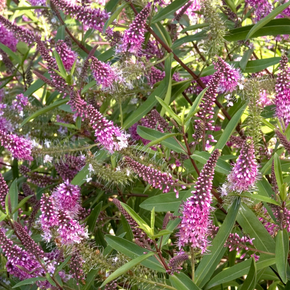
- Shimmering deep rose-pink flower spikes crown the branch tips each summer, beautifully contrasted by glossy dark green leaves with distinctive magenta-red edges and mahogany-toned stems.
- Compact, rounded evergreen shrub that matures to a tidy 3-4 feet tall and wide, making it ideal for borders, low hedges, mass plantings, and patio containers with minimal maintenance.
- Exceptionally versatile and tough — tolerates coastal salt spray, road salt exposure, and summer heat while remaining reliably evergreen in USDA Zones 7-11.
- A proven pollinator magnet that attracts bees and beneficial insects, and produces flower spikes long enough to cut and bring indoors for fresh arrangements.
Wiri Blush Hebe (Hebe hybrid 'Wiri Blush', also classified as Veronica 'Wiri Blush') is a refined, compact evergreen shrub that earns its place in the garden through all four seasons — delivering a spectacular summer display of shimmering deep rose-pink flower spikes at the branch tips, set against a backdrop of lush, glossy, dark green foliage with eye-catching magenta-red leaf edges and rich mahogany-colored stems. Maturing to a well-proportioned 3-4 feet tall and wide, this low-maintenance New Zealand native grows at a moderate to fast pace and naturally maintains a neat, rounded form that works equally well as a stand-alone specimen, a flowering low hedge, a front-of-border accent, or a lush container plant on a sunny patio or porch. Part of the celebrated Wiri series developed by renowned New Zealand breeder Jack Hobbs at the Auckland Regional Botanical Gardens and introduced in 1995, Wiri Blush quickly became one of the most popular compact Hebe cultivars for warm-climate landscaping thanks to its outstanding combination of ornamental foliage, vibrant blooms, salt spray tolerance, and reliable performance from USDA Zones 7 through 11. Its flower spikes also hold up exceptionally well when cut, making it a welcome addition to cutting gardens and fresh summer arrangements.
Plant Description
Wiri Blush Hebe is a bushy, broadleaf evergreen shrub that offers ornamental interest across all seasons. Its narrowly elliptic leaves are a glossy, deep green on top with fine magenta-red edging along the margins. The undersides of new leaves and the plant's stems share the same rich magenta hue, giving the entire plant a colorful, layered appearance even when not in bloom. In summer, dense spikes of deep rose-pink flowers emerge vigorously at the branch tips, shimmering in the light and standing out sharply against the dark, glossy foliage. The flower spikes reach approximately 3 inches in length and are highly attractive to bees and other pollinators. The plant's naturally compact, rounded, and upright habit means it rarely requires heavy pruning to look its best, and its fast establishment from a young plant means it reaches its attractive mature form relatively quickly. This cultivar belongs to the Plantaginaceae family and is now botanically recognized under the genus Veronica, though it is widely sold and commonly known under the Hebe name.
Mature Size
| Attribute | Detail |
|---|---|
| Mature Height | 3-4 feet (approximately 1-1.2 meters) |
| Mature Spread | 3-4 feet (approximately 1-1.2 meters) |
| Growth Habit | Rounded, bushy, upright-mounding |
| Growth Rate | Moderate to fast; can reach mature size within 2-3 years from a small starter plant |
| Time to Ultimate Height | Approximately 5-10 years to absolute maximum size under ideal conditions |
Hardiness Zones
Wiri Blush Hebe is rated for USDA Hardiness Zones 7 through 11, making it a reliable landscape shrub across a wide range of climates in the American West, Pacific Coast, South, and mild interior regions.
- Zone 7: Reliably cold hardy to approximately 0-5 degrees Fahrenheit. Some tip dieback is possible during the most severe winters, especially in exposed or windy locations. Applying a 2-3 inch layer of mulch over the root zone and providing windbreak shelter significantly improves cold-season performance at the edge of its range.
- Zones 8-9: Performs as a fully reliable, year-round evergreen landscape shrub with no special cold protection needed. An excellent choice for the mild-winter climates of the Pacific Coast, including the Rogue Valley, the Sacramento Valley, and coastal California.
- Zones 10-11: Thrives in warm, frost-free climates. Provide afternoon shade in areas with extreme summer heat to extend the plant's lifespan.
- AHS Heat Zones: Rated for American Horticultural Society Heat Zones 7-12, meaning it is capable of tolerating conditions where temperatures exceed 86 degrees Fahrenheit for more than 210 days per year — an unusually high heat tolerance for a Hebe.
Sunlight Requirements
Wiri Blush Hebe performs best in full sun to partial sun exposure. Understanding the optimal light conditions will maximize both flowering and foliage quality.
- Full Sun (6+ hours of direct sun per day): Produces the most prolific flowering and the most compact, dense growth habit. Ideal for most garden settings in Zones 7-9.
- Partial Sun / Partial Shade (3-6 hours of direct sun): The plant remains healthy and attractive, though flowering may be slightly reduced. A good option in gardens with bright, dappled light or afternoon shade.
- Hot Summer Climates: In areas with intense afternoon heat exceeding 100 degrees Fahrenheit, some afternoon shade is beneficial and can help extend the plant's lifespan by reducing heat and moisture stress on the foliage.
- Coastal Settings: Thrives in the bright, diffuse light typical of coastal gardens, where it benefits from the naturally moderating maritime climate. The plant's excellent coastal tolerance makes it one of the top-performing shrubs for beachfront and seaside gardens.
Soil and pH Preferences
Wiri Blush Hebe is adaptable to a range of soil types but has a few key requirements for long-term success.
- Drainage: Excellent drainage is essential. This plant will not tolerate heavy, waterlogged, or clay-dominant soils that stay saturated after rain or irrigation. Root rot is a significant risk in poorly drained soils.
- Soil Texture: Thrives in loam, sandy loam, or chalk-based soils. Tolerates poor to moderately fertile soils well — overly rich, high-nitrogen soils can promote lush but weak growth at the expense of flowers.
- pH: Prefers a neutral to slightly alkaline pH, approximately 6.5 to 7.5. Unlike many ornamental shrubs, it does not require acidic conditions and performs well in chalky or limestone-derived soils.
- Amendments: When planting in heavy or clay-dense soils, work in generous amounts of coarse sand, fine gravel, or organic compost to improve drainage and aeration. In containers, use a high-quality, free-draining potting mix.
- Mulch: Apply a 2-inch layer of organic mulch around the base to help retain consistent soil moisture, moderate soil temperature, and reduce weed competition. Keep mulch a few inches away from the main stem to prevent crown rot.
Watering Guide
Consistent moisture during the growing season is key to keeping Wiri Blush Hebe healthy and in full flower. While it shows some drought tolerance once established, prolonged dry conditions — especially combined with intense heat — can shorten the plant's overall lifespan.
- Newly Planted: Water deeply and consistently during the first growing season to help the plant establish a strong, expansive root system. Check soil moisture regularly and water before the plant shows signs of stress.
- Established Plants: Water when the top 2 inches of soil feel dry to the touch. In cooler, coastal, or mild climates, natural rainfall may be largely sufficient during non-summer months.
- Hot and Dry Conditions: Increase watering frequency during heat waves or extended dry spells in summer. The plant is heat tolerant but performs best when root moisture is maintained.
- Overwatering: Avoid standing water around the root zone. Allow the soil to partially dry between deep waterings rather than keeping it constantly wet. Never allow roots to sit in pooled water.
- Container Plants: Containers dry out faster than garden beds. Check moisture levels more frequently and water as soon as the top inch or two of potting mix is dry.
Fertilizing
Wiri Blush Hebe has modest fertilizer needs and grows well in soils of average to low fertility. Over-fertilizing, particularly with high-nitrogen products, can produce soft, leafy growth at the expense of flower production and may make the plant more susceptible to pests and diseases.
- Timing: Apply fertilizer once in early spring as new growth begins, to support vigorous development through the blooming season.
- Product Type: Use a balanced, slow-release granular fertilizer or a formulation labeled for flowering shrubs or evergreens. A low-nitrogen formula with balanced phosphorus and potassium is ideal for promoting flowers rather than excess foliage.
- Application: Scatter granules evenly around the drip line of the plant (the outer edge of the canopy), then water in thoroughly. Avoid piling fertilizer against the crown or stems.
- Container Growing: Container-grown plants benefit from a diluted liquid fertilizer applied monthly through the growing season (spring through summer), as nutrients leach out of potting mix more quickly than garden soil.
- Caution: Do not fertilize in late summer or fall, as this can stimulate tender new growth that will be vulnerable to cold damage as temperatures drop.
Pruning and Maintenance
One of the most appealing qualities of Wiri Blush Hebe is its naturally tidy, self-shaping habit that requires only minimal intervention to look its best. The following pruning practices will keep it compact, floriferous, and long-lived.
- Post-Bloom Pruning: After the main summer flowering flush has finished, lightly prune or tip-prune each flowered stem back by approximately one-third to one-half its length. This removes spent flower heads, encourages fresh lateral growth, and helps maintain the plant's compact, rounded silhouette.
- Deadheading: Removing spent flower spikes as they fade can encourage a second, lighter flush of blooms later in the season in some climates.
- Rejuvenation: If an older plant becomes leggy or woody at the base, it can be cut back more severely. Hebe shrubs are remarkably resilient and will typically resprout vigorously from older wood, even when cut back to near-leafless stems.
- Timing: Avoid heavy pruning in late fall or winter in Zone 7, as fresh cuts can be vulnerable to cold injury. Stick to pruning in late spring through mid-summer.
- General Maintenance: Remove any dead, damaged, or crossing branches as needed throughout the year. Fallen leaves and spent flower material around the base should be cleared away to reduce the risk of fungal disease.
Planting Instructions
- Choose the Right Location: Select a site with full sun to partial shade, good air circulation, and well-drained soil. Avoid low spots where water pools after rain or irrigation.
- Timing: Plant in spring after the last frost date, or in early fall to allow root establishment before cold weather arrives. Spring planting is preferred in Zone 7.
- Prepare the Planting Hole: Dig a hole approximately twice as wide as the root ball and equal in depth. Loosen the soil around the sides of the hole to encourage root expansion. If your native soil drains poorly, amend it generously with coarse sand or organic compost before backfilling.
- Position the Plant: Set the plant in the hole so the top of the root ball sits level with or very slightly above the surrounding soil grade. Planting too deep can invite crown rot and other problems.
- Backfill and Firm: Refill the hole with the amended native soil, gently firming it around the root ball to eliminate air pockets. Do not compact the soil too heavily.
- Water Thoroughly: Soak the planting area deeply immediately after planting to settle the soil and initiate root-to-soil contact.
- Mulch: Apply a 2-inch layer of organic mulch over the root zone, keeping it several inches away from the main stem and crown of the plant.
- Spacing: For mass plantings or informal hedges, space plants approximately 3 feet apart on center for good coverage while allowing adequate air circulation between mature plants.
Seasonal Interest
| Season | Ornamental Interest |
|---|---|
| Spring | Fresh new growth emerges with vivid magenta-tinged leaf edges and rich mahogany stems; plant fills out beautifully as temperatures warm. Flower buds begin developing at branch tips. |
| Summer | Peak ornamental season — shimmering deep rose-pink flower spikes blanket the branch tips, creating a vibrant, colorful display that draws in bees and pollinators. Flower spikes are suitable for cutting. |
| Fall | Glossy foliage remains lush and attractive as temperatures cool. In some milder climates a secondary, lighter bloom may occur. Red leaf edging becomes more prominent as days shorten. |
| Winter | Fully evergreen in Zones 8-11; the glossy dark green foliage with red-edged margins and mahogany stems provide structural color and interest throughout the winter landscape. In Zone 7 it may show some tip dieback after harsh freezes but recovers well in spring. |
Landscape Uses
Wiri Blush Hebe is a remarkably versatile landscape shrub that serves a wide variety of garden design functions thanks to its compact size, evergreen foliage, and showy summer flowers.
- Foundation Planting: Its moderate, predictable mature size and tidy habit make it an outstanding choice for foundation beds along home walls and building bases.
- Low Hedge or Screen: Plants spaced 2.5-3 feet apart will knit together into a lush, semi-formal flowering hedge or low screen. Light clipping after bloom keeps the hedge neat.
- Mixed Shrub and Perennial Borders: Excellent mid-border plant that provides glossy evergreen structure and vibrant summer color between and among perennials.
- Mass Planting and Ground Coverage: Plant in groups of three or more for bold seasonal color and efficient low-maintenance coverage on slopes, banks, or open beds.
- Container Specimen: Its compact form and showy blooms make it an exceptional container plant for sunny patios, decks, and entry courtyards.
- Coastal and Seaside Gardens: One of the most salt-tolerant flowering shrubs available, performing reliably in oceanfront and near-coastal landscapes where many ornamentals struggle.
- Cutting Garden: The long-lasting, 3-inch flower spikes cut well and hold up in fresh floral arrangements, adding a spiky, exotic element to summer bouquets.
- Pollinator Garden: A top-choice addition to gardens designed to support bees, butterflies, and other beneficial insects through the summer months.
- Tropical-Style Gardens: The glossy, bold foliage with vivid color accents complements the lush aesthetic of tropical-inspired garden compositions featuring large-leafed exotics and dramatic ornamental grasses.
Companion Plants
Wiri Blush Hebe pairs beautifully with plants that complement its glossy foliage, rose-pink flower color, and sun-loving, well-drained soil preferences. The following companions create visually cohesive and culturally compatible garden combinations.
- New Zealand Flax (Phormium tenax or Phormium 'Dark Delight'): A fellow New Zealand native that shares the same cultural requirements and provides bold, architectural foliage in deep burgundy or bronze tones that perfectly complement the hebe's magenta-edged leaves and pink flowers.
- Russian Sage (Perovskia atriplicifolia): Billowing, airy spikes of blue-purple flowers create a striking cool-toned contrast to the warm rose-pink of Wiri Blush, and both plants thrive in full sun with well-drained soil.
- Lavender (Lavandula spp.): Shares the same preference for full sun, excellent drainage, and low to moderate fertility. The silver-gray foliage and purple flower spikes of lavender provide beautiful color and textural contrast.
- Ornamental Grasses (Miscanthus, Festuca, or Carex): Fine-textured, arching or upright grasses add movement and contrasting form alongside the hebe's dense, rounded mass.
- Catmint (Nepeta spp.): Low-growing, long-flowering perennial with soft lavender-blue blooms and gray-green foliage that edges out beneath the hebe while sharing its sun and drainage preferences.
- Gaura (Oenothera lindheimeri): Airy, wand-like stems of white to pink flowers dance above the garden alongside Wiri Blush, creating a light, naturalistic summer border combination.
- Salvia (Salvia nemorosa or S. greggii): Upright spikes of blue, purple, or red blooms make a bold color contrast partner that thrives in the same full-sun, well-drained conditions.
Pests and Diseases
Wiri Blush Hebe is generally a robust and trouble-free shrub when grown in the right conditions, but a few pests and diseases may occasionally appear, particularly when cultural conditions are not ideal.
- Aphids: The most common pest concern. Aphids may cluster on new growth and flower buds in spring and early summer. In most cases, a strong spray of water from the hose or an application of insecticidal soap is sufficient to bring populations under control without harming pollinators.
- Downy Mildew: A fungal-type disease that can affect hebe foliage in humid, poorly ventilated conditions. Improve air circulation around and between plants and avoid overhead watering to minimize risk.
- Fungal Leaf Spot: Irregular dark spots on foliage can appear during extended wet or humid periods. Remove affected leaves and avoid wetting the foliage when watering. Ensure good drainage and air flow.
- Root Rot (Phytophthora and Fungal Rot): The most serious disease risk, almost always caused by poorly drained or waterlogged soil. Planting in well-drained soil and avoiding overwatering is the best prevention. There is no effective treatment once root rot is established, so prevention through proper site selection and planting practices is essential.
- Honey Fungus: Rarely, hebe can be affected by honey fungus in soils with a history of infected woody plant material. Avoid planting in sites where honey fungus has previously been identified.
- General Prevention Tips: Maintain good air circulation between plants, avoid overhead irrigation, remove fallen leaf litter promptly, and ensure soil drains freely to keep this plant healthy and largely pest- and disease-free.
Container Growing
Wiri Blush Hebe is an excellent candidate for container culture, bringing its glossy evergreen foliage and brilliant summer flower spikes to patios, porches, entryways, and rooftop gardens. Follow these guidelines for success in pots.
- Container Size: Choose a container with a minimum diameter of 12-14 inches for a young plant, stepping up to a 16-18 inch or larger pot as the plant matures. A pot that is too small will restrict root growth and cause the plant to dry out too quickly.
- Drainage: Select a container with multiple large drainage holes. Terra cotta or unglazed ceramic pots are particularly well suited because they allow excess moisture to evaporate through the pot walls, reducing the risk of waterlogged roots.
- Potting Mix: Use a premium, well-draining potting mix. Adding 20-25% coarse perlite or fine gravel to the mix further improves drainage and aeration.
- Watering: Containers dry out significantly faster than garden beds, especially in warm and sunny conditions. Check soil moisture daily during summer heat and water whenever the top inch or two of potting mix is dry.
- Fertilizing: Feed container-grown plants with a diluted liquid fertilizer formulated for flowering shrubs every 3-4 weeks through the spring and summer growing season. Stop fertilizing in early fall.
- Repotting: Repot every 2-3 years, or when roots begin circling the pot base or emerging from drainage holes. Move up one pot size at a time to avoid over-potting.
- Winter Care in Zone 7: In colder zones near the edge of hardiness, move containers to a sheltered location such as an unheated garage or porch during hard freezes to protect the root ball, which is more vulnerable to cold in a pot than when planted in the ground.
Wildlife Value
Wiri Blush Hebe is a recognized pollinator plant, formally included on the Royal Horticultural Society's Plants for Pollinators list, and is valued in the garden for its positive contribution to local wildlife.
- Bees: The dense, nectar-rich flower spikes are highly attractive to honeybees, bumblebees, and native solitary bees throughout the summer blooming period. This makes it an excellent addition to dedicated pollinator gardens and wildlife-friendly landscapes.
- Beneficial Insects: A wide variety of beneficial insects, including hoverflies and parasitic wasps that help control pest populations in the garden, are drawn to the flowers for pollen and nectar.
- Butterflies: The showy, accessible flower spikes attract butterflies, making Wiri Blush a rewarding addition to butterfly gardens.
- Birds: While not a primary food source, the dense, evergreen shrub structure provides useful cover and shelter for small garden birds year-round.
- Deer Resistance: Hebe shrubs are generally not preferred by deer, giving Wiri Blush an advantage in landscapes where deer browsing is a concern, though no plant can be considered completely deer-proof in conditions of extreme browse pressure.
History and Background
Wiri Blush Hebe is part of the celebrated Wiri series of Hebe cultivars developed by Jack Hobbs, former curator of the Auckland Botanic Gardens in New Zealand. Hobbs undertook a focused breeding and selection program aimed at producing compact, garden-worthy Hebe cultivars with superior ornamental characteristics and improved hardiness for broad landscape use. Prior to his work, Hebes had largely been developed in Denmark primarily as greenhouse pot plants rather than hardy garden shrubs. The Wiri series — named after the suburb of South Auckland near the gardens where they were developed — represented a significant leap forward in making Hebes truly accessible to home gardeners across a wide range of climates. The series was first introduced to the commercial nursery trade in 1995, and Wiri Blush quickly emerged as one of the most widely grown and admired selections in the lineup. The genus Hebe, native primarily to New Zealand where it is one of the most species-diverse shrub genera in the country's native flora, has been reclassified by many botanists into the genus Veronica within the family Plantaginaceae, though the Hebe name remains widely used in horticulture and commercial nursery trade throughout the world.
- Shimmering deep rose-pink flower spikes crown the branch tips each summer, beautifully contrasted by glossy dark green leaves with distinctive magenta-red edges and mahogany-toned stems.
- Compact, rounded evergreen shrub that matures to a tidy 3-4 feet tall and wide, making it ideal for borders, low hedges, mass plantings, and patio containers with minimal maintenance.
- Exceptionally versatile and tough — tolerates coastal salt spray, road salt exposure, and summer heat while remaining reliably evergreen in USDA Zones 7-11.
- A proven pollinator magnet that attracts bees and beneficial insects, and produces flower spikes long enough to cut and bring indoors for fresh arrangements.
Wiri Blush Hebe (Hebe hybrid 'Wiri Blush', also classified as Veronica 'Wiri Blush') is a refined, compact evergreen shrub that earns its place in the garden through all four seasons — delivering a spectacular summer display of shimmering deep rose-pink flower spikes at the branch tips, set against a backdrop of lush, glossy, dark green foliage with eye-catching magenta-red leaf edges and rich mahogany-colored stems. Maturing to a well-proportioned 3-4 feet tall and wide, this low-maintenance New Zealand native grows at a moderate to fast pace and naturally maintains a neat, rounded form that works equally well as a stand-alone specimen, a flowering low hedge, a front-of-border accent, or a lush container plant on a sunny patio or porch. Part of the celebrated Wiri series developed by renowned New Zealand breeder Jack Hobbs at the Auckland Regional Botanical Gardens and introduced in 1995, Wiri Blush quickly became one of the most popular compact Hebe cultivars for warm-climate landscaping thanks to its outstanding combination of ornamental foliage, vibrant blooms, salt spray tolerance, and reliable performance from USDA Zones 7 through 11. Its flower spikes also hold up exceptionally well when cut, making it a welcome addition to cutting gardens and fresh summer arrangements.
Plant Description
Wiri Blush Hebe is a bushy, broadleaf evergreen shrub that offers ornamental interest across all seasons. Its narrowly elliptic leaves are a glossy, deep green on top with fine magenta-red edging along the margins. The undersides of new leaves and the plant's stems share the same rich magenta hue, giving the entire plant a colorful, layered appearance even when not in bloom. In summer, dense spikes of deep rose-pink flowers emerge vigorously at the branch tips, shimmering in the light and standing out sharply against the dark, glossy foliage. The flower spikes reach approximately 3 inches in length and are highly attractive to bees and other pollinators. The plant's naturally compact, rounded, and upright habit means it rarely requires heavy pruning to look its best, and its fast establishment from a young plant means it reaches its attractive mature form relatively quickly. This cultivar belongs to the Plantaginaceae family and is now botanically recognized under the genus Veronica, though it is widely sold and commonly known under the Hebe name.
Mature Size
| Attribute | Detail |
|---|---|
| Mature Height | 3-4 feet (approximately 1-1.2 meters) |
| Mature Spread | 3-4 feet (approximately 1-1.2 meters) |
| Growth Habit | Rounded, bushy, upright-mounding |
| Growth Rate | Moderate to fast; can reach mature size within 2-3 years from a small starter plant |
| Time to Ultimate Height | Approximately 5-10 years to absolute maximum size under ideal conditions |
Hardiness Zones
Wiri Blush Hebe is rated for USDA Hardiness Zones 7 through 11, making it a reliable landscape shrub across a wide range of climates in the American West, Pacific Coast, South, and mild interior regions.
- Zone 7: Reliably cold hardy to approximately 0-5 degrees Fahrenheit. Some tip dieback is possible during the most severe winters, especially in exposed or windy locations. Applying a 2-3 inch layer of mulch over the root zone and providing windbreak shelter significantly improves cold-season performance at the edge of its range.
- Zones 8-9: Performs as a fully reliable, year-round evergreen landscape shrub with no special cold protection needed. An excellent choice for the mild-winter climates of the Pacific Coast, including the Rogue Valley, the Sacramento Valley, and coastal California.
- Zones 10-11: Thrives in warm, frost-free climates. Provide afternoon shade in areas with extreme summer heat to extend the plant's lifespan.
- AHS Heat Zones: Rated for American Horticultural Society Heat Zones 7-12, meaning it is capable of tolerating conditions where temperatures exceed 86 degrees Fahrenheit for more than 210 days per year — an unusually high heat tolerance for a Hebe.
Sunlight Requirements
Wiri Blush Hebe performs best in full sun to partial sun exposure. Understanding the optimal light conditions will maximize both flowering and foliage quality.
- Full Sun (6+ hours of direct sun per day): Produces the most prolific flowering and the most compact, dense growth habit. Ideal for most garden settings in Zones 7-9.
- Partial Sun / Partial Shade (3-6 hours of direct sun): The plant remains healthy and attractive, though flowering may be slightly reduced. A good option in gardens with bright, dappled light or afternoon shade.
- Hot Summer Climates: In areas with intense afternoon heat exceeding 100 degrees Fahrenheit, some afternoon shade is beneficial and can help extend the plant's lifespan by reducing heat and moisture stress on the foliage.
- Coastal Settings: Thrives in the bright, diffuse light typical of coastal gardens, where it benefits from the naturally moderating maritime climate. The plant's excellent coastal tolerance makes it one of the top-performing shrubs for beachfront and seaside gardens.
Soil and pH Preferences
Wiri Blush Hebe is adaptable to a range of soil types but has a few key requirements for long-term success.
- Drainage: Excellent drainage is essential. This plant will not tolerate heavy, waterlogged, or clay-dominant soils that stay saturated after rain or irrigation. Root rot is a significant risk in poorly drained soils.
- Soil Texture: Thrives in loam, sandy loam, or chalk-based soils. Tolerates poor to moderately fertile soils well — overly rich, high-nitrogen soils can promote lush but weak growth at the expense of flowers.
- pH: Prefers a neutral to slightly alkaline pH, approximately 6.5 to 7.5. Unlike many ornamental shrubs, it does not require acidic conditions and performs well in chalky or limestone-derived soils.
- Amendments: When planting in heavy or clay-dense soils, work in generous amounts of coarse sand, fine gravel, or organic compost to improve drainage and aeration. In containers, use a high-quality, free-draining potting mix.
- Mulch: Apply a 2-inch layer of organic mulch around the base to help retain consistent soil moisture, moderate soil temperature, and reduce weed competition. Keep mulch a few inches away from the main stem to prevent crown rot.
Watering Guide
Consistent moisture during the growing season is key to keeping Wiri Blush Hebe healthy and in full flower. While it shows some drought tolerance once established, prolonged dry conditions — especially combined with intense heat — can shorten the plant's overall lifespan.
- Newly Planted: Water deeply and consistently during the first growing season to help the plant establish a strong, expansive root system. Check soil moisture regularly and water before the plant shows signs of stress.
- Established Plants: Water when the top 2 inches of soil feel dry to the touch. In cooler, coastal, or mild climates, natural rainfall may be largely sufficient during non-summer months.
- Hot and Dry Conditions: Increase watering frequency during heat waves or extended dry spells in summer. The plant is heat tolerant but performs best when root moisture is maintained.
- Overwatering: Avoid standing water around the root zone. Allow the soil to partially dry between deep waterings rather than keeping it constantly wet. Never allow roots to sit in pooled water.
- Container Plants: Containers dry out faster than garden beds. Check moisture levels more frequently and water as soon as the top inch or two of potting mix is dry.
Fertilizing
Wiri Blush Hebe has modest fertilizer needs and grows well in soils of average to low fertility. Over-fertilizing, particularly with high-nitrogen products, can produce soft, leafy growth at the expense of flower production and may make the plant more susceptible to pests and diseases.
- Timing: Apply fertilizer once in early spring as new growth begins, to support vigorous development through the blooming season.
- Product Type: Use a balanced, slow-release granular fertilizer or a formulation labeled for flowering shrubs or evergreens. A low-nitrogen formula with balanced phosphorus and potassium is ideal for promoting flowers rather than excess foliage.
- Application: Scatter granules evenly around the drip line of the plant (the outer edge of the canopy), then water in thoroughly. Avoid piling fertilizer against the crown or stems.
- Container Growing: Container-grown plants benefit from a diluted liquid fertilizer applied monthly through the growing season (spring through summer), as nutrients leach out of potting mix more quickly than garden soil.
- Caution: Do not fertilize in late summer or fall, as this can stimulate tender new growth that will be vulnerable to cold damage as temperatures drop.
Pruning and Maintenance
One of the most appealing qualities of Wiri Blush Hebe is its naturally tidy, self-shaping habit that requires only minimal intervention to look its best. The following pruning practices will keep it compact, floriferous, and long-lived.
- Post-Bloom Pruning: After the main summer flowering flush has finished, lightly prune or tip-prune each flowered stem back by approximately one-third to one-half its length. This removes spent flower heads, encourages fresh lateral growth, and helps maintain the plant's compact, rounded silhouette.
- Deadheading: Removing spent flower spikes as they fade can encourage a second, lighter flush of blooms later in the season in some climates.
- Rejuvenation: If an older plant becomes leggy or woody at the base, it can be cut back more severely. Hebe shrubs are remarkably resilient and will typically resprout vigorously from older wood, even when cut back to near-leafless stems.
- Timing: Avoid heavy pruning in late fall or winter in Zone 7, as fresh cuts can be vulnerable to cold injury. Stick to pruning in late spring through mid-summer.
- General Maintenance: Remove any dead, damaged, or crossing branches as needed throughout the year. Fallen leaves and spent flower material around the base should be cleared away to reduce the risk of fungal disease.
Planting Instructions
- Choose the Right Location: Select a site with full sun to partial shade, good air circulation, and well-drained soil. Avoid low spots where water pools after rain or irrigation.
- Timing: Plant in spring after the last frost date, or in early fall to allow root establishment before cold weather arrives. Spring planting is preferred in Zone 7.
- Prepare the Planting Hole: Dig a hole approximately twice as wide as the root ball and equal in depth. Loosen the soil around the sides of the hole to encourage root expansion. If your native soil drains poorly, amend it generously with coarse sand or organic compost before backfilling.
- Position the Plant: Set the plant in the hole so the top of the root ball sits level with or very slightly above the surrounding soil grade. Planting too deep can invite crown rot and other problems.
- Backfill and Firm: Refill the hole with the amended native soil, gently firming it around the root ball to eliminate air pockets. Do not compact the soil too heavily.
- Water Thoroughly: Soak the planting area deeply immediately after planting to settle the soil and initiate root-to-soil contact.
- Mulch: Apply a 2-inch layer of organic mulch over the root zone, keeping it several inches away from the main stem and crown of the plant.
- Spacing: For mass plantings or informal hedges, space plants approximately 3 feet apart on center for good coverage while allowing adequate air circulation between mature plants.
Seasonal Interest
| Season | Ornamental Interest |
|---|---|
| Spring | Fresh new growth emerges with vivid magenta-tinged leaf edges and rich mahogany stems; plant fills out beautifully as temperatures warm. Flower buds begin developing at branch tips. |
| Summer | Peak ornamental season — shimmering deep rose-pink flower spikes blanket the branch tips, creating a vibrant, colorful display that draws in bees and pollinators. Flower spikes are suitable for cutting. |
| Fall | Glossy foliage remains lush and attractive as temperatures cool. In some milder climates a secondary, lighter bloom may occur. Red leaf edging becomes more prominent as days shorten. |
| Winter | Fully evergreen in Zones 8-11; the glossy dark green foliage with red-edged margins and mahogany stems provide structural color and interest throughout the winter landscape. In Zone 7 it may show some tip dieback after harsh freezes but recovers well in spring. |
Landscape Uses
Wiri Blush Hebe is a remarkably versatile landscape shrub that serves a wide variety of garden design functions thanks to its compact size, evergreen foliage, and showy summer flowers.
- Foundation Planting: Its moderate, predictable mature size and tidy habit make it an outstanding choice for foundation beds along home walls and building bases.
- Low Hedge or Screen: Plants spaced 2.5-3 feet apart will knit together into a lush, semi-formal flowering hedge or low screen. Light clipping after bloom keeps the hedge neat.
- Mixed Shrub and Perennial Borders: Excellent mid-border plant that provides glossy evergreen structure and vibrant summer color between and among perennials.
- Mass Planting and Ground Coverage: Plant in groups of three or more for bold seasonal color and efficient low-maintenance coverage on slopes, banks, or open beds.
- Container Specimen: Its compact form and showy blooms make it an exceptional container plant for sunny patios, decks, and entry courtyards.
- Coastal and Seaside Gardens: One of the most salt-tolerant flowering shrubs available, performing reliably in oceanfront and near-coastal landscapes where many ornamentals struggle.
- Cutting Garden: The long-lasting, 3-inch flower spikes cut well and hold up in fresh floral arrangements, adding a spiky, exotic element to summer bouquets.
- Pollinator Garden: A top-choice addition to gardens designed to support bees, butterflies, and other beneficial insects through the summer months.
- Tropical-Style Gardens: The glossy, bold foliage with vivid color accents complements the lush aesthetic of tropical-inspired garden compositions featuring large-leafed exotics and dramatic ornamental grasses.
Companion Plants
Wiri Blush Hebe pairs beautifully with plants that complement its glossy foliage, rose-pink flower color, and sun-loving, well-drained soil preferences. The following companions create visually cohesive and culturally compatible garden combinations.
- New Zealand Flax (Phormium tenax or Phormium 'Dark Delight'): A fellow New Zealand native that shares the same cultural requirements and provides bold, architectural foliage in deep burgundy or bronze tones that perfectly complement the hebe's magenta-edged leaves and pink flowers.
- Russian Sage (Perovskia atriplicifolia): Billowing, airy spikes of blue-purple flowers create a striking cool-toned contrast to the warm rose-pink of Wiri Blush, and both plants thrive in full sun with well-drained soil.
- Lavender (Lavandula spp.): Shares the same preference for full sun, excellent drainage, and low to moderate fertility. The silver-gray foliage and purple flower spikes of lavender provide beautiful color and textural contrast.
- Ornamental Grasses (Miscanthus, Festuca, or Carex): Fine-textured, arching or upright grasses add movement and contrasting form alongside the hebe's dense, rounded mass.
- Catmint (Nepeta spp.): Low-growing, long-flowering perennial with soft lavender-blue blooms and gray-green foliage that edges out beneath the hebe while sharing its sun and drainage preferences.
- Gaura (Oenothera lindheimeri): Airy, wand-like stems of white to pink flowers dance above the garden alongside Wiri Blush, creating a light, naturalistic summer border combination.
- Salvia (Salvia nemorosa or S. greggii): Upright spikes of blue, purple, or red blooms make a bold color contrast partner that thrives in the same full-sun, well-drained conditions.
Pests and Diseases
Wiri Blush Hebe is generally a robust and trouble-free shrub when grown in the right conditions, but a few pests and diseases may occasionally appear, particularly when cultural conditions are not ideal.
- Aphids: The most common pest concern. Aphids may cluster on new growth and flower buds in spring and early summer. In most cases, a strong spray of water from the hose or an application of insecticidal soap is sufficient to bring populations under control without harming pollinators.
- Downy Mildew: A fungal-type disease that can affect hebe foliage in humid, poorly ventilated conditions. Improve air circulation around and between plants and avoid overhead watering to minimize risk.
- Fungal Leaf Spot: Irregular dark spots on foliage can appear during extended wet or humid periods. Remove affected leaves and avoid wetting the foliage when watering. Ensure good drainage and air flow.
- Root Rot (Phytophthora and Fungal Rot): The most serious disease risk, almost always caused by poorly drained or waterlogged soil. Planting in well-drained soil and avoiding overwatering is the best prevention. There is no effective treatment once root rot is established, so prevention through proper site selection and planting practices is essential.
- Honey Fungus: Rarely, hebe can be affected by honey fungus in soils with a history of infected woody plant material. Avoid planting in sites where honey fungus has previously been identified.
- General Prevention Tips: Maintain good air circulation between plants, avoid overhead irrigation, remove fallen leaf litter promptly, and ensure soil drains freely to keep this plant healthy and largely pest- and disease-free.
Container Growing
Wiri Blush Hebe is an excellent candidate for container culture, bringing its glossy evergreen foliage and brilliant summer flower spikes to patios, porches, entryways, and rooftop gardens. Follow these guidelines for success in pots.
- Container Size: Choose a container with a minimum diameter of 12-14 inches for a young plant, stepping up to a 16-18 inch or larger pot as the plant matures. A pot that is too small will restrict root growth and cause the plant to dry out too quickly.
- Drainage: Select a container with multiple large drainage holes. Terra cotta or unglazed ceramic pots are particularly well suited because they allow excess moisture to evaporate through the pot walls, reducing the risk of waterlogged roots.
- Potting Mix: Use a premium, well-draining potting mix. Adding 20-25% coarse perlite or fine gravel to the mix further improves drainage and aeration.
- Watering: Containers dry out significantly faster than garden beds, especially in warm and sunny conditions. Check soil moisture daily during summer heat and water whenever the top inch or two of potting mix is dry.
- Fertilizing: Feed container-grown plants with a diluted liquid fertilizer formulated for flowering shrubs every 3-4 weeks through the spring and summer growing season. Stop fertilizing in early fall.
- Repotting: Repot every 2-3 years, or when roots begin circling the pot base or emerging from drainage holes. Move up one pot size at a time to avoid over-potting.
- Winter Care in Zone 7: In colder zones near the edge of hardiness, move containers to a sheltered location such as an unheated garage or porch during hard freezes to protect the root ball, which is more vulnerable to cold in a pot than when planted in the ground.
Wildlife Value
Wiri Blush Hebe is a recognized pollinator plant, formally included on the Royal Horticultural Society's Plants for Pollinators list, and is valued in the garden for its positive contribution to local wildlife.
- Bees: The dense, nectar-rich flower spikes are highly attractive to honeybees, bumblebees, and native solitary bees throughout the summer blooming period. This makes it an excellent addition to dedicated pollinator gardens and wildlife-friendly landscapes.
- Beneficial Insects: A wide variety of beneficial insects, including hoverflies and parasitic wasps that help control pest populations in the garden, are drawn to the flowers for pollen and nectar.
- Butterflies: The showy, accessible flower spikes attract butterflies, making Wiri Blush a rewarding addition to butterfly gardens.
- Birds: While not a primary food source, the dense, evergreen shrub structure provides useful cover and shelter for small garden birds year-round.
- Deer Resistance: Hebe shrubs are generally not preferred by deer, giving Wiri Blush an advantage in landscapes where deer browsing is a concern, though no plant can be considered completely deer-proof in conditions of extreme browse pressure.
History and Background
Wiri Blush Hebe is part of the celebrated Wiri series of Hebe cultivars developed by Jack Hobbs, former curator of the Auckland Botanic Gardens in New Zealand. Hobbs undertook a focused breeding and selection program aimed at producing compact, garden-worthy Hebe cultivars with superior ornamental characteristics and improved hardiness for broad landscape use. Prior to his work, Hebes had largely been developed in Denmark primarily as greenhouse pot plants rather than hardy garden shrubs. The Wiri series — named after the suburb of South Auckland near the gardens where they were developed — represented a significant leap forward in making Hebes truly accessible to home gardeners across a wide range of climates. The series was first introduced to the commercial nursery trade in 1995, and Wiri Blush quickly emerged as one of the most widely grown and admired selections in the lineup. The genus Hebe, native primarily to New Zealand where it is one of the most species-diverse shrub genera in the country's native flora, has been reclassified by many botanists into the genus Veronica within the family Plantaginaceae, though the Hebe name remains widely used in horticulture and commercial nursery trade throughout the world.


