

Zoom the image with the mouse
Pink Candy Hebe - 2 Gallon
SKU:
2036900
UPC:
014949457962
$35.99
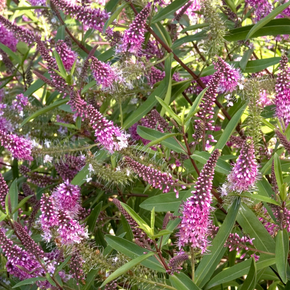
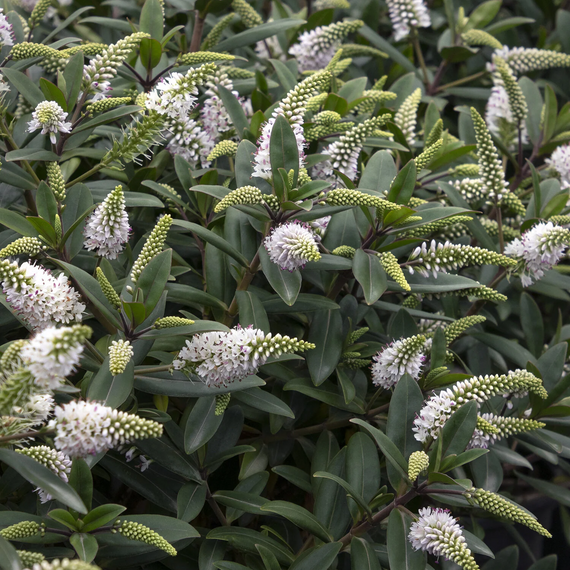
- Stunning flower spikes open white and mature to a delicate candy pink from early summer through autumn, reaching up to 4 inches long and drawing bees, butterflies, and other pollinators in abundance.
- Glossy, deep green foliage is accented with eye-catching crimson midribs and margins, then transitions to a warm bronze-red in fall and winter for outstanding year-round color.
- A compact, heat-tolerant, mounded habit stays tidy without constant pruning, making it an ideal low-maintenance choice for borders, rock gardens, and patio containers.
- Recipient of the prestigious Royal Horticultural Society Award of Garden Merit, confirming its exceptional garden performance and reliability across a wide range of growing conditions.
Pink Candy Hebe (Hebe hybrid 'Tulpink' PP #25,954) is a beautifully refined compact evergreen shrub that delivers multi-season ornamental appeal in a tidy, well-behaved package. Native to the temperate mountainsides and coastlines of New Zealand, this improved hybrid cultivar stands out for its notably better heat tolerance compared to many other hebe varieties, making it a standout performer in the mild-winter, warm-summer climates of Southern Oregon and Northern California. From early summer well into autumn, the plant produces an abundant flush of slender, elegant flower spikes that emerge white and gracefully deepen to a soft, inviting candy pink as they mature — each spike reaching up to 4 inches in length and serving as a magnet for bees, butterflies, and other beneficial pollinators. The glossy, pointed elliptic leaves are ornamental in their own right, showcasing rich dark green color enhanced by distinctive thin crimson midribs and margins throughout the growing season, before taking on warm bronze-red tones as temperatures cool in fall and winter. Maturing to approximately 18 inches tall and up to 30 inches wide, Pink Candy Hebe forms a dense, rounded mound that works beautifully as a low border plant, a rock garden accent, a mass planting groundcover, or a sophisticated container specimen. Its adaptable nature, salt tolerance, pollution resistance, and low fertilizer needs make it equally at home in coastal gardens, urban landscapes, and relaxed cottage-style settings.
Plant Description
Pink Candy Hebe is a compact, dense, multi-stemmed evergreen shrub with a naturally mounded, rounded form. Botanically classified as Hebe hybrid 'Tulpink' (also sold under the synonym Veronica 'Tulpink'), this patented cultivar was selected specifically for its improved heat resistance over standard hebe varieties, broader adaptability, and exceptional ornamental qualities. The glossy, pointy-tipped elliptic leaves are arranged in opposite pairs along the woody stems and are dark green in color, distinguished by striking thin crimson midribs and leaf margins that give the foliage a refined, two-tone appearance throughout spring and summer. As cooler temperatures arrive in autumn and persist through winter, the foliage flushes to attractive shades of bronze and red, ensuring the plant remains visually interesting even when not in bloom. The flower spikes are slender and elegant, beginning as clean white and gradually maturing to a soft blush pink, with individual blossoms each bearing delicate pink stamens. Spikes reach up to 4 inches in length and are produced prolifically from early summer through autumn. Its fine-textured foliage sets it apart visually from coarser-leaved landscape shrubs, giving it a polished, cultivated appearance in any setting.
Mature Size
| Characteristic | Measurement |
|---|---|
| Mature Height | Approximately 18 inches (about 1.5 feet) |
| Mature Spread | Approximately 24 to 30 inches wide |
| Growth Rate | Medium |
| Growth Habit | Compact, dense, rounded mound |
| Time to Reach Mature Size | Approximately 5 to 10 years under ideal conditions |
| Canopy | Low, ground-hugging canopy suitable for front-of-border use |
Hardiness Zones
Pink Candy Hebe is rated for USDA Hardiness Zones 7a through 10b, making it an excellent choice for the mild-winter climates of Southern Oregon and Northern California. It tolerates moderate frosts but should be sheltered from harsh, prolonged freezes and cold, drying winds. In marginally hardy areas at the cooler edge of Zone 7, siting the plant against a south- or west-facing wall or in a sheltered courtyard will improve winter survival. In Zone 9 and 10 gardens with hot summers, providing afternoon shade helps the plant thrive. The Pacific Coast and inland valleys of Northern California and the milder portions of the Rogue and Umpqua valleys in Southern Oregon fall comfortably within its preferred range. Its improved heat tolerance compared to older hebe cultivars also makes it more reliable in warm, inland garden settings.
Sunlight Requirements
Pink Candy Hebe performs best in full sun to partial shade. A minimum of 4 to 6 hours of direct sunlight per day encourages the most prolific flowering and the tightest, most compact growth habit. In coastal and mild inland gardens, full sun exposure throughout the day is ideal. In hotter inland locations where summer afternoon temperatures regularly exceed 90 degrees F, positioning the plant where it receives morning sun and some relief from intense afternoon sun will prevent leaf scorch and wilting while still supporting healthy flowering. South-facing or west-facing aspects are recommended for maximum bloom production. Avoid deep shade, as insufficient light leads to sparse, leggy growth and significantly reduced flowering.
Soil and pH Preferences
Pink Candy Hebe is adaptable to a range of soil types, including chalk, loam, and sandy soils, provided drainage is adequate. The single most critical soil requirement is excellent drainage — this plant will not tolerate soggy, waterlogged, or heavy clay soils, which lead quickly to root rot. Moderately fertile to average soil is preferred; overly rich, high-nitrogen soils tend to promote lush but soft, floppy growth at the expense of flowering. In terms of pH, Pink Candy Hebe prefers neutral to slightly alkaline conditions (approximately pH 6.5 to 7.5) but is generally adaptable and not highly sensitive to pH. It also demonstrates notable tolerance to environmental salt, making it suitable for coastal plantings and roadside borders where salt spray or road salt may be present. If your soil is heavy clay, amend generously with coarse grit, perlite, or compost prior to planting to improve drainage and long-term root health.
Watering Guide
Consistent, moderate moisture is the key to keeping Pink Candy Hebe healthy and free-flowering. While established plants develop reasonable drought tolerance, regular watering during the growing season produces the best results in terms of vigor and bloom production. Water deeply once or twice per week during warm, dry weather, allowing the soil to partially dry out between waterings. Always check the top few inches of soil before watering — if it still feels slightly moist, wait before irrigating. Reduce watering frequency in autumn and winter when the plant is not actively growing and rainfall is more frequent. Overhead watering is best avoided; drip irrigation or hand watering at the base of the plant reduces the risk of foliar fungal diseases. Container-grown plants dry out much faster than in-ground plants and may need watering several times per week during summer heat — check the soil moisture daily during hot spells.
Fertilizing
Pink Candy Hebe has modest fertilizer needs and will generally perform well in average garden soil without regular feeding. Over-fertilizing, particularly with high-nitrogen products, can encourage excessive leafy growth at the expense of flowers and can make the plant more susceptible to pests and diseases. For in-ground plants, a single application of a balanced, slow-release granular fertilizer (such as a 10-10-10 formulation) in early spring as new growth begins is sufficient for most gardens. Alternatively, a light top-dressing of compost around the base of the plant in spring provides gentle, sustained nutrition throughout the growing season. Container-grown plants deplete nutrients more quickly due to regular watering leaching them out of the potting mix; feed potted specimens once in spring with a balanced liquid or slow-release fertilizer to support healthy seasonal growth. Avoid fertilizing in late summer or autumn, as this can stimulate soft new growth that is vulnerable to frost damage.
Pruning and Maintenance
Pink Candy Hebe is a low-maintenance shrub that requires minimal pruning to look its best. The most important rule is to prune only after the plant has finished flowering, typically in late summer to early autumn, to avoid cutting off developing flower buds or current-season blooms. After flowering, stems that have bloomed can be trimmed back by up to one-third to one-half of their length to maintain a compact, tidy mound and encourage fresh new growth. Deadheading spent flower spikes as they fade can help prolong the blooming period and keeps the plant looking neat. Avoid hard pruning into bare, leafless wood during the main growing season. Older, overgrown, or leggy specimens can be rejuvenated by cutting back more severely in early spring, as hebes are capable of resprouting from mature wood. Remove any dead, damaged, or crossing branches at any time of year. No formal shearing is necessary; the plant naturally maintains an attractive rounded form.
Planting Instructions
- Choose a site with full sun to partial shade and well-draining soil. Avoid low-lying areas where water collects after rain.
- Dig a planting hole as deep as the root ball and at least twice as wide to allow the roots to spread freely and establish quickly.
- If your soil is heavy clay or poorly draining, amend the backfill with compost and coarse grit to improve drainage before refilling the hole.
- Remove the plant carefully from its container and gently loosen any circling roots. Set the plant in the hole so the top of the root ball sits level with or very slightly above the surrounding soil grade.
- Backfill with the amended soil, firming it gently around the roots to eliminate air pockets. Do not bury the stem or crown deeper than it was growing in the container.
- Water thoroughly immediately after planting to settle the soil and eliminate air pockets around the roots.
- Apply a 2 to 3 inch layer of organic mulch (bark, compost, or wood chips) around the base of the plant, keeping mulch a few inches away from the main stem to prevent rot.
- Water regularly during the first growing season to help the plant establish a deep, resilient root system. Once established, the plant is more drought tolerant but still benefits from consistent moisture during dry periods.
- The best times to plant are spring after the last frost or early fall when temperatures are mild and roots can establish before summer heat or winter cold.
Seasonal Interest
| Season | Ornamental Features |
|---|---|
| Spring | Glossy dark green foliage with crimson midribs and margins flushes with fresh new growth; plant begins building toward summer bloom |
| Summer | Prolific display of slender flower spikes opening white and maturing to soft candy pink; main peak of bloom from early to midsummer continuing through late summer |
| Autumn | Continued late flowering on new growth; foliage begins transitioning to warm bronze-red tones as temperatures cool |
| Winter | Evergreen foliage in rich bronze-red and copper tones provides color and structure in the dormant garden; remains attractive through the coldest months |
Landscape Uses
Pink Candy Hebe is a highly versatile landscape shrub suited to a wide variety of garden styles and applications. Its compact, tidy mounding habit and year-round evergreen presence make it one of the most useful small shrubs available for Pacific Coast gardens. Recommended uses include:
- Low border and edging plant: Its restrained size (under 2 feet tall) makes it perfect for the front of mixed shrub borders, pathway edges, and garden bed margins.
- Rock and alpine gardens: The compact habit, drought adaptability once established, and refined fine-textured foliage complement the aesthetic of rock garden plantings beautifully.
- Mass planting and groundcover: Planted in groups, Pink Candy Hebe creates a dense, weed-suppressing carpet of glossy foliage and pink flowers across slopes, hillsides, or open beds.
- Container and patio specimen: An outstanding container plant for decks, patios, and entryways, where its year-round ornamental foliage and seasonal blooms provide a focal point.
- Coastal gardens: Its salt tolerance makes it an excellent choice for seaside landscapes and coastal garden beds.
- Urban and courtyard gardens: Handles urban pollution well and thrives in sheltered city garden spaces.
- Pollinator garden: A valuable addition to wildlife-friendly garden designs, providing a rich nectar and pollen source from summer through fall.
- Cottage and informal gardens: The soft pink flower color and relaxed mounded habit fit naturally into romantic, informal, and cottage-style garden designs.
Container Growing
Pink Candy Hebe is exceptionally well suited to container culture and is widely regarded as one of the best compact hebe cultivars for pots, planters, window boxes, and patio urns. When growing in a container, select a pot that is at least 12 to 14 inches in diameter with ample drainage holes — terra cotta pots are particularly beneficial as they allow excess moisture to evaporate through the walls, reducing the risk of root rot. Use a high-quality, well-draining potting mix; avoid using straight garden soil in containers as it compacts and drains poorly. Position containers in a spot with morning sun and some afternoon shade in hot inland areas, or in full sun along the coast. Container plants require more frequent watering than in-ground plants — check soil moisture daily in warm weather and water when the top inch of soil is dry. Feed container-grown plants with a balanced liquid fertilizer or a slow-release granular fertilizer once in spring. Repot every 2 to 3 years or when the plant becomes visibly root-bound, moving up to a container one size larger. In areas at the cold edge of Zone 7, move containers to a sheltered location or unheated garage during hard frost events.
Wildlife Value
Pink Candy Hebe is a recognized pollinator plant, listed by the Royal Horticultural Society on its Plants for Pollinators list following expert evaluation. The nectar-rich flower spikes are highly attractive to a wide range of beneficial insects from early summer through autumn — a period when many other garden plants have finished blooming — making this hebe a particularly valuable late-season food source. Bees (including honeybees and native bumblebees), butterflies, and other beneficial pollinating insects are regularly observed visiting the blooms. Birds are also attracted to the dense, mounded shrub, which provides sheltered perching and nesting habitat. The plant has no significant negative characteristics with respect to wildlife — it is not known to be toxic to common garden birds or beneficial insects. Including Pink Candy Hebe in a pollinator-friendly planting scheme alongside other late-blooming perennials and shrubs helps support local pollinator populations throughout the growing season.
Companion Plants
Pink Candy Hebe pairs beautifully with a wide range of garden plants that share similar growing preferences for well-draining soil and a position in full sun to part shade. Consider these companion planting ideas:
- Lavender (Lavandula spp.): Shares the love of sun and well-draining soils; the purple-blue flower spikes of lavender create a striking contrast with the soft pink of hebe blooms.
- Rosemary (Salvia rosmarinus): Similar cultural needs and coastal tolerance; the silvery, needle-like foliage contrasts beautifully with the glossy dark green leaves of Pink Candy.
- Ornamental grasses (Festuca glauca, Carex): The fine, arching texture of grasses provides a soft, naturalistic contrast to the mounded form of the hebe.
- Rockrose (Cistus spp.): Fellow sun-lovers with Mediterranean flair; both tolerate coastal salt spray and free-draining soils.
- Sedums and succulents: Low-growing stonecrops and echeverias share similar drainage requirements and create a complementary rock garden palette.
- Catmint (Nepeta spp.): A fellow pollinator magnet with soft lavender-blue flowers that bloom alongside hebe in summer; both form tidy mounds of similar scale.
- Dwarf conifers: Slow-growing compact conifers provide year-round structural contrast and make excellent backdrops for the colorful foliage and flowers of Pink Candy Hebe.
- Salvia (Salvia spp.): Shares sun, drainage preferences, and pollinator-attracting qualities; pairs especially well in cottage or mixed border plantings.
Pests and Diseases
Pink Candy Hebe is generally a robust and relatively trouble-free shrub when grown in appropriate conditions. Most problems arise from poorly draining soil, excessive shade, or overhead watering rather than aggressive pest pressure. Common issues to be aware of include:
- Aphids: The most common pest; soft-bodied colonies may appear on new growth in spring and early summer. Control with a strong spray of water, insecticidal soap, or neem oil. Healthy, well-grown plants in good conditions resist infestation.
- Scale insects: Occasional infestations on stems; remove by hand or treat with horticultural oil.
- Root rot (Phytophthora and other fungal rots): The primary disease risk, caused almost exclusively by waterlogged or poorly draining soils. Prevention through proper siting and drainage is the most effective strategy.
- Downy mildew: Can appear in humid, poorly ventilated conditions; ensure good air circulation around the plant and avoid overhead watering.
- Fungal leaf spot: Occasional spotting on foliage in wet conditions; remove affected leaves and improve air circulation. Avoid wetting foliage when watering.
- Honey fungus: Rarely, but susceptibility has been noted; ensure good drainage and remove any dead wood promptly.
The best disease prevention strategy is cultural: plant in well-draining soil, provide adequate sun and air circulation, water at the base rather than overhead, and avoid over-fertilizing with nitrogen-heavy products.
Propagation
Pink Candy Hebe is a patented cultivar (PP #25,954), and any propagation is intended for personal, non-commercial use only. For the home gardener wishing to propagate additional plants for personal use, semi-ripe stem cuttings taken in late summer or early autumn are the preferred method and produce the most reliable results. Select healthy, non-flowering stems and take 3 to 5 inch cuttings just below a leaf node. Remove the lower leaves, leaving only 2 to 3 pairs at the tip, and dip the cut end in rooting hormone powder or gel. Insert cuttings into small pots filled with a free-draining propagation mix (equal parts perlite and peat or coir). Enclose pots in a clear plastic bag or humidity dome to retain moisture, and place in a warm, bright location out of direct sun. Bottom heat of around 65 to 70 degrees F significantly improves rooting success. Roots typically form within 4 to 8 weeks. Once rooted and potted up, overwinter young plants in a frost-free greenhouse, cold frame, or sheltered location before transplanting outdoors the following spring.
- Stunning flower spikes open white and mature to a delicate candy pink from early summer through autumn, reaching up to 4 inches long and drawing bees, butterflies, and other pollinators in abundance.
- Glossy, deep green foliage is accented with eye-catching crimson midribs and margins, then transitions to a warm bronze-red in fall and winter for outstanding year-round color.
- A compact, heat-tolerant, mounded habit stays tidy without constant pruning, making it an ideal low-maintenance choice for borders, rock gardens, and patio containers.
- Recipient of the prestigious Royal Horticultural Society Award of Garden Merit, confirming its exceptional garden performance and reliability across a wide range of growing conditions.
Pink Candy Hebe (Hebe hybrid 'Tulpink' PP #25,954) is a beautifully refined compact evergreen shrub that delivers multi-season ornamental appeal in a tidy, well-behaved package. Native to the temperate mountainsides and coastlines of New Zealand, this improved hybrid cultivar stands out for its notably better heat tolerance compared to many other hebe varieties, making it a standout performer in the mild-winter, warm-summer climates of Southern Oregon and Northern California. From early summer well into autumn, the plant produces an abundant flush of slender, elegant flower spikes that emerge white and gracefully deepen to a soft, inviting candy pink as they mature — each spike reaching up to 4 inches in length and serving as a magnet for bees, butterflies, and other beneficial pollinators. The glossy, pointed elliptic leaves are ornamental in their own right, showcasing rich dark green color enhanced by distinctive thin crimson midribs and margins throughout the growing season, before taking on warm bronze-red tones as temperatures cool in fall and winter. Maturing to approximately 18 inches tall and up to 30 inches wide, Pink Candy Hebe forms a dense, rounded mound that works beautifully as a low border plant, a rock garden accent, a mass planting groundcover, or a sophisticated container specimen. Its adaptable nature, salt tolerance, pollution resistance, and low fertilizer needs make it equally at home in coastal gardens, urban landscapes, and relaxed cottage-style settings.
Plant Description
Pink Candy Hebe is a compact, dense, multi-stemmed evergreen shrub with a naturally mounded, rounded form. Botanically classified as Hebe hybrid 'Tulpink' (also sold under the synonym Veronica 'Tulpink'), this patented cultivar was selected specifically for its improved heat resistance over standard hebe varieties, broader adaptability, and exceptional ornamental qualities. The glossy, pointy-tipped elliptic leaves are arranged in opposite pairs along the woody stems and are dark green in color, distinguished by striking thin crimson midribs and leaf margins that give the foliage a refined, two-tone appearance throughout spring and summer. As cooler temperatures arrive in autumn and persist through winter, the foliage flushes to attractive shades of bronze and red, ensuring the plant remains visually interesting even when not in bloom. The flower spikes are slender and elegant, beginning as clean white and gradually maturing to a soft blush pink, with individual blossoms each bearing delicate pink stamens. Spikes reach up to 4 inches in length and are produced prolifically from early summer through autumn. Its fine-textured foliage sets it apart visually from coarser-leaved landscape shrubs, giving it a polished, cultivated appearance in any setting.
Mature Size
| Characteristic | Measurement |
|---|---|
| Mature Height | Approximately 18 inches (about 1.5 feet) |
| Mature Spread | Approximately 24 to 30 inches wide |
| Growth Rate | Medium |
| Growth Habit | Compact, dense, rounded mound |
| Time to Reach Mature Size | Approximately 5 to 10 years under ideal conditions |
| Canopy | Low, ground-hugging canopy suitable for front-of-border use |
Hardiness Zones
Pink Candy Hebe is rated for USDA Hardiness Zones 7a through 10b, making it an excellent choice for the mild-winter climates of Southern Oregon and Northern California. It tolerates moderate frosts but should be sheltered from harsh, prolonged freezes and cold, drying winds. In marginally hardy areas at the cooler edge of Zone 7, siting the plant against a south- or west-facing wall or in a sheltered courtyard will improve winter survival. In Zone 9 and 10 gardens with hot summers, providing afternoon shade helps the plant thrive. The Pacific Coast and inland valleys of Northern California and the milder portions of the Rogue and Umpqua valleys in Southern Oregon fall comfortably within its preferred range. Its improved heat tolerance compared to older hebe cultivars also makes it more reliable in warm, inland garden settings.
Sunlight Requirements
Pink Candy Hebe performs best in full sun to partial shade. A minimum of 4 to 6 hours of direct sunlight per day encourages the most prolific flowering and the tightest, most compact growth habit. In coastal and mild inland gardens, full sun exposure throughout the day is ideal. In hotter inland locations where summer afternoon temperatures regularly exceed 90 degrees F, positioning the plant where it receives morning sun and some relief from intense afternoon sun will prevent leaf scorch and wilting while still supporting healthy flowering. South-facing or west-facing aspects are recommended for maximum bloom production. Avoid deep shade, as insufficient light leads to sparse, leggy growth and significantly reduced flowering.
Soil and pH Preferences
Pink Candy Hebe is adaptable to a range of soil types, including chalk, loam, and sandy soils, provided drainage is adequate. The single most critical soil requirement is excellent drainage — this plant will not tolerate soggy, waterlogged, or heavy clay soils, which lead quickly to root rot. Moderately fertile to average soil is preferred; overly rich, high-nitrogen soils tend to promote lush but soft, floppy growth at the expense of flowering. In terms of pH, Pink Candy Hebe prefers neutral to slightly alkaline conditions (approximately pH 6.5 to 7.5) but is generally adaptable and not highly sensitive to pH. It also demonstrates notable tolerance to environmental salt, making it suitable for coastal plantings and roadside borders where salt spray or road salt may be present. If your soil is heavy clay, amend generously with coarse grit, perlite, or compost prior to planting to improve drainage and long-term root health.
Watering Guide
Consistent, moderate moisture is the key to keeping Pink Candy Hebe healthy and free-flowering. While established plants develop reasonable drought tolerance, regular watering during the growing season produces the best results in terms of vigor and bloom production. Water deeply once or twice per week during warm, dry weather, allowing the soil to partially dry out between waterings. Always check the top few inches of soil before watering — if it still feels slightly moist, wait before irrigating. Reduce watering frequency in autumn and winter when the plant is not actively growing and rainfall is more frequent. Overhead watering is best avoided; drip irrigation or hand watering at the base of the plant reduces the risk of foliar fungal diseases. Container-grown plants dry out much faster than in-ground plants and may need watering several times per week during summer heat — check the soil moisture daily during hot spells.
Fertilizing
Pink Candy Hebe has modest fertilizer needs and will generally perform well in average garden soil without regular feeding. Over-fertilizing, particularly with high-nitrogen products, can encourage excessive leafy growth at the expense of flowers and can make the plant more susceptible to pests and diseases. For in-ground plants, a single application of a balanced, slow-release granular fertilizer (such as a 10-10-10 formulation) in early spring as new growth begins is sufficient for most gardens. Alternatively, a light top-dressing of compost around the base of the plant in spring provides gentle, sustained nutrition throughout the growing season. Container-grown plants deplete nutrients more quickly due to regular watering leaching them out of the potting mix; feed potted specimens once in spring with a balanced liquid or slow-release fertilizer to support healthy seasonal growth. Avoid fertilizing in late summer or autumn, as this can stimulate soft new growth that is vulnerable to frost damage.
Pruning and Maintenance
Pink Candy Hebe is a low-maintenance shrub that requires minimal pruning to look its best. The most important rule is to prune only after the plant has finished flowering, typically in late summer to early autumn, to avoid cutting off developing flower buds or current-season blooms. After flowering, stems that have bloomed can be trimmed back by up to one-third to one-half of their length to maintain a compact, tidy mound and encourage fresh new growth. Deadheading spent flower spikes as they fade can help prolong the blooming period and keeps the plant looking neat. Avoid hard pruning into bare, leafless wood during the main growing season. Older, overgrown, or leggy specimens can be rejuvenated by cutting back more severely in early spring, as hebes are capable of resprouting from mature wood. Remove any dead, damaged, or crossing branches at any time of year. No formal shearing is necessary; the plant naturally maintains an attractive rounded form.
Planting Instructions
- Choose a site with full sun to partial shade and well-draining soil. Avoid low-lying areas where water collects after rain.
- Dig a planting hole as deep as the root ball and at least twice as wide to allow the roots to spread freely and establish quickly.
- If your soil is heavy clay or poorly draining, amend the backfill with compost and coarse grit to improve drainage before refilling the hole.
- Remove the plant carefully from its container and gently loosen any circling roots. Set the plant in the hole so the top of the root ball sits level with or very slightly above the surrounding soil grade.
- Backfill with the amended soil, firming it gently around the roots to eliminate air pockets. Do not bury the stem or crown deeper than it was growing in the container.
- Water thoroughly immediately after planting to settle the soil and eliminate air pockets around the roots.
- Apply a 2 to 3 inch layer of organic mulch (bark, compost, or wood chips) around the base of the plant, keeping mulch a few inches away from the main stem to prevent rot.
- Water regularly during the first growing season to help the plant establish a deep, resilient root system. Once established, the plant is more drought tolerant but still benefits from consistent moisture during dry periods.
- The best times to plant are spring after the last frost or early fall when temperatures are mild and roots can establish before summer heat or winter cold.
Seasonal Interest
| Season | Ornamental Features |
|---|---|
| Spring | Glossy dark green foliage with crimson midribs and margins flushes with fresh new growth; plant begins building toward summer bloom |
| Summer | Prolific display of slender flower spikes opening white and maturing to soft candy pink; main peak of bloom from early to midsummer continuing through late summer |
| Autumn | Continued late flowering on new growth; foliage begins transitioning to warm bronze-red tones as temperatures cool |
| Winter | Evergreen foliage in rich bronze-red and copper tones provides color and structure in the dormant garden; remains attractive through the coldest months |
Landscape Uses
Pink Candy Hebe is a highly versatile landscape shrub suited to a wide variety of garden styles and applications. Its compact, tidy mounding habit and year-round evergreen presence make it one of the most useful small shrubs available for Pacific Coast gardens. Recommended uses include:
- Low border and edging plant: Its restrained size (under 2 feet tall) makes it perfect for the front of mixed shrub borders, pathway edges, and garden bed margins.
- Rock and alpine gardens: The compact habit, drought adaptability once established, and refined fine-textured foliage complement the aesthetic of rock garden plantings beautifully.
- Mass planting and groundcover: Planted in groups, Pink Candy Hebe creates a dense, weed-suppressing carpet of glossy foliage and pink flowers across slopes, hillsides, or open beds.
- Container and patio specimen: An outstanding container plant for decks, patios, and entryways, where its year-round ornamental foliage and seasonal blooms provide a focal point.
- Coastal gardens: Its salt tolerance makes it an excellent choice for seaside landscapes and coastal garden beds.
- Urban and courtyard gardens: Handles urban pollution well and thrives in sheltered city garden spaces.
- Pollinator garden: A valuable addition to wildlife-friendly garden designs, providing a rich nectar and pollen source from summer through fall.
- Cottage and informal gardens: The soft pink flower color and relaxed mounded habit fit naturally into romantic, informal, and cottage-style garden designs.
Container Growing
Pink Candy Hebe is exceptionally well suited to container culture and is widely regarded as one of the best compact hebe cultivars for pots, planters, window boxes, and patio urns. When growing in a container, select a pot that is at least 12 to 14 inches in diameter with ample drainage holes — terra cotta pots are particularly beneficial as they allow excess moisture to evaporate through the walls, reducing the risk of root rot. Use a high-quality, well-draining potting mix; avoid using straight garden soil in containers as it compacts and drains poorly. Position containers in a spot with morning sun and some afternoon shade in hot inland areas, or in full sun along the coast. Container plants require more frequent watering than in-ground plants — check soil moisture daily in warm weather and water when the top inch of soil is dry. Feed container-grown plants with a balanced liquid fertilizer or a slow-release granular fertilizer once in spring. Repot every 2 to 3 years or when the plant becomes visibly root-bound, moving up to a container one size larger. In areas at the cold edge of Zone 7, move containers to a sheltered location or unheated garage during hard frost events.
Wildlife Value
Pink Candy Hebe is a recognized pollinator plant, listed by the Royal Horticultural Society on its Plants for Pollinators list following expert evaluation. The nectar-rich flower spikes are highly attractive to a wide range of beneficial insects from early summer through autumn — a period when many other garden plants have finished blooming — making this hebe a particularly valuable late-season food source. Bees (including honeybees and native bumblebees), butterflies, and other beneficial pollinating insects are regularly observed visiting the blooms. Birds are also attracted to the dense, mounded shrub, which provides sheltered perching and nesting habitat. The plant has no significant negative characteristics with respect to wildlife — it is not known to be toxic to common garden birds or beneficial insects. Including Pink Candy Hebe in a pollinator-friendly planting scheme alongside other late-blooming perennials and shrubs helps support local pollinator populations throughout the growing season.
Companion Plants
Pink Candy Hebe pairs beautifully with a wide range of garden plants that share similar growing preferences for well-draining soil and a position in full sun to part shade. Consider these companion planting ideas:
- Lavender (Lavandula spp.): Shares the love of sun and well-draining soils; the purple-blue flower spikes of lavender create a striking contrast with the soft pink of hebe blooms.
- Rosemary (Salvia rosmarinus): Similar cultural needs and coastal tolerance; the silvery, needle-like foliage contrasts beautifully with the glossy dark green leaves of Pink Candy.
- Ornamental grasses (Festuca glauca, Carex): The fine, arching texture of grasses provides a soft, naturalistic contrast to the mounded form of the hebe.
- Rockrose (Cistus spp.): Fellow sun-lovers with Mediterranean flair; both tolerate coastal salt spray and free-draining soils.
- Sedums and succulents: Low-growing stonecrops and echeverias share similar drainage requirements and create a complementary rock garden palette.
- Catmint (Nepeta spp.): A fellow pollinator magnet with soft lavender-blue flowers that bloom alongside hebe in summer; both form tidy mounds of similar scale.
- Dwarf conifers: Slow-growing compact conifers provide year-round structural contrast and make excellent backdrops for the colorful foliage and flowers of Pink Candy Hebe.
- Salvia (Salvia spp.): Shares sun, drainage preferences, and pollinator-attracting qualities; pairs especially well in cottage or mixed border plantings.
Pests and Diseases
Pink Candy Hebe is generally a robust and relatively trouble-free shrub when grown in appropriate conditions. Most problems arise from poorly draining soil, excessive shade, or overhead watering rather than aggressive pest pressure. Common issues to be aware of include:
- Aphids: The most common pest; soft-bodied colonies may appear on new growth in spring and early summer. Control with a strong spray of water, insecticidal soap, or neem oil. Healthy, well-grown plants in good conditions resist infestation.
- Scale insects: Occasional infestations on stems; remove by hand or treat with horticultural oil.
- Root rot (Phytophthora and other fungal rots): The primary disease risk, caused almost exclusively by waterlogged or poorly draining soils. Prevention through proper siting and drainage is the most effective strategy.
- Downy mildew: Can appear in humid, poorly ventilated conditions; ensure good air circulation around the plant and avoid overhead watering.
- Fungal leaf spot: Occasional spotting on foliage in wet conditions; remove affected leaves and improve air circulation. Avoid wetting foliage when watering.
- Honey fungus: Rarely, but susceptibility has been noted; ensure good drainage and remove any dead wood promptly.
The best disease prevention strategy is cultural: plant in well-draining soil, provide adequate sun and air circulation, water at the base rather than overhead, and avoid over-fertilizing with nitrogen-heavy products.
Propagation
Pink Candy Hebe is a patented cultivar (PP #25,954), and any propagation is intended for personal, non-commercial use only. For the home gardener wishing to propagate additional plants for personal use, semi-ripe stem cuttings taken in late summer or early autumn are the preferred method and produce the most reliable results. Select healthy, non-flowering stems and take 3 to 5 inch cuttings just below a leaf node. Remove the lower leaves, leaving only 2 to 3 pairs at the tip, and dip the cut end in rooting hormone powder or gel. Insert cuttings into small pots filled with a free-draining propagation mix (equal parts perlite and peat or coir). Enclose pots in a clear plastic bag or humidity dome to retain moisture, and place in a warm, bright location out of direct sun. Bottom heat of around 65 to 70 degrees F significantly improves rooting success. Roots typically form within 4 to 8 weeks. Once rooted and potted up, overwinter young plants in a frost-free greenhouse, cold frame, or sheltered location before transplanting outdoors the following spring.