

Zoom the image with the mouse
Tropical Breeze Velvet Red Mandevilla
SKU:
1932310
UPC:
014949481837
$17.99
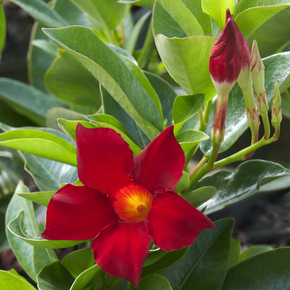
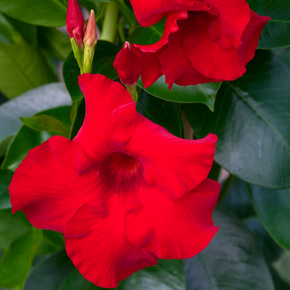
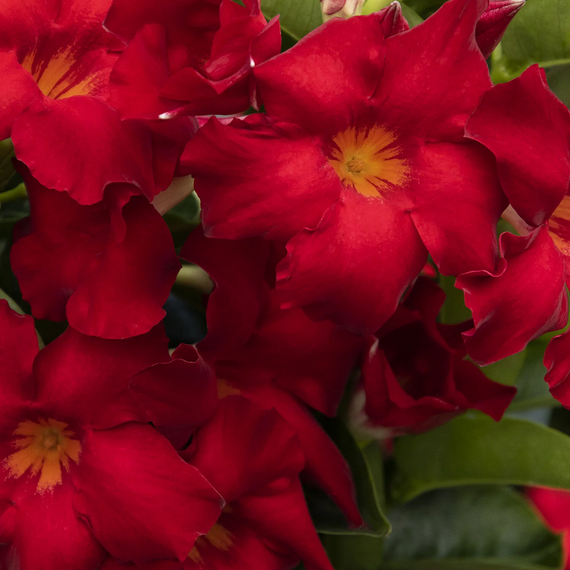
- Stunning deep velvet red, trumpet-shaped blooms with golden throats erupt from mid-spring all the way through late fall, delivering months of bold, uninterrupted tropical color.
- Uniquely bushy and vigorous habit grows as a cascading mound or can be trained up a trellis, fence, or pergola — thriving equally in hanging baskets, patio containers, or garden beds.
- A magnet for hummingbirds and butterflies, this low-maintenance showstopper brings wildlife and dazzling color to patios, entryways, and outdoor living spaces all season long.
- Excellent drought tolerance once established, with glossy dark green foliage that remains attractive even when the plant is not in full bloom.
Tropical Breeze Velvet Red Mandevilla (Mandevilla x 'Tropical Breeze Velvet Red') is a breathtaking tropical vine prized for its extraordinarily rich, deep scarlet trumpet flowers adorned with warm golden throats that bloom abundantly from mid-spring through late fall against a backdrop of lustrous, dark green foliage. Part of the celebrated Tropical Breeze series, this particularly bushy and compact hybrid stands apart from traditional climbing mandevillas with its dense, mounding growth habit that looks spectacular spilling from large patio containers, hanging baskets, and window boxes, yet responds beautifully to training on a trellis, arbor, or garden fence when vertical interest is desired. Native to the tropical regions of South and Central America, this interspecific hybrid thrives in full sun to part shade and rewards gardeners with surprisingly good drought tolerance, making it an ideal choice for vibrant summer displays in Southern Oregon and Northern California landscapes. Its irresistible blooms attract hummingbirds and butterflies throughout the season, while its naturally tidy form requires minimal maintenance to look its best. In frost-free climates it can persist as an evergreen perennial, and in cooler regions it can be successfully overwintered indoors, making Tropical Breeze Velvet Red Mandevilla one of the most versatile and rewarding tropical accent plants available for warm-season gardening.
Plant Description
Tropical Breeze Velvet Red Mandevilla is a multi-stemmed, evergreen tropical vine with a distinctly bushy, shrub-like habit that sets it apart from traditional tall-climbing mandevillas. It produces bold, trumpet-shaped flowers in a deep velvet red with warm golden-yellow throats that contrast beautifully against its pointy, glossy dark green leaves. The plant blooms prolifically and continuously from mid-spring through late fall, making it one of the longest-blooming tropical accent plants available. Its medium-textured foliage provides an attractive, lush appearance even between bloom flushes. Unlike many of its climbing relatives, this variety naturally forms a dense, rounded mound, though it can be coaxed upward with support. The milky sap common to the Apocynaceae family is present in this plant, so gardeners should handle it with care and wear gloves when pruning.
Mature Size
In its preferred tropical habitat and with optimal conditions and structural support, Tropical Breeze Velvet Red Mandevilla can reach up to 10 feet in height with a spread of approximately 24 to 48 inches. When grown as a seasonal annual in containers or garden beds in temperate climates such as Southern Oregon and Northern California, it typically forms a lush mounding or cascading plant 2 to 4 feet tall and wide over a single growing season. Its spreading, spilling habit makes it ideally suited as a "thriller" or "spiller" element in large mixed container arrangements or as a standalone specimen in a generously sized pot.
Hardiness Zones and Climate
Tropical Breeze Velvet Red Mandevilla is a tropical plant, perennial only in USDA Hardiness Zones 10 and 11, where it is evergreen and blooms year-round in frost-free conditions. In Zones 9 and below — which includes most of Southern Oregon and Northern California — it is best treated as a warm-season annual or overwintered indoors. The plant is sensitive to cold and should not be exposed to temperatures below 50°F for extended periods. Even a light frost can damage or kill the plant if it is left unprotected outdoors. It thrives during the warm summers of the Pacific Coast and inland valleys, making it an excellent patio and garden performer from late spring through fall. Move plants indoors before the first frost for best results.
Sunlight Requirements
For the most abundant flowering, plant Tropical Breeze Velvet Red Mandevilla in a location that receives full sun to part shade, ideally 6 to 8 hours of direct sunlight per day. While it can tolerate some afternoon shade — which can be beneficial during the hottest days of summer in inland areas — insufficient sunlight will noticeably reduce flowering. A spot that receives bright morning sun with some shelter from the most intense afternoon heat is often ideal, especially in hot interior climates. Container-grown plants can be positioned to take advantage of optimal sun exposure and moved as needed throughout the season.
Watering Guide
Mandevilla Tropical Breeze Velvet Red prefers consistently moist but never waterlogged soil. Water thoroughly when the top 1 to 2 inches of soil feel dry to the touch, then allow it to approach that level of dryness again before the next watering. Overwatering is one of the most common mistakes and can quickly lead to root rot, so always ensure excellent drainage in both containers and garden beds. During the peak heat of summer, more frequent watering may be needed — container-grown plants in particular can dry out quickly in warm, sunny conditions. Avoid letting the plant sit in standing water in saucers or trays. During winter dormancy indoors, reduce watering significantly, providing just enough moisture to keep the roots from desiccating completely.
Soil and pH Preferences
Tropical Breeze Velvet Red Mandevilla thrives in a rich, well-draining, loamy soil with a slightly acidic to neutral pH, ideally between 6.0 and 7.0. It is not particularly fussy about soil type as long as drainage is adequate. In garden beds, amending heavy clay soils with compost or aged organic matter will improve both drainage and nutrient content. For container plantings, use a high-quality, well-draining potting mix formulated for tropicals or add perlite to a standard potting mix to improve drainage and aeration. Placing a layer of gravel or broken pottery shards at the bottom of containers can also help prevent waterlogging at the root zone.
Fertilizing
Regular feeding is essential to sustain the long bloom season of Tropical Breeze Velvet Red Mandevilla. Apply a balanced, bloom-boosting fertilizer — one with a higher middle number (phosphorus) such as a 10-30-10 or similar formulation — every two weeks throughout the active growing season from spring through early fall. A slow-release granular fertilizer worked into the soil or potting mix at the beginning of the season can also be used as a foundation, supplemented with liquid feedings as needed. Avoid over-fertilizing with high-nitrogen formulas, as this encourages lush leafy growth at the expense of flowers. Always water the plant thoroughly before and after applying any fertilizer to prevent root burn. Stop feeding approximately six weeks before bringing the plant indoors for winter.
Pruning and Maintenance
Tropical Breeze Velvet Red Mandevilla is a low-maintenance plant that requires only occasional attention to stay at its best. Deadheading spent blooms encourages continuous flower production throughout the season. Light tip pruning or pinching back long, wayward stems at any time during the growing season promotes a fuller, bushier shape and more branching. For plants being overwintered, cut the plant back hard — to within 10 to 12 inches of the base — before bringing it indoors in the fall. This dramatic pruning is actually beneficial and helps the plant conserve energy through dormancy. In early spring, remove any dead or weak stems and tidy up the plant before moving it back outdoors. Always wear gloves when pruning, as the milky sap can be irritating to skin and is toxic if ingested.
Planting Instructions
For best results, plant Tropical Breeze Velvet Red Mandevilla outdoors only after all danger of frost has passed and overnight temperatures are consistently above 55°F. Choose a sunny, sheltered location protected from strong winds, which can damage the vines. When transplanting into a container, select a pot that is at least 12 to 16 inches in diameter with drainage holes, and fill with a premium, well-draining potting mix. When planting in a garden bed, prepare the soil by working in compost and ensuring good drainage. Set the plant at the same depth it was growing in its nursery container. Water thoroughly after planting. If you plan to train the plant upward on a trellis or support, install the support structure at planting time to avoid disturbing the root system later. Allow the plant to acclimate gradually to full outdoor sun if it has been kept in lower-light conditions.
Container Growing
Tropical Breeze Velvet Red Mandevilla is exceptionally well-suited to container growing and is one of the finest tropical plants available for patio and deck displays. Its naturally mounding and cascading habit makes it a standout "spiller" in large combination containers, paired beautifully with upright tropicals like canna or elephant ears as the "thriller" and colorful annuals as "fillers." It is also dramatic enough to be grown as a solitary specimen in a large decorative pot. Use a container of at least 12 to 16 inches in diameter with good drainage holes, and fill with a premium potting mix blended with perlite for added drainage. Container plants may need more frequent watering and fertilizing than in-ground plants since pots dry out faster and nutrients deplete more quickly. The portability of containers is an added advantage — plants can be relocated to optimize sun exposure or moved indoors at the end of the season to preserve them through winter.
Overwintering Indoors
In climates where winter temperatures drop below 50°F, Tropical Breeze Velvet Red Mandevilla can be successfully saved from year to year by overwintering it indoors. Before the first frost, inspect the plant carefully for pests and treat any infestations with neem oil or insecticidal soap to prevent bringing pests inside. Prune the plant back hard to approximately 10 to 12 inches from the base. Move the plant to a cool, dimly lit location such as a basement or garage where temperatures remain between 45°F and 60°F — cool enough to encourage dormancy but never freezing. Water only minimally during dormancy, just enough to keep the roots from completely drying out. The plant may drop most or all of its leaves, which is perfectly normal. In mid-spring, move the plant to a warm, bright location and begin watering more regularly. Once new growth appears and outdoor temperatures are consistently above 55°F at night, gradually reintroduce the plant to outdoor conditions before placing it in its final summer position.
Landscape Uses
The versatility of Tropical Breeze Velvet Red Mandevilla makes it suitable for a wide range of landscape applications. Its cascading mounding habit makes it ideal as a dramatic container specimen on patios, decks, balconies, and entryways. When supported with a trellis, obelisk, garden stake, or fence, it can add striking vertical interest to courtyard gardens, entry gardens, and outdoor living spaces. It works beautifully espalied along walls or trained up columns and porch posts. Use it in hanging baskets for a waterfall of rich red blooms. In garden beds in frost-free zones, it can serve as a vigorous ground cover, informal hedge, or screening plant. Its bold flower color and tropical appearance make it an excellent anchor or focal point in warm-season mixed planting schemes.
Wildlife Value
The large, nectar-rich trumpet flowers of Tropical Breeze Velvet Red Mandevilla are highly attractive to hummingbirds, which are drawn to the vivid red blooms throughout the growing season. Butterflies and bees also visit the flowers regularly, adding lively pollinator activity to the garden. The deep red color is particularly irresistible to hummingbirds, making this plant an excellent choice for gardeners who want to invite these charming visitors to their patio or outdoor space. The plant is generally not a preferred food source for deer, making it a reasonable option for gardens with occasional deer pressure, though no plant can be considered fully deer-proof.
Pests and Diseases
Tropical Breeze Velvet Red Mandevilla is generally robust, but like all tropical plants, it can be susceptible to certain pests and diseases, especially in humid conditions or when stressed. Common pests include:
- Aphids: Small soft-bodied insects that cluster on new growth; remove with a strong spray of water or treat with insecticidal soap or neem oil.
- Spider Mites: Tiny pests that appear in fine webbing, especially during hot, dry conditions; treat with neem oil or miticide and increase humidity.
- Mealybugs: White, cottony insects found in leaf axils and under foliage; often indicate low humidity or inconsistent watering; treat with neem oil or rubbing alcohol on a cotton swab.
- Scale Insects: Appear as brown or tan bumps on stems; treat with horticultural oil or neem oil.
- Whiteflies: Small flying insects that feed on leaf undersides; treat with yellow sticky traps or insecticidal soap.
In terms of disease, fungal issues such as powdery mildew or root rot can develop in conditions of poor air circulation, excessive moisture, or waterlogged soil. Ensure good drainage, avoid overhead watering, and space plants to promote air movement. Always inspect plants thoroughly before overwintering indoors to prevent bringing pests into the home.
Toxicity and Safety
Tropical Breeze Velvet Red Mandevilla is an interspecific hybrid in the Apocynaceae (dogbane) family, and all parts of the plant are considered toxic to humans, dogs, cats, and other animals if ingested. The milky latex sap can also cause skin irritation in sensitive individuals. Gardeners should take the following precautions:
- Plant in locations that are inaccessible to young children and pets.
- Wear gloves when pruning, pinching, or handling the plant, especially when the stems are cut and sap is exposed.
- Wash hands thoroughly after handling the plant.
- If ingestion is suspected in a child or pet, contact Poison Control or a veterinarian immediately.
Companion Plants
Tropical Breeze Velvet Red Mandevilla pairs beautifully with a wide range of tropical and warm-season plants that share its sun and moisture preferences. Consider these companion combinations:
- Canna Lily: Bold, upright foliage and vibrant flowers complement the cascading habit of the mandevilla in large containers.
- Elephant Ears (Alocasia or Colocasia): Large, dramatic tropical foliage provides a lush backdrop that makes the red blooms pop.
- Angelonia: Upright spikes of soft purple or white blooms contrast nicely in color and texture.
- Lantana: A sun-loving, pollinator-friendly companion with contrasting multi-colored blooms.
- Sweet Potato Vine: Trailing chartreuse or deep burgundy foliage provides striking color contrast as a spiller around the mandevilla.
- Pentas: A hummingbird and butterfly favorite that blooms in complementary shades of red, pink, or white.
- Bougainvillea: For in-ground planting in frost-free areas, the papery blooms of bougainvillea create a dramatic tropical display alongside climbing mandevilla.
- Stunning deep velvet red, trumpet-shaped blooms with golden throats erupt from mid-spring all the way through late fall, delivering months of bold, uninterrupted tropical color.
- Uniquely bushy and vigorous habit grows as a cascading mound or can be trained up a trellis, fence, or pergola — thriving equally in hanging baskets, patio containers, or garden beds.
- A magnet for hummingbirds and butterflies, this low-maintenance showstopper brings wildlife and dazzling color to patios, entryways, and outdoor living spaces all season long.
- Excellent drought tolerance once established, with glossy dark green foliage that remains attractive even when the plant is not in full bloom.
Tropical Breeze Velvet Red Mandevilla (Mandevilla x 'Tropical Breeze Velvet Red') is a breathtaking tropical vine prized for its extraordinarily rich, deep scarlet trumpet flowers adorned with warm golden throats that bloom abundantly from mid-spring through late fall against a backdrop of lustrous, dark green foliage. Part of the celebrated Tropical Breeze series, this particularly bushy and compact hybrid stands apart from traditional climbing mandevillas with its dense, mounding growth habit that looks spectacular spilling from large patio containers, hanging baskets, and window boxes, yet responds beautifully to training on a trellis, arbor, or garden fence when vertical interest is desired. Native to the tropical regions of South and Central America, this interspecific hybrid thrives in full sun to part shade and rewards gardeners with surprisingly good drought tolerance, making it an ideal choice for vibrant summer displays in Southern Oregon and Northern California landscapes. Its irresistible blooms attract hummingbirds and butterflies throughout the season, while its naturally tidy form requires minimal maintenance to look its best. In frost-free climates it can persist as an evergreen perennial, and in cooler regions it can be successfully overwintered indoors, making Tropical Breeze Velvet Red Mandevilla one of the most versatile and rewarding tropical accent plants available for warm-season gardening.
Plant Description
Tropical Breeze Velvet Red Mandevilla is a multi-stemmed, evergreen tropical vine with a distinctly bushy, shrub-like habit that sets it apart from traditional tall-climbing mandevillas. It produces bold, trumpet-shaped flowers in a deep velvet red with warm golden-yellow throats that contrast beautifully against its pointy, glossy dark green leaves. The plant blooms prolifically and continuously from mid-spring through late fall, making it one of the longest-blooming tropical accent plants available. Its medium-textured foliage provides an attractive, lush appearance even between bloom flushes. Unlike many of its climbing relatives, this variety naturally forms a dense, rounded mound, though it can be coaxed upward with support. The milky sap common to the Apocynaceae family is present in this plant, so gardeners should handle it with care and wear gloves when pruning.
Mature Size
In its preferred tropical habitat and with optimal conditions and structural support, Tropical Breeze Velvet Red Mandevilla can reach up to 10 feet in height with a spread of approximately 24 to 48 inches. When grown as a seasonal annual in containers or garden beds in temperate climates such as Southern Oregon and Northern California, it typically forms a lush mounding or cascading plant 2 to 4 feet tall and wide over a single growing season. Its spreading, spilling habit makes it ideally suited as a "thriller" or "spiller" element in large mixed container arrangements or as a standalone specimen in a generously sized pot.
Hardiness Zones and Climate
Tropical Breeze Velvet Red Mandevilla is a tropical plant, perennial only in USDA Hardiness Zones 10 and 11, where it is evergreen and blooms year-round in frost-free conditions. In Zones 9 and below — which includes most of Southern Oregon and Northern California — it is best treated as a warm-season annual or overwintered indoors. The plant is sensitive to cold and should not be exposed to temperatures below 50°F for extended periods. Even a light frost can damage or kill the plant if it is left unprotected outdoors. It thrives during the warm summers of the Pacific Coast and inland valleys, making it an excellent patio and garden performer from late spring through fall. Move plants indoors before the first frost for best results.
Sunlight Requirements
For the most abundant flowering, plant Tropical Breeze Velvet Red Mandevilla in a location that receives full sun to part shade, ideally 6 to 8 hours of direct sunlight per day. While it can tolerate some afternoon shade — which can be beneficial during the hottest days of summer in inland areas — insufficient sunlight will noticeably reduce flowering. A spot that receives bright morning sun with some shelter from the most intense afternoon heat is often ideal, especially in hot interior climates. Container-grown plants can be positioned to take advantage of optimal sun exposure and moved as needed throughout the season.
Watering Guide
Mandevilla Tropical Breeze Velvet Red prefers consistently moist but never waterlogged soil. Water thoroughly when the top 1 to 2 inches of soil feel dry to the touch, then allow it to approach that level of dryness again before the next watering. Overwatering is one of the most common mistakes and can quickly lead to root rot, so always ensure excellent drainage in both containers and garden beds. During the peak heat of summer, more frequent watering may be needed — container-grown plants in particular can dry out quickly in warm, sunny conditions. Avoid letting the plant sit in standing water in saucers or trays. During winter dormancy indoors, reduce watering significantly, providing just enough moisture to keep the roots from desiccating completely.
Soil and pH Preferences
Tropical Breeze Velvet Red Mandevilla thrives in a rich, well-draining, loamy soil with a slightly acidic to neutral pH, ideally between 6.0 and 7.0. It is not particularly fussy about soil type as long as drainage is adequate. In garden beds, amending heavy clay soils with compost or aged organic matter will improve both drainage and nutrient content. For container plantings, use a high-quality, well-draining potting mix formulated for tropicals or add perlite to a standard potting mix to improve drainage and aeration. Placing a layer of gravel or broken pottery shards at the bottom of containers can also help prevent waterlogging at the root zone.
Fertilizing
Regular feeding is essential to sustain the long bloom season of Tropical Breeze Velvet Red Mandevilla. Apply a balanced, bloom-boosting fertilizer — one with a higher middle number (phosphorus) such as a 10-30-10 or similar formulation — every two weeks throughout the active growing season from spring through early fall. A slow-release granular fertilizer worked into the soil or potting mix at the beginning of the season can also be used as a foundation, supplemented with liquid feedings as needed. Avoid over-fertilizing with high-nitrogen formulas, as this encourages lush leafy growth at the expense of flowers. Always water the plant thoroughly before and after applying any fertilizer to prevent root burn. Stop feeding approximately six weeks before bringing the plant indoors for winter.
Pruning and Maintenance
Tropical Breeze Velvet Red Mandevilla is a low-maintenance plant that requires only occasional attention to stay at its best. Deadheading spent blooms encourages continuous flower production throughout the season. Light tip pruning or pinching back long, wayward stems at any time during the growing season promotes a fuller, bushier shape and more branching. For plants being overwintered, cut the plant back hard — to within 10 to 12 inches of the base — before bringing it indoors in the fall. This dramatic pruning is actually beneficial and helps the plant conserve energy through dormancy. In early spring, remove any dead or weak stems and tidy up the plant before moving it back outdoors. Always wear gloves when pruning, as the milky sap can be irritating to skin and is toxic if ingested.
Planting Instructions
For best results, plant Tropical Breeze Velvet Red Mandevilla outdoors only after all danger of frost has passed and overnight temperatures are consistently above 55°F. Choose a sunny, sheltered location protected from strong winds, which can damage the vines. When transplanting into a container, select a pot that is at least 12 to 16 inches in diameter with drainage holes, and fill with a premium, well-draining potting mix. When planting in a garden bed, prepare the soil by working in compost and ensuring good drainage. Set the plant at the same depth it was growing in its nursery container. Water thoroughly after planting. If you plan to train the plant upward on a trellis or support, install the support structure at planting time to avoid disturbing the root system later. Allow the plant to acclimate gradually to full outdoor sun if it has been kept in lower-light conditions.
Container Growing
Tropical Breeze Velvet Red Mandevilla is exceptionally well-suited to container growing and is one of the finest tropical plants available for patio and deck displays. Its naturally mounding and cascading habit makes it a standout "spiller" in large combination containers, paired beautifully with upright tropicals like canna or elephant ears as the "thriller" and colorful annuals as "fillers." It is also dramatic enough to be grown as a solitary specimen in a large decorative pot. Use a container of at least 12 to 16 inches in diameter with good drainage holes, and fill with a premium potting mix blended with perlite for added drainage. Container plants may need more frequent watering and fertilizing than in-ground plants since pots dry out faster and nutrients deplete more quickly. The portability of containers is an added advantage — plants can be relocated to optimize sun exposure or moved indoors at the end of the season to preserve them through winter.
Overwintering Indoors
In climates where winter temperatures drop below 50°F, Tropical Breeze Velvet Red Mandevilla can be successfully saved from year to year by overwintering it indoors. Before the first frost, inspect the plant carefully for pests and treat any infestations with neem oil or insecticidal soap to prevent bringing pests inside. Prune the plant back hard to approximately 10 to 12 inches from the base. Move the plant to a cool, dimly lit location such as a basement or garage where temperatures remain between 45°F and 60°F — cool enough to encourage dormancy but never freezing. Water only minimally during dormancy, just enough to keep the roots from completely drying out. The plant may drop most or all of its leaves, which is perfectly normal. In mid-spring, move the plant to a warm, bright location and begin watering more regularly. Once new growth appears and outdoor temperatures are consistently above 55°F at night, gradually reintroduce the plant to outdoor conditions before placing it in its final summer position.
Landscape Uses
The versatility of Tropical Breeze Velvet Red Mandevilla makes it suitable for a wide range of landscape applications. Its cascading mounding habit makes it ideal as a dramatic container specimen on patios, decks, balconies, and entryways. When supported with a trellis, obelisk, garden stake, or fence, it can add striking vertical interest to courtyard gardens, entry gardens, and outdoor living spaces. It works beautifully espalied along walls or trained up columns and porch posts. Use it in hanging baskets for a waterfall of rich red blooms. In garden beds in frost-free zones, it can serve as a vigorous ground cover, informal hedge, or screening plant. Its bold flower color and tropical appearance make it an excellent anchor or focal point in warm-season mixed planting schemes.
Wildlife Value
The large, nectar-rich trumpet flowers of Tropical Breeze Velvet Red Mandevilla are highly attractive to hummingbirds, which are drawn to the vivid red blooms throughout the growing season. Butterflies and bees also visit the flowers regularly, adding lively pollinator activity to the garden. The deep red color is particularly irresistible to hummingbirds, making this plant an excellent choice for gardeners who want to invite these charming visitors to their patio or outdoor space. The plant is generally not a preferred food source for deer, making it a reasonable option for gardens with occasional deer pressure, though no plant can be considered fully deer-proof.
Pests and Diseases
Tropical Breeze Velvet Red Mandevilla is generally robust, but like all tropical plants, it can be susceptible to certain pests and diseases, especially in humid conditions or when stressed. Common pests include:
- Aphids: Small soft-bodied insects that cluster on new growth; remove with a strong spray of water or treat with insecticidal soap or neem oil.
- Spider Mites: Tiny pests that appear in fine webbing, especially during hot, dry conditions; treat with neem oil or miticide and increase humidity.
- Mealybugs: White, cottony insects found in leaf axils and under foliage; often indicate low humidity or inconsistent watering; treat with neem oil or rubbing alcohol on a cotton swab.
- Scale Insects: Appear as brown or tan bumps on stems; treat with horticultural oil or neem oil.
- Whiteflies: Small flying insects that feed on leaf undersides; treat with yellow sticky traps or insecticidal soap.
In terms of disease, fungal issues such as powdery mildew or root rot can develop in conditions of poor air circulation, excessive moisture, or waterlogged soil. Ensure good drainage, avoid overhead watering, and space plants to promote air movement. Always inspect plants thoroughly before overwintering indoors to prevent bringing pests into the home.
Toxicity and Safety
Tropical Breeze Velvet Red Mandevilla is an interspecific hybrid in the Apocynaceae (dogbane) family, and all parts of the plant are considered toxic to humans, dogs, cats, and other animals if ingested. The milky latex sap can also cause skin irritation in sensitive individuals. Gardeners should take the following precautions:
- Plant in locations that are inaccessible to young children and pets.
- Wear gloves when pruning, pinching, or handling the plant, especially when the stems are cut and sap is exposed.
- Wash hands thoroughly after handling the plant.
- If ingestion is suspected in a child or pet, contact Poison Control or a veterinarian immediately.
Companion Plants
Tropical Breeze Velvet Red Mandevilla pairs beautifully with a wide range of tropical and warm-season plants that share its sun and moisture preferences. Consider these companion combinations:
- Canna Lily: Bold, upright foliage and vibrant flowers complement the cascading habit of the mandevilla in large containers.
- Elephant Ears (Alocasia or Colocasia): Large, dramatic tropical foliage provides a lush backdrop that makes the red blooms pop.
- Angelonia: Upright spikes of soft purple or white blooms contrast nicely in color and texture.
- Lantana: A sun-loving, pollinator-friendly companion with contrasting multi-colored blooms.
- Sweet Potato Vine: Trailing chartreuse or deep burgundy foliage provides striking color contrast as a spiller around the mandevilla.
- Pentas: A hummingbird and butterfly favorite that blooms in complementary shades of red, pink, or white.
- Bougainvillea: For in-ground planting in frost-free areas, the papery blooms of bougainvillea create a dramatic tropical display alongside climbing mandevilla.