Zoom the image with the mouse
Sunvilla Giant Red Mandevilla - 1 Gallon
SKU:
2056320
UPC:
14949482780
$22.99
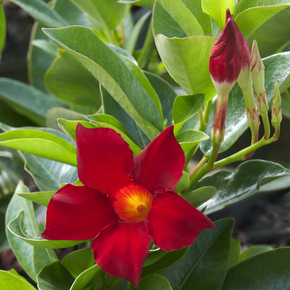
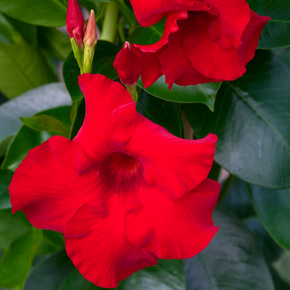
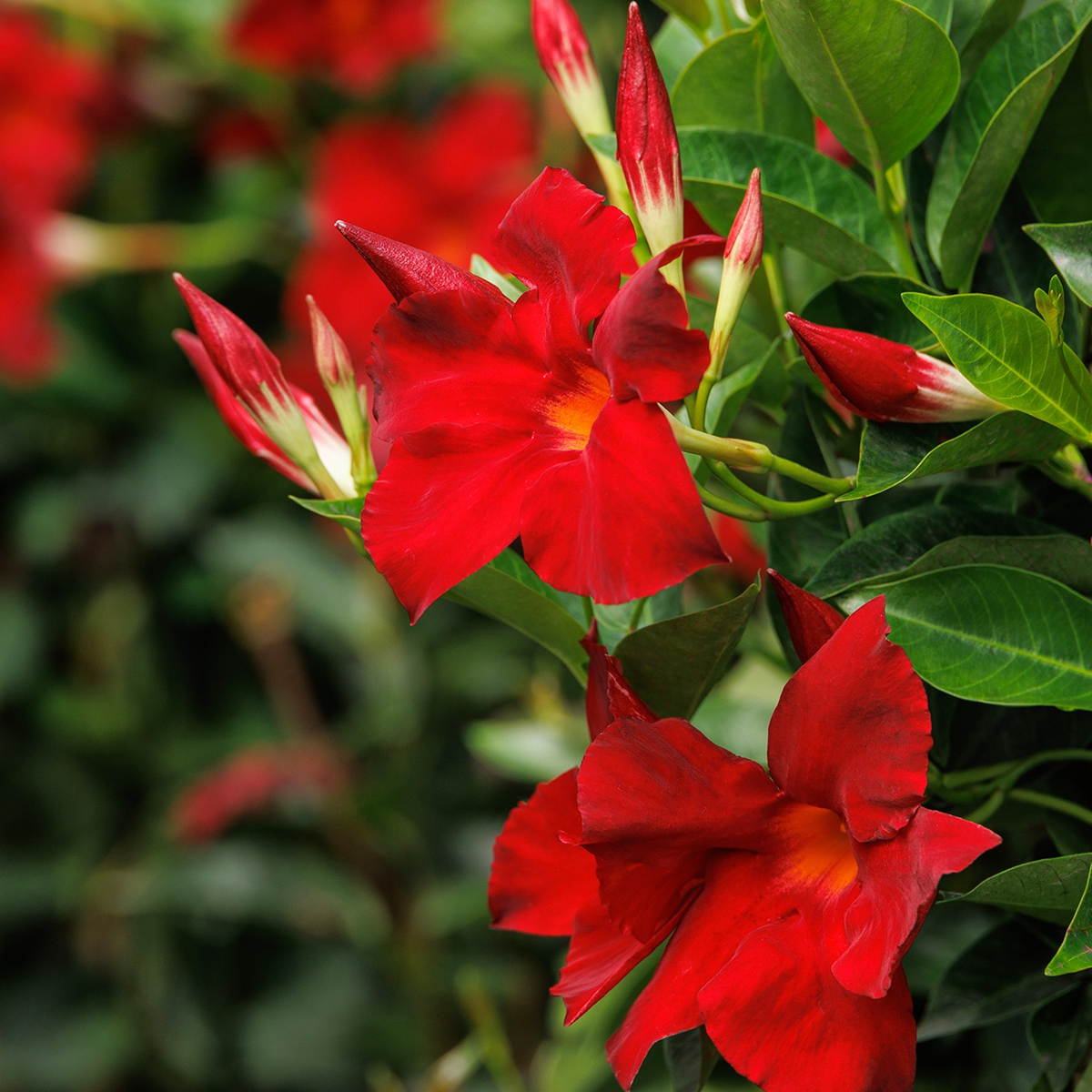
- Exceptionally large, vivid scarlet trumpet blooms with a bright yellow throat that hold their color without fading, flowering continuously from late spring through first frost.
- Vigorous climbing vine with rich, glossy dark green foliage that eagerly scales trellises, arbors, pergolas, and fences to create a stunning tropical focal point.
- A proven hummingbird and pollinator magnet — the wide, nectar-rich flowers draw hummingbirds, native bumblebees, and butterflies all season long.
- Thrives in containers or in-ground garden beds, making it a versatile showpiece for patios, decks, entryways, and warm-climate landscapes alike.
Mandevilla Sunvilla Giant Red is a breathtaking tropical climbing vine that delivers non-stop, show-stopping color from early summer all the way to the first frost of autumn. Its oversized, flared trumpet-shaped flowers are a deep, intense crimson-red accented by a warm golden-yellow throat, and unlike many vines, the blooms maintain their vibrant hue without fading as they age. The vigorous stems are draped in lustrous, deep green foliage that provides an elegant backdrop for the spectacular floral display. A fast-growing climber by nature, this variety eagerly twines up trellises, arbors, pergolas, obelisks, and fence rails, adding dramatic vertical interest wherever it is planted. Equally at home in a large patio container as it is trained along a garden structure, Mandevilla Sunvilla Giant Red is a go-to choice for gardeners across Southern Oregon and Northern California who want bold tropical character with relatively low maintenance. Hardy as a perennial in USDA Zones 10-11, it is grown as a striking warm-season annual or overwintered indoors in cooler regions, making it accessible and rewarding for gardeners in virtually any climate. Its rich nectar supply attracts hummingbirds and pollinators throughout the season, further enhancing the biodiversity and beauty of any garden setting.
Plant Description
Mandevilla Sunvilla Giant Red is a tropical evergreen vine belonging to the family Apocynaceae, native to the tropical and subtropical regions of Central and South America. This cultivar is prized for its exceptionally large, trumpet-shaped flowers in a rich, saturated red with a contrasting bright yellow throat. The blooms can reach up to 4-5 inches in diameter and are produced prolifically along vigorous twining stems clothed in glossy, dark green oval leaves. Unlike some red-flowered varieties, the blooms on Sunvilla Giant Red are notably long-lasting and do not fade as they mature, maintaining their vivid color throughout their display. The plant's lush, tropical appearance and continuous floral performance make it one of the most eye-catching vines available for warm-season garden use.
Mature Size
| Characteristic | Details |
|---|---|
| Vine Length (Seasonal Growth) | Typically 24-36 inches of new growth per season in containers; can climb 8-10 feet or more when established in-ground with support |
| Long-Term Height (In-Ground, Warm Climates) | Can reach up to 15-20 feet over multiple years in frost-free zones |
| Spread | 3-6 feet, depending on support structure and growing conditions |
| Growth Rate | Fast; vigorous twining habit during warm growing season |
| Flower Size | Up to 4-5 inches in diameter |
Hardiness Zones and Climate
Mandevilla Sunvilla Giant Red is winter-hardy as a perennial in USDA Hardiness Zones 10-11, where it can survive year-round outdoors in mild, frost-free conditions. In Zones 9 and below, it is widely grown as a warm-season annual, providing a full season of spectacular bloom before temperatures drop. In the milder areas of Southern Oregon and Northern California where overnight temperatures remain above 50°F through most of the growing season, this vine performs exceptionally well. It is highly sensitive to frost — temperatures at or below 32°F will damage or kill the plant. In cooler zones, plants can be successfully overwintered indoors and replanted outdoors the following spring. Ideal growing temperatures range between 65-85°F, and the plant does not tolerate prolonged cold below 50°F without stress.
Sunlight Requirements
Mandevilla Sunvilla Giant Red is a sun-loving vine that performs best with a minimum of 6 to 8 hours of direct sunlight each day. Full sun exposure encourages the most prolific blooming and produces the densest, most robust vine growth. In regions with very intense afternoon heat, some light afternoon shade can help prevent leaf scorch while still maintaining strong flowering. When grown in containers indoors or on a covered porch, place the plant as close as possible to the brightest available light source — a south- or west-facing exposure is ideal. Insufficient light leads to reduced flower production, leggy growth, and pallid foliage, so choosing the sunniest available spot is key to getting the best performance from this vine.
Soil and pH Preferences
This vine thrives in well-draining soil that is rich in organic matter. It does not tolerate heavy, compacted, or waterlogged soil, which can quickly lead to root rot. A slightly acidic to neutral soil pH between 5.5 and 6.5 is ideal. For in-ground planting, work generous amounts of finished compost or well-aged organic matter into the planting area to improve both drainage and fertility. For container growing, use a high-quality, lightweight potting mix formulated for flowering tropical plants or amend a standard potting mix with perlite or coarse sand to enhance drainage and aeration. Ensure that all containers have adequate drainage holes to allow excess water to escape freely. Avoid soils that remain persistently moist, as Mandevilla roots need periods of slight drying between waterings to remain healthy.
Watering Guide
Consistent but careful watering is essential for Mandevilla Sunvilla Giant Red. Water deeply whenever the top inch of soil feels dry to the touch, allowing the water to soak through to the root zone. Between waterings, allow the soil surface to partially dry out before watering again — this balance of moisture and drying is critical to prevent root rot while sustaining vigorous growth and flowering. During the height of summer, especially for container-grown plants, more frequent watering may be necessary since pots dry out much faster than garden beds. Reduce watering significantly in fall and winter when the plant's growth slows or when it is being overwintered indoors. Always ensure that containers drain freely and never allow the plant to sit in standing water. Using lukewarm water is preferable to cold water, particularly for plants transitioning indoors, to avoid temperature shock to the roots.
Fertilizing
Regular feeding throughout the growing season is key to sustaining Mandevilla Sunvilla Giant Red's vigorous growth and continuous, large-flowered display. Apply a balanced, water-soluble fertilizer such as a 10-10-10 formulation every two to four weeks from spring through late summer. For maximum flower production, consider alternating with or switching to a bloom-booster fertilizer higher in phosphorus (the middle number), which specifically encourages prolific bud set and flowering. Slow-release granular fertilizers can also be worked into the soil at the start of the season for a steady, sustained nutrient supply. Avoid over-fertilizing with nitrogen-heavy formulas, as excess nitrogen promotes lush foliage at the expense of blooms. Cease fertilizing in fall as temperatures cool and growth slows, and do not fertilize during winter dormancy or storage.
Planting Instructions
- Wait until nighttime temperatures are consistently above 50°F before planting outdoors — Mandevilla is extremely cold-sensitive and should not be exposed to frost or chilling temperatures.
- Select a sunny location with at least 6-8 hours of direct sunlight and install your trellis, arbor, or other support structure before planting to avoid disturbing roots later.
- For in-ground planting, loosen the soil in a generous area and incorporate compost or aged organic matter to improve drainage and fertility.
- Dig a planting hole twice as wide as the root ball and approximately the same depth. Avoid planting deeper than the original soil level on the stem.
- Water the plant thoroughly a few hours before transplanting to reduce transplant stress. Gently remove the plant from its container, loosening any circling or compacted roots.
- Place the plant in the hole, backfill with amended soil, and firm gently around the base to remove air pockets. Water deeply immediately after planting.
- Apply a 2-3 inch layer of organic mulch around the base to retain moisture and regulate soil temperature, keeping mulch a few inches away from the stem.
- For containers, use a pot at least 12-14 inches in diameter with ample drainage holes. Fill with a well-draining tropical potting mix and install a trellis or support stake at planting time.
- Gently guide young vines toward their support structure and loosely secure with soft plant ties or twine, checking and adjusting regularly as the vine grows.
Pruning and Maintenance
Mandevilla Sunvilla Giant Red benefits from regular, light pruning to maintain its desired shape and encourage bushier, more floriferous growth. The best time for major pruning is in late winter or very early spring, just before new growth begins — cutting back up to one-third of the plant's overall height at this time rejuvenates the vine and promotes a vigorous flush of new stems and flowers for the coming season. Throughout the growing season, light tip pruning can be performed at any time to control size, improve form, or remove any dead, damaged, or excessively leggy growth. Deadheading spent flowers encourages the plant to redirect energy into producing new buds rather than setting seed, keeping the floral display continuous and fresh. When pruning, always use clean, sharp pruning shears and wear gloves, as the stems produce a milky latex sap that can be mildly irritating to skin and is toxic if ingested.
Container Growing
Mandevilla Sunvilla Giant Red is one of the finest choices for patio and deck container gardening, bringing bold tropical drama to any outdoor living space. Select a container at least 12-14 inches in diameter with multiple drainage holes to accommodate root development and ensure proper drainage. Use a premium, lightweight potting mix blended with perlite or coarse sand for ideal drainage and aeration. Install a trellis, obelisk, or bamboo stakes directly in the container at planting time to give the vine vertical support. Place the container in the warmest, sunniest spot available. Container plants require more frequent watering than in-ground plants as the soil dries out faster — check moisture daily during hot weather. Feed container-grown plants every two weeks during the growing season with a balanced liquid fertilizer. At the end of the season, containers can be brought indoors for overwintering, which extends the life of the plant and saves the cost of replacing it each year.
Overwintering Indoors
In climates where frost is expected, Mandevilla Sunvilla Giant Red can be successfully overwintered indoors and replanted outside the following spring. Before bringing the plant in, prune it back to roughly 12 inches from the base — this may look drastic, but it reduces the mess of leaf drop indoors and encourages vigorous regrowth in spring. Move the plant inside before temperatures drop below 50°F. Store it in a cool but frost-free location such as a basement, garage, or spare room where temperatures stay between 45-60°F. Reduce watering dramatically during dormancy, providing just enough moisture to keep the roots from completely drying out. Do not fertilize during winter storage. In mid-spring, move the plant to a bright, warm location and gradually increase watering as new growth resumes. Once nighttime temperatures are reliably above 50°F, harden the plant off by gradually reintroducing it to outdoor conditions over 7-10 days before placing it in its final outdoor location.
Landscape Uses
The bold tropical character of Mandevilla Sunvilla Giant Red makes it a versatile and high-impact plant in a variety of landscape applications. Its vigorous climbing habit makes it an outstanding choice for dressing up trellises, arbors, pergolas, fences, mailbox posts, and garden obelisks with season-long color. It is equally effective when allowed to drape over a fence or railing, creating a lush, cascading effect. In warm-climate gardens (Zones 10-11), it can be used as a living privacy screen or trained along boundary walls. On patios and decks, it shines as a dramatic container specimen, providing vertical interest and tropical flair. It can also be grouped with other tropical-looking container plants to create an immersive resort-style outdoor living space. For gardeners in Southern Oregon and Northern California, it performs best when planted after the last frost risk has passed in a sheltered, south-facing location that captures maximum sun and warmth through the summer months.
Companion Plants
Mandevilla Sunvilla Giant Red pairs beautifully with a wide range of plants that share its preference for full sun, warmth, and well-draining soil. For a lush tropical container combination, plant it as the vertical thriller at the center of a large pot and surround it with bold-textured fillers such as coleus, caladium, or begonias, then finish the edges with trailing plants like sweet potato vine, lobelia, or creeping Jenny to soften the container's rim. In garden borders, it combines strikingly with tropical-looking companions such as hibiscus, canna lilies, elephant ears, and ornamental bananas that echo its bold, exotic character. For color contrast, pair the rich red blooms with the silvery foliage of dusty miller, lamb's ear, or artemisia for an elegant, refined look. Lavender, petunia, and vinca are excellent annual companions that share similar sun and soil requirements and provide complementary color without competing for resources. Avoid pairing with water-loving plants such as papyrus or bog iris, as well as with drought-tolerant succulents and xeric plants that prefer dry conditions incompatible with Mandevilla's needs.
Wildlife Value
Mandevilla Sunvilla Giant Red is a magnet for beneficial wildlife, making it a valuable addition to pollinator-friendly gardens. The wide, flared trumpet-shaped flowers with their bright red color and rich nectar are particularly attractive to hummingbirds, which are drawn to the tubular bloom shape and vibrant hue. Native bumblebees are also frequent visitors, feeding on the abundant nectar throughout the blooming season. Butterflies, including various swallowtail and skipper species, are regularly attracted to the blooms as well. By incorporating Mandevilla Sunvilla Giant Red into patio containers, arbors, or garden borders, gardeners actively support local pollinator populations and contribute to the health of the surrounding ecosystem. Note: All parts of the plant contain a milky latex sap that is toxic if ingested by humans, dogs, or cats, so place containers thoughtfully in households with pets or small children.
Pests and Diseases
- Aphids: Small, soft-bodied insects that cluster on new growth and leaf undersides, causing curling and yellowing foliage. Control with a strong spray of water, insecticidal soap, or neem oil.
- Spider Mites: Thrive in hot, dry conditions and cause tiny yellow speckles (stippling) on leaves, sometimes accompanied by fine webbing. Increase humidity, rinse foliage regularly, and treat with neem oil or insecticidal soap as needed.
- Mealybugs: Appear as white, cottony clusters on stems and leaf nodes. Remove manually with a cotton swab dipped in rubbing alcohol, or apply neem oil to affected areas.
- Scale Insects: Small, shell-like bumps on stems that drain plant vigor. Treat with horticultural oil or insecticidal soap, and remove by hand where possible.
- Root Rot: Caused by overwatering or poorly draining soil, resulting in mushy roots, wilting, and yellowing leaves. Prevent by ensuring excellent drainage and allowing the top inch of soil to dry between waterings. Treat early cases by removing affected roots and repotting in fresh, dry mix.
- Powdery Mildew: White, powdery coating on foliage caused by humid conditions with poor air circulation. Improve airflow around the plant and treat with a fungicide or a diluted baking soda solution.
- Leaf Spot: Brown or yellow spots on foliage from fungal or bacterial infection. Remove affected leaves promptly, improve air circulation, and apply a suitable fungicide to prevent spread.
Toxicity and Safety
Mandevilla Sunvilla Giant Red contains a milky latex sap throughout all parts of the plant — stems, leaves, and roots — that is toxic if ingested by humans, dogs, or cats. Ingestion can cause gastrointestinal upset and other symptoms. Keep the plant out of reach of pets and small children, and always wear gloves when pruning or handling the stems to avoid skin irritation from the sap. If accidental ingestion occurs, contact Poison Control (US: 800-222-1222) or your veterinarian immediately. Despite this caution, the plant is perfectly safe to handle with normal garden gloves and poses no risk through casual contact with the foliage or flowers.
- Exceptionally large, vivid scarlet trumpet blooms with a bright yellow throat that hold their color without fading, flowering continuously from late spring through first frost.
- Vigorous climbing vine with rich, glossy dark green foliage that eagerly scales trellises, arbors, pergolas, and fences to create a stunning tropical focal point.
- A proven hummingbird and pollinator magnet — the wide, nectar-rich flowers draw hummingbirds, native bumblebees, and butterflies all season long.
- Thrives in containers or in-ground garden beds, making it a versatile showpiece for patios, decks, entryways, and warm-climate landscapes alike.
Mandevilla Sunvilla Giant Red is a breathtaking tropical climbing vine that delivers non-stop, show-stopping color from early summer all the way to the first frost of autumn. Its oversized, flared trumpet-shaped flowers are a deep, intense crimson-red accented by a warm golden-yellow throat, and unlike many vines, the blooms maintain their vibrant hue without fading as they age. The vigorous stems are draped in lustrous, deep green foliage that provides an elegant backdrop for the spectacular floral display. A fast-growing climber by nature, this variety eagerly twines up trellises, arbors, pergolas, obelisks, and fence rails, adding dramatic vertical interest wherever it is planted. Equally at home in a large patio container as it is trained along a garden structure, Mandevilla Sunvilla Giant Red is a go-to choice for gardeners across Southern Oregon and Northern California who want bold tropical character with relatively low maintenance. Hardy as a perennial in USDA Zones 10-11, it is grown as a striking warm-season annual or overwintered indoors in cooler regions, making it accessible and rewarding for gardeners in virtually any climate. Its rich nectar supply attracts hummingbirds and pollinators throughout the season, further enhancing the biodiversity and beauty of any garden setting.
Plant Description
Mandevilla Sunvilla Giant Red is a tropical evergreen vine belonging to the family Apocynaceae, native to the tropical and subtropical regions of Central and South America. This cultivar is prized for its exceptionally large, trumpet-shaped flowers in a rich, saturated red with a contrasting bright yellow throat. The blooms can reach up to 4-5 inches in diameter and are produced prolifically along vigorous twining stems clothed in glossy, dark green oval leaves. Unlike some red-flowered varieties, the blooms on Sunvilla Giant Red are notably long-lasting and do not fade as they mature, maintaining their vivid color throughout their display. The plant's lush, tropical appearance and continuous floral performance make it one of the most eye-catching vines available for warm-season garden use.
Mature Size
| Characteristic | Details |
|---|---|
| Vine Length (Seasonal Growth) | Typically 24-36 inches of new growth per season in containers; can climb 8-10 feet or more when established in-ground with support |
| Long-Term Height (In-Ground, Warm Climates) | Can reach up to 15-20 feet over multiple years in frost-free zones |
| Spread | 3-6 feet, depending on support structure and growing conditions |
| Growth Rate | Fast; vigorous twining habit during warm growing season |
| Flower Size | Up to 4-5 inches in diameter |
Hardiness Zones and Climate
Mandevilla Sunvilla Giant Red is winter-hardy as a perennial in USDA Hardiness Zones 10-11, where it can survive year-round outdoors in mild, frost-free conditions. In Zones 9 and below, it is widely grown as a warm-season annual, providing a full season of spectacular bloom before temperatures drop. In the milder areas of Southern Oregon and Northern California where overnight temperatures remain above 50°F through most of the growing season, this vine performs exceptionally well. It is highly sensitive to frost — temperatures at or below 32°F will damage or kill the plant. In cooler zones, plants can be successfully overwintered indoors and replanted outdoors the following spring. Ideal growing temperatures range between 65-85°F, and the plant does not tolerate prolonged cold below 50°F without stress.
Sunlight Requirements
Mandevilla Sunvilla Giant Red is a sun-loving vine that performs best with a minimum of 6 to 8 hours of direct sunlight each day. Full sun exposure encourages the most prolific blooming and produces the densest, most robust vine growth. In regions with very intense afternoon heat, some light afternoon shade can help prevent leaf scorch while still maintaining strong flowering. When grown in containers indoors or on a covered porch, place the plant as close as possible to the brightest available light source — a south- or west-facing exposure is ideal. Insufficient light leads to reduced flower production, leggy growth, and pallid foliage, so choosing the sunniest available spot is key to getting the best performance from this vine.
Soil and pH Preferences
This vine thrives in well-draining soil that is rich in organic matter. It does not tolerate heavy, compacted, or waterlogged soil, which can quickly lead to root rot. A slightly acidic to neutral soil pH between 5.5 and 6.5 is ideal. For in-ground planting, work generous amounts of finished compost or well-aged organic matter into the planting area to improve both drainage and fertility. For container growing, use a high-quality, lightweight potting mix formulated for flowering tropical plants or amend a standard potting mix with perlite or coarse sand to enhance drainage and aeration. Ensure that all containers have adequate drainage holes to allow excess water to escape freely. Avoid soils that remain persistently moist, as Mandevilla roots need periods of slight drying between waterings to remain healthy.
Watering Guide
Consistent but careful watering is essential for Mandevilla Sunvilla Giant Red. Water deeply whenever the top inch of soil feels dry to the touch, allowing the water to soak through to the root zone. Between waterings, allow the soil surface to partially dry out before watering again — this balance of moisture and drying is critical to prevent root rot while sustaining vigorous growth and flowering. During the height of summer, especially for container-grown plants, more frequent watering may be necessary since pots dry out much faster than garden beds. Reduce watering significantly in fall and winter when the plant's growth slows or when it is being overwintered indoors. Always ensure that containers drain freely and never allow the plant to sit in standing water. Using lukewarm water is preferable to cold water, particularly for plants transitioning indoors, to avoid temperature shock to the roots.
Fertilizing
Regular feeding throughout the growing season is key to sustaining Mandevilla Sunvilla Giant Red's vigorous growth and continuous, large-flowered display. Apply a balanced, water-soluble fertilizer such as a 10-10-10 formulation every two to four weeks from spring through late summer. For maximum flower production, consider alternating with or switching to a bloom-booster fertilizer higher in phosphorus (the middle number), which specifically encourages prolific bud set and flowering. Slow-release granular fertilizers can also be worked into the soil at the start of the season for a steady, sustained nutrient supply. Avoid over-fertilizing with nitrogen-heavy formulas, as excess nitrogen promotes lush foliage at the expense of blooms. Cease fertilizing in fall as temperatures cool and growth slows, and do not fertilize during winter dormancy or storage.
Planting Instructions
- Wait until nighttime temperatures are consistently above 50°F before planting outdoors — Mandevilla is extremely cold-sensitive and should not be exposed to frost or chilling temperatures.
- Select a sunny location with at least 6-8 hours of direct sunlight and install your trellis, arbor, or other support structure before planting to avoid disturbing roots later.
- For in-ground planting, loosen the soil in a generous area and incorporate compost or aged organic matter to improve drainage and fertility.
- Dig a planting hole twice as wide as the root ball and approximately the same depth. Avoid planting deeper than the original soil level on the stem.
- Water the plant thoroughly a few hours before transplanting to reduce transplant stress. Gently remove the plant from its container, loosening any circling or compacted roots.
- Place the plant in the hole, backfill with amended soil, and firm gently around the base to remove air pockets. Water deeply immediately after planting.
- Apply a 2-3 inch layer of organic mulch around the base to retain moisture and regulate soil temperature, keeping mulch a few inches away from the stem.
- For containers, use a pot at least 12-14 inches in diameter with ample drainage holes. Fill with a well-draining tropical potting mix and install a trellis or support stake at planting time.
- Gently guide young vines toward their support structure and loosely secure with soft plant ties or twine, checking and adjusting regularly as the vine grows.
Pruning and Maintenance
Mandevilla Sunvilla Giant Red benefits from regular, light pruning to maintain its desired shape and encourage bushier, more floriferous growth. The best time for major pruning is in late winter or very early spring, just before new growth begins — cutting back up to one-third of the plant's overall height at this time rejuvenates the vine and promotes a vigorous flush of new stems and flowers for the coming season. Throughout the growing season, light tip pruning can be performed at any time to control size, improve form, or remove any dead, damaged, or excessively leggy growth. Deadheading spent flowers encourages the plant to redirect energy into producing new buds rather than setting seed, keeping the floral display continuous and fresh. When pruning, always use clean, sharp pruning shears and wear gloves, as the stems produce a milky latex sap that can be mildly irritating to skin and is toxic if ingested.
Container Growing
Mandevilla Sunvilla Giant Red is one of the finest choices for patio and deck container gardening, bringing bold tropical drama to any outdoor living space. Select a container at least 12-14 inches in diameter with multiple drainage holes to accommodate root development and ensure proper drainage. Use a premium, lightweight potting mix blended with perlite or coarse sand for ideal drainage and aeration. Install a trellis, obelisk, or bamboo stakes directly in the container at planting time to give the vine vertical support. Place the container in the warmest, sunniest spot available. Container plants require more frequent watering than in-ground plants as the soil dries out faster — check moisture daily during hot weather. Feed container-grown plants every two weeks during the growing season with a balanced liquid fertilizer. At the end of the season, containers can be brought indoors for overwintering, which extends the life of the plant and saves the cost of replacing it each year.
Overwintering Indoors
In climates where frost is expected, Mandevilla Sunvilla Giant Red can be successfully overwintered indoors and replanted outside the following spring. Before bringing the plant in, prune it back to roughly 12 inches from the base — this may look drastic, but it reduces the mess of leaf drop indoors and encourages vigorous regrowth in spring. Move the plant inside before temperatures drop below 50°F. Store it in a cool but frost-free location such as a basement, garage, or spare room where temperatures stay between 45-60°F. Reduce watering dramatically during dormancy, providing just enough moisture to keep the roots from completely drying out. Do not fertilize during winter storage. In mid-spring, move the plant to a bright, warm location and gradually increase watering as new growth resumes. Once nighttime temperatures are reliably above 50°F, harden the plant off by gradually reintroducing it to outdoor conditions over 7-10 days before placing it in its final outdoor location.
Landscape Uses
The bold tropical character of Mandevilla Sunvilla Giant Red makes it a versatile and high-impact plant in a variety of landscape applications. Its vigorous climbing habit makes it an outstanding choice for dressing up trellises, arbors, pergolas, fences, mailbox posts, and garden obelisks with season-long color. It is equally effective when allowed to drape over a fence or railing, creating a lush, cascading effect. In warm-climate gardens (Zones 10-11), it can be used as a living privacy screen or trained along boundary walls. On patios and decks, it shines as a dramatic container specimen, providing vertical interest and tropical flair. It can also be grouped with other tropical-looking container plants to create an immersive resort-style outdoor living space. For gardeners in Southern Oregon and Northern California, it performs best when planted after the last frost risk has passed in a sheltered, south-facing location that captures maximum sun and warmth through the summer months.
Companion Plants
Mandevilla Sunvilla Giant Red pairs beautifully with a wide range of plants that share its preference for full sun, warmth, and well-draining soil. For a lush tropical container combination, plant it as the vertical thriller at the center of a large pot and surround it with bold-textured fillers such as coleus, caladium, or begonias, then finish the edges with trailing plants like sweet potato vine, lobelia, or creeping Jenny to soften the container's rim. In garden borders, it combines strikingly with tropical-looking companions such as hibiscus, canna lilies, elephant ears, and ornamental bananas that echo its bold, exotic character. For color contrast, pair the rich red blooms with the silvery foliage of dusty miller, lamb's ear, or artemisia for an elegant, refined look. Lavender, petunia, and vinca are excellent annual companions that share similar sun and soil requirements and provide complementary color without competing for resources. Avoid pairing with water-loving plants such as papyrus or bog iris, as well as with drought-tolerant succulents and xeric plants that prefer dry conditions incompatible with Mandevilla's needs.
Wildlife Value
Mandevilla Sunvilla Giant Red is a magnet for beneficial wildlife, making it a valuable addition to pollinator-friendly gardens. The wide, flared trumpet-shaped flowers with their bright red color and rich nectar are particularly attractive to hummingbirds, which are drawn to the tubular bloom shape and vibrant hue. Native bumblebees are also frequent visitors, feeding on the abundant nectar throughout the blooming season. Butterflies, including various swallowtail and skipper species, are regularly attracted to the blooms as well. By incorporating Mandevilla Sunvilla Giant Red into patio containers, arbors, or garden borders, gardeners actively support local pollinator populations and contribute to the health of the surrounding ecosystem. Note: All parts of the plant contain a milky latex sap that is toxic if ingested by humans, dogs, or cats, so place containers thoughtfully in households with pets or small children.
Pests and Diseases
- Aphids: Small, soft-bodied insects that cluster on new growth and leaf undersides, causing curling and yellowing foliage. Control with a strong spray of water, insecticidal soap, or neem oil.
- Spider Mites: Thrive in hot, dry conditions and cause tiny yellow speckles (stippling) on leaves, sometimes accompanied by fine webbing. Increase humidity, rinse foliage regularly, and treat with neem oil or insecticidal soap as needed.
- Mealybugs: Appear as white, cottony clusters on stems and leaf nodes. Remove manually with a cotton swab dipped in rubbing alcohol, or apply neem oil to affected areas.
- Scale Insects: Small, shell-like bumps on stems that drain plant vigor. Treat with horticultural oil or insecticidal soap, and remove by hand where possible.
- Root Rot: Caused by overwatering or poorly draining soil, resulting in mushy roots, wilting, and yellowing leaves. Prevent by ensuring excellent drainage and allowing the top inch of soil to dry between waterings. Treat early cases by removing affected roots and repotting in fresh, dry mix.
- Powdery Mildew: White, powdery coating on foliage caused by humid conditions with poor air circulation. Improve airflow around the plant and treat with a fungicide or a diluted baking soda solution.
- Leaf Spot: Brown or yellow spots on foliage from fungal or bacterial infection. Remove affected leaves promptly, improve air circulation, and apply a suitable fungicide to prevent spread.
Toxicity and Safety
Mandevilla Sunvilla Giant Red contains a milky latex sap throughout all parts of the plant — stems, leaves, and roots — that is toxic if ingested by humans, dogs, or cats. Ingestion can cause gastrointestinal upset and other symptoms. Keep the plant out of reach of pets and small children, and always wear gloves when pruning or handling the stems to avoid skin irritation from the sap. If accidental ingestion occurs, contact Poison Control (US: 800-222-1222) or your veterinarian immediately. Despite this caution, the plant is perfectly safe to handle with normal garden gloves and poses no risk through casual contact with the foliage or flowers.