

Zoom the image with the mouse
Sundenia Red Improved Mandevilla - 1 Gallon
SKU:
2151105
UPC:
014949051115
$24.99
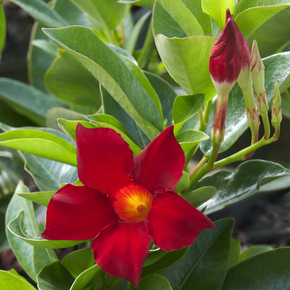
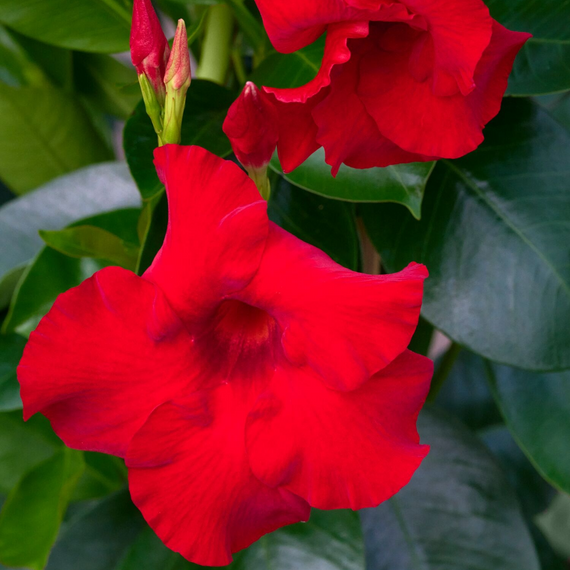
- Oversized 3-5 inch vivid red blooms with sunny yellow throats bloom non-stop from spring through fall, delivering twice the flower size of a standard dipladenia
- Improved for a fuller, bushier, more compact habit — perfect as a bold thriller in patio containers, hanging baskets, or sunny garden beds
- Glossy, deep green evergreen foliage provides a lush tropical backdrop that makes every red bloom pop with rich color contrast
- A proven magnet for hummingbirds and butterflies, this heat-tolerant tropical performer thrives in the intense summer sun of Southern Oregon and Northern California
Sundenia Red Improved Mandevilla (Dipladenia hybrid) takes everything gardeners love about classic mandevillas — the bold, trumpet-shaped blooms, the glossy tropical foliage, the season-long color — and delivers it all on a compact, bushy, ultra-manageable plant. The "Improved" designation signals a meaningful upgrade: this selection has been refined for a notably fuller, more branching habit and even larger flowers than earlier versions, with each bloom stretching 3 to 5 inches across, easily double the size of a typical dipladenia. The vivid, saturated red petals open to reveal a contrasting golden-yellow throat, creating a striking two-toned display that commands attention from planting time straight through to the first frost. Growing 12 to 24 inches tall and spreading 18 to 24 inches wide, Sundenia Red Improved stays tidy and well-proportioned, making it an ideal thriller specimen for mixed container combinations, a standout in hanging baskets where it gracefully cascades over the rim, or a tropical accent in warm, sunny garden beds. Its heat tolerance, fast growth rate, and continuous blooming habit make it particularly well-suited to the long, hot summers of Southern Oregon and Northern California, where it rewards gardeners with months of eye-catching color. Hardy outdoors year-round in USDA Zones 10-11, it is grown as a spectacular warm-season annual or overwintered indoors in cooler climates, bringing irresistible tropical flair to any sunny outdoor space.
Plant Description
Sundenia Red Improved Mandevilla is a Dipladenia hybrid that bridges the gap between traditional compact dipladenias and their larger-flowered mandevilla cousins. Classified botanically within the Apocynaceae (dogbane) family, it produces upright to mounding, densely branched stems clothed in glossy, dark green, pointed leaves that remain evergreen in frost-free climates. From late spring through fall frost, the plant is blanketed in trumpet-shaped blooms measuring 3 to 5 inches in diameter — roughly twice the size of a standard dipladenia flower. Each blossom features rich, saturated red petals that flare open to expose a bright yellow-gold throat, creating a vivid two-tone effect. The "Improved" designation reflects a breeder-selected enhancement for a fuller, bushier growth habit and more prolific, larger blooms compared to earlier Sundenia Red selections. This variety is vigorous, fast-growing, and maintains a naturally tidy, rounded silhouette with minimal effort.
Mature Size
| Characteristic | Measurement |
|---|---|
| Mature Height | 12 to 24 inches |
| Mature Spread | 18 to 24 inches |
| Flower Diameter | 3 to 5 inches |
| Growth Rate | Fast |
| Growth Habit | Upright, mounding, bushy |
Sundenia Red Improved stays notably more compact than vining mandevilla species, making it an excellent choice for smaller patio containers, window boxes, and hanging baskets where an aggressive vine would be impractical. Its naturally bushy, self-branching form fills out containers and garden beds quickly through the growing season without requiring extensive staking or support.
Hardiness Zones and Temperature
Sundenia Red Improved Mandevilla is hardy year-round in USDA Zones 10 and 11, where it performs as an evergreen perennial. In Zones 9 and below — including most of Southern Oregon and the inland areas of Northern California — it is grown as a warm-season annual or overwintered indoors. This plant is cold-sensitive and cannot tolerate frost or prolonged temperatures below 45 to 50 degrees F. Do not set plants outdoors until nighttime temperatures are consistently above 50 degrees F. Plants thrive with daytime temperatures of 65 to 80 degrees F and prefer nighttime temperatures no lower than 65 degrees F for optimal growth and blooming.
Sunlight Requirements
This variety performs best in full sun, receiving a minimum of 6 hours of direct sunlight per day. More sun generally equals more blooms and a more vigorous, compact growth habit. It can tolerate partial sun (4 to 6 hours per day), though flowering may be somewhat reduced in lower light conditions. In the hottest inland regions of Southern Oregon and Northern California, some light afternoon shade can help protect the plant during extreme heat events above 100 degrees F, while still maintaining strong bloom production. When transitioning plants outdoors in spring, gradually acclimate them to full sun over one to two weeks to prevent leaf scorch.
Soil and pH Preferences
Sundenia Red Improved thrives in a well-draining, moderately fertile soil that retains some moisture without becoming waterlogged. For in-ground planting, a loamy or sandy-loam soil amended with compost for added organic matter works well. For container culture, use a high-quality peat- and perlite-based potting mix designed for flowering tropicals or container plants, as this will provide the drainage and aeration the root system needs. The preferred soil pH range is 5.5 to 6.0 for optimal nutrient availability, though the plant demonstrates reasonable tolerance for a slightly wider range. Avoid heavy clay soils that remain wet for extended periods, as consistently soggy roots will lead to root rot and decline.
Watering Guide
Water Sundenia Red Improved consistently, keeping the soil evenly moist but never saturated. Allow the top 1 to 2 inches of soil to begin drying out before watering again — overwatering is one of the most common causes of poor performance in this plant. In hot summer weather and when grown in containers, plants may require watering every day or every other day, as containers dry out much faster than in-ground plantings. Containers must have adequate drainage holes to prevent standing water. Reduce watering frequency during cooler weather in fall and even further if the plant is overwintered indoors in a semi-dormant state. Drip irrigation or soaker hoses are ideal for in-ground plantings to deliver consistent moisture directly to the root zone.
Fertilizing
Feed Sundenia Red Improved regularly throughout the growing season to support its vigorous growth and continuous bloom production. Apply a balanced, slow-release granular fertilizer at planting time. Follow up with a liquid fertilizer high in phosphorus (middle number in the N-P-K ratio) every 3 to 4 weeks from spring through late summer to encourage lush foliage and prolific flowering. A fertilizer with an approximate ratio such as 10-30-10 or similar bloom-booster formula is well-suited for this plant. Avoid over-fertilizing with excessive nitrogen (the first number), as this encourages leafy growth at the expense of flowers. Reduce fertilizing to once a month or stop entirely in fall as temperatures cool and growth slows. Always water the plant well before applying liquid fertilizer to avoid root burn.
Pruning and Maintenance
Sundenia Red Improved has a naturally compact, self-branching habit that requires less pruning than vining mandevilla types. However, light pruning and pinching will encourage an even fuller form and maximize bloom production. Pinch back stem tips early in the season when the plant is young and actively rooting to promote additional branching. Deadheading spent flowers, while not strictly necessary, keeps the plant looking tidy and can marginally encourage new bud formation. Remove any dead, damaged, or yellowing stems and leaves as they appear throughout the season. If the plant becomes leggy or overgrown by midsummer, cut stems back by one-third to reinvigorate growth and encourage a new flush of blooms. Before bringing plants indoors for winter, prune them back to a manageable size of around 10 to 12 inches.
Planting Instructions
- Choose a location that receives at least 6 hours of direct sun daily and has well-draining soil.
- Wait until nighttime temperatures are consistently above 50 degrees F before planting outdoors — typically after the last frost date in your area.
- If planting in the ground, dig a hole twice as wide as the root ball and the same depth. Amend heavy or poor soil with compost before backfilling.
- For containers, select a pot with drainage holes and fill with a quality peat- and perlite-based potting mix. A container at least 10 to 12 inches in diameter is recommended for a single plant.
- Set the plant at the same depth it was growing in its nursery container — do not bury the crown.
- Backfill, firm gently around the roots, and water thoroughly to settle the soil and eliminate air pockets.
- Apply a thin layer of mulch around in-ground plants to help retain soil moisture and regulate root zone temperature.
- Gradually acclimate plants purchased from a greenhouse to outdoor sun over 7 to 14 days before placing in full sun permanently.
Container Growing
Sundenia Red Improved is exceptionally well-suited to container life and is one of its best uses in the garden. Its compact, mounding habit makes it ideal as the "thriller" centerpiece in a mixed container combination, or as a standalone specimen in a hanging basket where its arching branches can spill gracefully over the rim. Choose a container with adequate drainage holes and fill with a well-draining tropical or all-purpose potting mix. A pot in the 10 to 14-inch range suits a single plant well; larger pots are needed for multi-plant combinations. Container-grown plants dry out more quickly than in-ground plants and will typically require daily watering in the heat of summer. Fertilize container plants every 2 to 3 weeks with a phosphorus-rich liquid fertilizer for best bloom performance. Containers can be moved indoors easily at the end of the season to overwinter the plant for another year of color.
Seasonal Interest
Sundenia Red Improved delivers season-long floral interest from late spring all the way through to the first fall frost, making it one of the longest-blooming warm-season tropicals available for Southern Oregon and Northern California gardens. Unlike many flowering plants that bloom in waves, this variety maintains a near-constant display of vivid red trumpets throughout the peak summer heat. The deep, glossy foliage provides attractive green contrast even between flushes of bloom. In USDA Zones 10 and 11, the plant may remain evergreen through winter, though blooming slows considerably during the coolest months. For gardeners in cooler zones, it performs as a spectacular summer annual, bridging the gap between spring and fall seasonal color.
Landscape Uses
- Thriller centerpiece in mixed patio containers and decorative pots
- Standout specimen in hanging baskets on porches, patios, and pergolas
- Tropical accent in warm, sunny garden beds and borders
- Bold front-walk or entryway planting for season-long curb appeal
- Color anchor in deck and patio arrangements alongside other tropical annuals
- Spiller element along the edges of raised planters and window boxes
- Tropical-themed garden or poolside planting in warm microclimates
- Seasonal color in commercial or residential landscapes in Zones 9-11
Companion Plants
Sundenia Red Improved pairs beautifully with other sun-loving tropicals and warm-season annuals. For container combinations, try pairing it with the following:
- Spillers: Sweet potato vine (especially chartreuse or deep purple-leafed varieties), trailing lobelia, licorice plant (Helichrysum), bacopa, or creeping Jenny
- Fillers: Coleus, New Guinea impatiens, vinca, moss rose (Portulaca), or flowering begonias
- Thriller companions: Canna lilies, ornamental grasses, elephant ears, or upright celosia for bold foliage contrast
- In-ground companions: Hibiscus, lantana, pentas, salvia, and bougainvillea all share similar sun and water requirements and complement the tropical color scheme
- Foliage contrast: Caladiums, large tropical ferns, and dusty miller provide attractive leaf texture and color contrast alongside the bold red blooms
Avoid planting Sundenia Red Improved alongside water-loving bog plants or drought-tolerant xeric plants such as agave, aloe, or santolina, as their water and soil needs are incompatible.
Wildlife Value
Sundenia Red Improved is a valuable wildlife plant, particularly for pollinators attracted to its large, nectar-rich tubular flowers. The vivid red trumpet blooms are highly attractive to hummingbirds, which are drawn to their shape and color from considerable distances. Native bumblebees and other large-bodied pollinators also visit the flowers for nectar. Butterflies, including swallowtails and other nectar-feeding species, are frequent visitors throughout the blooming season. The plant is generally considered deer resistant, as deer tend to avoid it in favor of more palatable choices, making it a reliable option in areas with deer pressure. Planting it near other hummingbird-attracting species such as salvia, pentas, and lantana can transform a patio or garden area into a lively wildlife corridor through the summer months.
Overwintering Indoors
In climates cooler than USDA Zone 10 — including most of Southern Oregon and higher-elevation areas of Northern California — Sundenia Red Improved will not survive frost outdoors. Gardeners who wish to save their plants for another season can overwinter them indoors using one of two methods:
- As a houseplant: Before the first frost and once outdoor temperatures consistently drop below 55 to 60 degrees F, bring the container indoors. Prune the plant back to a manageable size and place it near a bright, south-facing window or under a grow light. Water weekly, allowing the top inch of soil to dry between waterings. Do not fertilize during winter. Expect little to no bloom indoors but the plant will remain alive and healthy. Resume normal outdoor care in spring after the danger of frost has passed.
- As a dormant plant: Cut the plant back to approximately 10 inches, drench the soil to flush out any pests, and move the pot to a cool, dark space such as a garage where temperatures stay between 50 and 60 degrees F. Water only sparingly — just enough to keep the root zone from drying out completely. Watch for new growth in late winter as a signal to move the plant back into warmth and light. Harden off outdoors gradually once nighttime temperatures are reliably above 50 degrees F.
Pests and Diseases
Sundenia Red Improved is generally a robust and trouble-free plant when grown in appropriate conditions, but there are a few pests and diseases to be aware of:
- Aphids: Small, soft-bodied insects that cluster on new growth and buds. Treat with a strong spray of water, insecticidal soap, or neem oil.
- Whiteflies: Tiny white flying insects that weaken plants by feeding on leaf undersides. Yellow sticky traps and insecticidal soap are effective controls.
- Spider mites: More prevalent in hot, dry conditions. Look for fine webbing on leaf undersides. Increase humidity, rinse foliage, and apply miticides or neem oil as needed.
- Thrips: Cause silvery streaking or stippling on leaves and flowers. Treat with spinosad or insecticidal soap.
- Root rot: Caused by overwatering or poorly draining soil. Prevent by ensuring containers have adequate drainage and allowing soil to partially dry between waterings.
- Leaf spot and fungal diseases: Minimize by avoiding overhead watering and keeping foliage dry. Improve air circulation around plants. During winter storage indoors, keeping plants on the dry side helps prevent Fusarium and Botrytis.
Inspect plants regularly, especially when bringing them indoors for winter, and treat any pest issues before moving them into enclosed spaces.
Toxicity and Safety
Like other members of the Apocynaceae family, Sundenia Red Improved Mandevilla contains milky sap that is considered toxic if ingested by humans or animals. All parts of the plant — including stems, leaves, flowers, and roots — should be kept away from children, dogs, and cats. The sap can also cause mild skin irritation or allergic reactions in sensitive individuals upon contact. It is advisable to wear gloves when pruning or handling the plant, especially if you have sensitive skin. Exercise appropriate caution when placing containers in areas accessible to pets or young children. This plant is not intended for consumption.
- Oversized 3-5 inch vivid red blooms with sunny yellow throats bloom non-stop from spring through fall, delivering twice the flower size of a standard dipladenia
- Improved for a fuller, bushier, more compact habit — perfect as a bold thriller in patio containers, hanging baskets, or sunny garden beds
- Glossy, deep green evergreen foliage provides a lush tropical backdrop that makes every red bloom pop with rich color contrast
- A proven magnet for hummingbirds and butterflies, this heat-tolerant tropical performer thrives in the intense summer sun of Southern Oregon and Northern California
Sundenia Red Improved Mandevilla (Dipladenia hybrid) takes everything gardeners love about classic mandevillas — the bold, trumpet-shaped blooms, the glossy tropical foliage, the season-long color — and delivers it all on a compact, bushy, ultra-manageable plant. The "Improved" designation signals a meaningful upgrade: this selection has been refined for a notably fuller, more branching habit and even larger flowers than earlier versions, with each bloom stretching 3 to 5 inches across, easily double the size of a typical dipladenia. The vivid, saturated red petals open to reveal a contrasting golden-yellow throat, creating a striking two-toned display that commands attention from planting time straight through to the first frost. Growing 12 to 24 inches tall and spreading 18 to 24 inches wide, Sundenia Red Improved stays tidy and well-proportioned, making it an ideal thriller specimen for mixed container combinations, a standout in hanging baskets where it gracefully cascades over the rim, or a tropical accent in warm, sunny garden beds. Its heat tolerance, fast growth rate, and continuous blooming habit make it particularly well-suited to the long, hot summers of Southern Oregon and Northern California, where it rewards gardeners with months of eye-catching color. Hardy outdoors year-round in USDA Zones 10-11, it is grown as a spectacular warm-season annual or overwintered indoors in cooler climates, bringing irresistible tropical flair to any sunny outdoor space.
Plant Description
Sundenia Red Improved Mandevilla is a Dipladenia hybrid that bridges the gap between traditional compact dipladenias and their larger-flowered mandevilla cousins. Classified botanically within the Apocynaceae (dogbane) family, it produces upright to mounding, densely branched stems clothed in glossy, dark green, pointed leaves that remain evergreen in frost-free climates. From late spring through fall frost, the plant is blanketed in trumpet-shaped blooms measuring 3 to 5 inches in diameter — roughly twice the size of a standard dipladenia flower. Each blossom features rich, saturated red petals that flare open to expose a bright yellow-gold throat, creating a vivid two-tone effect. The "Improved" designation reflects a breeder-selected enhancement for a fuller, bushier growth habit and more prolific, larger blooms compared to earlier Sundenia Red selections. This variety is vigorous, fast-growing, and maintains a naturally tidy, rounded silhouette with minimal effort.
Mature Size
| Characteristic | Measurement |
|---|---|
| Mature Height | 12 to 24 inches |
| Mature Spread | 18 to 24 inches |
| Flower Diameter | 3 to 5 inches |
| Growth Rate | Fast |
| Growth Habit | Upright, mounding, bushy |
Sundenia Red Improved stays notably more compact than vining mandevilla species, making it an excellent choice for smaller patio containers, window boxes, and hanging baskets where an aggressive vine would be impractical. Its naturally bushy, self-branching form fills out containers and garden beds quickly through the growing season without requiring extensive staking or support.
Hardiness Zones and Temperature
Sundenia Red Improved Mandevilla is hardy year-round in USDA Zones 10 and 11, where it performs as an evergreen perennial. In Zones 9 and below — including most of Southern Oregon and the inland areas of Northern California — it is grown as a warm-season annual or overwintered indoors. This plant is cold-sensitive and cannot tolerate frost or prolonged temperatures below 45 to 50 degrees F. Do not set plants outdoors until nighttime temperatures are consistently above 50 degrees F. Plants thrive with daytime temperatures of 65 to 80 degrees F and prefer nighttime temperatures no lower than 65 degrees F for optimal growth and blooming.
Sunlight Requirements
This variety performs best in full sun, receiving a minimum of 6 hours of direct sunlight per day. More sun generally equals more blooms and a more vigorous, compact growth habit. It can tolerate partial sun (4 to 6 hours per day), though flowering may be somewhat reduced in lower light conditions. In the hottest inland regions of Southern Oregon and Northern California, some light afternoon shade can help protect the plant during extreme heat events above 100 degrees F, while still maintaining strong bloom production. When transitioning plants outdoors in spring, gradually acclimate them to full sun over one to two weeks to prevent leaf scorch.
Soil and pH Preferences
Sundenia Red Improved thrives in a well-draining, moderately fertile soil that retains some moisture without becoming waterlogged. For in-ground planting, a loamy or sandy-loam soil amended with compost for added organic matter works well. For container culture, use a high-quality peat- and perlite-based potting mix designed for flowering tropicals or container plants, as this will provide the drainage and aeration the root system needs. The preferred soil pH range is 5.5 to 6.0 for optimal nutrient availability, though the plant demonstrates reasonable tolerance for a slightly wider range. Avoid heavy clay soils that remain wet for extended periods, as consistently soggy roots will lead to root rot and decline.
Watering Guide
Water Sundenia Red Improved consistently, keeping the soil evenly moist but never saturated. Allow the top 1 to 2 inches of soil to begin drying out before watering again — overwatering is one of the most common causes of poor performance in this plant. In hot summer weather and when grown in containers, plants may require watering every day or every other day, as containers dry out much faster than in-ground plantings. Containers must have adequate drainage holes to prevent standing water. Reduce watering frequency during cooler weather in fall and even further if the plant is overwintered indoors in a semi-dormant state. Drip irrigation or soaker hoses are ideal for in-ground plantings to deliver consistent moisture directly to the root zone.
Fertilizing
Feed Sundenia Red Improved regularly throughout the growing season to support its vigorous growth and continuous bloom production. Apply a balanced, slow-release granular fertilizer at planting time. Follow up with a liquid fertilizer high in phosphorus (middle number in the N-P-K ratio) every 3 to 4 weeks from spring through late summer to encourage lush foliage and prolific flowering. A fertilizer with an approximate ratio such as 10-30-10 or similar bloom-booster formula is well-suited for this plant. Avoid over-fertilizing with excessive nitrogen (the first number), as this encourages leafy growth at the expense of flowers. Reduce fertilizing to once a month or stop entirely in fall as temperatures cool and growth slows. Always water the plant well before applying liquid fertilizer to avoid root burn.
Pruning and Maintenance
Sundenia Red Improved has a naturally compact, self-branching habit that requires less pruning than vining mandevilla types. However, light pruning and pinching will encourage an even fuller form and maximize bloom production. Pinch back stem tips early in the season when the plant is young and actively rooting to promote additional branching. Deadheading spent flowers, while not strictly necessary, keeps the plant looking tidy and can marginally encourage new bud formation. Remove any dead, damaged, or yellowing stems and leaves as they appear throughout the season. If the plant becomes leggy or overgrown by midsummer, cut stems back by one-third to reinvigorate growth and encourage a new flush of blooms. Before bringing plants indoors for winter, prune them back to a manageable size of around 10 to 12 inches.
Planting Instructions
- Choose a location that receives at least 6 hours of direct sun daily and has well-draining soil.
- Wait until nighttime temperatures are consistently above 50 degrees F before planting outdoors — typically after the last frost date in your area.
- If planting in the ground, dig a hole twice as wide as the root ball and the same depth. Amend heavy or poor soil with compost before backfilling.
- For containers, select a pot with drainage holes and fill with a quality peat- and perlite-based potting mix. A container at least 10 to 12 inches in diameter is recommended for a single plant.
- Set the plant at the same depth it was growing in its nursery container — do not bury the crown.
- Backfill, firm gently around the roots, and water thoroughly to settle the soil and eliminate air pockets.
- Apply a thin layer of mulch around in-ground plants to help retain soil moisture and regulate root zone temperature.
- Gradually acclimate plants purchased from a greenhouse to outdoor sun over 7 to 14 days before placing in full sun permanently.
Container Growing
Sundenia Red Improved is exceptionally well-suited to container life and is one of its best uses in the garden. Its compact, mounding habit makes it ideal as the "thriller" centerpiece in a mixed container combination, or as a standalone specimen in a hanging basket where its arching branches can spill gracefully over the rim. Choose a container with adequate drainage holes and fill with a well-draining tropical or all-purpose potting mix. A pot in the 10 to 14-inch range suits a single plant well; larger pots are needed for multi-plant combinations. Container-grown plants dry out more quickly than in-ground plants and will typically require daily watering in the heat of summer. Fertilize container plants every 2 to 3 weeks with a phosphorus-rich liquid fertilizer for best bloom performance. Containers can be moved indoors easily at the end of the season to overwinter the plant for another year of color.
Seasonal Interest
Sundenia Red Improved delivers season-long floral interest from late spring all the way through to the first fall frost, making it one of the longest-blooming warm-season tropicals available for Southern Oregon and Northern California gardens. Unlike many flowering plants that bloom in waves, this variety maintains a near-constant display of vivid red trumpets throughout the peak summer heat. The deep, glossy foliage provides attractive green contrast even between flushes of bloom. In USDA Zones 10 and 11, the plant may remain evergreen through winter, though blooming slows considerably during the coolest months. For gardeners in cooler zones, it performs as a spectacular summer annual, bridging the gap between spring and fall seasonal color.
Landscape Uses
- Thriller centerpiece in mixed patio containers and decorative pots
- Standout specimen in hanging baskets on porches, patios, and pergolas
- Tropical accent in warm, sunny garden beds and borders
- Bold front-walk or entryway planting for season-long curb appeal
- Color anchor in deck and patio arrangements alongside other tropical annuals
- Spiller element along the edges of raised planters and window boxes
- Tropical-themed garden or poolside planting in warm microclimates
- Seasonal color in commercial or residential landscapes in Zones 9-11
Companion Plants
Sundenia Red Improved pairs beautifully with other sun-loving tropicals and warm-season annuals. For container combinations, try pairing it with the following:
- Spillers: Sweet potato vine (especially chartreuse or deep purple-leafed varieties), trailing lobelia, licorice plant (Helichrysum), bacopa, or creeping Jenny
- Fillers: Coleus, New Guinea impatiens, vinca, moss rose (Portulaca), or flowering begonias
- Thriller companions: Canna lilies, ornamental grasses, elephant ears, or upright celosia for bold foliage contrast
- In-ground companions: Hibiscus, lantana, pentas, salvia, and bougainvillea all share similar sun and water requirements and complement the tropical color scheme
- Foliage contrast: Caladiums, large tropical ferns, and dusty miller provide attractive leaf texture and color contrast alongside the bold red blooms
Avoid planting Sundenia Red Improved alongside water-loving bog plants or drought-tolerant xeric plants such as agave, aloe, or santolina, as their water and soil needs are incompatible.
Wildlife Value
Sundenia Red Improved is a valuable wildlife plant, particularly for pollinators attracted to its large, nectar-rich tubular flowers. The vivid red trumpet blooms are highly attractive to hummingbirds, which are drawn to their shape and color from considerable distances. Native bumblebees and other large-bodied pollinators also visit the flowers for nectar. Butterflies, including swallowtails and other nectar-feeding species, are frequent visitors throughout the blooming season. The plant is generally considered deer resistant, as deer tend to avoid it in favor of more palatable choices, making it a reliable option in areas with deer pressure. Planting it near other hummingbird-attracting species such as salvia, pentas, and lantana can transform a patio or garden area into a lively wildlife corridor through the summer months.
Overwintering Indoors
In climates cooler than USDA Zone 10 — including most of Southern Oregon and higher-elevation areas of Northern California — Sundenia Red Improved will not survive frost outdoors. Gardeners who wish to save their plants for another season can overwinter them indoors using one of two methods:
- As a houseplant: Before the first frost and once outdoor temperatures consistently drop below 55 to 60 degrees F, bring the container indoors. Prune the plant back to a manageable size and place it near a bright, south-facing window or under a grow light. Water weekly, allowing the top inch of soil to dry between waterings. Do not fertilize during winter. Expect little to no bloom indoors but the plant will remain alive and healthy. Resume normal outdoor care in spring after the danger of frost has passed.
- As a dormant plant: Cut the plant back to approximately 10 inches, drench the soil to flush out any pests, and move the pot to a cool, dark space such as a garage where temperatures stay between 50 and 60 degrees F. Water only sparingly — just enough to keep the root zone from drying out completely. Watch for new growth in late winter as a signal to move the plant back into warmth and light. Harden off outdoors gradually once nighttime temperatures are reliably above 50 degrees F.
Pests and Diseases
Sundenia Red Improved is generally a robust and trouble-free plant when grown in appropriate conditions, but there are a few pests and diseases to be aware of:
- Aphids: Small, soft-bodied insects that cluster on new growth and buds. Treat with a strong spray of water, insecticidal soap, or neem oil.
- Whiteflies: Tiny white flying insects that weaken plants by feeding on leaf undersides. Yellow sticky traps and insecticidal soap are effective controls.
- Spider mites: More prevalent in hot, dry conditions. Look for fine webbing on leaf undersides. Increase humidity, rinse foliage, and apply miticides or neem oil as needed.
- Thrips: Cause silvery streaking or stippling on leaves and flowers. Treat with spinosad or insecticidal soap.
- Root rot: Caused by overwatering or poorly draining soil. Prevent by ensuring containers have adequate drainage and allowing soil to partially dry between waterings.
- Leaf spot and fungal diseases: Minimize by avoiding overhead watering and keeping foliage dry. Improve air circulation around plants. During winter storage indoors, keeping plants on the dry side helps prevent Fusarium and Botrytis.
Inspect plants regularly, especially when bringing them indoors for winter, and treat any pest issues before moving them into enclosed spaces.
Toxicity and Safety
Like other members of the Apocynaceae family, Sundenia Red Improved Mandevilla contains milky sap that is considered toxic if ingested by humans or animals. All parts of the plant — including stems, leaves, flowers, and roots — should be kept away from children, dogs, and cats. The sap can also cause mild skin irritation or allergic reactions in sensitive individuals upon contact. It is advisable to wear gloves when pruning or handling the plant, especially if you have sensitive skin. Exercise appropriate caution when placing containers in areas accessible to pets or young children. This plant is not intended for consumption.