
Zoom the image with the mouse
Oregon Grape - 5 Gallon
SKU:
106240
UPC:
753768008053
$39.99
- Oregon's official state flower and a true Pacific Northwest native, delivering bold, glossy, holly-like evergreen foliage and brilliant clusters of bright yellow blooms every spring
- Highly adaptable and low-maintenance — tolerates deep shade, drought, dry soils, and deer browsing once established, making it one of the toughest native shrubs available
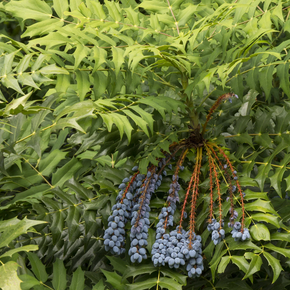
- Produces stunning clusters of deep dusty-blue berries in summer and fall that attract songbirds and other wildlife while offering striking four-season garden interest
- Naturally deer resistant with spiny, bold-textured foliage that transitions from glossy dark green in summer to rich burgundy and bronze in winter for year-round color
Oregon Grape (Berberis aquifolium, syn. Mahonia aquifolium) is an iconic broadleaf evergreen shrub native to the forests of the Pacific Northwest, celebrated as Oregon's official state flower and cherished by gardeners throughout Southern Oregon and Northern California for its exceptional toughness and four-season appeal. Growing in an upright, architectural form typically reaching 3 to 6 feet tall and 2 to 5 feet wide, this slow-growing native features stout, infrequently branching stems adorned with large, pinnately compound leaves composed of 5 to 13 glossy, leathery, spine-tipped leaflets that closely resemble those of holly. In early spring, showy terminal racemes of fragrant, bright yellow flowers emerge in profusion, attracting early-season pollinators including native bees and butterflies, before giving way to dramatic clusters of dusty deep-blue to purple-black berries that ripen through summer and fall, providing critical food for songbirds and other wildlife. New foliage emerges with attractive reddish tints before maturing to a rich, glossy dark green, then transitions to stunning shades of burgundy, bronze, and purple-red in winter, ensuring interest in every season. Thriving naturally as a woodland understory plant, Oregon Grape excels in partial to full shade and is exceptionally well suited to the dry-summer climate of the Pacific Coast, tolerating drought, poor soils, and heavy root competition once established. Its naturally suckering habit makes it a superb choice for mass planting on slopes for erosion control, as a rugged security hedge, or as a dramatic native specimen in a woodland or shade garden setting.
Plant Description
Oregon Grape is a striking broadleaf evergreen shrub in the barberry family (Berberidaceae), native to the forests of western North America from British Columbia south through Oregon and into Northern California. It is the designated state flower of Oregon, recognized by the legislature in 1899. The plant grows in an upright, columnar to oval form with stout stems that branch infrequently, giving it a bold, architectural presence in the landscape. Its large, alternate, pinnately compound leaves are composed of 5 to 13 rigid, coriaceous (leathery) leaflets, each edged with sharp, holly-like spiny teeth. New growth emerges with attractive red or bronze tints before hardening to a deep, glossy dark green. In late winter to early spring, showy terminal and axillary racemes of densely packed, bright golden-yellow flowers appear in abundance, carrying a mild, pleasant fragrance. These blooms are followed by clusters of small, round, deep dusty-blue to purple-black berries that ripen by midsummer and may persist into fall and winter. The inner bark of the stems and roots is characteristically bright yellow, a result of the alkaloid berberine, which has a long history of traditional use by Indigenous peoples of the Pacific Northwest.
Mature Size
| Attribute | Measurement |
|---|---|
| Mature Height | 3 to 6 feet |
| Mature Width / Spread | 2 to 5 feet |
| Growth Rate | Slow |
| Growth Habit | Upright, columnar to oval; suckering to form colonies |
| Plant Type | Broadleaf evergreen shrub |
Hardiness Zones and Climate
Oregon Grape is reliably hardy in USDA Plant Hardiness Zones 5 through 9, making it perfectly suited to gardens across Southern Oregon and Northern California. It is at home in the mild, dry-summer Pacific Coast climate and thrives across a broad range of conditions from coastal lowlands to inland mountain foothills. It is well adapted to the temperature extremes common in the Siskiyou region and is one of the most climatically versatile native shrubs in western North America. While it tolerates summer heat, it performs best where summer temperatures are moderated and does not thrive in hot, humid climates. It is notably frost hardy and maintains its evergreen foliage throughout winter, often displaying beautiful bronze and burgundy winter color in colder locations.
Sunlight Requirements
Oregon Grape is most at home in partial shade to full shade, mirroring its natural role as a woodland understory shrub beneath conifers and other forest trees. It grows and looks its best in dappled sunlight or a site receiving 2 to 6 hours of direct sun per day. While it can tolerate some morning sun, exposure to intense afternoon sun — especially in hotter inland locations — can bleach out and scorch the foliage and stress the plant. In deeply shaded locations it will produce less vigorous flowering and fruiting but will maintain handsome evergreen foliage. In the Pacific Northwest and Northern California, a partially shaded site with good moisture retention provides ideal conditions. Avoid planting in locations with harsh, drying afternoon sun unless the soil can be kept consistently moist.
Soil and pH Preferences
Oregon Grape is adaptable to a wide range of soil types but performs best in well-drained soils with moderate to high organic matter content. It is native to forest soils that are typically slightly acidic, and it grows most vigorously in a soil pH range of 5.0 to 7.0 (acidic to neutral). It tolerates average to moderately poor soils once established, including rocky or gravelly woodland soils typical of Southern Oregon and Northern California. Heavy, unamended clay soils with poor drainage should be avoided or improved with compost prior to planting. It does not tolerate waterlogged or consistently soggy conditions. Chlorosis (yellowing of leaves between the veins) can occur on high-pH soils; if this is observed, amend the soil or apply an acidifying fertilizer to correct the pH. Adding a layer of organic mulch at planting time will help maintain soil moisture and slowly improve soil quality as it breaks down.
Watering Guide
Once established, Oregon Grape is considered drought tolerant and is well adapted to the dry summers of the Pacific Coast. During the first one to two growing seasons after planting, regular watering is important to help the plant develop a strong, deep root system. Water newly planted shrubs deeply and thoroughly, then allow the top few inches of soil to dry before watering again — roughly once or twice per week in warm weather. After establishment, Oregon Grape typically requires little to no supplemental irrigation in the cooler, moister climates of the Pacific Northwest. In hotter inland areas of Southern Oregon and Northern California, an occasional deep watering during the driest months of summer will help maintain the plant's best appearance and vigor. Avoid frequent shallow watering, which encourages surface roots and reduces drought resilience. Consistent overwatering or poorly drained soils can lead to root rot.
Fertilizing
Oregon Grape is a low-fertility native shrub that does not require heavy feeding and can actually be harmed by excessive fertilization. In most Pacific Northwest and Northern California garden soils, no regular fertilizing is necessary once the plant is established. If growth appears slow or foliage is pale and lacking in luster, a light application of a balanced, slow-release shrub fertilizer or an all-purpose organic fertilizer in early spring — just as new growth begins — is sufficient. If chlorosis is present on alkaline soils, an acidifying fertilizer containing sulfur or chelated iron can be applied to correct the deficiency. Avoid high-nitrogen fertilizers, which promote lush, soft growth that may be more susceptible to pest damage and does not reflect the plant's naturally tough character. Always follow label directions and avoid fertilizing in late summer or fall, as this can stimulate tender new growth that may be damaged by early frosts.
Pruning and Maintenance
Oregon Grape is a low-maintenance shrub that requires minimal pruning under normal circumstances. Because flowers and fruit are produced on the previous season's wood (old growth), heavy pruning should be avoided if preserving the spring floral display and summer berry crop is a priority. Light shaping or the removal of wayward or crossing stems can be done immediately after the spring bloom period concludes. If an established plant becomes overly leggy or sparse, it responds well to a hard rejuvenation pruning — cutting stems back to 12 to 18 inches from the ground in late winter or early spring — which will stimulate vigorous new growth from the base. Remove any dead, damaged, or diseased stems at any time of year. The plant naturally spreads by underground suckers; simply dig and remove unwanted suckers at the base to control the spread of the colony if needed. Wear thick gloves when pruning to protect against the spiny-tipped leaflets.
Planting Instructions
- Choose a site in partial to full shade with well-drained, organically rich soil. Avoid locations with harsh afternoon sun or poor drainage.
- Dig a planting hole two to three times as wide as the root ball and equal in depth. The top of the root ball should sit level with or slightly above the surrounding soil grade.
- If your soil is heavy clay or very sandy, amend it generously with compost or aged bark to improve drainage and organic matter content.
- Remove the plant from its container and gently loosen any circling or compacted roots before placing it in the hole.
- Backfill the hole with the native soil or amended soil, firming it gently around the roots to eliminate air pockets.
- Water thoroughly and deeply immediately after planting.
- Apply a 2- to 3-inch layer of organic mulch — such as shredded bark or wood chips — over the root zone, keeping the mulch a few inches away from the base of the stems to prevent rot.
- Water consistently throughout the first growing season to support root establishment. Fall planting is ideal in Southern Oregon and Northern California, allowing roots to establish during the cooler, wetter months before summer heat arrives.
Seasonal Interest
Oregon Grape is a standout four-season plant that provides ornamental interest throughout the entire year. In late winter to early spring (typically February through April depending on location and elevation), dense clusters of bright golden-yellow flowers open in abundance, providing an early and showy floral display before most other shrubs have leafed out. Through spring and early summer, the glossy, dark green compound foliage provides a lush, architectural backdrop in the landscape. By midsummer through fall, showy clusters of deep dusty-blue to purple-black berries ripen, adding rich color and an important food source for wildlife. In winter, the leathery foliage takes on gorgeous tones of burgundy, bronze, and purple-red in response to cold temperatures and increased sun exposure, giving the garden rich color even in the off season. The bold, holly-like texture of the foliage provides strong visual structure and contrast in mixed plantings year-round.
Landscape Uses
- Woodland and shade garden as a bold, textural native understory shrub
- Mass plantings for erosion control on shaded or dry slopes
- Foundation plantings in partially shaded locations
- Security hedges and barrier plantings — spiny foliage discourages foot traffic and browsing animals
- Mixed shrub borders for four-season interest
- Naturalistic, low-water, and native plant garden designs
- Specimen plant valued for bold, architectural foliage texture
- Groundcover-style mass planting under large trees where few other shrubs succeed
- Pollinator and wildlife gardens to support native bees and fruit-eating birds
- Cut foliage for fresh and dried floral arrangements — the glossy compound leaves are long-lasting and highly decorative
Wildlife Value
Oregon Grape is an outstanding native plant for supporting local wildlife and pollinators. The early spring flowers are among the first abundant pollen and nectar sources of the season, providing critical forage for native bees, mason bees, bumblebees, and other early-emerging pollinators when few other plants are in bloom. Hummingbirds are also attracted to the yellow flower clusters. The clusters of deep blue-black berries that ripen from midsummer into fall provide an important food source for numerous species of songbirds, including thrushes, robins, cedar waxwings, towhees, and finches, as well as small mammals such as foxes and bears in its native Pacific Northwest habitat. The dense, spiny shrub provides excellent nesting cover and protective habitat for small birds and wildlife. As a native plant, Oregon Grape is deeply integrated into the food webs of Pacific Coast ecosystems, supporting a far greater range of native fauna than non-native ornamental alternatives.
Companion Plants
Oregon Grape pairs beautifully with a wide range of other Pacific Northwest native and shade-tolerant plants, creating naturalistic and ecologically functional garden compositions. Excellent companion plants include:
- Western Red Cedar (Thuja plicata) and Douglas Fir (Pseudotsuga menziesii) as canopy trees that replicate its natural forest understory habitat
- Sword Fern (Polystichum munitum) for contrasting fine texture and similar shade and moisture preferences
- Red Flowering Currant (Ribes sanguineum) for complementary early spring color
- Western Serviceberry (Amelanchier alnifolia) as a multi-season native shrub companion
- Vine Maple (Acer circinatum) for dappled shade and spectacular fall color contrast
- Salal (Gaultheria shallon) as a low-growing evergreen native groundcover beneath Oregon Grape
- Pacific Wax Myrtle (Morella californica) for a mixed native evergreen screen
- Wild Ginger (Asarum caudatum) as a native groundcover at the base
- Western Bleeding Heart (Dicentra formosa) for soft textural contrast and spring color in the understory
Pests and Diseases
Oregon Grape is generally a tough and resilient shrub with few serious pest or disease problems, especially when sited in appropriate conditions. The following issues may occasionally be encountered:
- Aphids: Small colonies may appear on new growth in spring. Typically controlled by natural predators; a strong stream of water or insecticidal soap spray resolves persistent infestations.
- Scale insects (armored and soft scale): Can occasionally colonize stems. Treat with horticultural oil applied in late winter or early spring before new growth emerges.
- Whiteflies: Possible in warm, sheltered locations. Treat with insecticidal soap if populations become problematic.
- Leaf spots and rust: Fungal diseases can cause spotting or discoloration of foliage in conditions of high humidity and poor air circulation. Improve air circulation through selective pruning and avoid overhead watering.
- Leaf scorch: Brown leaf margins and tips caused by exposure to harsh sun, drying winds, or drought stress. Address by correcting siting or watering practices.
- Chlorosis: Yellowing between leaf veins due to iron deficiency on high-pH soils. Correct soil pH or apply chelated iron.
This plant is deer resistant due to its tough, spiny foliage, making it an excellent choice for gardens in areas with heavy deer pressure.
Edibility and Ethnobotanical History
Oregon Grape has a rich history of use by Indigenous peoples of the Pacific Northwest. The tart, deep-blue berries are edible and have been consumed fresh in small quantities, dried for winter use, or processed into jelly, preserves, juice, and wine. The berries are high in vitamin C but contain the alkaloid berberine, which can cause stomach upset if consumed in large quantities, particularly by children. The bright yellow inner bark and roots have been used for centuries as a natural dye, producing vivid yellow tones for baskets, wool, and other fiber arts. Berberine, the primary alkaloid in the plant, has a long history of medicinal use by Native American peoples and is the subject of ongoing modern research for its potential antifungal, antibiotic, anti-inflammatory, and other therapeutic properties. The foliage is widely used in the commercial cut flower and florist industry as a long-lasting background greenery for arrangements. Note: as with many plants, consult an expert before consuming any part of this plant, as large quantities of berberine can cause adverse effects.
Container Growing
Oregon Grape can be grown successfully in large containers, making it a versatile option for shaded patios, entryways, and courtyard gardens. Choose a generously sized container — at least 15 to 20 gallons — with adequate drainage holes to prevent waterlogging. Use a high-quality potting mix blended with extra perlite or coarse bark for good drainage, and consider mixing in a small amount of acidifying amendment to maintain the preferred slightly acidic pH. Container-grown plants will require more frequent watering than those in the ground, as pots dry out more quickly, but be careful not to overwater. A slow-release fertilizer applied in spring will support healthy growth in the container environment. Position the container in a spot with morning sun and afternoon shade to avoid leaf scorch. In very cold winters, containers may need to be moved to a sheltered location to protect the roots from hard freezes, as container-grown roots are more vulnerable to cold than in-ground roots. Regular repotting every few years into a slightly larger container will keep the plant vigorous.
- Oregon's official state flower and a true Pacific Northwest native, delivering bold, glossy, holly-like evergreen foliage and brilliant clusters of bright yellow blooms every spring
- Highly adaptable and low-maintenance — tolerates deep shade, drought, dry soils, and deer browsing once established, making it one of the toughest native shrubs available
- Produces stunning clusters of deep dusty-blue berries in summer and fall that attract songbirds and other wildlife while offering striking four-season garden interest
- Naturally deer resistant with spiny, bold-textured foliage that transitions from glossy dark green in summer to rich burgundy and bronze in winter for year-round color
Oregon Grape (Berberis aquifolium, syn. Mahonia aquifolium) is an iconic broadleaf evergreen shrub native to the forests of the Pacific Northwest, celebrated as Oregon's official state flower and cherished by gardeners throughout Southern Oregon and Northern California for its exceptional toughness and four-season appeal. Growing in an upright, architectural form typically reaching 3 to 6 feet tall and 2 to 5 feet wide, this slow-growing native features stout, infrequently branching stems adorned with large, pinnately compound leaves composed of 5 to 13 glossy, leathery, spine-tipped leaflets that closely resemble those of holly. In early spring, showy terminal racemes of fragrant, bright yellow flowers emerge in profusion, attracting early-season pollinators including native bees and butterflies, before giving way to dramatic clusters of dusty deep-blue to purple-black berries that ripen through summer and fall, providing critical food for songbirds and other wildlife. New foliage emerges with attractive reddish tints before maturing to a rich, glossy dark green, then transitions to stunning shades of burgundy, bronze, and purple-red in winter, ensuring interest in every season. Thriving naturally as a woodland understory plant, Oregon Grape excels in partial to full shade and is exceptionally well suited to the dry-summer climate of the Pacific Coast, tolerating drought, poor soils, and heavy root competition once established. Its naturally suckering habit makes it a superb choice for mass planting on slopes for erosion control, as a rugged security hedge, or as a dramatic native specimen in a woodland or shade garden setting.
Plant Description
Oregon Grape is a striking broadleaf evergreen shrub in the barberry family (Berberidaceae), native to the forests of western North America from British Columbia south through Oregon and into Northern California. It is the designated state flower of Oregon, recognized by the legislature in 1899. The plant grows in an upright, columnar to oval form with stout stems that branch infrequently, giving it a bold, architectural presence in the landscape. Its large, alternate, pinnately compound leaves are composed of 5 to 13 rigid, coriaceous (leathery) leaflets, each edged with sharp, holly-like spiny teeth. New growth emerges with attractive red or bronze tints before hardening to a deep, glossy dark green. In late winter to early spring, showy terminal and axillary racemes of densely packed, bright golden-yellow flowers appear in abundance, carrying a mild, pleasant fragrance. These blooms are followed by clusters of small, round, deep dusty-blue to purple-black berries that ripen by midsummer and may persist into fall and winter. The inner bark of the stems and roots is characteristically bright yellow, a result of the alkaloid berberine, which has a long history of traditional use by Indigenous peoples of the Pacific Northwest.
Mature Size
| Attribute | Measurement |
|---|---|
| Mature Height | 3 to 6 feet |
| Mature Width / Spread | 2 to 5 feet |
| Growth Rate | Slow |
| Growth Habit | Upright, columnar to oval; suckering to form colonies |
| Plant Type | Broadleaf evergreen shrub |
Hardiness Zones and Climate
Oregon Grape is reliably hardy in USDA Plant Hardiness Zones 5 through 9, making it perfectly suited to gardens across Southern Oregon and Northern California. It is at home in the mild, dry-summer Pacific Coast climate and thrives across a broad range of conditions from coastal lowlands to inland mountain foothills. It is well adapted to the temperature extremes common in the Siskiyou region and is one of the most climatically versatile native shrubs in western North America. While it tolerates summer heat, it performs best where summer temperatures are moderated and does not thrive in hot, humid climates. It is notably frost hardy and maintains its evergreen foliage throughout winter, often displaying beautiful bronze and burgundy winter color in colder locations.
Sunlight Requirements
Oregon Grape is most at home in partial shade to full shade, mirroring its natural role as a woodland understory shrub beneath conifers and other forest trees. It grows and looks its best in dappled sunlight or a site receiving 2 to 6 hours of direct sun per day. While it can tolerate some morning sun, exposure to intense afternoon sun — especially in hotter inland locations — can bleach out and scorch the foliage and stress the plant. In deeply shaded locations it will produce less vigorous flowering and fruiting but will maintain handsome evergreen foliage. In the Pacific Northwest and Northern California, a partially shaded site with good moisture retention provides ideal conditions. Avoid planting in locations with harsh, drying afternoon sun unless the soil can be kept consistently moist.
Soil and pH Preferences
Oregon Grape is adaptable to a wide range of soil types but performs best in well-drained soils with moderate to high organic matter content. It is native to forest soils that are typically slightly acidic, and it grows most vigorously in a soil pH range of 5.0 to 7.0 (acidic to neutral). It tolerates average to moderately poor soils once established, including rocky or gravelly woodland soils typical of Southern Oregon and Northern California. Heavy, unamended clay soils with poor drainage should be avoided or improved with compost prior to planting. It does not tolerate waterlogged or consistently soggy conditions. Chlorosis (yellowing of leaves between the veins) can occur on high-pH soils; if this is observed, amend the soil or apply an acidifying fertilizer to correct the pH. Adding a layer of organic mulch at planting time will help maintain soil moisture and slowly improve soil quality as it breaks down.
Watering Guide
Once established, Oregon Grape is considered drought tolerant and is well adapted to the dry summers of the Pacific Coast. During the first one to two growing seasons after planting, regular watering is important to help the plant develop a strong, deep root system. Water newly planted shrubs deeply and thoroughly, then allow the top few inches of soil to dry before watering again — roughly once or twice per week in warm weather. After establishment, Oregon Grape typically requires little to no supplemental irrigation in the cooler, moister climates of the Pacific Northwest. In hotter inland areas of Southern Oregon and Northern California, an occasional deep watering during the driest months of summer will help maintain the plant's best appearance and vigor. Avoid frequent shallow watering, which encourages surface roots and reduces drought resilience. Consistent overwatering or poorly drained soils can lead to root rot.
Fertilizing
Oregon Grape is a low-fertility native shrub that does not require heavy feeding and can actually be harmed by excessive fertilization. In most Pacific Northwest and Northern California garden soils, no regular fertilizing is necessary once the plant is established. If growth appears slow or foliage is pale and lacking in luster, a light application of a balanced, slow-release shrub fertilizer or an all-purpose organic fertilizer in early spring — just as new growth begins — is sufficient. If chlorosis is present on alkaline soils, an acidifying fertilizer containing sulfur or chelated iron can be applied to correct the deficiency. Avoid high-nitrogen fertilizers, which promote lush, soft growth that may be more susceptible to pest damage and does not reflect the plant's naturally tough character. Always follow label directions and avoid fertilizing in late summer or fall, as this can stimulate tender new growth that may be damaged by early frosts.
Pruning and Maintenance
Oregon Grape is a low-maintenance shrub that requires minimal pruning under normal circumstances. Because flowers and fruit are produced on the previous season's wood (old growth), heavy pruning should be avoided if preserving the spring floral display and summer berry crop is a priority. Light shaping or the removal of wayward or crossing stems can be done immediately after the spring bloom period concludes. If an established plant becomes overly leggy or sparse, it responds well to a hard rejuvenation pruning — cutting stems back to 12 to 18 inches from the ground in late winter or early spring — which will stimulate vigorous new growth from the base. Remove any dead, damaged, or diseased stems at any time of year. The plant naturally spreads by underground suckers; simply dig and remove unwanted suckers at the base to control the spread of the colony if needed. Wear thick gloves when pruning to protect against the spiny-tipped leaflets.
Planting Instructions
- Choose a site in partial to full shade with well-drained, organically rich soil. Avoid locations with harsh afternoon sun or poor drainage.
- Dig a planting hole two to three times as wide as the root ball and equal in depth. The top of the root ball should sit level with or slightly above the surrounding soil grade.
- If your soil is heavy clay or very sandy, amend it generously with compost or aged bark to improve drainage and organic matter content.
- Remove the plant from its container and gently loosen any circling or compacted roots before placing it in the hole.
- Backfill the hole with the native soil or amended soil, firming it gently around the roots to eliminate air pockets.
- Water thoroughly and deeply immediately after planting.
- Apply a 2- to 3-inch layer of organic mulch — such as shredded bark or wood chips — over the root zone, keeping the mulch a few inches away from the base of the stems to prevent rot.
- Water consistently throughout the first growing season to support root establishment. Fall planting is ideal in Southern Oregon and Northern California, allowing roots to establish during the cooler, wetter months before summer heat arrives.
Seasonal Interest
Oregon Grape is a standout four-season plant that provides ornamental interest throughout the entire year. In late winter to early spring (typically February through April depending on location and elevation), dense clusters of bright golden-yellow flowers open in abundance, providing an early and showy floral display before most other shrubs have leafed out. Through spring and early summer, the glossy, dark green compound foliage provides a lush, architectural backdrop in the landscape. By midsummer through fall, showy clusters of deep dusty-blue to purple-black berries ripen, adding rich color and an important food source for wildlife. In winter, the leathery foliage takes on gorgeous tones of burgundy, bronze, and purple-red in response to cold temperatures and increased sun exposure, giving the garden rich color even in the off season. The bold, holly-like texture of the foliage provides strong visual structure and contrast in mixed plantings year-round.
Landscape Uses
- Woodland and shade garden as a bold, textural native understory shrub
- Mass plantings for erosion control on shaded or dry slopes
- Foundation plantings in partially shaded locations
- Security hedges and barrier plantings — spiny foliage discourages foot traffic and browsing animals
- Mixed shrub borders for four-season interest
- Naturalistic, low-water, and native plant garden designs
- Specimen plant valued for bold, architectural foliage texture
- Groundcover-style mass planting under large trees where few other shrubs succeed
- Pollinator and wildlife gardens to support native bees and fruit-eating birds
- Cut foliage for fresh and dried floral arrangements — the glossy compound leaves are long-lasting and highly decorative
Wildlife Value
Oregon Grape is an outstanding native plant for supporting local wildlife and pollinators. The early spring flowers are among the first abundant pollen and nectar sources of the season, providing critical forage for native bees, mason bees, bumblebees, and other early-emerging pollinators when few other plants are in bloom. Hummingbirds are also attracted to the yellow flower clusters. The clusters of deep blue-black berries that ripen from midsummer into fall provide an important food source for numerous species of songbirds, including thrushes, robins, cedar waxwings, towhees, and finches, as well as small mammals such as foxes and bears in its native Pacific Northwest habitat. The dense, spiny shrub provides excellent nesting cover and protective habitat for small birds and wildlife. As a native plant, Oregon Grape is deeply integrated into the food webs of Pacific Coast ecosystems, supporting a far greater range of native fauna than non-native ornamental alternatives.
Companion Plants
Oregon Grape pairs beautifully with a wide range of other Pacific Northwest native and shade-tolerant plants, creating naturalistic and ecologically functional garden compositions. Excellent companion plants include:
- Western Red Cedar (Thuja plicata) and Douglas Fir (Pseudotsuga menziesii) as canopy trees that replicate its natural forest understory habitat
- Sword Fern (Polystichum munitum) for contrasting fine texture and similar shade and moisture preferences
- Red Flowering Currant (Ribes sanguineum) for complementary early spring color
- Western Serviceberry (Amelanchier alnifolia) as a multi-season native shrub companion
- Vine Maple (Acer circinatum) for dappled shade and spectacular fall color contrast
- Salal (Gaultheria shallon) as a low-growing evergreen native groundcover beneath Oregon Grape
- Pacific Wax Myrtle (Morella californica) for a mixed native evergreen screen
- Wild Ginger (Asarum caudatum) as a native groundcover at the base
- Western Bleeding Heart (Dicentra formosa) for soft textural contrast and spring color in the understory
Pests and Diseases
Oregon Grape is generally a tough and resilient shrub with few serious pest or disease problems, especially when sited in appropriate conditions. The following issues may occasionally be encountered:
- Aphids: Small colonies may appear on new growth in spring. Typically controlled by natural predators; a strong stream of water or insecticidal soap spray resolves persistent infestations.
- Scale insects (armored and soft scale): Can occasionally colonize stems. Treat with horticultural oil applied in late winter or early spring before new growth emerges.
- Whiteflies: Possible in warm, sheltered locations. Treat with insecticidal soap if populations become problematic.
- Leaf spots and rust: Fungal diseases can cause spotting or discoloration of foliage in conditions of high humidity and poor air circulation. Improve air circulation through selective pruning and avoid overhead watering.
- Leaf scorch: Brown leaf margins and tips caused by exposure to harsh sun, drying winds, or drought stress. Address by correcting siting or watering practices.
- Chlorosis: Yellowing between leaf veins due to iron deficiency on high-pH soils. Correct soil pH or apply chelated iron.
This plant is deer resistant due to its tough, spiny foliage, making it an excellent choice for gardens in areas with heavy deer pressure.
Edibility and Ethnobotanical History
Oregon Grape has a rich history of use by Indigenous peoples of the Pacific Northwest. The tart, deep-blue berries are edible and have been consumed fresh in small quantities, dried for winter use, or processed into jelly, preserves, juice, and wine. The berries are high in vitamin C but contain the alkaloid berberine, which can cause stomach upset if consumed in large quantities, particularly by children. The bright yellow inner bark and roots have been used for centuries as a natural dye, producing vivid yellow tones for baskets, wool, and other fiber arts. Berberine, the primary alkaloid in the plant, has a long history of medicinal use by Native American peoples and is the subject of ongoing modern research for its potential antifungal, antibiotic, anti-inflammatory, and other therapeutic properties. The foliage is widely used in the commercial cut flower and florist industry as a long-lasting background greenery for arrangements. Note: as with many plants, consult an expert before consuming any part of this plant, as large quantities of berberine can cause adverse effects.
Container Growing
Oregon Grape can be grown successfully in large containers, making it a versatile option for shaded patios, entryways, and courtyard gardens. Choose a generously sized container — at least 15 to 20 gallons — with adequate drainage holes to prevent waterlogging. Use a high-quality potting mix blended with extra perlite or coarse bark for good drainage, and consider mixing in a small amount of acidifying amendment to maintain the preferred slightly acidic pH. Container-grown plants will require more frequent watering than those in the ground, as pots dry out more quickly, but be careful not to overwater. A slow-release fertilizer applied in spring will support healthy growth in the container environment. Position the container in a spot with morning sun and afternoon shade to avoid leaf scorch. In very cold winters, containers may need to be moved to a sheltered location to protect the roots from hard freezes, as container-grown roots are more vulnerable to cold than in-ground roots. Regular repotting every few years into a slightly larger container will keep the plant vigorous.