

Zoom the image with the mouse
Charity Oregon Grape
SKU:
2094825-P
UPC:
014949233863
$47.99 - $49.99
- Sweetly fragrant golden-yellow flower spikes bloom from late fall through winter, delivering rare color and fragrance to the garden when little else is in bloom.
- Bold, architectural evergreen foliage features dramatic whorls of large, spine-tipped, dark green pinnate leaves that provide striking year-round texture and structure.
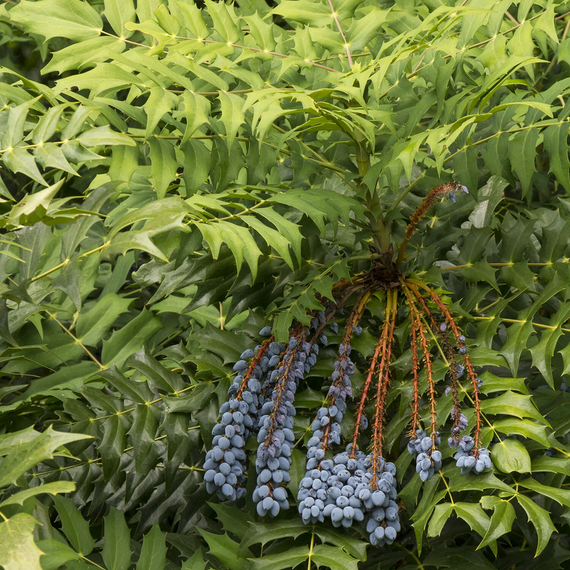
- Clusters of deep blue-purple, grape-like berries follow the flowers, attracting birds and other wildlife through late summer and fall.
- Exceptionally adaptable and low-maintenance once established — tolerating a wide range of soils, resisting deer, and thriving in full sun to partial shade.
Mahonia x media 'Charity' is a statuesque, broadleaf evergreen shrub that stands out as one of the most impressive winter-interest plants available for Pacific Coast gardens. Originating as a chance hybrid between Mahonia japonica and Mahonia lomariifolia at the Slieve Donard Nursery in Northern Ireland, and later selected and named by the renowned plantsman Sir Eric Savill, 'Charity' inherits the best qualities of both parent species — the hardiness and fragrance of M. japonica combined with the bold, upright form and large pinnate leaves of M. lomariifolia. From late autumn through the depths of winter, long upright racemes of sweetly scented, soft golden-yellow flowers emerge from the tips of each architectural stem, drawing in pollinators and perfuming the surrounding air during the coldest months of the year. The dramatically tropical-looking foliage is composed of whorls of large, dark green, leathery leaves, each made up of 17 to 21 sharp-tipped leaflets that give the plant a bold, almost prehistoric character in any garden setting. As the flowers fade, clusters of glossy, deep purple-blue berries develop, providing stunning late-season interest and a valuable food source for birds. A proven performer in Southern Oregon and Northern California gardens, Charity Mahonia thrives in a range of conditions, tolerates drought once established, and asks for little in return beyond a well-chosen planting site — making it an outstanding choice for borders, woodland gardens, screens, and mixed-shrub plantings where year-round beauty and four-season interest are priorities.
Plant Description
Mahonia x media 'Charity' is a large, upright, broadleaf evergreen shrub renowned for its dramatic architectural presence and exceptional winter performance. Its bold, frond-like leaves grow in distinct whorls along coarsely branched, vertical stems, giving the plant a striking, almost tropical silhouette. Each large pinnate leaf is composed of 17 to 21 leathery, lance-shaped leaflets edged with sharp spiny teeth, reminiscent of a cross between holly and a tropical palm frond. The foliage is a rich, lustrous dark green throughout most of the year, occasionally taking on burnished bronze or reddish tones in cold winter temperatures or when planted in full sun. From late October through February, long, upright spikes of small, cup-shaped, golden-yellow flowers erupt from the stem tips, arranged in clusters of 14 to 20 racemes per stem. These blooms are genuinely fragrant — carrying a soft, lily-of-the-valley-like sweetness — and are among the most welcome of any winter-blooming shrub. By late summer and fall, the spent flowers give way to grape-like clusters of glossy, round, deep blue-purple berries that persist on the plant and attract birds. 'Charity' is a hybrid between Mahonia japonica and Mahonia lomariifolia, first raised at the Slieve Donard Nursery in Northern Ireland and selected by the eminent plantsman Sir Eric Savill.
Mature Size
| Attribute | Measurement |
|---|---|
| Mature Height | 10 to 15 feet (occasionally to 20 feet in ideal conditions) |
| Mature Spread | 8 to 12 feet |
| Growth Rate | Moderate; typically 12 to 18 inches per year once established |
| Plant Shape | Upright, vase-shaped to broadly columnar |
| Leaf Length | Individual pinnate leaves can reach up to 18 inches long |
Because of its ultimately large stature, it is important to select a permanent planting location with ample space. 'Charity' does not transplant well once established, so thoughtful initial siting is essential. Allow at least 8 to 10 feet from structures, walls, or other large shrubs to give this plant room to display its full architectural character.
Hardiness Zones and Climate
Mahonia x media 'Charity' is reliably hardy in USDA Zones 7 to 9, with some sources citing performance in the warmer microclimates of Zone 6 with wind protection. It is exceptionally well-suited to the mild, wet winters and warm, dry summers characteristic of Southern Oregon and Northern California, making it an ideal choice for gardeners in the Rogue Valley, Medford, Ashland, and the Shasta/Redding region. It thrives in the maritime Pacific Northwest climate and performs equally well in the warmer inland valleys. While the plant tolerates moderate frost, it should be sited away from cold, drying winds that can cause foliage burn (windburn) on the spiny leaflets. A sheltered position near a wall, fence, or taller windbreak planting will help the shrub reach its full ornamental potential in colder microclimates.
Sunlight Requirements
'Charity' Mahonia is adaptable to a wide range of light conditions, one of its most valuable landscape traits. Here is how it performs in different light levels:
- Full Sun (6+ hours direct light): Plants bloom prolifically and maintain a compact, upright form. Foliage may show more reddish-bronze tones, especially in winter. Occasional deep watering during summer dry spells is important in full sun to maintain rich foliage color.
- Partial Shade (3-6 hours direct or filtered light): The ideal exposure for most gardens. Foliage remains a deep, lustrous green, and flowering is still excellent. This is the preferred condition in hotter inland climates such as Southern Oregon and Northern California summers.
- Full Shade (under 3 hours direct light): The plant will survive in full shade but may become somewhat leggy as it reaches toward available light. Flowering may be reduced. Best used as a structural foliage plant in heavily shaded areas.
Soil and pH Preferences
One of the hallmarks of 'Charity' Mahonia is its adaptability to a wide variety of soil types. It performs well in chalk, clay, loam, and sandy soils, provided drainage is adequate. Waterlogged or poorly draining soils should be avoided, as prolonged saturation can lead to root rot. Key soil preferences include:
- Soil Type: Fertile, humus-rich, moist but well-drained soils are ideal. Adding compost or aged organic matter at planting time greatly improves establishment in both clay-heavy and sandy native soils.
- Soil pH: Adaptable to acid, neutral, and moderately alkaline soils. Optimum pH is in the range of 5.5 to 7.0. In Southern Oregon's often neutral to slightly alkaline soils, incorporating acidifying organic amendments such as composted bark or leaf mold at planting can be beneficial.
- Drainage: Good drainage is essential. In heavy clay soils, amend the planting bed generously with coarse sand or perlite in addition to compost to improve structure and drainage.
Watering Guide
Proper watering, particularly through the first growing season, is critical to establishing a strong, deep root system. Once well-established, 'Charity' Mahonia is notably drought tolerant — an important trait for the hot, dry summers of Southern Oregon and Northern California.
- At Planting: Soak the root ball in water for 20 to 30 minutes before planting, and water deeply and thoroughly immediately after planting.
- First Season: Water deeply every 7 to 14 days throughout the first summer and fall, allowing the soil to partially dry between waterings. Deep, infrequent watering encourages the roots to grow deep.
- Established Plants: Drought tolerant once established (typically after 2 to 3 growing seasons). Occasional deep watering during extended dry periods, especially for plants in full sun, will help maintain rich, dark green foliage color and support summer berry development.
- Signs of Overwatering: Yellowing leaves and soft, mushy stem bases can indicate root rot from excessive moisture or poor drainage.
- Signs of Underwatering: Wilting foliage, dry and crumbling soil, and leaf scorch on exposed leaflet tips indicate insufficient moisture.
Fertilizing
Mahonia x media 'Charity' is not a heavy feeder, but providing appropriate nutrition, particularly in the first few years, will support healthy establishment, vigorous growth, and abundant flowering.
- At Planting: Incorporate a slow-release bone meal or all-purpose granular fertilizer into the planting hole backfill to promote early root development.
- Established Plants: Apply a balanced, slow-release granular fertilizer (such as a 10-10-10 or a formula designed for shrubs and ornamentals) in early spring as new growth begins. One application per year is typically sufficient for healthy, well-sited plants.
- Organic Options: Top-dressing the root zone with a 2- to 3-inch layer of quality compost in early spring provides slow, gentle nutrition while also improving soil moisture retention and structure.
- Avoid Over-Fertilizing: Excessive nitrogen can promote lush, soft growth that is more susceptible to pests and diseases. Use fertilizer according to label directions and resist the urge to over-apply.
Pruning and Maintenance
'Charity' Mahonia is a naturally low-maintenance shrub that requires minimal pruning to look its best. Its architectural, whorled branching structure is best displayed when the plant is allowed to develop its natural form without heavy cutting.
- Routine Pruning: In late spring, after the flowering period has concluded, pinch or lightly trim the stem tips to encourage branching and create a fuller, more bushy habit. This is optional but beneficial for younger plants.
- Deadheading: Unless berry production for wildlife is desired, spent flower stalks can be removed after bloom to tidy the plant's appearance.
- Corrective Pruning: Remove dead, damaged, or diseased branches at any time of year. Older, bare-bottomed stems can be cut back hard in late spring to encourage new growth from the base and improve the plant's overall density.
- Renewal Pruning: For overgrown, leggy specimens, one-third of the oldest stems can be removed at the base in late spring to stimulate rejuvenating new growth without shocking the plant.
- Mulching: Apply a 2- to 3-inch layer of organic mulch over the root zone each year to conserve soil moisture, regulate soil temperature, and suppress weeds. Keep mulch a few inches away from the main stems to prevent rot.
- Transplanting: Avoid moving established plants. Select the permanent planting location carefully, as 'Charity' does not appreciate being disturbed once it has settled in.
Planting Instructions
- Timing: Plant in early spring or fall when temperatures are mild. Avoid planting during heat waves or when hard frosts are forecast.
- Site Selection: Choose a location with the appropriate light exposure (full sun to partial shade) that is sheltered from cold, desiccating winds. Allow adequate space for the plant's ultimate mature size — at least 8 to 10 feet from structures or neighboring large plants.
- Prepare the Hole: Dig a planting hole that is twice as wide as the root ball and approximately as deep. Loosen the sides of the hole to allow roots to penetrate the surrounding soil easily.
- Amend the Soil: Mix the removed soil with generous amounts of compost or aged organic matter. If drainage is a concern, incorporate coarse sand or perlite. Add a handful of bone meal to the backfill to support initial root development.
- Prepare the Plant: Soak the root ball in water for 20 to 30 minutes before planting. Gently loosen any circling or tightly bound roots before placing the plant in the hole.
- Position the Plant: Set the plant so that the top of the root ball sits level with or just slightly above the surrounding soil grade. Planting too deep is a common mistake that can cause stem rot.
- Backfill and Tamp: Fill the hole with the amended soil, firming it gently around the roots to eliminate air pockets. Do not compact the soil heavily.
- Water Thoroughly: Water deeply and slowly immediately after planting to settle the soil and ensure good root-to-soil contact.
- Mulch: Apply a 2- to 3-inch layer of organic mulch over the entire root zone, keeping it a few inches away from the base of the stems.
Seasonal Interest
'Charity' Mahonia is a true four-season performer, offering something of visual value in every month of the year — a rare quality among landscape shrubs.
- Fall (October - November): The first fragrant flower buds begin to open on upright racemes at the stem tips. Deep blue-purple berry clusters from the previous season's flowers remain ornamentally attractive and provide food for birds migrating through Southern Oregon.
- Winter (December - February): Peak bloom season. Long, arching to upright spikes of golden-yellow, sweetly scented flowers are at their most spectacular. The bold evergreen foliage may take on rich bronzy-red tones in cold temperatures, adding further seasonal interest against the bright blooms.
- Spring (March - April): Flowering continues into early spring. New growth emerges in a warm coppery-bronze to reddish tone before maturing to rich dark green, providing striking color contrast with the mature foliage.
- Summer (May - September): The architectural evergreen foliage provides structure, deep green color, and bold texture throughout the long, dry Pacific Coast summer. Developing berry clusters ripen to their deep blue-purple color by late summer, adding ornamental interest and wildlife value.
Landscape Uses
Mahonia x media 'Charity' is an exceptionally versatile landscape plant that serves a wide variety of functional and ornamental roles in Pacific Coast gardens:
- Specimen or Focal Point: Its bold, architectural form and striking winter flowers make it an outstanding standalone specimen in a prominent garden position.
- Mixed Shrub Borders: Pairs beautifully with other winter- and spring-interest shrubs, adding height, evergreen structure, and winter color to mixed plantings.
- Woodland Gardens: Thrives in the dappled shade beneath deciduous trees, where it naturalizes beautifully among ferns, hellebores, and other shade-adapted plants.
- Screen and Hedging: Its tall, dense, upright growth habit and spiny foliage make it an effective and deer-resistant screening plant or informal hedge along property boundaries.
- Foundation Planting: Works well as a bold cornerpiece in foundation plantings for larger homes, providing year-round structure and winter interest.
- Coastal and City Gardens: Tolerates the challenging conditions of coastal gardens and urban environments, including air pollution and reflected heat from paving.
- Erosion Control on Slopes: Once established, its deep, spreading root system helps stabilize slopes and embankments in the landscape.
- Security Planting: The sharply spined leaflets make this an effective deterrent hedge along fence lines, serving as a natural security barrier while remaining highly ornamental.
Companion Plants
Mahonia x media 'Charity' pairs beautifully with plants that share its preference for partial shade and moist, well-drained soils, or that complement its bold winter presence with contrasting textures and colors:
- Helleborus x hybridus (Lenten Rose): Blooms in late winter alongside 'Charity,' creating a classic winter garden combination of nodding flowers and bold spiny foliage.
- Hamamelis (Witch Hazel): Fragrant winter-blooming deciduous shrubs that provide complementary color and fragrance alongside 'Charity's' evergreen structure.
- Carex oshimensis 'Evergold' (Japanese Sedge): The golden-variegated foliage of this evergreen sedge provides a bright, low-growing contrast at the base of the taller Mahonia.
- Cyclamen coum (Persian Violet): Delicate pink to magenta winter flowers and beautifully marbled foliage create a charming underplanting at the feet of 'Charity.'
- Stachyurus praecox: Early-blooming winter shrub with pendulous yellow flower chains that complement the upright spikes of 'Charity' in the winter garden.
- Daphne odora 'Aureomarginata' (Winter Daphne): Shares 'Charity's' winter bloom season and extraordinary fragrance; the two together create a powerfully scented winter garden vignette.
- Ferns (Polystichum, Dryopteris): Evergreen and deciduous ferns provide lush, fine-textured contrast to the bold pinnate leaves of 'Charity' in shaded garden settings.
- Nandina domestica (Heavenly Bamboo): Offers complementary upright form and brilliant winter foliage color alongside 'Charity's' yellow winter blooms.
Pests and Diseases
Mahonia x media 'Charity' is generally a robust, trouble-free shrub with good natural resistance to most serious pests and diseases. However, gardeners should be aware of the following occasional issues:
- Powdery Mildew: The most common disease affecting Mahonias. Appears as a grayish-white powdery coating on the leaf surfaces, typically occurring in conditions of poor air circulation or dry soil combined with humid air. Treat with a labeled fungicide and improve air circulation by thinning crowded growth. Remove and dispose of heavily affected leaves.
- Rust: Another fungal issue that can appear as orange-brown pustules on leaf surfaces. Remove affected foliage promptly and treat with a copper-based or appropriate fungicide.
- Aphids: Occasionally colonize new growth in spring. A strong stream of water or an application of insecticidal soap or neem oil is typically sufficient to control infestations.
- Scale Insects: Can occasionally appear on stems. Treat with horticultural oil applied in early spring before new growth emerges.
- Spider Mites: More common in hot, dry conditions. Neem oil or insecticidal soap sprays applied to the undersides of leaves are effective treatments.
- Root Rot (Phytophthora): Can develop in poorly drained or waterlogged soils. Prevention through proper site selection and soil preparation is the best approach. There is no cure once root rot is advanced.
- Windburn: Not a pest or disease, but cold, drying winds can cause browning of leaflet margins, especially in winter. Siting the plant in a sheltered location is the best preventive measure.
- Deer Resistance: The spiny-toothed leaflets make 'Charity' highly resistant to deer browse — an important advantage in Southern Oregon and Northern California landscapes.
Wildlife Value
Mahonia x media 'Charity' is an outstanding wildlife plant, providing critical resources for wildlife at times of the year when few other plants are in bloom or bearing fruit:
- Pollinators in Winter: The fragrant golden-yellow flowers bloom from late October through February, offering a rare and valuable nectar source for winter-active bees, including native bumblebees that forage on warm winter days in the Pacific Coast climate. Butterflies and other early-season pollinators also visit the flowers.
- Hummingbirds: Anna's Hummingbirds, which overwinter throughout Southern Oregon and Northern California, are known to visit the flowers for nectar during the winter bloom period.
- Birds and Berry-Eating Wildlife: The deep blue-purple berry clusters that ripen in late summer and fall are relished by a wide variety of birds, including thrushes, robins, waxwings, and other frugivorous species. The berries are an important food source for birds during fall migration.
- Cover and Nesting: The dense, spiny foliage provides excellent protective cover for small birds and other wildlife sheltering from predators and harsh weather.
- Deer Resistant: The sharply spined leaflets deter deer, making 'Charity' a reliable choice in areas with high deer pressure while still supporting other beneficial wildlife.
Propagation
Mahonia x media 'Charity' can be propagated by home gardeners using the following methods:
- Semi-Hardwood Cuttings (Recommended): The most reliable method for reproducing 'Charity' true to type. Take 4- to 6-inch cuttings of partially mature (semi-hardwood) stem growth in late summer to early fall. Remove the lower leaves, dip the cut end in rooting hormone, and insert into a well-draining propagation medium (such as equal parts perlite and peat or coir). Keep consistently moist in a sheltered, partially shaded location. Rooting typically occurs over several weeks to months.
- Seed: Mahonia x media 'Charity' can be grown from seed, though seed-raised plants may not be identical to the parent and may show some variation in leaf form and flower character. Collect ripe berries in fall, clean the seeds from the pulp, and stratify (cold, moist stratification for 4 to 8 weeks) before sowing in spring. Germination can be slow and irregular.
- Leaf-Bud Cuttings: Individual leaflets with a bud and a short section of stem can be rooted under mist or in a propagation chamber, though this method is more commonly used in commercial production settings.
- Sweetly fragrant golden-yellow flower spikes bloom from late fall through winter, delivering rare color and fragrance to the garden when little else is in bloom.
- Bold, architectural evergreen foliage features dramatic whorls of large, spine-tipped, dark green pinnate leaves that provide striking year-round texture and structure.
- Clusters of deep blue-purple, grape-like berries follow the flowers, attracting birds and other wildlife through late summer and fall.
- Exceptionally adaptable and low-maintenance once established — tolerating a wide range of soils, resisting deer, and thriving in full sun to partial shade.
Mahonia x media 'Charity' is a statuesque, broadleaf evergreen shrub that stands out as one of the most impressive winter-interest plants available for Pacific Coast gardens. Originating as a chance hybrid between Mahonia japonica and Mahonia lomariifolia at the Slieve Donard Nursery in Northern Ireland, and later selected and named by the renowned plantsman Sir Eric Savill, 'Charity' inherits the best qualities of both parent species — the hardiness and fragrance of M. japonica combined with the bold, upright form and large pinnate leaves of M. lomariifolia. From late autumn through the depths of winter, long upright racemes of sweetly scented, soft golden-yellow flowers emerge from the tips of each architectural stem, drawing in pollinators and perfuming the surrounding air during the coldest months of the year. The dramatically tropical-looking foliage is composed of whorls of large, dark green, leathery leaves, each made up of 17 to 21 sharp-tipped leaflets that give the plant a bold, almost prehistoric character in any garden setting. As the flowers fade, clusters of glossy, deep purple-blue berries develop, providing stunning late-season interest and a valuable food source for birds. A proven performer in Southern Oregon and Northern California gardens, Charity Mahonia thrives in a range of conditions, tolerates drought once established, and asks for little in return beyond a well-chosen planting site — making it an outstanding choice for borders, woodland gardens, screens, and mixed-shrub plantings where year-round beauty and four-season interest are priorities.
Plant Description
Mahonia x media 'Charity' is a large, upright, broadleaf evergreen shrub renowned for its dramatic architectural presence and exceptional winter performance. Its bold, frond-like leaves grow in distinct whorls along coarsely branched, vertical stems, giving the plant a striking, almost tropical silhouette. Each large pinnate leaf is composed of 17 to 21 leathery, lance-shaped leaflets edged with sharp spiny teeth, reminiscent of a cross between holly and a tropical palm frond. The foliage is a rich, lustrous dark green throughout most of the year, occasionally taking on burnished bronze or reddish tones in cold winter temperatures or when planted in full sun. From late October through February, long, upright spikes of small, cup-shaped, golden-yellow flowers erupt from the stem tips, arranged in clusters of 14 to 20 racemes per stem. These blooms are genuinely fragrant — carrying a soft, lily-of-the-valley-like sweetness — and are among the most welcome of any winter-blooming shrub. By late summer and fall, the spent flowers give way to grape-like clusters of glossy, round, deep blue-purple berries that persist on the plant and attract birds. 'Charity' is a hybrid between Mahonia japonica and Mahonia lomariifolia, first raised at the Slieve Donard Nursery in Northern Ireland and selected by the eminent plantsman Sir Eric Savill.
Mature Size
| Attribute | Measurement |
|---|---|
| Mature Height | 10 to 15 feet (occasionally to 20 feet in ideal conditions) |
| Mature Spread | 8 to 12 feet |
| Growth Rate | Moderate; typically 12 to 18 inches per year once established |
| Plant Shape | Upright, vase-shaped to broadly columnar |
| Leaf Length | Individual pinnate leaves can reach up to 18 inches long |
Because of its ultimately large stature, it is important to select a permanent planting location with ample space. 'Charity' does not transplant well once established, so thoughtful initial siting is essential. Allow at least 8 to 10 feet from structures, walls, or other large shrubs to give this plant room to display its full architectural character.
Hardiness Zones and Climate
Mahonia x media 'Charity' is reliably hardy in USDA Zones 7 to 9, with some sources citing performance in the warmer microclimates of Zone 6 with wind protection. It is exceptionally well-suited to the mild, wet winters and warm, dry summers characteristic of Southern Oregon and Northern California, making it an ideal choice for gardeners in the Rogue Valley, Medford, Ashland, and the Shasta/Redding region. It thrives in the maritime Pacific Northwest climate and performs equally well in the warmer inland valleys. While the plant tolerates moderate frost, it should be sited away from cold, drying winds that can cause foliage burn (windburn) on the spiny leaflets. A sheltered position near a wall, fence, or taller windbreak planting will help the shrub reach its full ornamental potential in colder microclimates.
Sunlight Requirements
'Charity' Mahonia is adaptable to a wide range of light conditions, one of its most valuable landscape traits. Here is how it performs in different light levels:
- Full Sun (6+ hours direct light): Plants bloom prolifically and maintain a compact, upright form. Foliage may show more reddish-bronze tones, especially in winter. Occasional deep watering during summer dry spells is important in full sun to maintain rich foliage color.
- Partial Shade (3-6 hours direct or filtered light): The ideal exposure for most gardens. Foliage remains a deep, lustrous green, and flowering is still excellent. This is the preferred condition in hotter inland climates such as Southern Oregon and Northern California summers.
- Full Shade (under 3 hours direct light): The plant will survive in full shade but may become somewhat leggy as it reaches toward available light. Flowering may be reduced. Best used as a structural foliage plant in heavily shaded areas.
Soil and pH Preferences
One of the hallmarks of 'Charity' Mahonia is its adaptability to a wide variety of soil types. It performs well in chalk, clay, loam, and sandy soils, provided drainage is adequate. Waterlogged or poorly draining soils should be avoided, as prolonged saturation can lead to root rot. Key soil preferences include:
- Soil Type: Fertile, humus-rich, moist but well-drained soils are ideal. Adding compost or aged organic matter at planting time greatly improves establishment in both clay-heavy and sandy native soils.
- Soil pH: Adaptable to acid, neutral, and moderately alkaline soils. Optimum pH is in the range of 5.5 to 7.0. In Southern Oregon's often neutral to slightly alkaline soils, incorporating acidifying organic amendments such as composted bark or leaf mold at planting can be beneficial.
- Drainage: Good drainage is essential. In heavy clay soils, amend the planting bed generously with coarse sand or perlite in addition to compost to improve structure and drainage.
Watering Guide
Proper watering, particularly through the first growing season, is critical to establishing a strong, deep root system. Once well-established, 'Charity' Mahonia is notably drought tolerant — an important trait for the hot, dry summers of Southern Oregon and Northern California.
- At Planting: Soak the root ball in water for 20 to 30 minutes before planting, and water deeply and thoroughly immediately after planting.
- First Season: Water deeply every 7 to 14 days throughout the first summer and fall, allowing the soil to partially dry between waterings. Deep, infrequent watering encourages the roots to grow deep.
- Established Plants: Drought tolerant once established (typically after 2 to 3 growing seasons). Occasional deep watering during extended dry periods, especially for plants in full sun, will help maintain rich, dark green foliage color and support summer berry development.
- Signs of Overwatering: Yellowing leaves and soft, mushy stem bases can indicate root rot from excessive moisture or poor drainage.
- Signs of Underwatering: Wilting foliage, dry and crumbling soil, and leaf scorch on exposed leaflet tips indicate insufficient moisture.
Fertilizing
Mahonia x media 'Charity' is not a heavy feeder, but providing appropriate nutrition, particularly in the first few years, will support healthy establishment, vigorous growth, and abundant flowering.
- At Planting: Incorporate a slow-release bone meal or all-purpose granular fertilizer into the planting hole backfill to promote early root development.
- Established Plants: Apply a balanced, slow-release granular fertilizer (such as a 10-10-10 or a formula designed for shrubs and ornamentals) in early spring as new growth begins. One application per year is typically sufficient for healthy, well-sited plants.
- Organic Options: Top-dressing the root zone with a 2- to 3-inch layer of quality compost in early spring provides slow, gentle nutrition while also improving soil moisture retention and structure.
- Avoid Over-Fertilizing: Excessive nitrogen can promote lush, soft growth that is more susceptible to pests and diseases. Use fertilizer according to label directions and resist the urge to over-apply.
Pruning and Maintenance
'Charity' Mahonia is a naturally low-maintenance shrub that requires minimal pruning to look its best. Its architectural, whorled branching structure is best displayed when the plant is allowed to develop its natural form without heavy cutting.
- Routine Pruning: In late spring, after the flowering period has concluded, pinch or lightly trim the stem tips to encourage branching and create a fuller, more bushy habit. This is optional but beneficial for younger plants.
- Deadheading: Unless berry production for wildlife is desired, spent flower stalks can be removed after bloom to tidy the plant's appearance.
- Corrective Pruning: Remove dead, damaged, or diseased branches at any time of year. Older, bare-bottomed stems can be cut back hard in late spring to encourage new growth from the base and improve the plant's overall density.
- Renewal Pruning: For overgrown, leggy specimens, one-third of the oldest stems can be removed at the base in late spring to stimulate rejuvenating new growth without shocking the plant.
- Mulching: Apply a 2- to 3-inch layer of organic mulch over the root zone each year to conserve soil moisture, regulate soil temperature, and suppress weeds. Keep mulch a few inches away from the main stems to prevent rot.
- Transplanting: Avoid moving established plants. Select the permanent planting location carefully, as 'Charity' does not appreciate being disturbed once it has settled in.
Planting Instructions
- Timing: Plant in early spring or fall when temperatures are mild. Avoid planting during heat waves or when hard frosts are forecast.
- Site Selection: Choose a location with the appropriate light exposure (full sun to partial shade) that is sheltered from cold, desiccating winds. Allow adequate space for the plant's ultimate mature size — at least 8 to 10 feet from structures or neighboring large plants.
- Prepare the Hole: Dig a planting hole that is twice as wide as the root ball and approximately as deep. Loosen the sides of the hole to allow roots to penetrate the surrounding soil easily.
- Amend the Soil: Mix the removed soil with generous amounts of compost or aged organic matter. If drainage is a concern, incorporate coarse sand or perlite. Add a handful of bone meal to the backfill to support initial root development.
- Prepare the Plant: Soak the root ball in water for 20 to 30 minutes before planting. Gently loosen any circling or tightly bound roots before placing the plant in the hole.
- Position the Plant: Set the plant so that the top of the root ball sits level with or just slightly above the surrounding soil grade. Planting too deep is a common mistake that can cause stem rot.
- Backfill and Tamp: Fill the hole with the amended soil, firming it gently around the roots to eliminate air pockets. Do not compact the soil heavily.
- Water Thoroughly: Water deeply and slowly immediately after planting to settle the soil and ensure good root-to-soil contact.
- Mulch: Apply a 2- to 3-inch layer of organic mulch over the entire root zone, keeping it a few inches away from the base of the stems.
Seasonal Interest
'Charity' Mahonia is a true four-season performer, offering something of visual value in every month of the year — a rare quality among landscape shrubs.
- Fall (October - November): The first fragrant flower buds begin to open on upright racemes at the stem tips. Deep blue-purple berry clusters from the previous season's flowers remain ornamentally attractive and provide food for birds migrating through Southern Oregon.
- Winter (December - February): Peak bloom season. Long, arching to upright spikes of golden-yellow, sweetly scented flowers are at their most spectacular. The bold evergreen foliage may take on rich bronzy-red tones in cold temperatures, adding further seasonal interest against the bright blooms.
- Spring (March - April): Flowering continues into early spring. New growth emerges in a warm coppery-bronze to reddish tone before maturing to rich dark green, providing striking color contrast with the mature foliage.
- Summer (May - September): The architectural evergreen foliage provides structure, deep green color, and bold texture throughout the long, dry Pacific Coast summer. Developing berry clusters ripen to their deep blue-purple color by late summer, adding ornamental interest and wildlife value.
Landscape Uses
Mahonia x media 'Charity' is an exceptionally versatile landscape plant that serves a wide variety of functional and ornamental roles in Pacific Coast gardens:
- Specimen or Focal Point: Its bold, architectural form and striking winter flowers make it an outstanding standalone specimen in a prominent garden position.
- Mixed Shrub Borders: Pairs beautifully with other winter- and spring-interest shrubs, adding height, evergreen structure, and winter color to mixed plantings.
- Woodland Gardens: Thrives in the dappled shade beneath deciduous trees, where it naturalizes beautifully among ferns, hellebores, and other shade-adapted plants.
- Screen and Hedging: Its tall, dense, upright growth habit and spiny foliage make it an effective and deer-resistant screening plant or informal hedge along property boundaries.
- Foundation Planting: Works well as a bold cornerpiece in foundation plantings for larger homes, providing year-round structure and winter interest.
- Coastal and City Gardens: Tolerates the challenging conditions of coastal gardens and urban environments, including air pollution and reflected heat from paving.
- Erosion Control on Slopes: Once established, its deep, spreading root system helps stabilize slopes and embankments in the landscape.
- Security Planting: The sharply spined leaflets make this an effective deterrent hedge along fence lines, serving as a natural security barrier while remaining highly ornamental.
Companion Plants
Mahonia x media 'Charity' pairs beautifully with plants that share its preference for partial shade and moist, well-drained soils, or that complement its bold winter presence with contrasting textures and colors:
- Helleborus x hybridus (Lenten Rose): Blooms in late winter alongside 'Charity,' creating a classic winter garden combination of nodding flowers and bold spiny foliage.
- Hamamelis (Witch Hazel): Fragrant winter-blooming deciduous shrubs that provide complementary color and fragrance alongside 'Charity's' evergreen structure.
- Carex oshimensis 'Evergold' (Japanese Sedge): The golden-variegated foliage of this evergreen sedge provides a bright, low-growing contrast at the base of the taller Mahonia.
- Cyclamen coum (Persian Violet): Delicate pink to magenta winter flowers and beautifully marbled foliage create a charming underplanting at the feet of 'Charity.'
- Stachyurus praecox: Early-blooming winter shrub with pendulous yellow flower chains that complement the upright spikes of 'Charity' in the winter garden.
- Daphne odora 'Aureomarginata' (Winter Daphne): Shares 'Charity's' winter bloom season and extraordinary fragrance; the two together create a powerfully scented winter garden vignette.
- Ferns (Polystichum, Dryopteris): Evergreen and deciduous ferns provide lush, fine-textured contrast to the bold pinnate leaves of 'Charity' in shaded garden settings.
- Nandina domestica (Heavenly Bamboo): Offers complementary upright form and brilliant winter foliage color alongside 'Charity's' yellow winter blooms.
Pests and Diseases
Mahonia x media 'Charity' is generally a robust, trouble-free shrub with good natural resistance to most serious pests and diseases. However, gardeners should be aware of the following occasional issues:
- Powdery Mildew: The most common disease affecting Mahonias. Appears as a grayish-white powdery coating on the leaf surfaces, typically occurring in conditions of poor air circulation or dry soil combined with humid air. Treat with a labeled fungicide and improve air circulation by thinning crowded growth. Remove and dispose of heavily affected leaves.
- Rust: Another fungal issue that can appear as orange-brown pustules on leaf surfaces. Remove affected foliage promptly and treat with a copper-based or appropriate fungicide.
- Aphids: Occasionally colonize new growth in spring. A strong stream of water or an application of insecticidal soap or neem oil is typically sufficient to control infestations.
- Scale Insects: Can occasionally appear on stems. Treat with horticultural oil applied in early spring before new growth emerges.
- Spider Mites: More common in hot, dry conditions. Neem oil or insecticidal soap sprays applied to the undersides of leaves are effective treatments.
- Root Rot (Phytophthora): Can develop in poorly drained or waterlogged soils. Prevention through proper site selection and soil preparation is the best approach. There is no cure once root rot is advanced.
- Windburn: Not a pest or disease, but cold, drying winds can cause browning of leaflet margins, especially in winter. Siting the plant in a sheltered location is the best preventive measure.
- Deer Resistance: The spiny-toothed leaflets make 'Charity' highly resistant to deer browse — an important advantage in Southern Oregon and Northern California landscapes.
Wildlife Value
Mahonia x media 'Charity' is an outstanding wildlife plant, providing critical resources for wildlife at times of the year when few other plants are in bloom or bearing fruit:
- Pollinators in Winter: The fragrant golden-yellow flowers bloom from late October through February, offering a rare and valuable nectar source for winter-active bees, including native bumblebees that forage on warm winter days in the Pacific Coast climate. Butterflies and other early-season pollinators also visit the flowers.
- Hummingbirds: Anna's Hummingbirds, which overwinter throughout Southern Oregon and Northern California, are known to visit the flowers for nectar during the winter bloom period.
- Birds and Berry-Eating Wildlife: The deep blue-purple berry clusters that ripen in late summer and fall are relished by a wide variety of birds, including thrushes, robins, waxwings, and other frugivorous species. The berries are an important food source for birds during fall migration.
- Cover and Nesting: The dense, spiny foliage provides excellent protective cover for small birds and other wildlife sheltering from predators and harsh weather.
- Deer Resistant: The sharply spined leaflets deter deer, making 'Charity' a reliable choice in areas with high deer pressure while still supporting other beneficial wildlife.
Propagation
Mahonia x media 'Charity' can be propagated by home gardeners using the following methods:
- Semi-Hardwood Cuttings (Recommended): The most reliable method for reproducing 'Charity' true to type. Take 4- to 6-inch cuttings of partially mature (semi-hardwood) stem growth in late summer to early fall. Remove the lower leaves, dip the cut end in rooting hormone, and insert into a well-draining propagation medium (such as equal parts perlite and peat or coir). Keep consistently moist in a sheltered, partially shaded location. Rooting typically occurs over several weeks to months.
- Seed: Mahonia x media 'Charity' can be grown from seed, though seed-raised plants may not be identical to the parent and may show some variation in leaf form and flower character. Collect ripe berries in fall, clean the seeds from the pulp, and stratify (cold, moist stratification for 4 to 8 weeks) before sowing in spring. Germination can be slow and irregular.
- Leaf-Bud Cuttings: Individual leaflets with a bud and a short section of stem can be rooted under mist or in a propagation chamber, though this method is more commonly used in commercial production settings.