Zoom the image with the mouse
Little Giant Arborvitae - 1 Gallon
SKU:
223980
UPC:
052199101204
$9.99
- Naturally globe-shaped, dwarf evergreen shrub that maintains its tidy, rounded form with little to no pruning required
- Rich forest green foliage holds its vibrant color year-round, providing four-season interest even through harsh winters
- Exceptionally cold-hardy in USDA Zones 3-8 with a slow, compact growth habit ideal for small gardens, foundation plantings, and containers
- Low-maintenance, native-origin evergreen that tolerates a wide range of soil types, urban pollution, and occasional moisture fluctuations
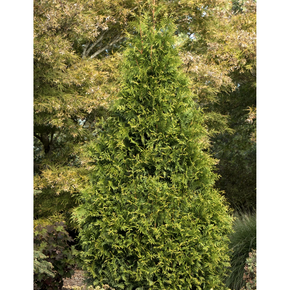
Little Giant Arborvitae (Thuja occidentalis 'Little Giant') is a standout dwarf evergreen shrub prized for its naturally rounded, globe-shaped form and its exceptional year-round appeal. Unlike most landscape plants that require regular shearing to maintain a tidy shape, this compact cultivar of eastern arborvitae develops its attractive spherical silhouette entirely on its own, making it one of the most effortlessly elegant choices for today's low-maintenance gardens. The dense, fine-textured foliage is composed of flattened, fan-like sprays of aromatic, scale-like leaves in a rich forest green that remains vibrant and deep-colored throughout every season, including winter — a quality that sets it apart from many other evergreens. Maturing at a slow and predictable rate to approximately 3-5 feet tall and equally wide, Little Giant Arborvitae is perfectly scaled for foundation plantings, formal borders, container gardens, and small residential landscapes where a larger shrub would quickly become overwhelming. Hardy from USDA Zones 3 through 8, it thrives across a broad range of climates and is highly adaptable to various soil types including clay and loam, tolerating both moist conditions and brief dry spells once established. Its selection from the native eastern arborvitae species means it carries real ecological value, offering winter shelter and seed forage for songbirds while bringing lasting structure and sophisticated evergreen texture to any landscape design.
Plant Description
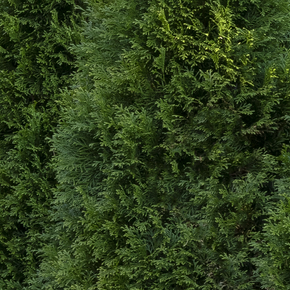
Little Giant Arborvitae (Thuja occidentalis 'Little Giant') is a dwarf, globe-shaped cultivar of the native eastern arborvitae, a species in the cypress family (Cupressaceae) indigenous to eastern and north-central North America. What makes this cultivar exceptional is its naturally self-forming, rounded silhouette — it requires no shearing to hold its compact, spherical shape. The foliage is composed of densely layered, flat, fan-shaped sprays of scale-like, aromatic leaves in a rich forest green. When the foliage is gently crushed, it releases a pleasant, citrusy-piney fragrance characteristic of the species. The texture is notably fine, lending a lush, almost moss-like visual quality that stands out among coarser-leaved shrubs. Small, oblong seed cones may appear near the branch tips in season, adding a subtle ornamental detail. The overall growth habit is dense and multi-stemmed, filling out fully from the ground up without any bare patches at the base.
Mature Size and Growth Rate
| Characteristic | Detail |
|---|---|
| Mature Height | 3-5 feet |
| Mature Spread | 3-5 feet |
| Growth Rate | Slow (typically 2-4 inches per year) |
| Growth Habit | Dense, rounded globe; self-shaping |
| Estimated Lifespan | Approximately 30+ years under ideal conditions |
| Base Coverage | Fills out fully to ground level; no facer plants needed |
Because of its slow growth rate, Little Giant Arborvitae will not quickly outgrow its intended space, making it an excellent long-term investment for areas where a permanent, low-effort evergreen anchor is desired. Its predictable size also makes it safe to plant under power lines and in close proximity to structures.
Hardiness Zones
Little Giant Arborvitae is rated for USDA Plant Hardiness Zones 3 through 8, making it one of the most cold-tolerant dwarf evergreen shrubs available for American gardens. It can withstand extreme minimum winter temperatures as low as -40 degrees F, making it a reliable choice for high-elevation and cold-winter climates such as those found in the mountains of Southern Oregon and Northern California, as well as across the northern United States. In hotter portions of Zone 8 and in climates with intense afternoon sun and dry summers, providing some light afternoon shade can help prevent foliage scorch and keep the plant looking its best throughout the warm season.
Sunlight Requirements
Little Giant Arborvitae performs best in full sun, defined as 6 or more hours of direct sunlight per day. Full sun exposure encourages the densest foliage, most vivid green coloring, and the tightest, most symmetrical globe form. It will tolerate partial shade (3-6 hours of direct sun), particularly in regions with hot summers where light afternoon shade can protect foliage from desiccation. However, in heavy or full shade, the growth habit becomes more open and loose, the foliage thins noticeably, and the plant loses much of its ornamental appeal. When siting this shrub, choose a location that receives consistent direct light and avoids prolonged deep shade from nearby structures or overhanging trees.
Soil and pH Preferences
Little Giant Arborvitae is quite adaptable when it comes to soil, thriving in a wide range of conditions. For best performance, plant in moist, fertile, well-draining loam. It tolerates clay soils and can handle periodically moist sites, making it suitable for low areas that may receive occasional standing water — though it should not be planted in permanently waterlogged ground, as prolonged wet roots invite rot. Sandy, overly dry soils should be amended with organic matter to improve both moisture retention and fertility. The acceptable soil pH range is broad, from slightly acidic to slightly alkaline (approximately 6.0 to 8.0), which means Little Giant Arborvitae is not as pH-demanding as many other conifers. It also demonstrates a reasonable tolerance for urban pollution and compacted soils, making it a practical choice for residential landscapes near roadways and foundations.
Watering Guide
Consistent moisture is the key to establishing a healthy Little Giant Arborvitae. Follow these guidelines based on the plant's stage of growth:
- At planting: Water thoroughly immediately after planting to settle the soil around the root ball and eliminate air pockets.
- First growing season: Water deeply and regularly — approximately once or twice per week — keeping the soil consistently moist but never waterlogged. Young plants have limited root systems and cannot access deep soil moisture on their own.
- Established plants: Once rooted in (typically after the first full growing season), Little Giant Arborvitae becomes more drought-tolerant. Water deeply but less frequently, allowing the top 2-3 inches of soil to begin drying between waterings. During extended dry spells or heat waves, increase watering frequency.
- Best practice: Water in the early morning to allow any foliage moisture to evaporate during the day, reducing the risk of fungal disease. Drip irrigation or soaker hoses at the root zone are preferable to overhead sprinklers.
- Winter: In regions with dry winters, water deeply before the ground freezes to prevent desiccation of the evergreen foliage through the cold months.
Fertilizing
Little Giant Arborvitae is not a heavy feeder, but a well-timed fertilization program helps sustain the rich green color and steady, healthy growth that make this shrub so appealing.
- Timing: Apply fertilizer in early spring, just as new growth begins to emerge. A second light application can be made in early summer if needed. Do not fertilize after midsummer, as late-season feeding stimulates tender new growth that is vulnerable to winter damage.
- Fertilizer type: Use a slow-release, balanced granular fertilizer formulated for evergreens, trees, and shrubs — such as a 10-10-10 or 12-4-8 NPK ratio. Slow-release formulas provide steady nutrition without the risk of burning roots.
- Application: Distribute granules evenly around the drip line (the outer perimeter of the branches), keeping fertilizer away from the trunk. Water in thoroughly after application to move nutrients into the root zone.
- Organic option: Topdressing with compost each spring is an excellent organic alternative that also improves soil structure and long-term fertility.
Pruning and Maintenance
One of the most celebrated qualities of Little Giant Arborvitae is that it requires virtually no pruning to maintain its elegant, rounded form — it naturally grows into a tidy globe without any intervention. For most gardeners, the maintenance routine is minimal:
- Routine pruning: Not required for shape. The plant self-forms its globe silhouette naturally throughout its life.
- Light tidying: If desired, lightly tip-prune in early spring to encourage density or to correct any minor irregularities in shape. Only trim the current season's new growth.
- Avoid hard pruning: Do not cut back into old, bare wood. Arborvitae branches that are cut back past the live green foliage rarely regenerate new growth, leaving unsightly bare patches.
- Deadwood removal: Remove any dead, damaged, or diseased branches at any time of year using clean, sharp pruners.
- Mulching: Apply a 2-4 inch layer of organic mulch (wood chips, shredded bark, or pine needles) around the base each spring, keeping mulch pulled back several inches from the trunk to prevent rot and discourage pests.
- Wind protection: In exposed locations, a temporary burlap windscreen placed on the windward side during winter can help prevent foliage desiccation and browning.
Planting Instructions
- Choose your site: Select a location with full sun to partial shade and well-draining soil. Avoid areas with standing water or heavy, poorly draining clay without amendment.
- Prepare the hole: Dig a hole twice as wide as the root ball and equal in depth. Wide holes allow roots to spread easily into loosened, amended soil.
- Amend the soil: If your native soil is very sandy or heavy clay, blend in compost or aged organic matter to improve drainage and fertility. Target a pH of 6.0-8.0.
- Position the plant: Set the root ball so its top sits level with or very slightly above the surrounding soil grade. Planting too deep can cause crown rot and poor establishment.
- Backfill and firm: Replace the excavated soil around the root ball, gently firming it to remove air pockets. Build a shallow water-retaining berm around the outer edge of the planting hole.
- Mulch: Apply 2-4 inches of organic mulch over the root zone, keeping it 3-4 inches away from the trunk.
- Water in: Water deeply and thoroughly immediately after planting to settle the roots and eliminate air pockets.
- Spacing: For individual specimens, allow 4-5 feet of clearance from other plants and structures. For a defined evergreen border or low informal hedge, space plants 3-4 feet apart on center.
Landscape Uses
Little Giant Arborvitae is one of the most versatile dwarf evergreens available for home landscapes. Its naturally symmetrical form and year-round evergreen presence make it suitable for a wide range of design applications:
- Foundation planting: A classic use — the tidy globe form complements architectural lines without overpowering windows or doorways.
- Formal borders and edging: Planted in a row, these globe shrubs create a clean, symmetrical border along walkways, driveways, or garden beds.
- Accent specimen: Use as a focal point in a mixed shrub border or perennial bed, providing a structured evergreen anchor among seasonal flowering plants.
- Mass planting: Group several plants together in a low-maintenance, weed-suppressing mass across slopes or open landscape areas.
- Low informal hedge: Spaced slightly closer together, Little Giant Arborvitae forms a soft, natural-looking evergreen hedge that defines spaces without rigid shearing.
- Container gardening: Its slow growth and compact habit make it ideal for large patio containers, flanking entryways, or adding year-round structure to deck and porch plantings.
- Rock and native gardens: Well-suited as a structural element in naturalistic planting schemes.
- Entryway framing: A pair of Little Giant Arborvitae flanking a front door, gate, or garden entrance creates an elegant, classic statement.
Seasonal Interest
Little Giant Arborvitae is a true four-season landscape plant. Unlike deciduous shrubs that leave bare branches through the winter months, this evergreen provides consistent color, form, and texture throughout the entire year:
- Spring: Bright, fresh new growth emerges at the tips of each branch spray, giving the plant a lush, renewed appearance after winter. This is an ideal time to apply fertilizer and a fresh layer of mulch.
- Summer: Dense, rich forest green foliage is at its fullest and deepest color. The aromatic foliage releases a pleasant fragrance on warm days.
- Fall: Foliage retains its deep green color as deciduous companion plants shift to fall tones, making the Globe Arborvitae a valuable constant in the autumn garden palette.
- Winter: One of this cultivar's most praised qualities is its ability to hold its rich green color through winter — even in harsh, cold climates. It provides structure and visual interest in the snow garden when most other plants have gone dormant, and its dense branching offers valuable winter cover and shelter for birds.
Companion Plants
Little Giant Arborvitae pairs beautifully with a wide variety of plants that complement its rounded form, evergreen texture, and rich green color. Consider these combinations for visually dynamic and ecologically supportive plantings:
- Ornamental grasses (e.g., Blue Oat Grass, Karl Foerster Feather Reed Grass): The fine, upright texture of grasses provides a graceful contrast to the dense, rounded form of the arborvitae.
- Dwarf spirea (e.g., 'Little Princess', 'Magic Carpet'): Flowering spirea planted nearby adds seasonal color bursts against the steady green backdrop.
- Boxwood (Buxus spp.): Combines well in formal garden designs, with both plants offering fine texture and structure.
- Lavender (Lavandula spp.): The silvery foliage and aromatic blooms of lavender create a beautiful contrast in texture and color, and lavender's pest-deterrent properties benefit neighboring plants.
- Dwarf conifers (e.g., Bird's Nest Spruce, Dwarf Alberta Spruce): Mixing globe-shaped arborvitae with other dwarf conifers of varied forms creates a low-maintenance conifer garden with year-round visual interest.
- Hellebores and ferns: Excellent for the partially shaded edges of an arborvitae planting, adding lush foliage interest at the base layer.
- Flowering perennials (e.g., coneflowers, black-eyed Susans): The bold seasonal color of native perennials pops vibrantly against the steady deep green of the arborvitae.
Pests and Diseases
Little Giant Arborvitae is generally a robust and trouble-free shrub, but as with any plant, awareness of potential pests and diseases helps you catch and address problems early:
- Spider mites: Among the most common arborvitae pests, spider mites are tiny sap-sucking arachnids that build fine webbing in the foliage and cause stippled, bronzed, or dull foliage. Most active in hot, dry conditions. Treat with insecticidal soap, neem oil, or a targeted miticide. Improve air circulation and avoid drought stress as prevention.
- Bagworms: Caterpillars that construct spindle-shaped bags from foliage and debris, consuming foliage as they feed. Hand-pick and destroy bags in late fall through spring before eggs hatch. Treat active infestations with Bacillus thuringiensis (Bt) or appropriate insecticides during early larval stage in late spring.
- Arborvitae leaf miners: Small moth larvae that tunnel through foliage tips, causing browning and dieback of branch ends. Treat with systemic insecticide or horticultural oil when adults are active.
- Scale insects: Scale can colonize branches and weaken the plant by sucking sap. Treat with horticultural oil applied during dormancy or at crawler stage.
- Tip blight (Pestalotiopsis): A fungal disease causing browning and dieback of branch tips, often following wet, humid conditions. Improve air circulation, avoid overhead watering, and remove affected branches. Copper-based fungicides may help in persistent cases.
- Root rot (Phytophthora): Caused by overly wet or poorly draining soil conditions. Prevent by ensuring excellent drainage at planting and avoiding overwatering. There is no cure; prevention through proper siting is essential.
- Winter burn: Browning of foliage caused by desiccating winter winds and bright winter sun, especially in exposed sites. Protect with an anti-desiccant spray in late fall and consider a windbreak burlap screen for the first few winters after planting.
- Deer browsing: Deer will browse arborvitae foliage, particularly in winter when other food sources are scarce. In areas with heavy deer pressure, consider deer-repellent sprays or physical fencing during the establishment period.
Container Growing
Little Giant Arborvitae is an excellent candidate for container gardening, bringing permanent evergreen structure to patios, decks, entryways, and rooftop gardens where in-ground planting is not possible.
- Container size: Choose a large, sturdy container — at least 18-24 inches in diameter and depth — with ample drainage holes. Larger containers provide more insulation for roots in cold winters.
- Potting mix: Use a high-quality, well-draining potting mix designed for trees and shrubs, or blend general potting mix with coarse perlite to improve drainage. Avoid heavy garden soil in containers.
- Watering in containers: Container plants dry out more rapidly than in-ground plants and require more frequent monitoring. Water when the top 2 inches of the potting mix feel dry, watering thoroughly until drainage flows freely from the bottom.
- Fertilizing: Containerized plants benefit from regular feeding with a slow-release evergreen fertilizer in spring, as nutrients leach out with watering over time.
- Winter protection: In Zones 6 and colder, move containers to a sheltered location (unheated garage, covered porch, or against a building wall) during the coldest months to protect the roots from hard freezes, as container roots are more exposed to temperature extremes than in-ground roots.
- Repotting: Given its slow growth rate, repotting is only needed every few years when roots become visibly pot-bound.
Wildlife Value
As a cultivar of the native eastern arborvitae (Thuja occidentalis), Little Giant Arborvitae carries meaningful wildlife value for your garden ecosystem:
- Bird shelter: The dense, year-round evergreen foliage provides critical winter cover and roosting shelter for songbirds and small native birds seeking protection from cold winds and predators.
- Nesting habitat: The dense branching structure offers protected nesting sites for small songbirds during the breeding season.
- Seed and foliage forage: Small seed cones produced by arborvitae are consumed by certain songbirds. The foliage also serves as a food source for small mammals.
- Non-invasive native origin: Unlike many exotic evergreens, Thuja occidentalis is native to North America, meaning it has co-evolved with local wildlife and contributes positively to regional biodiversity without risk of invasive spread.
- Note on deer: While this plant has wildlife value, deer are known to browse arborvitae foliage, particularly in winter. In landscapes with high deer pressure, protective measures may be needed to preserve the plant's form and health.
- Naturally globe-shaped, dwarf evergreen shrub that maintains its tidy, rounded form with little to no pruning required
- Rich forest green foliage holds its vibrant color year-round, providing four-season interest even through harsh winters
- Exceptionally cold-hardy in USDA Zones 3-8 with a slow, compact growth habit ideal for small gardens, foundation plantings, and containers
- Low-maintenance, native-origin evergreen that tolerates a wide range of soil types, urban pollution, and occasional moisture fluctuations
Little Giant Arborvitae (Thuja occidentalis 'Little Giant') is a standout dwarf evergreen shrub prized for its naturally rounded, globe-shaped form and its exceptional year-round appeal. Unlike most landscape plants that require regular shearing to maintain a tidy shape, this compact cultivar of eastern arborvitae develops its attractive spherical silhouette entirely on its own, making it one of the most effortlessly elegant choices for today's low-maintenance gardens. The dense, fine-textured foliage is composed of flattened, fan-like sprays of aromatic, scale-like leaves in a rich forest green that remains vibrant and deep-colored throughout every season, including winter — a quality that sets it apart from many other evergreens. Maturing at a slow and predictable rate to approximately 3-5 feet tall and equally wide, Little Giant Arborvitae is perfectly scaled for foundation plantings, formal borders, container gardens, and small residential landscapes where a larger shrub would quickly become overwhelming. Hardy from USDA Zones 3 through 8, it thrives across a broad range of climates and is highly adaptable to various soil types including clay and loam, tolerating both moist conditions and brief dry spells once established. Its selection from the native eastern arborvitae species means it carries real ecological value, offering winter shelter and seed forage for songbirds while bringing lasting structure and sophisticated evergreen texture to any landscape design.
Plant Description
Little Giant Arborvitae (Thuja occidentalis 'Little Giant') is a dwarf, globe-shaped cultivar of the native eastern arborvitae, a species in the cypress family (Cupressaceae) indigenous to eastern and north-central North America. What makes this cultivar exceptional is its naturally self-forming, rounded silhouette — it requires no shearing to hold its compact, spherical shape. The foliage is composed of densely layered, flat, fan-shaped sprays of scale-like, aromatic leaves in a rich forest green. When the foliage is gently crushed, it releases a pleasant, citrusy-piney fragrance characteristic of the species. The texture is notably fine, lending a lush, almost moss-like visual quality that stands out among coarser-leaved shrubs. Small, oblong seed cones may appear near the branch tips in season, adding a subtle ornamental detail. The overall growth habit is dense and multi-stemmed, filling out fully from the ground up without any bare patches at the base.
Mature Size and Growth Rate
| Characteristic | Detail |
|---|---|
| Mature Height | 3-5 feet |
| Mature Spread | 3-5 feet |
| Growth Rate | Slow (typically 2-4 inches per year) |
| Growth Habit | Dense, rounded globe; self-shaping |
| Estimated Lifespan | Approximately 30+ years under ideal conditions |
| Base Coverage | Fills out fully to ground level; no facer plants needed |
Because of its slow growth rate, Little Giant Arborvitae will not quickly outgrow its intended space, making it an excellent long-term investment for areas where a permanent, low-effort evergreen anchor is desired. Its predictable size also makes it safe to plant under power lines and in close proximity to structures.
Hardiness Zones
Little Giant Arborvitae is rated for USDA Plant Hardiness Zones 3 through 8, making it one of the most cold-tolerant dwarf evergreen shrubs available for American gardens. It can withstand extreme minimum winter temperatures as low as -40 degrees F, making it a reliable choice for high-elevation and cold-winter climates such as those found in the mountains of Southern Oregon and Northern California, as well as across the northern United States. In hotter portions of Zone 8 and in climates with intense afternoon sun and dry summers, providing some light afternoon shade can help prevent foliage scorch and keep the plant looking its best throughout the warm season.
Sunlight Requirements
Little Giant Arborvitae performs best in full sun, defined as 6 or more hours of direct sunlight per day. Full sun exposure encourages the densest foliage, most vivid green coloring, and the tightest, most symmetrical globe form. It will tolerate partial shade (3-6 hours of direct sun), particularly in regions with hot summers where light afternoon shade can protect foliage from desiccation. However, in heavy or full shade, the growth habit becomes more open and loose, the foliage thins noticeably, and the plant loses much of its ornamental appeal. When siting this shrub, choose a location that receives consistent direct light and avoids prolonged deep shade from nearby structures or overhanging trees.
Soil and pH Preferences
Little Giant Arborvitae is quite adaptable when it comes to soil, thriving in a wide range of conditions. For best performance, plant in moist, fertile, well-draining loam. It tolerates clay soils and can handle periodically moist sites, making it suitable for low areas that may receive occasional standing water — though it should not be planted in permanently waterlogged ground, as prolonged wet roots invite rot. Sandy, overly dry soils should be amended with organic matter to improve both moisture retention and fertility. The acceptable soil pH range is broad, from slightly acidic to slightly alkaline (approximately 6.0 to 8.0), which means Little Giant Arborvitae is not as pH-demanding as many other conifers. It also demonstrates a reasonable tolerance for urban pollution and compacted soils, making it a practical choice for residential landscapes near roadways and foundations.
Watering Guide
Consistent moisture is the key to establishing a healthy Little Giant Arborvitae. Follow these guidelines based on the plant's stage of growth:
- At planting: Water thoroughly immediately after planting to settle the soil around the root ball and eliminate air pockets.
- First growing season: Water deeply and regularly — approximately once or twice per week — keeping the soil consistently moist but never waterlogged. Young plants have limited root systems and cannot access deep soil moisture on their own.
- Established plants: Once rooted in (typically after the first full growing season), Little Giant Arborvitae becomes more drought-tolerant. Water deeply but less frequently, allowing the top 2-3 inches of soil to begin drying between waterings. During extended dry spells or heat waves, increase watering frequency.
- Best practice: Water in the early morning to allow any foliage moisture to evaporate during the day, reducing the risk of fungal disease. Drip irrigation or soaker hoses at the root zone are preferable to overhead sprinklers.
- Winter: In regions with dry winters, water deeply before the ground freezes to prevent desiccation of the evergreen foliage through the cold months.
Fertilizing
Little Giant Arborvitae is not a heavy feeder, but a well-timed fertilization program helps sustain the rich green color and steady, healthy growth that make this shrub so appealing.
- Timing: Apply fertilizer in early spring, just as new growth begins to emerge. A second light application can be made in early summer if needed. Do not fertilize after midsummer, as late-season feeding stimulates tender new growth that is vulnerable to winter damage.
- Fertilizer type: Use a slow-release, balanced granular fertilizer formulated for evergreens, trees, and shrubs — such as a 10-10-10 or 12-4-8 NPK ratio. Slow-release formulas provide steady nutrition without the risk of burning roots.
- Application: Distribute granules evenly around the drip line (the outer perimeter of the branches), keeping fertilizer away from the trunk. Water in thoroughly after application to move nutrients into the root zone.
- Organic option: Topdressing with compost each spring is an excellent organic alternative that also improves soil structure and long-term fertility.
Pruning and Maintenance
One of the most celebrated qualities of Little Giant Arborvitae is that it requires virtually no pruning to maintain its elegant, rounded form — it naturally grows into a tidy globe without any intervention. For most gardeners, the maintenance routine is minimal:
- Routine pruning: Not required for shape. The plant self-forms its globe silhouette naturally throughout its life.
- Light tidying: If desired, lightly tip-prune in early spring to encourage density or to correct any minor irregularities in shape. Only trim the current season's new growth.
- Avoid hard pruning: Do not cut back into old, bare wood. Arborvitae branches that are cut back past the live green foliage rarely regenerate new growth, leaving unsightly bare patches.
- Deadwood removal: Remove any dead, damaged, or diseased branches at any time of year using clean, sharp pruners.
- Mulching: Apply a 2-4 inch layer of organic mulch (wood chips, shredded bark, or pine needles) around the base each spring, keeping mulch pulled back several inches from the trunk to prevent rot and discourage pests.
- Wind protection: In exposed locations, a temporary burlap windscreen placed on the windward side during winter can help prevent foliage desiccation and browning.
Planting Instructions
- Choose your site: Select a location with full sun to partial shade and well-draining soil. Avoid areas with standing water or heavy, poorly draining clay without amendment.
- Prepare the hole: Dig a hole twice as wide as the root ball and equal in depth. Wide holes allow roots to spread easily into loosened, amended soil.
- Amend the soil: If your native soil is very sandy or heavy clay, blend in compost or aged organic matter to improve drainage and fertility. Target a pH of 6.0-8.0.
- Position the plant: Set the root ball so its top sits level with or very slightly above the surrounding soil grade. Planting too deep can cause crown rot and poor establishment.
- Backfill and firm: Replace the excavated soil around the root ball, gently firming it to remove air pockets. Build a shallow water-retaining berm around the outer edge of the planting hole.
- Mulch: Apply 2-4 inches of organic mulch over the root zone, keeping it 3-4 inches away from the trunk.
- Water in: Water deeply and thoroughly immediately after planting to settle the roots and eliminate air pockets.
- Spacing: For individual specimens, allow 4-5 feet of clearance from other plants and structures. For a defined evergreen border or low informal hedge, space plants 3-4 feet apart on center.
Landscape Uses
Little Giant Arborvitae is one of the most versatile dwarf evergreens available for home landscapes. Its naturally symmetrical form and year-round evergreen presence make it suitable for a wide range of design applications:
- Foundation planting: A classic use — the tidy globe form complements architectural lines without overpowering windows or doorways.
- Formal borders and edging: Planted in a row, these globe shrubs create a clean, symmetrical border along walkways, driveways, or garden beds.
- Accent specimen: Use as a focal point in a mixed shrub border or perennial bed, providing a structured evergreen anchor among seasonal flowering plants.
- Mass planting: Group several plants together in a low-maintenance, weed-suppressing mass across slopes or open landscape areas.
- Low informal hedge: Spaced slightly closer together, Little Giant Arborvitae forms a soft, natural-looking evergreen hedge that defines spaces without rigid shearing.
- Container gardening: Its slow growth and compact habit make it ideal for large patio containers, flanking entryways, or adding year-round structure to deck and porch plantings.
- Rock and native gardens: Well-suited as a structural element in naturalistic planting schemes.
- Entryway framing: A pair of Little Giant Arborvitae flanking a front door, gate, or garden entrance creates an elegant, classic statement.
Seasonal Interest
Little Giant Arborvitae is a true four-season landscape plant. Unlike deciduous shrubs that leave bare branches through the winter months, this evergreen provides consistent color, form, and texture throughout the entire year:
- Spring: Bright, fresh new growth emerges at the tips of each branch spray, giving the plant a lush, renewed appearance after winter. This is an ideal time to apply fertilizer and a fresh layer of mulch.
- Summer: Dense, rich forest green foliage is at its fullest and deepest color. The aromatic foliage releases a pleasant fragrance on warm days.
- Fall: Foliage retains its deep green color as deciduous companion plants shift to fall tones, making the Globe Arborvitae a valuable constant in the autumn garden palette.
- Winter: One of this cultivar's most praised qualities is its ability to hold its rich green color through winter — even in harsh, cold climates. It provides structure and visual interest in the snow garden when most other plants have gone dormant, and its dense branching offers valuable winter cover and shelter for birds.
Companion Plants
Little Giant Arborvitae pairs beautifully with a wide variety of plants that complement its rounded form, evergreen texture, and rich green color. Consider these combinations for visually dynamic and ecologically supportive plantings:
- Ornamental grasses (e.g., Blue Oat Grass, Karl Foerster Feather Reed Grass): The fine, upright texture of grasses provides a graceful contrast to the dense, rounded form of the arborvitae.
- Dwarf spirea (e.g., 'Little Princess', 'Magic Carpet'): Flowering spirea planted nearby adds seasonal color bursts against the steady green backdrop.
- Boxwood (Buxus spp.): Combines well in formal garden designs, with both plants offering fine texture and structure.
- Lavender (Lavandula spp.): The silvery foliage and aromatic blooms of lavender create a beautiful contrast in texture and color, and lavender's pest-deterrent properties benefit neighboring plants.
- Dwarf conifers (e.g., Bird's Nest Spruce, Dwarf Alberta Spruce): Mixing globe-shaped arborvitae with other dwarf conifers of varied forms creates a low-maintenance conifer garden with year-round visual interest.
- Hellebores and ferns: Excellent for the partially shaded edges of an arborvitae planting, adding lush foliage interest at the base layer.
- Flowering perennials (e.g., coneflowers, black-eyed Susans): The bold seasonal color of native perennials pops vibrantly against the steady deep green of the arborvitae.
Pests and Diseases
Little Giant Arborvitae is generally a robust and trouble-free shrub, but as with any plant, awareness of potential pests and diseases helps you catch and address problems early:
- Spider mites: Among the most common arborvitae pests, spider mites are tiny sap-sucking arachnids that build fine webbing in the foliage and cause stippled, bronzed, or dull foliage. Most active in hot, dry conditions. Treat with insecticidal soap, neem oil, or a targeted miticide. Improve air circulation and avoid drought stress as prevention.
- Bagworms: Caterpillars that construct spindle-shaped bags from foliage and debris, consuming foliage as they feed. Hand-pick and destroy bags in late fall through spring before eggs hatch. Treat active infestations with Bacillus thuringiensis (Bt) or appropriate insecticides during early larval stage in late spring.
- Arborvitae leaf miners: Small moth larvae that tunnel through foliage tips, causing browning and dieback of branch ends. Treat with systemic insecticide or horticultural oil when adults are active.
- Scale insects: Scale can colonize branches and weaken the plant by sucking sap. Treat with horticultural oil applied during dormancy or at crawler stage.
- Tip blight (Pestalotiopsis): A fungal disease causing browning and dieback of branch tips, often following wet, humid conditions. Improve air circulation, avoid overhead watering, and remove affected branches. Copper-based fungicides may help in persistent cases.
- Root rot (Phytophthora): Caused by overly wet or poorly draining soil conditions. Prevent by ensuring excellent drainage at planting and avoiding overwatering. There is no cure; prevention through proper siting is essential.
- Winter burn: Browning of foliage caused by desiccating winter winds and bright winter sun, especially in exposed sites. Protect with an anti-desiccant spray in late fall and consider a windbreak burlap screen for the first few winters after planting.
- Deer browsing: Deer will browse arborvitae foliage, particularly in winter when other food sources are scarce. In areas with heavy deer pressure, consider deer-repellent sprays or physical fencing during the establishment period.
Container Growing
Little Giant Arborvitae is an excellent candidate for container gardening, bringing permanent evergreen structure to patios, decks, entryways, and rooftop gardens where in-ground planting is not possible.
- Container size: Choose a large, sturdy container — at least 18-24 inches in diameter and depth — with ample drainage holes. Larger containers provide more insulation for roots in cold winters.
- Potting mix: Use a high-quality, well-draining potting mix designed for trees and shrubs, or blend general potting mix with coarse perlite to improve drainage. Avoid heavy garden soil in containers.
- Watering in containers: Container plants dry out more rapidly than in-ground plants and require more frequent monitoring. Water when the top 2 inches of the potting mix feel dry, watering thoroughly until drainage flows freely from the bottom.
- Fertilizing: Containerized plants benefit from regular feeding with a slow-release evergreen fertilizer in spring, as nutrients leach out with watering over time.
- Winter protection: In Zones 6 and colder, move containers to a sheltered location (unheated garage, covered porch, or against a building wall) during the coldest months to protect the roots from hard freezes, as container roots are more exposed to temperature extremes than in-ground roots.
- Repotting: Given its slow growth rate, repotting is only needed every few years when roots become visibly pot-bound.
Wildlife Value
As a cultivar of the native eastern arborvitae (Thuja occidentalis), Little Giant Arborvitae carries meaningful wildlife value for your garden ecosystem:
- Bird shelter: The dense, year-round evergreen foliage provides critical winter cover and roosting shelter for songbirds and small native birds seeking protection from cold winds and predators.
- Nesting habitat: The dense branching structure offers protected nesting sites for small songbirds during the breeding season.
- Seed and foliage forage: Small seed cones produced by arborvitae are consumed by certain songbirds. The foliage also serves as a food source for small mammals.
- Non-invasive native origin: Unlike many exotic evergreens, Thuja occidentalis is native to North America, meaning it has co-evolved with local wildlife and contributes positively to regional biodiversity without risk of invasive spread.
- Note on deer: While this plant has wildlife value, deer are known to browse arborvitae foliage, particularly in winter. In landscapes with high deer pressure, protective measures may be needed to preserve the plant's form and health.