Zoom the image with the mouse
Green Giant Arborvitae - 10 Gallon
SKU:
1125350
UPC:
052199246608
$99.99
- Exceptionally fast-growing evergreen — gaining 3 to 5 feet per year — making it one of the quickest and most effective privacy screens and windbreaks available for the home landscape.
- Lush, dense, deep-green pyramidal form holds its rich color all year long, with foliage that only deepens to a handsome bronzed hue in winter rather than browning or fading.
- Remarkably low-maintenance hybrid of Western Red Cedar and Japanese Arborvitae, boasting strong resistance to common pests, diseases, and deer, with a naturally elegant shape that rarely requires pruning.
- Highly adaptable to a wide range of soil types — from heavy clay to sandy loam — and thrives across USDA Hardiness Zones 5 through 9, performing especially well in the Pacific Northwest and Northern California climates.
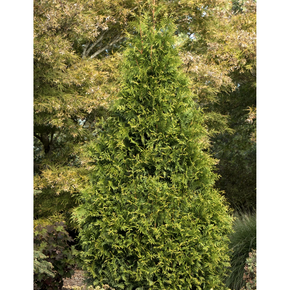
Green Giant Arborvitae (Thuja standishii x plicata 'Green Giant') is widely regarded as the premier fast-growing evergreen for privacy screening, windbreaks, and bold landscape structure. This vigorous hybrid — a cross between Western Red Cedar and Japanese Arborvitae — delivers an unbeatable combination of speed, beauty, and toughness, gaining 3 to 5 feet per year under good conditions and ultimately maturing to an impressive 40 to 60 feet tall and 12 to 18 feet wide. Its naturally dense, narrowly pyramidal silhouette is clothed in overlapping, scale-like, glossy foliage that emits a pleasant fragrance when brushed, and the rich deep green color remains vibrant in every season — only deepening to a warm bronze tone in the coldest months before returning to brilliant green in spring. Unlike many arborvitae, 'Green Giant' is notably resistant to deer browsing, a significant advantage for gardeners in rural and suburban areas throughout Southern Oregon and Northern California. Whether planted as a majestic specimen, a classic formal hedge, a noise-reducing double-row screen, or a towering windbreak, Green Giant Arborvitae establishes quickly, demands minimal care once settled, and delivers decades of four-season privacy and year-round structural beauty to nearly any landscape.
Plant Description
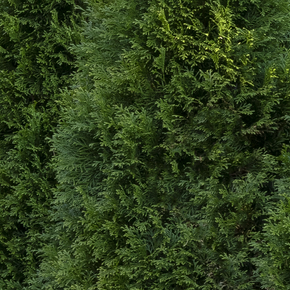
Green Giant Arborvitae is a large, stately evergreen conifer belonging to the cypress family (Cupressaceae). It is a hybrid between two species — the Western Red Cedar (Thuja plicata), native to the Pacific Northwest, and the Japanese Arborvitae (Thuja standishii) — producing offspring that surpasses both parents in vigor, adaptability, and ornamental appeal. The foliage is composed of tightly packed, overlapping, glossy scale-like leaves arranged in flattened, fan-shaped sprays. When touched or brushed, the foliage releases a pleasant, faintly sweet-spicy fragrance characteristic of its Western Red Cedar parentage. The bark is attractive as well — shaggy, fibrous, and dark reddish-brown — adding subtle textural interest at the base of mature specimens. Small, oblong seed cones form at branch tips and ripen to brown, though they are rarely conspicuous on densely branched trees. The cultivar name 'Green Giant' was registered in the United States, where it quickly became recognized as one of the most valuable evergreen trees available to American gardeners and landscapers.
Mature Size and Growth Rate
| Characteristic | Details |
|---|---|
| Mature Height | 40 to 60 feet |
| Mature Spread | 12 to 18 feet wide |
| Annual Growth Rate | 3 to 5 feet per year under optimal conditions |
| Growth Habit | Narrowly pyramidal to broadly conical, naturally dense |
| Lifespan | Up to 40 years or more in ideal conditions |
Young trees establish quickly and put on impressive height gains annually, making Green Giant one of the fastest-growing conifers available for home landscapes. Growth rate is most vigorous in the first several years after planting when the root system is actively expanding. Trees maintain their naturally dense pyramidal form without shearing, gradually broadening at the base as they age. Spacing should account for the eventual mature spread — allow 12 to 18 feet between trees for specimen or group plantings, or 5 to 6 feet apart for a tightly woven privacy hedge.
Hardiness Zones and Climate Tolerance
Green Giant Arborvitae is rated for USDA Hardiness Zones 5 through 9, with peak performance in Zones 6 through 8. It tolerates minimum winter temperatures down to approximately -20°F, making it fully cold-hardy throughout Southern Oregon and Northern California. It handles the mild, wet winters and warm, dry summers of the Pacific Northwest and Northern California foothills with exceptional adaptability — a direct benefit of its Western Red Cedar parentage. In warmer climates, the tree appreciates some afternoon shade relief during peak summer heat. It is tolerant of humidity, moderate drought once established, strong winds, and both ice and snow loading. One notable sensitivity is salt — avoid planting in areas exposed to heavy road salt application or direct coastal salt spray, as prolonged salt exposure can damage foliage. In Zone 9 conditions like those found in the warmer valleys of Northern California, the tree performs admirably when provided with adequate moisture during dry summer months.
Sunlight Requirements
Green Giant Arborvitae thrives in full sun and should receive a minimum of 6 hours of direct, unfiltered sunlight per day for optimal growth and density. It will tolerate partial shade — particularly welcome afternoon shade in hotter inland climates — but growth rate decreases noticeably and foliage density can thin out when sun exposure drops significantly. A partially shaded planting will still produce a functional screen or specimen, but for the fastest establishment and the most lush, dense branching structure, choose a site with generous full-sun exposure. Avoid sites with heavy overhead shade from large overhanging trees, which can also create competing root and moisture pressure.
Soil and pH Preferences
One of Green Giant's most valuable landscape traits is its remarkable soil adaptability. It thrives in moist, fertile, well-drained loamy soils, but it also performs well in heavy clay or sandy soils, provided drainage is adequate. Standing water and waterlogged soils are the primary conditions to avoid, as persistently wet roots promote root rot. Regarding pH, 'Green Giant' is unusually tolerant — it grows well in slightly acidic, neutral, and moderately alkaline soils. A pH range of approximately 6.0 to 8.0 is generally acceptable, though it grows most vigorously in slightly acidic to neutral soils (pH 6.0 to 7.0). A soil test is recommended before planting in areas where pH or drainage may be a concern. If clay soil is heavy and slow-draining, amend it with compost or coarse organic matter to improve drainage and aeration prior to planting.
Watering Guide
Consistent moisture is critical during the first year after planting to encourage deep, well-anchored root development. During the first 2 months, water frequently enough to keep the root zone consistently moist — but never waterlogged. After the first few months, gradually reduce frequency while increasing watering depth, providing approximately 1 inch of water per week during dry periods throughout the first growing season. Applying a 3- to 6-inch layer of organic mulch around the base of the tree — kept several inches back from the trunk — will significantly help retain soil moisture, moderate soil temperature, and suppress competing weeds. Once fully established after the first full growing season, Green Giant Arborvitae becomes moderately drought-tolerant and generally requires supplemental irrigation only during extended dry spells. In the dry summers of Southern Oregon and Northern California, deep monthly watering during summer is recommended even for established trees to maintain the deepest green color and most vigorous growth. Do not neglect watering in autumn — trees heading into winter well-hydrated are better protected against foliage desiccation and winter stress.
Fertilizing
Green Giant Arborvitae does not require fertilizer during its first year in the ground. Allow the tree to focus its energy on root establishment without the potential stress of excess nutrients during this critical period. Beginning in the second year, apply a balanced, slow-release fertilizer formulated for evergreen trees and shrubs — such as a 10-10-10 or 4-3-4 granular formula — in early spring before new growth flushes. Follow package directions carefully and avoid over-application, which can burn roots and produce excessive, weak growth. Once the tree has been growing vigorously in its location for 3 or more years and has a well-established root system, fertilization is generally no longer necessary unless a soil test indicates a specific deficiency. In poor or sandy soils, an annual spring application may remain beneficial. Avoid fertilizing in late summer or fall, as this can stimulate tender new growth that is vulnerable to frost damage.
Pruning and Maintenance
Green Giant Arborvitae is one of the most low-maintenance evergreens in cultivation. Its naturally symmetrical, pyramidal growth habit means it typically requires no pruning to maintain an attractive form throughout its life. If shaping or size management is desired, light shearing can be performed in late winter or early spring before new growth begins, or again after the first flush of spring growth has hardened off. Avoid heavy pruning into old wood, as this can create permanent bare patches — unlike many broadleaf shrubs, conifers do not reliably regenerate foliage from mature brown inner wood. Remove any dead, damaged, or crossing branches at any time of year using clean, sharp pruning tools. For formal hedges, annual light trimming in late spring helps maintain a clean, even profile. For informal screens and windbreaks, simply let the tree grow freely with no pruning at all. One maintenance note specific to snowy climates: gently brush off heavy snow accumulation after storms to prevent branch breakage under significant snow or ice loads.
Planting Instructions
- Select a site with full sun to partial shade and well-drained soil. Mark planting holes 5 to 6 feet apart for a privacy hedge, or 12 to 18 feet apart for specimen or group planting.
- Before planting, water the tree thoroughly while still in its container to reduce transplant shock.
- Dig a planting hole twice as wide as the root ball and no deeper than the height of the root ball. Setting the tree too deep is one of the most common planting mistakes and leads to long-term decline.
- Carefully remove the tree from its container and gently loosen any circling or pot-bound roots with your fingers.
- Place the root ball in the hole, ensuring the top of the root ball is level with or slightly above the surrounding soil grade.
- Backfill the hole with the native excavated soil, gently firming it in layers to eliminate large air pockets. Avoid over-compacting the soil around the root zone.
- Build a shallow water-retaining berm or ring around the outer edge of the planting hole to direct irrigation water toward the root zone during the establishment period.
- Apply a 3- to 6-inch layer of coarse organic mulch (wood chips, bark, or shredded leaves) over the root zone, keeping mulch several inches away from direct contact with the trunk.
- Water deeply and thoroughly immediately after planting. Maintain consistent moisture throughout the first growing season.
Landscape Uses
Few evergreen trees offer the versatility of Green Giant Arborvitae in the residential and commercial landscape. Its speed of growth, adaptable nature, and year-round appeal make it suitable for a wide range of applications:
- Privacy Screens: The most popular use. Plant 5 to 6 feet apart in a single row for a solid green wall within just a few growing seasons. A staggered double row — trees spaced 8 to 10 feet apart within each row — provides the densest sound- and sight-barrier possible.
- Windbreaks: The height, density, and flexibility of 'Green Giant' make it one of the best trees available for protecting homes, outbuildings, vegetable gardens, and orchards from prevailing winds.
- Specimen Planting: A single 'Green Giant' makes a commanding vertical accent in a lawn or large shrub border, adding dramatic scale and four-season structure.
- Framing and Screening: Use flanking pairs to frame a driveway entrance, garden gate, or architectural focal point. Also effective planted in corners or along fence lines to soften hard edges and block unsightly views.
- Noise Reduction: Dense multi-row plantings provide measurable buffering of road noise and neighboring property sounds, a particularly useful application near busy rural roads and highways.
Seasonal Interest
| Season | Appearance and Interest |
|---|---|
| Spring | Bright, fresh new growth flushes in vivid lime green at branch tips, contrasting beautifully against the darker inner foliage and signaling the start of the year's most vigorous growth surge. |
| Summer | Foliage fills to a dense, rich, uniform deep green. The pyramidal silhouette is at its most lush and full. Scale-like leaves emit a pleasant herbal fragrance in warm weather. |
| Fall | Foliage remains deep green through autumn as neighboring deciduous trees change color, providing a rich evergreen backdrop to fall foliage displays. Small seed cones may be visible at branch tips. |
| Winter | Foliage takes on a subtle bronzed or darker green tone in response to cold temperatures — a natural and temporary physiological response. Maintains full density and structure through the coldest months. Returns to bright green as temperatures warm in late winter. |
Pests and Diseases
Green Giant Arborvitae is among the most pest- and disease-resistant conifers available, with far fewer problems than most other arborvitae. However, occasional issues may arise:
- Bagworms (Thyridopteryx ephemeraeformis): The most notable pest concern. Caterpillars encase themselves in 1- to 2-inch spindle-shaped bags constructed from foliage and debris that hang from branch tips. They feed on foliage and can cause branch dieback if populations are heavy. Hand-pick and destroy bags in fall through early spring before eggs hatch. Treat active caterpillar infestations with Bt (Bacillus thuringiensis) or spinosad-based insecticides when larvae are young in late spring.
- Fletcher Scale (Parthenolecanium fletcheri): A soft scale insect specific to arborvitae and related conifers. Crawlers hatch in early summer and feed by sucking sap from stems and foliage. Can be managed with horticultural oil applied in early spring before hatching, or with systemic insecticides when caught early.
- Spider Mites: More likely during hot, dry summers. Look for stippled, faded, or bronzed foliage and fine webbing. A strong jet of water applied repeatedly can reduce mite populations. Horticultural oil or insecticidal soap sprays applied in the morning are also effective.
- Root Rot (Phytophthora spp.): Primarily a concern in poorly drained, waterlogged soils. Prevention is the best strategy — always plant in well-drained sites and avoid overwatering. Symptoms include yellowing foliage, dieback from the tips, and general decline. There is no effective cure once advanced; focus on prevention through proper site selection and watering practices.
- Deer: 'Green Giant' is significantly more deer-resistant than most other arborvitae species and is widely recommended for deer-prone landscapes. However, when natural food sources are extremely scarce in winter, even resistant plants may experience some browsing pressure. Temporary deer fencing around young trees under 8 feet tall is a worthwhile precaution in heavily deer-populated areas.
Companion Plants
Green Giant Arborvitae pairs beautifully with a wide range of plants that complement its bold vertical form and year-round dark green color. When designing privacy screens or mixed borders, consider the following companions:
- Ornamental Grasses (Miscanthus, Calamagrostis): The airy, arching texture and warm autumn tones of tall ornamental grasses contrast dramatically with the stiff, dark evergreen foliage, adding movement and seasonal color.
- Flowering Shrubs (Forsythia, Weigela, Lilac): Spring-blooming deciduous shrubs planted in front of a Green Giant screen create a beautiful seasonal foreground display of color against the rich green backdrop.
- Rhododendrons and Azaleas: Broad-leaved evergreen companions that share the preference for slightly acidic, well-drained soil and complement the vertical form with bold spring flower color and rounded growth habits.
- Burning Bush (Euonymus alatus) or Oakleaf Hydrangea: Shrubs with spectacular autumn color stand out brilliantly when backlit against the solid evergreen mass of a Green Giant hedge.
- Ornamental Conifers (Dwarf Alberta Spruce, Emerald Green Arborvitae): Mixing different evergreen textures and sizes in a foundation planting creates layered year-round structure and visual depth.
- Native Ferns and Shade Perennials: Plant along the shaded north-facing side of a mature Green Giant row for a naturalistic woodland edge effect, using sword fern, deer fern, or hostas to fill the understory.
Wildlife Value
Green Giant Arborvitae provides meaningful habitat and food value for local wildlife, particularly birds. The dense, year-round foliage offers excellent protected nesting sites for a variety of songbirds, including robins, sparrows, and finches, which appreciate the shelter the thick interior branches provide from weather and predators. Small seed cones produced at branch tips offer a food source for seed-eating birds such as pine siskins and juncos in late fall and winter. The layered interior of mature Green Giant hedgerows creates valuable year-round thermal cover for small mammals and birds seeking refuge during cold weather. While the tree is more resistant to deer browse than most arborvitae, this relative resistance is a landscape advantage rather than a deterrent to general wildlife value. Planting Green Giant in rows or clusters rather than as isolated specimens maximizes its habitat benefit by creating connected wildlife corridors.
Container Growing
While Green Giant Arborvitae is ultimately a large landscape tree and is best suited to being planted in the ground, younger specimens can be grown in large containers for a period of time as dramatic patio or entry accent plants. For container culture, choose a very large, sturdy container — a minimum of 25 to 30 gallons — with excellent drainage holes. Use a high-quality, well-draining potting mix blended with perlite or coarse pumice for added aeration. Container-grown specimens require significantly more frequent watering than in-ground plants, as pots dry out rapidly — check soil moisture every day or two during hot weather and never allow the root ball to dry out completely. Apply a balanced slow-release fertilizer in early spring according to label directions. Expect container-grown trees to grow more slowly and to a smaller final size than in-ground specimens. Plan to transition the tree to a permanent in-ground planting site as it outgrows its container to ensure its long-term health and full ornamental potential are realized.
- Exceptionally fast-growing evergreen — gaining 3 to 5 feet per year — making it one of the quickest and most effective privacy screens and windbreaks available for the home landscape.
- Lush, dense, deep-green pyramidal form holds its rich color all year long, with foliage that only deepens to a handsome bronzed hue in winter rather than browning or fading.
- Remarkably low-maintenance hybrid of Western Red Cedar and Japanese Arborvitae, boasting strong resistance to common pests, diseases, and deer, with a naturally elegant shape that rarely requires pruning.
- Highly adaptable to a wide range of soil types — from heavy clay to sandy loam — and thrives across USDA Hardiness Zones 5 through 9, performing especially well in the Pacific Northwest and Northern California climates.
Green Giant Arborvitae (Thuja standishii x plicata 'Green Giant') is widely regarded as the premier fast-growing evergreen for privacy screening, windbreaks, and bold landscape structure. This vigorous hybrid — a cross between Western Red Cedar and Japanese Arborvitae — delivers an unbeatable combination of speed, beauty, and toughness, gaining 3 to 5 feet per year under good conditions and ultimately maturing to an impressive 40 to 60 feet tall and 12 to 18 feet wide. Its naturally dense, narrowly pyramidal silhouette is clothed in overlapping, scale-like, glossy foliage that emits a pleasant fragrance when brushed, and the rich deep green color remains vibrant in every season — only deepening to a warm bronze tone in the coldest months before returning to brilliant green in spring. Unlike many arborvitae, 'Green Giant' is notably resistant to deer browsing, a significant advantage for gardeners in rural and suburban areas throughout Southern Oregon and Northern California. Whether planted as a majestic specimen, a classic formal hedge, a noise-reducing double-row screen, or a towering windbreak, Green Giant Arborvitae establishes quickly, demands minimal care once settled, and delivers decades of four-season privacy and year-round structural beauty to nearly any landscape.
Plant Description
Green Giant Arborvitae is a large, stately evergreen conifer belonging to the cypress family (Cupressaceae). It is a hybrid between two species — the Western Red Cedar (Thuja plicata), native to the Pacific Northwest, and the Japanese Arborvitae (Thuja standishii) — producing offspring that surpasses both parents in vigor, adaptability, and ornamental appeal. The foliage is composed of tightly packed, overlapping, glossy scale-like leaves arranged in flattened, fan-shaped sprays. When touched or brushed, the foliage releases a pleasant, faintly sweet-spicy fragrance characteristic of its Western Red Cedar parentage. The bark is attractive as well — shaggy, fibrous, and dark reddish-brown — adding subtle textural interest at the base of mature specimens. Small, oblong seed cones form at branch tips and ripen to brown, though they are rarely conspicuous on densely branched trees. The cultivar name 'Green Giant' was registered in the United States, where it quickly became recognized as one of the most valuable evergreen trees available to American gardeners and landscapers.
Mature Size and Growth Rate
| Characteristic | Details |
|---|---|
| Mature Height | 40 to 60 feet |
| Mature Spread | 12 to 18 feet wide |
| Annual Growth Rate | 3 to 5 feet per year under optimal conditions |
| Growth Habit | Narrowly pyramidal to broadly conical, naturally dense |
| Lifespan | Up to 40 years or more in ideal conditions |
Young trees establish quickly and put on impressive height gains annually, making Green Giant one of the fastest-growing conifers available for home landscapes. Growth rate is most vigorous in the first several years after planting when the root system is actively expanding. Trees maintain their naturally dense pyramidal form without shearing, gradually broadening at the base as they age. Spacing should account for the eventual mature spread — allow 12 to 18 feet between trees for specimen or group plantings, or 5 to 6 feet apart for a tightly woven privacy hedge.
Hardiness Zones and Climate Tolerance
Green Giant Arborvitae is rated for USDA Hardiness Zones 5 through 9, with peak performance in Zones 6 through 8. It tolerates minimum winter temperatures down to approximately -20°F, making it fully cold-hardy throughout Southern Oregon and Northern California. It handles the mild, wet winters and warm, dry summers of the Pacific Northwest and Northern California foothills with exceptional adaptability — a direct benefit of its Western Red Cedar parentage. In warmer climates, the tree appreciates some afternoon shade relief during peak summer heat. It is tolerant of humidity, moderate drought once established, strong winds, and both ice and snow loading. One notable sensitivity is salt — avoid planting in areas exposed to heavy road salt application or direct coastal salt spray, as prolonged salt exposure can damage foliage. In Zone 9 conditions like those found in the warmer valleys of Northern California, the tree performs admirably when provided with adequate moisture during dry summer months.
Sunlight Requirements
Green Giant Arborvitae thrives in full sun and should receive a minimum of 6 hours of direct, unfiltered sunlight per day for optimal growth and density. It will tolerate partial shade — particularly welcome afternoon shade in hotter inland climates — but growth rate decreases noticeably and foliage density can thin out when sun exposure drops significantly. A partially shaded planting will still produce a functional screen or specimen, but for the fastest establishment and the most lush, dense branching structure, choose a site with generous full-sun exposure. Avoid sites with heavy overhead shade from large overhanging trees, which can also create competing root and moisture pressure.
Soil and pH Preferences
One of Green Giant's most valuable landscape traits is its remarkable soil adaptability. It thrives in moist, fertile, well-drained loamy soils, but it also performs well in heavy clay or sandy soils, provided drainage is adequate. Standing water and waterlogged soils are the primary conditions to avoid, as persistently wet roots promote root rot. Regarding pH, 'Green Giant' is unusually tolerant — it grows well in slightly acidic, neutral, and moderately alkaline soils. A pH range of approximately 6.0 to 8.0 is generally acceptable, though it grows most vigorously in slightly acidic to neutral soils (pH 6.0 to 7.0). A soil test is recommended before planting in areas where pH or drainage may be a concern. If clay soil is heavy and slow-draining, amend it with compost or coarse organic matter to improve drainage and aeration prior to planting.
Watering Guide
Consistent moisture is critical during the first year after planting to encourage deep, well-anchored root development. During the first 2 months, water frequently enough to keep the root zone consistently moist — but never waterlogged. After the first few months, gradually reduce frequency while increasing watering depth, providing approximately 1 inch of water per week during dry periods throughout the first growing season. Applying a 3- to 6-inch layer of organic mulch around the base of the tree — kept several inches back from the trunk — will significantly help retain soil moisture, moderate soil temperature, and suppress competing weeds. Once fully established after the first full growing season, Green Giant Arborvitae becomes moderately drought-tolerant and generally requires supplemental irrigation only during extended dry spells. In the dry summers of Southern Oregon and Northern California, deep monthly watering during summer is recommended even for established trees to maintain the deepest green color and most vigorous growth. Do not neglect watering in autumn — trees heading into winter well-hydrated are better protected against foliage desiccation and winter stress.
Fertilizing
Green Giant Arborvitae does not require fertilizer during its first year in the ground. Allow the tree to focus its energy on root establishment without the potential stress of excess nutrients during this critical period. Beginning in the second year, apply a balanced, slow-release fertilizer formulated for evergreen trees and shrubs — such as a 10-10-10 or 4-3-4 granular formula — in early spring before new growth flushes. Follow package directions carefully and avoid over-application, which can burn roots and produce excessive, weak growth. Once the tree has been growing vigorously in its location for 3 or more years and has a well-established root system, fertilization is generally no longer necessary unless a soil test indicates a specific deficiency. In poor or sandy soils, an annual spring application may remain beneficial. Avoid fertilizing in late summer or fall, as this can stimulate tender new growth that is vulnerable to frost damage.
Pruning and Maintenance
Green Giant Arborvitae is one of the most low-maintenance evergreens in cultivation. Its naturally symmetrical, pyramidal growth habit means it typically requires no pruning to maintain an attractive form throughout its life. If shaping or size management is desired, light shearing can be performed in late winter or early spring before new growth begins, or again after the first flush of spring growth has hardened off. Avoid heavy pruning into old wood, as this can create permanent bare patches — unlike many broadleaf shrubs, conifers do not reliably regenerate foliage from mature brown inner wood. Remove any dead, damaged, or crossing branches at any time of year using clean, sharp pruning tools. For formal hedges, annual light trimming in late spring helps maintain a clean, even profile. For informal screens and windbreaks, simply let the tree grow freely with no pruning at all. One maintenance note specific to snowy climates: gently brush off heavy snow accumulation after storms to prevent branch breakage under significant snow or ice loads.
Planting Instructions
- Select a site with full sun to partial shade and well-drained soil. Mark planting holes 5 to 6 feet apart for a privacy hedge, or 12 to 18 feet apart for specimen or group planting.
- Before planting, water the tree thoroughly while still in its container to reduce transplant shock.
- Dig a planting hole twice as wide as the root ball and no deeper than the height of the root ball. Setting the tree too deep is one of the most common planting mistakes and leads to long-term decline.
- Carefully remove the tree from its container and gently loosen any circling or pot-bound roots with your fingers.
- Place the root ball in the hole, ensuring the top of the root ball is level with or slightly above the surrounding soil grade.
- Backfill the hole with the native excavated soil, gently firming it in layers to eliminate large air pockets. Avoid over-compacting the soil around the root zone.
- Build a shallow water-retaining berm or ring around the outer edge of the planting hole to direct irrigation water toward the root zone during the establishment period.
- Apply a 3- to 6-inch layer of coarse organic mulch (wood chips, bark, or shredded leaves) over the root zone, keeping mulch several inches away from direct contact with the trunk.
- Water deeply and thoroughly immediately after planting. Maintain consistent moisture throughout the first growing season.
Landscape Uses
Few evergreen trees offer the versatility of Green Giant Arborvitae in the residential and commercial landscape. Its speed of growth, adaptable nature, and year-round appeal make it suitable for a wide range of applications:
- Privacy Screens: The most popular use. Plant 5 to 6 feet apart in a single row for a solid green wall within just a few growing seasons. A staggered double row — trees spaced 8 to 10 feet apart within each row — provides the densest sound- and sight-barrier possible.
- Windbreaks: The height, density, and flexibility of 'Green Giant' make it one of the best trees available for protecting homes, outbuildings, vegetable gardens, and orchards from prevailing winds.
- Specimen Planting: A single 'Green Giant' makes a commanding vertical accent in a lawn or large shrub border, adding dramatic scale and four-season structure.
- Framing and Screening: Use flanking pairs to frame a driveway entrance, garden gate, or architectural focal point. Also effective planted in corners or along fence lines to soften hard edges and block unsightly views.
- Noise Reduction: Dense multi-row plantings provide measurable buffering of road noise and neighboring property sounds, a particularly useful application near busy rural roads and highways.
Seasonal Interest
| Season | Appearance and Interest |
|---|---|
| Spring | Bright, fresh new growth flushes in vivid lime green at branch tips, contrasting beautifully against the darker inner foliage and signaling the start of the year's most vigorous growth surge. |
| Summer | Foliage fills to a dense, rich, uniform deep green. The pyramidal silhouette is at its most lush and full. Scale-like leaves emit a pleasant herbal fragrance in warm weather. |
| Fall | Foliage remains deep green through autumn as neighboring deciduous trees change color, providing a rich evergreen backdrop to fall foliage displays. Small seed cones may be visible at branch tips. |
| Winter | Foliage takes on a subtle bronzed or darker green tone in response to cold temperatures — a natural and temporary physiological response. Maintains full density and structure through the coldest months. Returns to bright green as temperatures warm in late winter. |
Pests and Diseases
Green Giant Arborvitae is among the most pest- and disease-resistant conifers available, with far fewer problems than most other arborvitae. However, occasional issues may arise:
- Bagworms (Thyridopteryx ephemeraeformis): The most notable pest concern. Caterpillars encase themselves in 1- to 2-inch spindle-shaped bags constructed from foliage and debris that hang from branch tips. They feed on foliage and can cause branch dieback if populations are heavy. Hand-pick and destroy bags in fall through early spring before eggs hatch. Treat active caterpillar infestations with Bt (Bacillus thuringiensis) or spinosad-based insecticides when larvae are young in late spring.
- Fletcher Scale (Parthenolecanium fletcheri): A soft scale insect specific to arborvitae and related conifers. Crawlers hatch in early summer and feed by sucking sap from stems and foliage. Can be managed with horticultural oil applied in early spring before hatching, or with systemic insecticides when caught early.
- Spider Mites: More likely during hot, dry summers. Look for stippled, faded, or bronzed foliage and fine webbing. A strong jet of water applied repeatedly can reduce mite populations. Horticultural oil or insecticidal soap sprays applied in the morning are also effective.
- Root Rot (Phytophthora spp.): Primarily a concern in poorly drained, waterlogged soils. Prevention is the best strategy — always plant in well-drained sites and avoid overwatering. Symptoms include yellowing foliage, dieback from the tips, and general decline. There is no effective cure once advanced; focus on prevention through proper site selection and watering practices.
- Deer: 'Green Giant' is significantly more deer-resistant than most other arborvitae species and is widely recommended for deer-prone landscapes. However, when natural food sources are extremely scarce in winter, even resistant plants may experience some browsing pressure. Temporary deer fencing around young trees under 8 feet tall is a worthwhile precaution in heavily deer-populated areas.
Companion Plants
Green Giant Arborvitae pairs beautifully with a wide range of plants that complement its bold vertical form and year-round dark green color. When designing privacy screens or mixed borders, consider the following companions:
- Ornamental Grasses (Miscanthus, Calamagrostis): The airy, arching texture and warm autumn tones of tall ornamental grasses contrast dramatically with the stiff, dark evergreen foliage, adding movement and seasonal color.
- Flowering Shrubs (Forsythia, Weigela, Lilac): Spring-blooming deciduous shrubs planted in front of a Green Giant screen create a beautiful seasonal foreground display of color against the rich green backdrop.
- Rhododendrons and Azaleas: Broad-leaved evergreen companions that share the preference for slightly acidic, well-drained soil and complement the vertical form with bold spring flower color and rounded growth habits.
- Burning Bush (Euonymus alatus) or Oakleaf Hydrangea: Shrubs with spectacular autumn color stand out brilliantly when backlit against the solid evergreen mass of a Green Giant hedge.
- Ornamental Conifers (Dwarf Alberta Spruce, Emerald Green Arborvitae): Mixing different evergreen textures and sizes in a foundation planting creates layered year-round structure and visual depth.
- Native Ferns and Shade Perennials: Plant along the shaded north-facing side of a mature Green Giant row for a naturalistic woodland edge effect, using sword fern, deer fern, or hostas to fill the understory.
Wildlife Value
Green Giant Arborvitae provides meaningful habitat and food value for local wildlife, particularly birds. The dense, year-round foliage offers excellent protected nesting sites for a variety of songbirds, including robins, sparrows, and finches, which appreciate the shelter the thick interior branches provide from weather and predators. Small seed cones produced at branch tips offer a food source for seed-eating birds such as pine siskins and juncos in late fall and winter. The layered interior of mature Green Giant hedgerows creates valuable year-round thermal cover for small mammals and birds seeking refuge during cold weather. While the tree is more resistant to deer browse than most arborvitae, this relative resistance is a landscape advantage rather than a deterrent to general wildlife value. Planting Green Giant in rows or clusters rather than as isolated specimens maximizes its habitat benefit by creating connected wildlife corridors.
Container Growing
While Green Giant Arborvitae is ultimately a large landscape tree and is best suited to being planted in the ground, younger specimens can be grown in large containers for a period of time as dramatic patio or entry accent plants. For container culture, choose a very large, sturdy container — a minimum of 25 to 30 gallons — with excellent drainage holes. Use a high-quality, well-draining potting mix blended with perlite or coarse pumice for added aeration. Container-grown specimens require significantly more frequent watering than in-ground plants, as pots dry out rapidly — check soil moisture every day or two during hot weather and never allow the root ball to dry out completely. Apply a balanced slow-release fertilizer in early spring according to label directions. Expect container-grown trees to grow more slowly and to a smaller final size than in-ground specimens. Plan to transition the tree to a permanent in-ground planting site as it outgrows its container to ensure its long-term health and full ornamental potential are realized.