

Zoom the image with the mouse
Emerald Green Arborvitae - 1 Gallon
SKU:
195580
UPC:
753768016256
$11.99
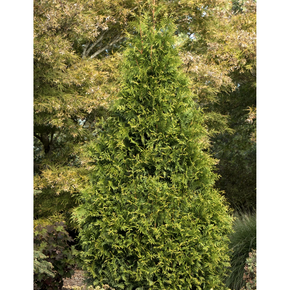
- Narrow, upright pyramidal form with dense, vibrant emerald green foliage that holds its rich color all year long, including through cold winters
- Exceptionally versatile evergreen ideal for privacy screens, formal hedges, windbreaks, and elegant specimen plantings in a wide range of landscape styles
- Cold-hardy in USDA Zones 3-8 and tolerant of a broad range of soil types, making it one of the most dependable and low-maintenance evergreens available
- Slow, steady growth habit naturally maintains its refined columnar shape with minimal pruning, reducing long-term landscape maintenance
Emerald Green Arborvitae (Thuja occidentalis 'Smaragd') is a classic, narrow pyramidal evergreen prized across American landscapes for its strikingly rich, emerald green foliage that stays vibrant from spring through the depths of winter without bronzing. Originating as a Danish cultivar — "Smaragd" being the Danish word for "emerald" — this refined conifer typically reaches 10 to 15 feet tall with a tidy 3 to 4 foot spread at maturity, making it ideally proportioned for residential and commercial properties alike. Its dense, feathery, scale-like foliage arranged in flat, fan-like sprays gives it a lush, full appearance throughout every season, and small ornamental cones add subtle interest in fall. Hardy in USDA Zones 3 through 8, Emerald Green Arborvitae adapts well to a wide range of soil conditions and thrives in full sun to partial shade, performing reliably across the varied climates of the Pacific Northwest, the Pacific Coast ranges, and mountain valleys of Southern Oregon and Northern California. Whether planted in a tight row for a seamless privacy screen, used as a formal foundation accent, or positioned as a structural focal point in mixed borders, this evergreen's naturally symmetrical form, low-maintenance nature, and year-round color make it one of the most popular and enduring landscape conifers available today.
Plant Description
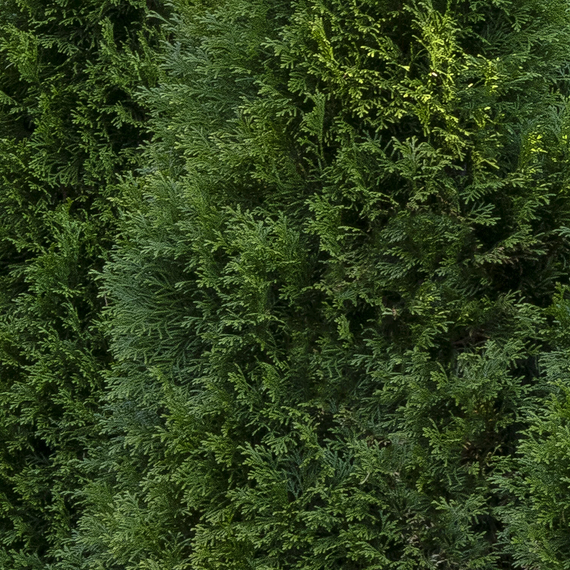
Emerald Green Arborvitae is a cultivar of the Eastern White Cedar (Thuja occidentalis), a species native to the moist forests, riverbanks, and wetland edges of northeastern North America. The 'Smaragd' cultivar was selected and named in Denmark for its exceptionally consistent emerald green foliage color and its tightly refined, narrow pyramidal form. Unlike many arborvitae that take on a bronze or brownish cast in cold weather, 'Smaragd' maintains its true emerald green color through winter, which is one of its most celebrated traits. The foliage is composed of dense, overlapping, scale-like leaves arranged in flat, fan-shaped sprays that are soft to the touch and glossy in appearance. Small, oblong cones are produced in spring and mature to a reddish-brown in fall, providing a subtle secondary point of interest. The overall texture of the plant is fine and lush, giving it an air of formality and elegance that suits both traditional and contemporary garden designs.
Mature Size
| Characteristic | Details |
|---|---|
| Mature Height | 10 to 15 feet |
| Mature Spread | 3 to 4 feet |
| Growth Rate | Moderate; approximately 6 to 12 inches per year once established, up to 12 to 24 inches per year in ideal conditions during early years |
| Growth Habit | Narrow, upright, densely pyramidal |
| Time to Maturity | Approximately 10 to 15 years to reach full height |
Hardiness Zones and Climate
Emerald Green Arborvitae is hardy in USDA Zones 3 through 8, tolerating winter temperatures as low as -40 degrees F. This remarkable cold hardiness makes it dependable across an exceptionally wide range of climates, from the frigid winters of the upper Midwest to the mild, wet winters of the Pacific Northwest and the hot, dry summers of Northern California when supplemental irrigation is provided. In Southern Oregon and Northern California, it performs well in the Rogue Valley, Umpqua Valley, Klamath Basin, and coastal areas, provided it receives adequate moisture during the dry summer season. It handles summer heat up to approximately 90 degrees F when irrigated consistently. In exposed sites with strong desiccating winds — particularly at higher elevations — providing a windbreak or applying anti-desiccant spray in late fall can help prevent winter foliage browning. Young plants are more vulnerable to cold wind damage than established specimens, so some protection during the first winter in harsh sites is advisable.
Sunlight Requirements
Emerald Green Arborvitae performs best in full sun, defined as a minimum of 6 to 8 hours of direct sunlight per day. Full sun exposure promotes the densest, most richly colored foliage and the tightest, most compact pyramidal growth form. This cultivar tolerates partial shade (3 to 6 hours of direct sun), but foliage density will decrease noticeably in lower light conditions, and the plant may develop a thinner, more open canopy that reduces its effectiveness as a privacy screen or formal hedge. Avoid planting in locations with heavy afternoon shade or where competing overhead tree canopies will block light. For optimal results in Southern Oregon and Northern California, a south- or east-facing exposure is ideal, providing ample morning and midday sun while offering some relief from intense late-afternoon summer heat.
Soil and pH Preferences
While Emerald Green Arborvitae adapts to a fairly broad range of soil types, it thrives best in moist, fertile, well-draining loamy soil. Good drainage is critical — standing water and chronically wet soils promote root rot and eventual plant decline. This cultivar tolerates moderately heavy clay soils as long as drainage is adequate, and it also grows well in sandy loam soils provided moisture is maintained. In compacted or extremely heavy clay soils, amending with compost and coarse sand at planting will significantly improve establishment and long-term health.
| Soil Characteristic | Preferred Range |
|---|---|
| Soil pH | 6.0 to 8.0 (slightly acidic to slightly alkaline) |
| Soil Texture | Loamy, well-draining; tolerates clay if drainage is adequate |
| Moisture Level | Consistently moist but never waterlogged |
| Organic Matter | Benefits from compost amendment at planting |
Watering Guide
Consistent moisture is particularly important during the establishment period and during the warm, dry summers typical of Southern Oregon and Northern California. Follow these guidelines for best results:
- Newly planted (first growing season): Water deeply 2 to 3 times per week, allowing water to penetrate the entire root zone. Check soil moisture 2 to 3 inches deep and water when the top layer begins to feel dry.
- Established plants (after year one): Water deeply once per week during dry summer periods when rainfall is insufficient. Aim for approximately 1 inch of water per week total, including rainfall.
- Fall and winter: Continue watering until the ground freezes. Evergreens lose moisture through their foliage year-round, and dry winters combined with dry winds can cause significant browning. Water during extended dry winter spells when the ground is not frozen.
- Mulching: Apply 2 to 3 inches of organic mulch over the root zone, keeping it a few inches away from the trunk. Mulch conserves moisture, moderates soil temperature, and reduces the frequency of supplemental watering needed in summer.
- Signs of underwatering: Browning foliage tips, bronze discoloration, and needle drop.
- Signs of overwatering: Yellowing foliage, soft mushy trunk base, and general wilting despite wet soil — indicators of potential root rot.
Fertilizing
Emerald Green Arborvitae has modest fertilizer needs but responds well to annual feeding during the growing season. Avoid fertilizing at planting time — allow the plant to settle for at least 4 to 6 weeks before beginning a fertilizer program.
- Fertilizer type: Use a balanced, slow-release granular fertilizer formulated for evergreens or conifers, such as a 10-10-10 or similar NPK ratio. Slow-release formulations provide a steady, gentle supply of nutrients and reduce the risk of fertilizer burn.
- Timing: Apply in early spring, just as new growth begins to emerge. A second light application can be made in late spring to early summer if needed.
- Stop date: Do not fertilize after mid-summer (July). Late-season fertilization stimulates tender new growth that may not harden off before cold weather arrives, leaving the plant vulnerable to winter damage.
- Application: Spread granules evenly around the base of the plant out to the drip line (the outer edge of the canopy). Water thoroughly after application to activate the fertilizer and prevent root burn.
- Caution: Avoid over-fertilizing. Excessive nitrogen promotes rapid, weak growth that is more susceptible to pest damage, disease, and winter injury.
Planting Instructions
- Choose the right site: Select a location with at least 6 hours of direct sun daily and well-draining soil. Avoid low spots where water collects or areas exposed to constant desiccating winds without protection.
- Best planting time: Early spring or early fall are ideal. Moderate temperatures and more consistent rainfall give the plant the best chance to establish roots before summer heat or winter cold arrives.
- Dig the hole: Excavate a hole twice as wide as the root ball and approximately the same depth, so the top of the root ball sits level with or very slightly above the surrounding soil grade. Planting too deep is one of the most common causes of arborvitae failure.
- Prepare the plant: Water the plant thoroughly before removing from its container. Gently loosen or score any circling roots to encourage outward root growth.
- Backfill: Refill the hole with native soil, mixing in compost to improve structure if needed. Gently tamp soil to eliminate air pockets. Do not mound soil against the trunk.
- Water in: Water deeply and thoroughly immediately after planting to settle the soil and hydrate the root zone.
- Mulch: Apply a 2- to 3-inch layer of organic mulch over the root zone, keeping it pulled back 2 to 3 inches from the trunk to prevent rot.
- Spacing for hedges: Space plants 3 to 4 feet apart for a dense, continuous privacy screen that fills in within a few years. For individual specimen use, allow 5 to 6 feet of clearance from structures and other plants.
Pruning and Maintenance
One of the great virtues of Emerald Green Arborvitae is its naturally symmetrical pyramidal form, which requires very little corrective pruning. In most landscape situations, annual light maintenance is all that is needed to keep it looking its best.
- Routine pruning: Prune lightly in late spring after new growth has flushed, or in late winter before growth begins. Remove any dead, damaged, or diseased branches as soon as they are noticed.
- Shaping: If shaping is desired for a more formal look, use sharp bypass hand pruners or hedge shears to trim only into green, active growth. Never cut back into old brown wood — arborvitae cannot regenerate foliage from bare, old wood.
- Interior needle drop: It is completely normal for arborvitae to shed older interior needles each year, typically in fall. This is a natural process and not a sign of disease. Rake fallen needles from around the base of the plant, as accumulated needle litter can trap moisture and encourage fungal issues.
- Snow and ice: In areas with heavy snowfall, gently brush accumulated snow off branches with a broom before it can freeze solid. Ice-laden or snow-weighted branches can splay outward and permanently distort the narrow form of the plant.
- Overall maintenance level: Very low. Once properly established, the primary ongoing care tasks are irrigation during dry periods, annual fertilization in spring, and monitoring for pests or disease.
Landscape Uses
Few evergreens are as versatile and reliably effective in the landscape as Emerald Green Arborvitae. Its narrow form, dense foliage, and year-round color make it suitable for a wide range of functional and ornamental applications:
- Privacy screens and hedges: The most popular use. Planted in rows 3 to 4 feet apart, these columnar trees quickly form a dense, year-round green barrier that blocks sight lines, reduces noise, and defines property boundaries.
- Windbreaks: Dense, evergreen foliage makes it an effective windbreak for exposed gardens, patios, and structures, particularly in valley floors and hillside sites common to Southern Oregon and Northern California.
- Foundation planting: The narrow spread (3 to 4 feet) makes it one of the few upright evergreens that can be used near structures without eventually overwhelming them.
- Formal accents and specimen planting: Its naturally symmetrical, architectural form makes it an excellent exclamation point in formal garden designs, entry plantings, and as framing elements on either side of gates, doorways, or driveways.
- Corner plantings: Useful for softening the hard angles of structures and walls with vertical green interest.
- Background planting: Makes an outstanding dark green backdrop for flowering shrubs, ornamental grasses, and perennial beds, providing year-round structure to mixed borders.
- Container gardening: Grows well in large containers with regular watering and fertilizing. Excellent for framing entryways, patios, and decks in a formal or symmetrical arrangement.
Companion Plants
Emerald Green Arborvitae pairs beautifully with a wide range of shrubs, perennials, and ornamental grasses, offering a rich green backdrop or structural anchor that allows companion plants to shine. Consider these pairings for the Southern Oregon and Northern California climate:
- Ornamental grasses (Karl Foerster Feather Reed Grass, Blue Oat Grass): Provide contrasting texture and movement against the stiff, formal foliage of the arborvitae.
- Flowering shrubs (Knock Out Roses, Encore Azaleas, Spirea): The deep green foliage of 'Smaragd' makes an outstanding backdrop for colorful flowering shrubs, amplifying their bloom color throughout the season.
- Lavender: A natural companion for sunny, well-drained borders in Southern Oregon and Northern California. The purple-silver tones of lavender contrast beautifully with the rich green of arborvitae.
- Boxwood: Pairs well in formal hedging schemes where a low, clipped edging shrub is needed at the base of a taller arborvitae screen.
- Hellebores and Hostas: Work well in front of arborvitae plantings in partially shaded areas, with their bold foliage providing low-growing contrast.
- Dwarf conifers: Combine with contrasting dwarf conifers (blue spruce, golden threadleaf cypress) for year-round textural and color interest in mixed evergreen beds.
Pests and Diseases
Emerald Green Arborvitae is generally resistant to most serious pest and disease problems. However, like any plant, it can occasionally be affected by the following:
- Spider mites: One of the most common issues, particularly during hot, dry weather. Look for stippled, yellowing or bronzing foliage and fine silky webbing between branch tips. Treat with insecticidal soap or horticultural oil, applying every 7 to 10 days until the infestation clears. Adequate irrigation reduces plant stress and susceptibility.
- Bagworms: Caterpillars that construct spindle-shaped silk-and-foliage bags hanging from branches. Hand-remove and destroy bags in late fall and winter. In spring, apply Bacillus thuringiensis (Bt) when larvae are small and newly hatched.
- Scale insects: Small, immobile insects that attach to stems and drain sap. Treat with horticultural oil applied in late winter before new growth or with systemic insecticides in severe cases.
- Leafminers: Larvae tunnel through foliage, causing blotchy, discolored patterns. Prune and destroy affected growth; horticultural oils applied at the appropriate time can reduce populations.
- Aphids and mealybugs: Typically minor. Treat with insecticidal soap or a strong stream of water to dislodge colonies.
- Root rot (Phytophthora): Caused by poor drainage and overwatering. Symptoms include yellowing, wilting, and dieback despite moist soil. Prevention through proper site selection and drainage is critical; no effective cure once established.
- Fungal canker and tip blight: Stem dieback caused by fungal pathogens, often entering through wounds or stressed tissue. Prune out affected branches with sterilized tools and improve air circulation through proper spacing.
- Deer: While not a preferred deer food, hungry deer will browse arborvitae in winter when other food sources are scarce. In high-deer-pressure areas of Southern Oregon and Northern California, consider deer repellent sprays or physical barriers around young plants.
Seasonal Interest
| Season | What to Expect |
|---|---|
| Spring | Flush of bright new growth emerges at branch tips, adding a slightly lighter green accent to the deep emerald foliage. Small inconspicuous flowers and early cone development begin. An ideal time for fertilizing and planting. |
| Summer | Foliage reaches its peak density and deepest emerald green color. The dense canopy provides maximum privacy and wind screening. Cones continue to develop and mature throughout the season. |
| Fall | Mature cones turn reddish-brown, offering subtle ornamental interest. Natural interior needle shedding occurs — a normal process. Foliage begins transitioning but retains green color far better than most competing cultivars. |
| Winter | One of 'Smaragd's' most valued traits: the foliage holds its true emerald green color through cold weather without the bronze or yellowish discoloration seen in many other arborvitae varieties. Provides essential structure and evergreen color in the winter garden. |
Wildlife Value
Emerald Green Arborvitae provides meaningful habitat and shelter value for local wildlife, particularly birds, making it a welcome addition to any wildlife-friendly landscape:
- Bird shelter and nesting: The dense, layered branching structure provides excellent year-round shelter and cover for a wide variety of songbirds, including sparrows, finches, wrens, and chickadees. Larger birds such as hawks and owls may use established specimens as perching or hunting lookout posts. In winter, the dense evergreen canopy serves as a critical thermal refuge for birds roosting through cold nights.
- Nesting sites: The tightly branched interior of established plants provides well-concealed, protected nesting sites for small songbirds seeking cover from predators.
- Seed cones: Mature cones produce small seeds that are consumed by seed-eating birds, including various finches and sparrows native to Southern Oregon and Northern California.
- Windbreak habitat: Rows or groupings of arborvitae create sheltered microclimates that benefit a wide range of small mammals and beneficial insects during cold or windy weather.
- Caution for pets: Thuja species contain compounds that may cause gastrointestinal upset if ingested in significant quantities by dogs or cats. Plant in areas not regularly frequented by pets, and consult a veterinarian if ingestion is suspected.
Container Growing
Emerald Green Arborvitae can be grown successfully in large containers, making it a striking choice for framing entryways, flanking garage doors, or accenting patios and decks with formal, symmetrical greenery. Keep these container-specific considerations in mind:
- Container size: Choose a large, sturdy container with excellent drainage holes — a minimum of 15 to 20 gallons is recommended to provide adequate root room and stability against wind.
- Potting mix: Use a high-quality potting mix designed for trees and shrubs, ideally with added perlite or coarse grit to ensure free drainage. Avoid standard garden soil, which compacts in containers and impedes drainage.
- Watering: Container plants dry out significantly faster than in-ground plants, especially during the hot, dry Southern Oregon and Northern California summers. Check soil moisture every 1 to 2 days in summer and water thoroughly when the top 1 to 2 inches feel dry. Never allow the container to sit in standing water.
- Fertilizing: Container plants require more frequent feeding than in-ground plants. Apply a slow-release granular fertilizer for evergreens in early spring, supplemented with a diluted liquid fertilizer every 4 to 6 weeks through summer.
- Winter protection: In cold climates, insulate containers with burlap wrap or move them to a sheltered location to protect roots from freezing, as roots in above-ground containers are more vulnerable to extreme cold than in-ground roots.
- Repotting: Every 2 to 3 years, repot into a slightly larger container or root-prune to refresh the growing medium and prevent the plant from becoming severely root-bound.
Toxicity and Safety
Gardeners with pets, children, or livestock should be aware of the following regarding Emerald Green Arborvitae:
- Pets (dogs and cats): Thuja occidentalis contains volatile oils and compounds that may cause gastrointestinal upset — including vomiting, diarrhea, and drooling — if foliage or cones are ingested in significant quantities. While not typically listed as severely toxic, it is advisable to plant in areas not frequently accessed by pets and to consult a veterinarian promptly if ingestion is suspected.
- Livestock: Arborvitae foliage can be harmful to horses, cattle, and other livestock if consumed in large amounts. Avoid planting along fence lines where livestock can readily access the plant.
- Humans: The foliage contains essential oils that may cause skin irritation in sensitive individuals when handling. Wearing gloves during pruning is a sensible precaution. Ingestion of plant material by children should be treated as a potential medical concern — contact Poison Control if ingestion occurs.
- Skin contact: Some individuals experience mild dermatitis from prolonged contact with the foliage. Gloves and long sleeves are recommended when doing extensive pruning or handling large quantities of plant material.
- Narrow, upright pyramidal form with dense, vibrant emerald green foliage that holds its rich color all year long, including through cold winters
- Exceptionally versatile evergreen ideal for privacy screens, formal hedges, windbreaks, and elegant specimen plantings in a wide range of landscape styles
- Cold-hardy in USDA Zones 3-8 and tolerant of a broad range of soil types, making it one of the most dependable and low-maintenance evergreens available
- Slow, steady growth habit naturally maintains its refined columnar shape with minimal pruning, reducing long-term landscape maintenance
Emerald Green Arborvitae (Thuja occidentalis 'Smaragd') is a classic, narrow pyramidal evergreen prized across American landscapes for its strikingly rich, emerald green foliage that stays vibrant from spring through the depths of winter without bronzing. Originating as a Danish cultivar — "Smaragd" being the Danish word for "emerald" — this refined conifer typically reaches 10 to 15 feet tall with a tidy 3 to 4 foot spread at maturity, making it ideally proportioned for residential and commercial properties alike. Its dense, feathery, scale-like foliage arranged in flat, fan-like sprays gives it a lush, full appearance throughout every season, and small ornamental cones add subtle interest in fall. Hardy in USDA Zones 3 through 8, Emerald Green Arborvitae adapts well to a wide range of soil conditions and thrives in full sun to partial shade, performing reliably across the varied climates of the Pacific Northwest, the Pacific Coast ranges, and mountain valleys of Southern Oregon and Northern California. Whether planted in a tight row for a seamless privacy screen, used as a formal foundation accent, or positioned as a structural focal point in mixed borders, this evergreen's naturally symmetrical form, low-maintenance nature, and year-round color make it one of the most popular and enduring landscape conifers available today.
Plant Description
Emerald Green Arborvitae is a cultivar of the Eastern White Cedar (Thuja occidentalis), a species native to the moist forests, riverbanks, and wetland edges of northeastern North America. The 'Smaragd' cultivar was selected and named in Denmark for its exceptionally consistent emerald green foliage color and its tightly refined, narrow pyramidal form. Unlike many arborvitae that take on a bronze or brownish cast in cold weather, 'Smaragd' maintains its true emerald green color through winter, which is one of its most celebrated traits. The foliage is composed of dense, overlapping, scale-like leaves arranged in flat, fan-shaped sprays that are soft to the touch and glossy in appearance. Small, oblong cones are produced in spring and mature to a reddish-brown in fall, providing a subtle secondary point of interest. The overall texture of the plant is fine and lush, giving it an air of formality and elegance that suits both traditional and contemporary garden designs.
Mature Size
| Characteristic | Details |
|---|---|
| Mature Height | 10 to 15 feet |
| Mature Spread | 3 to 4 feet |
| Growth Rate | Moderate; approximately 6 to 12 inches per year once established, up to 12 to 24 inches per year in ideal conditions during early years |
| Growth Habit | Narrow, upright, densely pyramidal |
| Time to Maturity | Approximately 10 to 15 years to reach full height |
Hardiness Zones and Climate
Emerald Green Arborvitae is hardy in USDA Zones 3 through 8, tolerating winter temperatures as low as -40 degrees F. This remarkable cold hardiness makes it dependable across an exceptionally wide range of climates, from the frigid winters of the upper Midwest to the mild, wet winters of the Pacific Northwest and the hot, dry summers of Northern California when supplemental irrigation is provided. In Southern Oregon and Northern California, it performs well in the Rogue Valley, Umpqua Valley, Klamath Basin, and coastal areas, provided it receives adequate moisture during the dry summer season. It handles summer heat up to approximately 90 degrees F when irrigated consistently. In exposed sites with strong desiccating winds — particularly at higher elevations — providing a windbreak or applying anti-desiccant spray in late fall can help prevent winter foliage browning. Young plants are more vulnerable to cold wind damage than established specimens, so some protection during the first winter in harsh sites is advisable.
Sunlight Requirements
Emerald Green Arborvitae performs best in full sun, defined as a minimum of 6 to 8 hours of direct sunlight per day. Full sun exposure promotes the densest, most richly colored foliage and the tightest, most compact pyramidal growth form. This cultivar tolerates partial shade (3 to 6 hours of direct sun), but foliage density will decrease noticeably in lower light conditions, and the plant may develop a thinner, more open canopy that reduces its effectiveness as a privacy screen or formal hedge. Avoid planting in locations with heavy afternoon shade or where competing overhead tree canopies will block light. For optimal results in Southern Oregon and Northern California, a south- or east-facing exposure is ideal, providing ample morning and midday sun while offering some relief from intense late-afternoon summer heat.
Soil and pH Preferences
While Emerald Green Arborvitae adapts to a fairly broad range of soil types, it thrives best in moist, fertile, well-draining loamy soil. Good drainage is critical — standing water and chronically wet soils promote root rot and eventual plant decline. This cultivar tolerates moderately heavy clay soils as long as drainage is adequate, and it also grows well in sandy loam soils provided moisture is maintained. In compacted or extremely heavy clay soils, amending with compost and coarse sand at planting will significantly improve establishment and long-term health.
| Soil Characteristic | Preferred Range |
|---|---|
| Soil pH | 6.0 to 8.0 (slightly acidic to slightly alkaline) |
| Soil Texture | Loamy, well-draining; tolerates clay if drainage is adequate |
| Moisture Level | Consistently moist but never waterlogged |
| Organic Matter | Benefits from compost amendment at planting |
Watering Guide
Consistent moisture is particularly important during the establishment period and during the warm, dry summers typical of Southern Oregon and Northern California. Follow these guidelines for best results:
- Newly planted (first growing season): Water deeply 2 to 3 times per week, allowing water to penetrate the entire root zone. Check soil moisture 2 to 3 inches deep and water when the top layer begins to feel dry.
- Established plants (after year one): Water deeply once per week during dry summer periods when rainfall is insufficient. Aim for approximately 1 inch of water per week total, including rainfall.
- Fall and winter: Continue watering until the ground freezes. Evergreens lose moisture through their foliage year-round, and dry winters combined with dry winds can cause significant browning. Water during extended dry winter spells when the ground is not frozen.
- Mulching: Apply 2 to 3 inches of organic mulch over the root zone, keeping it a few inches away from the trunk. Mulch conserves moisture, moderates soil temperature, and reduces the frequency of supplemental watering needed in summer.
- Signs of underwatering: Browning foliage tips, bronze discoloration, and needle drop.
- Signs of overwatering: Yellowing foliage, soft mushy trunk base, and general wilting despite wet soil — indicators of potential root rot.
Fertilizing
Emerald Green Arborvitae has modest fertilizer needs but responds well to annual feeding during the growing season. Avoid fertilizing at planting time — allow the plant to settle for at least 4 to 6 weeks before beginning a fertilizer program.
- Fertilizer type: Use a balanced, slow-release granular fertilizer formulated for evergreens or conifers, such as a 10-10-10 or similar NPK ratio. Slow-release formulations provide a steady, gentle supply of nutrients and reduce the risk of fertilizer burn.
- Timing: Apply in early spring, just as new growth begins to emerge. A second light application can be made in late spring to early summer if needed.
- Stop date: Do not fertilize after mid-summer (July). Late-season fertilization stimulates tender new growth that may not harden off before cold weather arrives, leaving the plant vulnerable to winter damage.
- Application: Spread granules evenly around the base of the plant out to the drip line (the outer edge of the canopy). Water thoroughly after application to activate the fertilizer and prevent root burn.
- Caution: Avoid over-fertilizing. Excessive nitrogen promotes rapid, weak growth that is more susceptible to pest damage, disease, and winter injury.
Planting Instructions
- Choose the right site: Select a location with at least 6 hours of direct sun daily and well-draining soil. Avoid low spots where water collects or areas exposed to constant desiccating winds without protection.
- Best planting time: Early spring or early fall are ideal. Moderate temperatures and more consistent rainfall give the plant the best chance to establish roots before summer heat or winter cold arrives.
- Dig the hole: Excavate a hole twice as wide as the root ball and approximately the same depth, so the top of the root ball sits level with or very slightly above the surrounding soil grade. Planting too deep is one of the most common causes of arborvitae failure.
- Prepare the plant: Water the plant thoroughly before removing from its container. Gently loosen or score any circling roots to encourage outward root growth.
- Backfill: Refill the hole with native soil, mixing in compost to improve structure if needed. Gently tamp soil to eliminate air pockets. Do not mound soil against the trunk.
- Water in: Water deeply and thoroughly immediately after planting to settle the soil and hydrate the root zone.
- Mulch: Apply a 2- to 3-inch layer of organic mulch over the root zone, keeping it pulled back 2 to 3 inches from the trunk to prevent rot.
- Spacing for hedges: Space plants 3 to 4 feet apart for a dense, continuous privacy screen that fills in within a few years. For individual specimen use, allow 5 to 6 feet of clearance from structures and other plants.
Pruning and Maintenance
One of the great virtues of Emerald Green Arborvitae is its naturally symmetrical pyramidal form, which requires very little corrective pruning. In most landscape situations, annual light maintenance is all that is needed to keep it looking its best.
- Routine pruning: Prune lightly in late spring after new growth has flushed, or in late winter before growth begins. Remove any dead, damaged, or diseased branches as soon as they are noticed.
- Shaping: If shaping is desired for a more formal look, use sharp bypass hand pruners or hedge shears to trim only into green, active growth. Never cut back into old brown wood — arborvitae cannot regenerate foliage from bare, old wood.
- Interior needle drop: It is completely normal for arborvitae to shed older interior needles each year, typically in fall. This is a natural process and not a sign of disease. Rake fallen needles from around the base of the plant, as accumulated needle litter can trap moisture and encourage fungal issues.
- Snow and ice: In areas with heavy snowfall, gently brush accumulated snow off branches with a broom before it can freeze solid. Ice-laden or snow-weighted branches can splay outward and permanently distort the narrow form of the plant.
- Overall maintenance level: Very low. Once properly established, the primary ongoing care tasks are irrigation during dry periods, annual fertilization in spring, and monitoring for pests or disease.
Landscape Uses
Few evergreens are as versatile and reliably effective in the landscape as Emerald Green Arborvitae. Its narrow form, dense foliage, and year-round color make it suitable for a wide range of functional and ornamental applications:
- Privacy screens and hedges: The most popular use. Planted in rows 3 to 4 feet apart, these columnar trees quickly form a dense, year-round green barrier that blocks sight lines, reduces noise, and defines property boundaries.
- Windbreaks: Dense, evergreen foliage makes it an effective windbreak for exposed gardens, patios, and structures, particularly in valley floors and hillside sites common to Southern Oregon and Northern California.
- Foundation planting: The narrow spread (3 to 4 feet) makes it one of the few upright evergreens that can be used near structures without eventually overwhelming them.
- Formal accents and specimen planting: Its naturally symmetrical, architectural form makes it an excellent exclamation point in formal garden designs, entry plantings, and as framing elements on either side of gates, doorways, or driveways.
- Corner plantings: Useful for softening the hard angles of structures and walls with vertical green interest.
- Background planting: Makes an outstanding dark green backdrop for flowering shrubs, ornamental grasses, and perennial beds, providing year-round structure to mixed borders.
- Container gardening: Grows well in large containers with regular watering and fertilizing. Excellent for framing entryways, patios, and decks in a formal or symmetrical arrangement.
Companion Plants
Emerald Green Arborvitae pairs beautifully with a wide range of shrubs, perennials, and ornamental grasses, offering a rich green backdrop or structural anchor that allows companion plants to shine. Consider these pairings for the Southern Oregon and Northern California climate:
- Ornamental grasses (Karl Foerster Feather Reed Grass, Blue Oat Grass): Provide contrasting texture and movement against the stiff, formal foliage of the arborvitae.
- Flowering shrubs (Knock Out Roses, Encore Azaleas, Spirea): The deep green foliage of 'Smaragd' makes an outstanding backdrop for colorful flowering shrubs, amplifying their bloom color throughout the season.
- Lavender: A natural companion for sunny, well-drained borders in Southern Oregon and Northern California. The purple-silver tones of lavender contrast beautifully with the rich green of arborvitae.
- Boxwood: Pairs well in formal hedging schemes where a low, clipped edging shrub is needed at the base of a taller arborvitae screen.
- Hellebores and Hostas: Work well in front of arborvitae plantings in partially shaded areas, with their bold foliage providing low-growing contrast.
- Dwarf conifers: Combine with contrasting dwarf conifers (blue spruce, golden threadleaf cypress) for year-round textural and color interest in mixed evergreen beds.
Pests and Diseases
Emerald Green Arborvitae is generally resistant to most serious pest and disease problems. However, like any plant, it can occasionally be affected by the following:
- Spider mites: One of the most common issues, particularly during hot, dry weather. Look for stippled, yellowing or bronzing foliage and fine silky webbing between branch tips. Treat with insecticidal soap or horticultural oil, applying every 7 to 10 days until the infestation clears. Adequate irrigation reduces plant stress and susceptibility.
- Bagworms: Caterpillars that construct spindle-shaped silk-and-foliage bags hanging from branches. Hand-remove and destroy bags in late fall and winter. In spring, apply Bacillus thuringiensis (Bt) when larvae are small and newly hatched.
- Scale insects: Small, immobile insects that attach to stems and drain sap. Treat with horticultural oil applied in late winter before new growth or with systemic insecticides in severe cases.
- Leafminers: Larvae tunnel through foliage, causing blotchy, discolored patterns. Prune and destroy affected growth; horticultural oils applied at the appropriate time can reduce populations.
- Aphids and mealybugs: Typically minor. Treat with insecticidal soap or a strong stream of water to dislodge colonies.
- Root rot (Phytophthora): Caused by poor drainage and overwatering. Symptoms include yellowing, wilting, and dieback despite moist soil. Prevention through proper site selection and drainage is critical; no effective cure once established.
- Fungal canker and tip blight: Stem dieback caused by fungal pathogens, often entering through wounds or stressed tissue. Prune out affected branches with sterilized tools and improve air circulation through proper spacing.
- Deer: While not a preferred deer food, hungry deer will browse arborvitae in winter when other food sources are scarce. In high-deer-pressure areas of Southern Oregon and Northern California, consider deer repellent sprays or physical barriers around young plants.
Seasonal Interest
| Season | What to Expect |
|---|---|
| Spring | Flush of bright new growth emerges at branch tips, adding a slightly lighter green accent to the deep emerald foliage. Small inconspicuous flowers and early cone development begin. An ideal time for fertilizing and planting. |
| Summer | Foliage reaches its peak density and deepest emerald green color. The dense canopy provides maximum privacy and wind screening. Cones continue to develop and mature throughout the season. |
| Fall | Mature cones turn reddish-brown, offering subtle ornamental interest. Natural interior needle shedding occurs — a normal process. Foliage begins transitioning but retains green color far better than most competing cultivars. |
| Winter | One of 'Smaragd's' most valued traits: the foliage holds its true emerald green color through cold weather without the bronze or yellowish discoloration seen in many other arborvitae varieties. Provides essential structure and evergreen color in the winter garden. |
Wildlife Value
Emerald Green Arborvitae provides meaningful habitat and shelter value for local wildlife, particularly birds, making it a welcome addition to any wildlife-friendly landscape:
- Bird shelter and nesting: The dense, layered branching structure provides excellent year-round shelter and cover for a wide variety of songbirds, including sparrows, finches, wrens, and chickadees. Larger birds such as hawks and owls may use established specimens as perching or hunting lookout posts. In winter, the dense evergreen canopy serves as a critical thermal refuge for birds roosting through cold nights.
- Nesting sites: The tightly branched interior of established plants provides well-concealed, protected nesting sites for small songbirds seeking cover from predators.
- Seed cones: Mature cones produce small seeds that are consumed by seed-eating birds, including various finches and sparrows native to Southern Oregon and Northern California.
- Windbreak habitat: Rows or groupings of arborvitae create sheltered microclimates that benefit a wide range of small mammals and beneficial insects during cold or windy weather.
- Caution for pets: Thuja species contain compounds that may cause gastrointestinal upset if ingested in significant quantities by dogs or cats. Plant in areas not regularly frequented by pets, and consult a veterinarian if ingestion is suspected.
Container Growing
Emerald Green Arborvitae can be grown successfully in large containers, making it a striking choice for framing entryways, flanking garage doors, or accenting patios and decks with formal, symmetrical greenery. Keep these container-specific considerations in mind:
- Container size: Choose a large, sturdy container with excellent drainage holes — a minimum of 15 to 20 gallons is recommended to provide adequate root room and stability against wind.
- Potting mix: Use a high-quality potting mix designed for trees and shrubs, ideally with added perlite or coarse grit to ensure free drainage. Avoid standard garden soil, which compacts in containers and impedes drainage.
- Watering: Container plants dry out significantly faster than in-ground plants, especially during the hot, dry Southern Oregon and Northern California summers. Check soil moisture every 1 to 2 days in summer and water thoroughly when the top 1 to 2 inches feel dry. Never allow the container to sit in standing water.
- Fertilizing: Container plants require more frequent feeding than in-ground plants. Apply a slow-release granular fertilizer for evergreens in early spring, supplemented with a diluted liquid fertilizer every 4 to 6 weeks through summer.
- Winter protection: In cold climates, insulate containers with burlap wrap or move them to a sheltered location to protect roots from freezing, as roots in above-ground containers are more vulnerable to extreme cold than in-ground roots.
- Repotting: Every 2 to 3 years, repot into a slightly larger container or root-prune to refresh the growing medium and prevent the plant from becoming severely root-bound.
Toxicity and Safety
Gardeners with pets, children, or livestock should be aware of the following regarding Emerald Green Arborvitae:
- Pets (dogs and cats): Thuja occidentalis contains volatile oils and compounds that may cause gastrointestinal upset — including vomiting, diarrhea, and drooling — if foliage or cones are ingested in significant quantities. While not typically listed as severely toxic, it is advisable to plant in areas not frequently accessed by pets and to consult a veterinarian promptly if ingestion is suspected.
- Livestock: Arborvitae foliage can be harmful to horses, cattle, and other livestock if consumed in large amounts. Avoid planting along fence lines where livestock can readily access the plant.
- Humans: The foliage contains essential oils that may cause skin irritation in sensitive individuals when handling. Wearing gloves during pruning is a sensible precaution. Ingestion of plant material by children should be treated as a potential medical concern — contact Poison Control if ingestion occurs.
- Skin contact: Some individuals experience mild dermatitis from prolonged contact with the foliage. Gloves and long sleeves are recommended when doing extensive pruning or handling large quantities of plant material.