Zoom the image with the mouse
Leyland Cypress - 10 Gallon
SKU:
1126370
UPC:
541537003664
$99.99
- Exceptional fast-growing evergreen conifer reaching 3-4 feet of new growth per year, quickly establishing dense, feathery blue-green foliage that delivers year-round privacy, noise reduction, and wind protection.
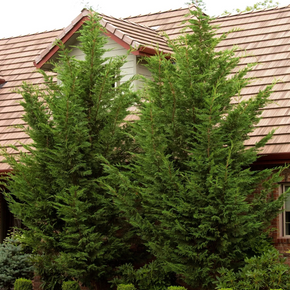
- Dense, narrow columnar form matures to 40-60 feet tall with a 12-25 foot spread, making it one of the most effective and low-maintenance privacy screens and windbreaks available for residential and commercial landscapes.
- Highly adaptable to a wide range of soil types including clay, loam, and sandy soils, and tolerant of coastal salt spray, drought (once established), and temperatures across USDA Hardiness Zones 6-10.
- A classic choice for formal pruned hedges, property border screens, or stand-alone specimen plantings — responds beautifully to shaping and can also be grown commercially as a Christmas tree thanks to its iconic conical silhouette.
The Leyland Cypress (x Cupressocyparis leylandii) is one of the most sought-after fast-growing evergreen trees in American horticulture, prized for its ability to create a lush, dense wall of soft blue-green foliage in just a few seasons. A naturally occurring hybrid between the Nootka Cypress (Cupressus nootkatensis) and the Monterey Cypress (Hesperocyparis macrocarpa), this vigorous conifer combines the best traits of both parents — cold hardiness, coastal tolerance, and rapid, columnar growth. With a growth rate of 3-4 feet per year under ideal conditions, a newly planted row of Leyland Cypress can transform an open yard into a fully enclosed, year-round privacy screen within two to three years. The foliage consists of flat, feathery sprays of soft, scale-like needles in a rich deep grey-green hue that retains its color throughout all four seasons. At maturity, trees typically reach 40-60 feet in height with a spread of 12-25 feet, though the tree responds extremely well to annual pruning for height and shape control, making it equally suitable as a tall formal hedge or a stately specimen tree. Hardy in USDA Zones 6-10 and adaptable to sandy, loamy, or clay soils, Leyland Cypress thrives in full sun and tolerates coastal salt spray, moderate drought once established, and a wide range of temperature extremes, making it an outstanding choice for landscapes across Southern Oregon and Northern California.
Plant Description
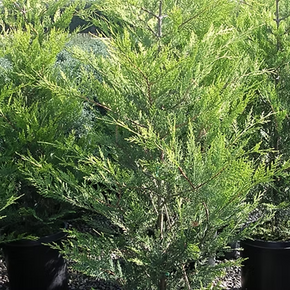
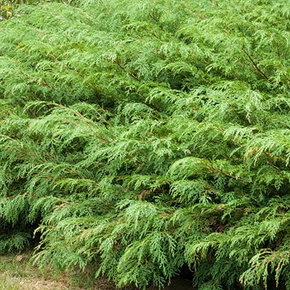
The Leyland Cypress is a large, evergreen conifer known for its graceful, densely branched columnar to broadly pyramidal form. Its foliage is composed of flat, feathery sprays of soft, scale-like, overlapping needles in a distinctive deep grey-green to blue-green color that remains vibrant and attractive throughout every season. Unlike many conifers, the texture of the foliage is notably soft to the touch rather than sharp or prickly, making it pleasant to work with during pruning and maintenance. The bark is reddish-brown and develops attractive ridges and furrows with age. Branches are upright and tightly layered, contributing to the dense, opaque canopy that makes this tree such an effective visual and noise barrier. The Leyland Cypress does not produce ornamentally significant flowers or cones, keeping the overall appearance clean and tidy year-round. It is a sterile hybrid, meaning it does not produce viable seed and must be propagated vegetatively from cuttings. This sterility also means it poses no invasive risk in native landscapes.
Mature Size and Growth Rate
| Characteristic | Details |
|---|---|
| Mature Height | 40-60 feet (can exceed 70 feet in ideal conditions) |
| Mature Spread | 12-25 feet wide |
| Annual Growth Rate | 3-4 feet per year (up to 4-5 feet in optimal conditions) |
| Growth Habit | Narrow columnar to broadly conical |
| Years to Privacy Screen | Approximately 2-3 years when spaced 5-7 feet apart |
| Typical Lifespan | 20-50 years depending on site conditions and care |
Due to its shallow root system, it is important to select a permanent planting site with adequate space. Leyland Cypress can reach 15-20 feet in as few as 5 years, making it one of the fastest-establishing large conifers available for screening purposes. Plan for its ultimate size when siting near structures, utilities, or property lines.
Hardiness Zones and Climate Tolerance
Leyland Cypress is rated for USDA Hardiness Zones 6 through 10, tolerating minimum winter temperatures down to approximately -8°F (-22°C). It performs exceptionally well in the climate zones of Southern Oregon and Northern California, where cool winters, warm dry summers, and occasional drought are common. The tree is notably tolerant of coastal conditions including salt-laden winds and maritime humidity, making it a reliable choice for properties near the Pacific coast. It can handle summer heat up to 100°F (38°C), though in the hottest and most humid portions of its range, supplemental watering during drought is recommended to prevent stress-related decline. In climates with high summer humidity combined with poor air circulation, fungal diseases become a greater concern; proper spacing and siting help mitigate these risks. Overall, the Leyland Cypress is well suited to the Mediterranean-influenced climate conditions found throughout much of Northern California and the inland valleys of Southern Oregon.
Sunlight Requirements
Leyland Cypress thrives in full sun and produces its densest, most robust foliage when it receives a minimum of 6 hours of direct sunlight per day. For best results, choose an open planting location with unobstructed southern or western exposure. The tree can tolerate partial shade, particularly in the hotter, drier portions of its range where afternoon shading can reduce heat stress. However, trees grown in significant shade tend to develop thinner, less dense foliage, which reduces their effectiveness as a privacy screen and may make them more susceptible to certain fungal diseases due to reduced air circulation and slower drying of foliage after rain or irrigation. When planting a row of Leyland Cypress as a hedge, ensure that each tree in the row has adequate access to sunlight along its full length, as dense shading from neighboring trees or structures can cause interior dieback and uneven density over time.
Soil and pH Preferences
| Soil Factor | Preference |
|---|---|
| Soil Types | Sandy, loam, and clay soils all acceptable |
| Drainage | Well-draining; does not tolerate waterlogged conditions |
| Soil pH | Adaptable; performs well in slightly acidic to slightly alkaline soils (pH 5.5-8.0) |
| Soil Richness | Moderate fertility preferred; very rich soils can increase disease risk |
| Soil Amendments | In heavy clay or persistently wet soils, incorporate agricultural sand or grit to improve drainage |
One of the great strengths of the Leyland Cypress is its remarkable adaptability to a wide range of soil conditions. It can establish successfully in nearly any well-draining soil type, from light sandy coastal soils to heavier clay. The most important factor is drainage — standing water around the root zone leads to root rot and rapid decline. In native clay-heavy soils common to parts of Southern Oregon and Northern California, raised planting beds or thorough soil amendment will significantly improve long-term performance.
Watering Guide
Establishment Period (First 1-2 Years): Regular, consistent watering is essential during the first year or two after planting while the root system is becoming established. Water deeply once per week, allowing moisture to penetrate the full root zone. Drip irrigation or soaker hoses applied for 40-60 minutes once per week are ideal, as they deliver moisture directly to the root zone without wetting the foliage — an important consideration for disease prevention.
Established Trees: Once established, Leyland Cypress becomes moderately drought-tolerant and can typically rely on natural precipitation in areas with at least 20 inches of annual rainfall. During extended dry periods — which are common during the summer months in Southern Oregon and Northern California — deep watering every 2-3 weeks helps maintain tree health and prevents the stress conditions that invite canker diseases. Avoid frequent, shallow watering, which encourages a surface root system prone to drought stress and tree toppling.
Caution: Overwatering and poor drainage are the leading causes of root rot in this species. Always allow the soil to partially dry between watering cycles and ensure excellent drainage at the planting site.
Fertilizing
Leyland Cypress is not a heavy feeder and generally performs well without intensive fertilization in average garden soils. For best results, apply a balanced, slow-release granular fertilizer (such as a 10-10-10 or similar formulation) once in early spring as new growth begins. This annual application supports vigorous growth in young trees and helps maintain healthy foliage color in established specimens. In nutrient-poor or sandy soils, a second light application in early summer may be beneficial. Alternatively, top-dressing the root zone with 2-3 inches of high-quality compost each spring provides a gentle, sustained source of nutrients while also improving soil structure and moisture retention. Avoid over-fertilizing with high-nitrogen products, as excessive soft growth can increase susceptibility to pests and diseases. Established trees planted in fertile soils may require little to no supplemental fertilization beyond a compost mulch application.
Pruning and Maintenance
Hedge and Screen Pruning: Leyland Cypress responds very well to pruning and can be maintained at a wide range of heights. For formal hedge use, prune once in late spring and again in mid-to-late summer (April through August) to control height and encourage dense lateral branching. When first establishing a pruned hedge, allow trees to grow approximately one foot above the desired final height before topping them to about 6 inches below that target, which encourages bushy backfill growth at the top. Trim the sides in a slightly tapered "A-shape" from the top, which allows sunlight to reach the lower branches and prevents bare lower limbs over time.
Specimen Tree Pruning: Trees grown as specimens require only light corrective pruning to remove dead, damaged, or crossing branches. Remove any dead or diseased wood at any time of year. Overgrown trees can be reduced by up to one-third of their height in early April if necessary.
Important Tips:
- Always prune with clean, sterilized tools to reduce the risk of spreading fungal diseases between cuts.
- Avoid pruning during wet or humid weather when fungal spores are most active.
- Do not cut back into bare, brown wood — Leyland Cypress will not regenerate foliage from old, bare wood.
- Young trees can be staked for the first year or two if toppling is a concern in windy sites.
Planting Instructions
- Choose the right site: Select a location in full sun with well-draining soil and adequate space for the tree's mature size. Plant at least 20 feet from structures, overhead utilities, or other large trees. In fire-prone areas, note that cypress species are not fire-resistant — maintain appropriate clearance from structures.
- Determine spacing: For a dense privacy screen or hedge, space trees 5-7 feet apart on center. For a more open, naturalistic screen that still provides coverage, 8-10 feet spacing works well. Closer spacing (5 feet) allows the canopy to merge within 2-3 years for maximum privacy.
- Dig the planting hole: Dig a hole that is at least twice as wide as the root ball but only as deep as the root ball's height. Planting too deep is a common cause of early decline.
- Plant at the correct depth: Set the tree so the top of the root ball is level with or very slightly above the surrounding soil grade. This is especially important in heavier soils prone to retaining moisture.
- Backfill: Fill the hole with the native soil removed from the hole — no amendments to the backfill soil are necessary in most situations. Firm the soil gently as you backfill to eliminate large air pockets.
- Water thoroughly: Water the entire root zone deeply immediately after planting to settle the soil and initiate root-to-soil contact.
- Mulch: Apply a 2-3 inch layer of organic mulch (bark, wood chips, or compost) over the root zone, extending at least 3 feet out from the trunk. Keep mulch a few inches away from the bark at the base of the trunk to prevent rot.
- Staking (optional): In exposed, windy sites, stake young trees for the first growing season to keep them upright while roots establish. Remove stakes after one year.
Landscape Uses
The Leyland Cypress is one of the most versatile large conifers for residential and commercial landscape design. Its most popular applications include:
- Privacy Screens and Living Fences: The primary use — planted in rows 5-7 feet apart, a solid, opaque evergreen screen can be established in as little as 2-3 years.
- Windbreaks and Shelterbelts: The dense, deep-rooted canopy (once established) is highly effective at reducing wind velocity, protecting gardens, outbuildings, orchards, and livestock areas from prevailing winds.
- Noise Barriers: The thick, layered foliage absorbs and deflects sound, making Leyland Cypress an effective buffer along busy roads, highways, or neighboring properties.
- Formal Clipped Hedges: The tree's strong tolerance for pruning makes it ideal for tall formal hedgerows that define property boundaries or garden rooms.
- Specimen or Accent Tree: A single unpruned Leyland Cypress makes a dramatic tall specimen in a large open lawn or at a property entrance.
- Christmas Tree Production: Widely grown commercially in the southeastern United States for this purpose due to its classic conical shape and lush foliage.
- Coastal Landscapes: Salt spray tolerance makes it a reliable choice for properties near the Pacific coast, where other large conifers may struggle.
Pests and Diseases
While Leyland Cypress is generally resilient, there are several pests and diseases to monitor for, particularly in dense plantings or stressed trees:
Common Diseases:
- Seiridium Canker: The most serious disease of Leyland Cypress. Caused by the fungus Seiridium unicorne, it produces sunken, discolored, resin-soaked cankers on branches and the main trunk, leading to branch dieback and potentially tree death. Most prevalent in trees stressed by drought, poor drainage, or injury. There is no effective chemical cure — prevention through proper watering, good drainage, adequate plant spacing, and tool sanitation is essential. Prune out and dispose of all affected wood promptly.
- Botryosphaeria (Bot) Canker: A second common canker disease that causes similar dieback symptoms to Seiridium canker. Both diseases are most destructive during periods of drought stress. Management strategies are the same: reduce stress, improve drainage, prune out affected wood with clean tools.
- Needle Blight (Tip Blight): A fungal disease causing yellowing and dieback of branch tips, most common in humid conditions and dense plantings with poor air circulation. Improve spacing and air flow; remove affected material promptly.
- Root Rot (Phytophthora): Develops in waterlogged or poorly draining soils. Symptoms include needle discoloration, wilting, and softening of the trunk base. Ensure excellent drainage; remove severely affected trees.
Common Pests:
- Bagworms: The most significant insect pest. Larvae build distinctive spindle-shaped silken bags covered with plant material along the branches. Small infestations can be hand-picked; larger infestations may require treatment with Bacillus thuringiensis (Bt) when larvae are young and actively feeding in spring.
- Spider Mites: Can cause stippled, bronzed foliage, especially during hot, dry conditions. Treat with insecticidal soap or neem oil. Improving air circulation and avoiding drought stress helps prevent outbreaks.
Companion Plants
Leyland Cypress pairs beautifully with a wide range of ornamental plants that can fill in the foreground and mid-story of a privacy screen planting, adding seasonal color and texture while the cypress provides the evergreen backdrop. Excellent companions for Southern Oregon and Northern California gardens include:
- Azaleas and Rhododendrons: Thrive in the partial shade and slightly acidic conditions found at the base of established cypress screens. Provide spectacular spring color.
- Japanese Maples: Offer stunning autumn foliage in orange, red, and burgundy — a beautiful contrast to the evergreen cypress. Allow 8-10 feet of separation.
- Lavender: Loves the well-drained, sun-drenched conditions along a cypress hedge. The silver-gray foliage and purple blooms contrast beautifully against deep green cypress.
- Ornamental Grasses: Varieties such as Maiden Grass or Fountain Grass provide movement and texture contrast. Plant in groups of 3-5 in front of the cypress line.
- Camellias: Evergreen structure and winter-to-spring flowers make camellias ideal companions where the cypress provides shelter from cold winds.
- Nandina (Heavenly Bamboo): Compact, multi-season interest with red winter foliage and berries. Thrives in conditions similar to those preferred by Leyland Cypress.
- Coneflowers (Echinacea) and Daylilies: Tough, low-maintenance perennials that bring summer color and wildlife value to the sunny border in front of a cypress screen.
- Hostas: Ideal for shaded areas at the base of an established cypress row where they benefit from the protection of the overhead canopy.
Plants to Avoid Nearby: English Ivy (aggressively climbs and can weaken trees), Black Walnut (releases juglone, which is toxic to many plants including cypress), running Bamboo (aggressive root competition), and Willow species (extreme water competition and potential disease transmission).
Seasonal Interest
| Season | Landscape Appearance |
|---|---|
| Spring | Fresh, vivid new growth emerges at branch tips, brightening the overall canopy. Ideal time for light corrective pruning and fertilization. |
| Summer | Full, dense deep grey-green canopy at its thickest. Primary hedge trimming season (late spring through mid-summer). Tree is growing at its fastest rate. |
| Fall | Foliage retains full color as deciduous trees around it change — the Leyland Cypress becomes a bold green anchor in the autumn landscape. |
| Winter | Evergreen foliage provides year-round structure, privacy, and visual screening even after all deciduous plants have dropped their leaves. An important windbreak during winter storms. |
Unlike many deciduous screening options, the Leyland Cypress provides consistent, reliable coverage in every season. Its value as a privacy screen and windbreak is arguably greatest during winter months when other trees are bare.
Wildlife Value
Although the Leyland Cypress is a sterile hybrid and does not produce significant quantities of seed, pollen, or nectar, it still provides meaningful wildlife habitat value in the home landscape:
- Bird Nesting and Shelter: The dense, layered foliage provides protected nesting sites for a wide variety of songbirds, including robins, mockingbirds, and finches. Its thick canopy offers excellent winter shelter from wind, rain, and predators.
- Roosting Cover: Large mature specimens become important roosting sites for birds seeking shelter during cold or wet weather.
- Deer Resistance: Leyland Cypress is considered generally deer resistant, as deer typically avoid the aromatic foliage. This makes it a reliable choice in areas with deer pressure, though no plant is entirely deer-proof under extreme browsing pressure.
- Wind and Noise Shelter: Rows of Leyland Cypress create sheltered microclimates that benefit both garden plants and wildlife seeking refuge from prevailing winds.
- Exceptional fast-growing evergreen conifer reaching 3-4 feet of new growth per year, quickly establishing dense, feathery blue-green foliage that delivers year-round privacy, noise reduction, and wind protection.
- Dense, narrow columnar form matures to 40-60 feet tall with a 12-25 foot spread, making it one of the most effective and low-maintenance privacy screens and windbreaks available for residential and commercial landscapes.
- Highly adaptable to a wide range of soil types including clay, loam, and sandy soils, and tolerant of coastal salt spray, drought (once established), and temperatures across USDA Hardiness Zones 6-10.
- A classic choice for formal pruned hedges, property border screens, or stand-alone specimen plantings — responds beautifully to shaping and can also be grown commercially as a Christmas tree thanks to its iconic conical silhouette.
The Leyland Cypress (x Cupressocyparis leylandii) is one of the most sought-after fast-growing evergreen trees in American horticulture, prized for its ability to create a lush, dense wall of soft blue-green foliage in just a few seasons. A naturally occurring hybrid between the Nootka Cypress (Cupressus nootkatensis) and the Monterey Cypress (Hesperocyparis macrocarpa), this vigorous conifer combines the best traits of both parents — cold hardiness, coastal tolerance, and rapid, columnar growth. With a growth rate of 3-4 feet per year under ideal conditions, a newly planted row of Leyland Cypress can transform an open yard into a fully enclosed, year-round privacy screen within two to three years. The foliage consists of flat, feathery sprays of soft, scale-like needles in a rich deep grey-green hue that retains its color throughout all four seasons. At maturity, trees typically reach 40-60 feet in height with a spread of 12-25 feet, though the tree responds extremely well to annual pruning for height and shape control, making it equally suitable as a tall formal hedge or a stately specimen tree. Hardy in USDA Zones 6-10 and adaptable to sandy, loamy, or clay soils, Leyland Cypress thrives in full sun and tolerates coastal salt spray, moderate drought once established, and a wide range of temperature extremes, making it an outstanding choice for landscapes across Southern Oregon and Northern California.
Plant Description
The Leyland Cypress is a large, evergreen conifer known for its graceful, densely branched columnar to broadly pyramidal form. Its foliage is composed of flat, feathery sprays of soft, scale-like, overlapping needles in a distinctive deep grey-green to blue-green color that remains vibrant and attractive throughout every season. Unlike many conifers, the texture of the foliage is notably soft to the touch rather than sharp or prickly, making it pleasant to work with during pruning and maintenance. The bark is reddish-brown and develops attractive ridges and furrows with age. Branches are upright and tightly layered, contributing to the dense, opaque canopy that makes this tree such an effective visual and noise barrier. The Leyland Cypress does not produce ornamentally significant flowers or cones, keeping the overall appearance clean and tidy year-round. It is a sterile hybrid, meaning it does not produce viable seed and must be propagated vegetatively from cuttings. This sterility also means it poses no invasive risk in native landscapes.
Mature Size and Growth Rate
| Characteristic | Details |
|---|---|
| Mature Height | 40-60 feet (can exceed 70 feet in ideal conditions) |
| Mature Spread | 12-25 feet wide |
| Annual Growth Rate | 3-4 feet per year (up to 4-5 feet in optimal conditions) |
| Growth Habit | Narrow columnar to broadly conical |
| Years to Privacy Screen | Approximately 2-3 years when spaced 5-7 feet apart |
| Typical Lifespan | 20-50 years depending on site conditions and care |
Due to its shallow root system, it is important to select a permanent planting site with adequate space. Leyland Cypress can reach 15-20 feet in as few as 5 years, making it one of the fastest-establishing large conifers available for screening purposes. Plan for its ultimate size when siting near structures, utilities, or property lines.
Hardiness Zones and Climate Tolerance
Leyland Cypress is rated for USDA Hardiness Zones 6 through 10, tolerating minimum winter temperatures down to approximately -8°F (-22°C). It performs exceptionally well in the climate zones of Southern Oregon and Northern California, where cool winters, warm dry summers, and occasional drought are common. The tree is notably tolerant of coastal conditions including salt-laden winds and maritime humidity, making it a reliable choice for properties near the Pacific coast. It can handle summer heat up to 100°F (38°C), though in the hottest and most humid portions of its range, supplemental watering during drought is recommended to prevent stress-related decline. In climates with high summer humidity combined with poor air circulation, fungal diseases become a greater concern; proper spacing and siting help mitigate these risks. Overall, the Leyland Cypress is well suited to the Mediterranean-influenced climate conditions found throughout much of Northern California and the inland valleys of Southern Oregon.
Sunlight Requirements
Leyland Cypress thrives in full sun and produces its densest, most robust foliage when it receives a minimum of 6 hours of direct sunlight per day. For best results, choose an open planting location with unobstructed southern or western exposure. The tree can tolerate partial shade, particularly in the hotter, drier portions of its range where afternoon shading can reduce heat stress. However, trees grown in significant shade tend to develop thinner, less dense foliage, which reduces their effectiveness as a privacy screen and may make them more susceptible to certain fungal diseases due to reduced air circulation and slower drying of foliage after rain or irrigation. When planting a row of Leyland Cypress as a hedge, ensure that each tree in the row has adequate access to sunlight along its full length, as dense shading from neighboring trees or structures can cause interior dieback and uneven density over time.
Soil and pH Preferences
| Soil Factor | Preference |
|---|---|
| Soil Types | Sandy, loam, and clay soils all acceptable |
| Drainage | Well-draining; does not tolerate waterlogged conditions |
| Soil pH | Adaptable; performs well in slightly acidic to slightly alkaline soils (pH 5.5-8.0) |
| Soil Richness | Moderate fertility preferred; very rich soils can increase disease risk |
| Soil Amendments | In heavy clay or persistently wet soils, incorporate agricultural sand or grit to improve drainage |
One of the great strengths of the Leyland Cypress is its remarkable adaptability to a wide range of soil conditions. It can establish successfully in nearly any well-draining soil type, from light sandy coastal soils to heavier clay. The most important factor is drainage — standing water around the root zone leads to root rot and rapid decline. In native clay-heavy soils common to parts of Southern Oregon and Northern California, raised planting beds or thorough soil amendment will significantly improve long-term performance.
Watering Guide
Establishment Period (First 1-2 Years): Regular, consistent watering is essential during the first year or two after planting while the root system is becoming established. Water deeply once per week, allowing moisture to penetrate the full root zone. Drip irrigation or soaker hoses applied for 40-60 minutes once per week are ideal, as they deliver moisture directly to the root zone without wetting the foliage — an important consideration for disease prevention.
Established Trees: Once established, Leyland Cypress becomes moderately drought-tolerant and can typically rely on natural precipitation in areas with at least 20 inches of annual rainfall. During extended dry periods — which are common during the summer months in Southern Oregon and Northern California — deep watering every 2-3 weeks helps maintain tree health and prevents the stress conditions that invite canker diseases. Avoid frequent, shallow watering, which encourages a surface root system prone to drought stress and tree toppling.
Caution: Overwatering and poor drainage are the leading causes of root rot in this species. Always allow the soil to partially dry between watering cycles and ensure excellent drainage at the planting site.
Fertilizing
Leyland Cypress is not a heavy feeder and generally performs well without intensive fertilization in average garden soils. For best results, apply a balanced, slow-release granular fertilizer (such as a 10-10-10 or similar formulation) once in early spring as new growth begins. This annual application supports vigorous growth in young trees and helps maintain healthy foliage color in established specimens. In nutrient-poor or sandy soils, a second light application in early summer may be beneficial. Alternatively, top-dressing the root zone with 2-3 inches of high-quality compost each spring provides a gentle, sustained source of nutrients while also improving soil structure and moisture retention. Avoid over-fertilizing with high-nitrogen products, as excessive soft growth can increase susceptibility to pests and diseases. Established trees planted in fertile soils may require little to no supplemental fertilization beyond a compost mulch application.
Pruning and Maintenance
Hedge and Screen Pruning: Leyland Cypress responds very well to pruning and can be maintained at a wide range of heights. For formal hedge use, prune once in late spring and again in mid-to-late summer (April through August) to control height and encourage dense lateral branching. When first establishing a pruned hedge, allow trees to grow approximately one foot above the desired final height before topping them to about 6 inches below that target, which encourages bushy backfill growth at the top. Trim the sides in a slightly tapered "A-shape" from the top, which allows sunlight to reach the lower branches and prevents bare lower limbs over time.
Specimen Tree Pruning: Trees grown as specimens require only light corrective pruning to remove dead, damaged, or crossing branches. Remove any dead or diseased wood at any time of year. Overgrown trees can be reduced by up to one-third of their height in early April if necessary.
Important Tips:
- Always prune with clean, sterilized tools to reduce the risk of spreading fungal diseases between cuts.
- Avoid pruning during wet or humid weather when fungal spores are most active.
- Do not cut back into bare, brown wood — Leyland Cypress will not regenerate foliage from old, bare wood.
- Young trees can be staked for the first year or two if toppling is a concern in windy sites.
Planting Instructions
- Choose the right site: Select a location in full sun with well-draining soil and adequate space for the tree's mature size. Plant at least 20 feet from structures, overhead utilities, or other large trees. In fire-prone areas, note that cypress species are not fire-resistant — maintain appropriate clearance from structures.
- Determine spacing: For a dense privacy screen or hedge, space trees 5-7 feet apart on center. For a more open, naturalistic screen that still provides coverage, 8-10 feet spacing works well. Closer spacing (5 feet) allows the canopy to merge within 2-3 years for maximum privacy.
- Dig the planting hole: Dig a hole that is at least twice as wide as the root ball but only as deep as the root ball's height. Planting too deep is a common cause of early decline.
- Plant at the correct depth: Set the tree so the top of the root ball is level with or very slightly above the surrounding soil grade. This is especially important in heavier soils prone to retaining moisture.
- Backfill: Fill the hole with the native soil removed from the hole — no amendments to the backfill soil are necessary in most situations. Firm the soil gently as you backfill to eliminate large air pockets.
- Water thoroughly: Water the entire root zone deeply immediately after planting to settle the soil and initiate root-to-soil contact.
- Mulch: Apply a 2-3 inch layer of organic mulch (bark, wood chips, or compost) over the root zone, extending at least 3 feet out from the trunk. Keep mulch a few inches away from the bark at the base of the trunk to prevent rot.
- Staking (optional): In exposed, windy sites, stake young trees for the first growing season to keep them upright while roots establish. Remove stakes after one year.
Landscape Uses
The Leyland Cypress is one of the most versatile large conifers for residential and commercial landscape design. Its most popular applications include:
- Privacy Screens and Living Fences: The primary use — planted in rows 5-7 feet apart, a solid, opaque evergreen screen can be established in as little as 2-3 years.
- Windbreaks and Shelterbelts: The dense, deep-rooted canopy (once established) is highly effective at reducing wind velocity, protecting gardens, outbuildings, orchards, and livestock areas from prevailing winds.
- Noise Barriers: The thick, layered foliage absorbs and deflects sound, making Leyland Cypress an effective buffer along busy roads, highways, or neighboring properties.
- Formal Clipped Hedges: The tree's strong tolerance for pruning makes it ideal for tall formal hedgerows that define property boundaries or garden rooms.
- Specimen or Accent Tree: A single unpruned Leyland Cypress makes a dramatic tall specimen in a large open lawn or at a property entrance.
- Christmas Tree Production: Widely grown commercially in the southeastern United States for this purpose due to its classic conical shape and lush foliage.
- Coastal Landscapes: Salt spray tolerance makes it a reliable choice for properties near the Pacific coast, where other large conifers may struggle.
Pests and Diseases
While Leyland Cypress is generally resilient, there are several pests and diseases to monitor for, particularly in dense plantings or stressed trees:
Common Diseases:
- Seiridium Canker: The most serious disease of Leyland Cypress. Caused by the fungus Seiridium unicorne, it produces sunken, discolored, resin-soaked cankers on branches and the main trunk, leading to branch dieback and potentially tree death. Most prevalent in trees stressed by drought, poor drainage, or injury. There is no effective chemical cure — prevention through proper watering, good drainage, adequate plant spacing, and tool sanitation is essential. Prune out and dispose of all affected wood promptly.
- Botryosphaeria (Bot) Canker: A second common canker disease that causes similar dieback symptoms to Seiridium canker. Both diseases are most destructive during periods of drought stress. Management strategies are the same: reduce stress, improve drainage, prune out affected wood with clean tools.
- Needle Blight (Tip Blight): A fungal disease causing yellowing and dieback of branch tips, most common in humid conditions and dense plantings with poor air circulation. Improve spacing and air flow; remove affected material promptly.
- Root Rot (Phytophthora): Develops in waterlogged or poorly draining soils. Symptoms include needle discoloration, wilting, and softening of the trunk base. Ensure excellent drainage; remove severely affected trees.
Common Pests:
- Bagworms: The most significant insect pest. Larvae build distinctive spindle-shaped silken bags covered with plant material along the branches. Small infestations can be hand-picked; larger infestations may require treatment with Bacillus thuringiensis (Bt) when larvae are young and actively feeding in spring.
- Spider Mites: Can cause stippled, bronzed foliage, especially during hot, dry conditions. Treat with insecticidal soap or neem oil. Improving air circulation and avoiding drought stress helps prevent outbreaks.
Companion Plants
Leyland Cypress pairs beautifully with a wide range of ornamental plants that can fill in the foreground and mid-story of a privacy screen planting, adding seasonal color and texture while the cypress provides the evergreen backdrop. Excellent companions for Southern Oregon and Northern California gardens include:
- Azaleas and Rhododendrons: Thrive in the partial shade and slightly acidic conditions found at the base of established cypress screens. Provide spectacular spring color.
- Japanese Maples: Offer stunning autumn foliage in orange, red, and burgundy — a beautiful contrast to the evergreen cypress. Allow 8-10 feet of separation.
- Lavender: Loves the well-drained, sun-drenched conditions along a cypress hedge. The silver-gray foliage and purple blooms contrast beautifully against deep green cypress.
- Ornamental Grasses: Varieties such as Maiden Grass or Fountain Grass provide movement and texture contrast. Plant in groups of 3-5 in front of the cypress line.
- Camellias: Evergreen structure and winter-to-spring flowers make camellias ideal companions where the cypress provides shelter from cold winds.
- Nandina (Heavenly Bamboo): Compact, multi-season interest with red winter foliage and berries. Thrives in conditions similar to those preferred by Leyland Cypress.
- Coneflowers (Echinacea) and Daylilies: Tough, low-maintenance perennials that bring summer color and wildlife value to the sunny border in front of a cypress screen.
- Hostas: Ideal for shaded areas at the base of an established cypress row where they benefit from the protection of the overhead canopy.
Plants to Avoid Nearby: English Ivy (aggressively climbs and can weaken trees), Black Walnut (releases juglone, which is toxic to many plants including cypress), running Bamboo (aggressive root competition), and Willow species (extreme water competition and potential disease transmission).
Seasonal Interest
| Season | Landscape Appearance |
|---|---|
| Spring | Fresh, vivid new growth emerges at branch tips, brightening the overall canopy. Ideal time for light corrective pruning and fertilization. |
| Summer | Full, dense deep grey-green canopy at its thickest. Primary hedge trimming season (late spring through mid-summer). Tree is growing at its fastest rate. |
| Fall | Foliage retains full color as deciduous trees around it change — the Leyland Cypress becomes a bold green anchor in the autumn landscape. |
| Winter | Evergreen foliage provides year-round structure, privacy, and visual screening even after all deciduous plants have dropped their leaves. An important windbreak during winter storms. |
Unlike many deciduous screening options, the Leyland Cypress provides consistent, reliable coverage in every season. Its value as a privacy screen and windbreak is arguably greatest during winter months when other trees are bare.
Wildlife Value
Although the Leyland Cypress is a sterile hybrid and does not produce significant quantities of seed, pollen, or nectar, it still provides meaningful wildlife habitat value in the home landscape:
- Bird Nesting and Shelter: The dense, layered foliage provides protected nesting sites for a wide variety of songbirds, including robins, mockingbirds, and finches. Its thick canopy offers excellent winter shelter from wind, rain, and predators.
- Roosting Cover: Large mature specimens become important roosting sites for birds seeking shelter during cold or wet weather.
- Deer Resistance: Leyland Cypress is considered generally deer resistant, as deer typically avoid the aromatic foliage. This makes it a reliable choice in areas with deer pressure, though no plant is entirely deer-proof under extreme browsing pressure.
- Wind and Noise Shelter: Rows of Leyland Cypress create sheltered microclimates that benefit both garden plants and wildlife seeking refuge from prevailing winds.
Related Products