

Zoom the image with the mouse
Blue Italian Cypress - 5 Gallon
SKU:
104595
UPC:
753768030542
$64.99
- Striking blue-green, scale-like evergreen foliage delivers superior color intensity and holds its rich hue year-round, giving any landscape a bold Mediterranean character.
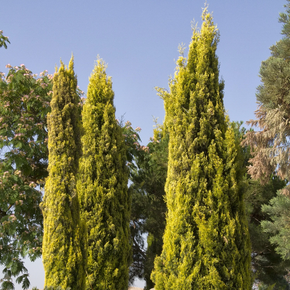
- Dramatically narrow, pencil-straight columnar form grows 40-60 feet tall yet only 5-10 feet wide, making it the ultimate space-saving vertical accent or privacy screen.
- Fast-growing and drought tolerant once established, this low-maintenance conifer thrives in the dry, sun-drenched climates of Southern Oregon and Northern California with minimal irrigation needs.
- Naturally deer resistant and long-lived, with a dense, symmetrical silhouette that requires little to no pruning to maintain its refined, architectural elegance.
Blue Italian Cypress (Cupressus sempervirens 'Glauca') is a superior-strain evergreen conifer celebrated for its intensely blue-green foliage and stately, pencil-column silhouette that has graced formal Mediterranean gardens since the Renaissance. Unlike the standard species, 'Glauca' is prized for its enhanced blue coloration, exceptionally dense branching, and tightly upright habit that reaches impressive heights of 40-60 feet while remaining a slender 5-10 feet wide, making it both a commanding focal point and a practical privacy screen. This fast-growing conifer is ideally suited to the warm, dry climates of USDA Zones 7-10, thriving in full sun and well-drained soils where it develops strong drought tolerance once established. Its fine-textured, aromatic, scale-like foliage retains its distinctive blue-green color through every season, lending year-round elegance to formal garden designs, long allees, entryway flanking, windbreaks, and large-scale landscape compositions. Whether planted as a bold singular specimen or in sweeping linear groupings, Blue Italian Cypress delivers unmatched vertical drama and timeless Old World sophistication to any garden setting.
Plant Description
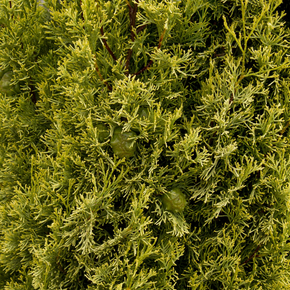
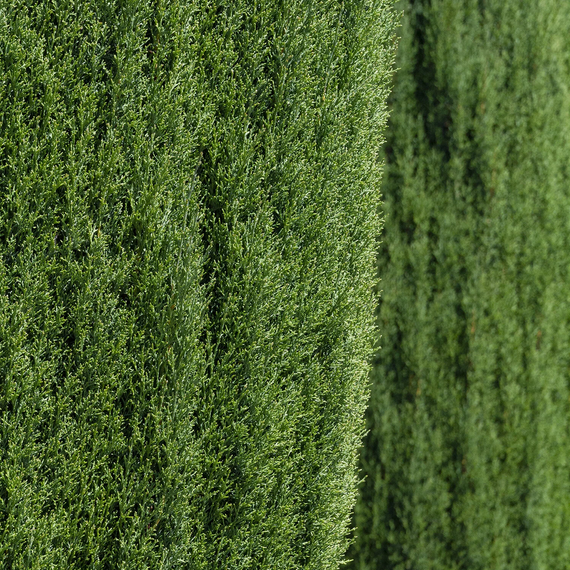
Blue Italian Cypress is a narrowly columnar, needled evergreen conifer in the family Cupressaceae. The 'Glauca' cultivar is distinguished from other Italian Cypress selections by its superior blue-green foliage coloration, which is more pronounced and vivid than standard green-foliaged forms. The scale-like leaves are tightly arranged along upright, densely branched stems, giving the overall canopy a fine, feathery texture that catches the light beautifully. The foliage is mildly aromatic when brushed or crushed, releasing a pleasant resinous fragrance reminiscent of its Mediterranean homeland. The bark is thin and gray-brown, often developing an attractive exfoliating character with age. Small, rounded cones approximately 1 inch in diameter may form on mature trees, though this cultivar is noted for producing relatively few cones. The tree maintains a single, strong central leader throughout its life, resulting in a symmetrical, formal silhouette that requires no staking or structural pruning to achieve its classic shape.
Mature Size
| Characteristic | Measurement |
|---|---|
| Mature Height | 40-60 feet |
| Mature Spread | 5-10 feet |
| Growth Rate | Fast (up to 24-36 inches per year under ideal conditions) |
| Crown Shape | Narrowly columnar / fastigiate |
| Crown Density | Dense |
| Canopy Clearance | Low; branching begins near ground level |
| Longevity | 60+ years under ideal conditions |
Hardiness Zones
Blue Italian Cypress is reliably hardy in USDA Plant Hardiness Zones 7A through 10A. It is exceptionally well suited to the Mediterranean-type climates found throughout Southern Oregon and Northern California, where hot, dry summers and mild, wet winters closely mirror the tree's native growing conditions in southern Europe and western Asia. It can tolerate brief cold snaps but performs best where prolonged hard freezes are uncommon. In the hottest portions of Zone 10, light afternoon shade during extreme heat waves can help prevent foliage scorch on young trees.
Sunlight Requirements
Blue Italian Cypress demands full sun for best performance and should receive a minimum of 6-8 hours of direct sunlight daily. Planting in full sun encourages the densest possible foliage, the strongest columnar form, and the richest blue-green color intensity. Insufficient light leads to sparse, open branching, loss of the characteristic tight column shape, and a duller, less vibrant foliage color. Avoid planting in sites that are shaded by buildings, fences, or other trees for significant portions of the day. Open, south-facing or west-facing exposures are ideal in the Pacific Coast region.
Soil and pH Preferences
This cypress is adaptable to a wide range of soil types, including sandy, loamy, and even moderately clay-based soils, provided drainage is excellent. Well-drained soil is the single most important requirement, as soggy or waterlogged conditions are a primary cause of root rot and decline. The ideal soil pH range is 6.0 to 7.5 (slightly acidic to neutral), though the tree can tolerate mildly alkaline conditions. It performs particularly well in sandy loams that drain quickly and warm up rapidly. If planting in heavier clay soils, amend generously with coarse sand and organic compost to improve aeration and drainage, or consider building a raised planting bed to elevate the root zone above any standing water. Blue Italian Cypress also demonstrates moderate tolerance to salt aerosol, making it a viable choice for coastal garden settings.
Watering Guide
- At planting: Water deeply and thoroughly immediately after planting to settle the soil around the root ball and eliminate air pockets.
- First growing season: Water deeply once or twice per week, allowing the soil to partially dry between waterings. Consistent moisture during the first season is critical to establishing a strong root system.
- Established trees: Once well established, Blue Italian Cypress becomes notably drought tolerant. Reduce watering frequency to every 10-14 days during dry summer months, and scale back further during cooler months.
- General guideline: Aim for approximately 1-2 inches of water per week during the active growing season, adjusted based on rainfall and temperature.
- Caution: Overwatering is one of the most common mistakes. Check soil moisture 2-3 inches below the surface before watering. If the soil still feels moist, wait before irrigating again.
- Mulching: Apply a 2-3 inch layer of organic mulch (wood chips or shredded bark) around the base, keeping it several inches away from the trunk, to retain soil moisture, regulate temperature, and reduce watering frequency.
Fertilizing
Blue Italian Cypress is not a heavy feeder and requires minimal fertilization to thrive. Apply a balanced, slow-release fertilizer formulated for evergreen conifers once per year in early spring, just as new growth begins. A fertilizer with an N-P-K ratio such as 10-10-10 or one specifically labeled for conifers and evergreens is appropriate. Follow all package directions carefully and avoid over-fertilizing, which can stimulate weak, rapid growth and increase susceptibility to pests. Do not fertilize in late summer or fall, as this can encourage new tender growth that may be damaged if temperatures drop. Incorporate a layer of compost around the drip line in spring as a gentle, organic nutrient supplement between fertilizer applications. Soil testing every few years helps identify any specific nutrient deficiencies that may need to be addressed.
Planting Instructions
- Choose the right time: Plant in early spring or early fall when temperatures are moderate, reducing transplant stress and promoting faster root establishment.
- Select the right location: Choose a full-sun site with excellent drainage. Allow adequate space for the tree's mature footprint of 5-10 feet wide. Avoid planting beneath power lines due to the potential mature height.
- Dig the hole: Dig a hole approximately twice as wide as the root ball and equal in depth. Loosen the soil at the bottom and sides of the hole to encourage root penetration into the surrounding ground.
- Check drainage: Fill the hole with water and observe. If water drains away within an hour, drainage is adequate. If not, amend the soil with coarse sand and organic matter, or consider a raised bed installation.
- Prepare the root ball: Gently loosen any circling or compacted roots before placing the tree in the hole.
- Set the tree: Position the tree so the top of the root ball is level with or very slightly above the surrounding soil grade. Planting too deep invites crown rot.
- Backfill: Fill the hole with a mix of the native soil and organic compost, firming it gently in layers to eliminate large air pockets. Do not over-tamp, as compaction can restrict root development.
- Water thoroughly: Water deeply immediately after planting to hydrate the roots and settle the backfill soil.
- Mulch: Spread a 2-3 inch layer of organic mulch in a ring around the base, keeping mulch pulled back a few inches from the trunk to prevent moisture accumulation against the bark.
- Spacing for screens: For a dense privacy hedge or windbreak, space trees 3-5 feet apart on center. For specimen or accent plantings, allow a minimum of 6-8 feet from structures or other plants.
Pruning and Maintenance
One of the greatest appeals of Blue Italian Cypress is its naturally tidy, columnar growth habit, which requires little corrective pruning to maintain. In most situations, no routine pruning is necessary. If shaping is desired, prune lightly in late winter or very early spring, before new growth begins, using clean, sharp pruning shears. Remove only dead, damaged, or crossing branches, and make cuts back to a lateral branch or growth node. Avoid cutting back into old, bare wood, as Italian Cypress does not reliably regenerate new growth from leafless stems. Heavy shearing or topping is strongly discouraged, as it destroys the tree's natural form and can introduce disease entry points. The tree should never be pruned in the fall, as this can stimulate tender new growth vulnerable to cold damage. Overall, this is a very low-maintenance tree that rewards minimal intervention with consistent, elegant performance.
Landscape Uses
- Vertical accent / exclamation point: A single specimen creates an immediate focal point, drawing the eye upward and adding dramatic height to otherwise flat or horizontal compositions.
- Formal allees and entryway flanking: Planted in pairs or rows flanking a driveway, pathway, or gate, Blue Italian Cypress delivers classic European formality and a strong sense of arrival.
- Privacy screen and hedge: Planted 3-5 feet apart on center, a row creates a tall, dense, year-round screen that blocks sightlines and reduces noise.
- Windbreak and shelterbelt: The dense, upright form is effective at slowing prevailing winds and protecting more tender plantings downwind.
- Architectural accent around large structures: Ideal for complementing the scale of large homes, commercial buildings, or estate walls where a bold vertical element is needed.
- Mediterranean and formal garden themes: A natural companion for gardens designed with Italian, Spanish, Tuscan, or other Mediterranean-influenced aesthetics.
- Mixed conifer borders: The narrow blue-green column contrasts beautifully in color and form against rounded or spreading evergreen companions.
Seasonal Interest
Blue Italian Cypress delivers outstanding year-round landscape interest thanks to its evergreen nature. The blue-green foliage maintains its color consistently through all four seasons, providing structure and color even in the depths of winter when deciduous plants are bare. In spring, emerging new growth may appear slightly brighter and fresher, giving the canopy a renewed luminosity. During summer, the dense, richly colored column creates strong contrast with flowering perennials and warm-toned ornamentals. In fall and winter, it serves as a reliable anchor of structure and living color in the landscape, creating a sense of continuity when much of the garden has gone dormant. The tree's bold vertical silhouette is especially striking when viewed against a low winter sun or a dramatic sky.
Pests and Diseases
Blue Italian Cypress is generally a robust tree, but a few pest and disease issues are worth monitoring, particularly in warm, dry climates:
- Spider mites: The most common pest problem. Infestations are more frequent during hot, dry weather and manifest as bronzing, yellowing, or stippling of the foliage along with fine webbing. Treat promptly with insecticidal soap or neem oil, and improve air circulation. Keeping the foliage clean with occasional light water sprays helps deter mites.
- Bagworms: Occasionally attack Italian Cypress, creating spindle-shaped silk bags covered in foliage fragments hanging from branches. Hand-remove bags in fall and winter, or treat with Bacillus thuringiensis (Bt) in spring when larvae are young.
- Aphids: May appear on new growth. Control with insecticidal soap, neem oil, or a strong blast of water.
- Cypress canker (Seiridium cardinale): A serious fungal disease in California that causes cankers on branches and the main stem, leading to die-back of affected limbs. There is no chemical cure; manage by pruning out infected branches well below the canker, disinfecting pruning tools between cuts, and avoiding unnecessary wounds. Plant in well-drained soil and minimize plant stress to reduce susceptibility.
- Root rot: Caused by Phytophthora and other fungi in poorly drained or waterlogged soils. Prevention through excellent drainage and avoiding overwatering is the best strategy. This cultivar shows relatively high resistance to root rot when sited and watered correctly.
Companion Plants
Blue Italian Cypress pairs beautifully with plants that complement its vertical form, Mediterranean character, and blue-green coloration. Consider the following companion plant combinations:
- Lavender (Lavandula spp.): The soft purple flowers and silver-gray foliage of lavender create a classic Mediterranean pairing at the base of a cypress column.
- Rosemary (Salvia rosmarinus): Shares the same drought tolerance and Mediterranean heritage; mounding or trailing rosemary provides a soft textural contrast at ground level.
- Olive (Olea europaea): The gnarled silver-leafed olive tree creates a quintessential Tuscan-inspired planting scheme alongside Italian Cypress.
- Agave and Yucca: Bold, architectural succulents echo the formal structure of the cypress and thrive in the same dry, well-drained conditions.
- Italian Buckthorn (Rhamnus alaternus): A dense, dark green evergreen shrub that creates a contrasting backdrop to highlight the blue-gray foliage of the cypress.
- Ornamental grasses (Festuca glauca, Nassella tenuissima): The fine, airy texture and movement of ornamental grasses provide a beautiful soft counterpoint to the rigid, formal cypress column.
- Rockrose (Cistus spp.): A drought-tolerant flowering shrub that performs well under similar sunny, dry conditions and adds seasonal flower interest.
Wildlife Value
While Blue Italian Cypress is not a primary wildlife habitat plant in the traditional sense, it does offer several meaningful benefits to garden wildlife. The dense, evergreen branching structure provides year-round shelter and protected nesting sites for a variety of songbirds. The thick interior canopy offers cover from predators and wind, making it attractive to birds seeking roosting spots during cold or stormy weather. Small conifer-seed-eating birds may forage among the minimal cones that mature trees occasionally produce. Importantly, Blue Italian Cypress is notably deer resistant, as deer generally find the aromatic foliage unpalatable, making it a dependable choice in deer-prone landscapes. It is not known to be a significant source of pollen, nectar, or fruit for pollinators or other wildlife, but its structural contributions to the garden ecosystem make it a worthwhile inclusion in any mixed planting.
Container Growing
Blue Italian Cypress can be grown successfully in large containers and makes a dramatic statement flanking an entry, on a patio, or in a formal courtyard setting. For container culture, keep the following guidelines in mind:
- Container size: Choose a large, heavy container with ample drainage holes. A minimum 20-25 gallon container is recommended to accommodate the root system and provide stability for the tall, narrow form.
- Potting mix: Use a high-quality, fast-draining potting mix formulated for trees and shrubs. Blend in additional perlite or coarse sand to ensure excellent drainage.
- Watering in containers: Container-grown trees dry out more quickly than those planted in the ground. Check soil moisture regularly and water when the top 2 inches feel dry, being careful never to let the root ball sit in standing water in the drainage saucer.
- Fertilizing: Container plants benefit from more frequent feeding. Apply a slow-release granular fertilizer formulated for conifers in spring, and supplement with a diluted liquid fertilizer once a month through the growing season.
- Root management: Repot every 2-3 years, stepping up to a slightly larger container each time, or root-prune and return to the same container to control ultimate size.
- Overwintering: In the mildest parts of Zones 7-10, container-grown trees can remain outdoors year-round. Move containers to a sheltered location near a south-facing wall during unusually hard freezes to protect the roots.
- Striking blue-green, scale-like evergreen foliage delivers superior color intensity and holds its rich hue year-round, giving any landscape a bold Mediterranean character.
- Dramatically narrow, pencil-straight columnar form grows 40-60 feet tall yet only 5-10 feet wide, making it the ultimate space-saving vertical accent or privacy screen.
- Fast-growing and drought tolerant once established, this low-maintenance conifer thrives in the dry, sun-drenched climates of Southern Oregon and Northern California with minimal irrigation needs.
- Naturally deer resistant and long-lived, with a dense, symmetrical silhouette that requires little to no pruning to maintain its refined, architectural elegance.
Blue Italian Cypress (Cupressus sempervirens 'Glauca') is a superior-strain evergreen conifer celebrated for its intensely blue-green foliage and stately, pencil-column silhouette that has graced formal Mediterranean gardens since the Renaissance. Unlike the standard species, 'Glauca' is prized for its enhanced blue coloration, exceptionally dense branching, and tightly upright habit that reaches impressive heights of 40-60 feet while remaining a slender 5-10 feet wide, making it both a commanding focal point and a practical privacy screen. This fast-growing conifer is ideally suited to the warm, dry climates of USDA Zones 7-10, thriving in full sun and well-drained soils where it develops strong drought tolerance once established. Its fine-textured, aromatic, scale-like foliage retains its distinctive blue-green color through every season, lending year-round elegance to formal garden designs, long allees, entryway flanking, windbreaks, and large-scale landscape compositions. Whether planted as a bold singular specimen or in sweeping linear groupings, Blue Italian Cypress delivers unmatched vertical drama and timeless Old World sophistication to any garden setting.
Plant Description
Blue Italian Cypress is a narrowly columnar, needled evergreen conifer in the family Cupressaceae. The 'Glauca' cultivar is distinguished from other Italian Cypress selections by its superior blue-green foliage coloration, which is more pronounced and vivid than standard green-foliaged forms. The scale-like leaves are tightly arranged along upright, densely branched stems, giving the overall canopy a fine, feathery texture that catches the light beautifully. The foliage is mildly aromatic when brushed or crushed, releasing a pleasant resinous fragrance reminiscent of its Mediterranean homeland. The bark is thin and gray-brown, often developing an attractive exfoliating character with age. Small, rounded cones approximately 1 inch in diameter may form on mature trees, though this cultivar is noted for producing relatively few cones. The tree maintains a single, strong central leader throughout its life, resulting in a symmetrical, formal silhouette that requires no staking or structural pruning to achieve its classic shape.
Mature Size
| Characteristic | Measurement |
|---|---|
| Mature Height | 40-60 feet |
| Mature Spread | 5-10 feet |
| Growth Rate | Fast (up to 24-36 inches per year under ideal conditions) |
| Crown Shape | Narrowly columnar / fastigiate |
| Crown Density | Dense |
| Canopy Clearance | Low; branching begins near ground level |
| Longevity | 60+ years under ideal conditions |
Hardiness Zones
Blue Italian Cypress is reliably hardy in USDA Plant Hardiness Zones 7A through 10A. It is exceptionally well suited to the Mediterranean-type climates found throughout Southern Oregon and Northern California, where hot, dry summers and mild, wet winters closely mirror the tree's native growing conditions in southern Europe and western Asia. It can tolerate brief cold snaps but performs best where prolonged hard freezes are uncommon. In the hottest portions of Zone 10, light afternoon shade during extreme heat waves can help prevent foliage scorch on young trees.
Sunlight Requirements
Blue Italian Cypress demands full sun for best performance and should receive a minimum of 6-8 hours of direct sunlight daily. Planting in full sun encourages the densest possible foliage, the strongest columnar form, and the richest blue-green color intensity. Insufficient light leads to sparse, open branching, loss of the characteristic tight column shape, and a duller, less vibrant foliage color. Avoid planting in sites that are shaded by buildings, fences, or other trees for significant portions of the day. Open, south-facing or west-facing exposures are ideal in the Pacific Coast region.
Soil and pH Preferences
This cypress is adaptable to a wide range of soil types, including sandy, loamy, and even moderately clay-based soils, provided drainage is excellent. Well-drained soil is the single most important requirement, as soggy or waterlogged conditions are a primary cause of root rot and decline. The ideal soil pH range is 6.0 to 7.5 (slightly acidic to neutral), though the tree can tolerate mildly alkaline conditions. It performs particularly well in sandy loams that drain quickly and warm up rapidly. If planting in heavier clay soils, amend generously with coarse sand and organic compost to improve aeration and drainage, or consider building a raised planting bed to elevate the root zone above any standing water. Blue Italian Cypress also demonstrates moderate tolerance to salt aerosol, making it a viable choice for coastal garden settings.
Watering Guide
- At planting: Water deeply and thoroughly immediately after planting to settle the soil around the root ball and eliminate air pockets.
- First growing season: Water deeply once or twice per week, allowing the soil to partially dry between waterings. Consistent moisture during the first season is critical to establishing a strong root system.
- Established trees: Once well established, Blue Italian Cypress becomes notably drought tolerant. Reduce watering frequency to every 10-14 days during dry summer months, and scale back further during cooler months.
- General guideline: Aim for approximately 1-2 inches of water per week during the active growing season, adjusted based on rainfall and temperature.
- Caution: Overwatering is one of the most common mistakes. Check soil moisture 2-3 inches below the surface before watering. If the soil still feels moist, wait before irrigating again.
- Mulching: Apply a 2-3 inch layer of organic mulch (wood chips or shredded bark) around the base, keeping it several inches away from the trunk, to retain soil moisture, regulate temperature, and reduce watering frequency.
Fertilizing
Blue Italian Cypress is not a heavy feeder and requires minimal fertilization to thrive. Apply a balanced, slow-release fertilizer formulated for evergreen conifers once per year in early spring, just as new growth begins. A fertilizer with an N-P-K ratio such as 10-10-10 or one specifically labeled for conifers and evergreens is appropriate. Follow all package directions carefully and avoid over-fertilizing, which can stimulate weak, rapid growth and increase susceptibility to pests. Do not fertilize in late summer or fall, as this can encourage new tender growth that may be damaged if temperatures drop. Incorporate a layer of compost around the drip line in spring as a gentle, organic nutrient supplement between fertilizer applications. Soil testing every few years helps identify any specific nutrient deficiencies that may need to be addressed.
Planting Instructions
- Choose the right time: Plant in early spring or early fall when temperatures are moderate, reducing transplant stress and promoting faster root establishment.
- Select the right location: Choose a full-sun site with excellent drainage. Allow adequate space for the tree's mature footprint of 5-10 feet wide. Avoid planting beneath power lines due to the potential mature height.
- Dig the hole: Dig a hole approximately twice as wide as the root ball and equal in depth. Loosen the soil at the bottom and sides of the hole to encourage root penetration into the surrounding ground.
- Check drainage: Fill the hole with water and observe. If water drains away within an hour, drainage is adequate. If not, amend the soil with coarse sand and organic matter, or consider a raised bed installation.
- Prepare the root ball: Gently loosen any circling or compacted roots before placing the tree in the hole.
- Set the tree: Position the tree so the top of the root ball is level with or very slightly above the surrounding soil grade. Planting too deep invites crown rot.
- Backfill: Fill the hole with a mix of the native soil and organic compost, firming it gently in layers to eliminate large air pockets. Do not over-tamp, as compaction can restrict root development.
- Water thoroughly: Water deeply immediately after planting to hydrate the roots and settle the backfill soil.
- Mulch: Spread a 2-3 inch layer of organic mulch in a ring around the base, keeping mulch pulled back a few inches from the trunk to prevent moisture accumulation against the bark.
- Spacing for screens: For a dense privacy hedge or windbreak, space trees 3-5 feet apart on center. For specimen or accent plantings, allow a minimum of 6-8 feet from structures or other plants.
Pruning and Maintenance
One of the greatest appeals of Blue Italian Cypress is its naturally tidy, columnar growth habit, which requires little corrective pruning to maintain. In most situations, no routine pruning is necessary. If shaping is desired, prune lightly in late winter or very early spring, before new growth begins, using clean, sharp pruning shears. Remove only dead, damaged, or crossing branches, and make cuts back to a lateral branch or growth node. Avoid cutting back into old, bare wood, as Italian Cypress does not reliably regenerate new growth from leafless stems. Heavy shearing or topping is strongly discouraged, as it destroys the tree's natural form and can introduce disease entry points. The tree should never be pruned in the fall, as this can stimulate tender new growth vulnerable to cold damage. Overall, this is a very low-maintenance tree that rewards minimal intervention with consistent, elegant performance.
Landscape Uses
- Vertical accent / exclamation point: A single specimen creates an immediate focal point, drawing the eye upward and adding dramatic height to otherwise flat or horizontal compositions.
- Formal allees and entryway flanking: Planted in pairs or rows flanking a driveway, pathway, or gate, Blue Italian Cypress delivers classic European formality and a strong sense of arrival.
- Privacy screen and hedge: Planted 3-5 feet apart on center, a row creates a tall, dense, year-round screen that blocks sightlines and reduces noise.
- Windbreak and shelterbelt: The dense, upright form is effective at slowing prevailing winds and protecting more tender plantings downwind.
- Architectural accent around large structures: Ideal for complementing the scale of large homes, commercial buildings, or estate walls where a bold vertical element is needed.
- Mediterranean and formal garden themes: A natural companion for gardens designed with Italian, Spanish, Tuscan, or other Mediterranean-influenced aesthetics.
- Mixed conifer borders: The narrow blue-green column contrasts beautifully in color and form against rounded or spreading evergreen companions.
Seasonal Interest
Blue Italian Cypress delivers outstanding year-round landscape interest thanks to its evergreen nature. The blue-green foliage maintains its color consistently through all four seasons, providing structure and color even in the depths of winter when deciduous plants are bare. In spring, emerging new growth may appear slightly brighter and fresher, giving the canopy a renewed luminosity. During summer, the dense, richly colored column creates strong contrast with flowering perennials and warm-toned ornamentals. In fall and winter, it serves as a reliable anchor of structure and living color in the landscape, creating a sense of continuity when much of the garden has gone dormant. The tree's bold vertical silhouette is especially striking when viewed against a low winter sun or a dramatic sky.
Pests and Diseases
Blue Italian Cypress is generally a robust tree, but a few pest and disease issues are worth monitoring, particularly in warm, dry climates:
- Spider mites: The most common pest problem. Infestations are more frequent during hot, dry weather and manifest as bronzing, yellowing, or stippling of the foliage along with fine webbing. Treat promptly with insecticidal soap or neem oil, and improve air circulation. Keeping the foliage clean with occasional light water sprays helps deter mites.
- Bagworms: Occasionally attack Italian Cypress, creating spindle-shaped silk bags covered in foliage fragments hanging from branches. Hand-remove bags in fall and winter, or treat with Bacillus thuringiensis (Bt) in spring when larvae are young.
- Aphids: May appear on new growth. Control with insecticidal soap, neem oil, or a strong blast of water.
- Cypress canker (Seiridium cardinale): A serious fungal disease in California that causes cankers on branches and the main stem, leading to die-back of affected limbs. There is no chemical cure; manage by pruning out infected branches well below the canker, disinfecting pruning tools between cuts, and avoiding unnecessary wounds. Plant in well-drained soil and minimize plant stress to reduce susceptibility.
- Root rot: Caused by Phytophthora and other fungi in poorly drained or waterlogged soils. Prevention through excellent drainage and avoiding overwatering is the best strategy. This cultivar shows relatively high resistance to root rot when sited and watered correctly.
Companion Plants
Blue Italian Cypress pairs beautifully with plants that complement its vertical form, Mediterranean character, and blue-green coloration. Consider the following companion plant combinations:
- Lavender (Lavandula spp.): The soft purple flowers and silver-gray foliage of lavender create a classic Mediterranean pairing at the base of a cypress column.
- Rosemary (Salvia rosmarinus): Shares the same drought tolerance and Mediterranean heritage; mounding or trailing rosemary provides a soft textural contrast at ground level.
- Olive (Olea europaea): The gnarled silver-leafed olive tree creates a quintessential Tuscan-inspired planting scheme alongside Italian Cypress.
- Agave and Yucca: Bold, architectural succulents echo the formal structure of the cypress and thrive in the same dry, well-drained conditions.
- Italian Buckthorn (Rhamnus alaternus): A dense, dark green evergreen shrub that creates a contrasting backdrop to highlight the blue-gray foliage of the cypress.
- Ornamental grasses (Festuca glauca, Nassella tenuissima): The fine, airy texture and movement of ornamental grasses provide a beautiful soft counterpoint to the rigid, formal cypress column.
- Rockrose (Cistus spp.): A drought-tolerant flowering shrub that performs well under similar sunny, dry conditions and adds seasonal flower interest.
Wildlife Value
While Blue Italian Cypress is not a primary wildlife habitat plant in the traditional sense, it does offer several meaningful benefits to garden wildlife. The dense, evergreen branching structure provides year-round shelter and protected nesting sites for a variety of songbirds. The thick interior canopy offers cover from predators and wind, making it attractive to birds seeking roosting spots during cold or stormy weather. Small conifer-seed-eating birds may forage among the minimal cones that mature trees occasionally produce. Importantly, Blue Italian Cypress is notably deer resistant, as deer generally find the aromatic foliage unpalatable, making it a dependable choice in deer-prone landscapes. It is not known to be a significant source of pollen, nectar, or fruit for pollinators or other wildlife, but its structural contributions to the garden ecosystem make it a worthwhile inclusion in any mixed planting.
Container Growing
Blue Italian Cypress can be grown successfully in large containers and makes a dramatic statement flanking an entry, on a patio, or in a formal courtyard setting. For container culture, keep the following guidelines in mind:
- Container size: Choose a large, heavy container with ample drainage holes. A minimum 20-25 gallon container is recommended to accommodate the root system and provide stability for the tall, narrow form.
- Potting mix: Use a high-quality, fast-draining potting mix formulated for trees and shrubs. Blend in additional perlite or coarse sand to ensure excellent drainage.
- Watering in containers: Container-grown trees dry out more quickly than those planted in the ground. Check soil moisture regularly and water when the top 2 inches feel dry, being careful never to let the root ball sit in standing water in the drainage saucer.
- Fertilizing: Container plants benefit from more frequent feeding. Apply a slow-release granular fertilizer formulated for conifers in spring, and supplement with a diluted liquid fertilizer once a month through the growing season.
- Root management: Repot every 2-3 years, stepping up to a slightly larger container each time, or root-prune and return to the same container to control ultimate size.
- Overwintering: In the mildest parts of Zones 7-10, container-grown trees can remain outdoors year-round. Move containers to a sheltered location near a south-facing wall during unusually hard freezes to protect the roots.