
Zoom the image with the mouse
Golden Leyland Cypress - 2 Gallon
SKU:
1595090
UPC:
541537003640
$24.99
- Brilliant golden-yellow foliage holds its vibrant color year-round, providing striking contrast and warm visual interest in every season
- Exceptionally fast-growing evergreen conifer that quickly forms a dense, narrow pyramid — ideal for privacy screens, windbreaks, and tall hedges
- Highly adaptable to a wide range of soil types and tolerant of wind, coastal conditions, heat, drought once established, and urban pollution
- Hardy in USDA Zones 6-9 and responds well to shaping, making it equally at home as a clipped formal hedge or a bold landscape specimen
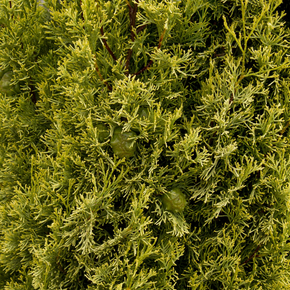
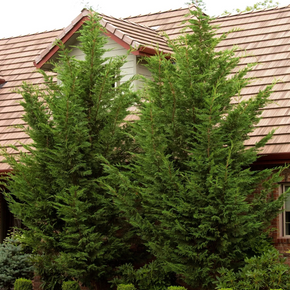
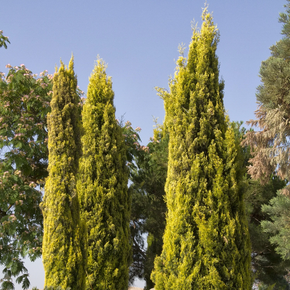
Golden Leyland Cypress (Cupressocyparis leylandii 'Castlewellan') is one of the most eye-catching conifers available for the Pacific Coast and Pacific Northwest landscape, delivering a dense, upright pyramidal silhouette draped in warm, golden-yellow scale-like foliage that glows year-round. An interspecific hybrid between Monterey Cypress (Cupressus macrocarpa) and Nootka Cypress (Cupressus nootkatensis), this vigorous evergreen is celebrated for its impressively fast growth rate — capable of putting on up to 2 feet or more per year under ideal conditions — making it one of the quickest solutions available for establishing a tall privacy screen, a dense windbreak, or a dramatic living fence. Unlike its plain green counterpart, 'Castlewellan' offers four-season ornamental appeal with foliage that takes on warm bronze-gold tones in fall and winter before brightening back to rich gold as new growth emerges each spring. The flat, feathery sprays of tiny scale-like leaves create an exceptionally fine, soft texture that adds refinement and contrast to any landscape composition. Mature trees develop a naturally narrow, columnar-to-pyramidal habit and respond well to pruning, allowing gardeners to maintain a tailored hedge or screen at virtually any height. Adaptable to chalk, clay, loam, and sandy soils across a wide pH range, and tolerant of coastal salt spray, wind exposure, and mild urban pollution, Golden Leyland Cypress is a remarkably versatile performer for the Southern Oregon and Northern California climate — perfectly suited to the region's warm summers, wet winters, and variable coastal and inland conditions.
Plant Description
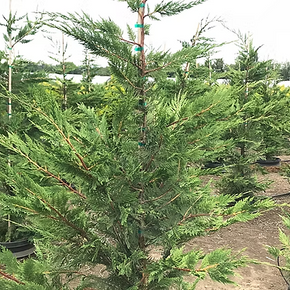
Golden Leyland Cypress is a vigorous, columnar to narrowly pyramidal evergreen conifer with dense, flat sprays of tiny, scale-like foliage in a warm golden-yellow color that persists throughout the year. New spring growth emerges in a bright, fresh gold, maturing to a rich chartreuse-gold in summer, then taking on attractive bronze-gold tints in the cooler months of fall and winter. The overall texture is extremely fine and feathery, giving the tree an elegant, refined appearance. Small, round, brown female cones and tiny ovoid male cones are produced but are largely inconspicuous against the striking foliage. As a hybrid between Monterey Cypress and Nootka Cypress, 'Castlewellan' combines the vigor and heat tolerance of the former with the cold hardiness and wind resistance of the latter, resulting in a plant that is both adaptable and ornamentally superior. Because it is an interspecific hybrid, it is sterile and must be propagated from semi-hardwood cuttings.
Mature Size
| Characteristic | Detail |
|---|---|
| Typical Landscape Height | 40-60 feet (occasionally to 80 feet or more if unpruned) |
| Typical Landscape Spread | 15-25 feet |
| Growth Rate | Fast; up to 2 feet or more per year under ideal conditions |
| Time to Significant Height | Reaches screening height within a few years; 10-20 years to approach full height |
| Growth Habit | Upright, columnar to narrowly pyramidal |
| Canopy Clearance | Branching typically begins near ground level; low canopy clearance |
Due to its vigorous growth potential, it is important to site this tree thoughtfully and keep it away from power lines, structures, and property boundaries where its ultimate size could become a concern. Regular trimming easily keeps it at a manageable, desired height.
Hardiness Zones and Climate Tolerance
Golden Leyland Cypress is rated for USDA Hardiness Zones 6-9, which covers a broad range of North American climates including the Southern Oregon and Northern California regions. It is reliably cold-hardy to approximately -10 degrees F (-23 C) and thrives in the mild-to-warm conditions typical of the Pacific Coast. It performs exceptionally well in coastal climates, tolerating salt-laden winds and exposed, windy sites with ease. It also adapts to the hotter, drier inland valleys of the region, provided supplemental irrigation is given during establishment and hot summer dry spells. This cultivar shows good tolerance for heat and humidity, urban air pollution, and moderate drought once its root system is well established.
Sunlight Requirements
Golden Leyland Cypress grows best in full sun, defined as 6 or more hours of direct, unobstructed sunlight per day. Full sun exposure produces the most vibrant golden-yellow foliage color and the densest, most compact growth habit. It will tolerate partial shade (3-6 hours of sun per day), but growth may be somewhat less vigorous and the golden foliage color may appear slightly less intense in lower-light conditions. Sites with southern or western exposure are generally ideal. In the hot interior valleys of Southern Oregon and Northern California, a location that receives afternoon shade can help reduce heat stress, particularly for newly planted trees.
Soil and pH Preferences
One of the great strengths of Golden Leyland Cypress is its adaptability to a wide variety of soil types. It grows well in sandy, loamy, and clay-based soils, provided drainage is adequate. Standing water and consistently waterlogged soils should be avoided, as prolonged wet conditions can promote root disease. The preferred pH range is 5.5 to 8.0, making it tolerant of both moderately acidic and moderately alkaline soils. It has a notable preference for slightly acidic conditions but performs well across neutral and even chalky, alkaline soils. It also handles environmental salt well, making it suitable for coastal plantings and roadside situations where de-icing salt may be a concern.
Watering Guide
Proper watering is most critical during the first two years after planting while the root system establishes. Follow these guidelines for best results:
- Newly Planted Trees: Water deeply and thoroughly at planting, then water 2 times per week during the spring and summer growing season. Reduce to 2 times per month in fall and winter.
- Established Trees (2+ years): Once established, water deeply every 2 weeks during spring and summer. In fall and winter, once a month is typically sufficient, unless rainfall is minimal.
- Deep Watering: Always water deeply rather than frequently and shallowly. Deep watering encourages roots to grow downward and outward, producing a more drought-resilient plant.
- Mulching: Apply a 3-inch layer of organic mulch around the root zone (keeping it away from the trunk) to help retain soil moisture, regulate soil temperature, and reduce watering frequency.
- Drainage: Ensure the planting site drains well. Do not allow water to pond around the base of the tree, as this promotes fungal root diseases.
Fertilizing
Golden Leyland Cypress is a vigorous grower and generally does not require heavy fertilization. However, a modest annual fertilizing program supports healthy, dense growth and maintains the richness of the golden foliage color.
- Apply a balanced, slow-release granular fertilizer formulated for trees and shrubs in early spring as new growth begins.
- A fertilizer with a slightly higher nitrogen (N) content encourages lush, dense foliar growth typical of a healthy Leyland Cypress hedge or screen.
- Avoid over-fertilizing with nitrogen, which can push excessive soft growth that may be more susceptible to pests or not harden off properly before cold weather.
- Do not fertilize after midsummer (late July-August), as late-season fertilizing can stimulate tender new growth that will not have time to harden before fall.
- A soil test every 2-3 years can identify any specific nutrient deficiencies and help fine-tune the fertilizing program.
- For established trees in naturally fertile soils, fertilizing every 2-3 years may be sufficient.
Pruning and Maintenance
Golden Leyland Cypress is easy to prune and responds well to shearing, making it one of the most manageable fast-growing conifers for hedges and screens. Follow these key pruning principles:
- Timing: Trim 2-3 times during the active growing season (spring through late summer) for formal hedges. Avoid heavy pruning in late fall, as this can stimulate soft growth that may be damaged by frost.
- Green Growth Only: Always limit cuts to young, green shoots. Old brown wood will not regenerate new growth, so avoid cutting back beyond the green zone. This is the single most important rule when pruning Leyland Cypress.
- Hedge Shape: When training a formal hedge, angle the sides slightly so the base is wider than the top. This "batter" shape ensures sunlight reaches the lower foliage, preventing the bottom from becoming bare and leggy.
- Young Tree Training: Shear off the top 2-6 inches several times during the first two seasons to encourage dense lateral branching.
- Specimen Trees: If grown as a freestanding specimen, minimal pruning is needed. The tree's natural pyramidal form is attractive without intervention.
- Damaged Limbs: Remove any dead, damaged, or diseased branches as soon as they are noticed, at any time of year.
Planting Instructions
- Choose a site with full sun to partial shade and well-drained soil. For hedging or screening, space plants 5-8 feet apart on center for a dense screen; wider for a looser planting.
- Dig a planting hole 3-4 times the diameter of the root ball and equal in depth to the root ball. Avoid digging deeper than the root ball to prevent settling and root suffocation.
- Use a pitchfork or shovel to roughen (scarify) the sides of the hole, which encourages roots to penetrate into the surrounding soil.
- Remove the tree from its container and gently loosen any circling or matted roots around the outer edges of the root ball.
- Set the tree in the center of the hole so the top of the root ball sits at or very slightly above ground level. Do not plant too deep.
- Backfill with the original native soil. Recent studies indicate that amending backfill with less than half native soil provides no advantage in loamy or sandy soils. In heavy clay, modest organic amendment may be beneficial.
- Build a low water-retention ring (berm) of soil around the outer perimeter of the planting hole to direct irrigation water directly to the root zone.
- Water deeply and thoroughly immediately after planting.
- Apply a 3-inch layer of organic mulch over the backfilled area, keeping mulch several inches away from the trunk to prevent rot.
- Remove any damaged or broken branches at planting time.
Landscape Uses
Golden Leyland Cypress is one of the most versatile conifers available and serves a wide range of landscape functions. Its upright, dense form and standout golden foliage make it valuable both functionally and aesthetically:
- Privacy Screen and Hedge: Its primary use — the fast growth rate and dense, full branching to the ground level create a solid, opaque screen within a relatively short period.
- Windbreak: The dense, columnar form provides excellent protection from prevailing winds, making it ideal for exposed sites, rural properties, and coastal gardens.
- Specimen or Accent Tree: The glowing golden foliage makes it a dramatic focal point in the landscape when planted as a standalone specimen.
- Vertical Accent: Its tall, narrow habit provides strong vertical interest in mixed borders or at the back of large planting beds.
- Mass Planting: Groups of three or more create a bold golden-textured backdrop or grove planting.
- Topiary: Responds well to formal shaping into columns, cones, or other geometric forms.
- Boundary Planting: Effectively marks and defines property boundaries while providing year-round screening.
- Noise Barrier: Dense evergreen mass provides a degree of noise reduction from roads and neighboring properties.
Seasonal Interest
| Season | Ornamental Character |
|---|---|
| Spring | Fresh bright golden-yellow new growth emerges, giving the tree a particularly vivid, luminous appearance. |
| Summer | Foliage matures to a rich chartreuse-gold and yellow-green, maintaining strong visual contrast against other greens in the landscape. Dense pyramidal form is fully expressed. |
| Fall | Foliage takes on warmer bronze-gold overtones as temperatures cool, adding depth and warmth to the autumn landscape palette. |
| Winter | Retains its bronze-yellow to golden foliage through winter, providing essential evergreen structure and year-round color when most deciduous plants are bare. |
Pests and Diseases
Golden Leyland Cypress is generally a robust, low-maintenance tree, but it can occasionally be affected by the following:
- Conifer Aphids: Small sap-sucking insects that colonize foliage and stems. Heavy infestations can cause yellowing and dieback. Natural predators such as parasitic wasps and ladybugs often keep populations in check. Treat severe infestations with insecticidal soap or a labeled horticultural oil.
- Scale Insects: Appear as small bumps on stems or foliage, feeding on plant sap and potentially causing yellowing foliage, leaf drop, and the development of sooty mold (a black fungal coating on honeydew secretions). Encourage natural predators; consult your local extension office for recommended treatments.
- Bacterial Canker (Seiridium Canker): Causes sunken, discolored cankers on stems and branches, often accompanied by resin bleeding. Prune out and dispose of infected wood well below the canker. Avoid wounding the bark.
- Honey Fungus (Armillaria): A soil-borne fungal pathogen that attacks roots and the base of the trunk. There is no chemical cure; remove and dispose of affected plants and roots, and avoid replanting susceptible species in the same spot.
- Phytophthora Root Rot: A water mold disease promoted by poorly drained, saturated soils. The best prevention is planting in well-drained soil and avoiding overwatering.
- Browning (Spray Damage / Wind Burn): Not a disease, but brown patches can result from desiccating winter winds or chemical spray drift. Provide windbreaks for newly planted trees in exposed sites.
Good cultural practices — proper siting, appropriate irrigation, and avoiding mechanical damage to bark and roots — are the most effective means of keeping this tree healthy and pest-free.
Deer and Wildlife Tolerance
Golden Leyland Cypress is considered deer-resistant. Deer do not typically find this plant palatable and will generally browse other more attractive plants before turning to Leyland Cypress. This makes it a practical choice for gardens and properties in deer-populated areas of Southern Oregon and Northern California.
While not a significant wildlife food source, the dense branching and evergreen foliage provide excellent shelter and nesting habitat for birds, particularly small songbirds that seek cover in hedgerows and screens throughout the year. As a hybrid conifer, its small cones offer minimal food value compared to native conifers.
Note: The foliage is considered a potential skin allergen for some people and may also cause skin irritation in dogs. Wear gloves when pruning or handling, and keep pets in mind when selecting a planting location.
Companion Plants
The warm golden-yellow foliage of 'Castlewellan' creates stunning contrasts and harmonious combinations with a range of landscape plants. Consider these companion planting ideas:
- Dark-Foliaged Conifers: Plant alongside Emerald Green Arborvitae, Blue Atlas Cedar, or other blue-green or dark green conifers to create dramatic foliage color contrast in screens or mixed conifer plantings.
- Japanese Maples (Acer palmatum): The delicate red or burgundy foliage of Japanese Maples provides a beautiful complementary color contrast against the golden cypress.
- Ornamental Grasses: Blue oat grass (Helictotrichon) or blue fescue (Festuca glauca) at the base of the planting echo the color contrast with fine-textured, cool blue tones.
- Lavender (Lavandula spp.): Low-growing lavender at the feet of a Leyland Cypress hedge provides fragrance, purple summer bloom color, and pollinator value in a complementary planting scheme.
- Dark-Flowered Roses: Deep red or burgundy shrub roses planted in front of a golden cypress hedge create a bold, classic combination.
- Heavenly Bamboo (Nandina domestica): The red-tipped foliage and compact habit of Nandina work well as a foreground plant against a golden cypress screen.
- Purple-Leaf Shrubs: Smoke Bush (Cotinus) or Purple Leaf Barberry provide contrasting foliage color that makes the golden cypress pop.
Container Growing
While Golden Leyland Cypress is best suited to open-ground planting where it can reach its considerable mature size, younger specimens can be grown in large containers for a period of time as a patio accent, topiary subject, or temporary screen on decks and terraces.
- Use a large, sturdy container (25-30 gallon or larger) with ample drainage holes to accommodate root growth.
- Fill with a well-draining, quality potting mix amended with perlite or coarse grit to ensure excellent drainage.
- Container-grown trees dry out more quickly than in-ground plants; check soil moisture regularly and water more frequently during hot, dry weather.
- Fertilize container plants with a slow-release granular fertilizer in spring and optionally with a balanced liquid feed during the growing season.
- Due to its vigorous growth rate, plan to move container-grown trees to the landscape or repot into a larger container every 2-3 years.
- Container-grown specimens may be less cold-hardy than in-ground plants; move containers to a sheltered location during hard freezes in Zone 6.
Propagation
Because Golden Leyland Cypress ('Castlewellan') is a sterile interspecific hybrid, it does not produce viable seed and must be propagated vegetatively from cuttings. The standard method is semi-hardwood cuttings:
- Take semi-hardwood cuttings in late summer to early fall (August-October), selecting firm, current-season growth that has begun to harden but is not yet fully woody.
- Cuttings should be 4-6 inches long, taken from healthy, vigorous side shoots.
- Remove foliage from the lower half of the cutting and dip the cut end in rooting hormone powder or gel.
- Insert cuttings into a free-draining rooting medium such as perlite, coarse sand, or a mix of peat and perlite.
- Maintain high humidity around cuttings (use a humidity dome or misting system) and provide bottom heat for best rooting success.
- Rooting typically occurs within 6-12 weeks under ideal conditions.
- Once well-rooted, pot cuttings individually and grow on in a sheltered location before planting out the following season.
- Brilliant golden-yellow foliage holds its vibrant color year-round, providing striking contrast and warm visual interest in every season
- Exceptionally fast-growing evergreen conifer that quickly forms a dense, narrow pyramid — ideal for privacy screens, windbreaks, and tall hedges
- Highly adaptable to a wide range of soil types and tolerant of wind, coastal conditions, heat, drought once established, and urban pollution
- Hardy in USDA Zones 6-9 and responds well to shaping, making it equally at home as a clipped formal hedge or a bold landscape specimen
Golden Leyland Cypress (Cupressocyparis leylandii 'Castlewellan') is one of the most eye-catching conifers available for the Pacific Coast and Pacific Northwest landscape, delivering a dense, upright pyramidal silhouette draped in warm, golden-yellow scale-like foliage that glows year-round. An interspecific hybrid between Monterey Cypress (Cupressus macrocarpa) and Nootka Cypress (Cupressus nootkatensis), this vigorous evergreen is celebrated for its impressively fast growth rate — capable of putting on up to 2 feet or more per year under ideal conditions — making it one of the quickest solutions available for establishing a tall privacy screen, a dense windbreak, or a dramatic living fence. Unlike its plain green counterpart, 'Castlewellan' offers four-season ornamental appeal with foliage that takes on warm bronze-gold tones in fall and winter before brightening back to rich gold as new growth emerges each spring. The flat, feathery sprays of tiny scale-like leaves create an exceptionally fine, soft texture that adds refinement and contrast to any landscape composition. Mature trees develop a naturally narrow, columnar-to-pyramidal habit and respond well to pruning, allowing gardeners to maintain a tailored hedge or screen at virtually any height. Adaptable to chalk, clay, loam, and sandy soils across a wide pH range, and tolerant of coastal salt spray, wind exposure, and mild urban pollution, Golden Leyland Cypress is a remarkably versatile performer for the Southern Oregon and Northern California climate — perfectly suited to the region's warm summers, wet winters, and variable coastal and inland conditions.
Plant Description
Golden Leyland Cypress is a vigorous, columnar to narrowly pyramidal evergreen conifer with dense, flat sprays of tiny, scale-like foliage in a warm golden-yellow color that persists throughout the year. New spring growth emerges in a bright, fresh gold, maturing to a rich chartreuse-gold in summer, then taking on attractive bronze-gold tints in the cooler months of fall and winter. The overall texture is extremely fine and feathery, giving the tree an elegant, refined appearance. Small, round, brown female cones and tiny ovoid male cones are produced but are largely inconspicuous against the striking foliage. As a hybrid between Monterey Cypress and Nootka Cypress, 'Castlewellan' combines the vigor and heat tolerance of the former with the cold hardiness and wind resistance of the latter, resulting in a plant that is both adaptable and ornamentally superior. Because it is an interspecific hybrid, it is sterile and must be propagated from semi-hardwood cuttings.
Mature Size
| Characteristic | Detail |
|---|---|
| Typical Landscape Height | 40-60 feet (occasionally to 80 feet or more if unpruned) |
| Typical Landscape Spread | 15-25 feet |
| Growth Rate | Fast; up to 2 feet or more per year under ideal conditions |
| Time to Significant Height | Reaches screening height within a few years; 10-20 years to approach full height |
| Growth Habit | Upright, columnar to narrowly pyramidal |
| Canopy Clearance | Branching typically begins near ground level; low canopy clearance |
Due to its vigorous growth potential, it is important to site this tree thoughtfully and keep it away from power lines, structures, and property boundaries where its ultimate size could become a concern. Regular trimming easily keeps it at a manageable, desired height.
Hardiness Zones and Climate Tolerance
Golden Leyland Cypress is rated for USDA Hardiness Zones 6-9, which covers a broad range of North American climates including the Southern Oregon and Northern California regions. It is reliably cold-hardy to approximately -10 degrees F (-23 C) and thrives in the mild-to-warm conditions typical of the Pacific Coast. It performs exceptionally well in coastal climates, tolerating salt-laden winds and exposed, windy sites with ease. It also adapts to the hotter, drier inland valleys of the region, provided supplemental irrigation is given during establishment and hot summer dry spells. This cultivar shows good tolerance for heat and humidity, urban air pollution, and moderate drought once its root system is well established.
Sunlight Requirements
Golden Leyland Cypress grows best in full sun, defined as 6 or more hours of direct, unobstructed sunlight per day. Full sun exposure produces the most vibrant golden-yellow foliage color and the densest, most compact growth habit. It will tolerate partial shade (3-6 hours of sun per day), but growth may be somewhat less vigorous and the golden foliage color may appear slightly less intense in lower-light conditions. Sites with southern or western exposure are generally ideal. In the hot interior valleys of Southern Oregon and Northern California, a location that receives afternoon shade can help reduce heat stress, particularly for newly planted trees.
Soil and pH Preferences
One of the great strengths of Golden Leyland Cypress is its adaptability to a wide variety of soil types. It grows well in sandy, loamy, and clay-based soils, provided drainage is adequate. Standing water and consistently waterlogged soils should be avoided, as prolonged wet conditions can promote root disease. The preferred pH range is 5.5 to 8.0, making it tolerant of both moderately acidic and moderately alkaline soils. It has a notable preference for slightly acidic conditions but performs well across neutral and even chalky, alkaline soils. It also handles environmental salt well, making it suitable for coastal plantings and roadside situations where de-icing salt may be a concern.
Watering Guide
Proper watering is most critical during the first two years after planting while the root system establishes. Follow these guidelines for best results:
- Newly Planted Trees: Water deeply and thoroughly at planting, then water 2 times per week during the spring and summer growing season. Reduce to 2 times per month in fall and winter.
- Established Trees (2+ years): Once established, water deeply every 2 weeks during spring and summer. In fall and winter, once a month is typically sufficient, unless rainfall is minimal.
- Deep Watering: Always water deeply rather than frequently and shallowly. Deep watering encourages roots to grow downward and outward, producing a more drought-resilient plant.
- Mulching: Apply a 3-inch layer of organic mulch around the root zone (keeping it away from the trunk) to help retain soil moisture, regulate soil temperature, and reduce watering frequency.
- Drainage: Ensure the planting site drains well. Do not allow water to pond around the base of the tree, as this promotes fungal root diseases.
Fertilizing
Golden Leyland Cypress is a vigorous grower and generally does not require heavy fertilization. However, a modest annual fertilizing program supports healthy, dense growth and maintains the richness of the golden foliage color.
- Apply a balanced, slow-release granular fertilizer formulated for trees and shrubs in early spring as new growth begins.
- A fertilizer with a slightly higher nitrogen (N) content encourages lush, dense foliar growth typical of a healthy Leyland Cypress hedge or screen.
- Avoid over-fertilizing with nitrogen, which can push excessive soft growth that may be more susceptible to pests or not harden off properly before cold weather.
- Do not fertilize after midsummer (late July-August), as late-season fertilizing can stimulate tender new growth that will not have time to harden before fall.
- A soil test every 2-3 years can identify any specific nutrient deficiencies and help fine-tune the fertilizing program.
- For established trees in naturally fertile soils, fertilizing every 2-3 years may be sufficient.
Pruning and Maintenance
Golden Leyland Cypress is easy to prune and responds well to shearing, making it one of the most manageable fast-growing conifers for hedges and screens. Follow these key pruning principles:
- Timing: Trim 2-3 times during the active growing season (spring through late summer) for formal hedges. Avoid heavy pruning in late fall, as this can stimulate soft growth that may be damaged by frost.
- Green Growth Only: Always limit cuts to young, green shoots. Old brown wood will not regenerate new growth, so avoid cutting back beyond the green zone. This is the single most important rule when pruning Leyland Cypress.
- Hedge Shape: When training a formal hedge, angle the sides slightly so the base is wider than the top. This "batter" shape ensures sunlight reaches the lower foliage, preventing the bottom from becoming bare and leggy.
- Young Tree Training: Shear off the top 2-6 inches several times during the first two seasons to encourage dense lateral branching.
- Specimen Trees: If grown as a freestanding specimen, minimal pruning is needed. The tree's natural pyramidal form is attractive without intervention.
- Damaged Limbs: Remove any dead, damaged, or diseased branches as soon as they are noticed, at any time of year.
Planting Instructions
- Choose a site with full sun to partial shade and well-drained soil. For hedging or screening, space plants 5-8 feet apart on center for a dense screen; wider for a looser planting.
- Dig a planting hole 3-4 times the diameter of the root ball and equal in depth to the root ball. Avoid digging deeper than the root ball to prevent settling and root suffocation.
- Use a pitchfork or shovel to roughen (scarify) the sides of the hole, which encourages roots to penetrate into the surrounding soil.
- Remove the tree from its container and gently loosen any circling or matted roots around the outer edges of the root ball.
- Set the tree in the center of the hole so the top of the root ball sits at or very slightly above ground level. Do not plant too deep.
- Backfill with the original native soil. Recent studies indicate that amending backfill with less than half native soil provides no advantage in loamy or sandy soils. In heavy clay, modest organic amendment may be beneficial.
- Build a low water-retention ring (berm) of soil around the outer perimeter of the planting hole to direct irrigation water directly to the root zone.
- Water deeply and thoroughly immediately after planting.
- Apply a 3-inch layer of organic mulch over the backfilled area, keeping mulch several inches away from the trunk to prevent rot.
- Remove any damaged or broken branches at planting time.
Landscape Uses
Golden Leyland Cypress is one of the most versatile conifers available and serves a wide range of landscape functions. Its upright, dense form and standout golden foliage make it valuable both functionally and aesthetically:
- Privacy Screen and Hedge: Its primary use — the fast growth rate and dense, full branching to the ground level create a solid, opaque screen within a relatively short period.
- Windbreak: The dense, columnar form provides excellent protection from prevailing winds, making it ideal for exposed sites, rural properties, and coastal gardens.
- Specimen or Accent Tree: The glowing golden foliage makes it a dramatic focal point in the landscape when planted as a standalone specimen.
- Vertical Accent: Its tall, narrow habit provides strong vertical interest in mixed borders or at the back of large planting beds.
- Mass Planting: Groups of three or more create a bold golden-textured backdrop or grove planting.
- Topiary: Responds well to formal shaping into columns, cones, or other geometric forms.
- Boundary Planting: Effectively marks and defines property boundaries while providing year-round screening.
- Noise Barrier: Dense evergreen mass provides a degree of noise reduction from roads and neighboring properties.
Seasonal Interest
| Season | Ornamental Character |
|---|---|
| Spring | Fresh bright golden-yellow new growth emerges, giving the tree a particularly vivid, luminous appearance. |
| Summer | Foliage matures to a rich chartreuse-gold and yellow-green, maintaining strong visual contrast against other greens in the landscape. Dense pyramidal form is fully expressed. |
| Fall | Foliage takes on warmer bronze-gold overtones as temperatures cool, adding depth and warmth to the autumn landscape palette. |
| Winter | Retains its bronze-yellow to golden foliage through winter, providing essential evergreen structure and year-round color when most deciduous plants are bare. |
Pests and Diseases
Golden Leyland Cypress is generally a robust, low-maintenance tree, but it can occasionally be affected by the following:
- Conifer Aphids: Small sap-sucking insects that colonize foliage and stems. Heavy infestations can cause yellowing and dieback. Natural predators such as parasitic wasps and ladybugs often keep populations in check. Treat severe infestations with insecticidal soap or a labeled horticultural oil.
- Scale Insects: Appear as small bumps on stems or foliage, feeding on plant sap and potentially causing yellowing foliage, leaf drop, and the development of sooty mold (a black fungal coating on honeydew secretions). Encourage natural predators; consult your local extension office for recommended treatments.
- Bacterial Canker (Seiridium Canker): Causes sunken, discolored cankers on stems and branches, often accompanied by resin bleeding. Prune out and dispose of infected wood well below the canker. Avoid wounding the bark.
- Honey Fungus (Armillaria): A soil-borne fungal pathogen that attacks roots and the base of the trunk. There is no chemical cure; remove and dispose of affected plants and roots, and avoid replanting susceptible species in the same spot.
- Phytophthora Root Rot: A water mold disease promoted by poorly drained, saturated soils. The best prevention is planting in well-drained soil and avoiding overwatering.
- Browning (Spray Damage / Wind Burn): Not a disease, but brown patches can result from desiccating winter winds or chemical spray drift. Provide windbreaks for newly planted trees in exposed sites.
Good cultural practices — proper siting, appropriate irrigation, and avoiding mechanical damage to bark and roots — are the most effective means of keeping this tree healthy and pest-free.
Deer and Wildlife Tolerance
Golden Leyland Cypress is considered deer-resistant. Deer do not typically find this plant palatable and will generally browse other more attractive plants before turning to Leyland Cypress. This makes it a practical choice for gardens and properties in deer-populated areas of Southern Oregon and Northern California.
While not a significant wildlife food source, the dense branching and evergreen foliage provide excellent shelter and nesting habitat for birds, particularly small songbirds that seek cover in hedgerows and screens throughout the year. As a hybrid conifer, its small cones offer minimal food value compared to native conifers.
Note: The foliage is considered a potential skin allergen for some people and may also cause skin irritation in dogs. Wear gloves when pruning or handling, and keep pets in mind when selecting a planting location.
Companion Plants
The warm golden-yellow foliage of 'Castlewellan' creates stunning contrasts and harmonious combinations with a range of landscape plants. Consider these companion planting ideas:
- Dark-Foliaged Conifers: Plant alongside Emerald Green Arborvitae, Blue Atlas Cedar, or other blue-green or dark green conifers to create dramatic foliage color contrast in screens or mixed conifer plantings.
- Japanese Maples (Acer palmatum): The delicate red or burgundy foliage of Japanese Maples provides a beautiful complementary color contrast against the golden cypress.
- Ornamental Grasses: Blue oat grass (Helictotrichon) or blue fescue (Festuca glauca) at the base of the planting echo the color contrast with fine-textured, cool blue tones.
- Lavender (Lavandula spp.): Low-growing lavender at the feet of a Leyland Cypress hedge provides fragrance, purple summer bloom color, and pollinator value in a complementary planting scheme.
- Dark-Flowered Roses: Deep red or burgundy shrub roses planted in front of a golden cypress hedge create a bold, classic combination.
- Heavenly Bamboo (Nandina domestica): The red-tipped foliage and compact habit of Nandina work well as a foreground plant against a golden cypress screen.
- Purple-Leaf Shrubs: Smoke Bush (Cotinus) or Purple Leaf Barberry provide contrasting foliage color that makes the golden cypress pop.
Container Growing
While Golden Leyland Cypress is best suited to open-ground planting where it can reach its considerable mature size, younger specimens can be grown in large containers for a period of time as a patio accent, topiary subject, or temporary screen on decks and terraces.
- Use a large, sturdy container (25-30 gallon or larger) with ample drainage holes to accommodate root growth.
- Fill with a well-draining, quality potting mix amended with perlite or coarse grit to ensure excellent drainage.
- Container-grown trees dry out more quickly than in-ground plants; check soil moisture regularly and water more frequently during hot, dry weather.
- Fertilize container plants with a slow-release granular fertilizer in spring and optionally with a balanced liquid feed during the growing season.
- Due to its vigorous growth rate, plan to move container-grown trees to the landscape or repot into a larger container every 2-3 years.
- Container-grown specimens may be less cold-hardy than in-ground plants; move containers to a sheltered location during hard freezes in Zone 6.
Propagation
Because Golden Leyland Cypress ('Castlewellan') is a sterile interspecific hybrid, it does not produce viable seed and must be propagated vegetatively from cuttings. The standard method is semi-hardwood cuttings:
- Take semi-hardwood cuttings in late summer to early fall (August-October), selecting firm, current-season growth that has begun to harden but is not yet fully woody.
- Cuttings should be 4-6 inches long, taken from healthy, vigorous side shoots.
- Remove foliage from the lower half of the cutting and dip the cut end in rooting hormone powder or gel.
- Insert cuttings into a free-draining rooting medium such as perlite, coarse sand, or a mix of peat and perlite.
- Maintain high humidity around cuttings (use a humidity dome or misting system) and provide bottom heat for best rooting success.
- Rooting typically occurs within 6-12 weeks under ideal conditions.
- Once well-rooted, pot cuttings individually and grow on in a sheltered location before planting out the following season.
Related Products