Zoom the image with the mouse
Krossa Regal Hosta - 5 Gallon
SKU:
2099640
UPC:
014949418253
$64.99
- Striking vase-shaped habit with towering, frosty gray-blue foliage that commands attention in any shade garden — a true architectural specimen unlike typical mounding hostas.
- Exceptionally tall flower scapes rising 5 to 6 feet above the foliage display bell-shaped pale lavender blooms in mid to late summer, attracting hummingbirds and songbirds.
- Award-winning recipient of the Royal Horticultural Society's Award of Garden Merit, recognized for outstanding ornamental value and reliable garden performance.
- Thick, heavily-substanced leaves offer notably good resistance to slug and snail damage, making this large hosta easier to maintain than many other varieties.
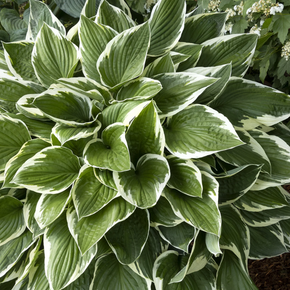
Hosta 'Krossa Regal' (Hosta x 'Krossa Regal') is a bold, award-winning giant hosta prized for its dramatic upright, vase-shaped habit and stunning frosty gray-blue to blue-green foliage that sets it apart from nearly every other shade perennial in the garden. The smooth, thick, widely-veined ovate leaves grow up to 12 inches long and 7 inches wide, with slightly wavy margins, cuspidate tips, and gracefully rounded lobes that catch every subtle shift of light in dappled shade. In mid to late summer, exceptionally tall scapes — reaching an impressive 5 to 6 feet above the ground — bear racemes of trumpet-shaped, pale lavender flowers that rise dramatically above the foliage mound and draw in hummingbirds. Moderately fast-growing, this large-to-giant perennial typically matures to 3 to 4 feet tall with a spread of 3 to 6 feet, making it an outstanding specimen plant, bold groundcover, or striking backdrop in woodland gardens, shaded borders, and naturalized landscapes across USDA hardiness zones 3 through 9. A hybrid of Hosta nigrescens introduced in 1980, 'Krossa Regal' combines regal elegance with genuine low-maintenance toughness, tolerating full shade and even black walnut toxicity, while its thick leaves provide better-than-average resistance to slug damage — a hallmark virtue in the shade garden.
Plant Description
Hosta 'Krossa Regal' is a large-to-giant, clump-forming herbaceous perennial that stands out from the typical hosta with its distinctly upright, arching, vase-shaped growth habit rather than the low, flat mound most hostas form. The smooth, ovate leaves are a soft frosty gray-blue to blue-green color and are notable for their thick substance, prominent widely-spaced veining, slightly wavy margins, and pointed (cuspidate) tips. Individual leaves can reach 12 inches long by 7 inches wide, creating a lush, bold texture that makes this variety an unmistakable presence in the shade garden. In mid to late summer, tall, unbranched scapes shoot skyward well above the foliage — often 5 to 6 feet high — bearing one-sided racemes of trumpet-shaped, pale lavender to soft purple flowers, each up to 5 inches long. This variety is a hybrid derived from Hosta nigrescens and was introduced by G. Krossa and A. Krossa in 1980. It is a recipient of the prestigious Royal Horticultural Society Award of Garden Merit.
Mature Size
| Attribute | Measurement |
|---|---|
| Foliage Height | 3 to 4 feet tall |
| Flower Scape Height | 5 to 6 feet tall |
| Spread | 3 to 6 feet wide |
| Recommended Spacing | 36 to 72 inches apart |
| Leaf Length | Up to 12 inches |
| Leaf Width | Up to 7 inches |
| Growth Rate | Moderate to moderately fast |
| Years to Maturity | Approximately 3 to 5 years |
Hardiness Zones
Hosta 'Krossa Regal' is reliably cold hardy in USDA Hardiness Zones 3 through 9, tolerating winter temperatures as low as -40°F in the coldest end of its range. It performs beautifully across a wide range of climates, from the frigid upper Midwest to the milder winters of the Pacific Coast and the South. In warmer zones (8 and 9), siting in deeper shade helps prevent heat stress and protects the desirable blue-gray leaf color, which can fade toward green with excess sun or heat. It is also rated for AHS Heat Zones 2 through 9. In Southern Oregon and Northern California, 'Krossa Regal' thrives exceptionally well in the region's temperate climate, dying back to the ground each winter and re-emerging reliably each spring.
Sunlight Requirements
Hosta 'Krossa Regal' performs best in partial shade to full shade. The ideal exposure is dappled light or morning sun with afternoon shade, which brings out the richest blue-gray coloration in the foliage. Too much direct sun — particularly intense afternoon sun — can scorch or bleach the leaves and cause the coveted blue tones to fade to a more ordinary green. In deeper shade, the plant remains lush and healthy, though some morning light encourages stronger growth and better flowering. This variety tolerates heavy shade better than many other hostas, making it an excellent choice for north-facing beds, the shaded side of buildings, or beneath the canopy of tall deciduous trees. It should be sheltered from strong, cold, or drying winds, which can damage the large leaves.
Soil and pH Preferences
For best performance, plant Hosta 'Krossa Regal' in fertile, moist, well-drained soil rich in organic matter. It adapts to clay or loam soil types, but good drainage is essential — waterlogged conditions encourage root and crown rot. The ideal soil pH is slightly acidic to neutral, in the range of 6.0 to 7.0. Amending planting beds with compost or well-aged organic matter before planting will improve both moisture retention and drainage while providing steady, slow-release nutrition. This variety has a notable tolerance for growing under black walnut trees, which produce juglone — a compound toxic to many garden plants. Avoid planting in areas where water pools after rain, especially during the warm months when fungal diseases are most active.
Watering Guide
Consistent, even moisture is the key to keeping Hosta 'Krossa Regal' looking its best. Water regularly to maintain consistently moist — but never saturated — soil, particularly during the heat of summer. Established plants with their thick leaves show more drought tolerance than thin-leaved hostas, but prolonged dryness will cause wilting, tip browning, and diminished growth. Water is best applied directly to the soil at the base of the plant rather than overhead, as wet foliage promotes fungal leaf spot diseases. Early morning watering is preferred so that any moisture on the foliage has time to dry before evening. Reduce watering in fall as the plant enters dormancy, and avoid heavy irrigation during winter dormancy. Apply a 2 to 3 inch layer of mulch around the plant to help retain soil moisture and moderate soil temperatures.
Fertilizing
Hosta 'Krossa Regal' responds well to a consistent but simple fertilizing program. Apply a balanced, slow-release granular fertilizer (such as a 10-10-10 or similar formulation) in early spring just as the new shoots begin to emerge from the ground. A second application of a balanced fertilizer in mid-summer can support continued healthy growth and encourage vigorous flowering. Avoid high-nitrogen fertilizers late in the season, as this can stimulate soft new growth that is vulnerable to frost damage. Over-fertilizing is generally more harmful than under-fertilizing with hostas — too much fertilizer can diminish the beautiful blue-gray foliage color. Topdressing the root zone with compost each spring is a gentle, effective way to improve soil fertility without the risk of chemical burn.
Pruning and Maintenance
Hosta 'Krossa Regal' is one of the lowest-maintenance shade perennials available. Aside from basic seasonal cleanup, very little pruning is required. After the plant blooms, cut the spent flower scapes down to the base to keep the plant tidy and redirect energy back into foliage. Throughout the growing season, remove any yellowed, damaged, or diseased leaves at the base to maintain the plant's appearance and improve air circulation. In autumn, after the first hard frost causes the foliage to collapse, cut all remaining foliage to the ground and remove it from the garden to eliminate overwintering habitat for slugs, snails, and disease pathogens. Divide clumps every 4 to 6 years in early spring before the leaves unfurl, or in early fall, to keep plants vigorous and to propagate new plants. The center of large, old clumps may die out over time — this is normal and the live outer portions can be divided and replanted.
Planting Instructions
- Choose a site in partial to full shade with well-drained, fertile soil. Avoid low spots where water collects.
- Amend the planting bed by working 2 to 4 inches of compost into the soil to a depth of 12 inches.
- Dig a hole slightly wider than the root ball and at the same depth — the crown of the plant (where the roots meet the shoots) should sit at or just slightly below the soil surface.
- Place the plant in the hole, backfill with the amended soil, and gently firm the soil around the roots to remove air pockets.
- Water thoroughly after planting to settle the soil.
- Apply a 2 to 3 inch layer of mulch (bark, shredded leaves, or wood chips) around the plant, keeping mulch a few inches away from the crown to discourage rot and slug habitat.
- Space plants 36 to 72 inches apart to allow for their impressive mature spread of 3 to 6 feet.
- The best planting times are early spring (as the ground thaws) or early fall (at least 6 weeks before the first hard frost).
Seasonal Interest
Hosta 'Krossa Regal' provides multi-season ornamental interest beginning in mid-spring when its striking frosty blue-green shoots push up from the ground in an attractive upright, vase-shaped emergence. As the season progresses into late spring and early summer, the full foliage mound develops and the large gray-blue leaves take on their most intense coloration — particularly beautiful in morning light or dappled shade. The dramatic floral display arrives in mid to late summer (July through August), when flower scapes shoot to 5 or 6 feet, bearing pale lavender blooms that attract hummingbirds. In early fall, the foliage transitions toward softer yellow-green tones before the plant goes dormant. Even the bare winter garden benefits from the memory of this plant's architectural stature — its spot in the garden marks an exciting re-emergence to anticipate each spring.
Landscape Uses
The bold, upright stature and large frosty blue foliage of Hosta 'Krossa Regal' make it exceptionally versatile in shaded and partly shaded landscapes. Its most impactful role is as a specimen or accent plant where it can be displayed alone and appreciated for its architectural form. It works equally well massed in large drifts as a dramatic groundcover beneath deciduous trees or along shaded pathways. Use it in the back or middle of shaded borders where its tall flower scapes will not obscure shorter companions. It is well suited to woodland gardens, Japanese-style gardens, cottage gardens, and city or courtyard gardens. The plant is effective at underplanting large shrubs, rhododendrons, and shade trees. Its dense, spreading foliage helps suppress weeds and stabilize soil on shaded slopes. It also performs well in large containers on shaded patios or decks, where its upright habit creates a striking focal point.
Companion Plants
Hosta 'Krossa Regal' pairs beautifully with a wide range of shade-loving perennials, shrubs, and groundcovers. Its bold blue-gray foliage and upright form create a striking contrast when combined with fine-textured or colorful companions. Consider these excellent pairings:
- Ferns (Athyrium, Dryopteris, Osmunda) — their delicate, lacy fronds create an elegant textural contrast with the large, smooth hosta leaves.
- Astilbe — feathery plumes in pink, red, white, or lavender complement the bold foliage and enjoy the same moist, shaded conditions.
- Heuchera (Coral Bells) — vibrant, colorful foliage in burgundy, caramel, or chartreuse provides a striking foreground contrast.
- Variegated or chartreuse hostas — pairing 'Krossa Regal' with creamy variegated or golden-leaved hosta varieties creates a dramatic foliage tapestry.
- Japanese Forest Grass (Hakonechloa macra) — cascading golden or variegated grass softens the base of the tall hosta mound.
- Goat's Beard (Aruncus) — bold plumes echo the hosta's large scale and love the same cool, moist shade.
- Rhododendrons and Azaleas — large-leaved hostas like 'Krossa Regal' make ideal underplantings for these flowering shrubs, filling in the ground layer beautifully.
- Japanese Sedge (Carex oshimensis) — fine-textured, evergreen foliage provides year-round interest around the base of the hosta.
- Solomon's Seal (Polygonatum) — arching stems and nodding white flowers create a harmonious woodland combination.
Pests and Diseases
Hosta 'Krossa Regal' is generally a robust, low-maintenance variety with better-than-average pest resistance. However, gardeners should be aware of the following potential issues:
- Slugs and Snails: The most common hosta pest. 'Krossa Regal' is notably more resistant than thin-leaved varieties due to its thick leaf substance, but monitoring is still recommended. Look for irregular holes in the foliage, particularly in cool, wet conditions. Control with iron phosphate baits, hand-picking at night, beer traps, or by reducing damp hiding spots (excess mulch, debris).
- Deer and Rabbits: Both animals find hosta foliage highly palatable and can devastate plants overnight. Deer leave ragged, torn leaf edges while rabbits leave clean, scissor-like cuts. Fencing, repellent sprays, and proximity to the house are the most effective deterrents.
- Foliar Nematodes: Microscopic roundworms that feed within leaf tissue, causing distinctive interveinal browning or yellowing. Remove and destroy affected leaves and avoid overhead watering. There is no chemical cure.
- Anthracnose and Leaf Spot Fungi: Several fungal pathogens (Colletotrichum, Cercospora, Alternaria, Phyllosticta) can cause irregular brown spots, tattered leaf edges, or spotting during warm, wet weather. Improve air circulation, water at the base of the plant, and remove infected foliage promptly.
- Petiole and Crown Rot (Sclerotium rolfsii): A serious fungal disease causing yellowing, collapse of petioles, and mushy crown rot. Remove and destroy infected plants and replace surrounding soil. Prevention is critical — avoid overwatering and excess mulch at the crown.
- Hosta Virus X (HVX) and Other Viruses: HVX, tobacco rattle virus, and tomato ringspot virus can cause mosaic patterning, leaf distortion, and decline. There is no cure — infected plants must be removed and destroyed immediately to prevent spread. Purchase plants only from reputable sources.
Container Growing
Hosta 'Krossa Regal' can be grown successfully in large containers, making it a dramatic choice for shaded patios, decks, entryways, and courtyards. Due to its potentially large mature size, choose a container with a minimum diameter of 18 to 24 inches and a depth of at least 16 inches to accommodate the extensive rhizomatous root system. Ensure the container has ample drainage holes to prevent waterlogging. Use a high-quality, well-draining potting mix amended with compost for added fertility. Container-grown hostas require more frequent watering than in-ground plants, as pots dry out faster — check soil moisture regularly and water when the top inch of soil is dry. Apply a balanced, slow-release fertilizer in spring and supplement with a diluted liquid fertilizer monthly through summer. In cold climates, containers should be moved to a protected but unheated location (such as a garage) over winter to prevent freeze-thaw damage to the roots and pot. Repot every 2 to 3 years as the plant fills the container.
Wildlife Value
Hosta 'Krossa Regal' provides meaningful value to pollinators and birds during its summer blooming period. The tall, nectar-rich pale lavender flowers, held high on 5 to 6 foot scapes, are particularly attractive to hummingbirds, which readily visit the trumpet-shaped blooms. Songbirds are also drawn to the plant during the blooming and seeding period. Bees and bumblebees visit the flowers for nectar. However, it is important to note that the plant is palatable to deer and rabbits, who can cause serious damage if not managed. All parts of the hosta are toxic to dogs, cats, and horses if ingested, so placement in gardens frequented by pets should be considered carefully.
Toxicity Information
Hosta 'Krossa Regal' is toxic to dogs, cats, and horses. The leaves and flowers contain saponins, which can cause gastrointestinal upset including drooling, vomiting, diarrhea, and general weakness if ingested by pets. Symptoms in dogs and cats may also include lethargy and loss of appetite. If you suspect a pet has consumed any part of this plant, contact your veterinarian or a pet poison hotline immediately. While hostas have been consumed as food in some Asian culinary traditions (young shoots), the plant should be kept away from pets and small children to avoid accidental ingestion. When working with the plant — dividing, pruning, or transplanting — washing hands after handling is a good general practice.
- Striking vase-shaped habit with towering, frosty gray-blue foliage that commands attention in any shade garden — a true architectural specimen unlike typical mounding hostas.
- Exceptionally tall flower scapes rising 5 to 6 feet above the foliage display bell-shaped pale lavender blooms in mid to late summer, attracting hummingbirds and songbirds.
- Award-winning recipient of the Royal Horticultural Society's Award of Garden Merit, recognized for outstanding ornamental value and reliable garden performance.
- Thick, heavily-substanced leaves offer notably good resistance to slug and snail damage, making this large hosta easier to maintain than many other varieties.
Hosta 'Krossa Regal' (Hosta x 'Krossa Regal') is a bold, award-winning giant hosta prized for its dramatic upright, vase-shaped habit and stunning frosty gray-blue to blue-green foliage that sets it apart from nearly every other shade perennial in the garden. The smooth, thick, widely-veined ovate leaves grow up to 12 inches long and 7 inches wide, with slightly wavy margins, cuspidate tips, and gracefully rounded lobes that catch every subtle shift of light in dappled shade. In mid to late summer, exceptionally tall scapes — reaching an impressive 5 to 6 feet above the ground — bear racemes of trumpet-shaped, pale lavender flowers that rise dramatically above the foliage mound and draw in hummingbirds. Moderately fast-growing, this large-to-giant perennial typically matures to 3 to 4 feet tall with a spread of 3 to 6 feet, making it an outstanding specimen plant, bold groundcover, or striking backdrop in woodland gardens, shaded borders, and naturalized landscapes across USDA hardiness zones 3 through 9. A hybrid of Hosta nigrescens introduced in 1980, 'Krossa Regal' combines regal elegance with genuine low-maintenance toughness, tolerating full shade and even black walnut toxicity, while its thick leaves provide better-than-average resistance to slug damage — a hallmark virtue in the shade garden.
Plant Description
Hosta 'Krossa Regal' is a large-to-giant, clump-forming herbaceous perennial that stands out from the typical hosta with its distinctly upright, arching, vase-shaped growth habit rather than the low, flat mound most hostas form. The smooth, ovate leaves are a soft frosty gray-blue to blue-green color and are notable for their thick substance, prominent widely-spaced veining, slightly wavy margins, and pointed (cuspidate) tips. Individual leaves can reach 12 inches long by 7 inches wide, creating a lush, bold texture that makes this variety an unmistakable presence in the shade garden. In mid to late summer, tall, unbranched scapes shoot skyward well above the foliage — often 5 to 6 feet high — bearing one-sided racemes of trumpet-shaped, pale lavender to soft purple flowers, each up to 5 inches long. This variety is a hybrid derived from Hosta nigrescens and was introduced by G. Krossa and A. Krossa in 1980. It is a recipient of the prestigious Royal Horticultural Society Award of Garden Merit.
Mature Size
| Attribute | Measurement |
|---|---|
| Foliage Height | 3 to 4 feet tall |
| Flower Scape Height | 5 to 6 feet tall |
| Spread | 3 to 6 feet wide |
| Recommended Spacing | 36 to 72 inches apart |
| Leaf Length | Up to 12 inches |
| Leaf Width | Up to 7 inches |
| Growth Rate | Moderate to moderately fast |
| Years to Maturity | Approximately 3 to 5 years |
Hardiness Zones
Hosta 'Krossa Regal' is reliably cold hardy in USDA Hardiness Zones 3 through 9, tolerating winter temperatures as low as -40°F in the coldest end of its range. It performs beautifully across a wide range of climates, from the frigid upper Midwest to the milder winters of the Pacific Coast and the South. In warmer zones (8 and 9), siting in deeper shade helps prevent heat stress and protects the desirable blue-gray leaf color, which can fade toward green with excess sun or heat. It is also rated for AHS Heat Zones 2 through 9. In Southern Oregon and Northern California, 'Krossa Regal' thrives exceptionally well in the region's temperate climate, dying back to the ground each winter and re-emerging reliably each spring.
Sunlight Requirements
Hosta 'Krossa Regal' performs best in partial shade to full shade. The ideal exposure is dappled light or morning sun with afternoon shade, which brings out the richest blue-gray coloration in the foliage. Too much direct sun — particularly intense afternoon sun — can scorch or bleach the leaves and cause the coveted blue tones to fade to a more ordinary green. In deeper shade, the plant remains lush and healthy, though some morning light encourages stronger growth and better flowering. This variety tolerates heavy shade better than many other hostas, making it an excellent choice for north-facing beds, the shaded side of buildings, or beneath the canopy of tall deciduous trees. It should be sheltered from strong, cold, or drying winds, which can damage the large leaves.
Soil and pH Preferences
For best performance, plant Hosta 'Krossa Regal' in fertile, moist, well-drained soil rich in organic matter. It adapts to clay or loam soil types, but good drainage is essential — waterlogged conditions encourage root and crown rot. The ideal soil pH is slightly acidic to neutral, in the range of 6.0 to 7.0. Amending planting beds with compost or well-aged organic matter before planting will improve both moisture retention and drainage while providing steady, slow-release nutrition. This variety has a notable tolerance for growing under black walnut trees, which produce juglone — a compound toxic to many garden plants. Avoid planting in areas where water pools after rain, especially during the warm months when fungal diseases are most active.
Watering Guide
Consistent, even moisture is the key to keeping Hosta 'Krossa Regal' looking its best. Water regularly to maintain consistently moist — but never saturated — soil, particularly during the heat of summer. Established plants with their thick leaves show more drought tolerance than thin-leaved hostas, but prolonged dryness will cause wilting, tip browning, and diminished growth. Water is best applied directly to the soil at the base of the plant rather than overhead, as wet foliage promotes fungal leaf spot diseases. Early morning watering is preferred so that any moisture on the foliage has time to dry before evening. Reduce watering in fall as the plant enters dormancy, and avoid heavy irrigation during winter dormancy. Apply a 2 to 3 inch layer of mulch around the plant to help retain soil moisture and moderate soil temperatures.
Fertilizing
Hosta 'Krossa Regal' responds well to a consistent but simple fertilizing program. Apply a balanced, slow-release granular fertilizer (such as a 10-10-10 or similar formulation) in early spring just as the new shoots begin to emerge from the ground. A second application of a balanced fertilizer in mid-summer can support continued healthy growth and encourage vigorous flowering. Avoid high-nitrogen fertilizers late in the season, as this can stimulate soft new growth that is vulnerable to frost damage. Over-fertilizing is generally more harmful than under-fertilizing with hostas — too much fertilizer can diminish the beautiful blue-gray foliage color. Topdressing the root zone with compost each spring is a gentle, effective way to improve soil fertility without the risk of chemical burn.
Pruning and Maintenance
Hosta 'Krossa Regal' is one of the lowest-maintenance shade perennials available. Aside from basic seasonal cleanup, very little pruning is required. After the plant blooms, cut the spent flower scapes down to the base to keep the plant tidy and redirect energy back into foliage. Throughout the growing season, remove any yellowed, damaged, or diseased leaves at the base to maintain the plant's appearance and improve air circulation. In autumn, after the first hard frost causes the foliage to collapse, cut all remaining foliage to the ground and remove it from the garden to eliminate overwintering habitat for slugs, snails, and disease pathogens. Divide clumps every 4 to 6 years in early spring before the leaves unfurl, or in early fall, to keep plants vigorous and to propagate new plants. The center of large, old clumps may die out over time — this is normal and the live outer portions can be divided and replanted.
Planting Instructions
- Choose a site in partial to full shade with well-drained, fertile soil. Avoid low spots where water collects.
- Amend the planting bed by working 2 to 4 inches of compost into the soil to a depth of 12 inches.
- Dig a hole slightly wider than the root ball and at the same depth — the crown of the plant (where the roots meet the shoots) should sit at or just slightly below the soil surface.
- Place the plant in the hole, backfill with the amended soil, and gently firm the soil around the roots to remove air pockets.
- Water thoroughly after planting to settle the soil.
- Apply a 2 to 3 inch layer of mulch (bark, shredded leaves, or wood chips) around the plant, keeping mulch a few inches away from the crown to discourage rot and slug habitat.
- Space plants 36 to 72 inches apart to allow for their impressive mature spread of 3 to 6 feet.
- The best planting times are early spring (as the ground thaws) or early fall (at least 6 weeks before the first hard frost).
Seasonal Interest
Hosta 'Krossa Regal' provides multi-season ornamental interest beginning in mid-spring when its striking frosty blue-green shoots push up from the ground in an attractive upright, vase-shaped emergence. As the season progresses into late spring and early summer, the full foliage mound develops and the large gray-blue leaves take on their most intense coloration — particularly beautiful in morning light or dappled shade. The dramatic floral display arrives in mid to late summer (July through August), when flower scapes shoot to 5 or 6 feet, bearing pale lavender blooms that attract hummingbirds. In early fall, the foliage transitions toward softer yellow-green tones before the plant goes dormant. Even the bare winter garden benefits from the memory of this plant's architectural stature — its spot in the garden marks an exciting re-emergence to anticipate each spring.
Landscape Uses
The bold, upright stature and large frosty blue foliage of Hosta 'Krossa Regal' make it exceptionally versatile in shaded and partly shaded landscapes. Its most impactful role is as a specimen or accent plant where it can be displayed alone and appreciated for its architectural form. It works equally well massed in large drifts as a dramatic groundcover beneath deciduous trees or along shaded pathways. Use it in the back or middle of shaded borders where its tall flower scapes will not obscure shorter companions. It is well suited to woodland gardens, Japanese-style gardens, cottage gardens, and city or courtyard gardens. The plant is effective at underplanting large shrubs, rhododendrons, and shade trees. Its dense, spreading foliage helps suppress weeds and stabilize soil on shaded slopes. It also performs well in large containers on shaded patios or decks, where its upright habit creates a striking focal point.
Companion Plants
Hosta 'Krossa Regal' pairs beautifully with a wide range of shade-loving perennials, shrubs, and groundcovers. Its bold blue-gray foliage and upright form create a striking contrast when combined with fine-textured or colorful companions. Consider these excellent pairings:
- Ferns (Athyrium, Dryopteris, Osmunda) — their delicate, lacy fronds create an elegant textural contrast with the large, smooth hosta leaves.
- Astilbe — feathery plumes in pink, red, white, or lavender complement the bold foliage and enjoy the same moist, shaded conditions.
- Heuchera (Coral Bells) — vibrant, colorful foliage in burgundy, caramel, or chartreuse provides a striking foreground contrast.
- Variegated or chartreuse hostas — pairing 'Krossa Regal' with creamy variegated or golden-leaved hosta varieties creates a dramatic foliage tapestry.
- Japanese Forest Grass (Hakonechloa macra) — cascading golden or variegated grass softens the base of the tall hosta mound.
- Goat's Beard (Aruncus) — bold plumes echo the hosta's large scale and love the same cool, moist shade.
- Rhododendrons and Azaleas — large-leaved hostas like 'Krossa Regal' make ideal underplantings for these flowering shrubs, filling in the ground layer beautifully.
- Japanese Sedge (Carex oshimensis) — fine-textured, evergreen foliage provides year-round interest around the base of the hosta.
- Solomon's Seal (Polygonatum) — arching stems and nodding white flowers create a harmonious woodland combination.
Pests and Diseases
Hosta 'Krossa Regal' is generally a robust, low-maintenance variety with better-than-average pest resistance. However, gardeners should be aware of the following potential issues:
- Slugs and Snails: The most common hosta pest. 'Krossa Regal' is notably more resistant than thin-leaved varieties due to its thick leaf substance, but monitoring is still recommended. Look for irregular holes in the foliage, particularly in cool, wet conditions. Control with iron phosphate baits, hand-picking at night, beer traps, or by reducing damp hiding spots (excess mulch, debris).
- Deer and Rabbits: Both animals find hosta foliage highly palatable and can devastate plants overnight. Deer leave ragged, torn leaf edges while rabbits leave clean, scissor-like cuts. Fencing, repellent sprays, and proximity to the house are the most effective deterrents.
- Foliar Nematodes: Microscopic roundworms that feed within leaf tissue, causing distinctive interveinal browning or yellowing. Remove and destroy affected leaves and avoid overhead watering. There is no chemical cure.
- Anthracnose and Leaf Spot Fungi: Several fungal pathogens (Colletotrichum, Cercospora, Alternaria, Phyllosticta) can cause irregular brown spots, tattered leaf edges, or spotting during warm, wet weather. Improve air circulation, water at the base of the plant, and remove infected foliage promptly.
- Petiole and Crown Rot (Sclerotium rolfsii): A serious fungal disease causing yellowing, collapse of petioles, and mushy crown rot. Remove and destroy infected plants and replace surrounding soil. Prevention is critical — avoid overwatering and excess mulch at the crown.
- Hosta Virus X (HVX) and Other Viruses: HVX, tobacco rattle virus, and tomato ringspot virus can cause mosaic patterning, leaf distortion, and decline. There is no cure — infected plants must be removed and destroyed immediately to prevent spread. Purchase plants only from reputable sources.
Container Growing
Hosta 'Krossa Regal' can be grown successfully in large containers, making it a dramatic choice for shaded patios, decks, entryways, and courtyards. Due to its potentially large mature size, choose a container with a minimum diameter of 18 to 24 inches and a depth of at least 16 inches to accommodate the extensive rhizomatous root system. Ensure the container has ample drainage holes to prevent waterlogging. Use a high-quality, well-draining potting mix amended with compost for added fertility. Container-grown hostas require more frequent watering than in-ground plants, as pots dry out faster — check soil moisture regularly and water when the top inch of soil is dry. Apply a balanced, slow-release fertilizer in spring and supplement with a diluted liquid fertilizer monthly through summer. In cold climates, containers should be moved to a protected but unheated location (such as a garage) over winter to prevent freeze-thaw damage to the roots and pot. Repot every 2 to 3 years as the plant fills the container.
Wildlife Value
Hosta 'Krossa Regal' provides meaningful value to pollinators and birds during its summer blooming period. The tall, nectar-rich pale lavender flowers, held high on 5 to 6 foot scapes, are particularly attractive to hummingbirds, which readily visit the trumpet-shaped blooms. Songbirds are also drawn to the plant during the blooming and seeding period. Bees and bumblebees visit the flowers for nectar. However, it is important to note that the plant is palatable to deer and rabbits, who can cause serious damage if not managed. All parts of the hosta are toxic to dogs, cats, and horses if ingested, so placement in gardens frequented by pets should be considered carefully.
Toxicity Information
Hosta 'Krossa Regal' is toxic to dogs, cats, and horses. The leaves and flowers contain saponins, which can cause gastrointestinal upset including drooling, vomiting, diarrhea, and general weakness if ingested by pets. Symptoms in dogs and cats may also include lethargy and loss of appetite. If you suspect a pet has consumed any part of this plant, contact your veterinarian or a pet poison hotline immediately. While hostas have been consumed as food in some Asian culinary traditions (young shoots), the plant should be kept away from pets and small children to avoid accidental ingestion. When working with the plant — dividing, pruning, or transplanting — washing hands after handling is a good general practice.
Related Products