Zoom the image with the mouse
Kelsey's Dwarf Red-Osier Dogwood - 2 Gallon
SKU:
196985
UPC:
052199216311
$19.99
- Brilliant fire-engine-red stems ignite the winter landscape with vivid color after the leaves drop, making this compact dwarf a true four-season showstopper.
- A well-behaved, mounded form growing only 2-3 feet tall and wide -- a space-saving alternative to full-sized red-osier dogwood that fits small gardens, borders, and rain gardens with ease.
- Tough and versatile, Kelseyi tolerates wet soils, clay, and a wide pH range while remaining deer-resistant, making it one of the most adaptable low-maintenance shrubs for challenging sites.
- A proven wildlife magnet that attracts butterflies, native bees, and songbirds with late-spring white flower clusters and bluish-white berries that persist into fall.
Kelsey's Dwarf Red-Osier Dogwood (Cornus sericea 'Kelseyi') is a compact, rounded, deciduous shrub that delivers remarkable four-season ornamental interest in a tidy 2-3 foot package, making it one of the most versatile and garden-friendly selections in the red-twig dogwood family. Native across much of North America and prized for its brilliantly colored crimson stems, 'Kelseyi' earns its place in the landscape from the first flush of medium-green, ovate foliage in spring through the flat-topped clusters of creamy-white flowers in late spring, the clusters of bluish-white berries that follow in summer and persist into fall, and the spectacular burgundy-red autumn foliage color that precedes leaf drop -- all leading up to the showiest season of all, when glistening, fire-red stems command the winter garden. Hardy in USDA Zones 3-8, this adaptable shrub thrives in full sun to partial shade and tolerates a wide spectrum of soil conditions including wet sites, clay-heavy soils, and variable pH levels, making it an outstanding candidate for rain gardens, streamside plantings, low spots in the landscape, shrub borders, mass plantings, and erosion-prone slopes. Its naturally dense, low-spreading habit eliminates the need for frequent shaping, while its deer resistance and low maintenance requirements make it an ideal choice for busy gardeners seeking maximum impact with minimal effort throughout all four seasons.
Plant Description
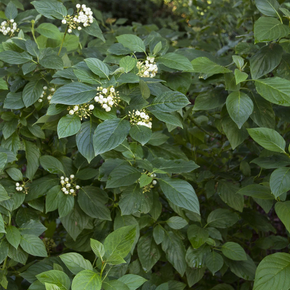
Cornus sericea 'Kelseyi', commonly known as Kelsey's Dwarf Red-Osier Dogwood or Kelsey's Dwarf Redtwig Dogwood, is a dwarf, rounded, suckering deciduous shrub selected from the native North American red-osier dogwood species. Unlike its larger parent species, which can reach 6-9 feet, 'Kelseyi' maintains a tidy, compact mounded form that makes it suitable for a much wider range of landscape settings. Its medium to dark green, ovate to lanceolate leaves are arranged in opposite pairs along slender stems and measure 2-5 inches in length, displaying a smooth texture with slightly silky undersides -- a characteristic reflected in the species name sericea, Latin for "silky." In late spring, small flat-topped clusters (cymes) of tiny creamy-white flowers appear, though they are produced less abundantly on this cultivar than on full-sized selections. These are followed by small clusters of pea-sized, white to bluish-white drupes that are beloved by birds. In autumn, the foliage shifts through attractive shades of orange, red, and burgundy-purple before dropping to reveal the plant's most celebrated feature: smooth, glistening, bright red to dark blood-red stems that provide vivid color throughout winter and into early spring.
Mature Size
| Attribute | Measurement |
|---|---|
| Mature Height | 2 to 3 feet |
| Mature Spread | 2 to 3 feet |
| Growth Rate | Fast |
| Habit | Compact, rounded, multi-stemmed, mounding |
| Recommended Spacing | 24 to 36 inches on center |
Because 'Kelseyi' spreads slowly by root suckers, clumps may gradually widen beyond the initial spread if not managed. For a tidy, controlled appearance, simply remove unwanted suckers at ground level in early spring. Its compact proportions make it an excellent substitute where the standard red-osier dogwood would be far too large.
Hardiness and Climate
| Attribute | Detail |
|---|---|
| USDA Hardiness Zones | 3 to 8 |
| AHS Heat Zones | 1 to 8 |
| Sunset Climate Zones | 1A, 1B, 2A, 2B, 3A, 3B, 4, 5, 6, 7, 8, 9, 14-21, A1-A3 |
| Cold Tolerance | Extremely cold-hardy; tolerates temperatures well below 0 degrees F |
| Heat Tolerance Notes | Best performance in Zones 3-7; may show increased disease susceptibility in hot, humid climates south of Zone 7 |
For gardeners in Southern Oregon and Northern California, 'Kelseyi' performs exceptionally well across the range of coastal, valley, and higher-elevation climates found in these regions, including the Rogue Valley, Siskiyou foothills, and Shasta Cascade areas.
Sunlight Requirements
Kelsey's Dwarf Red-Osier Dogwood thrives in full sun to partial shade. In cooler Pacific Northwest and inland Northwest climates, a full-sun exposure (6 or more hours of direct sunlight per day) encourages the strongest stem color and the most compact, vigorous growth. In warmer inland valleys or during hot summer stretches, a site with morning sun and dappled afternoon shade is preferred to reduce heat stress and the risk of leaf scorch. Avoid deep, dense shade, which can result in weak, open growth, diminished stem color, and increased susceptibility to diseases such as powdery mildew. The brightest winter stem color is consistently produced in sunnier positions with good air circulation.
Soil and pH Preferences
'Kelseyi' is remarkably adaptable and tolerates a wider range of soil conditions than most ornamental shrubs. It performs well in the following soil types and conditions:
- Soil Texture: Performs well in clay, loam, sandy loam, and chalky soils. It is one of the few ornamental shrubs that genuinely tolerates heavy clay.
- Soil Moisture: Prefers consistently moist, organically rich soil but adapts to average garden conditions. It is notably tolerant of occasional flooding and seasonally wet soils -- making it an excellent rain garden plant.
- Soil Drainage: Best in moist but well-drained soils. Will tolerate wet and poorly drained sites far better than most shrubs but does not require boggy conditions to thrive.
- Soil pH: Adaptable to acid, neutral, and even mildly alkaline soils (roughly pH 5.5 to 8.0). Unlike many ornamentals, it does not require an acidic soil pH to perform well.
- Organic Matter: Incorporating compost or aged bark into the planting area improves establishment and long-term health, particularly in sandy or compacted soils.
Watering Guide
Once established (typically after one to two full growing seasons), Kelsey's Dwarf Red-Osier Dogwood has average water needs and shows good adaptability to both moist and periodically dry conditions. Follow these watering guidelines for best results:
- At Planting: Water thoroughly at planting and keep the root zone consistently moist throughout the first growing season to encourage deep root development.
- Established Plants: Provide approximately 1 inch of water per week during the growing season, either from rainfall or supplemental irrigation. Deep, infrequent watering is preferred over frequent shallow watering.
- Hot, Dry Periods: During heat waves or extended dry spells typical of inland Southern Oregon and Northern California summers, increase watering frequency to prevent drought stress. Stressed plants are more susceptible to insect and disease problems.
- Wet Sites: 'Kelseyi' naturally colonizes streambanks, wet meadow edges, and seasonally flooded areas -- it handles excess moisture far better than most landscape shrubs.
- Mulching: A 2-3 inch layer of organic mulch over the root zone conserves moisture, moderates soil temperature, and reduces weed competition. Keep mulch pulled back a few inches from the base of the stems to discourage rot.
Fertilizing
Kelsey's Dwarf Redtwig Dogwood is not a heavy feeder and typically performs well without intensive fertilization, especially when planted in organically rich soil. For the best foliage color, stem vigor, and overall plant health, follow these guidelines:
- Timing: Apply fertilizer once in early spring as new growth begins to emerge, after the last frost has passed.
- Fertilizer Type: Use a balanced, slow-release shrub fertilizer or a balanced organic fertilizer. A granular product with an approximate N-P-K ratio of 10-10-10 or an organic alternative such as a balanced all-purpose fertilizer works well.
- Application: Apply fertilizer evenly under the drip line of the shrub, avoiding direct contact with stems. Water in thoroughly after application.
- Avoid Over-Fertilizing: Excessive nitrogen promotes overly lush, soft growth that is more attractive to aphids and more prone to disease. It can also reduce the intensity of fall and winter stem color.
- Established Plants: Mature, established shrubs in good soil often require little to no supplemental fertilization beyond a top-dressing of compost each spring.
Pruning and Maintenance
The most important thing to know about pruning 'Kelseyi' is that the brightest, most vivid red stem color develops on new, young growth. As stems age, their color fades from brilliant red to a duller brownish-red. Strategic pruning renews the plant and maximizes winter stem display. 'Kelseyi' is lower maintenance than full-sized red-osier dogwoods due to its naturally compact habit, but the following pruning approaches are recommended:
- Hard Rejuvenation Pruning (Every 2-3 Years): Cut all stems flush to the ground in early spring, just as leaf buds begin to swell. This produces a flush of vigorous new growth with maximum winter stem color intensity. Note that rejuvenation pruning eliminates flower and berry production for that season, since blooms and fruit form on second-year wood.
- Selective Stem Renewal (Annual): As an alternative to full rejuvenation, remove one-quarter to one-third of the oldest, tallest stems at ground level each spring. This approach maintains a tidier appearance, preserves some flowering and fruiting, and still encourages new colorful stems each year.
- Timing: Always prune in early spring before new leaves fully emerge. Avoid pruning in late summer or fall, which can stimulate tender new growth vulnerable to early frost damage.
- Sucker Control: 'Kelseyi' spreads slowly by underground stolons. Remove unwanted suckers promptly by cutting or digging at ground level to keep the clump within its desired footprint.
- General Tidying: Remove any dead, damaged, or diseased stems at any time of year.
Planting Instructions
- Site Selection: Choose a location with full sun to partial shade and adequate soil moisture. 'Kelseyi' is well suited to low spots, rain garden areas, streamside settings, or any moist location in the landscape.
- Timing: Plant in early spring or fall for best establishment. Fall planting allows roots to establish during cooler temperatures before summer heat arrives.
- Dig the Hole: Dig a hole two to three times as wide as the root ball and approximately as deep as the root ball height. Loosening the surrounding soil encourages lateral root expansion.
- Amend the Soil: Mix compost or aged organic material into the backfill soil, especially in sandy or clay-heavy sites, to improve drainage, aeration, and moisture retention.
- Plant at the Right Depth: Set the shrub so the top of the root ball is level with or very slightly above the surrounding soil grade. Avoid planting too deeply, which can lead to crown rot.
- Backfill and Tamp: Fill the hole with amended soil, gently firming it in layers to eliminate air pockets around the roots.
- Water Thoroughly: Water deeply immediately after planting to settle the soil and saturate the root zone.
- Mulch: Apply a 2-3 inch layer of organic mulch (shredded bark, wood chips, or compost) over the root zone, keeping it a few inches away from the base of the stems.
- Follow-Up Watering: Keep the soil consistently moist throughout the first growing season, watering every few days in the absence of rainfall.
Seasonal Interest
| Season | Ornamental Features |
|---|---|
| Spring | Fresh medium to dark green foliage emerges; small flat-topped clusters of creamy-white flowers appear in late spring, attracting pollinators |
| Summer | Dense, lush green foliage creates a tidy, rounded mound; clusters of small white to bluish-white berries develop and attract birds |
| Fall | Foliage transitions through shades of orange, red, and burgundy-purple before dropping; berries persist and continue to attract wildlife |
| Winter | Brilliant, glistening crimson-red stems provide vivid color contrast against snow, frost, dormant grasses, and evergreen backdrops; most spectacular display is on current-season growth |
Landscape Uses
'Kelseyi' is one of the most versatile compact shrubs available for Pacific Northwest and Northern California landscapes. Its adaptability to wet soils, its four-season interest, and its tidy size open up a wide range of design possibilities:
- Shrub Borders: Massed or used as a low front-of-border element in mixed shrub plantings
- Rain Gardens: One of the best low-maintenance plants for rain garden installations due to its tolerance of periodic inundation
- Streamside and Pond Edges: Thrives in the moist, rich soils along water features, ponds, and creeks; its fibrous root system helps stabilize banks
- Erosion Control: Spreading root system anchors slopes and streambanks prone to erosion
- Low Ground Cover Mass Planting: When planted in groups at 24-36 inch spacing, it forms a dense, weed-suppressing mass with spectacular seasonal color
- Winter Garden Focal Point: Plant against a backdrop of evergreens, stone walls, or light-colored fencing to maximize the visual impact of the red stems in winter
- Wildlife and Pollinator Gardens: Flowers attract native bees and butterflies; berries feed songbirds and small mammals through fall
- Small or Urban Gardens: The compact size makes it appropriate for smaller yards, courtyard gardens, and tight landscape spaces where full-sized dogwoods would be overwhelming
Wildlife Value
Cornus sericea 'Kelseyi' is a highly valuable wildlife plant with benefits across multiple seasons:
- Butterflies: Serves as a larval host plant for the Spring Azure butterfly (Celastrina ladon). The flowers also attract a variety of nectaring butterflies and moths in late spring.
- Native Bees: Supports several specialist bee species in the genus Andrena (including Andrena fragilis, Andrena integra, and Andrena platyparia) that collect pollen specifically from Cornus species.
- Songbirds: The bluish-white drupes are eaten by a wide variety of birds, including robins, thrushes, waxwings, woodpeckers, and bluebirds. Berries that persist into fall provide an important food source for migrating species.
- Small Mammals: Fruits are also consumed by small mammals such as chipmunks and squirrels. The dense thicket-like growth provides nesting cover and shelter.
- Waterfowl and Marshbirds: In wetter landscape settings, berries and cover attract waterfowl, marsh birds, and shorebirds.
- Deer Resistance: While no plant is fully deer-proof, 'Kelseyi' is rated as deer-resistant and is seldom browsed under normal browsing pressure.
Pests and Diseases
Kelsey's Dwarf Redtwig Dogwood is generally a resilient plant when sited appropriately. Stress from drought, poor drainage, or deep shade increases susceptibility to the following issues:
- Powdery Mildew: A fungal disease that coats foliage with a white, powdery film. Most common in humid conditions with poor air circulation. Improve air circulation through selective pruning; avoid overhead irrigation.
- Leaf Spot: Various fungal leaf spot diseases can cause brown or tan spots on foliage, particularly during wet spring weather. Generally cosmetic and not life-threatening to established plants. Remove and dispose of affected fallen leaves.
- Twig Blight and Canker: Fungal cankers may girdle individual stems, causing dieback. Prune out affected stems well below the infected area and dispose of cuttings away from the garden.
- Scale Insects: Armored or soft scales may occasionally colonize stems. Treat with dormant horticultural oil applied in late winter before bud break.
- Dogwood Borer (Synanthedon scitula): A moth larva that bores into stems, most often targeting stressed or mechanically damaged plants. Maintain plant health and avoid wounding stems during lawn or garden maintenance.
- Bagworms and Leaf Miners: Occasionally reported but rarely cause serious long-term damage on red-osier types.
- Aphids: May appear on new growth in spring. Dislodge with a strong spray of water or treat with insecticidal soap if populations are heavy.
The best prevention for all pest and disease issues is proper siting, adequate spacing for air circulation, consistent moisture management, and annual rejuvenation pruning that removes older, more vulnerable wood.
Companion Plants
'Kelseyi' pairs beautifully with plants that complement or contrast its brilliant red winter stems, lush summer foliage, and fall color. Consider the following companion planting combinations:
- Ornamental Grasses: Feather reed grass (Calamagrostis), switchgrass (Panicum), or blue oat grass (Helictotrichon) provide contrasting textures and hold their structure through winter alongside the red stems.
- Hellebores (Helleborus spp.): Winter- and early-spring-blooming hellebores pair elegantly with the red stems, providing interest at the same time and thriving in similar moist, partly shaded conditions.
- Witch Hazel (Hamamelis x intermedia): Late winter flowers in yellow, orange, or red tones create a stunning multi-plant winter display alongside 'Kelseyi' stems.
- Wintercreeper (Euonymus fortunei 'Emerald n Gold'): The yellow-and-green variegated evergreen foliage provides year-round contrast and makes the red stems pop in winter.
- Siberian Iris (Iris sibirica): Shares a preference for moist soils; the fine, upright foliage contrasts with 'Kelseyi' s rounded form, and the blue-violet flowers are a pleasing spring companion.
- Black-Eyed Susan (Rudbeckia spp.): Yellow summer and fall blooms create warm color contrast against the green dogwood foliage and transition beautifully into the fall display.
- Native Sedges (Carex spp.): Low-growing sedges fill in beautifully beneath or around 'Kelseyi' in moist, partly shaded locations, unifying rain garden and naturalistic plantings.
- Snowdrops or Winter Aconite: Early spring bulbs push through the mulch beneath the bare red stems, layering interest in the late-winter and early-spring garden before foliage emerges.
- Brilliant fire-engine-red stems ignite the winter landscape with vivid color after the leaves drop, making this compact dwarf a true four-season showstopper.
- A well-behaved, mounded form growing only 2-3 feet tall and wide -- a space-saving alternative to full-sized red-osier dogwood that fits small gardens, borders, and rain gardens with ease.
- Tough and versatile, Kelseyi tolerates wet soils, clay, and a wide pH range while remaining deer-resistant, making it one of the most adaptable low-maintenance shrubs for challenging sites.
- A proven wildlife magnet that attracts butterflies, native bees, and songbirds with late-spring white flower clusters and bluish-white berries that persist into fall.
Kelsey's Dwarf Red-Osier Dogwood (Cornus sericea 'Kelseyi') is a compact, rounded, deciduous shrub that delivers remarkable four-season ornamental interest in a tidy 2-3 foot package, making it one of the most versatile and garden-friendly selections in the red-twig dogwood family. Native across much of North America and prized for its brilliantly colored crimson stems, 'Kelseyi' earns its place in the landscape from the first flush of medium-green, ovate foliage in spring through the flat-topped clusters of creamy-white flowers in late spring, the clusters of bluish-white berries that follow in summer and persist into fall, and the spectacular burgundy-red autumn foliage color that precedes leaf drop -- all leading up to the showiest season of all, when glistening, fire-red stems command the winter garden. Hardy in USDA Zones 3-8, this adaptable shrub thrives in full sun to partial shade and tolerates a wide spectrum of soil conditions including wet sites, clay-heavy soils, and variable pH levels, making it an outstanding candidate for rain gardens, streamside plantings, low spots in the landscape, shrub borders, mass plantings, and erosion-prone slopes. Its naturally dense, low-spreading habit eliminates the need for frequent shaping, while its deer resistance and low maintenance requirements make it an ideal choice for busy gardeners seeking maximum impact with minimal effort throughout all four seasons.
Plant Description
Cornus sericea 'Kelseyi', commonly known as Kelsey's Dwarf Red-Osier Dogwood or Kelsey's Dwarf Redtwig Dogwood, is a dwarf, rounded, suckering deciduous shrub selected from the native North American red-osier dogwood species. Unlike its larger parent species, which can reach 6-9 feet, 'Kelseyi' maintains a tidy, compact mounded form that makes it suitable for a much wider range of landscape settings. Its medium to dark green, ovate to lanceolate leaves are arranged in opposite pairs along slender stems and measure 2-5 inches in length, displaying a smooth texture with slightly silky undersides -- a characteristic reflected in the species name sericea, Latin for "silky." In late spring, small flat-topped clusters (cymes) of tiny creamy-white flowers appear, though they are produced less abundantly on this cultivar than on full-sized selections. These are followed by small clusters of pea-sized, white to bluish-white drupes that are beloved by birds. In autumn, the foliage shifts through attractive shades of orange, red, and burgundy-purple before dropping to reveal the plant's most celebrated feature: smooth, glistening, bright red to dark blood-red stems that provide vivid color throughout winter and into early spring.
Mature Size
| Attribute | Measurement |
|---|---|
| Mature Height | 2 to 3 feet |
| Mature Spread | 2 to 3 feet |
| Growth Rate | Fast |
| Habit | Compact, rounded, multi-stemmed, mounding |
| Recommended Spacing | 24 to 36 inches on center |
Because 'Kelseyi' spreads slowly by root suckers, clumps may gradually widen beyond the initial spread if not managed. For a tidy, controlled appearance, simply remove unwanted suckers at ground level in early spring. Its compact proportions make it an excellent substitute where the standard red-osier dogwood would be far too large.
Hardiness and Climate
| Attribute | Detail |
|---|---|
| USDA Hardiness Zones | 3 to 8 |
| AHS Heat Zones | 1 to 8 |
| Sunset Climate Zones | 1A, 1B, 2A, 2B, 3A, 3B, 4, 5, 6, 7, 8, 9, 14-21, A1-A3 |
| Cold Tolerance | Extremely cold-hardy; tolerates temperatures well below 0 degrees F |
| Heat Tolerance Notes | Best performance in Zones 3-7; may show increased disease susceptibility in hot, humid climates south of Zone 7 |
For gardeners in Southern Oregon and Northern California, 'Kelseyi' performs exceptionally well across the range of coastal, valley, and higher-elevation climates found in these regions, including the Rogue Valley, Siskiyou foothills, and Shasta Cascade areas.
Sunlight Requirements
Kelsey's Dwarf Red-Osier Dogwood thrives in full sun to partial shade. In cooler Pacific Northwest and inland Northwest climates, a full-sun exposure (6 or more hours of direct sunlight per day) encourages the strongest stem color and the most compact, vigorous growth. In warmer inland valleys or during hot summer stretches, a site with morning sun and dappled afternoon shade is preferred to reduce heat stress and the risk of leaf scorch. Avoid deep, dense shade, which can result in weak, open growth, diminished stem color, and increased susceptibility to diseases such as powdery mildew. The brightest winter stem color is consistently produced in sunnier positions with good air circulation.
Soil and pH Preferences
'Kelseyi' is remarkably adaptable and tolerates a wider range of soil conditions than most ornamental shrubs. It performs well in the following soil types and conditions:
- Soil Texture: Performs well in clay, loam, sandy loam, and chalky soils. It is one of the few ornamental shrubs that genuinely tolerates heavy clay.
- Soil Moisture: Prefers consistently moist, organically rich soil but adapts to average garden conditions. It is notably tolerant of occasional flooding and seasonally wet soils -- making it an excellent rain garden plant.
- Soil Drainage: Best in moist but well-drained soils. Will tolerate wet and poorly drained sites far better than most shrubs but does not require boggy conditions to thrive.
- Soil pH: Adaptable to acid, neutral, and even mildly alkaline soils (roughly pH 5.5 to 8.0). Unlike many ornamentals, it does not require an acidic soil pH to perform well.
- Organic Matter: Incorporating compost or aged bark into the planting area improves establishment and long-term health, particularly in sandy or compacted soils.
Watering Guide
Once established (typically after one to two full growing seasons), Kelsey's Dwarf Red-Osier Dogwood has average water needs and shows good adaptability to both moist and periodically dry conditions. Follow these watering guidelines for best results:
- At Planting: Water thoroughly at planting and keep the root zone consistently moist throughout the first growing season to encourage deep root development.
- Established Plants: Provide approximately 1 inch of water per week during the growing season, either from rainfall or supplemental irrigation. Deep, infrequent watering is preferred over frequent shallow watering.
- Hot, Dry Periods: During heat waves or extended dry spells typical of inland Southern Oregon and Northern California summers, increase watering frequency to prevent drought stress. Stressed plants are more susceptible to insect and disease problems.
- Wet Sites: 'Kelseyi' naturally colonizes streambanks, wet meadow edges, and seasonally flooded areas -- it handles excess moisture far better than most landscape shrubs.
- Mulching: A 2-3 inch layer of organic mulch over the root zone conserves moisture, moderates soil temperature, and reduces weed competition. Keep mulch pulled back a few inches from the base of the stems to discourage rot.
Fertilizing
Kelsey's Dwarf Redtwig Dogwood is not a heavy feeder and typically performs well without intensive fertilization, especially when planted in organically rich soil. For the best foliage color, stem vigor, and overall plant health, follow these guidelines:
- Timing: Apply fertilizer once in early spring as new growth begins to emerge, after the last frost has passed.
- Fertilizer Type: Use a balanced, slow-release shrub fertilizer or a balanced organic fertilizer. A granular product with an approximate N-P-K ratio of 10-10-10 or an organic alternative such as a balanced all-purpose fertilizer works well.
- Application: Apply fertilizer evenly under the drip line of the shrub, avoiding direct contact with stems. Water in thoroughly after application.
- Avoid Over-Fertilizing: Excessive nitrogen promotes overly lush, soft growth that is more attractive to aphids and more prone to disease. It can also reduce the intensity of fall and winter stem color.
- Established Plants: Mature, established shrubs in good soil often require little to no supplemental fertilization beyond a top-dressing of compost each spring.
Pruning and Maintenance
The most important thing to know about pruning 'Kelseyi' is that the brightest, most vivid red stem color develops on new, young growth. As stems age, their color fades from brilliant red to a duller brownish-red. Strategic pruning renews the plant and maximizes winter stem display. 'Kelseyi' is lower maintenance than full-sized red-osier dogwoods due to its naturally compact habit, but the following pruning approaches are recommended:
- Hard Rejuvenation Pruning (Every 2-3 Years): Cut all stems flush to the ground in early spring, just as leaf buds begin to swell. This produces a flush of vigorous new growth with maximum winter stem color intensity. Note that rejuvenation pruning eliminates flower and berry production for that season, since blooms and fruit form on second-year wood.
- Selective Stem Renewal (Annual): As an alternative to full rejuvenation, remove one-quarter to one-third of the oldest, tallest stems at ground level each spring. This approach maintains a tidier appearance, preserves some flowering and fruiting, and still encourages new colorful stems each year.
- Timing: Always prune in early spring before new leaves fully emerge. Avoid pruning in late summer or fall, which can stimulate tender new growth vulnerable to early frost damage.
- Sucker Control: 'Kelseyi' spreads slowly by underground stolons. Remove unwanted suckers promptly by cutting or digging at ground level to keep the clump within its desired footprint.
- General Tidying: Remove any dead, damaged, or diseased stems at any time of year.
Planting Instructions
- Site Selection: Choose a location with full sun to partial shade and adequate soil moisture. 'Kelseyi' is well suited to low spots, rain garden areas, streamside settings, or any moist location in the landscape.
- Timing: Plant in early spring or fall for best establishment. Fall planting allows roots to establish during cooler temperatures before summer heat arrives.
- Dig the Hole: Dig a hole two to three times as wide as the root ball and approximately as deep as the root ball height. Loosening the surrounding soil encourages lateral root expansion.
- Amend the Soil: Mix compost or aged organic material into the backfill soil, especially in sandy or clay-heavy sites, to improve drainage, aeration, and moisture retention.
- Plant at the Right Depth: Set the shrub so the top of the root ball is level with or very slightly above the surrounding soil grade. Avoid planting too deeply, which can lead to crown rot.
- Backfill and Tamp: Fill the hole with amended soil, gently firming it in layers to eliminate air pockets around the roots.
- Water Thoroughly: Water deeply immediately after planting to settle the soil and saturate the root zone.
- Mulch: Apply a 2-3 inch layer of organic mulch (shredded bark, wood chips, or compost) over the root zone, keeping it a few inches away from the base of the stems.
- Follow-Up Watering: Keep the soil consistently moist throughout the first growing season, watering every few days in the absence of rainfall.
Seasonal Interest
| Season | Ornamental Features |
|---|---|
| Spring | Fresh medium to dark green foliage emerges; small flat-topped clusters of creamy-white flowers appear in late spring, attracting pollinators |
| Summer | Dense, lush green foliage creates a tidy, rounded mound; clusters of small white to bluish-white berries develop and attract birds |
| Fall | Foliage transitions through shades of orange, red, and burgundy-purple before dropping; berries persist and continue to attract wildlife |
| Winter | Brilliant, glistening crimson-red stems provide vivid color contrast against snow, frost, dormant grasses, and evergreen backdrops; most spectacular display is on current-season growth |
Landscape Uses
'Kelseyi' is one of the most versatile compact shrubs available for Pacific Northwest and Northern California landscapes. Its adaptability to wet soils, its four-season interest, and its tidy size open up a wide range of design possibilities:
- Shrub Borders: Massed or used as a low front-of-border element in mixed shrub plantings
- Rain Gardens: One of the best low-maintenance plants for rain garden installations due to its tolerance of periodic inundation
- Streamside and Pond Edges: Thrives in the moist, rich soils along water features, ponds, and creeks; its fibrous root system helps stabilize banks
- Erosion Control: Spreading root system anchors slopes and streambanks prone to erosion
- Low Ground Cover Mass Planting: When planted in groups at 24-36 inch spacing, it forms a dense, weed-suppressing mass with spectacular seasonal color
- Winter Garden Focal Point: Plant against a backdrop of evergreens, stone walls, or light-colored fencing to maximize the visual impact of the red stems in winter
- Wildlife and Pollinator Gardens: Flowers attract native bees and butterflies; berries feed songbirds and small mammals through fall
- Small or Urban Gardens: The compact size makes it appropriate for smaller yards, courtyard gardens, and tight landscape spaces where full-sized dogwoods would be overwhelming
Wildlife Value
Cornus sericea 'Kelseyi' is a highly valuable wildlife plant with benefits across multiple seasons:
- Butterflies: Serves as a larval host plant for the Spring Azure butterfly (Celastrina ladon). The flowers also attract a variety of nectaring butterflies and moths in late spring.
- Native Bees: Supports several specialist bee species in the genus Andrena (including Andrena fragilis, Andrena integra, and Andrena platyparia) that collect pollen specifically from Cornus species.
- Songbirds: The bluish-white drupes are eaten by a wide variety of birds, including robins, thrushes, waxwings, woodpeckers, and bluebirds. Berries that persist into fall provide an important food source for migrating species.
- Small Mammals: Fruits are also consumed by small mammals such as chipmunks and squirrels. The dense thicket-like growth provides nesting cover and shelter.
- Waterfowl and Marshbirds: In wetter landscape settings, berries and cover attract waterfowl, marsh birds, and shorebirds.
- Deer Resistance: While no plant is fully deer-proof, 'Kelseyi' is rated as deer-resistant and is seldom browsed under normal browsing pressure.
Pests and Diseases
Kelsey's Dwarf Redtwig Dogwood is generally a resilient plant when sited appropriately. Stress from drought, poor drainage, or deep shade increases susceptibility to the following issues:
- Powdery Mildew: A fungal disease that coats foliage with a white, powdery film. Most common in humid conditions with poor air circulation. Improve air circulation through selective pruning; avoid overhead irrigation.
- Leaf Spot: Various fungal leaf spot diseases can cause brown or tan spots on foliage, particularly during wet spring weather. Generally cosmetic and not life-threatening to established plants. Remove and dispose of affected fallen leaves.
- Twig Blight and Canker: Fungal cankers may girdle individual stems, causing dieback. Prune out affected stems well below the infected area and dispose of cuttings away from the garden.
- Scale Insects: Armored or soft scales may occasionally colonize stems. Treat with dormant horticultural oil applied in late winter before bud break.
- Dogwood Borer (Synanthedon scitula): A moth larva that bores into stems, most often targeting stressed or mechanically damaged plants. Maintain plant health and avoid wounding stems during lawn or garden maintenance.
- Bagworms and Leaf Miners: Occasionally reported but rarely cause serious long-term damage on red-osier types.
- Aphids: May appear on new growth in spring. Dislodge with a strong spray of water or treat with insecticidal soap if populations are heavy.
The best prevention for all pest and disease issues is proper siting, adequate spacing for air circulation, consistent moisture management, and annual rejuvenation pruning that removes older, more vulnerable wood.
Companion Plants
'Kelseyi' pairs beautifully with plants that complement or contrast its brilliant red winter stems, lush summer foliage, and fall color. Consider the following companion planting combinations:
- Ornamental Grasses: Feather reed grass (Calamagrostis), switchgrass (Panicum), or blue oat grass (Helictotrichon) provide contrasting textures and hold their structure through winter alongside the red stems.
- Hellebores (Helleborus spp.): Winter- and early-spring-blooming hellebores pair elegantly with the red stems, providing interest at the same time and thriving in similar moist, partly shaded conditions.
- Witch Hazel (Hamamelis x intermedia): Late winter flowers in yellow, orange, or red tones create a stunning multi-plant winter display alongside 'Kelseyi' stems.
- Wintercreeper (Euonymus fortunei 'Emerald n Gold'): The yellow-and-green variegated evergreen foliage provides year-round contrast and makes the red stems pop in winter.
- Siberian Iris (Iris sibirica): Shares a preference for moist soils; the fine, upright foliage contrasts with 'Kelseyi' s rounded form, and the blue-violet flowers are a pleasing spring companion.
- Black-Eyed Susan (Rudbeckia spp.): Yellow summer and fall blooms create warm color contrast against the green dogwood foliage and transition beautifully into the fall display.
- Native Sedges (Carex spp.): Low-growing sedges fill in beautifully beneath or around 'Kelseyi' in moist, partly shaded locations, unifying rain garden and naturalistic plantings.
- Snowdrops or Winter Aconite: Early spring bulbs push through the mulch beneath the bare red stems, layering interest in the late-winter and early-spring garden before foliage emerges.
Related Products