

Zoom the image with the mouse
Dwarf Balsam Fir - 2 Gallon
SKU:
174650
UPC:
014949000823
$49.99
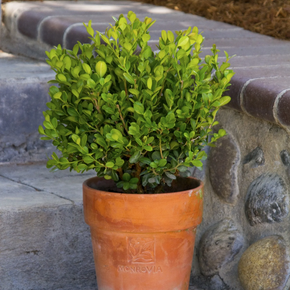
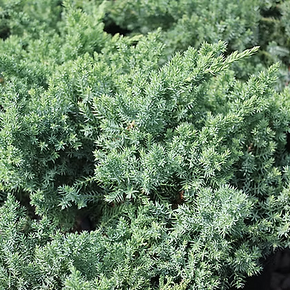
- Dense, dark green, wonderfully aromatic needles on horizontal spreading branches form a very small, tidy globe-shaped evergreen shrub
- Slow growing to just 2 feet tall and 3 feet wide, making it a perfect specimen for rock gardens, mixed borders, bonsai, and small-space plantings
- Thrives in cooler summer regions across USDA Zones 3 through 6, providing year-round evergreen structure with virtually no maintenance
- Rabbit resistant and beneficial to birds, with the classic balsam fir fragrance that makes it a sensory delight in the garden
Dwarf Balsam Fir (Abies balsamea 'Nana') is a beautiful, slow-growing miniature evergreen that forms a dense, globe-shaped mound of aromatic dark green needles on horizontal spreading branches. Reaching just 2 feet tall and 3 feet wide over many years, this tidy, compact conifer is an ideal specimen for rock gardens, mixed borders, bonsai, and small-space landscapes where year-round evergreen structure is desired in a petite package. Native to the cool, moist woodlands of the northeastern United States and Canada, it thrives in USDA Zones 3 through 6 and performs best in cooler summer climates where it can enjoy the moist, temperate conditions that mirror its natural habitat. Rabbit resistant and offering the classic, beloved balsam fir fragrance, Dwarf Balsam Fir is a low-maintenance, long-lived garden gem that provides year-round beauty, textural interest, and aromatic pleasure with virtually no care once established.
Plant Details
| Attribute | Details |
|---|---|
| Botanical Name | Abies balsamea 'Nana' |
| Plant Type | Dwarf Evergreen Conifer |
| Foliage Color | Dark green (aromatic) |
| Bloom Time | Conifer; prized for foliage and fragrance |
| Growth Rate | Slow |
| Growth Habit | Rounded / Globe-shaped |
| Mature Size | 2 ft. tall, 3 ft. wide |
| USDA Zones | 3 - 6 |
| Light | Full sun |
| Water | Keep soil moist, not soggy |
| Special Features | Easy Care, Compact Form, Benefits Birds, Aromatic |
| Landscape Use | Rock Garden, Border, Bonsai, Container |
| Rabbit Resistant | Yes |
Size and Growth Habit
Dwarf Balsam Fir is a genuinely miniature conifer that slowly reaches just 2 feet in height and 3 feet in width over many years. Its naturally rounded, globe-shaped growth habit requires no pruning or shaping to maintain its tidy, symmetrical form. The dense, horizontal branching structure creates a compact, cushion-like mound that fits proportionally into the smallest garden spaces. This slow growth rate is an asset for rock gardens, troughs, and small-scale landscapes where other conifers would quickly outgrow their intended position. Individual plants may take a decade or more to reach their full mature dimensions.
Sunlight Requirements
Dwarf Balsam Fir performs well in full sun in cooler climates but benefits from some afternoon shade in warmer areas within its hardiness range. In its native habitat, Balsam Fir grows in both full sun clearings and partially shaded woodland edges. The key consideration is not so much light intensity as overall climate; this conifer performs best where summer temperatures remain moderate and humidity levels are reasonable. In the warmest parts of Zone 6, providing a site with morning sun and afternoon shade helps prevent heat stress during summer peaks.
Watering
Keep the soil consistently moist but not waterlogged. Dwarf Balsam Fir is native to moist woodland environments and does not tolerate prolonged drought. Water deeply and regularly during the first few growing seasons to establish an extensive root system. Once established, continue to water regularly to maintain evenly moist soil, particularly during dry spells in summer. This fir does not have the drought tolerance of junipers or pines and should not be allowed to dry out completely. Mulching around the base helps retain soil moisture and moderate root zone temperature.
Soil Requirements
Provide organically rich, lightly acidic, well-drained soil with a pH of approximately 5.0 to 6.5. Dwarf Balsam Fir thrives in the humus-rich, moist but well-aerated soils that characterize its native woodland habitat. Amend heavy clay soils with generous quantities of compost and pine bark to improve both drainage and acidity. Sandy soils benefit from added organic matter to improve moisture retention. Avoid alkaline or dry, infertile soils, which will significantly limit growth and may cause foliage decline over time.
Care and Maintenance
- Watering: Maintain evenly moist soil year-round; this fir does not tolerate drought well and needs consistent moisture to thrive.
- Fertilizing: Apply a general-purpose or acid-loving plant fertilizer before new growth begins in spring to support healthy needle development.
- Pruning: Virtually none required; the natural globe shape is self-maintaining. Remove any dead or damaged branches as they appear.
- Mulching: Apply 2 to 3 inches of organic mulch (pine bark or wood chips) around the base to retain moisture and maintain acidic soil conditions.
- Heat protection: In the warmest parts of its range, provide afternoon shade and extra moisture during summer heat waves.
Landscape Uses
Dwarf Balsam Fir is a perfect specimen for rock gardens where its small, dense, globe-shaped form creates a dark green cushion amid colorful alpine plants and stone. It is also beautiful mixed with brighter, lower-growing groundcovers, where it provides rich evergreen contrast. Use it as an anchor in mixed borders alongside smaller flowering perennials, as a miniature focal point in container gardens, or as a bonsai subject where its naturally compact form and aromatic needles are especially appreciated. Its slow growth and tidy habit make it one of the best dwarf conifers for small gardens, entryway plantings, and intimate courtyard settings.
Companion Plants
| Plant | Why It Works |
|---|---|
| Pine (Pinus) | Taller needled conifers in the background provide scale contrast and a naturalistic conifer garden effect |
| Dogwood (Cornus) | Seasonal flowers, fall color, and colorful winter stems create multi-season interest around the evergreen fir |
| Ninebark (Physocarpus) | Bold deciduous foliage in burgundy or gold provides warm color contrast beside the cool, dark green needles |
| Spirea (Spiraea) | Delicate flower sprays and fine-textured foliage complement the dense, rounded fir form at a similar scale |
| Viburnum (Viburnum) | Three-season flower, fruit, and fall foliage interest pairs well with the year-round evergreen constancy of the fir |
Fragrance
One of the most delightful features of Dwarf Balsam Fir is its wonderfully aromatic foliage, which releases the classic, beloved balsam fir scent when the needles are brushed or warmed by the sun. This is the same iconic fragrance associated with Christmas trees, balsam pillows, and forest candles. Planting this miniature fir near a garden bench, along a frequently used path, or beside an entryway allows the fragrance to be enjoyed up close. The aromatic oils in the needles are naturally insect-deterring and contribute to the plant's overall resilience against common garden pests.
Climate Considerations
Dwarf Balsam Fir is native to the cool, moist woodlands and bottomlands of the midwestern and eastern United States and Canada. It does not thrive in the hot, humid regions of the southern states or in the hot, dry summer climates of the Southwest. For best results, plant it in areas with cool to moderate summer temperatures and adequate natural moisture. In Zone 6, which represents the warm edge of its adaptability, careful siting with afternoon shade, consistent watering, and a well-mulched root zone will help compensate for summer heat that exceeds the plant's natural comfort range.
USDA Hardiness Zones
Dwarf Balsam Fir is rated for USDA Hardiness Zones 3 through 6. In Zone 3, it easily survives winter temperatures as low as -40 degrees Fahrenheit, reflecting its native adaptation to some of the coldest regions of North America. While it is extremely cold hardy, its upper limit of Zone 6 reflects its sensitivity to heat rather than cold; this is a species that performs best where summers are cool and moist. Gardeners in Zones 7 and above should consider alternative dwarf conifers better adapted to warmer summer conditions.
- Dense, dark green, wonderfully aromatic needles on horizontal spreading branches form a very small, tidy globe-shaped evergreen shrub
- Slow growing to just 2 feet tall and 3 feet wide, making it a perfect specimen for rock gardens, mixed borders, bonsai, and small-space plantings
- Thrives in cooler summer regions across USDA Zones 3 through 6, providing year-round evergreen structure with virtually no maintenance
- Rabbit resistant and beneficial to birds, with the classic balsam fir fragrance that makes it a sensory delight in the garden
Dwarf Balsam Fir (Abies balsamea 'Nana') is a beautiful, slow-growing miniature evergreen that forms a dense, globe-shaped mound of aromatic dark green needles on horizontal spreading branches. Reaching just 2 feet tall and 3 feet wide over many years, this tidy, compact conifer is an ideal specimen for rock gardens, mixed borders, bonsai, and small-space landscapes where year-round evergreen structure is desired in a petite package. Native to the cool, moist woodlands of the northeastern United States and Canada, it thrives in USDA Zones 3 through 6 and performs best in cooler summer climates where it can enjoy the moist, temperate conditions that mirror its natural habitat. Rabbit resistant and offering the classic, beloved balsam fir fragrance, Dwarf Balsam Fir is a low-maintenance, long-lived garden gem that provides year-round beauty, textural interest, and aromatic pleasure with virtually no care once established.
Plant Details
| Attribute | Details |
|---|---|
| Botanical Name | Abies balsamea 'Nana' |
| Plant Type | Dwarf Evergreen Conifer |
| Foliage Color | Dark green (aromatic) |
| Bloom Time | Conifer; prized for foliage and fragrance |
| Growth Rate | Slow |
| Growth Habit | Rounded / Globe-shaped |
| Mature Size | 2 ft. tall, 3 ft. wide |
| USDA Zones | 3 - 6 |
| Light | Full sun |
| Water | Keep soil moist, not soggy |
| Special Features | Easy Care, Compact Form, Benefits Birds, Aromatic |
| Landscape Use | Rock Garden, Border, Bonsai, Container |
| Rabbit Resistant | Yes |
Size and Growth Habit
Dwarf Balsam Fir is a genuinely miniature conifer that slowly reaches just 2 feet in height and 3 feet in width over many years. Its naturally rounded, globe-shaped growth habit requires no pruning or shaping to maintain its tidy, symmetrical form. The dense, horizontal branching structure creates a compact, cushion-like mound that fits proportionally into the smallest garden spaces. This slow growth rate is an asset for rock gardens, troughs, and small-scale landscapes where other conifers would quickly outgrow their intended position. Individual plants may take a decade or more to reach their full mature dimensions.
Sunlight Requirements
Dwarf Balsam Fir performs well in full sun in cooler climates but benefits from some afternoon shade in warmer areas within its hardiness range. In its native habitat, Balsam Fir grows in both full sun clearings and partially shaded woodland edges. The key consideration is not so much light intensity as overall climate; this conifer performs best where summer temperatures remain moderate and humidity levels are reasonable. In the warmest parts of Zone 6, providing a site with morning sun and afternoon shade helps prevent heat stress during summer peaks.
Watering
Keep the soil consistently moist but not waterlogged. Dwarf Balsam Fir is native to moist woodland environments and does not tolerate prolonged drought. Water deeply and regularly during the first few growing seasons to establish an extensive root system. Once established, continue to water regularly to maintain evenly moist soil, particularly during dry spells in summer. This fir does not have the drought tolerance of junipers or pines and should not be allowed to dry out completely. Mulching around the base helps retain soil moisture and moderate root zone temperature.
Soil Requirements
Provide organically rich, lightly acidic, well-drained soil with a pH of approximately 5.0 to 6.5. Dwarf Balsam Fir thrives in the humus-rich, moist but well-aerated soils that characterize its native woodland habitat. Amend heavy clay soils with generous quantities of compost and pine bark to improve both drainage and acidity. Sandy soils benefit from added organic matter to improve moisture retention. Avoid alkaline or dry, infertile soils, which will significantly limit growth and may cause foliage decline over time.
Care and Maintenance
- Watering: Maintain evenly moist soil year-round; this fir does not tolerate drought well and needs consistent moisture to thrive.
- Fertilizing: Apply a general-purpose or acid-loving plant fertilizer before new growth begins in spring to support healthy needle development.
- Pruning: Virtually none required; the natural globe shape is self-maintaining. Remove any dead or damaged branches as they appear.
- Mulching: Apply 2 to 3 inches of organic mulch (pine bark or wood chips) around the base to retain moisture and maintain acidic soil conditions.
- Heat protection: In the warmest parts of its range, provide afternoon shade and extra moisture during summer heat waves.
Landscape Uses
Dwarf Balsam Fir is a perfect specimen for rock gardens where its small, dense, globe-shaped form creates a dark green cushion amid colorful alpine plants and stone. It is also beautiful mixed with brighter, lower-growing groundcovers, where it provides rich evergreen contrast. Use it as an anchor in mixed borders alongside smaller flowering perennials, as a miniature focal point in container gardens, or as a bonsai subject where its naturally compact form and aromatic needles are especially appreciated. Its slow growth and tidy habit make it one of the best dwarf conifers for small gardens, entryway plantings, and intimate courtyard settings.
Companion Plants
| Plant | Why It Works |
|---|---|
| Pine (Pinus) | Taller needled conifers in the background provide scale contrast and a naturalistic conifer garden effect |
| Dogwood (Cornus) | Seasonal flowers, fall color, and colorful winter stems create multi-season interest around the evergreen fir |
| Ninebark (Physocarpus) | Bold deciduous foliage in burgundy or gold provides warm color contrast beside the cool, dark green needles |
| Spirea (Spiraea) | Delicate flower sprays and fine-textured foliage complement the dense, rounded fir form at a similar scale |
| Viburnum (Viburnum) | Three-season flower, fruit, and fall foliage interest pairs well with the year-round evergreen constancy of the fir |
Fragrance
One of the most delightful features of Dwarf Balsam Fir is its wonderfully aromatic foliage, which releases the classic, beloved balsam fir scent when the needles are brushed or warmed by the sun. This is the same iconic fragrance associated with Christmas trees, balsam pillows, and forest candles. Planting this miniature fir near a garden bench, along a frequently used path, or beside an entryway allows the fragrance to be enjoyed up close. The aromatic oils in the needles are naturally insect-deterring and contribute to the plant's overall resilience against common garden pests.
Climate Considerations
Dwarf Balsam Fir is native to the cool, moist woodlands and bottomlands of the midwestern and eastern United States and Canada. It does not thrive in the hot, humid regions of the southern states or in the hot, dry summer climates of the Southwest. For best results, plant it in areas with cool to moderate summer temperatures and adequate natural moisture. In Zone 6, which represents the warm edge of its adaptability, careful siting with afternoon shade, consistent watering, and a well-mulched root zone will help compensate for summer heat that exceeds the plant's natural comfort range.
USDA Hardiness Zones
Dwarf Balsam Fir is rated for USDA Hardiness Zones 3 through 6. In Zone 3, it easily survives winter temperatures as low as -40 degrees Fahrenheit, reflecting its native adaptation to some of the coldest regions of North America. While it is extremely cold hardy, its upper limit of Zone 6 reflects its sensitivity to heat rather than cold; this is a species that performs best where summers are cool and moist. Gardeners in Zones 7 and above should consider alternative dwarf conifers better adapted to warmer summer conditions.