null Skip to main content
Zoom the image with the mouse

Dwarf Burning Bush - 2 Gallon

SKU: 105985
UPC: 651469520570
$32.99
  • Jaw-dropping scarlet-red fall foliage delivers one of the most vivid autumn color displays of any deciduous shrub in the landscape.
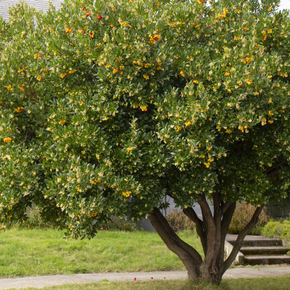
  • Dense, rounded, vase-shaped form grows 8-10 feet tall and wide, making it ideal as a bold specimen, informal hedge, or mass planting screen.
  • Exceptional adaptability to a wide range of soils, light levels, and climates, thriving in USDA Hardiness Zones 4-9 with minimal care required.
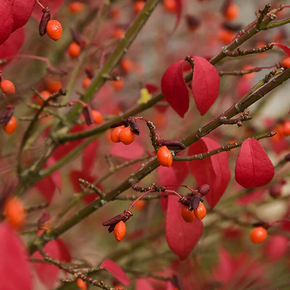
  • Ornamental purplish-red fruit capsules split open in fall to reveal vivid orange-coated seeds that persist into winter and attract songbirds.

Euonymus alatus 'Compactus', commonly known as Dwarf Burning Bush or Compact Winged Euonymus, is one of the most iconic deciduous shrubs in American landscapes, prized above all else for its extraordinary flame-red fall foliage that sets the garden ablaze each autumn. A more manageable cultivar of the straight species, 'Compactus' forms a dense, multi-stemmed, spreading shrub with a graceful vase-shaped habit, typically reaching 8-10 feet tall and equally wide at maturity. Throughout spring and summer, the elliptic, finely serrated leaves emerge in a rich, deep green, creating a lush, refined backdrop in borders and screens. In late spring, small inconspicuous greenish-yellow flowers appear, later giving way to ornamental purplish-red capsule fruits that split open in fall to reveal brilliantly orange-coated seeds — a welcome late-season food source for songbirds. Come autumn, the foliage transforms into a stunning, almost luminous scarlet red before dropping to reveal the plant's attractive winter structure, including the distinctive corky-winged stems that give winged euonymus its name. Hardy in USDA Zones 4-9, adaptable to a broad range of soil types, and requiring very little maintenance, Dwarf Burning Bush is a dependable, high-impact choice for hedges, specimen plantings, shrub borders, and foundation plantings across Southern Oregon, Northern California, and well beyond.


Plant Description

Euonymus alatus 'Compactus' (Dwarf Burning Bush or Compact Winged Euonymus) is a medium-to-large deciduous shrub native to eastern Russia, Japan, China, and Korea. It belongs to the Celastraceae family and is a more compact and manageable cultivar of the straight species Euonymus alatus. The plant has a dense, twiggy, flat-topped to rounded, multi-stemmed form with a graceful vase-shaped habit. Its most celebrated feature is its spectacular scarlet-red fall foliage, widely regarded as among the most vivid autumn color of any shrub in cultivation. The stems feature distinctive corky ridges, or "wings," that become especially visible in winter after the leaves have fallen, providing year-round textural interest. Small, 4-petaled, greenish-yellow flowers bloom inconspicuously in late spring, followed by ornamental purplish-red capsule fruits that ripen and split open in fall to reveal tiny orange-coated seeds. This shrub holds the prestigious Award of Garden Merit from the Royal Horticultural Society, recognizing its outstanding ornamental value and reliability in the garden.

Mature Size
Characteristic Details
Mature Height 8-10 feet
Mature Spread 8-10 feet
Growth Rate Moderate to fast
Growth Habit Dense, rounded, multi-stemmed, vase-shaped
Recommended Spacing 8-10 feet on center for hedges or screens; 10 feet for individual specimens

Note that 'Compactus' is significantly more manageable than the straight Euonymus alatus species, which can reach 15-20 feet in height. With regular pruning, this cultivar can be kept considerably smaller to suit tighter spaces.

Hardiness Zones
Zone Type Range
USDA Hardiness Zones 4a through 8b (generally Zones 4-9)
AHS Heat Zones 1-9
Sunset Climate Zones 2, 3, 4, 5, 6, 7, 8, 9, 10, 14, 15, 16, A3

Dwarf Burning Bush is exceptionally cold-hardy and performs reliably across a wide swath of the United States. In Southern Oregon and Northern California, it is well-suited to most regional climate zones. For the most intense fall color display, plant in a location with cooler overnight temperatures in autumn.

Sunlight Requirements

Euonymus alatus 'Compactus' thrives in full sun to partial shade. For the most spectacular and deeply saturated scarlet-red fall foliage, a location receiving at least 6 or more hours of direct sunlight per day is strongly recommended. Plants grown in partial shade (2-6 hours of direct sun) will perform well and grow vigorously but may produce less intense fall color. Full shade is tolerated but is not recommended, as it significantly diminishes the plant's signature autumn display and can lead to a looser, less dense growth habit. Planting against a backdrop of evergreen trees or dark green hedging greatly enhances the visual impact of the fall color.

Soil and pH Preferences
Characteristic Details
Soil Types Clay, loam, sand, chalk — highly adaptable
Soil pH Acid, neutral, or alkaline (wide tolerance)
Drainage Moist but well-drained; good drainage preferred
Soil to Avoid Poorly drained, boggy, or consistently waterlogged soils
Organic Matter Performs best in soils enriched with organic matter; amend at planting with compost if soil is poor

One of the key strengths of 'Compactus' is its remarkable soil adaptability. It tolerates a range of conditions from slightly acidic to alkaline, and from sandy to clay-based soils, making it a versatile choice for a wide variety of garden situations. The one condition it does not tolerate is consistently wet or waterlogged soil, which can lead to root problems and twig blight.

Watering Guide

Dwarf Burning Bush prefers consistently moist, well-drained soil, especially during its first two growing seasons while it establishes a strong root system. Water newly planted shrubs deeply at least once per week, or more often during periods of intense summer heat. Once established, this shrub demonstrates good drought tolerance and can often survive on natural rainfall alone in most Pacific Northwest and Northern California climates, though supplemental irrigation during prolonged dry spells will maintain the best appearance and growth. Avoid overhead watering whenever possible, as wet foliage increases susceptibility to powdery mildew and other fungal diseases. A 2-3 inch layer of organic mulch around the root zone helps retain soil moisture, regulate temperature, and reduce watering frequency.

Fertilizing

Mature Dwarf Burning Bush plants are not heavy feeders, but periodic fertilization encourages healthy growth and a more vibrant color display. Follow these guidelines for best results:

  • Apply a balanced, slow-release shrub and tree fertilizer with an NPK ratio such as 10-10-10 or 20-20-20 in early spring before new growth emerges.
  • For a more vigorous feeding program, apply a water-soluble balanced fertilizer three to four times during the growing season, beginning in mid-spring and ending by mid-summer. Do not fertilize after mid-summer, as this can stimulate tender late-season growth vulnerable to frost damage.
  • Newly planted shrubs benefit greatly from fertilization to help establish a strong root network in their first year.
  • In poor soils, incorporate organic compost or well-aged manure into the planting hole and use it as a top-dressing around the base of established plants each spring.
  • Apply fertilizer several inches away from the base of the plant and water in thoroughly after application so roots can absorb nutrients effectively.
Pruning and Maintenance

Euonymus alatus 'Compactus' has an inherently attractive natural shape and requires very little pruning to look its best. Here are the key guidelines:

  • When to prune: Prune in late winter or very early spring before new growth begins. This timing allows you to assess winter damage and shape the plant before the growing season.
  • Shaping: The shrub's natural rounded, vase-shaped form is appealing on its own. Minimal trimming to maintain the desired size and shape is all that is typically needed. It responds very well to pruning and can be cut back significantly without harm.
  • Thinning: Periodically thin out crowded or crossing interior branches to improve air circulation and allow light to penetrate into the center of the plant, which promotes better fall color and reduces disease pressure.
  • Deadwood removal: Remove any dead, damaged, or diseased branches as soon as they are noticed, at any time of year.
  • Hedge maintenance: When grown as a formal hedge or screen, light shearing can be done after the first flush of spring growth. Avoid heavy pruning in fall, which can reduce cold-hardiness of new tissue.
  • Overall maintenance level: Low. This shrub is a reliable, low-fuss performer that rewards minimal effort with a spectacular seasonal show.
Planting Instructions
  1. Choose the right site: Select a location in full sun to partial shade with well-drained soil. Avoid low-lying areas where water tends to pool.
  2. Dig the planting hole: Dig a hole two to three times as wide as the root ball and equal to or slightly shallower than its depth. Wider planting holes encourage lateral root growth and faster establishment.
  3. Amend the soil: In poor or compacted soils, mix the removed soil with compost or other organic matter to improve drainage, aeration, and fertility.
  4. Position the plant: Set the root ball in the hole so that the top of the root ball sits at or very slightly above the surrounding soil grade. Planting too deep is one of the most common causes of shrub decline.
  5. Backfill and firm: Fill the hole with the amended soil, gently firming it around the root ball to eliminate large air pockets. Water as you backfill to help settle the soil.
  6. Water thoroughly: After planting, water deeply and slowly to saturate the entire root zone and help the plant settle in.
  7. Mulch: Apply a 2-3 inch layer of organic mulch (wood chips, bark, or shredded leaves) around the base of the plant, keeping mulch a few inches away from the main stems to prevent rot.
  8. Spacing: Space plants 8-10 feet apart for mass plantings or informal hedges. For a single specimen, allow the full recommended spread of 8-10 feet around the plant.
  9. Best planting time: Spring and fall are ideal planting times. Fall planting allows roots to establish during cooler, moister weather before the stress of summer heat.
Seasonal Interest
Season Ornamental Feature
Spring Fresh, rich deep-green elliptic foliage emerges; tiny inconspicuous greenish-yellow flowers bloom in late spring
Summer Dense, lush green foliage provides a solid, attractive backdrop or screen throughout the season
Fall Foliage transforms into a spectacular, intense scarlet red — one of the most vivid fall color displays of any landscape shrub; ornamental purplish-red fruit capsules split to reveal bright orange-coated seeds
Winter Attractive corky-winged stems and persistent orange-red seed arils provide textural structure and winter interest; seeds attract birds
Landscape Uses

Dwarf Burning Bush is one of the most versatile shrubs available for residential and commercial landscapes. Common and highly effective uses include:

  • Specimen planting: A single plant makes a bold, eye-catching focal point in any mixed border or lawn setting, especially when sited against a backdrop of evergreens that amplify the scarlet fall color.
  • Informal hedge or screen: When planted in a row, the dense, spreading habit creates an effective visual barrier or property-line hedge that turns into a wall of fire each autumn.
  • Shrub borders and mixed beds: Pairs beautifully with ornamental grasses, conifers, perennials, and other deciduous shrubs to create layered, multi-season interest.
  • Foundation planting: Works well as a large-scale foundation shrub in front of taller structures, providing four-season interest.
  • Mass planting: A sweeping mass planting creates a dramatic river of color in fall across slopes, berms, or large open spaces.
  • Asian-inspired gardens: Its native origin and clean structure make it a natural fit for Asian garden design styles.
  • City and courtyard gardens: Tolerates urban conditions including soil compaction and air pollution.
Companion Plants

Euonymus alatus 'Compactus' pairs beautifully with a variety of plants that complement or contrast with its bold fall color and summer green foliage. Consider these companions for a multi-season display:

  • Evergreen conifers (such as arborvitae, spruce, or yew) — provide a dark green backdrop that makes the scarlet fall color pop dramatically
  • Japanese Blood Grass (Imperata cylindrica 'Red Baron') — echoes the red tones of fall foliage and provides contrasting fine texture
  • Blue Fescue (Festuca glauca 'Elijah Blue') — cool blue-gray blades create a striking color contrast against the shrub's green summer foliage and scarlet autumn display
  • Purple Fountain Grass (Pennisetum setaceum 'Rubrum') — warm burgundy tones complement the fall color palette
  • Fall-blooming asters — blue or purple asters bloom simultaneously with the fall color change, creating a complementary cool-warm color pairing
  • Ornamental grasses (such as Miscanthus or Panicum) — their golden fall tones blend harmoniously with the red foliage to create a warm autumnal scene
  • Japanese maples — layered with 'Compactus' for a stunning mixed fall color display using varied tree forms and textures
Pests and Diseases

Euonymus alatus 'Compactus' is generally a tough and resilient shrub, but it can be affected by the following pests and diseases:

  • Euonymus Scale (Unaspis euonymi): The most serious pest of the euonymus family. Fortunately, 'Compactus' is noted as one of the more resistant cultivars. Female scales are dark and oyster-shaped; male scales are small and white. Heavy infestations cause yellow spotting on leaves and can lead to dieback. Monitor plants regularly. Treat with horticultural oil sprays at 2-4% dilution during the dormant season or against crawlers in spring. Light infestations can be scraped off by hand.
  • Two-Spotted Spider Mites: Can become a problem during hot, dry weather. Look for fine webbing and stippled, bronzed foliage. Treat with horticultural oil or insecticidal soap sprays, and ensure adequate soil moisture to reduce plant stress.
  • Powdery Mildew: The most common fungal disease on euonymus. Appears as a white to gray powdery coating on leaf surfaces, sometimes accompanied by slight yellowing. Prevent by planting in sunny, well-ventilated locations and avoiding overhead watering. Treat with fungicides containing myclobutanil, propiconazole, or horticultural oil if needed.
  • Twig Blight: Can occur in wet or poorly drained soil conditions. Remove affected wood promptly and improve soil drainage to prevent recurrence.
  • Crown Gall: A bacterial disease causing large corky galls at the plant's base. Infected plants often survive for years but show reduced vigor. Prune affected stems below the gall and sterilize tools between cuts.
  • Cercospora Leaf Spot and Anthracnose: Fungal leaf spot diseases that cause irregular brown spots on foliage, more common during cool, wet springs. Rake and destroy fallen leaves; treat severe cases with appropriate fungicides.

General plant health practices — proper siting in well-drained soil, adequate sun, mulching, and avoiding overhead watering — are the best long-term defenses against most pest and disease issues.

Wildlife Value

Dwarf Burning Bush provides meaningful wildlife value, particularly during fall and winter when food sources become scarce:

  • Birds: The bright orange-coated seeds within the split capsule fruits are eaten by a variety of songbirds during fall and winter. Birds including robins, mockingbirds, and other berry-eating species are attracted to the plant. Note that birds also disperse seeds, which can contribute to naturalized spreading in some regions.
  • Bees: The small spring flowers attract bees and other pollinators, providing an early-season nectar source.
  • Beetles: The plant serves as a host for certain beetle species.
  • Deer: It is worth noting that this shrub is attractive to deer and may sustain browsing damage in areas with high deer pressure. Additional protection may be needed in deer-dense landscapes.
Toxicity and Safety

All parts of Euonymus alatus 'Compactus' are considered toxic if ingested in large quantities, including the leaves, stems, sap, seeds, and fruits. The toxic principle is unidentified but is thought to involve a glycoside compound. Potential symptoms from ingesting large amounts include abdominal pain, nausea, vomiting, diarrhea, weakness, chills, convulsions, and in severe cases, coma. Toxicity is classified as low severity — small accidental exposures are generally not life-threatening — but no part of this plant should be eaten, and children, who may be attracted to the colorful fruits in fall, should be supervised around this shrub. The plant is also considered toxic to dogs, cats, and horses. It does not cause contact dermatitis from handling.

Container Growing

Euonymus alatus 'Compactus' can be grown successfully in large containers, making it a dramatic option for oversized patio or entryway plantings where bold fall color is desired. Keep the following tips in mind:
  • Choose a very large, sturdy container (at least 24-30 inches in diameter) with multiple drainage holes to accommodate the root system and prevent waterlogging.
  • Use a high-quality, well-draining potting mix amended with perlite or coarse sand for added drainage.
  • Container-grown plants dry out faster than in-ground plants; check soil moisture regularly and water thoroughly when the top 1-2 inches of soil feel dry.
  • Fertilize container plants more frequently than in-ground plants, using a balanced water-soluble fertilizer every 4-6 weeks during the growing season, as nutrients leach out more quickly with regular watering.
  • In colder climates, container roots are more exposed to freezing temperatures. In Zones 4-5, move pots to a sheltered location — such as an unheated garage — during the coldest winter months to protect the root ball from hard freezes.
  • Repot every 2-3 years as the plant outgrows its container, or root-prune and refresh the potting mix to extend the life of the planting.
  • Be prepared for the plant to eventually require a very large container or transition to the ground as it approaches mature size.
 
  • Jaw-dropping scarlet-red fall foliage delivers one of the most vivid autumn color displays of any deciduous shrub in the landscape.
  • Dense, rounded, vase-shaped form grows 8-10 feet tall and wide, making it ideal as a bold specimen, informal hedge, or mass planting screen.
  • Exceptional adaptability to a wide range of soils, light levels, and climates, thriving in USDA Hardiness Zones 4-9 with minimal care required.
  • Ornamental purplish-red fruit capsules split open in fall to reveal vivid orange-coated seeds that persist into winter and attract songbirds.

Euonymus alatus 'Compactus', commonly known as Dwarf Burning Bush or Compact Winged Euonymus, is one of the most iconic deciduous shrubs in American landscapes, prized above all else for its extraordinary flame-red fall foliage that sets the garden ablaze each autumn. A more manageable cultivar of the straight species, 'Compactus' forms a dense, multi-stemmed, spreading shrub with a graceful vase-shaped habit, typically reaching 8-10 feet tall and equally wide at maturity. Throughout spring and summer, the elliptic, finely serrated leaves emerge in a rich, deep green, creating a lush, refined backdrop in borders and screens. In late spring, small inconspicuous greenish-yellow flowers appear, later giving way to ornamental purplish-red capsule fruits that split open in fall to reveal brilliantly orange-coated seeds — a welcome late-season food source for songbirds. Come autumn, the foliage transforms into a stunning, almost luminous scarlet red before dropping to reveal the plant's attractive winter structure, including the distinctive corky-winged stems that give winged euonymus its name. Hardy in USDA Zones 4-9, adaptable to a broad range of soil types, and requiring very little maintenance, Dwarf Burning Bush is a dependable, high-impact choice for hedges, specimen plantings, shrub borders, and foundation plantings across Southern Oregon, Northern California, and well beyond.


Plant Description

Euonymus alatus 'Compactus' (Dwarf Burning Bush or Compact Winged Euonymus) is a medium-to-large deciduous shrub native to eastern Russia, Japan, China, and Korea. It belongs to the Celastraceae family and is a more compact and manageable cultivar of the straight species Euonymus alatus. The plant has a dense, twiggy, flat-topped to rounded, multi-stemmed form with a graceful vase-shaped habit. Its most celebrated feature is its spectacular scarlet-red fall foliage, widely regarded as among the most vivid autumn color of any shrub in cultivation. The stems feature distinctive corky ridges, or "wings," that become especially visible in winter after the leaves have fallen, providing year-round textural interest. Small, 4-petaled, greenish-yellow flowers bloom inconspicuously in late spring, followed by ornamental purplish-red capsule fruits that ripen and split open in fall to reveal tiny orange-coated seeds. This shrub holds the prestigious Award of Garden Merit from the Royal Horticultural Society, recognizing its outstanding ornamental value and reliability in the garden.

Mature Size
Characteristic Details
Mature Height 8-10 feet
Mature Spread 8-10 feet
Growth Rate Moderate to fast
Growth Habit Dense, rounded, multi-stemmed, vase-shaped
Recommended Spacing 8-10 feet on center for hedges or screens; 10 feet for individual specimens

Note that 'Compactus' is significantly more manageable than the straight Euonymus alatus species, which can reach 15-20 feet in height. With regular pruning, this cultivar can be kept considerably smaller to suit tighter spaces.

Hardiness Zones
Zone Type Range
USDA Hardiness Zones 4a through 8b (generally Zones 4-9)
AHS Heat Zones 1-9
Sunset Climate Zones 2, 3, 4, 5, 6, 7, 8, 9, 10, 14, 15, 16, A3

Dwarf Burning Bush is exceptionally cold-hardy and performs reliably across a wide swath of the United States. In Southern Oregon and Northern California, it is well-suited to most regional climate zones. For the most intense fall color display, plant in a location with cooler overnight temperatures in autumn.

Sunlight Requirements

Euonymus alatus 'Compactus' thrives in full sun to partial shade. For the most spectacular and deeply saturated scarlet-red fall foliage, a location receiving at least 6 or more hours of direct sunlight per day is strongly recommended. Plants grown in partial shade (2-6 hours of direct sun) will perform well and grow vigorously but may produce less intense fall color. Full shade is tolerated but is not recommended, as it significantly diminishes the plant's signature autumn display and can lead to a looser, less dense growth habit. Planting against a backdrop of evergreen trees or dark green hedging greatly enhances the visual impact of the fall color.

Soil and pH Preferences
Characteristic Details
Soil Types Clay, loam, sand, chalk — highly adaptable
Soil pH Acid, neutral, or alkaline (wide tolerance)
Drainage Moist but well-drained; good drainage preferred
Soil to Avoid Poorly drained, boggy, or consistently waterlogged soils
Organic Matter Performs best in soils enriched with organic matter; amend at planting with compost if soil is poor

One of the key strengths of 'Compactus' is its remarkable soil adaptability. It tolerates a range of conditions from slightly acidic to alkaline, and from sandy to clay-based soils, making it a versatile choice for a wide variety of garden situations. The one condition it does not tolerate is consistently wet or waterlogged soil, which can lead to root problems and twig blight.

Watering Guide

Dwarf Burning Bush prefers consistently moist, well-drained soil, especially during its first two growing seasons while it establishes a strong root system. Water newly planted shrubs deeply at least once per week, or more often during periods of intense summer heat. Once established, this shrub demonstrates good drought tolerance and can often survive on natural rainfall alone in most Pacific Northwest and Northern California climates, though supplemental irrigation during prolonged dry spells will maintain the best appearance and growth. Avoid overhead watering whenever possible, as wet foliage increases susceptibility to powdery mildew and other fungal diseases. A 2-3 inch layer of organic mulch around the root zone helps retain soil moisture, regulate temperature, and reduce watering frequency.

Fertilizing

Mature Dwarf Burning Bush plants are not heavy feeders, but periodic fertilization encourages healthy growth and a more vibrant color display. Follow these guidelines for best results:

  • Apply a balanced, slow-release shrub and tree fertilizer with an NPK ratio such as 10-10-10 or 20-20-20 in early spring before new growth emerges.
  • For a more vigorous feeding program, apply a water-soluble balanced fertilizer three to four times during the growing season, beginning in mid-spring and ending by mid-summer. Do not fertilize after mid-summer, as this can stimulate tender late-season growth vulnerable to frost damage.
  • Newly planted shrubs benefit greatly from fertilization to help establish a strong root network in their first year.
  • In poor soils, incorporate organic compost or well-aged manure into the planting hole and use it as a top-dressing around the base of established plants each spring.
  • Apply fertilizer several inches away from the base of the plant and water in thoroughly after application so roots can absorb nutrients effectively.
Pruning and Maintenance

Euonymus alatus 'Compactus' has an inherently attractive natural shape and requires very little pruning to look its best. Here are the key guidelines:

  • When to prune: Prune in late winter or very early spring before new growth begins. This timing allows you to assess winter damage and shape the plant before the growing season.
  • Shaping: The shrub's natural rounded, vase-shaped form is appealing on its own. Minimal trimming to maintain the desired size and shape is all that is typically needed. It responds very well to pruning and can be cut back significantly without harm.
  • Thinning: Periodically thin out crowded or crossing interior branches to improve air circulation and allow light to penetrate into the center of the plant, which promotes better fall color and reduces disease pressure.
  • Deadwood removal: Remove any dead, damaged, or diseased branches as soon as they are noticed, at any time of year.
  • Hedge maintenance: When grown as a formal hedge or screen, light shearing can be done after the first flush of spring growth. Avoid heavy pruning in fall, which can reduce cold-hardiness of new tissue.
  • Overall maintenance level: Low. This shrub is a reliable, low-fuss performer that rewards minimal effort with a spectacular seasonal show.
Planting Instructions
  1. Choose the right site: Select a location in full sun to partial shade with well-drained soil. Avoid low-lying areas where water tends to pool.
  2. Dig the planting hole: Dig a hole two to three times as wide as the root ball and equal to or slightly shallower than its depth. Wider planting holes encourage lateral root growth and faster establishment.
  3. Amend the soil: In poor or compacted soils, mix the removed soil with compost or other organic matter to improve drainage, aeration, and fertility.
  4. Position the plant: Set the root ball in the hole so that the top of the root ball sits at or very slightly above the surrounding soil grade. Planting too deep is one of the most common causes of shrub decline.
  5. Backfill and firm: Fill the hole with the amended soil, gently firming it around the root ball to eliminate large air pockets. Water as you backfill to help settle the soil.
  6. Water thoroughly: After planting, water deeply and slowly to saturate the entire root zone and help the plant settle in.
  7. Mulch: Apply a 2-3 inch layer of organic mulch (wood chips, bark, or shredded leaves) around the base of the plant, keeping mulch a few inches away from the main stems to prevent rot.
  8. Spacing: Space plants 8-10 feet apart for mass plantings or informal hedges. For a single specimen, allow the full recommended spread of 8-10 feet around the plant.
  9. Best planting time: Spring and fall are ideal planting times. Fall planting allows roots to establish during cooler, moister weather before the stress of summer heat.
Seasonal Interest
Season Ornamental Feature
Spring Fresh, rich deep-green elliptic foliage emerges; tiny inconspicuous greenish-yellow flowers bloom in late spring
Summer Dense, lush green foliage provides a solid, attractive backdrop or screen throughout the season
Fall Foliage transforms into a spectacular, intense scarlet red — one of the most vivid fall color displays of any landscape shrub; ornamental purplish-red fruit capsules split to reveal bright orange-coated seeds
Winter Attractive corky-winged stems and persistent orange-red seed arils provide textural structure and winter interest; seeds attract birds
Landscape Uses

Dwarf Burning Bush is one of the most versatile shrubs available for residential and commercial landscapes. Common and highly effective uses include:

  • Specimen planting: A single plant makes a bold, eye-catching focal point in any mixed border or lawn setting, especially when sited against a backdrop of evergreens that amplify the scarlet fall color.
  • Informal hedge or screen: When planted in a row, the dense, spreading habit creates an effective visual barrier or property-line hedge that turns into a wall of fire each autumn.
  • Shrub borders and mixed beds: Pairs beautifully with ornamental grasses, conifers, perennials, and other deciduous shrubs to create layered, multi-season interest.
  • Foundation planting: Works well as a large-scale foundation shrub in front of taller structures, providing four-season interest.
  • Mass planting: A sweeping mass planting creates a dramatic river of color in fall across slopes, berms, or large open spaces.
  • Asian-inspired gardens: Its native origin and clean structure make it a natural fit for Asian garden design styles.
  • City and courtyard gardens: Tolerates urban conditions including soil compaction and air pollution.
Companion Plants

Euonymus alatus 'Compactus' pairs beautifully with a variety of plants that complement or contrast with its bold fall color and summer green foliage. Consider these companions for a multi-season display:

  • Evergreen conifers (such as arborvitae, spruce, or yew) — provide a dark green backdrop that makes the scarlet fall color pop dramatically
  • Japanese Blood Grass (Imperata cylindrica 'Red Baron') — echoes the red tones of fall foliage and provides contrasting fine texture
  • Blue Fescue (Festuca glauca 'Elijah Blue') — cool blue-gray blades create a striking color contrast against the shrub's green summer foliage and scarlet autumn display
  • Purple Fountain Grass (Pennisetum setaceum 'Rubrum') — warm burgundy tones complement the fall color palette
  • Fall-blooming asters — blue or purple asters bloom simultaneously with the fall color change, creating a complementary cool-warm color pairing
  • Ornamental grasses (such as Miscanthus or Panicum) — their golden fall tones blend harmoniously with the red foliage to create a warm autumnal scene
  • Japanese maples — layered with 'Compactus' for a stunning mixed fall color display using varied tree forms and textures
Pests and Diseases

Euonymus alatus 'Compactus' is generally a tough and resilient shrub, but it can be affected by the following pests and diseases:

  • Euonymus Scale (Unaspis euonymi): The most serious pest of the euonymus family. Fortunately, 'Compactus' is noted as one of the more resistant cultivars. Female scales are dark and oyster-shaped; male scales are small and white. Heavy infestations cause yellow spotting on leaves and can lead to dieback. Monitor plants regularly. Treat with horticultural oil sprays at 2-4% dilution during the dormant season or against crawlers in spring. Light infestations can be scraped off by hand.
  • Two-Spotted Spider Mites: Can become a problem during hot, dry weather. Look for fine webbing and stippled, bronzed foliage. Treat with horticultural oil or insecticidal soap sprays, and ensure adequate soil moisture to reduce plant stress.
  • Powdery Mildew: The most common fungal disease on euonymus. Appears as a white to gray powdery coating on leaf surfaces, sometimes accompanied by slight yellowing. Prevent by planting in sunny, well-ventilated locations and avoiding overhead watering. Treat with fungicides containing myclobutanil, propiconazole, or horticultural oil if needed.
  • Twig Blight: Can occur in wet or poorly drained soil conditions. Remove affected wood promptly and improve soil drainage to prevent recurrence.
  • Crown Gall: A bacterial disease causing large corky galls at the plant's base. Infected plants often survive for years but show reduced vigor. Prune affected stems below the gall and sterilize tools between cuts.
  • Cercospora Leaf Spot and Anthracnose: Fungal leaf spot diseases that cause irregular brown spots on foliage, more common during cool, wet springs. Rake and destroy fallen leaves; treat severe cases with appropriate fungicides.

General plant health practices — proper siting in well-drained soil, adequate sun, mulching, and avoiding overhead watering — are the best long-term defenses against most pest and disease issues.

Wildlife Value

Dwarf Burning Bush provides meaningful wildlife value, particularly during fall and winter when food sources become scarce:

  • Birds: The bright orange-coated seeds within the split capsule fruits are eaten by a variety of songbirds during fall and winter. Birds including robins, mockingbirds, and other berry-eating species are attracted to the plant. Note that birds also disperse seeds, which can contribute to naturalized spreading in some regions.
  • Bees: The small spring flowers attract bees and other pollinators, providing an early-season nectar source.
  • Beetles: The plant serves as a host for certain beetle species.
  • Deer: It is worth noting that this shrub is attractive to deer and may sustain browsing damage in areas with high deer pressure. Additional protection may be needed in deer-dense landscapes.
Toxicity and Safety

All parts of Euonymus alatus 'Compactus' are considered toxic if ingested in large quantities, including the leaves, stems, sap, seeds, and fruits. The toxic principle is unidentified but is thought to involve a glycoside compound. Potential symptoms from ingesting large amounts include abdominal pain, nausea, vomiting, diarrhea, weakness, chills, convulsions, and in severe cases, coma. Toxicity is classified as low severity — small accidental exposures are generally not life-threatening — but no part of this plant should be eaten, and children, who may be attracted to the colorful fruits in fall, should be supervised around this shrub. The plant is also considered toxic to dogs, cats, and horses. It does not cause contact dermatitis from handling.

Container Growing

Euonymus alatus 'Compactus' can be grown successfully in large containers, making it a dramatic option for oversized patio or entryway plantings where bold fall color is desired. Keep the following tips in mind:
  • Choose a very large, sturdy container (at least 24-30 inches in diameter) with multiple drainage holes to accommodate the root system and prevent waterlogging.
  • Use a high-quality, well-draining potting mix amended with perlite or coarse sand for added drainage.
  • Container-grown plants dry out faster than in-ground plants; check soil moisture regularly and water thoroughly when the top 1-2 inches of soil feel dry.
  • Fertilize container plants more frequently than in-ground plants, using a balanced water-soluble fertilizer every 4-6 weeks during the growing season, as nutrients leach out more quickly with regular watering.
  • In colder climates, container roots are more exposed to freezing temperatures. In Zones 4-5, move pots to a sheltered location — such as an unheated garage — during the coldest winter months to protect the root ball from hard freezes.
  • Repot every 2-3 years as the plant outgrows its container, or root-prune and refresh the potting mix to extend the life of the planting.
  • Be prepared for the plant to eventually require a very large container or transition to the ground as it approaches mature size.