Zoom the image with the mouse
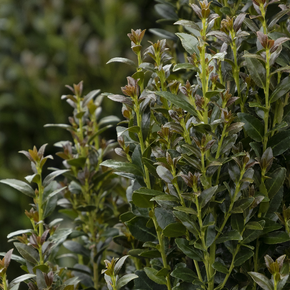
Gold Coast English Holly - 5 Gallon
SKU:
2036940
UPC:
014949430552
$49.99
- Striking year-round color from small, glossy dark green leaves boldly edged in bright golden yellow, giving this compact evergreen shrub a vibrant, two-toned appeal in every season.
- A well-behaved male cultivar that serves as an effective pollenizer for nearby female English holly varieties while staying tidy at a manageable 4 to 6 feet tall and wide.
- Naturally dense, conical growth habit requires minimal pruning and makes it an ideal candidate for formal hedges, foundation plantings, and landscape accent work.
- Exceptionally tough and adaptable, with notable resistance to deer, rabbits, wind, salt spray, and air pollution, making it a low-maintenance choice for a wide range of garden settings.
Gold Coast English Holly (Ilex aquifolium 'Monvila') is a slow-growing, broadleaf evergreen shrub prized for its outstanding foliage color and refined, compact form. Each small, spiny oval leaf is finished in deep forest green with a crisp, golden-yellow margin that catches the light and brightens shaded corners, foundation beds, and mixed shrub borders throughout the year. This patented male selection produces no berries of its own, but it plays a key role in the garden as a reliable pollenizer for nearby female English holly varieties, enabling them to set their classic red winter fruit. The plant matures into a naturally dense, upright-spreading pyramid, making it useful as a formal hedge, a bold specimen, or a striking container planting on patios and entryways. Hardy in USDA Zones 6 through 9, Gold Coast English Holly thrives in the mild, temperate climates of Southern Oregon and Northern California, performing best in full sun to partial shade with consistent moisture and well-drained, humus-rich, slightly acidic soil. Its inherent resistance to deer, rabbits, wind, salt, and urban pollution further establishes it as one of the most versatile and dependable variegated hollies available for the Pacific Coast garden.
Plant Description
Gold Coast English Holly is a compact, multi-stemmed broadleaf evergreen shrub with a naturally upright, conical habit and dense branching. Its defining ornamental feature is its foliage: small, spiny, oval leaves with a leathery, glossy surface displaying a rich forest green center cleanly edged in bright golden yellow. The variegated coloration remains vivid and consistent throughout all four seasons, providing long-lasting contrast and brightness in the landscape. The overall texture of the plant is medium-coarse, and its pyramidal silhouette gives it a polished, architectural presence without the need for heavy shaping. As a male cultivar, Gold Coast does not produce berries, but it delivers showstopping foliage interest and fills the important ecological role of pollinating nearby female English holly varieties when they are planted within approximately 50 feet.
Mature Size and Growth Rate
| Characteristic | Detail |
|---|---|
| Mature Height | 4 to 6 feet |
| Mature Spread | 4 to 6 feet |
| Growth Rate | Slow |
| Growth Habit | Upright, conical, dense |
| Longevity | 50 years or more under ideal conditions |
| Recommended Spacing (hedge) | 5 to 6 feet apart |
Gold Coast is a notably slower-growing selection than the straight species, which contributes to its naturally tidy, compact form and reduces the frequency of pruning needed to keep it looking its best. Its low canopy and restrained size make it well-suited for planting under power lines and in areas where a larger holly would eventually become unmanageable.
Hardiness Zones and Climate
Gold Coast English Holly is hardy in USDA Zones 6a through 9b, making it an excellent fit for the mild, maritime-influenced climates found throughout Southern Oregon and Northern California. It performs at its best where summers are moderate rather than intensely hot and dry, and where winters are cool without sustained periods of extreme cold. In warmer inland locations, situating the plant where it receives some afternoon shade will help protect the foliage from heat stress and leaf scorch. Young plants benefit from a sheltered planting site that provides protection from harsh winter winds during their first few seasons in the ground. Applying a 2 to 3 inch layer of organic mulch around the root zone before winter helps insulate the roots in exposed or colder microclimates.
Sunlight Requirements
This holly thrives in a range of light conditions, from full sun to partial shade. For the richest leaf color and the most compact, symmetrical growth, plant Gold Coast where it receives at least 6 hours of direct sunlight each day. In regions with hot, dry summers, afternoon shade is beneficial and helps prevent leaf scorch and soil moisture loss. The plant will tolerate deeper shade, but growth may become less dense and the golden variegation less vibrant under low-light conditions. In the Pacific Coast climate zone, a site receiving morning sun and light afternoon shade is often ideal for achieving peak foliage color and plant vigor.
Soil and pH Preferences
Gold Coast English Holly prefers rich, well-drained soil with a consistent supply of moisture. It performs best in slightly acidic to neutral soil and is intolerant of poorly drained or waterlogged conditions, which can lead to root rot. Heavy clay soils should be amended before planting to improve drainage and aeration.
- Ideal soil pH: 5.5 to 7.0 (slightly acidic to neutral)
- Soil type: Loam or organically enriched soil with good drainage is preferred; tolerates some sand
- Amendments: Incorporate compost or well-aged organic matter at planting to improve drainage and fertility in heavy clay or sandy soils
- pH adjustment: If soil is too alkaline, work in elemental sulfur or peat moss to bring the pH into the preferred acidic range
- Mulching: A 2 to 3 inch layer of wood chip or bark mulch helps maintain soil moisture, regulate temperature, and gradually acidify the soil as it decomposes
Watering Guide
Consistent moisture is key to establishing and maintaining a healthy Gold Coast English Holly. Follow these watering guidelines through the plant's life stages:
- First week after planting: Water deeply every day if no rain falls, to settle the soil around the roots and reduce transplant stress.
- First growing season: Water twice per week, providing approximately 1 to 2 inches total per week, until the plant is well established.
- Established plants: Water deeply once per week during warm or dry periods. Check that the top inch of soil is dry before watering to avoid overwatering.
- Summer drought: Supplement with irrigation during extended dry spells, as this holly does not tolerate prolonged drought well without additional water.
- Overwatering: Avoid waterlogged conditions at all times. Soggy soil promotes root rot and other fungal diseases. Ensure planting sites have adequate drainage.
- Mulch: Maintain a 2 to 3 inch mulch layer around the base to reduce evaporation and keep roots consistently moist between watering sessions.
Fertilizing
Gold Coast English Holly is a relatively low-maintenance feeder, but benefits from annual fertilization to support healthy foliage color and steady growth. Use a fertilizer formulated for acid-loving plants, such as an azalea and holly-specific granular fertilizer or a product like Holly-Tone.
- When to fertilize: Apply once in early spring, just as new growth begins, and optionally again in early summer for plants that appear pale or slow-growing.
- Fertilizer type: A slow-release, acid-forming granular fertilizer with a balanced NPK ratio designed for hollies, rhododendrons, or azaleas is ideal. Look for products with a higher nitrogen content to support the rich leaf color.
- Application rate: Follow the manufacturer's label instructions based on the size of the plant and the area being fertilized. Avoid over-application, which can cause fertilizer burn or excessive leafy growth at the expense of plant health.
- Method: Broadcast granules evenly over the root zone, extending to just beyond the drip line. Water in thoroughly after application.
- Avoid late-season fertilizing: Do not fertilize after midsummer, as late-season fertilization stimulates tender new growth that may be damaged by fall and winter cold.
Pruning and Maintenance
One of the most appealing qualities of Gold Coast English Holly is its naturally neat, pyramidal shape, which means it requires very little pruning to look its best. However, light annual pruning keeps it dense and well-proportioned.
- Best time to prune: Prune in late winter to early spring, just before new growth begins. This timing avoids damage from cold snaps and allows the plant to direct energy into fresh spring growth immediately after cuts are made.
- Tools: Use sharp, clean loppers or hand pruners. Wear thick gloves and long sleeves, as the spiny leaves are sharp.
- What to remove: Begin by removing any dead, damaged, or crossing branches. Then trim back any branches growing out of the desired pyramid shape.
- Shaping for hedges: Shear lightly with hedge shears to maintain a uniform hedge surface, cutting to just above a leaf bud to encourage bushy regrowth.
- Hard pruning: Established plants tolerate more significant rejuvenation pruning if needed, but avoid removing more than one-third of the plant's total mass at a time.
- General maintenance: Replenish mulch in early spring and remove weeds regularly to reduce competition for soil moisture and nutrients.
Planting Instructions
- Select a site with full sun to partial shade and well-drained, slightly acidic soil. Avoid low-lying areas where water collects after rain.
- Dig a planting hole twice as wide as the root ball and the same depth. Avoid planting too deep, as this can suffocate roots.
- If the soil is very heavy clay or sandy, amend the backfill with compost or aged organic matter mixed at a ratio of no more than half original soil to half amendment.
- Remove the plant from its container and gently loosen any circling or tightly bound roots with your fingers.
- Set the root ball in the center of the hole so that the top of the root ball sits approximately 1 inch above the surrounding soil grade to allow for settling.
- Backfill with the prepared soil, firming gently around the roots to eliminate air pockets. Do not mound soil up against the trunk or crown.
- Build a shallow watering berm around the outer edge of the planting hole to direct water toward the root zone.
- Apply a 2 to 3 inch layer of mulch over the root zone, keeping it 2 inches away from the main stem.
- Water thoroughly at planting and maintain a consistent watering schedule throughout the first growing season until the plant is well established.
- For hedge use, space plants 5 to 6 feet apart on center. For specimen use, allow at least 6 feet of clearance from structures and other plants.
Landscape Uses
Gold Coast English Holly's compact size, refined habit, and year-round golden-variegated foliage make it one of the most versatile evergreen shrubs available for Pacific Coast gardens. Its many practical and ornamental applications include:
- Foundation planting: Its tidy, pyramidal form and manageable size make it an ideal choice along house foundations and building entries, providing evergreen structure without overcrowding.
- Formal or informal hedge: Dense branching creates an effective privacy screen, windbreak, or property border that holds its shape with minimal clipping.
- Specimen or accent plant: The bold golden-edged foliage stands out as a solo focal point in a garden bed or at the end of a walkway.
- Mass planting: Groupings of three or more plants create a striking golden-green tapestry effect in larger landscape beds.
- Container planting: Well-suited to large decorative containers on patios, entries, and courtyards, where the foliage provides year-round interest.
- Mixed shrub border: Pairs beautifully with darker-foliaged plants to create color contrast, or with other broadleaf evergreens for a layered, textural landscape.
- Woodland garden edge: Thrives along the dappled edges of woodland gardens where light filters through the tree canopy.
- Pollenizer planting: Pairs strategically with berry-producing female English holly varieties to ensure reliable winter berry production.
Companion Plants
Gold Coast English Holly pairs beautifully with plants that complement its bold golden variegation and evergreen structure. Consider these companion planting combinations:
- Female English hollies (such as Ilex aquifolium 'Argentea Marginata' or Sparkler Holly) - planted nearby to take advantage of Gold Coast's role as a pollenizer and produce winter berries.
- Rhododendrons and azaleas - share the same acidic soil and moisture preferences; their bold spring blooms contrast beautifully against Gold Coast's evergreen foliage.
- Camellias - fellow broadleaf evergreens that thrive in similar acidic, well-drained conditions and provide complementary winter and early spring flowers.
- Heavenly Bamboo (Nandina domestica) - offers contrasting fine-textured foliage and bright red winter berries that echo the seasonal palette.
- Boxwood (Buxus spp.) - deep, uniform green foliage provides a bold contrast to Gold Coast's golden-edged leaves and similar formal structure.
- Japanese Forest Grass (Hakonechloa macra 'Aureola') - its golden, arching blades echo and amplify the yellow tones in Gold Coast's foliage at the shrub's base.
- Hellebores - low-growing, shade-tolerant perennials that thrive under the canopy of Gold Coast when planted in partial shade settings.
Pests and Diseases
Gold Coast English Holly is generally a robust and low-maintenance shrub with no serious insect or disease problems when sited and cared for correctly. The following are the most common issues to monitor:
- Holly leaf miner (Phytomyza ilicis): Small fly larvae that tunnel inside leaves, creating blotchy yellow or brown trails on the leaf surface. Remove and dispose of affected leaves; beneficial insects help control populations naturally.
- Scale insects: Small, armored scale insects can attach to stems and leaves, sucking plant sap and causing yellowing. Treat with horticultural oil in late winter or early spring before new growth emerges.
- Aphids: Can cluster on new shoot tips in spring, causing leaf curl and sticky honeydew residue. A strong blast of water or an insecticidal soap spray is usually sufficient treatment.
- Phytophthora root rot: Caused by overwatering or poorly drained soil. Symptoms include wilting, yellowing foliage, and darkened roots. Prevention through proper drainage and careful watering is the best strategy; affected plants may be difficult to save.
- Holly leaf blight and tar spot: Fungal diseases that can develop in excessively wet conditions, presenting as dark spots or blotches on leaves. Improve air circulation through light pruning and avoid overhead watering to minimize risk.
- Anthracnose and cankers: Can develop in prolonged wet conditions. Prune out affected wood and ensure good air circulation around the plant.
Note: The berries of English holly species and cultivars are toxic to humans, dogs, cats, and horses if ingested. Children should be cautioned accordingly. The leaves of Gold Coast are also spiny and can cause skin irritation when handled; always wear gloves when pruning or working around this plant.
Wildlife Value
While Gold Coast English Holly is a male cultivar that does not produce berries of its own, it plays an indirect but vital role in supporting wildlife in the garden. By acting as a pollenizer for nearby female English holly plants, it enables those plants to set their red drupes, which are an important winter food source for songbirds including thrushes, robins, cedar waxwings, and mockingbirds. The small, fragrant white flowers that English hollies produce in spring are attractive to bees and other native pollinators. The dense, spiny foliage also provides excellent cover and nesting habitat for small birds, offering protection from predators. The sharp, interlocking leaf margins make Gold Coast naturally resistant to browsing by deer and rabbits, meaning the plant itself remains intact to continue providing these habitat benefits year after year.
Container Growing
Gold Coast English Holly's compact, slow-growing habit makes it one of the better English holly selections for container culture. Its formal pyramidal shape adds year-round structure and color to patios, entryways, courtyards, and covered porches. Follow these guidelines for successful container growing:
- Container size: Choose a large, sturdy container with a minimum of 15 to 20 gallons capacity and multiple drainage holes. A heavy container will help anchor the plant against wind.
- Potting mix: Use a high-quality, well-draining potting mix formulated for acid-loving plants, or blend standard potting mix with perlite and peat moss to improve drainage and lower pH.
- Watering: Container plants dry out faster than in-ground plantings. Check soil moisture every 2 to 3 days during warm weather and water when the top inch of soil is dry. Never allow the pot to sit in standing water.
- Fertilizing: Feed container-grown plants with a slow-release, acid-forming fertilizer in early spring, and supplement with a liquid fertilizer for hollies or rhododendrons every 4 to 6 weeks through the growing season.
- Repotting: Repot every 2 to 3 years in late winter or early spring into the next size container to refresh the growing medium and accommodate root growth.
- Winter protection: In colder microclimates or on exposed patios, move containers to a sheltered location or against a south-facing wall during winter to protect roots from freezing.
Toxicity and Safety
Gardeners with children or pets should be aware of the following safety considerations associated with Gold Coast English Holly:
- Berries (on female English holly plants nearby): English holly berries contain saponins and are toxic to humans, dogs, cats, and horses. Ingestion can cause vomiting, diarrhea, drowsiness, and depression. Children are particularly at risk due to the bright, attractive appearance of the red fruit. Note: Gold Coast itself does not produce berries, but nearby female holly plants it pollinates will.
- Leaves: The spiny leaf margins of all English holly cultivars, including Gold Coast, can cause skin irritation and puncture wounds. Always wear thick gloves and long sleeves when pruning or handling the plant.
- Deer and rabbit resistance: The spiny foliage deters most browsing animals, making Gold Coast an excellent choice for gardens where deer pressure is a concern.
- Toxic severity: Low to moderate. Problems are most likely to arise with consumption of large quantities; however, any suspected ingestion by children or pets should be treated as a medical concern and addressed promptly by contacting a physician or veterinarian.
- Striking year-round color from small, glossy dark green leaves boldly edged in bright golden yellow, giving this compact evergreen shrub a vibrant, two-toned appeal in every season.
- A well-behaved male cultivar that serves as an effective pollenizer for nearby female English holly varieties while staying tidy at a manageable 4 to 6 feet tall and wide.
- Naturally dense, conical growth habit requires minimal pruning and makes it an ideal candidate for formal hedges, foundation plantings, and landscape accent work.
- Exceptionally tough and adaptable, with notable resistance to deer, rabbits, wind, salt spray, and air pollution, making it a low-maintenance choice for a wide range of garden settings.
Gold Coast English Holly (Ilex aquifolium 'Monvila') is a slow-growing, broadleaf evergreen shrub prized for its outstanding foliage color and refined, compact form. Each small, spiny oval leaf is finished in deep forest green with a crisp, golden-yellow margin that catches the light and brightens shaded corners, foundation beds, and mixed shrub borders throughout the year. This patented male selection produces no berries of its own, but it plays a key role in the garden as a reliable pollenizer for nearby female English holly varieties, enabling them to set their classic red winter fruit. The plant matures into a naturally dense, upright-spreading pyramid, making it useful as a formal hedge, a bold specimen, or a striking container planting on patios and entryways. Hardy in USDA Zones 6 through 9, Gold Coast English Holly thrives in the mild, temperate climates of Southern Oregon and Northern California, performing best in full sun to partial shade with consistent moisture and well-drained, humus-rich, slightly acidic soil. Its inherent resistance to deer, rabbits, wind, salt, and urban pollution further establishes it as one of the most versatile and dependable variegated hollies available for the Pacific Coast garden.
Plant Description
Gold Coast English Holly is a compact, multi-stemmed broadleaf evergreen shrub with a naturally upright, conical habit and dense branching. Its defining ornamental feature is its foliage: small, spiny, oval leaves with a leathery, glossy surface displaying a rich forest green center cleanly edged in bright golden yellow. The variegated coloration remains vivid and consistent throughout all four seasons, providing long-lasting contrast and brightness in the landscape. The overall texture of the plant is medium-coarse, and its pyramidal silhouette gives it a polished, architectural presence without the need for heavy shaping. As a male cultivar, Gold Coast does not produce berries, but it delivers showstopping foliage interest and fills the important ecological role of pollinating nearby female English holly varieties when they are planted within approximately 50 feet.
Mature Size and Growth Rate
| Characteristic | Detail |
|---|---|
| Mature Height | 4 to 6 feet |
| Mature Spread | 4 to 6 feet |
| Growth Rate | Slow |
| Growth Habit | Upright, conical, dense |
| Longevity | 50 years or more under ideal conditions |
| Recommended Spacing (hedge) | 5 to 6 feet apart |
Gold Coast is a notably slower-growing selection than the straight species, which contributes to its naturally tidy, compact form and reduces the frequency of pruning needed to keep it looking its best. Its low canopy and restrained size make it well-suited for planting under power lines and in areas where a larger holly would eventually become unmanageable.
Hardiness Zones and Climate
Gold Coast English Holly is hardy in USDA Zones 6a through 9b, making it an excellent fit for the mild, maritime-influenced climates found throughout Southern Oregon and Northern California. It performs at its best where summers are moderate rather than intensely hot and dry, and where winters are cool without sustained periods of extreme cold. In warmer inland locations, situating the plant where it receives some afternoon shade will help protect the foliage from heat stress and leaf scorch. Young plants benefit from a sheltered planting site that provides protection from harsh winter winds during their first few seasons in the ground. Applying a 2 to 3 inch layer of organic mulch around the root zone before winter helps insulate the roots in exposed or colder microclimates.
Sunlight Requirements
This holly thrives in a range of light conditions, from full sun to partial shade. For the richest leaf color and the most compact, symmetrical growth, plant Gold Coast where it receives at least 6 hours of direct sunlight each day. In regions with hot, dry summers, afternoon shade is beneficial and helps prevent leaf scorch and soil moisture loss. The plant will tolerate deeper shade, but growth may become less dense and the golden variegation less vibrant under low-light conditions. In the Pacific Coast climate zone, a site receiving morning sun and light afternoon shade is often ideal for achieving peak foliage color and plant vigor.
Soil and pH Preferences
Gold Coast English Holly prefers rich, well-drained soil with a consistent supply of moisture. It performs best in slightly acidic to neutral soil and is intolerant of poorly drained or waterlogged conditions, which can lead to root rot. Heavy clay soils should be amended before planting to improve drainage and aeration.
- Ideal soil pH: 5.5 to 7.0 (slightly acidic to neutral)
- Soil type: Loam or organically enriched soil with good drainage is preferred; tolerates some sand
- Amendments: Incorporate compost or well-aged organic matter at planting to improve drainage and fertility in heavy clay or sandy soils
- pH adjustment: If soil is too alkaline, work in elemental sulfur or peat moss to bring the pH into the preferred acidic range
- Mulching: A 2 to 3 inch layer of wood chip or bark mulch helps maintain soil moisture, regulate temperature, and gradually acidify the soil as it decomposes
Watering Guide
Consistent moisture is key to establishing and maintaining a healthy Gold Coast English Holly. Follow these watering guidelines through the plant's life stages:
- First week after planting: Water deeply every day if no rain falls, to settle the soil around the roots and reduce transplant stress.
- First growing season: Water twice per week, providing approximately 1 to 2 inches total per week, until the plant is well established.
- Established plants: Water deeply once per week during warm or dry periods. Check that the top inch of soil is dry before watering to avoid overwatering.
- Summer drought: Supplement with irrigation during extended dry spells, as this holly does not tolerate prolonged drought well without additional water.
- Overwatering: Avoid waterlogged conditions at all times. Soggy soil promotes root rot and other fungal diseases. Ensure planting sites have adequate drainage.
- Mulch: Maintain a 2 to 3 inch mulch layer around the base to reduce evaporation and keep roots consistently moist between watering sessions.
Fertilizing
Gold Coast English Holly is a relatively low-maintenance feeder, but benefits from annual fertilization to support healthy foliage color and steady growth. Use a fertilizer formulated for acid-loving plants, such as an azalea and holly-specific granular fertilizer or a product like Holly-Tone.
- When to fertilize: Apply once in early spring, just as new growth begins, and optionally again in early summer for plants that appear pale or slow-growing.
- Fertilizer type: A slow-release, acid-forming granular fertilizer with a balanced NPK ratio designed for hollies, rhododendrons, or azaleas is ideal. Look for products with a higher nitrogen content to support the rich leaf color.
- Application rate: Follow the manufacturer's label instructions based on the size of the plant and the area being fertilized. Avoid over-application, which can cause fertilizer burn or excessive leafy growth at the expense of plant health.
- Method: Broadcast granules evenly over the root zone, extending to just beyond the drip line. Water in thoroughly after application.
- Avoid late-season fertilizing: Do not fertilize after midsummer, as late-season fertilization stimulates tender new growth that may be damaged by fall and winter cold.
Pruning and Maintenance
One of the most appealing qualities of Gold Coast English Holly is its naturally neat, pyramidal shape, which means it requires very little pruning to look its best. However, light annual pruning keeps it dense and well-proportioned.
- Best time to prune: Prune in late winter to early spring, just before new growth begins. This timing avoids damage from cold snaps and allows the plant to direct energy into fresh spring growth immediately after cuts are made.
- Tools: Use sharp, clean loppers or hand pruners. Wear thick gloves and long sleeves, as the spiny leaves are sharp.
- What to remove: Begin by removing any dead, damaged, or crossing branches. Then trim back any branches growing out of the desired pyramid shape.
- Shaping for hedges: Shear lightly with hedge shears to maintain a uniform hedge surface, cutting to just above a leaf bud to encourage bushy regrowth.
- Hard pruning: Established plants tolerate more significant rejuvenation pruning if needed, but avoid removing more than one-third of the plant's total mass at a time.
- General maintenance: Replenish mulch in early spring and remove weeds regularly to reduce competition for soil moisture and nutrients.
Planting Instructions
- Select a site with full sun to partial shade and well-drained, slightly acidic soil. Avoid low-lying areas where water collects after rain.
- Dig a planting hole twice as wide as the root ball and the same depth. Avoid planting too deep, as this can suffocate roots.
- If the soil is very heavy clay or sandy, amend the backfill with compost or aged organic matter mixed at a ratio of no more than half original soil to half amendment.
- Remove the plant from its container and gently loosen any circling or tightly bound roots with your fingers.
- Set the root ball in the center of the hole so that the top of the root ball sits approximately 1 inch above the surrounding soil grade to allow for settling.
- Backfill with the prepared soil, firming gently around the roots to eliminate air pockets. Do not mound soil up against the trunk or crown.
- Build a shallow watering berm around the outer edge of the planting hole to direct water toward the root zone.
- Apply a 2 to 3 inch layer of mulch over the root zone, keeping it 2 inches away from the main stem.
- Water thoroughly at planting and maintain a consistent watering schedule throughout the first growing season until the plant is well established.
- For hedge use, space plants 5 to 6 feet apart on center. For specimen use, allow at least 6 feet of clearance from structures and other plants.
Landscape Uses
Gold Coast English Holly's compact size, refined habit, and year-round golden-variegated foliage make it one of the most versatile evergreen shrubs available for Pacific Coast gardens. Its many practical and ornamental applications include:
- Foundation planting: Its tidy, pyramidal form and manageable size make it an ideal choice along house foundations and building entries, providing evergreen structure without overcrowding.
- Formal or informal hedge: Dense branching creates an effective privacy screen, windbreak, or property border that holds its shape with minimal clipping.
- Specimen or accent plant: The bold golden-edged foliage stands out as a solo focal point in a garden bed or at the end of a walkway.
- Mass planting: Groupings of three or more plants create a striking golden-green tapestry effect in larger landscape beds.
- Container planting: Well-suited to large decorative containers on patios, entries, and courtyards, where the foliage provides year-round interest.
- Mixed shrub border: Pairs beautifully with darker-foliaged plants to create color contrast, or with other broadleaf evergreens for a layered, textural landscape.
- Woodland garden edge: Thrives along the dappled edges of woodland gardens where light filters through the tree canopy.
- Pollenizer planting: Pairs strategically with berry-producing female English holly varieties to ensure reliable winter berry production.
Companion Plants
Gold Coast English Holly pairs beautifully with plants that complement its bold golden variegation and evergreen structure. Consider these companion planting combinations:
- Female English hollies (such as Ilex aquifolium 'Argentea Marginata' or Sparkler Holly) - planted nearby to take advantage of Gold Coast's role as a pollenizer and produce winter berries.
- Rhododendrons and azaleas - share the same acidic soil and moisture preferences; their bold spring blooms contrast beautifully against Gold Coast's evergreen foliage.
- Camellias - fellow broadleaf evergreens that thrive in similar acidic, well-drained conditions and provide complementary winter and early spring flowers.
- Heavenly Bamboo (Nandina domestica) - offers contrasting fine-textured foliage and bright red winter berries that echo the seasonal palette.
- Boxwood (Buxus spp.) - deep, uniform green foliage provides a bold contrast to Gold Coast's golden-edged leaves and similar formal structure.
- Japanese Forest Grass (Hakonechloa macra 'Aureola') - its golden, arching blades echo and amplify the yellow tones in Gold Coast's foliage at the shrub's base.
- Hellebores - low-growing, shade-tolerant perennials that thrive under the canopy of Gold Coast when planted in partial shade settings.
Pests and Diseases
Gold Coast English Holly is generally a robust and low-maintenance shrub with no serious insect or disease problems when sited and cared for correctly. The following are the most common issues to monitor:
- Holly leaf miner (Phytomyza ilicis): Small fly larvae that tunnel inside leaves, creating blotchy yellow or brown trails on the leaf surface. Remove and dispose of affected leaves; beneficial insects help control populations naturally.
- Scale insects: Small, armored scale insects can attach to stems and leaves, sucking plant sap and causing yellowing. Treat with horticultural oil in late winter or early spring before new growth emerges.
- Aphids: Can cluster on new shoot tips in spring, causing leaf curl and sticky honeydew residue. A strong blast of water or an insecticidal soap spray is usually sufficient treatment.
- Phytophthora root rot: Caused by overwatering or poorly drained soil. Symptoms include wilting, yellowing foliage, and darkened roots. Prevention through proper drainage and careful watering is the best strategy; affected plants may be difficult to save.
- Holly leaf blight and tar spot: Fungal diseases that can develop in excessively wet conditions, presenting as dark spots or blotches on leaves. Improve air circulation through light pruning and avoid overhead watering to minimize risk.
- Anthracnose and cankers: Can develop in prolonged wet conditions. Prune out affected wood and ensure good air circulation around the plant.
Note: The berries of English holly species and cultivars are toxic to humans, dogs, cats, and horses if ingested. Children should be cautioned accordingly. The leaves of Gold Coast are also spiny and can cause skin irritation when handled; always wear gloves when pruning or working around this plant.
Wildlife Value
While Gold Coast English Holly is a male cultivar that does not produce berries of its own, it plays an indirect but vital role in supporting wildlife in the garden. By acting as a pollenizer for nearby female English holly plants, it enables those plants to set their red drupes, which are an important winter food source for songbirds including thrushes, robins, cedar waxwings, and mockingbirds. The small, fragrant white flowers that English hollies produce in spring are attractive to bees and other native pollinators. The dense, spiny foliage also provides excellent cover and nesting habitat for small birds, offering protection from predators. The sharp, interlocking leaf margins make Gold Coast naturally resistant to browsing by deer and rabbits, meaning the plant itself remains intact to continue providing these habitat benefits year after year.
Container Growing
Gold Coast English Holly's compact, slow-growing habit makes it one of the better English holly selections for container culture. Its formal pyramidal shape adds year-round structure and color to patios, entryways, courtyards, and covered porches. Follow these guidelines for successful container growing:
- Container size: Choose a large, sturdy container with a minimum of 15 to 20 gallons capacity and multiple drainage holes. A heavy container will help anchor the plant against wind.
- Potting mix: Use a high-quality, well-draining potting mix formulated for acid-loving plants, or blend standard potting mix with perlite and peat moss to improve drainage and lower pH.
- Watering: Container plants dry out faster than in-ground plantings. Check soil moisture every 2 to 3 days during warm weather and water when the top inch of soil is dry. Never allow the pot to sit in standing water.
- Fertilizing: Feed container-grown plants with a slow-release, acid-forming fertilizer in early spring, and supplement with a liquid fertilizer for hollies or rhododendrons every 4 to 6 weeks through the growing season.
- Repotting: Repot every 2 to 3 years in late winter or early spring into the next size container to refresh the growing medium and accommodate root growth.
- Winter protection: In colder microclimates or on exposed patios, move containers to a sheltered location or against a south-facing wall during winter to protect roots from freezing.
Toxicity and Safety
Gardeners with children or pets should be aware of the following safety considerations associated with Gold Coast English Holly:
- Berries (on female English holly plants nearby): English holly berries contain saponins and are toxic to humans, dogs, cats, and horses. Ingestion can cause vomiting, diarrhea, drowsiness, and depression. Children are particularly at risk due to the bright, attractive appearance of the red fruit. Note: Gold Coast itself does not produce berries, but nearby female holly plants it pollinates will.
- Leaves: The spiny leaf margins of all English holly cultivars, including Gold Coast, can cause skin irritation and puncture wounds. Always wear thick gloves and long sleeves when pruning or handling the plant.
- Deer and rabbit resistance: The spiny foliage deters most browsing animals, making Gold Coast an excellent choice for gardens where deer pressure is a concern.
- Toxic severity: Low to moderate. Problems are most likely to arise with consumption of large quantities; however, any suspected ingestion by children or pets should be treated as a medical concern and addressed promptly by contacting a physician or veterinarian.
Related Products