Zoom the image with the mouse
Berri-Magic Royalty Holly Combination - 5 Gallon
SKU:
2036950
UPC:
014949451359
$54.99
- Self-pollinating duo — male 'Blue Prince' and female 'Blue Princess' are planted together in a single container, guaranteeing a generous crop of vivid red berries every fall and winter without needing a separate pollinator plant nearby.
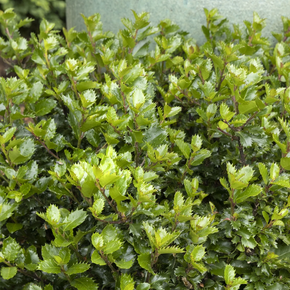
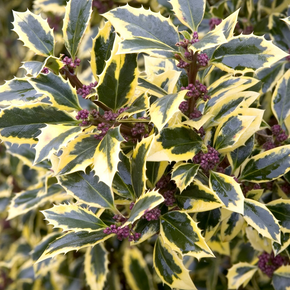
- Stunning year-round evergreen appeal with rich, dark blue-green, spiny foliage carried on distinctive blue-purple stems that look handsome in every season.
- Exceptionally cold-hardy Meserve hybrid tolerates temperatures down to -20°F, making it one of the hardiest broadleaf evergreen hollies available for the home landscape.
- Incredibly versatile — thrives as a formal or informal hedge, privacy screen, foundation planting, accent specimen, or even a dramatic container planting, and tolerates shearing with ease.
Berri-Magic Royalty Holly (Ilex x meserveae 'Blue Prince' & 'Blue Princess') is the ultimate no-fuss solution for gardeners who want the full classic holly experience — glossy evergreen foliage and a spectacular show of bright red berries — without the guesswork of separate pollinator plants. This innovative combination pairs both the male 'Blue Prince' and female 'Blue Princess' Meserve holly cultivars together, ensuring that cross-pollination happens reliably and that the female plant produces its signature profusion of rich red, long-lasting berries from mid-fall through the heart of winter. The foliage is a hallmark dark blue-green with a subtle waxy sheen, edged with flexible, prominent spines on ovate leaves carried along striking purple-tinged stems — an ornamental statement in itself even before the berries arrive. A hybrid of the cold-tolerant Japanese Ilex rugosa and the beloved English holly Ilex aquifolium, this Meserve holly is widely regarded as one of the hardiest broadleaf evergreen shrubs available, performing reliably in USDA Zones 5 through 7. Growing at a moderate rate to a refined pyramidal to rounded form reaching 8 to 10 feet tall and 6 to 8 feet wide, Berri-Magic Royalty fills in densely from the ground up, requiring minimal staking or structural support. Its tolerance for shearing makes it ideal for formal hedges and screens, while its naturally attractive shape works equally well as a freestanding specimen. Clusters of small white flowers bloom in spring, attracting bees and other pollinators, before giving way to the dazzling fall berry display that draws songbirds to the garden. Whether you're creating a year-round privacy screen, adding bold winter color to a foundation planting, or anchoring a mixed shrub border, Berri-Magic Royalty Holly delivers lasting beauty, cold toughness, and low-maintenance elegance in a single, ready-to-plant package.
Plant Description
Berri-Magic Royalty Holly is a broadleaf evergreen shrub combining two Meserve holly cultivars — the male 'Blue Prince' and female 'Blue Princess' — in a single planting. The result is a dense, multi-stemmed shrub with a naturally pyramidal to rounded habit that fills in fully from base to tip. Foliage is the defining feature outside of berry season: leaves are alternate, simple, ovate, and leathery with a glossy, waxy surface and a distinctive dark blue-green coloration that gives the Meserve hollies their common nickname of "blue hollies." Leaf margins are edged with 4 to 8 flexible, ascending spines per side, and individual leaves measure roughly 1 to 2.5 inches long. Stems are a hallmark purplish-green, transitioning to greenish-tan as they mature, adding a subtle ornamental quality even on bare winter stems. In spring, small clusters of white to pinkish-white flowers appear, attractive to bees and other native pollinators. By mid-fall, the fertilized female plant produces an abundance of bright red berry-like drupes that persist well into late winter, providing striking seasonal color and an invaluable food source for birds. The Meserve holly is an artificial hybrid developed by Kathleen K. Meserve in the 1950s, crossing the cold-hardy Ilex rugosa from northern Japan with the ornamentally superior Ilex aquifolium, the English holly, to produce the hardiest hollies with the classic holly appearance.
Mature Size and Growth Rate
| Characteristic | Detail |
|---|---|
| Mature Height | 8 to 10 feet |
| Mature Width / Spread | 6 to 8 feet |
| Growth Rate | Slow to moderate |
| Growth Habit | Dense, upright, pyramidal to rounded; fills in to the ground |
| Longevity | Can be expected to live 40 years or more under ideal conditions |
| Suitable Under Power Lines | Yes — mature height is well within typical clearance requirements |
Because growth is slow to moderate, Berri-Magic Royalty is easy to keep tidy and in proportion in most landscape settings without aggressive pruning. Its dense, ground-to-tip branching habit means it does not require filler plants at its base to look complete in the landscape.
Hardiness Zones and Cold Tolerance
Berri-Magic Royalty Holly is hardy in USDA Zones 5 through 7, with some sources noting acceptable performance into Zone 4 in sheltered microclimates. It tolerates temperatures as low as -20°F, making it one of the most cold-hardy broadleaf evergreen shrubs with the traditional holly look. The Meserve hybrid parentage — specifically the contribution of the highly frost-tolerant Ilex rugosa from northern Japan — is what sets this holly apart from English holly alone, which is typically only hardy to Zone 7. For gardens in Southern Oregon and Northern California, this holly thrives across nearly all elevations and microclimates in the region, including areas that experience significant winter frost. In locations at the colder edge of its range or in exposed spots with harsh winter winds, siting the plant in a sheltered location and applying a thick mulch over the root zone before winter will help ensure success.
Sunlight Requirements
Berri-Magic Royalty Holly performs best in full sun to partial shade. Full sun — defined as 6 or more hours of direct sunlight per day — encourages the densest growth habit and the most prolific berry production. Partial shade, with 2 to 6 hours of direct sun, is also well tolerated and can be beneficial in hot-summer climates or sites that receive intense afternoon sun, such as against south-facing walls or in reflected heat zones. Avoid deep shade, which reduces berry set and can cause the shrub to open up and become leggy over time. In Southern Oregon and Northern California gardens, where summer temperatures can be high, a location with morning sun and light afternoon shade is often the ideal balance for keeping foliage looking its best while maximizing berry production.
Soil and pH Preferences
For best performance, plant Berri-Magic Royalty Holly in organically rich, slightly acidic, moist, well-drained soil. The ideal soil pH range is 4.5 to 6.0. This holly is quite fussy about soil pH — in alkaline or high-pH soils, the plant is highly susceptible to chlorosis, a condition where leaves turn yellow due to the plant's inability to absorb iron efficiently. If your native soil is heavy clay or on the alkaline side (common in parts of Southern Oregon and Northern California), amending the planting hole with acidifying organic matter such as aged compost, forest humus, or peat moss is strongly recommended. A soil acidifier can also be applied around established plants. The plant cannot tolerate poorly drained or waterlogged soil and will decline or die in standing water. It is considered somewhat tolerant of urban soil conditions and coastal environments but should not be planted in sites with compacted, infertile, or overly dry soils.
Watering Guide
Consistent moisture is the key to establishing and maintaining a healthy Berri-Magic Royalty Holly. Follow these guidelines by growth stage:
- First growing season: Water deeply and regularly — approximately every 5 to 7 days in moderate weather, more frequently during hot spells — to encourage a deep and extensive root system to develop.
- Established plants: Water when the top 2 inches of soil feel dry. Established plants develop moderate drought tolerance but perform and look best with consistent moisture.
- Avoid overwatering: Never allow the root zone to sit in standing water. Well-drained soil is essential; soggy conditions will cause root rot and rapid plant decline.
- Mulching: Apply a 2- to 3-inch layer of organic mulch over the root zone, keeping it a few inches away from the main stems. This conserves moisture, moderates soil temperature, and gradually improves soil acidity as it decomposes.
- Hot, dry summers: In the warmer portions of Southern Oregon and Northern California, increase irrigation frequency during periods of prolonged heat and low humidity to prevent leaf scorch.
Fertilizing
Feed Berri-Magic Royalty Holly once per year in late winter to early spring, just before new growth begins. A fertilizer formulated specifically for acid-loving plants or broadleaf evergreens — such as an azalea and camellia fertilizer or a holly-specific blend — is ideal, as it contains the micronutrients, including iron and manganese, that hollies require at low soil pH. Alternatively, a balanced general-purpose slow-release granular fertilizer can be used. Apply according to label directions and water in thoroughly after application. Avoid fertilizing in late summer or fall, as this encourages tender new growth that is susceptible to frost damage. If the foliage begins to show yellowing between the veins (interveinal chlorosis), this is usually a sign of iron deficiency caused by high soil pH rather than a lack of nitrogen, and the remedy is a soil acidifier or chelated iron supplement rather than additional fertilizer.
Pruning and Maintenance
Berri-Magic Royalty Holly is a relatively low-maintenance shrub with naturally attractive form. Pruning is optional but encouraged for those who want a tidy, formal shape or to manage size. Key pruning guidelines include:
- Best time to prune: Late winter, once the risk of extreme cold has passed. This preserves the berry display through the holiday season and into late winter before cutting back.
- Shearing: This holly tolerates shearing exceptionally well, making it an excellent candidate for formal hedges and topiaries. Use hedge shears or hand pruners for a clean, even cut.
- Light annual shaping: A once-yearly trim to shape and control size is typically sufficient for most landscape applications.
- Renewal pruning: If the shrub becomes overgrown or misshapen over many years, it can tolerate harder renovation pruning in late winter; however, this will temporarily sacrifice the berry display on those stems.
- Gloves recommended: Wear thick gloves when pruning — the spiny leaf margins are sharp and can cause skin irritation with repeated contact.
Planting Instructions
- Choose a site with full sun to partial shade and well-drained, slightly acidic soil. Avoid low-lying areas where water pools after rain.
- Dig a planting hole two to three times as wide as the root ball but no deeper than the root ball itself. The top of the root ball should sit at or slightly above the surrounding soil grade to promote drainage.
- Amend the removed soil with aged compost or other acidifying organic matter at a ratio of approximately 1 part amendment to 2 parts native soil, particularly if planting in heavy clay or alkaline soils.
- Remove the plant from its container and gently loosen any circling or compacted roots before placing it in the hole.
- Backfill with the amended soil mixture, firming it gently around the root ball to eliminate air pockets.
- Water thoroughly immediately after planting to settle the soil and hydrate the roots.
- Apply a 2- to 3-inch layer of organic mulch over the planting area, extending it to the dripline but keeping it several inches clear of the main stems to prevent crown rot.
- For use as a hedge or screen, space plants 4 to 6 feet apart on center, depending on desired density and how quickly you want coverage.
Seasonal Interest
| Season | Ornamental Highlights |
|---|---|
| Spring | Fresh new leaf growth emerges; small clusters of white to pinkish-white, mildly fragrant flowers appear in April and May, attracting bees and native pollinators. |
| Summer | Dense, glossy dark blue-green foliage provides rich color and strong structure throughout the garden. Developing fruit is visible on female plant. |
| Fall | Vivid bright red berries ripen from mid-fall onward, providing one of the most dramatic berry displays of any evergreen shrub; foliage remains deep and lustrous. |
| Winter | Red berries persist through the winter months, offering exceptional cold-season color and an important food source for birds; dark evergreen foliage and purple stems remain ornamentally attractive through frost and snow. |
Landscape Uses
Berri-Magic Royalty Holly is one of the most versatile broadleaf evergreens available for the home landscape. Its dense, upright habit, year-round foliage, and showy berry display make it a strong performer in a wide range of applications:
- Privacy hedge or screen: Plant in a row spaced 4 to 6 feet apart for a dense, formal or semi-formal privacy screen. Tolerates shearing for a clean, uniform appearance.
- Foundation planting: Excellent near building foundations where its year-round structure and seasonal berry color anchor mixed plantings.
- Specimen or accent plant: Its naturally pyramidal form and distinctive foliage and berry combination make it a stand-alone showpiece in a lawn or mixed border.
- Mass planting: Groups of three or more create a bold, cohesive evergreen mass with stunning winter berry impact.
- Barrier planting: The spiny foliage creates an effective, deer-deterring barrier along property borders or pathways.
- Container planting: Can be grown successfully in a large container as a 'thriller' element; ideal for entry ways, patios, or decks where a formal evergreen statement is desired.
- Wildlife garden: Berries attract a wide range of songbirds, and the dense spiny foliage provides excellent nesting and protective cover.
- Winter garden or holiday display: The long-lasting berries are perfect for fresh-cut holiday decorating and are a natural focal point in the winter landscape.
Wildlife Value
Berri-Magic Royalty Holly is an outstanding plant for supporting local wildlife throughout all four seasons. The spring flowers, though small, are attractive to bees — including the specialist native bee Colletes banksi, which has a particular association with the genus Ilex — as well as other native pollinator species. The abundant red berries that ripen in fall and persist through winter are a critical food source for songbirds, particularly during periods when other food is scarce. Bird species commonly observed feeding on holly berries include American robins, cedar waxwings, bluebirds, mockingbirds, and thrushes. The dense, spiny foliage serves a dual purpose for wildlife: it provides excellent protective cover and nesting habitat, with the sharp leaf spines deterring predators from disturbing roosting or nesting birds. In this respect, Berri-Magic Royalty Holly functions as a true wildlife habitat plant, offering food, shelter, and nesting support in a single ornamental shrub. The berries are toxic to humans and pets if ingested in quantity, but pose no concern to wildlife.
Pests and Diseases
Berri-Magic Royalty Holly is considered a low-maintenance plant with no serious pest or disease problems under good growing conditions. Be aware of the following potential issues and monitor plants regularly:
- Holly leaf miner (Phytomyza ilicicola): The most common insect pest of hollies. Larvae tunnel through leaf tissue, leaving pale, serpentine mines or blotches on the leaf surface. Damage is primarily cosmetic. Remove and dispose of affected leaves; systemic insecticides may be used for severe infestations.
- Scale insects: Soft or armored scale may occasionally colonize stems and leaves, appearing as small bumps. Treat with horticultural oil sprays applied during the dormant season or early in the growing season.
- Spider mites: May appear during hot, dry weather, causing stippled, bronzy foliage. Increase irrigation and apply insecticidal soap or horticultural oil if populations become problematic.
- Whitefly: Occasional infestations may occur; treat with yellow sticky traps or an appropriate insecticide if needed.
- Leaf spot and tar spot: Fungal diseases that cause dark spots on leaves. Improve air circulation through pruning; avoid overhead irrigation; remove and dispose of infected leaves.
- Powdery mildew: Can occur in humid conditions with poor air circulation. Treat with a labeled fungicide if severe.
- Chlorosis (interveinal yellowing): Not a pest or disease but a physiological condition caused by high soil pH limiting iron uptake. Correct by lowering soil pH and applying chelated iron or a soil acidifier.
- Leaf scorch: Brown leaf margins caused by drought stress, reflected heat, or desiccating winter winds. Mulch well, maintain consistent moisture, and site away from harsh wind exposure.
Companion Plants
Berri-Magic Royalty Holly pairs beautifully with a wide range of plants that share similar cultural preferences for moist, acidic, well-drained soils and partial to full sun. Consider these companion combinations to enhance its seasonal appeal:
- Rhododendrons and Azaleas: Share nearly identical soil pH and moisture requirements; their spring bloom season beautifully bridges the gap before holly berries appear.
- Mountain Laurel (Kalmia latifolia): Evergreen, acid-loving, and stunning in spring bloom — creates a refined layered border with holly.
- Ornamental grasses (e.g., Miscanthus, Calamagrostis): Their fine, feathery texture creates an elegant contrast to the bold, spiny holly foliage and golden winter seed heads complement the red berries.
- Nandina (Heavenly Bamboo): Also produces red winter berries and shares the same cultural needs; planting together creates a layered, berry-rich winter display.
- Pieris japonica (Lily of the Valley Shrub): Evergreen with delicate spring flowers and similar cultural requirements — excellent layered companion for a woodland-style border.
- Hellebores: Shade-tolerant perennials that bloom in late winter directly beneath hollies, adding color at ground level when berries are at their peak above.
- Leucothoe (Dog Hobble): A graceful, arching evergreen shrub with complementary deep green to burgundy foliage and the same acidic soil preference.
Container Growing
Berri-Magic Royalty Holly is well suited to growing in large outdoor containers, making it an impressive choice for entryways, patios, and decks where a year-round, low-maintenance evergreen statement is desired. Follow these guidelines for success in containers:
- Container size: Choose a large, sturdy container with excellent drainage holes — a minimum of 18 to 24 inches in diameter is recommended to allow adequate root development.
- Potting mix: Use a high-quality potting soil formulated for acid-loving plants, or blend a general potting mix with additional perlite for drainage and a small amount of peat moss or pine bark to maintain acidity.
- Watering: Container-grown plants dry out more quickly than in-ground plantings. Check soil moisture frequently and water when the top inch of potting mix feels dry — this may mean watering every 2 to 3 days in summer heat.
- Fertilizing: Feed container plants with a slow-release acid-forming fertilizer in early spring, and consider a light supplemental liquid feed of a chelated iron formula mid-season to maintain foliage color.
- Winter protection: Container plants are more vulnerable to root freeze than in-ground plants. In colder winters, move containers to a sheltered location such as an unheated garage or against a protected wall, or wrap the container with burlap to insulate roots.
- Design use: In container combinations, Berri-Magic Royalty Holly functions as a dramatic 'thriller' centerpiece, best surrounded by lower-growing, trailing companions that spill over the pot edges.
Toxicity and Safety
While Berri-Magic Royalty Holly is a beloved ornamental and wildlife plant, gardeners with children or pets should be aware of its toxicity profile. The berries and leaves of Ilex x meserveae contain saponins, which are toxic to humans and pets if ingested. Ingestion of berries by humans — especially children — can cause symptoms including nausea, vomiting, diarrhea, and lethargy. Toxicity is considered low severity, and serious harm generally requires ingestion of a significant quantity. Nonetheless, the bright red berries are visually appealing to young children, so parental awareness is important. Keep pets, especially dogs and cats, from consuming the berries or leaves. The plant causes no contact dermatitis and is safe to handle, though the spiny leaf margins can cause minor skin irritation — wear gloves when pruning or handling cut branches. This plant is not edible and should not be confused with edible berrying plants.
- Self-pollinating duo — male 'Blue Prince' and female 'Blue Princess' are planted together in a single container, guaranteeing a generous crop of vivid red berries every fall and winter without needing a separate pollinator plant nearby.
- Stunning year-round evergreen appeal with rich, dark blue-green, spiny foliage carried on distinctive blue-purple stems that look handsome in every season.
- Exceptionally cold-hardy Meserve hybrid tolerates temperatures down to -20°F, making it one of the hardiest broadleaf evergreen hollies available for the home landscape.
- Incredibly versatile — thrives as a formal or informal hedge, privacy screen, foundation planting, accent specimen, or even a dramatic container planting, and tolerates shearing with ease.
Berri-Magic Royalty Holly (Ilex x meserveae 'Blue Prince' & 'Blue Princess') is the ultimate no-fuss solution for gardeners who want the full classic holly experience — glossy evergreen foliage and a spectacular show of bright red berries — without the guesswork of separate pollinator plants. This innovative combination pairs both the male 'Blue Prince' and female 'Blue Princess' Meserve holly cultivars together, ensuring that cross-pollination happens reliably and that the female plant produces its signature profusion of rich red, long-lasting berries from mid-fall through the heart of winter. The foliage is a hallmark dark blue-green with a subtle waxy sheen, edged with flexible, prominent spines on ovate leaves carried along striking purple-tinged stems — an ornamental statement in itself even before the berries arrive. A hybrid of the cold-tolerant Japanese Ilex rugosa and the beloved English holly Ilex aquifolium, this Meserve holly is widely regarded as one of the hardiest broadleaf evergreen shrubs available, performing reliably in USDA Zones 5 through 7. Growing at a moderate rate to a refined pyramidal to rounded form reaching 8 to 10 feet tall and 6 to 8 feet wide, Berri-Magic Royalty fills in densely from the ground up, requiring minimal staking or structural support. Its tolerance for shearing makes it ideal for formal hedges and screens, while its naturally attractive shape works equally well as a freestanding specimen. Clusters of small white flowers bloom in spring, attracting bees and other pollinators, before giving way to the dazzling fall berry display that draws songbirds to the garden. Whether you're creating a year-round privacy screen, adding bold winter color to a foundation planting, or anchoring a mixed shrub border, Berri-Magic Royalty Holly delivers lasting beauty, cold toughness, and low-maintenance elegance in a single, ready-to-plant package.
Plant Description
Berri-Magic Royalty Holly is a broadleaf evergreen shrub combining two Meserve holly cultivars — the male 'Blue Prince' and female 'Blue Princess' — in a single planting. The result is a dense, multi-stemmed shrub with a naturally pyramidal to rounded habit that fills in fully from base to tip. Foliage is the defining feature outside of berry season: leaves are alternate, simple, ovate, and leathery with a glossy, waxy surface and a distinctive dark blue-green coloration that gives the Meserve hollies their common nickname of "blue hollies." Leaf margins are edged with 4 to 8 flexible, ascending spines per side, and individual leaves measure roughly 1 to 2.5 inches long. Stems are a hallmark purplish-green, transitioning to greenish-tan as they mature, adding a subtle ornamental quality even on bare winter stems. In spring, small clusters of white to pinkish-white flowers appear, attractive to bees and other native pollinators. By mid-fall, the fertilized female plant produces an abundance of bright red berry-like drupes that persist well into late winter, providing striking seasonal color and an invaluable food source for birds. The Meserve holly is an artificial hybrid developed by Kathleen K. Meserve in the 1950s, crossing the cold-hardy Ilex rugosa from northern Japan with the ornamentally superior Ilex aquifolium, the English holly, to produce the hardiest hollies with the classic holly appearance.
Mature Size and Growth Rate
| Characteristic | Detail |
|---|---|
| Mature Height | 8 to 10 feet |
| Mature Width / Spread | 6 to 8 feet |
| Growth Rate | Slow to moderate |
| Growth Habit | Dense, upright, pyramidal to rounded; fills in to the ground |
| Longevity | Can be expected to live 40 years or more under ideal conditions |
| Suitable Under Power Lines | Yes — mature height is well within typical clearance requirements |
Because growth is slow to moderate, Berri-Magic Royalty is easy to keep tidy and in proportion in most landscape settings without aggressive pruning. Its dense, ground-to-tip branching habit means it does not require filler plants at its base to look complete in the landscape.
Hardiness Zones and Cold Tolerance
Berri-Magic Royalty Holly is hardy in USDA Zones 5 through 7, with some sources noting acceptable performance into Zone 4 in sheltered microclimates. It tolerates temperatures as low as -20°F, making it one of the most cold-hardy broadleaf evergreen shrubs with the traditional holly look. The Meserve hybrid parentage — specifically the contribution of the highly frost-tolerant Ilex rugosa from northern Japan — is what sets this holly apart from English holly alone, which is typically only hardy to Zone 7. For gardens in Southern Oregon and Northern California, this holly thrives across nearly all elevations and microclimates in the region, including areas that experience significant winter frost. In locations at the colder edge of its range or in exposed spots with harsh winter winds, siting the plant in a sheltered location and applying a thick mulch over the root zone before winter will help ensure success.
Sunlight Requirements
Berri-Magic Royalty Holly performs best in full sun to partial shade. Full sun — defined as 6 or more hours of direct sunlight per day — encourages the densest growth habit and the most prolific berry production. Partial shade, with 2 to 6 hours of direct sun, is also well tolerated and can be beneficial in hot-summer climates or sites that receive intense afternoon sun, such as against south-facing walls or in reflected heat zones. Avoid deep shade, which reduces berry set and can cause the shrub to open up and become leggy over time. In Southern Oregon and Northern California gardens, where summer temperatures can be high, a location with morning sun and light afternoon shade is often the ideal balance for keeping foliage looking its best while maximizing berry production.
Soil and pH Preferences
For best performance, plant Berri-Magic Royalty Holly in organically rich, slightly acidic, moist, well-drained soil. The ideal soil pH range is 4.5 to 6.0. This holly is quite fussy about soil pH — in alkaline or high-pH soils, the plant is highly susceptible to chlorosis, a condition where leaves turn yellow due to the plant's inability to absorb iron efficiently. If your native soil is heavy clay or on the alkaline side (common in parts of Southern Oregon and Northern California), amending the planting hole with acidifying organic matter such as aged compost, forest humus, or peat moss is strongly recommended. A soil acidifier can also be applied around established plants. The plant cannot tolerate poorly drained or waterlogged soil and will decline or die in standing water. It is considered somewhat tolerant of urban soil conditions and coastal environments but should not be planted in sites with compacted, infertile, or overly dry soils.
Watering Guide
Consistent moisture is the key to establishing and maintaining a healthy Berri-Magic Royalty Holly. Follow these guidelines by growth stage:
- First growing season: Water deeply and regularly — approximately every 5 to 7 days in moderate weather, more frequently during hot spells — to encourage a deep and extensive root system to develop.
- Established plants: Water when the top 2 inches of soil feel dry. Established plants develop moderate drought tolerance but perform and look best with consistent moisture.
- Avoid overwatering: Never allow the root zone to sit in standing water. Well-drained soil is essential; soggy conditions will cause root rot and rapid plant decline.
- Mulching: Apply a 2- to 3-inch layer of organic mulch over the root zone, keeping it a few inches away from the main stems. This conserves moisture, moderates soil temperature, and gradually improves soil acidity as it decomposes.
- Hot, dry summers: In the warmer portions of Southern Oregon and Northern California, increase irrigation frequency during periods of prolonged heat and low humidity to prevent leaf scorch.
Fertilizing
Feed Berri-Magic Royalty Holly once per year in late winter to early spring, just before new growth begins. A fertilizer formulated specifically for acid-loving plants or broadleaf evergreens — such as an azalea and camellia fertilizer or a holly-specific blend — is ideal, as it contains the micronutrients, including iron and manganese, that hollies require at low soil pH. Alternatively, a balanced general-purpose slow-release granular fertilizer can be used. Apply according to label directions and water in thoroughly after application. Avoid fertilizing in late summer or fall, as this encourages tender new growth that is susceptible to frost damage. If the foliage begins to show yellowing between the veins (interveinal chlorosis), this is usually a sign of iron deficiency caused by high soil pH rather than a lack of nitrogen, and the remedy is a soil acidifier or chelated iron supplement rather than additional fertilizer.
Pruning and Maintenance
Berri-Magic Royalty Holly is a relatively low-maintenance shrub with naturally attractive form. Pruning is optional but encouraged for those who want a tidy, formal shape or to manage size. Key pruning guidelines include:
- Best time to prune: Late winter, once the risk of extreme cold has passed. This preserves the berry display through the holiday season and into late winter before cutting back.
- Shearing: This holly tolerates shearing exceptionally well, making it an excellent candidate for formal hedges and topiaries. Use hedge shears or hand pruners for a clean, even cut.
- Light annual shaping: A once-yearly trim to shape and control size is typically sufficient for most landscape applications.
- Renewal pruning: If the shrub becomes overgrown or misshapen over many years, it can tolerate harder renovation pruning in late winter; however, this will temporarily sacrifice the berry display on those stems.
- Gloves recommended: Wear thick gloves when pruning — the spiny leaf margins are sharp and can cause skin irritation with repeated contact.
Planting Instructions
- Choose a site with full sun to partial shade and well-drained, slightly acidic soil. Avoid low-lying areas where water pools after rain.
- Dig a planting hole two to three times as wide as the root ball but no deeper than the root ball itself. The top of the root ball should sit at or slightly above the surrounding soil grade to promote drainage.
- Amend the removed soil with aged compost or other acidifying organic matter at a ratio of approximately 1 part amendment to 2 parts native soil, particularly if planting in heavy clay or alkaline soils.
- Remove the plant from its container and gently loosen any circling or compacted roots before placing it in the hole.
- Backfill with the amended soil mixture, firming it gently around the root ball to eliminate air pockets.
- Water thoroughly immediately after planting to settle the soil and hydrate the roots.
- Apply a 2- to 3-inch layer of organic mulch over the planting area, extending it to the dripline but keeping it several inches clear of the main stems to prevent crown rot.
- For use as a hedge or screen, space plants 4 to 6 feet apart on center, depending on desired density and how quickly you want coverage.
Seasonal Interest
| Season | Ornamental Highlights |
|---|---|
| Spring | Fresh new leaf growth emerges; small clusters of white to pinkish-white, mildly fragrant flowers appear in April and May, attracting bees and native pollinators. |
| Summer | Dense, glossy dark blue-green foliage provides rich color and strong structure throughout the garden. Developing fruit is visible on female plant. |
| Fall | Vivid bright red berries ripen from mid-fall onward, providing one of the most dramatic berry displays of any evergreen shrub; foliage remains deep and lustrous. |
| Winter | Red berries persist through the winter months, offering exceptional cold-season color and an important food source for birds; dark evergreen foliage and purple stems remain ornamentally attractive through frost and snow. |
Landscape Uses
Berri-Magic Royalty Holly is one of the most versatile broadleaf evergreens available for the home landscape. Its dense, upright habit, year-round foliage, and showy berry display make it a strong performer in a wide range of applications:
- Privacy hedge or screen: Plant in a row spaced 4 to 6 feet apart for a dense, formal or semi-formal privacy screen. Tolerates shearing for a clean, uniform appearance.
- Foundation planting: Excellent near building foundations where its year-round structure and seasonal berry color anchor mixed plantings.
- Specimen or accent plant: Its naturally pyramidal form and distinctive foliage and berry combination make it a stand-alone showpiece in a lawn or mixed border.
- Mass planting: Groups of three or more create a bold, cohesive evergreen mass with stunning winter berry impact.
- Barrier planting: The spiny foliage creates an effective, deer-deterring barrier along property borders or pathways.
- Container planting: Can be grown successfully in a large container as a 'thriller' element; ideal for entry ways, patios, or decks where a formal evergreen statement is desired.
- Wildlife garden: Berries attract a wide range of songbirds, and the dense spiny foliage provides excellent nesting and protective cover.
- Winter garden or holiday display: The long-lasting berries are perfect for fresh-cut holiday decorating and are a natural focal point in the winter landscape.
Wildlife Value
Berri-Magic Royalty Holly is an outstanding plant for supporting local wildlife throughout all four seasons. The spring flowers, though small, are attractive to bees — including the specialist native bee Colletes banksi, which has a particular association with the genus Ilex — as well as other native pollinator species. The abundant red berries that ripen in fall and persist through winter are a critical food source for songbirds, particularly during periods when other food is scarce. Bird species commonly observed feeding on holly berries include American robins, cedar waxwings, bluebirds, mockingbirds, and thrushes. The dense, spiny foliage serves a dual purpose for wildlife: it provides excellent protective cover and nesting habitat, with the sharp leaf spines deterring predators from disturbing roosting or nesting birds. In this respect, Berri-Magic Royalty Holly functions as a true wildlife habitat plant, offering food, shelter, and nesting support in a single ornamental shrub. The berries are toxic to humans and pets if ingested in quantity, but pose no concern to wildlife.
Pests and Diseases
Berri-Magic Royalty Holly is considered a low-maintenance plant with no serious pest or disease problems under good growing conditions. Be aware of the following potential issues and monitor plants regularly:
- Holly leaf miner (Phytomyza ilicicola): The most common insect pest of hollies. Larvae tunnel through leaf tissue, leaving pale, serpentine mines or blotches on the leaf surface. Damage is primarily cosmetic. Remove and dispose of affected leaves; systemic insecticides may be used for severe infestations.
- Scale insects: Soft or armored scale may occasionally colonize stems and leaves, appearing as small bumps. Treat with horticultural oil sprays applied during the dormant season or early in the growing season.
- Spider mites: May appear during hot, dry weather, causing stippled, bronzy foliage. Increase irrigation and apply insecticidal soap or horticultural oil if populations become problematic.
- Whitefly: Occasional infestations may occur; treat with yellow sticky traps or an appropriate insecticide if needed.
- Leaf spot and tar spot: Fungal diseases that cause dark spots on leaves. Improve air circulation through pruning; avoid overhead irrigation; remove and dispose of infected leaves.
- Powdery mildew: Can occur in humid conditions with poor air circulation. Treat with a labeled fungicide if severe.
- Chlorosis (interveinal yellowing): Not a pest or disease but a physiological condition caused by high soil pH limiting iron uptake. Correct by lowering soil pH and applying chelated iron or a soil acidifier.
- Leaf scorch: Brown leaf margins caused by drought stress, reflected heat, or desiccating winter winds. Mulch well, maintain consistent moisture, and site away from harsh wind exposure.
Companion Plants
Berri-Magic Royalty Holly pairs beautifully with a wide range of plants that share similar cultural preferences for moist, acidic, well-drained soils and partial to full sun. Consider these companion combinations to enhance its seasonal appeal:
- Rhododendrons and Azaleas: Share nearly identical soil pH and moisture requirements; their spring bloom season beautifully bridges the gap before holly berries appear.
- Mountain Laurel (Kalmia latifolia): Evergreen, acid-loving, and stunning in spring bloom — creates a refined layered border with holly.
- Ornamental grasses (e.g., Miscanthus, Calamagrostis): Their fine, feathery texture creates an elegant contrast to the bold, spiny holly foliage and golden winter seed heads complement the red berries.
- Nandina (Heavenly Bamboo): Also produces red winter berries and shares the same cultural needs; planting together creates a layered, berry-rich winter display.
- Pieris japonica (Lily of the Valley Shrub): Evergreen with delicate spring flowers and similar cultural requirements — excellent layered companion for a woodland-style border.
- Hellebores: Shade-tolerant perennials that bloom in late winter directly beneath hollies, adding color at ground level when berries are at their peak above.
- Leucothoe (Dog Hobble): A graceful, arching evergreen shrub with complementary deep green to burgundy foliage and the same acidic soil preference.
Container Growing
Berri-Magic Royalty Holly is well suited to growing in large outdoor containers, making it an impressive choice for entryways, patios, and decks where a year-round, low-maintenance evergreen statement is desired. Follow these guidelines for success in containers:
- Container size: Choose a large, sturdy container with excellent drainage holes — a minimum of 18 to 24 inches in diameter is recommended to allow adequate root development.
- Potting mix: Use a high-quality potting soil formulated for acid-loving plants, or blend a general potting mix with additional perlite for drainage and a small amount of peat moss or pine bark to maintain acidity.
- Watering: Container-grown plants dry out more quickly than in-ground plantings. Check soil moisture frequently and water when the top inch of potting mix feels dry — this may mean watering every 2 to 3 days in summer heat.
- Fertilizing: Feed container plants with a slow-release acid-forming fertilizer in early spring, and consider a light supplemental liquid feed of a chelated iron formula mid-season to maintain foliage color.
- Winter protection: Container plants are more vulnerable to root freeze than in-ground plants. In colder winters, move containers to a sheltered location such as an unheated garage or against a protected wall, or wrap the container with burlap to insulate roots.
- Design use: In container combinations, Berri-Magic Royalty Holly functions as a dramatic 'thriller' centerpiece, best surrounded by lower-growing, trailing companions that spill over the pot edges.
Toxicity and Safety
While Berri-Magic Royalty Holly is a beloved ornamental and wildlife plant, gardeners with children or pets should be aware of its toxicity profile. The berries and leaves of Ilex x meserveae contain saponins, which are toxic to humans and pets if ingested. Ingestion of berries by humans — especially children — can cause symptoms including nausea, vomiting, diarrhea, and lethargy. Toxicity is considered low severity, and serious harm generally requires ingestion of a significant quantity. Nonetheless, the bright red berries are visually appealing to young children, so parental awareness is important. Keep pets, especially dogs and cats, from consuming the berries or leaves. The plant causes no contact dermatitis and is safe to handle, though the spiny leaf margins can cause minor skin irritation — wear gloves when pruning or handling cut branches. This plant is not edible and should not be confused with edible berrying plants.