Zoom the image with the mouse
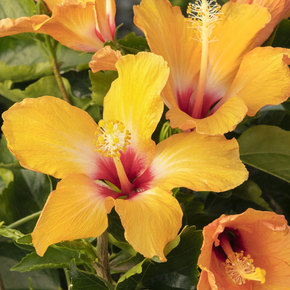
Fullmoon Hibiscus
SKU:
1879600
UPC:
014949412015
$19.99
- Striking double-petaled, bright yellow blooms glow like a full moon — flowering nearly year-round in frost-free climates and all summer long in warmer gardens
- Lush, glossy dark-green evergreen foliage provides an elegant tropical backdrop, making it a standout hedge, screen, or specimen plant
- Irresistible to hummingbirds and butterflies, this deer-resistant beauty adds vibrant, exotic flair to garden beds, borders, and patio containers alike
- A versatile, heat-loving tropical shrub that thrives in full sun and tolerates coastal conditions — perfect for warm-climate landscapes seeking bold year-round color
Fullmoon Hibiscus (Hibiscus rosa-sinensis 'Monoon') is a showstopping tropical shrub that earns its evocative name with layers of luminous, bright yellow double flowers that radiate the soft golden brilliance of a full moon rising over a tropical landscape. Each bloom is composed of densely layered, delicately ruffled petals that create a rich visual texture unlike any single-flowered variety, and in frost-free climates the plant pumps out these eye-catching blossoms nearly year-round, while gardeners in warmer temperate zones enjoy a long, spectacular summer-through-fall display. The foliage is equally impressive — thick, glossy, and a deep rich green that forms a lush, evergreen backdrop perfectly suited to showcasing those radiant yellow flowers. A medium-growing shrub that reaches 4 to 6 feet tall and 3 to 4 feet wide at maturity, Fullmoon Hibiscus adapts beautifully to a wide range of landscape roles: plant it as a bold specimen to anchor an entryway, mass it as an exotic flowering hedge or privacy screen, tuck it into a mixed tropical border, or grow it as a stunning patio container plant. It thrives in full sun and well-drained, organically enriched soil, and it handles coastal conditions and urban garden environments with ease. As a reliable wildlife magnet that draws hummingbirds and butterflies while naturally resisting deer browse, this frost-tender evergreen tropical brings unmatched exotic elegance to Southern Oregon, Northern California, and any warm-climate garden where summer heat and sunshine are plentiful.
Plant Description
Fullmoon Hibiscus is a tropical evergreen shrub belonging to the Malvaceae (mallow) family. Its botanical name is Hibiscus rosa-sinensis 'Monoon', and it is thought to have originated in tropical Asia. The defining feature of this cultivar is its spectacular double flower form — multiple layers of broadly ruffled, soft to bright yellow petals that overlap to create a lush, multi-dimensional bloom reminiscent of a peony in its fullness. Individual flowers are medium to large in size and, like all tropical hibiscus blooms, each one is typically short-lived, lasting about one day. However, the plant produces buds in such continuous succession that the overall floral display remains abundant throughout the growing season. The foliage is glossy, deep green, and slightly serrated at the leaf margins, providing a handsome tropical backdrop that remains attractive even when the plant is between bloom cycles. Fullmoon Hibiscus is classified as frost-tender and is grown as a permanent outdoor evergreen shrub only in the warmest climates.
Mature Size
| Characteristic | Measurement |
|---|---|
| Mature Height | 4 to 6 feet |
| Mature Spread | 3 to 4 feet |
| Growth Rate | Medium |
| Plant Form | Upright, rounded shrub |
| Foliage Type | Evergreen (frost-free climates) |
Hardiness Zones and Climate
Fullmoon Hibiscus is rated for USDA Hardiness Zones 10-11, where it can be grown as a permanent outdoor evergreen. It thrives in warm, humid to semi-arid climates with long, hot summers and mild winters. In Zone 9 it may be grown outdoors with frost protection, but even light frost can cause leaf drop and tip damage. It is not cold-hardy and should not be exposed to freezing temperatures for extended periods. In cooler climates at the edge of its hardiness range, growing it in a container that can be moved to a frost-free location — such as a covered patio, greenhouse, or bright indoor space — during cold snaps is highly recommended. It is ideally suited to the warm, sun-drenched summers of Southern Oregon's interior valleys and Northern California's hotter inland regions, especially when sited against a south or west-facing wall that retains heat.
Sunlight Requirements
Fullmoon Hibiscus is a full-sun plant and demands a minimum of 6 to 8 hours of direct sunlight per day to bloom at its best. Full sun exposure is the single most important factor in achieving abundant, repeat flowering throughout the season. While the plant can tolerate partial sun — particularly light afternoon shade in extremely hot inland climates — reduced light will noticeably diminish bloom production and can cause the plant to become leggy and open in habit. For the most prolific flowering and the most compact, healthy growth habit, choose the sunniest, warmest spot available in your garden. South- and west-facing exposures against a reflective wall or fence are ideal, as these positions maximize both light and warmth.
Soil and pH Preferences
This tropical hibiscus performs best in well-drained soil that has been enriched with organic matter. It prefers a soil pH that is neutral to slightly acidic, ideally in the range of 6.0 to 7.0. Heavy clay soils that retain standing water around the roots are unsuitable and can quickly lead to root rot. Sandy soils that drain too rapidly should be amended with compost or other organic matter to improve moisture and nutrient retention. When planting in the ground, work a generous amount of compost or a quality planting mix into the native soil at the planting site. Good drainage is non-negotiable — if your native soil drains poorly, consider planting in a raised bed or mound to ensure roots are never waterlogged. For container planting, use a high-quality, well-draining potting mix formulated for tropical or flowering shrubs.
Watering Guide
Consistent moisture is key to keeping Fullmoon Hibiscus healthy and blooming freely. During the first growing season after planting, water deeply and regularly to help the plant establish a strong, extensive root system — this means watering thoroughly to saturate the root zone and then allowing the top inch or two of soil to dry slightly before watering again. Once established, the plant prefers average to moist soil conditions and should never be allowed to dry out completely, as drought stress can cause bud drop and foliage yellowing. During periods of extreme summer heat, more frequent watering may be necessary. In containers, check soil moisture more frequently, as potted plants dry out faster than in-ground specimens. Reduce watering frequency in fall and winter when the plant's growth naturally slows. Avoid overhead irrigation when possible; water at the base of the plant to minimize fungal disease risk on the foliage.
Fertilizing
Fullmoon Hibiscus is a heavy feeder that responds vigorously to regular fertilization during the growing season. For best results, apply a balanced, slow-release granular fertilizer in early spring just before new growth begins to kick-start the season. Throughout the growing season, supplement with a water-soluble fertilizer formulated for tropical flowering plants or one that is relatively high in potassium and moderate in nitrogen — a fertilizer profile that supports abundant flowering rather than excessive vegetative growth. Avoid fertilizers with very high phosphorus levels, as tropical hibiscus can be sensitive to phosphorus excess. During the peak of the blooming season, monthly liquid feeding can significantly boost flower production. Taper off fertilization in late fall as temperatures cool and growth slows, and do not fertilize during winter dormancy or cold-weather slowdown periods.
Pruning and Maintenance
Regular pruning keeps Fullmoon Hibiscus shapely, vigorous, and floriferous. Because this tropical hibiscus blooms on new wood — growth produced during the current season — pruning at the right time is important for maximizing flower production. The best time to prune is in late winter or very early spring, just before new growth begins. At this time, remove any dead, damaged, or crossing branches and cut back the overall plant by one-third to one-half to encourage a flush of new, flowering growth. For a more formal, tidy appearance, a light shaping can also be done after each major flush of blooms throughout the season. Removing spent flowers is generally not necessary since the old blooms drop naturally, but tidying the plant improves its overall appearance. In mild-winter climates where the plant grows year-round, light maintenance pruning can be performed throughout the year as needed. Avoid heavy pruning in late summer or fall, as this can reduce the number of flowering shoots available for the remainder of the season.
Planting Instructions
- Select a planting site that receives at least 6 to 8 hours of direct sunlight daily and is sheltered from strong winds that can break stems and damage flowers.
- Dig a planting hole that is twice as wide as the root ball and equal in depth, so that the top of the root ball sits level with or very slightly above the surrounding soil grade.
- Amend the removed soil with compost or a quality planting mix to improve fertility and drainage before backfilling.
- Remove the plant from its container and gently loosen any circling or matted roots before placing it in the hole.
- Backfill with the amended soil, firming gently around the root zone to eliminate air pockets.
- Water deeply and thoroughly immediately after planting to settle the soil and begin root establishment.
- Apply a 2 to 3 inch layer of organic mulch around the base of the plant, keeping it a few inches away from the main stem, to retain soil moisture, regulate soil temperature, and suppress weeds.
- Water deeply and regularly for the first growing season until the plant is well-established and showing vigorous new growth.
Container Growing
Fullmoon Hibiscus is an outstanding container plant and an ideal choice for patio, courtyard, and poolside displays where its exotic tropical character can be fully appreciated up close. When growing in a container, choose a pot that is generously sized — at least 15 to 20 gallons for a mature specimen — with excellent drainage holes at the bottom. Use a premium, well-draining potting mix formulated for tropical plants or flowering shrubs. Container-grown plants dry out faster than in-ground plants, so check moisture levels regularly, particularly during hot weather, and water thoroughly whenever the top inch of soil feels dry. Because nutrients leach out of containers more quickly with frequent watering, regular fertilization is especially important for container specimens — feed monthly during the growing season with a balanced water-soluble fertilizer. One of the greatest advantages of container culture in cooler climates is portability: move the pot to a frost-free location such as a covered porch, greenhouse, or bright sunny indoor space when cold weather threatens, and bring it back outdoors once temperatures are reliably warm in spring.
Landscape Uses
The versatility of Fullmoon Hibiscus makes it one of the most useful flowering shrubs available for warm-climate gardens. Consider these landscape applications:
- Specimen or Focal Point: Plant as a standalone showpiece to highlight an entryway, driveway border, or garden bed centerpiece where its brilliant yellow blooms can steal the spotlight.
- Informal Hedge or Screen: Mass-plant in a row to create a lush, flowering privacy screen or garden boundary with an exotic tropical feel.
- Mixed Tropical Border: Combine with other tropical or bold-textured plants for a lush, layered landscape bed with continuous summer color.
- Patio or Courtyard Container: Grow in a large decorative pot to dress up outdoor living spaces with vibrant seasonal color.
- Coastal Garden: Performs well in coastal exposure settings where many plants struggle, tolerating sea breezes and salt air.
- Espalier: Can be trained against a warm, sunny wall as an espalier for a dramatic, space-saving display.
- Urban Garden: Well-suited to urban garden environments, tolerating heat, reflected light, and the challenging microclimates common in city settings.
Wildlife Value
Fullmoon Hibiscus is a reliable magnet for beneficial wildlife in the garden. Its large, nectar-rich flowers are particularly attractive to hummingbirds, whose long bills are perfectly suited to feeding from hibiscus blooms, making this shrub a wonderful addition to any hummingbird garden. Butterflies, including species such as Cloudless Sulfurs, Gulf Fritillaries, and blues, are also drawn to the flowers. Because it blooms so abundantly and over such a long season, it provides a sustained nectar source that supports pollinators throughout summer and into fall. As an added practical benefit, Fullmoon Hibiscus is resistant to deer browsing, making it a smart choice for gardens in areas where deer pressure is a concern.
Pests and Diseases
While Fullmoon Hibiscus is a robust grower, it can be susceptible to a handful of common pests and diseases. Regular scouting allows problems to be caught early when they are easiest to manage.
- Aphids: Small, soft-bodied insects that cluster on new growth and flower buds, sucking plant sap. Check the undersides of leaves regularly. Knock off with a strong jet of water or treat with insecticidal soap or neem oil.
- Whiteflies: Tiny white flying insects found on leaf undersides that weaken the plant and produce sticky honeydew. Treat with insecticidal soap, neem oil, or yellow sticky traps.
- Mealybugs: White, cottony clusters typically found at stem joints and leaf axils. Treat with insecticidal soap or neem oil.
- Spider Mites: More common in hot, dry conditions. Look for fine webbing and stippled, yellowing foliage. Improve air circulation, increase humidity, and treat with miticide or neem oil.
- Fungal Leaf Spots: Can occur in overly wet conditions or with overhead watering. Improve air circulation, water at the base, and remove affected foliage. Do not crowd plants.
- Sooty Mold: A secondary fungal growth that develops on the honeydew secreted by sucking insects. Control the underlying pest infestation to resolve sooty mold.
Note: Do not use the pesticide malathion on hibiscus, as it can cause serious damage to the plant.
Seasonal Interest
In frost-free USDA Zones 10-11, Fullmoon Hibiscus is virtually a year-round bloomer, producing its luminous double yellow flowers nearly continuously as long as light and warmth are adequate. In warmer temperate climates at the edge of its hardiness range — such as the hotter interior valleys of Southern Oregon and Northern California — the primary display runs from late spring through summer and into early fall, with peak bloom coinciding with the longest, hottest days of summer. The glossy, dark-green evergreen foliage remains attractive and ornamental throughout the year, ensuring the plant never looks bare or uninteresting even between bloom cycles. During the cooler months in borderline climates, growth slows and bloom production may diminish, but the handsome foliage continues to provide structure and year-round greenery in the landscape.
Companion Plants
Fullmoon Hibiscus pairs beautifully with a wide range of tropical and warm-climate plants that share its love of full sun, heat, and well-drained soil. Consider these companions for a cohesive, visually striking planting:
- Bird of Paradise (Strelitzia reginae): Bold, architectural form and vivid orange-and-blue flowers complement the soft yellow hibiscus blooms perfectly.
- Bougainvillea: The vivid magenta, red, or orange bracts of bougainvillea create a dramatic tropical color contrast against yellow hibiscus flowers.
- Plumbago (Plumbago auriculata): Soft powder-blue flowers provide a cool, refreshing color contrast to the warm yellow blooms of Fullmoon Hibiscus.
- Mexican Sage (Salvia leucantha): Velvety purple flower spikes pair elegantly with the bold yellow hibiscus for a striking summer and fall combination.
- Canna Lily: Large tropical foliage and bold summer flowers in red, orange, or yellow amplify the lush, exotic character of the planting.
- Lantana: Low, spreading mounding habit, heat tolerance, and multi-colored blooms make lantana an ideal foreground companion.
- Agapanthus: Clean, strap-like foliage and globe-shaped blue or white summer flowers provide elegant contrast in color and texture.
- Striking double-petaled, bright yellow blooms glow like a full moon — flowering nearly year-round in frost-free climates and all summer long in warmer gardens
- Lush, glossy dark-green evergreen foliage provides an elegant tropical backdrop, making it a standout hedge, screen, or specimen plant
- Irresistible to hummingbirds and butterflies, this deer-resistant beauty adds vibrant, exotic flair to garden beds, borders, and patio containers alike
- A versatile, heat-loving tropical shrub that thrives in full sun and tolerates coastal conditions — perfect for warm-climate landscapes seeking bold year-round color
Fullmoon Hibiscus (Hibiscus rosa-sinensis 'Monoon') is a showstopping tropical shrub that earns its evocative name with layers of luminous, bright yellow double flowers that radiate the soft golden brilliance of a full moon rising over a tropical landscape. Each bloom is composed of densely layered, delicately ruffled petals that create a rich visual texture unlike any single-flowered variety, and in frost-free climates the plant pumps out these eye-catching blossoms nearly year-round, while gardeners in warmer temperate zones enjoy a long, spectacular summer-through-fall display. The foliage is equally impressive — thick, glossy, and a deep rich green that forms a lush, evergreen backdrop perfectly suited to showcasing those radiant yellow flowers. A medium-growing shrub that reaches 4 to 6 feet tall and 3 to 4 feet wide at maturity, Fullmoon Hibiscus adapts beautifully to a wide range of landscape roles: plant it as a bold specimen to anchor an entryway, mass it as an exotic flowering hedge or privacy screen, tuck it into a mixed tropical border, or grow it as a stunning patio container plant. It thrives in full sun and well-drained, organically enriched soil, and it handles coastal conditions and urban garden environments with ease. As a reliable wildlife magnet that draws hummingbirds and butterflies while naturally resisting deer browse, this frost-tender evergreen tropical brings unmatched exotic elegance to Southern Oregon, Northern California, and any warm-climate garden where summer heat and sunshine are plentiful.
Plant Description
Fullmoon Hibiscus is a tropical evergreen shrub belonging to the Malvaceae (mallow) family. Its botanical name is Hibiscus rosa-sinensis 'Monoon', and it is thought to have originated in tropical Asia. The defining feature of this cultivar is its spectacular double flower form — multiple layers of broadly ruffled, soft to bright yellow petals that overlap to create a lush, multi-dimensional bloom reminiscent of a peony in its fullness. Individual flowers are medium to large in size and, like all tropical hibiscus blooms, each one is typically short-lived, lasting about one day. However, the plant produces buds in such continuous succession that the overall floral display remains abundant throughout the growing season. The foliage is glossy, deep green, and slightly serrated at the leaf margins, providing a handsome tropical backdrop that remains attractive even when the plant is between bloom cycles. Fullmoon Hibiscus is classified as frost-tender and is grown as a permanent outdoor evergreen shrub only in the warmest climates.
Mature Size
| Characteristic | Measurement |
|---|---|
| Mature Height | 4 to 6 feet |
| Mature Spread | 3 to 4 feet |
| Growth Rate | Medium |
| Plant Form | Upright, rounded shrub |
| Foliage Type | Evergreen (frost-free climates) |
Hardiness Zones and Climate
Fullmoon Hibiscus is rated for USDA Hardiness Zones 10-11, where it can be grown as a permanent outdoor evergreen. It thrives in warm, humid to semi-arid climates with long, hot summers and mild winters. In Zone 9 it may be grown outdoors with frost protection, but even light frost can cause leaf drop and tip damage. It is not cold-hardy and should not be exposed to freezing temperatures for extended periods. In cooler climates at the edge of its hardiness range, growing it in a container that can be moved to a frost-free location — such as a covered patio, greenhouse, or bright indoor space — during cold snaps is highly recommended. It is ideally suited to the warm, sun-drenched summers of Southern Oregon's interior valleys and Northern California's hotter inland regions, especially when sited against a south or west-facing wall that retains heat.
Sunlight Requirements
Fullmoon Hibiscus is a full-sun plant and demands a minimum of 6 to 8 hours of direct sunlight per day to bloom at its best. Full sun exposure is the single most important factor in achieving abundant, repeat flowering throughout the season. While the plant can tolerate partial sun — particularly light afternoon shade in extremely hot inland climates — reduced light will noticeably diminish bloom production and can cause the plant to become leggy and open in habit. For the most prolific flowering and the most compact, healthy growth habit, choose the sunniest, warmest spot available in your garden. South- and west-facing exposures against a reflective wall or fence are ideal, as these positions maximize both light and warmth.
Soil and pH Preferences
This tropical hibiscus performs best in well-drained soil that has been enriched with organic matter. It prefers a soil pH that is neutral to slightly acidic, ideally in the range of 6.0 to 7.0. Heavy clay soils that retain standing water around the roots are unsuitable and can quickly lead to root rot. Sandy soils that drain too rapidly should be amended with compost or other organic matter to improve moisture and nutrient retention. When planting in the ground, work a generous amount of compost or a quality planting mix into the native soil at the planting site. Good drainage is non-negotiable — if your native soil drains poorly, consider planting in a raised bed or mound to ensure roots are never waterlogged. For container planting, use a high-quality, well-draining potting mix formulated for tropical or flowering shrubs.
Watering Guide
Consistent moisture is key to keeping Fullmoon Hibiscus healthy and blooming freely. During the first growing season after planting, water deeply and regularly to help the plant establish a strong, extensive root system — this means watering thoroughly to saturate the root zone and then allowing the top inch or two of soil to dry slightly before watering again. Once established, the plant prefers average to moist soil conditions and should never be allowed to dry out completely, as drought stress can cause bud drop and foliage yellowing. During periods of extreme summer heat, more frequent watering may be necessary. In containers, check soil moisture more frequently, as potted plants dry out faster than in-ground specimens. Reduce watering frequency in fall and winter when the plant's growth naturally slows. Avoid overhead irrigation when possible; water at the base of the plant to minimize fungal disease risk on the foliage.
Fertilizing
Fullmoon Hibiscus is a heavy feeder that responds vigorously to regular fertilization during the growing season. For best results, apply a balanced, slow-release granular fertilizer in early spring just before new growth begins to kick-start the season. Throughout the growing season, supplement with a water-soluble fertilizer formulated for tropical flowering plants or one that is relatively high in potassium and moderate in nitrogen — a fertilizer profile that supports abundant flowering rather than excessive vegetative growth. Avoid fertilizers with very high phosphorus levels, as tropical hibiscus can be sensitive to phosphorus excess. During the peak of the blooming season, monthly liquid feeding can significantly boost flower production. Taper off fertilization in late fall as temperatures cool and growth slows, and do not fertilize during winter dormancy or cold-weather slowdown periods.
Pruning and Maintenance
Regular pruning keeps Fullmoon Hibiscus shapely, vigorous, and floriferous. Because this tropical hibiscus blooms on new wood — growth produced during the current season — pruning at the right time is important for maximizing flower production. The best time to prune is in late winter or very early spring, just before new growth begins. At this time, remove any dead, damaged, or crossing branches and cut back the overall plant by one-third to one-half to encourage a flush of new, flowering growth. For a more formal, tidy appearance, a light shaping can also be done after each major flush of blooms throughout the season. Removing spent flowers is generally not necessary since the old blooms drop naturally, but tidying the plant improves its overall appearance. In mild-winter climates where the plant grows year-round, light maintenance pruning can be performed throughout the year as needed. Avoid heavy pruning in late summer or fall, as this can reduce the number of flowering shoots available for the remainder of the season.
Planting Instructions
- Select a planting site that receives at least 6 to 8 hours of direct sunlight daily and is sheltered from strong winds that can break stems and damage flowers.
- Dig a planting hole that is twice as wide as the root ball and equal in depth, so that the top of the root ball sits level with or very slightly above the surrounding soil grade.
- Amend the removed soil with compost or a quality planting mix to improve fertility and drainage before backfilling.
- Remove the plant from its container and gently loosen any circling or matted roots before placing it in the hole.
- Backfill with the amended soil, firming gently around the root zone to eliminate air pockets.
- Water deeply and thoroughly immediately after planting to settle the soil and begin root establishment.
- Apply a 2 to 3 inch layer of organic mulch around the base of the plant, keeping it a few inches away from the main stem, to retain soil moisture, regulate soil temperature, and suppress weeds.
- Water deeply and regularly for the first growing season until the plant is well-established and showing vigorous new growth.
Container Growing
Fullmoon Hibiscus is an outstanding container plant and an ideal choice for patio, courtyard, and poolside displays where its exotic tropical character can be fully appreciated up close. When growing in a container, choose a pot that is generously sized — at least 15 to 20 gallons for a mature specimen — with excellent drainage holes at the bottom. Use a premium, well-draining potting mix formulated for tropical plants or flowering shrubs. Container-grown plants dry out faster than in-ground plants, so check moisture levels regularly, particularly during hot weather, and water thoroughly whenever the top inch of soil feels dry. Because nutrients leach out of containers more quickly with frequent watering, regular fertilization is especially important for container specimens — feed monthly during the growing season with a balanced water-soluble fertilizer. One of the greatest advantages of container culture in cooler climates is portability: move the pot to a frost-free location such as a covered porch, greenhouse, or bright sunny indoor space when cold weather threatens, and bring it back outdoors once temperatures are reliably warm in spring.
Landscape Uses
The versatility of Fullmoon Hibiscus makes it one of the most useful flowering shrubs available for warm-climate gardens. Consider these landscape applications:
- Specimen or Focal Point: Plant as a standalone showpiece to highlight an entryway, driveway border, or garden bed centerpiece where its brilliant yellow blooms can steal the spotlight.
- Informal Hedge or Screen: Mass-plant in a row to create a lush, flowering privacy screen or garden boundary with an exotic tropical feel.
- Mixed Tropical Border: Combine with other tropical or bold-textured plants for a lush, layered landscape bed with continuous summer color.
- Patio or Courtyard Container: Grow in a large decorative pot to dress up outdoor living spaces with vibrant seasonal color.
- Coastal Garden: Performs well in coastal exposure settings where many plants struggle, tolerating sea breezes and salt air.
- Espalier: Can be trained against a warm, sunny wall as an espalier for a dramatic, space-saving display.
- Urban Garden: Well-suited to urban garden environments, tolerating heat, reflected light, and the challenging microclimates common in city settings.
Wildlife Value
Fullmoon Hibiscus is a reliable magnet for beneficial wildlife in the garden. Its large, nectar-rich flowers are particularly attractive to hummingbirds, whose long bills are perfectly suited to feeding from hibiscus blooms, making this shrub a wonderful addition to any hummingbird garden. Butterflies, including species such as Cloudless Sulfurs, Gulf Fritillaries, and blues, are also drawn to the flowers. Because it blooms so abundantly and over such a long season, it provides a sustained nectar source that supports pollinators throughout summer and into fall. As an added practical benefit, Fullmoon Hibiscus is resistant to deer browsing, making it a smart choice for gardens in areas where deer pressure is a concern.
Pests and Diseases
While Fullmoon Hibiscus is a robust grower, it can be susceptible to a handful of common pests and diseases. Regular scouting allows problems to be caught early when they are easiest to manage.
- Aphids: Small, soft-bodied insects that cluster on new growth and flower buds, sucking plant sap. Check the undersides of leaves regularly. Knock off with a strong jet of water or treat with insecticidal soap or neem oil.
- Whiteflies: Tiny white flying insects found on leaf undersides that weaken the plant and produce sticky honeydew. Treat with insecticidal soap, neem oil, or yellow sticky traps.
- Mealybugs: White, cottony clusters typically found at stem joints and leaf axils. Treat with insecticidal soap or neem oil.
- Spider Mites: More common in hot, dry conditions. Look for fine webbing and stippled, yellowing foliage. Improve air circulation, increase humidity, and treat with miticide or neem oil.
- Fungal Leaf Spots: Can occur in overly wet conditions or with overhead watering. Improve air circulation, water at the base, and remove affected foliage. Do not crowd plants.
- Sooty Mold: A secondary fungal growth that develops on the honeydew secreted by sucking insects. Control the underlying pest infestation to resolve sooty mold.
Note: Do not use the pesticide malathion on hibiscus, as it can cause serious damage to the plant.
Seasonal Interest
In frost-free USDA Zones 10-11, Fullmoon Hibiscus is virtually a year-round bloomer, producing its luminous double yellow flowers nearly continuously as long as light and warmth are adequate. In warmer temperate climates at the edge of its hardiness range — such as the hotter interior valleys of Southern Oregon and Northern California — the primary display runs from late spring through summer and into early fall, with peak bloom coinciding with the longest, hottest days of summer. The glossy, dark-green evergreen foliage remains attractive and ornamental throughout the year, ensuring the plant never looks bare or uninteresting even between bloom cycles. During the cooler months in borderline climates, growth slows and bloom production may diminish, but the handsome foliage continues to provide structure and year-round greenery in the landscape.
Companion Plants
Fullmoon Hibiscus pairs beautifully with a wide range of tropical and warm-climate plants that share its love of full sun, heat, and well-drained soil. Consider these companions for a cohesive, visually striking planting:
- Bird of Paradise (Strelitzia reginae): Bold, architectural form and vivid orange-and-blue flowers complement the soft yellow hibiscus blooms perfectly.
- Bougainvillea: The vivid magenta, red, or orange bracts of bougainvillea create a dramatic tropical color contrast against yellow hibiscus flowers.
- Plumbago (Plumbago auriculata): Soft powder-blue flowers provide a cool, refreshing color contrast to the warm yellow blooms of Fullmoon Hibiscus.
- Mexican Sage (Salvia leucantha): Velvety purple flower spikes pair elegantly with the bold yellow hibiscus for a striking summer and fall combination.
- Canna Lily: Large tropical foliage and bold summer flowers in red, orange, or yellow amplify the lush, exotic character of the planting.
- Lantana: Low, spreading mounding habit, heat tolerance, and multi-colored blooms make lantana an ideal foreground companion.
- Agapanthus: Clean, strap-like foliage and globe-shaped blue or white summer flowers provide elegant contrast in color and texture.
Related Products