


Zoom the image with the mouse
Fresco Candy River Daisy - 1 Gallon
SKU:
1933255
UPC:
014949481547
$11.99
- Prolific lavender-pink, daisy-like blooms open earlier in the season than other river daisies and continue non-stop from spring through summer with virtually no deadheading required.
- Ultra-compact mounding habit reaches just 4-6 inches tall and 8-12 inches wide, making it ideal for the front of borders, patio containers, hanging baskets, and window boxes.
- Heat-tolerant and low-maintenance Australian native that is naturally deer resistant and a proven magnet for butterflies and other pollinators.
- Water-wise once established, thriving in most well-drained soils with only moderate watering — a perfect choice for gardeners seeking big color with minimal effort.
Fresco Candy River Daisy (Brachyscome angustifolia 'Candy') is a standout performer in the Fresco series, a specially bred line of compact, early-flowering river daisies developed for superior garden performance. Native to Australia and belonging to the Asteraceae family, this cheerful, mound-forming perennial produces a continuous profusion of lavender-pink, yellow-centered, daisy-like flowers from spring through summer, setting it apart from standard river daisies with its notably earlier bloom time and tighter, more uniform growth habit. The lacy, finely divided dark green foliage forms a dense, low mound that cascades beautifully over the edges of containers, hanging baskets, and raised beds, while remaining equally at home as a low-growing ground cover, border edging plant, or rock garden specimen. Bred for heat tolerance and adaptability, Fresco Candy thrives in full sun to part shade and is highly deer resistant, making it a dependable and versatile choice for Southern Oregon and Northern California gardens where bold seasonal color and easy care are essential.
Plant Description
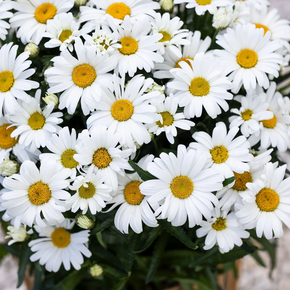
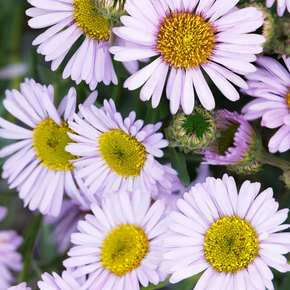
Fresco Candy River Daisy is a tender, mound-forming, short-lived evergreen perennial most commonly grown as a season-long annual in climates with cold winters. It produces an abundance of cheerful, daisy-like flower heads measuring approximately 1 inch across, each featuring delicate lavender-pink ray petals surrounding a bright yellow disc center. The flowers are held on slender stems above a cushion of finely divided, dark green, lacy foliage that gives the plant an airy, soft texture. The Fresco series was specifically developed by Danziger breeders to bloom earlier and maintain a more compact, uniform shape than other river daisy cultivars, resulting in a plant that looks tidy and full from the moment it goes in the ground. Flowers do not require deadheading to rebloom continuously, making it a truly low-effort, high-reward performer throughout the growing season.
Mature Size
| Attribute | Measurement |
|---|---|
| Mature Height | 4-6 inches |
| Mature Spread | 8-12 inches |
| Growth Habit | Compact, mounding, low-spreading |
| Growth Rate | Moderate |
Hardiness and Temperature
Fresco Candy River Daisy is a tender perennial hardy in USDA Zones 8a-11b. It performs as a true perennial in frost-free climates (Zones 10-11) where it may persist year-round. In the cooler portions of Southern Oregon and Northern California, it is best treated as a warm-season annual, planted out after the last frost date when nighttime temperatures remain reliably above 40-45 degrees F. This variety tolerates heat well once established, though it may temporarily slow flowering during prolonged extreme heat above 95 degrees F, resuming bloom when temperatures moderate. The minimum temperature for active growth is approximately 58 degrees F. Avoid exposing plants to frost, as foliage and stems are not frost tolerant.
Sunlight Requirements
Fresco Candy River Daisy performs best in full sun, which is defined as a minimum of 6 hours of direct sunlight per day. Full sun encourages the most prolific flowering and keeps the plant's compact, mounding habit at its tidiest. It will also tolerate part shade, receiving 3-6 hours of direct sun, and may appreciate afternoon shade in the hottest inland valley locations where summer temperatures regularly exceed 95 degrees F. In shadier conditions, flowering will be reduced and the plant may become slightly more open in habit. Avoid planting in full shade, as insufficient light results in poor bloom production and leggy growth.
Watering Guide
Fresco Candy requires moderate, consistent watering to establish and perform well. Once established in the garden, it demonstrates good drought tolerance and is considered water-wise — a reflection of its Australian native heritage. Follow these guidelines for best results:
- Water newly planted specimens regularly to keep the root zone evenly moist until fully established, typically 2-4 weeks after planting.
- Once established, water when the top inch of soil feels dry to the touch.
- During extended periods of heat or drought, provide occasional deep watering rather than frequent shallow irrigation to encourage deep root development.
- Always water at the base of the plant rather than overhead to reduce the risk of fungal issues on the foliage.
- Avoid overwatering or allowing roots to sit in standing water, which can lead to root rot. Good drainage is essential.
- Container-grown plants will dry out more quickly than in-ground plants and will need more frequent monitoring, especially during warm summer months.
Soil and pH Preferences
Fresco Candy River Daisy is adaptable to a wide range of soil types, provided drainage is excellent. It naturally grows in free-draining, moderately fertile soils and does not tolerate heavy, waterlogged clay conditions. For best results, aim for the following:
- Preferred soil types: loamy, sandy-loam, or well-amended garden soil with good drainage.
- Ideal soil pH: 5.8-6.5 (slightly acidic to near-neutral).
- Amend heavy clay soils with compost and coarse grit or perlite before planting to improve drainage and aeration.
- For containers, use a high-quality, well-drained potting mix — avoid dense, moisture-retentive mixes that stay soggy.
- Adding a small amount of slow-release fertilizer to the planting mix at the time of transplanting will give plants a healthy start.
Fertilizing
Fresco Candy is a light-to-moderate feeder that responds well to a consistent but not excessive fertilizer program. Over-fertilizing with high-nitrogen formulas can promote excessive foliage growth at the expense of flowers.
- Apply a granular, slow-release balanced fertilizer (such as a 10-10-10 or similar) at planting time or in early spring for established plants.
- Supplement with a liquid balanced or bloom-promoting fertilizer twice monthly during the active growing season for the most prolific flowering.
- For container-grown plants, more frequent liquid feeding is beneficial, as nutrients are leached from the soil more rapidly with each watering.
- Reduce or stop fertilizing as the growing season winds down and temperatures begin to cool in fall.
- Avoid fertilizing during periods of extreme heat stress, as plants may not take up nutrients efficiently and root burn is possible.
Pruning and Maintenance
One of Fresco Candy's most appealing traits is its self-cleaning, low-maintenance nature. Unlike many daisy-type plants, it does not require regular deadheading to keep blooming. However, light trimming will enhance its appearance and longevity:
- No deadheading is required — spent flowers drop cleanly and new blooms are continuously produced throughout the growing season.
- Perform light shearing or tip-pinching by about one-third of the plant's height when plants begin to look slightly open or untidy midseason. This refreshes the foliage, encourages a flush of new growth, and promotes continued heavy blooming.
- A single trim midseason is typically all that is needed to keep plants looking full and tidy through summer and into fall.
- Remove any dead or yellowing stems at the base as needed to maintain good air circulation and a neat appearance.
- In frost-free climates where the plant overwinters, cut back by up to one-third in early spring to encourage vigorous new growth.
Planting Instructions
- Choose a location that receives full sun to part shade with well-drained soil. Avoid low-lying areas where water pools after rain.
- Prepare the planting bed by loosening the soil to a depth of 8-10 inches and working in 2-3 inches of compost to improve fertility and drainage.
- Dig a hole slightly wider than the root ball and the same depth, so the crown of the plant sits level with the surrounding soil surface.
- Gently remove the plant from its container and loosen any circling roots before placing it in the hole.
- Backfill with the amended soil, firming lightly around the base to eliminate air pockets.
- Space plants 8-12 inches apart to allow for mature spread and ensure good airflow between plants.
- Water thoroughly after planting and maintain even soil moisture during the establishment period.
- Applying a 1-2 inch layer of mulch around (but not directly against) the base of plants helps retain soil moisture and regulate soil temperature.
Landscape Uses
Fresco Candy River Daisy is an exceptionally versatile plant suited to a wide range of garden and landscape applications. Its compact, mounding habit and prolific bloom make it one of the most useful low-growing flowering plants for both residential and commercial settings.
- Front-of-border edging plant in mixed annual or perennial beds.
- Patio and deck containers — solo or in combination with upright thrillers and trailing spillers.
- Hanging baskets, where the mounding habit spills attractively over the edges.
- Window boxes and planter troughs on porches and balconies.
- Mass planting as a low-growing seasonal ground cover.
- Rock gardens and along retaining or rockery walls where it cascades gracefully over edges.
- Cottage-style, native, or wildflower garden designs.
- A cheerful, color-rich cut flower for small floral arrangements and tabletop vases.
Container Growing
Fresco Candy is exceptionally well suited to container culture and is one of its strongest landscape applications. Its compact size means it works beautifully even in smaller pots, window boxes, and mixed baskets.
- Use a container with drainage holes and a high-quality, well-drained potting mix. Avoid moisture-retentive mixes that stay wet for extended periods.
- A 6-10 inch diameter pot is ideal for a single plant; for a lush, full look in a 10-12 inch basket, plant 3-5 plants together.
- Position containers in a full-sun to part-sun location on patios, decks, balconies, or porches.
- Containers dry out more quickly than garden beds — check soil moisture every 1-2 days during warm weather and water when the top inch feels dry.
- Feed container plants with a balanced liquid fertilizer every 10-14 days during the growing season for best flower production.
- Fresco Candy pairs beautifully in mixed containers with upright plants such as upright verbena, angelonia, or ornamental grass as a thriller, and trailing plants like bacopa, lobelia, or sweet potato vine as spillers.
Companion Plants
Fresco Candy River Daisy combines beautifully with many sun-loving annuals and perennials, particularly those that share its preference for well-drained soil, full sun, and moderate water. For a showy display, try pairing its lavender-pink blooms with yellow- or gold-flowering companions for vivid color contrast.
- Coreopsis (tickseed) — yellow blooms create a striking complementary color combination; similar soil and light needs.
- Verbena — trailing or mounding forms pair well in mixed containers and borders.
- Geranium (Pelargonium) — classic combination for pots and hanging baskets.
- Lavender — shares drought tolerance and full sun preference; attracts additional pollinators.
- Salvia — contrasting flower spikes in blue, purple, or red add height and drama to plantings.
- Gaillardia (blanket flower) — warm-colored summer blooms extend the visual interest alongside Fresco Candy's cooler tones.
- Echinacea (coneflower) — complementary bloom time and shared preference for well-drained soil in perennial border settings.
- Yarrow (Achillea) — drought-tolerant companion with flat-topped flower clusters in yellow, white, or pink tones.
Wildlife Value
Despite its modest size, Fresco Candy River Daisy is a valuable addition to pollinator-friendly gardens. The open, daisy-like flower form is highly accessible to a wide range of beneficial insects and small pollinators.
- Attracts butterflies, which are drawn to the nectar-rich blooms throughout the spring and summer bloom period.
- Visited by native bees, honeybees, and hoverflies, contributing to overall garden biodiversity and pollination services for surrounding plants.
- Naturally deer resistant — the fine-textured foliage is generally unappealing to browsing deer, making it a reliable choice for gardens in deer-prone areas common to Southern Oregon and Northern California.
- Not known to be toxic to humans, dogs, or cats, though consumption of any ornamental plant should be discouraged.
Pests and Diseases
Fresco Candy River Daisy is generally a robust, pest- and disease-resistant plant. When problems do occur, they are typically linked to poor air circulation, excessive moisture, or growing conditions outside the plant's preferred range.
- Thrips: Occasionally attack foliage and flowers, causing distorted or silvery-streaked petals. Monitor regularly and treat with an appropriate insecticidal soap or spinosad-based product at first sign of infestation.
- Whiteflies: May appear, particularly on plants grown in warm, sheltered locations. Yellow sticky traps and insecticidal soap sprays are effective controls. Lavender planted nearby can help deter whiteflies naturally.
- Botrytis (gray mold): Can develop on foliage and spent blooms during cool, wet, or overcast periods with poor air circulation. Prevent by watering at the base of plants in the morning, spacing plants for adequate airflow, and removing any dead or damaged plant material promptly.
- Root rot: The most common serious issue, caused by overwatering or poorly drained soil. Prevention through appropriate soil preparation and careful irrigation is far more effective than treatment. Affected plants typically cannot be saved once root rot is advanced.
- Aphids: Occasionally problematic; a strong stream of water or insecticidal soap spray is usually sufficient to control minor infestations.
Seasonal Interest
Fresco Candy River Daisy delivers its peak ornamental display from spring through summer, making it a workhorse plant during the primary garden season in Southern Oregon and Northern California.
- Spring: Blooming commences earlier than standard river daisy varieties — often among the first low-growing flowering annuals to put on a show after the last frost. Lavender-pink daisy flowers emerge prolifically over lush, dark green lacy foliage.
- Summer: Continuous non-stop bloom throughout summer, even in heat. A single light trim midseason refreshes the plant and encourages a renewed flush of flowers. Remains a reliable color source in containers and borders when many cool-season annuals have faded.
- Fall: In mild-climate areas of Northern California and the warmer portions of Southern Oregon, blooming may continue well into fall as temperatures cool. Cooler autumn temperatures can actually intensify flower color.
- Winter: Not frost tolerant; treat as an annual in areas with freezing temperatures. In frost-free climates (Zones 10-11), the plant may remain evergreen and continue sporadic bloom during mild winter periods.
- Prolific lavender-pink, daisy-like blooms open earlier in the season than other river daisies and continue non-stop from spring through summer with virtually no deadheading required.
- Ultra-compact mounding habit reaches just 4-6 inches tall and 8-12 inches wide, making it ideal for the front of borders, patio containers, hanging baskets, and window boxes.
- Heat-tolerant and low-maintenance Australian native that is naturally deer resistant and a proven magnet for butterflies and other pollinators.
- Water-wise once established, thriving in most well-drained soils with only moderate watering — a perfect choice for gardeners seeking big color with minimal effort.
Fresco Candy River Daisy (Brachyscome angustifolia 'Candy') is a standout performer in the Fresco series, a specially bred line of compact, early-flowering river daisies developed for superior garden performance. Native to Australia and belonging to the Asteraceae family, this cheerful, mound-forming perennial produces a continuous profusion of lavender-pink, yellow-centered, daisy-like flowers from spring through summer, setting it apart from standard river daisies with its notably earlier bloom time and tighter, more uniform growth habit. The lacy, finely divided dark green foliage forms a dense, low mound that cascades beautifully over the edges of containers, hanging baskets, and raised beds, while remaining equally at home as a low-growing ground cover, border edging plant, or rock garden specimen. Bred for heat tolerance and adaptability, Fresco Candy thrives in full sun to part shade and is highly deer resistant, making it a dependable and versatile choice for Southern Oregon and Northern California gardens where bold seasonal color and easy care are essential.
Plant Description
Fresco Candy River Daisy is a tender, mound-forming, short-lived evergreen perennial most commonly grown as a season-long annual in climates with cold winters. It produces an abundance of cheerful, daisy-like flower heads measuring approximately 1 inch across, each featuring delicate lavender-pink ray petals surrounding a bright yellow disc center. The flowers are held on slender stems above a cushion of finely divided, dark green, lacy foliage that gives the plant an airy, soft texture. The Fresco series was specifically developed by Danziger breeders to bloom earlier and maintain a more compact, uniform shape than other river daisy cultivars, resulting in a plant that looks tidy and full from the moment it goes in the ground. Flowers do not require deadheading to rebloom continuously, making it a truly low-effort, high-reward performer throughout the growing season.
Mature Size
| Attribute | Measurement |
|---|---|
| Mature Height | 4-6 inches |
| Mature Spread | 8-12 inches |
| Growth Habit | Compact, mounding, low-spreading |
| Growth Rate | Moderate |
Hardiness and Temperature
Fresco Candy River Daisy is a tender perennial hardy in USDA Zones 8a-11b. It performs as a true perennial in frost-free climates (Zones 10-11) where it may persist year-round. In the cooler portions of Southern Oregon and Northern California, it is best treated as a warm-season annual, planted out after the last frost date when nighttime temperatures remain reliably above 40-45 degrees F. This variety tolerates heat well once established, though it may temporarily slow flowering during prolonged extreme heat above 95 degrees F, resuming bloom when temperatures moderate. The minimum temperature for active growth is approximately 58 degrees F. Avoid exposing plants to frost, as foliage and stems are not frost tolerant.
Sunlight Requirements
Fresco Candy River Daisy performs best in full sun, which is defined as a minimum of 6 hours of direct sunlight per day. Full sun encourages the most prolific flowering and keeps the plant's compact, mounding habit at its tidiest. It will also tolerate part shade, receiving 3-6 hours of direct sun, and may appreciate afternoon shade in the hottest inland valley locations where summer temperatures regularly exceed 95 degrees F. In shadier conditions, flowering will be reduced and the plant may become slightly more open in habit. Avoid planting in full shade, as insufficient light results in poor bloom production and leggy growth.
Watering Guide
Fresco Candy requires moderate, consistent watering to establish and perform well. Once established in the garden, it demonstrates good drought tolerance and is considered water-wise — a reflection of its Australian native heritage. Follow these guidelines for best results:
- Water newly planted specimens regularly to keep the root zone evenly moist until fully established, typically 2-4 weeks after planting.
- Once established, water when the top inch of soil feels dry to the touch.
- During extended periods of heat or drought, provide occasional deep watering rather than frequent shallow irrigation to encourage deep root development.
- Always water at the base of the plant rather than overhead to reduce the risk of fungal issues on the foliage.
- Avoid overwatering or allowing roots to sit in standing water, which can lead to root rot. Good drainage is essential.
- Container-grown plants will dry out more quickly than in-ground plants and will need more frequent monitoring, especially during warm summer months.
Soil and pH Preferences
Fresco Candy River Daisy is adaptable to a wide range of soil types, provided drainage is excellent. It naturally grows in free-draining, moderately fertile soils and does not tolerate heavy, waterlogged clay conditions. For best results, aim for the following:
- Preferred soil types: loamy, sandy-loam, or well-amended garden soil with good drainage.
- Ideal soil pH: 5.8-6.5 (slightly acidic to near-neutral).
- Amend heavy clay soils with compost and coarse grit or perlite before planting to improve drainage and aeration.
- For containers, use a high-quality, well-drained potting mix — avoid dense, moisture-retentive mixes that stay soggy.
- Adding a small amount of slow-release fertilizer to the planting mix at the time of transplanting will give plants a healthy start.
Fertilizing
Fresco Candy is a light-to-moderate feeder that responds well to a consistent but not excessive fertilizer program. Over-fertilizing with high-nitrogen formulas can promote excessive foliage growth at the expense of flowers.
- Apply a granular, slow-release balanced fertilizer (such as a 10-10-10 or similar) at planting time or in early spring for established plants.
- Supplement with a liquid balanced or bloom-promoting fertilizer twice monthly during the active growing season for the most prolific flowering.
- For container-grown plants, more frequent liquid feeding is beneficial, as nutrients are leached from the soil more rapidly with each watering.
- Reduce or stop fertilizing as the growing season winds down and temperatures begin to cool in fall.
- Avoid fertilizing during periods of extreme heat stress, as plants may not take up nutrients efficiently and root burn is possible.
Pruning and Maintenance
One of Fresco Candy's most appealing traits is its self-cleaning, low-maintenance nature. Unlike many daisy-type plants, it does not require regular deadheading to keep blooming. However, light trimming will enhance its appearance and longevity:
- No deadheading is required — spent flowers drop cleanly and new blooms are continuously produced throughout the growing season.
- Perform light shearing or tip-pinching by about one-third of the plant's height when plants begin to look slightly open or untidy midseason. This refreshes the foliage, encourages a flush of new growth, and promotes continued heavy blooming.
- A single trim midseason is typically all that is needed to keep plants looking full and tidy through summer and into fall.
- Remove any dead or yellowing stems at the base as needed to maintain good air circulation and a neat appearance.
- In frost-free climates where the plant overwinters, cut back by up to one-third in early spring to encourage vigorous new growth.
Planting Instructions
- Choose a location that receives full sun to part shade with well-drained soil. Avoid low-lying areas where water pools after rain.
- Prepare the planting bed by loosening the soil to a depth of 8-10 inches and working in 2-3 inches of compost to improve fertility and drainage.
- Dig a hole slightly wider than the root ball and the same depth, so the crown of the plant sits level with the surrounding soil surface.
- Gently remove the plant from its container and loosen any circling roots before placing it in the hole.
- Backfill with the amended soil, firming lightly around the base to eliminate air pockets.
- Space plants 8-12 inches apart to allow for mature spread and ensure good airflow between plants.
- Water thoroughly after planting and maintain even soil moisture during the establishment period.
- Applying a 1-2 inch layer of mulch around (but not directly against) the base of plants helps retain soil moisture and regulate soil temperature.
Landscape Uses
Fresco Candy River Daisy is an exceptionally versatile plant suited to a wide range of garden and landscape applications. Its compact, mounding habit and prolific bloom make it one of the most useful low-growing flowering plants for both residential and commercial settings.
- Front-of-border edging plant in mixed annual or perennial beds.
- Patio and deck containers — solo or in combination with upright thrillers and trailing spillers.
- Hanging baskets, where the mounding habit spills attractively over the edges.
- Window boxes and planter troughs on porches and balconies.
- Mass planting as a low-growing seasonal ground cover.
- Rock gardens and along retaining or rockery walls where it cascades gracefully over edges.
- Cottage-style, native, or wildflower garden designs.
- A cheerful, color-rich cut flower for small floral arrangements and tabletop vases.
Container Growing
Fresco Candy is exceptionally well suited to container culture and is one of its strongest landscape applications. Its compact size means it works beautifully even in smaller pots, window boxes, and mixed baskets.
- Use a container with drainage holes and a high-quality, well-drained potting mix. Avoid moisture-retentive mixes that stay wet for extended periods.
- A 6-10 inch diameter pot is ideal for a single plant; for a lush, full look in a 10-12 inch basket, plant 3-5 plants together.
- Position containers in a full-sun to part-sun location on patios, decks, balconies, or porches.
- Containers dry out more quickly than garden beds — check soil moisture every 1-2 days during warm weather and water when the top inch feels dry.
- Feed container plants with a balanced liquid fertilizer every 10-14 days during the growing season for best flower production.
- Fresco Candy pairs beautifully in mixed containers with upright plants such as upright verbena, angelonia, or ornamental grass as a thriller, and trailing plants like bacopa, lobelia, or sweet potato vine as spillers.
Companion Plants
Fresco Candy River Daisy combines beautifully with many sun-loving annuals and perennials, particularly those that share its preference for well-drained soil, full sun, and moderate water. For a showy display, try pairing its lavender-pink blooms with yellow- or gold-flowering companions for vivid color contrast.
- Coreopsis (tickseed) — yellow blooms create a striking complementary color combination; similar soil and light needs.
- Verbena — trailing or mounding forms pair well in mixed containers and borders.
- Geranium (Pelargonium) — classic combination for pots and hanging baskets.
- Lavender — shares drought tolerance and full sun preference; attracts additional pollinators.
- Salvia — contrasting flower spikes in blue, purple, or red add height and drama to plantings.
- Gaillardia (blanket flower) — warm-colored summer blooms extend the visual interest alongside Fresco Candy's cooler tones.
- Echinacea (coneflower) — complementary bloom time and shared preference for well-drained soil in perennial border settings.
- Yarrow (Achillea) — drought-tolerant companion with flat-topped flower clusters in yellow, white, or pink tones.
Wildlife Value
Despite its modest size, Fresco Candy River Daisy is a valuable addition to pollinator-friendly gardens. The open, daisy-like flower form is highly accessible to a wide range of beneficial insects and small pollinators.
- Attracts butterflies, which are drawn to the nectar-rich blooms throughout the spring and summer bloom period.
- Visited by native bees, honeybees, and hoverflies, contributing to overall garden biodiversity and pollination services for surrounding plants.
- Naturally deer resistant — the fine-textured foliage is generally unappealing to browsing deer, making it a reliable choice for gardens in deer-prone areas common to Southern Oregon and Northern California.
- Not known to be toxic to humans, dogs, or cats, though consumption of any ornamental plant should be discouraged.
Pests and Diseases
Fresco Candy River Daisy is generally a robust, pest- and disease-resistant plant. When problems do occur, they are typically linked to poor air circulation, excessive moisture, or growing conditions outside the plant's preferred range.
- Thrips: Occasionally attack foliage and flowers, causing distorted or silvery-streaked petals. Monitor regularly and treat with an appropriate insecticidal soap or spinosad-based product at first sign of infestation.
- Whiteflies: May appear, particularly on plants grown in warm, sheltered locations. Yellow sticky traps and insecticidal soap sprays are effective controls. Lavender planted nearby can help deter whiteflies naturally.
- Botrytis (gray mold): Can develop on foliage and spent blooms during cool, wet, or overcast periods with poor air circulation. Prevent by watering at the base of plants in the morning, spacing plants for adequate airflow, and removing any dead or damaged plant material promptly.
- Root rot: The most common serious issue, caused by overwatering or poorly drained soil. Prevention through appropriate soil preparation and careful irrigation is far more effective than treatment. Affected plants typically cannot be saved once root rot is advanced.
- Aphids: Occasionally problematic; a strong stream of water or insecticidal soap spray is usually sufficient to control minor infestations.
Seasonal Interest
Fresco Candy River Daisy delivers its peak ornamental display from spring through summer, making it a workhorse plant during the primary garden season in Southern Oregon and Northern California.
- Spring: Blooming commences earlier than standard river daisy varieties — often among the first low-growing flowering annuals to put on a show after the last frost. Lavender-pink daisy flowers emerge prolifically over lush, dark green lacy foliage.
- Summer: Continuous non-stop bloom throughout summer, even in heat. A single light trim midseason refreshes the plant and encourages a renewed flush of flowers. Remains a reliable color source in containers and borders when many cool-season annuals have faded.
- Fall: In mild-climate areas of Northern California and the warmer portions of Southern Oregon, blooming may continue well into fall as temperatures cool. Cooler autumn temperatures can actually intensify flower color.
- Winter: Not frost tolerant; treat as an annual in areas with freezing temperatures. In frost-free climates (Zones 10-11), the plant may remain evergreen and continue sporadic bloom during mild winter periods.