

Zoom the image with the mouse
FloralBerry Chardonnay St. John's Wort - 1 Gallon
SKU:
1848430
UPC:
014949456828
$14.99
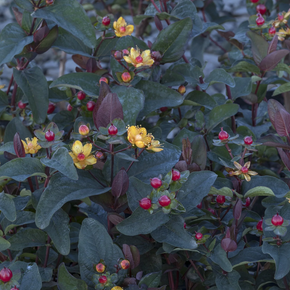
- Masses of bright, cup-shaped yellow flowers bloom from late spring into midsummer, followed by luminous yellow berries that persist from late summer through fall for two seasons of spectacular color.
- Rust-resistant and low-maintenance, this compact deciduous shrub boasts rich dark green foliage with grayish undersides and eye-catching brick-red stems throughout the growing season.
- Highly versatile in the landscape - plant as a specimen, low hedge, groundcover, or in sweeping mass plantings, and equally at home in containers as a stunning "thriller" centerpiece.
- Berry-laden stems are a prized addition to fall cut flower arrangements, bringing the beauty of the garden indoors well into the autumn season.
FloralBerry Chardonnay St. John's Wort (Hypericum x inodorum 'KOLCHAR') is a showstopping deciduous shrub that delivers non-stop ornamental interest from late spring all the way through autumn. Part of the FloralBerry series, this well-behaved, multi-stemmed shrub forms a tidy, upright-spreading mound reaching approximately 3 feet tall and 3 feet wide at maturity, making it a perfect fit for small-space gardens, mixed borders, and patio containers alike. In late spring to midsummer, the plant erupts in a profusion of cheerful, buttercup-yellow flowers at the tips of its branches - flowers that are just as beautiful in a vase as they are in the garden. As summer transitions to fall, those blooms give way to clusters of glowing, golden-yellow berries that glow against the clean, dark green foliage, creating a striking contrast that few shrubs can match. Notably rust-resistant and highly tolerant of urban conditions, drought, and a wide range of soil types, FloralBerry Chardonnay is as tough and adaptable as it is beautiful. Its self-pollinating nature means you only need a single plant to enjoy a full berry display each year. Whether used as a specimen focal point, massed in drifts for a bold landscape statement, planted as a low informal hedge, or grown in containers, this fuss-free shrub rewards gardeners in USDA Hardiness Zones 5-9 with year-round visual interest and outstanding versatility.
Plant Description
FloralBerry Chardonnay St. John's Wort is a multi-stemmed deciduous shrub belonging to the FloralBerry series of Hypericum x inodorum. It features an upright, spreading habit with relatively fine-textured foliage that gives it a refined look in the landscape. The dark green leaves have grayish-green undersides, and the attractive brick-red stems add winter structural interest after the leaves drop. This is a self-pollinating variety, meaning just one plant will produce a generous display of berries each fall without requiring a pollinating partner nearby. The plant's well-branched form fills in readily to the ground, eliminating the need for "facer" plants at the front of a border. Its compact, tidy growth habit and multi-season appeal make it one of the most ornamentally versatile shrubs available for gardens in the Pacific Coast and inland West regions.
Mature Size
| Attribute | Details |
|---|---|
| Mature Height | 2 to 3 feet |
| Mature Spread | 2 to 3 feet |
| Growth Rate | Moderate |
| Growth Habit | Upright spreading, multi-stemmed, fills in to the ground |
| Expected Lifespan | Approximately 5 years under ideal conditions; can be rejuvenated by pruning |
Hardiness Zones
FloralBerry Chardonnay St. John's Wort is reliably cold-hardy in USDA Hardiness Zones 5 through 9, making it well-suited to a broad range of climates including the mild winters and warm summers typical of Southern Oregon and Northern California. In colder areas at the lower end of its hardiness range or in exposed, wind-prone sites, applying a generous layer of mulch (2 to 3 inches) around the root zone in late fall will help insulate roots and protect the plant through the coldest months. Planting in a slightly sheltered microclimate - such as near a structure or larger shrubs that buffer cold winds - can extend the plant's performance and winter hardiness at the margins of its range.
Sunlight Requirements
This shrub performs best in full sun to partial shade. Full sun (6 or more hours of direct sunlight per day) encourages the most prolific flowering and berry production. In the hotter inland valleys of Southern Oregon and Northern California, afternoon shade or a site with dappled light through the hottest part of the day can help the plant thrive and prevent foliage stress during peak summer heat. Avoid deep shade, which will significantly reduce blooming and fruiting while causing the plant to become leggy and open in form.
Soil and pH Preferences
FloralBerry Chardonnay is notably adaptable when it comes to soil. It is not particular about soil type and will grow in sandy, loamy, or clay-based soils. The most important consideration is drainage - the plant strongly prefers well-drained conditions and will decline or die in areas with standing water or consistently waterlogged soil. It tolerates a wide range of soil pH and is not fussy about soil fertility. It is also highly tolerant of urban soils and compacted or poor-quality sites, making it a great candidate for challenging planting conditions. Amending heavy clay soils with compost or coarse grit at planting time will improve drainage and give the plant the best start.
Watering Guide
Once established, FloralBerry Chardonnay is considered drought-tolerant and thrives with average to dry moisture conditions, making it suitable for water-wise and xeriscape garden designs. During the first growing season, water regularly (approximately once or twice per week depending on heat and soil type) to help the plant establish a deep, healthy root system. After establishment, reduce watering frequency - deep, infrequent watering is preferable to frequent shallow irrigation. Avoid overwatering or allowing water to pool around the base of the plant, as consistently wet soil can lead to root rot. Container-grown plants will require more frequent watering than those planted in the ground, as pots dry out more rapidly, particularly in warm, sunny weather.
Fertilizing
FloralBerry Chardonnay does not require heavy feeding, but a light application of a balanced, slow-release shrub fertilizer in early spring as new growth emerges can support healthy flowering and berry production. Use a general-purpose granular fertilizer formulated for flowering shrubs and apply according to the product label directions, taking care not to over-fertilize, as excess nitrogen can encourage leafy growth at the expense of flowers and fruit. A light topdressing of compost around the base of the plant each spring also provides a gentle nutrient boost while helping to retain soil moisture. Avoid fertilizing in late summer or fall, as this can stimulate tender new growth that is vulnerable to frost damage.
Pruning and Maintenance
FloralBerry Chardonnay is a low-maintenance shrub that requires only occasional pruning to look its best. The ideal time to prune is in late winter to early spring, after the threat of severe cold has passed but before new growth begins. At this time, cut the plant back by one-third to one-half of its overall height to encourage vigorous new stems, abundant flowering, and a dense, full habit. Old, weak, or crossing stems should be removed at the base to improve air circulation and overall plant structure. Avoid heavy pruning in summer or fall, as this removes the berry-bearing stems that provide fall interest. Spent berry stems can be left in place through winter to provide additional structure and wildlife value before the spring pruning session.
Planting Instructions
- Choose a site with full sun to partial shade and well-drained soil. Avoid low-lying areas where water tends to collect.
- Dig a planting hole two to three times as wide as the root ball and approximately the same depth. In heavy clay soils, mix in compost or coarse grit to improve drainage.
- Remove the plant from its container and gently loosen any circling or tightly bound roots before placing it in the hole.
- Set the plant so that the top of the root ball is level with or very slightly above the surrounding soil grade. Avoid planting too deeply.
- Backfill with the original soil, tamping lightly to eliminate air pockets. Do not mound soil against the main stems.
- Water thoroughly after planting to settle the soil around the roots.
- Apply a 2- to 3-inch layer of organic mulch (such as wood chips or shredded bark) around the base of the plant, keeping it a few inches away from the main stems to prevent rot and discourage pests.
- For mass plantings or use as a low hedge, space plants approximately 2 to 3 feet apart on center for a filled-in, continuous planting effect.
Seasonal Interest
| Season | Ornamental Feature |
|---|---|
| Spring | Fresh dark green foliage emerges; plant leafs out vigorously after winter dormancy |
| Late Spring - Midsummer | Masses of bright, cup-shaped, buttercup-yellow flowers at branch tips; excellent for cutting |
| Late Summer - Fall | Luminous, glowing yellow berries in dense clusters contrast beautifully against dark green foliage |
| Fall - Early Winter | Berry stems remain showy and are outstanding for use in fresh and dried floral arrangements |
| Winter (dormant) | Attractive brick-red stems provide structural interest in the winter garden |
Landscape Uses
FloralBerry Chardonnay is a remarkably versatile shrub that suits a wide variety of landscape applications. Its compact, tidy size and showy multi-season display make it an ideal choice for the following uses:
- Specimen planting: Use as a standalone focal point in a mixed border or foundation planting where its flowers and berries can take center stage.
- Low informal hedge: Plant in a row spaced 2 to 3 feet apart to create a low, colorful seasonal hedge or border edging.
- Mass planting: Most visually impactful when planted in sweeping drifts of 3 or more, creating bold waves of gold flowers and berries across a slope or large bed.
- Container planting: Thrives as a "thriller" element in large patio containers, surrounded by trailing and mounding companion plants.
- Cutting garden: A must-have for the cutting garden; both the flower and berry stems are highly valued in fresh floral arrangements.
- Groundcover: Its habit of filling in to the ground makes it effective at suppressing weeds when mass planted.
- Urban gardens: Highly tolerant of pollution, compacted soils, and challenging urban growing conditions.
Container Growing
FloralBerry Chardonnay makes an excellent container plant and is well-suited to use as a dramatic centerpiece "thriller" in large patio pots, planter boxes, and mixed container arrangements. Select a container that is at least 12 to 14 inches in diameter with ample drainage holes. Use a high-quality, well-draining potting mix. Container-grown plants will require more frequent watering than their in-ground counterparts - check moisture levels regularly and water when the top inch of soil feels dry. Apply a slow-release fertilizer at the start of the growing season or supplement with a liquid balanced fertilizer every 3 to 4 weeks during the active growing period. In colder climates or during harsh winters, containers can be moved to a sheltered location to protect roots from hard freezes, as potted plants are more vulnerable to cold damage than those planted in the ground.
Companion Plants
FloralBerry Chardonnay pairs beautifully with a wide range of garden plants that complement its golden color palette and multi-season appeal. Consider combining it with the following:
- Ornamental grasses such as Karl Foerster feather reed grass or Blue Oat Grass provide a soft, contrasting texture alongside the shrub's fine-textured foliage and bold berries.
- Coneflowers (Echinacea) and Black-eyed Susans (Rudbeckia) repeat the warm yellow color theme in the perennial border during summer.
- Lavender (Lavandula) and Russian Sage (Perovskia) provide contrasting purple-blue tones that make the yellow flowers and berries pop.
- Sedums and Stonecrop share similar drought-tolerant requirements and offer complementary fall color and texture.
- Spirea and Potentilla are excellent low-maintenance shrub companions that share similar light and soil preferences.
- In containers, pair with trailing Sweet Potato Vine or Creeping Jenny for a lush spiller-thriller-filler combination.
Wildlife Value
FloralBerry Chardonnay offers meaningful value to garden wildlife. The bright yellow, cup-shaped flowers are pollinator-friendly, attracting bees and other beneficial insects when in bloom from late spring through midsummer. The showy yellow berries that follow provide a valuable late-season food source for songbirds and other wildlife moving through the garden in fall. The dense, twiggy branching structure also offers small birds cover and nesting habitat. As a bonus, Hypericum shrubs are generally considered to have good deer resistance, making FloralBerry Chardonnay a practical choice for gardens in rural areas of Southern Oregon and Northern California where deer browsing pressure can be significant.
Pests and Diseases
FloralBerry Chardonnay is notably rust-resistant, which is a significant advantage over many traditional Hypericum varieties that can be prone to unsightly fungal rust diseases. Under typical garden conditions, this shrub has no significant pest or disease problems and is considered a very clean, trouble-free plant. To maintain plant health and minimize any potential issues, observe the following best practices:
- Ensure good soil drainage, as consistently wet conditions are the most likely cause of root and crown rot.
- Avoid overhead irrigation when possible, as prolonged wet foliage can encourage fungal issues in humid conditions.
- Prune annually in late winter to improve air circulation through the canopy, which further reduces disease pressure.
- Monitor occasionally for aphids or scale insects, particularly on new growth in spring. These can typically be managed with a strong spray of water or a horticultural oil application if infestations are severe.
- The plant's high tolerance for urban pollution and environmental stress further contributes to its overall resilience and long-term garden performance.
- Masses of bright, cup-shaped yellow flowers bloom from late spring into midsummer, followed by luminous yellow berries that persist from late summer through fall for two seasons of spectacular color.
- Rust-resistant and low-maintenance, this compact deciduous shrub boasts rich dark green foliage with grayish undersides and eye-catching brick-red stems throughout the growing season.
- Highly versatile in the landscape - plant as a specimen, low hedge, groundcover, or in sweeping mass plantings, and equally at home in containers as a stunning "thriller" centerpiece.
- Berry-laden stems are a prized addition to fall cut flower arrangements, bringing the beauty of the garden indoors well into the autumn season.
FloralBerry Chardonnay St. John's Wort (Hypericum x inodorum 'KOLCHAR') is a showstopping deciduous shrub that delivers non-stop ornamental interest from late spring all the way through autumn. Part of the FloralBerry series, this well-behaved, multi-stemmed shrub forms a tidy, upright-spreading mound reaching approximately 3 feet tall and 3 feet wide at maturity, making it a perfect fit for small-space gardens, mixed borders, and patio containers alike. In late spring to midsummer, the plant erupts in a profusion of cheerful, buttercup-yellow flowers at the tips of its branches - flowers that are just as beautiful in a vase as they are in the garden. As summer transitions to fall, those blooms give way to clusters of glowing, golden-yellow berries that glow against the clean, dark green foliage, creating a striking contrast that few shrubs can match. Notably rust-resistant and highly tolerant of urban conditions, drought, and a wide range of soil types, FloralBerry Chardonnay is as tough and adaptable as it is beautiful. Its self-pollinating nature means you only need a single plant to enjoy a full berry display each year. Whether used as a specimen focal point, massed in drifts for a bold landscape statement, planted as a low informal hedge, or grown in containers, this fuss-free shrub rewards gardeners in USDA Hardiness Zones 5-9 with year-round visual interest and outstanding versatility.
Plant Description
FloralBerry Chardonnay St. John's Wort is a multi-stemmed deciduous shrub belonging to the FloralBerry series of Hypericum x inodorum. It features an upright, spreading habit with relatively fine-textured foliage that gives it a refined look in the landscape. The dark green leaves have grayish-green undersides, and the attractive brick-red stems add winter structural interest after the leaves drop. This is a self-pollinating variety, meaning just one plant will produce a generous display of berries each fall without requiring a pollinating partner nearby. The plant's well-branched form fills in readily to the ground, eliminating the need for "facer" plants at the front of a border. Its compact, tidy growth habit and multi-season appeal make it one of the most ornamentally versatile shrubs available for gardens in the Pacific Coast and inland West regions.
Mature Size
| Attribute | Details |
|---|---|
| Mature Height | 2 to 3 feet |
| Mature Spread | 2 to 3 feet |
| Growth Rate | Moderate |
| Growth Habit | Upright spreading, multi-stemmed, fills in to the ground |
| Expected Lifespan | Approximately 5 years under ideal conditions; can be rejuvenated by pruning |
Hardiness Zones
FloralBerry Chardonnay St. John's Wort is reliably cold-hardy in USDA Hardiness Zones 5 through 9, making it well-suited to a broad range of climates including the mild winters and warm summers typical of Southern Oregon and Northern California. In colder areas at the lower end of its hardiness range or in exposed, wind-prone sites, applying a generous layer of mulch (2 to 3 inches) around the root zone in late fall will help insulate roots and protect the plant through the coldest months. Planting in a slightly sheltered microclimate - such as near a structure or larger shrubs that buffer cold winds - can extend the plant's performance and winter hardiness at the margins of its range.
Sunlight Requirements
This shrub performs best in full sun to partial shade. Full sun (6 or more hours of direct sunlight per day) encourages the most prolific flowering and berry production. In the hotter inland valleys of Southern Oregon and Northern California, afternoon shade or a site with dappled light through the hottest part of the day can help the plant thrive and prevent foliage stress during peak summer heat. Avoid deep shade, which will significantly reduce blooming and fruiting while causing the plant to become leggy and open in form.
Soil and pH Preferences
FloralBerry Chardonnay is notably adaptable when it comes to soil. It is not particular about soil type and will grow in sandy, loamy, or clay-based soils. The most important consideration is drainage - the plant strongly prefers well-drained conditions and will decline or die in areas with standing water or consistently waterlogged soil. It tolerates a wide range of soil pH and is not fussy about soil fertility. It is also highly tolerant of urban soils and compacted or poor-quality sites, making it a great candidate for challenging planting conditions. Amending heavy clay soils with compost or coarse grit at planting time will improve drainage and give the plant the best start.
Watering Guide
Once established, FloralBerry Chardonnay is considered drought-tolerant and thrives with average to dry moisture conditions, making it suitable for water-wise and xeriscape garden designs. During the first growing season, water regularly (approximately once or twice per week depending on heat and soil type) to help the plant establish a deep, healthy root system. After establishment, reduce watering frequency - deep, infrequent watering is preferable to frequent shallow irrigation. Avoid overwatering or allowing water to pool around the base of the plant, as consistently wet soil can lead to root rot. Container-grown plants will require more frequent watering than those planted in the ground, as pots dry out more rapidly, particularly in warm, sunny weather.
Fertilizing
FloralBerry Chardonnay does not require heavy feeding, but a light application of a balanced, slow-release shrub fertilizer in early spring as new growth emerges can support healthy flowering and berry production. Use a general-purpose granular fertilizer formulated for flowering shrubs and apply according to the product label directions, taking care not to over-fertilize, as excess nitrogen can encourage leafy growth at the expense of flowers and fruit. A light topdressing of compost around the base of the plant each spring also provides a gentle nutrient boost while helping to retain soil moisture. Avoid fertilizing in late summer or fall, as this can stimulate tender new growth that is vulnerable to frost damage.
Pruning and Maintenance
FloralBerry Chardonnay is a low-maintenance shrub that requires only occasional pruning to look its best. The ideal time to prune is in late winter to early spring, after the threat of severe cold has passed but before new growth begins. At this time, cut the plant back by one-third to one-half of its overall height to encourage vigorous new stems, abundant flowering, and a dense, full habit. Old, weak, or crossing stems should be removed at the base to improve air circulation and overall plant structure. Avoid heavy pruning in summer or fall, as this removes the berry-bearing stems that provide fall interest. Spent berry stems can be left in place through winter to provide additional structure and wildlife value before the spring pruning session.
Planting Instructions
- Choose a site with full sun to partial shade and well-drained soil. Avoid low-lying areas where water tends to collect.
- Dig a planting hole two to three times as wide as the root ball and approximately the same depth. In heavy clay soils, mix in compost or coarse grit to improve drainage.
- Remove the plant from its container and gently loosen any circling or tightly bound roots before placing it in the hole.
- Set the plant so that the top of the root ball is level with or very slightly above the surrounding soil grade. Avoid planting too deeply.
- Backfill with the original soil, tamping lightly to eliminate air pockets. Do not mound soil against the main stems.
- Water thoroughly after planting to settle the soil around the roots.
- Apply a 2- to 3-inch layer of organic mulch (such as wood chips or shredded bark) around the base of the plant, keeping it a few inches away from the main stems to prevent rot and discourage pests.
- For mass plantings or use as a low hedge, space plants approximately 2 to 3 feet apart on center for a filled-in, continuous planting effect.
Seasonal Interest
| Season | Ornamental Feature |
|---|---|
| Spring | Fresh dark green foliage emerges; plant leafs out vigorously after winter dormancy |
| Late Spring - Midsummer | Masses of bright, cup-shaped, buttercup-yellow flowers at branch tips; excellent for cutting |
| Late Summer - Fall | Luminous, glowing yellow berries in dense clusters contrast beautifully against dark green foliage |
| Fall - Early Winter | Berry stems remain showy and are outstanding for use in fresh and dried floral arrangements |
| Winter (dormant) | Attractive brick-red stems provide structural interest in the winter garden |
Landscape Uses
FloralBerry Chardonnay is a remarkably versatile shrub that suits a wide variety of landscape applications. Its compact, tidy size and showy multi-season display make it an ideal choice for the following uses:
- Specimen planting: Use as a standalone focal point in a mixed border or foundation planting where its flowers and berries can take center stage.
- Low informal hedge: Plant in a row spaced 2 to 3 feet apart to create a low, colorful seasonal hedge or border edging.
- Mass planting: Most visually impactful when planted in sweeping drifts of 3 or more, creating bold waves of gold flowers and berries across a slope or large bed.
- Container planting: Thrives as a "thriller" element in large patio containers, surrounded by trailing and mounding companion plants.
- Cutting garden: A must-have for the cutting garden; both the flower and berry stems are highly valued in fresh floral arrangements.
- Groundcover: Its habit of filling in to the ground makes it effective at suppressing weeds when mass planted.
- Urban gardens: Highly tolerant of pollution, compacted soils, and challenging urban growing conditions.
Container Growing
FloralBerry Chardonnay makes an excellent container plant and is well-suited to use as a dramatic centerpiece "thriller" in large patio pots, planter boxes, and mixed container arrangements. Select a container that is at least 12 to 14 inches in diameter with ample drainage holes. Use a high-quality, well-draining potting mix. Container-grown plants will require more frequent watering than their in-ground counterparts - check moisture levels regularly and water when the top inch of soil feels dry. Apply a slow-release fertilizer at the start of the growing season or supplement with a liquid balanced fertilizer every 3 to 4 weeks during the active growing period. In colder climates or during harsh winters, containers can be moved to a sheltered location to protect roots from hard freezes, as potted plants are more vulnerable to cold damage than those planted in the ground.
Companion Plants
FloralBerry Chardonnay pairs beautifully with a wide range of garden plants that complement its golden color palette and multi-season appeal. Consider combining it with the following:
- Ornamental grasses such as Karl Foerster feather reed grass or Blue Oat Grass provide a soft, contrasting texture alongside the shrub's fine-textured foliage and bold berries.
- Coneflowers (Echinacea) and Black-eyed Susans (Rudbeckia) repeat the warm yellow color theme in the perennial border during summer.
- Lavender (Lavandula) and Russian Sage (Perovskia) provide contrasting purple-blue tones that make the yellow flowers and berries pop.
- Sedums and Stonecrop share similar drought-tolerant requirements and offer complementary fall color and texture.
- Spirea and Potentilla are excellent low-maintenance shrub companions that share similar light and soil preferences.
- In containers, pair with trailing Sweet Potato Vine or Creeping Jenny for a lush spiller-thriller-filler combination.
Wildlife Value
FloralBerry Chardonnay offers meaningful value to garden wildlife. The bright yellow, cup-shaped flowers are pollinator-friendly, attracting bees and other beneficial insects when in bloom from late spring through midsummer. The showy yellow berries that follow provide a valuable late-season food source for songbirds and other wildlife moving through the garden in fall. The dense, twiggy branching structure also offers small birds cover and nesting habitat. As a bonus, Hypericum shrubs are generally considered to have good deer resistance, making FloralBerry Chardonnay a practical choice for gardens in rural areas of Southern Oregon and Northern California where deer browsing pressure can be significant.
Pests and Diseases
FloralBerry Chardonnay is notably rust-resistant, which is a significant advantage over many traditional Hypericum varieties that can be prone to unsightly fungal rust diseases. Under typical garden conditions, this shrub has no significant pest or disease problems and is considered a very clean, trouble-free plant. To maintain plant health and minimize any potential issues, observe the following best practices:
- Ensure good soil drainage, as consistently wet conditions are the most likely cause of root and crown rot.
- Avoid overhead irrigation when possible, as prolonged wet foliage can encourage fungal issues in humid conditions.
- Prune annually in late winter to improve air circulation through the canopy, which further reduces disease pressure.
- Monitor occasionally for aphids or scale insects, particularly on new growth in spring. These can typically be managed with a strong spray of water or a horticultural oil application if infestations are severe.
- The plant's high tolerance for urban pollution and environmental stress further contributes to its overall resilience and long-term garden performance.