


Zoom the image with the mouse
Endlesslily® Coral Daylily - 1 Gallon
SKU:
1957660
UPC:
014949461327
$11.99
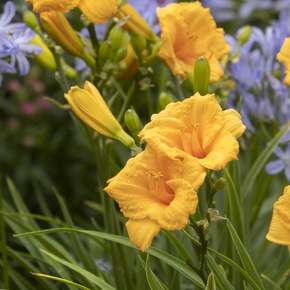
- Endlessly blooming from late spring through summer, this compact daylily delivers a continuous profusion of warm coral-pink flowers with cheerful golden-yellow throats above tidy, arching green foliage.
- A true low-maintenance perennial, Endlesslily Coral thrives in full sun to part shade across a wide range of hardiness zones (4-11) and adapts to most well-drained soils with little fuss.
- Its tidy, mounded clumping habit tops out at just 18-20 inches tall and wide, making it perfectly sized for front-of-border plantings, edging, mass plantings, containers, and small-space gardens.
- Naturally rabbit-resistant and tolerant of drought, coastal conditions, and erosion-prone slopes once established, it is a durable, long-lived choice for both formal and informal landscapes.
Hemerocallis Endlesslily Coral (Hemerocallis fulva 'DHEMCORAL') is a standout everblooming daylily that redefines what a compact perennial can do in the sunny garden. From late spring and straight through summer, tall, slender scapes rise above dense mounds of strappy, deep green foliage to display a seemingly endless succession of medium-sized, soft coral-pink blossoms accented by luminous golden-yellow throats. Unlike traditional daylilies that offer a single flush of color, Endlesslily Coral keeps the show going week after week, making it one of the most reliable sources of warm-season color available for beds, borders, containers, and mass plantings. Its naturally compact, arching, mounded habit reaches 18-20 inches tall and equally as wide, fitting beautifully at the front of the perennial border or along pathways without overcrowding neighboring plants. As an herbaceous perennial, the foliage dies back in colder climates but may remain semi-evergreen or evergreen in the mild winters of Southern Oregon and Northern California, providing attractive garden structure year-round. Endlesslily Coral is adaptable to a broad range of conditions - performing in full sun to partial shade, tolerating drought once established, resisting rabbit browsing, and even stabilizing erosion-prone slopes - all while demanding very little from the gardener in return.
Plant Description
Endlesslily Coral is a compact, clump-forming herbaceous perennial daylily belonging to the genus Hemerocallis. It produces dense mounds of arching, strap-like deep green foliage from which tall flowering scapes emerge throughout the warm season. Each scape carries multiple medium-sized blossoms in a soft coral-pink hue with a distinct golden-yellow throat at the center. True to its name, the plant is everblooming rather than a single-flush or simple rebloomer - it produces a continuous succession of flowers from late spring through summer. Individual flowers, like all daylilies, last just one day, but the abundance of buds per scape and the plant's prolific bud production ensure the display appears seamless and uninterrupted. In mild-winter climates such as those found across Southern Oregon and Northern California, the foliage may remain semi-evergreen, providing year-round textural interest in the garden.
Mature Size
| Characteristic | Measurement |
|---|---|
| Mature Height | 18-20 inches |
| Mature Width / Spread | 18-20 inches |
| Growth Habit | Compact, arching, mounded, clumping |
| Growth Rate | Moderate |
| Recommended Spacing | 18-20 inches on center |
Hardiness Zones and Climate
Endlesslily Coral is exceptionally cold-hardy and heat-tolerant, performing reliably across a wide range of climates. It is rated for USDA Hardiness Zones 4 through 11, tolerating winter temperatures down to approximately -20 degrees F. This broad zone adaptability makes it suitable for nearly every garden across the continental United States, including the diverse microclimates of Southern Oregon and Northern California. In regions with mild winters, the plant may retain semi-evergreen to evergreen foliage. In colder areas it will die back to the ground and reliably re-emerge each spring. It is also tolerant of coastal exposure and performs well at elevations up to approximately 6,500 feet.
Sunlight Requirements
Endlesslily Coral performs best in full sun, where it will produce the most abundant and vivid display of flowers. It requires a minimum of six hours of direct sunlight per day for optimal blooming. However, it is adaptable to partial shade or a location that receives afternoon shade, particularly in hot inland climates where some midday relief can help flowers stay fresh longer and prevent color fade. In deep or full shade, flowering will be significantly reduced and the plant may become leggy. In the Mediterranean-style climate of Southern Oregon and Northern California, a full-sun location is generally ideal.
Soil and pH Preferences
This daylily is adaptable to a wide range of soil types but performs best in organically rich, moist, well-drained loamy soil. It will also grow acceptably in sandy or average soils as long as drainage is adequate - standing water and consistently waterlogged soils should be avoided, as these can lead to crown rot. Endlesslily Coral prefers a slightly acidic to neutral soil pH in the range of 6.0 to 7.5. Amending planting beds with compost or well-rotted organic matter at the time of planting improves soil structure, fertility, and moisture retention and will give newly planted divisions the best possible start. For poorly draining sites, consider planting in a raised bed to ensure adequate drainage.
Watering Guide
Water newly planted Endlesslily Coral deeply and regularly throughout the first growing season to help establish a strong root system. Once established, this daylily demonstrates good drought tolerance, though it performs best - producing higher quality and more numerous flowers - when provided with consistent moisture during its active growing and blooming period. As a general guideline, aim for about 1 inch of water per week through rainfall or supplemental irrigation during the spring and summer months. Water deeply rather than frequently to encourage deep root development. In the dry summers common to Southern Oregon and Northern California, supplemental irrigation during the bloom period will noticeably improve flower quality and extend the blooming season. Reduce watering as the plant goes dormant in fall.
Fertilizing
Endlesslily Coral is not a heavy feeder, but a modest fertilization program will reward you with more vigorous growth and a more prolific flower display. Apply a balanced, slow-release granular fertilizer formulated for flowering perennials in early spring as new growth begins to emerge. A second light application in midsummer can help sustain bloom production through the remainder of the season. Always water the soil thoroughly before and after applying fertilizer to prevent root burn. Incorporating compost or well-rotted manure into the soil each spring also provides a gentle, slow-release source of nutrients. Avoid excessive nitrogen fertilization, which tends to promote lush foliage at the expense of flower production. A soil test every three to five years can help fine-tune your fertilization approach.
Pruning and Maintenance
- Deadheading: Remove spent blooms daily or every few days to keep the plant tidy and encourage continued bud development on each scape. While individual flowers drop on their own, removing them promptly improves appearance.
- Scape removal: Once all buds on a flowering scape have finished blooming, cut the scape down to its base near ground level to redirect the plant's energy into new growth and future blooms.
- Foliage cleanup: In fall or early winter, remove any dead or tattered foliage. In mild climates where the plant remains semi-evergreen, simply clear away any damaged leaves. In colder areas, cut the dormant foliage back to a few inches above ground level.
- Spring cleanup: In early spring before new growth emerges, remove any remaining dead foliage and pull weeds from around the crown to give new shoots unobstructed access to light and air.
- Mulching: Apply a 2-3 inch layer of organic mulch around the plant to suppress weeds, retain soil moisture, and moderate soil temperatures. Keep mulch pulled back slightly from the crown to prevent rot.
Planting Instructions
- Choose a planting location in full sun to partial shade with well-drained soil. Avoid sites where water pools after rain.
- Prepare the planting area by loosening the soil to a depth of 12-15 inches and incorporating 2-3 inches of compost or other organic matter.
- Dig a hole wide enough to accommodate the roots without bending or crowding them.
- Set the plant so that the crown - the point where the foliage meets the roots - sits approximately 1 inch below the soil surface. Planting too deep can inhibit blooming.
- Backfill the hole with native soil, gently firming it around the roots to eliminate air pockets.
- Water thoroughly after planting to settle the soil and hydrate the roots.
- Apply a 2-3 inch layer of mulch around the plant, keeping it a few inches away from the crown.
- Space plants 18-20 inches apart to allow room for mature spread and good air circulation.
- Continue to water regularly throughout the first growing season until the plant is well established.
Dividing and Propagation
Endlesslily Coral forms increasingly dense clumps over time, and dividing every three to five years is recommended to rejuvenate the plant, maintain vigorous flowering, and multiply your supply. The best times to divide are in early spring as new growth just begins to emerge, or immediately following the main bloom period in late summer. To divide, use a garden fork to carefully lift the entire clump from the ground. Shake or rinse away excess soil, then gently work individual fans - each consisting of a set of leaves and attached roots - apart by hand or with two garden forks placed back-to-back. Trim foliage back to 5-6 inches to reduce moisture stress on the divisions. Replant divisions at the same depth (crown 1 inch below soil surface), water well, and keep consistently moist until re-established. Divisions taken in spring may not bloom their first season but will flower normally the following year.
Seasonal Interest
Endlesslily Coral delivers consistent garden interest across the main growing season. In spring, fresh mounds of bright green, arching foliage emerge and quickly fill in to provide attractive ground-level texture. From late spring through the height of summer, the plant is in its prime flowering glory, with coral-pink blossoms on tall scapes creating bold color in the garden. The continuous blooming nature of this cultivar means the display extends far longer than many traditional daylilies - lasting from June through late summer in most climates. In the mild conditions of Southern Oregon and Northern California, blooming can begin earlier in the season and extend further into fall. In winter, the foliage may remain semi-evergreen in these milder regions, offering subtle structure and green color in the dormant garden. The clumping habit and strappy foliage also provide a fine-textured backdrop and contrast for other landscape plants throughout the growing season.
Landscape Uses
The compact, tidy habit and prolific flowering nature of Endlesslily Coral make it one of the most versatile perennials for the sunny landscape. Recommended uses include:
- Front of border: Its low stature and continuous color make it ideal for the foreground of mixed perennial or shrub borders.
- Edging: Use along pathways, driveways, or garden bed edges for a neat, defined look with season-long color.
- Mass planting: Planted en masse, Endlesslily Coral creates sweeps of warm coral color and forms a dense, weed-suppressing groundcover.
- Containers: Its compact size is well-suited to large patio containers and decorative pots.
- Erosion control: The fibrous root system helps stabilize slopes and erosion-prone banks once established.
- Small and courtyard gardens: Its manageable size fits neatly into limited spaces without overwhelming neighboring plants.
- Mixed borders: Combines beautifully with ornamental grasses, coneflowers, salvias, and other summer-blooming perennials for a layered, naturalistic look.
Companion Plants
Endlesslily Coral pairs beautifully with a wide range of sun-loving perennials, ornamental grasses, and shrubs. Its soft coral-pink flower color is especially complementary alongside plants in the following color ranges and textures:
- Echinacea (Coneflower): Purple and pink coneflowers create a classic cottage-garden combination with the coral blooms.
- Salvia: Blue and purple salvias provide striking color contrast and extend the pollinator appeal of the planting.
- Achillea (Yarrow): Yellow or white yarrow echoes the golden throat of the daylily flowers and adds fine texture.
- Ornamental Grasses: Fine-textured grasses such as blue oat grass or Karl Foerster feather reed grass add movement and architectural contrast.
- Shasta Daisy: Crisp white daisy flowers provide a cool counterpoint to the warm coral palette.
- Agapanthus: Blue to purple agapanthus blooms complement the coral tones beautifully and perform well in the same mild-climate zones.
- Rudbeckia (Black-eyed Susan): Golden-yellow rudbeckia echoes the throat of the daylily and creates a warm, cheerful combination.
- Geranium (Hardy Cranesbill): Low-growing hardy geraniums in blue or magenta fill in around the base of the daylily clumps.
Pests and Diseases
Endlesslily Coral is generally regarded as a tough, pest- and disease-resistant perennial that requires little intervention under normal garden conditions. The most common issues to be aware of include:
- Daylily leaf streak (Aureobasidium microstictum): A fungal disease causing yellow streaks and browning along leaf margins. Remove and dispose of affected foliage and avoid overhead watering to minimize spread.
- Aphids: Small colonies may occasionally form on new growth or flower buds. Knock off with a strong jet of water or treat with insecticidal soap if populations are high.
- Thrips: These tiny insects can feed on flower buds, causing distorted or streaked blossoms. Insecticidal soap or neem oil can be used for control if needed.
- Spider mites: More likely during hot, dry weather. Regular watering and keeping the area around plants free of dust and debris reduces risk. Treat with insecticidal soap or a miticide if infestation occurs.
- Slugs and snails: These can damage young foliage, particularly in moist conditions. Iron phosphate slug bait is an effective and pet-safe treatment.
- Crown rot: Caused by poorly drained or consistently wet soils. Ensure good drainage at planting time to prevent this issue.
Rabbit resistance is a notable attribute of this cultivar, making it a good choice in landscapes where rabbit browsing is a concern.
Container Growing
Endlesslily Coral adapts well to container culture, making it a rewarding choice for patios, decks, and entryways. Choose a container at least 12-14 inches in diameter with ample drainage holes to prevent waterlogging. Use a high-quality, well-draining potting mix amended with perlite or coarse sand for added drainage. Container-grown daylilies dry out more quickly than those planted in the ground, so monitor soil moisture regularly and water when the top inch of soil feels dry. Feed containerized plants with a balanced, slow-release granular fertilizer at the start of the growing season, and supplement with a dilute liquid fertilizer every four to six weeks during the bloom period. In Southern Oregon and Northern California, containers can often be left outdoors year-round in sheltered locations, but should be moved to a protected spot or given insulating wraps if hard frosts are expected. Repot or divide container-grown plants every two to three years to refresh the soil and prevent overcrowding.
Wildlife Value
While Endlesslily Coral is not considered a primary wildlife plant, it does offer some value to garden visitors. The open, trumpet-shaped coral-pink flowers attract bumblebees, honeybees, and other native bees foraging for pollen and nectar during the summer months. Hummingbirds have also been observed visiting daylily flowers, particularly those in warm coral and orange tones. The dense clumping foliage can provide light cover and shelter for beneficial ground-dwelling insects. Notably, this cultivar demonstrates good rabbit resistance, which is a significant practical advantage in gardens and landscapes where rabbit browsing is a problem. Deer may occasionally browse daylilies, particularly in high-pressure areas, though daylilies are generally considered less palatable to deer than many other perennials.
- Endlessly blooming from late spring through summer, this compact daylily delivers a continuous profusion of warm coral-pink flowers with cheerful golden-yellow throats above tidy, arching green foliage.
- A true low-maintenance perennial, Endlesslily Coral thrives in full sun to part shade across a wide range of hardiness zones (4-11) and adapts to most well-drained soils with little fuss.
- Its tidy, mounded clumping habit tops out at just 18-20 inches tall and wide, making it perfectly sized for front-of-border plantings, edging, mass plantings, containers, and small-space gardens.
- Naturally rabbit-resistant and tolerant of drought, coastal conditions, and erosion-prone slopes once established, it is a durable, long-lived choice for both formal and informal landscapes.
Hemerocallis Endlesslily Coral (Hemerocallis fulva 'DHEMCORAL') is a standout everblooming daylily that redefines what a compact perennial can do in the sunny garden. From late spring and straight through summer, tall, slender scapes rise above dense mounds of strappy, deep green foliage to display a seemingly endless succession of medium-sized, soft coral-pink blossoms accented by luminous golden-yellow throats. Unlike traditional daylilies that offer a single flush of color, Endlesslily Coral keeps the show going week after week, making it one of the most reliable sources of warm-season color available for beds, borders, containers, and mass plantings. Its naturally compact, arching, mounded habit reaches 18-20 inches tall and equally as wide, fitting beautifully at the front of the perennial border or along pathways without overcrowding neighboring plants. As an herbaceous perennial, the foliage dies back in colder climates but may remain semi-evergreen or evergreen in the mild winters of Southern Oregon and Northern California, providing attractive garden structure year-round. Endlesslily Coral is adaptable to a broad range of conditions - performing in full sun to partial shade, tolerating drought once established, resisting rabbit browsing, and even stabilizing erosion-prone slopes - all while demanding very little from the gardener in return.
Plant Description
Endlesslily Coral is a compact, clump-forming herbaceous perennial daylily belonging to the genus Hemerocallis. It produces dense mounds of arching, strap-like deep green foliage from which tall flowering scapes emerge throughout the warm season. Each scape carries multiple medium-sized blossoms in a soft coral-pink hue with a distinct golden-yellow throat at the center. True to its name, the plant is everblooming rather than a single-flush or simple rebloomer - it produces a continuous succession of flowers from late spring through summer. Individual flowers, like all daylilies, last just one day, but the abundance of buds per scape and the plant's prolific bud production ensure the display appears seamless and uninterrupted. In mild-winter climates such as those found across Southern Oregon and Northern California, the foliage may remain semi-evergreen, providing year-round textural interest in the garden.
Mature Size
| Characteristic | Measurement |
|---|---|
| Mature Height | 18-20 inches |
| Mature Width / Spread | 18-20 inches |
| Growth Habit | Compact, arching, mounded, clumping |
| Growth Rate | Moderate |
| Recommended Spacing | 18-20 inches on center |
Hardiness Zones and Climate
Endlesslily Coral is exceptionally cold-hardy and heat-tolerant, performing reliably across a wide range of climates. It is rated for USDA Hardiness Zones 4 through 11, tolerating winter temperatures down to approximately -20 degrees F. This broad zone adaptability makes it suitable for nearly every garden across the continental United States, including the diverse microclimates of Southern Oregon and Northern California. In regions with mild winters, the plant may retain semi-evergreen to evergreen foliage. In colder areas it will die back to the ground and reliably re-emerge each spring. It is also tolerant of coastal exposure and performs well at elevations up to approximately 6,500 feet.
Sunlight Requirements
Endlesslily Coral performs best in full sun, where it will produce the most abundant and vivid display of flowers. It requires a minimum of six hours of direct sunlight per day for optimal blooming. However, it is adaptable to partial shade or a location that receives afternoon shade, particularly in hot inland climates where some midday relief can help flowers stay fresh longer and prevent color fade. In deep or full shade, flowering will be significantly reduced and the plant may become leggy. In the Mediterranean-style climate of Southern Oregon and Northern California, a full-sun location is generally ideal.
Soil and pH Preferences
This daylily is adaptable to a wide range of soil types but performs best in organically rich, moist, well-drained loamy soil. It will also grow acceptably in sandy or average soils as long as drainage is adequate - standing water and consistently waterlogged soils should be avoided, as these can lead to crown rot. Endlesslily Coral prefers a slightly acidic to neutral soil pH in the range of 6.0 to 7.5. Amending planting beds with compost or well-rotted organic matter at the time of planting improves soil structure, fertility, and moisture retention and will give newly planted divisions the best possible start. For poorly draining sites, consider planting in a raised bed to ensure adequate drainage.
Watering Guide
Water newly planted Endlesslily Coral deeply and regularly throughout the first growing season to help establish a strong root system. Once established, this daylily demonstrates good drought tolerance, though it performs best - producing higher quality and more numerous flowers - when provided with consistent moisture during its active growing and blooming period. As a general guideline, aim for about 1 inch of water per week through rainfall or supplemental irrigation during the spring and summer months. Water deeply rather than frequently to encourage deep root development. In the dry summers common to Southern Oregon and Northern California, supplemental irrigation during the bloom period will noticeably improve flower quality and extend the blooming season. Reduce watering as the plant goes dormant in fall.
Fertilizing
Endlesslily Coral is not a heavy feeder, but a modest fertilization program will reward you with more vigorous growth and a more prolific flower display. Apply a balanced, slow-release granular fertilizer formulated for flowering perennials in early spring as new growth begins to emerge. A second light application in midsummer can help sustain bloom production through the remainder of the season. Always water the soil thoroughly before and after applying fertilizer to prevent root burn. Incorporating compost or well-rotted manure into the soil each spring also provides a gentle, slow-release source of nutrients. Avoid excessive nitrogen fertilization, which tends to promote lush foliage at the expense of flower production. A soil test every three to five years can help fine-tune your fertilization approach.
Pruning and Maintenance
- Deadheading: Remove spent blooms daily or every few days to keep the plant tidy and encourage continued bud development on each scape. While individual flowers drop on their own, removing them promptly improves appearance.
- Scape removal: Once all buds on a flowering scape have finished blooming, cut the scape down to its base near ground level to redirect the plant's energy into new growth and future blooms.
- Foliage cleanup: In fall or early winter, remove any dead or tattered foliage. In mild climates where the plant remains semi-evergreen, simply clear away any damaged leaves. In colder areas, cut the dormant foliage back to a few inches above ground level.
- Spring cleanup: In early spring before new growth emerges, remove any remaining dead foliage and pull weeds from around the crown to give new shoots unobstructed access to light and air.
- Mulching: Apply a 2-3 inch layer of organic mulch around the plant to suppress weeds, retain soil moisture, and moderate soil temperatures. Keep mulch pulled back slightly from the crown to prevent rot.
Planting Instructions
- Choose a planting location in full sun to partial shade with well-drained soil. Avoid sites where water pools after rain.
- Prepare the planting area by loosening the soil to a depth of 12-15 inches and incorporating 2-3 inches of compost or other organic matter.
- Dig a hole wide enough to accommodate the roots without bending or crowding them.
- Set the plant so that the crown - the point where the foliage meets the roots - sits approximately 1 inch below the soil surface. Planting too deep can inhibit blooming.
- Backfill the hole with native soil, gently firming it around the roots to eliminate air pockets.
- Water thoroughly after planting to settle the soil and hydrate the roots.
- Apply a 2-3 inch layer of mulch around the plant, keeping it a few inches away from the crown.
- Space plants 18-20 inches apart to allow room for mature spread and good air circulation.
- Continue to water regularly throughout the first growing season until the plant is well established.
Dividing and Propagation
Endlesslily Coral forms increasingly dense clumps over time, and dividing every three to five years is recommended to rejuvenate the plant, maintain vigorous flowering, and multiply your supply. The best times to divide are in early spring as new growth just begins to emerge, or immediately following the main bloom period in late summer. To divide, use a garden fork to carefully lift the entire clump from the ground. Shake or rinse away excess soil, then gently work individual fans - each consisting of a set of leaves and attached roots - apart by hand or with two garden forks placed back-to-back. Trim foliage back to 5-6 inches to reduce moisture stress on the divisions. Replant divisions at the same depth (crown 1 inch below soil surface), water well, and keep consistently moist until re-established. Divisions taken in spring may not bloom their first season but will flower normally the following year.
Seasonal Interest
Endlesslily Coral delivers consistent garden interest across the main growing season. In spring, fresh mounds of bright green, arching foliage emerge and quickly fill in to provide attractive ground-level texture. From late spring through the height of summer, the plant is in its prime flowering glory, with coral-pink blossoms on tall scapes creating bold color in the garden. The continuous blooming nature of this cultivar means the display extends far longer than many traditional daylilies - lasting from June through late summer in most climates. In the mild conditions of Southern Oregon and Northern California, blooming can begin earlier in the season and extend further into fall. In winter, the foliage may remain semi-evergreen in these milder regions, offering subtle structure and green color in the dormant garden. The clumping habit and strappy foliage also provide a fine-textured backdrop and contrast for other landscape plants throughout the growing season.
Landscape Uses
The compact, tidy habit and prolific flowering nature of Endlesslily Coral make it one of the most versatile perennials for the sunny landscape. Recommended uses include:
- Front of border: Its low stature and continuous color make it ideal for the foreground of mixed perennial or shrub borders.
- Edging: Use along pathways, driveways, or garden bed edges for a neat, defined look with season-long color.
- Mass planting: Planted en masse, Endlesslily Coral creates sweeps of warm coral color and forms a dense, weed-suppressing groundcover.
- Containers: Its compact size is well-suited to large patio containers and decorative pots.
- Erosion control: The fibrous root system helps stabilize slopes and erosion-prone banks once established.
- Small and courtyard gardens: Its manageable size fits neatly into limited spaces without overwhelming neighboring plants.
- Mixed borders: Combines beautifully with ornamental grasses, coneflowers, salvias, and other summer-blooming perennials for a layered, naturalistic look.
Companion Plants
Endlesslily Coral pairs beautifully with a wide range of sun-loving perennials, ornamental grasses, and shrubs. Its soft coral-pink flower color is especially complementary alongside plants in the following color ranges and textures:
- Echinacea (Coneflower): Purple and pink coneflowers create a classic cottage-garden combination with the coral blooms.
- Salvia: Blue and purple salvias provide striking color contrast and extend the pollinator appeal of the planting.
- Achillea (Yarrow): Yellow or white yarrow echoes the golden throat of the daylily flowers and adds fine texture.
- Ornamental Grasses: Fine-textured grasses such as blue oat grass or Karl Foerster feather reed grass add movement and architectural contrast.
- Shasta Daisy: Crisp white daisy flowers provide a cool counterpoint to the warm coral palette.
- Agapanthus: Blue to purple agapanthus blooms complement the coral tones beautifully and perform well in the same mild-climate zones.
- Rudbeckia (Black-eyed Susan): Golden-yellow rudbeckia echoes the throat of the daylily and creates a warm, cheerful combination.
- Geranium (Hardy Cranesbill): Low-growing hardy geraniums in blue or magenta fill in around the base of the daylily clumps.
Pests and Diseases
Endlesslily Coral is generally regarded as a tough, pest- and disease-resistant perennial that requires little intervention under normal garden conditions. The most common issues to be aware of include:
- Daylily leaf streak (Aureobasidium microstictum): A fungal disease causing yellow streaks and browning along leaf margins. Remove and dispose of affected foliage and avoid overhead watering to minimize spread.
- Aphids: Small colonies may occasionally form on new growth or flower buds. Knock off with a strong jet of water or treat with insecticidal soap if populations are high.
- Thrips: These tiny insects can feed on flower buds, causing distorted or streaked blossoms. Insecticidal soap or neem oil can be used for control if needed.
- Spider mites: More likely during hot, dry weather. Regular watering and keeping the area around plants free of dust and debris reduces risk. Treat with insecticidal soap or a miticide if infestation occurs.
- Slugs and snails: These can damage young foliage, particularly in moist conditions. Iron phosphate slug bait is an effective and pet-safe treatment.
- Crown rot: Caused by poorly drained or consistently wet soils. Ensure good drainage at planting time to prevent this issue.
Rabbit resistance is a notable attribute of this cultivar, making it a good choice in landscapes where rabbit browsing is a concern.
Container Growing
Endlesslily Coral adapts well to container culture, making it a rewarding choice for patios, decks, and entryways. Choose a container at least 12-14 inches in diameter with ample drainage holes to prevent waterlogging. Use a high-quality, well-draining potting mix amended with perlite or coarse sand for added drainage. Container-grown daylilies dry out more quickly than those planted in the ground, so monitor soil moisture regularly and water when the top inch of soil feels dry. Feed containerized plants with a balanced, slow-release granular fertilizer at the start of the growing season, and supplement with a dilute liquid fertilizer every four to six weeks during the bloom period. In Southern Oregon and Northern California, containers can often be left outdoors year-round in sheltered locations, but should be moved to a protected spot or given insulating wraps if hard frosts are expected. Repot or divide container-grown plants every two to three years to refresh the soil and prevent overcrowding.
Wildlife Value
While Endlesslily Coral is not considered a primary wildlife plant, it does offer some value to garden visitors. The open, trumpet-shaped coral-pink flowers attract bumblebees, honeybees, and other native bees foraging for pollen and nectar during the summer months. Hummingbirds have also been observed visiting daylily flowers, particularly those in warm coral and orange tones. The dense clumping foliage can provide light cover and shelter for beneficial ground-dwelling insects. Notably, this cultivar demonstrates good rabbit resistance, which is a significant practical advantage in gardens and landscapes where rabbit browsing is a problem. Deer may occasionally browse daylilies, particularly in high-pressure areas, though daylilies are generally considered less palatable to deer than many other perennials.


