

Zoom the image with the mouse
Eastern White Pine - 1 Gallon
SKU:
231445
$7.49
- Iconic fast-growing native evergreen reaching 50-80 feet tall, prized for its graceful pyramidal form and soft, feathery blue-green needles in distinctive bundles of five
- Exceptionally cold-hardy across USDA Zones 3-8, making it one of the most adaptable large conifers available for North American landscapes
- Highly versatile in the landscape — plant as a majestic specimen tree, a dense privacy screen, or a towering windbreak that provides year-round shelter and interest
- Low-maintenance once established, with naturally flexible branches, wildlife-friendly seed cones, and year-round evergreen beauty that requires minimal upkeep
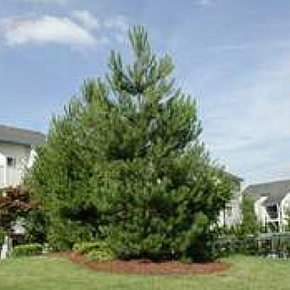
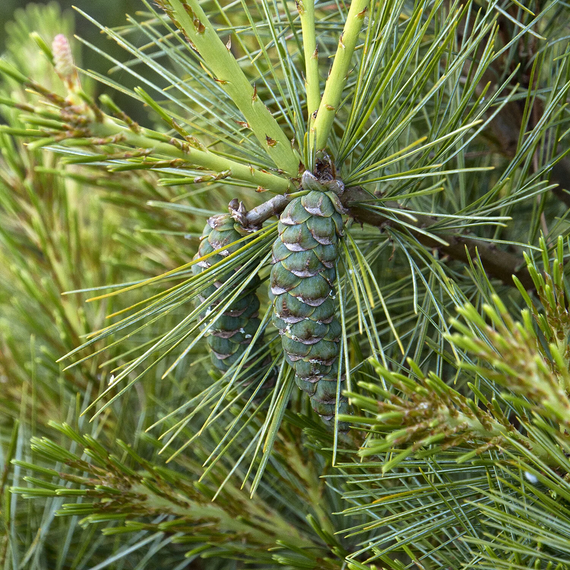
Eastern White Pine (Pinus strobus) is a towering, fast-growing needled evergreen native to eastern North America and one of the most stately conifers you can grow in a home landscape. Its signature soft, flexible blue-green needles are arranged in elegant bundles of five and can reach up to 5 inches in length, giving the canopy a feathery, graceful texture that sets it apart from stiffer-needled pines and spruces. Young trees develop a classic symmetrical pyramid shape, gradually broadening into a sweeping, irregularly crowned oval as the tree matures — a form that only grows more impressive with age. In cultivation it typically reaches 50 to 80 feet tall with a spread of 20 to 40 feet, and it puts on height quickly at a rate of roughly 2 to 3 feet per year under ideal conditions. Slender, resin-dotted cones measuring 4 to 8 inches long develop on established trees and provide a secondary ornamental interest while attracting a variety of bird species throughout the seasons. Hardy in USDA Zones 3 through 8 and thriving in full sun with well-drained, slightly acidic soil, Eastern White Pine is an outstanding choice for spacious residential properties, rural acreage, parks, and naturalized settings where its ultimate scale can be truly appreciated. Whether planted as a commanding single specimen, massed in a staggered windbreak row, or sheared into a privacy hedge, Pinus strobus brings timeless beauty, ecological value, and a living connection to North America's great forest heritage to any landscape it graces.
Plant Description
Eastern White Pine (Pinus strobus) is a rapid-growing, long-lived needled evergreen tree and one of the tallest native conifers in eastern North America. Its soft, flexible blue-green needles grow in bundles of five and reach up to 5 inches in length, giving the tree a distinctively feathery, fine-textured appearance unlike any other pine. Young trees display a clean, symmetrical pyramidal habit; with age the crown broadens into a wide, irregularly spreading oval that conveys timeless natural elegance. Smooth gray bark on young trees gradually becomes darker, thicker, and deeply furrowed as the tree matures. Slender, slightly curved brown cones measuring 4 to 8 inches long typically begin to appear after 5 to 10 years, adding further ornamental interest. The species is the state tree of both Maine and Michigan, and it carries a rich cultural history as the "Tree of Peace" among the Haudenosaunee people and as a prized colonial-era timber tree valued for its lightweight, straight-grained wood.
Mature Size
| Attribute | Typical Range |
|---|---|
| Mature Height (Cultivation) | 50 - 80 feet |
| Mature Spread | 20 - 40 feet |
| Annual Growth Rate | Approximately 2 - 3 feet per year |
| Growth Habit | Pyramidal when young; broad, irregular oval at maturity |
| Root System | Wide-spreading; requires ample uncompacted soil |
Because of its ultimate size, Eastern White Pine should be sited with plenty of open space away from structures, utility lines, and other large trees. Plan for the full 20- to 40-foot crown spread at maturity when selecting your planting location.
Hardiness Zones
Eastern White Pine is rated for USDA Hardiness Zones 3 through 8, making it one of the broadest-adapted large conifers available. It thrives across a wide range of climates, from the cold northern tier of the country down through the mid-Atlantic and into the upper South. Trees in Zones 3 and 4 may exhibit somewhat slower growth and reach a shorter mature height, while specimens growing near the warmer edge of Zone 8 may experience increased environmental stress and slightly elevated susceptibility to certain diseases. For best long-term performance in Southern Oregon and Northern California, plant in a site that offers cool soil conditions, good air circulation, and protection from prolonged drought or extreme heat.
Sunlight Requirements
Eastern White Pine grows best in full sun, defined as a minimum of 6 hours of direct sunlight per day. Full sun exposure encourages the most vigorous growth, the strongest central leader, and the densest, most attractive needle coverage. Young trees can tolerate light partial shade, but they will develop a weaker central leader and a less symmetrical form without adequate direct light. Avoid deep or heavily shaded positions, which result in sparse, open branching and significantly reduced growth rates. When planting in a group or row, space trees adequately so that as the canopy fills in, each individual still receives sufficient light.
Soil and pH Preferences
This species performs best in well-drained, slightly acidic to neutral soils with a pH of approximately 4.5 to 6.5. Sandy loam and loamy soils are ideal, providing the combination of good drainage and moderate moisture retention that Eastern White Pine favors. It tolerates dry, sandy sites reasonably well once established, but it is poorly suited to heavy clay soils, compacted ground, or any site with persistent standing water or poor drainage — conditions that lead to root decline and can be fatal over time. Eastern White Pine is also notably intolerant of alkaline soils and should not be planted in areas with highly calcareous or lime-rich substrate. It is very sensitive to salt spray and road salt runoff, so avoid planting near heavily salted roads, driveways, or coastal spray zones.
Watering Guide
Consistent moisture is critical during the establishment period. Newly planted trees should be watered deeply and regularly — approximately once or twice per week depending on temperature and soil type — for the first one to two growing seasons until the root system is well anchored. After establishment, Eastern White Pine is moderately drought tolerant, but it benefits from deep supplemental watering during extended dry periods, especially in summer heat. Avoid overwatering or allowing water to pool around the root zone, as waterlogged soil promotes root rot and fungal disease. A 2- to 3-inch layer of organic mulch spread around the base of the tree (kept several inches away from direct trunk contact) is highly effective at conserving soil moisture, moderating soil temperature, and reducing irrigation needs between watering sessions.
Fertilizing
Eastern White Pine is not a heavy feeder, and in reasonably fertile, well-amended soils it may require little to no supplemental fertilization once established. For young or newly planted trees, or for trees showing slow growth or pale needle color, apply a balanced slow-release granular fertilizer formulated for acid-loving conifers or trees in early spring, just as new growth begins. Follow package directions carefully — overfertilizing with high-nitrogen products can stimulate weak, soft growth that is more vulnerable to pest damage and wind breakage. Avoid fertilizing in late summer or fall, as this can encourage tender new growth that will not harden off adequately before winter. A soil pH test every few years is a worthwhile practice; if soil pH is creeping above 6.5, applications of elemental sulfur or acidified fertilizer can help maintain the slightly acidic conditions this tree prefers.
Pruning and Maintenance
Eastern White Pine is naturally low-maintenance and develops a beautiful form on its own with minimal pruning in most landscape settings. However, some pruning tasks are beneficial:
- Deadwood removal: Remove dead, damaged, or diseased branches any time they are noticed to maintain tree health and appearance.
- Shaping young trees: Light pruning or shearing in late spring after the new "candle" growth has expanded can control size and encourage denser branching. Never remove more than one-third of the live canopy in a single season.
- Hedge or screen maintenance: Trees used as hedges can be sheared annually in late spring to maintain a tighter, denser form — this is one of the few large pines well suited to this use.
- Weevil damage repair: If the central leader is killed by white pine weevil, prune the damaged portion back to healthy tissue and train the strongest lateral branch upward to become the new leader.
- Timing: Major pruning is best done in late winter to early spring while the tree is still dormant, or in late spring when new candles are fully elongated. Avoid pruning during freezing temperatures or in late summer, which can stimulate growth that will not harden before frost.
Planting Instructions
- Select a site with full sun, adequate space for mature growth (at least 20-40 feet from structures and other large trees), and well-drained, slightly acidic soil. Avoid low-lying areas prone to standing water and locations near heavily salted roads.
- Dig a planting hole two to three times as wide as the root ball and no deeper than the root ball's height. A wide, shallow hole encourages lateral root spread and establishment.
- Remove the tree from its container and gently loosen any circling roots. Place the tree in the hole so that the root collar — where the trunk meets the roots — sits level with or very slightly above the surrounding ground.
- Backfill with the native soil, tamping gently in layers to eliminate air pockets. Avoid amending heavily with organic matter, which can cause roots to stay within the planting hole rather than spreading outward.
- Water thoroughly immediately after planting to settle the soil and begin hydrating the root zone.
- Apply a 2- to 3-inch layer of organic mulch — shredded bark, pine needles, or wood chips — in a circle extending at least 2 to 3 feet from the trunk. Keep mulch several inches away from direct trunk contact to prevent rot.
- Continue watering regularly throughout the first two growing seasons. Stake the tree only if necessary to prevent leaning in wind-exposed sites, and remove stakes after the first year.
Landscape Uses
Eastern White Pine is one of the most versatile large conifers for the home landscape, valued for its rapid growth, graceful form, and year-round evergreen presence. Common landscape applications include:
- Specimen tree: A single mature Eastern White Pine makes a stunning focal point in a large lawn, park, or open property, its sweeping irregular crown providing dramatic visual impact.
- Privacy screening: When planted in staggered rows, the dense, layered branching creates an effective year-round visual screen — ideal for blocking neighboring structures or roads.
- Windbreaks and shelterbelts: Its fast growth and tall, full canopy make it one of the preferred species for agricultural and residential windbreaks across its hardiness range.
- Naturalized plantings: Eastern White Pine integrates beautifully into woodland edges, reforestation projects, and wildlife habitat plantings, blending naturally with native oaks, maples, and native understory plants.
- Hedge: Unusually for a large pine, this species tolerates shearing and can be maintained as a dense, tall formal or semi-formal hedge when pruned regularly.
Note: Due to its ultimate size, Eastern White Pine is best reserved for properties with ample horizontal space. It is not suited to small residential lots or tight urban conditions.
Companion Plants
Eastern White Pine creates a distinctive microclimate beneath and around its canopy — gradually acidifying the soil through needle drop and casting dappled to moderate shade as the canopy fills. The best companion plants are those that appreciate or tolerate slightly acidic, well-drained soils and partial shade. Excellent choices include:
- Rhododendrons and azaleas — thrive in the acidic, humus-rich soil enriched by decomposing pine needles
- Mountain laurel (Kalmia latifolia) — a native evergreen shrub that flourishes in similar acidic woodland conditions
- Native ferns (such as cinnamon fern or lady fern) — ideal for shaded, moist areas beneath the canopy
- Dogwood (Cornus species) — complementary flowering small trees for the woodland edge and transitional zones
- Wild ginger (Asarum canadense) — an attractive native ground cover suited to the shaded acidic conditions under mature specimens
- Hosta — excellent shade-tolerant perennial for the dripline area in partially shaded exposures
- Wintergreen (Gaultheria procumbens) — a low native ground cover well adapted to the acidic soils created by fallen pine needles
- Partridgeberry (Mitchella repens) — a charming native creeper that thrives in pine-enriched woodland soil
Allow a 5- to 6-foot clearance from the trunk when positioning companion shrubs and perennials, and avoid planting currants or gooseberries (Ribes species) in proximity to white pine, as they serve as alternate hosts for white pine blister rust.
Wildlife Value
Eastern White Pine is an outstanding tree for wildlife habitat, offering food, shelter, and nesting sites to a diverse range of species throughout the year:
- Birds: The dense evergreen canopy provides essential year-round roosting and nesting cover for numerous bird species, including owls, hawks, mourning doves, and songbirds. The nutritious seeds within the cones are consumed by crossbills, chickadees, nuthatches, and white-winged crossbills.
- Small mammals: Red squirrels and chipmunks harvest pine seeds and use the canopy for shelter; rabbits and white-tailed deer may browse young seedlings.
- Insects and pollinators: Pine pollen supports early-season native bees, and the bark and wood of mature trees provide habitat for cavity-nesting insects.
- Winter habitat: The thick, layered branches of mature trees intercept snow and create protected microclimates beneath the canopy, which are used by small mammals and ground-foraging birds during harsh winter weather.
Notably, Eastern White Pine is listed as tolerant of rabbit browsing and displays some deer resistance when mature, though young seedlings benefit from protection in deer-heavy areas.
Pests and Diseases
Eastern White Pine is generally resilient but can be susceptible to several pests and diseases, particularly in stressful growing conditions. Early detection and prompt response are key to maintaining tree health.
- White pine weevil (Pissodes strobi): The most common insect pest; larvae tunnel in the central leader, causing the top of the tree to wilt and die back in a characteristic "shepherd's crook." Monitor leaders in spring and prune out and destroy affected tips before adult weevils emerge. Insecticide applications to the terminal leader in spring can help prevent attacks.
- White pine blister rust (Cronartium ribicola): A serious fungal bark disease that is often fatal if not caught early. It requires an alternate host (Ribes species — currants and gooseberries) to complete its life cycle. Avoid planting Ribes species within several hundred feet of white pines.
- Needle cast: Various fungal needle diseases cause needle discoloration and premature drop. Improve air circulation around the tree and avoid overhead irrigation to reduce humidity and minimize risk.
- Pine bark beetles: Can attack stressed or weakened trees. Maintaining tree vigor through proper watering and avoiding mechanical damage reduces susceptibility.
- White pine shoot borer and Zimmerman pine moth: Monitor for wilting or dying shoot tips and resinous masses on the trunk and treat as recommended if detected.
- Scale insects, aphids, and pine sawfly: Occasional infestations treatable with horticultural oil or appropriate insecticide applications when populations are high.
- Spider mites: More common in hot, dry conditions. Improve soil moisture consistency and use miticides if infestations are severe.
Eastern White Pine is also sensitive to air pollutants including sulfur dioxide and ozone, and planting away from heavy vehicle traffic areas or industrial zones will help maintain long-term health. Avoid compacted or waterlogged soils, which greatly increase overall stress and disease vulnerability.
Seasonal Interest
Eastern White Pine provides year-round landscape interest across all four seasons:
- Spring: Bright, fresh pale-green "candles" of new growth emerge from branch tips, offering a striking two-tone contrast against the darker mature needles. This is also when male pollen cones release golden pollen and small female cones begin to develop.
- Summer: The canopy fills with its signature soft blue-green needles, providing dense shade, a cooling visual effect, and the gentle, whispering sound of wind passing through the fine-textured foliage.
- Fall: Like all pines, Eastern White Pine sheds its oldest (innermost) needles in autumn, which turn yellow-gold before dropping. This is entirely normal and not a sign of disease. The phenomenon adds a brief warm golden hue to the interior of the tree, and the shed needles make excellent acidifying mulch for garden beds.
- Winter: The evergreen canopy remains full and deep blue-green throughout the winter, providing color and structure in the landscape when deciduous trees are bare. Mature, resin-dotted cones hanging from branches add additional ornamental interest, and the dense branching offers critical shelter for overwintering wildlife.
Notable Cultivars
While the straight species is the classic choice for large-scale landscape use, several cultivars have been selected for unique form, size, or needle color — offering options for a wider range of garden styles and spaces:
- 'Nana': A compact, mounding dwarf form typically reaching only 3 to 4 feet tall and wide over many years, ideal for smaller gardens, rock gardens, or as a foundation accent.
- 'Blue Shag': A dense, rounded dwarf cultivar with notably blue-toned needles; typically 3 to 6 feet tall and wide at maturity, great for mixed borders or container use.
- 'Fastigiata': An upright, columnar form with a narrow, vertical profile — excellent for tight spaces or as a formal accent where height is desired without significant spread.
- 'Pendula': A dramatic weeping form with long, drooping branches; usually staked to a desired height and then allowed to cascade, creating a highly ornamental specimen effect.
- 'Contorta': Features twisted, contorted needles and branching, adding unique textural interest as a garden specimen or accent plant.
The standard species (Pinus strobus) remains the best choice for large windbreaks, privacy screens, and naturalized plantings where ultimate size and rapid coverage are the primary goals.
- Iconic fast-growing native evergreen reaching 50-80 feet tall, prized for its graceful pyramidal form and soft, feathery blue-green needles in distinctive bundles of five
- Exceptionally cold-hardy across USDA Zones 3-8, making it one of the most adaptable large conifers available for North American landscapes
- Highly versatile in the landscape — plant as a majestic specimen tree, a dense privacy screen, or a towering windbreak that provides year-round shelter and interest
- Low-maintenance once established, with naturally flexible branches, wildlife-friendly seed cones, and year-round evergreen beauty that requires minimal upkeep
Eastern White Pine (Pinus strobus) is a towering, fast-growing needled evergreen native to eastern North America and one of the most stately conifers you can grow in a home landscape. Its signature soft, flexible blue-green needles are arranged in elegant bundles of five and can reach up to 5 inches in length, giving the canopy a feathery, graceful texture that sets it apart from stiffer-needled pines and spruces. Young trees develop a classic symmetrical pyramid shape, gradually broadening into a sweeping, irregularly crowned oval as the tree matures — a form that only grows more impressive with age. In cultivation it typically reaches 50 to 80 feet tall with a spread of 20 to 40 feet, and it puts on height quickly at a rate of roughly 2 to 3 feet per year under ideal conditions. Slender, resin-dotted cones measuring 4 to 8 inches long develop on established trees and provide a secondary ornamental interest while attracting a variety of bird species throughout the seasons. Hardy in USDA Zones 3 through 8 and thriving in full sun with well-drained, slightly acidic soil, Eastern White Pine is an outstanding choice for spacious residential properties, rural acreage, parks, and naturalized settings where its ultimate scale can be truly appreciated. Whether planted as a commanding single specimen, massed in a staggered windbreak row, or sheared into a privacy hedge, Pinus strobus brings timeless beauty, ecological value, and a living connection to North America's great forest heritage to any landscape it graces.
Plant Description
Eastern White Pine (Pinus strobus) is a rapid-growing, long-lived needled evergreen tree and one of the tallest native conifers in eastern North America. Its soft, flexible blue-green needles grow in bundles of five and reach up to 5 inches in length, giving the tree a distinctively feathery, fine-textured appearance unlike any other pine. Young trees display a clean, symmetrical pyramidal habit; with age the crown broadens into a wide, irregularly spreading oval that conveys timeless natural elegance. Smooth gray bark on young trees gradually becomes darker, thicker, and deeply furrowed as the tree matures. Slender, slightly curved brown cones measuring 4 to 8 inches long typically begin to appear after 5 to 10 years, adding further ornamental interest. The species is the state tree of both Maine and Michigan, and it carries a rich cultural history as the "Tree of Peace" among the Haudenosaunee people and as a prized colonial-era timber tree valued for its lightweight, straight-grained wood.
Mature Size
| Attribute | Typical Range |
|---|---|
| Mature Height (Cultivation) | 50 - 80 feet |
| Mature Spread | 20 - 40 feet |
| Annual Growth Rate | Approximately 2 - 3 feet per year |
| Growth Habit | Pyramidal when young; broad, irregular oval at maturity |
| Root System | Wide-spreading; requires ample uncompacted soil |
Because of its ultimate size, Eastern White Pine should be sited with plenty of open space away from structures, utility lines, and other large trees. Plan for the full 20- to 40-foot crown spread at maturity when selecting your planting location.
Hardiness Zones
Eastern White Pine is rated for USDA Hardiness Zones 3 through 8, making it one of the broadest-adapted large conifers available. It thrives across a wide range of climates, from the cold northern tier of the country down through the mid-Atlantic and into the upper South. Trees in Zones 3 and 4 may exhibit somewhat slower growth and reach a shorter mature height, while specimens growing near the warmer edge of Zone 8 may experience increased environmental stress and slightly elevated susceptibility to certain diseases. For best long-term performance in Southern Oregon and Northern California, plant in a site that offers cool soil conditions, good air circulation, and protection from prolonged drought or extreme heat.
Sunlight Requirements
Eastern White Pine grows best in full sun, defined as a minimum of 6 hours of direct sunlight per day. Full sun exposure encourages the most vigorous growth, the strongest central leader, and the densest, most attractive needle coverage. Young trees can tolerate light partial shade, but they will develop a weaker central leader and a less symmetrical form without adequate direct light. Avoid deep or heavily shaded positions, which result in sparse, open branching and significantly reduced growth rates. When planting in a group or row, space trees adequately so that as the canopy fills in, each individual still receives sufficient light.
Soil and pH Preferences
This species performs best in well-drained, slightly acidic to neutral soils with a pH of approximately 4.5 to 6.5. Sandy loam and loamy soils are ideal, providing the combination of good drainage and moderate moisture retention that Eastern White Pine favors. It tolerates dry, sandy sites reasonably well once established, but it is poorly suited to heavy clay soils, compacted ground, or any site with persistent standing water or poor drainage — conditions that lead to root decline and can be fatal over time. Eastern White Pine is also notably intolerant of alkaline soils and should not be planted in areas with highly calcareous or lime-rich substrate. It is very sensitive to salt spray and road salt runoff, so avoid planting near heavily salted roads, driveways, or coastal spray zones.
Watering Guide
Consistent moisture is critical during the establishment period. Newly planted trees should be watered deeply and regularly — approximately once or twice per week depending on temperature and soil type — for the first one to two growing seasons until the root system is well anchored. After establishment, Eastern White Pine is moderately drought tolerant, but it benefits from deep supplemental watering during extended dry periods, especially in summer heat. Avoid overwatering or allowing water to pool around the root zone, as waterlogged soil promotes root rot and fungal disease. A 2- to 3-inch layer of organic mulch spread around the base of the tree (kept several inches away from direct trunk contact) is highly effective at conserving soil moisture, moderating soil temperature, and reducing irrigation needs between watering sessions.
Fertilizing
Eastern White Pine is not a heavy feeder, and in reasonably fertile, well-amended soils it may require little to no supplemental fertilization once established. For young or newly planted trees, or for trees showing slow growth or pale needle color, apply a balanced slow-release granular fertilizer formulated for acid-loving conifers or trees in early spring, just as new growth begins. Follow package directions carefully — overfertilizing with high-nitrogen products can stimulate weak, soft growth that is more vulnerable to pest damage and wind breakage. Avoid fertilizing in late summer or fall, as this can encourage tender new growth that will not harden off adequately before winter. A soil pH test every few years is a worthwhile practice; if soil pH is creeping above 6.5, applications of elemental sulfur or acidified fertilizer can help maintain the slightly acidic conditions this tree prefers.
Pruning and Maintenance
Eastern White Pine is naturally low-maintenance and develops a beautiful form on its own with minimal pruning in most landscape settings. However, some pruning tasks are beneficial:
- Deadwood removal: Remove dead, damaged, or diseased branches any time they are noticed to maintain tree health and appearance.
- Shaping young trees: Light pruning or shearing in late spring after the new "candle" growth has expanded can control size and encourage denser branching. Never remove more than one-third of the live canopy in a single season.
- Hedge or screen maintenance: Trees used as hedges can be sheared annually in late spring to maintain a tighter, denser form — this is one of the few large pines well suited to this use.
- Weevil damage repair: If the central leader is killed by white pine weevil, prune the damaged portion back to healthy tissue and train the strongest lateral branch upward to become the new leader.
- Timing: Major pruning is best done in late winter to early spring while the tree is still dormant, or in late spring when new candles are fully elongated. Avoid pruning during freezing temperatures or in late summer, which can stimulate growth that will not harden before frost.
Planting Instructions
- Select a site with full sun, adequate space for mature growth (at least 20-40 feet from structures and other large trees), and well-drained, slightly acidic soil. Avoid low-lying areas prone to standing water and locations near heavily salted roads.
- Dig a planting hole two to three times as wide as the root ball and no deeper than the root ball's height. A wide, shallow hole encourages lateral root spread and establishment.
- Remove the tree from its container and gently loosen any circling roots. Place the tree in the hole so that the root collar — where the trunk meets the roots — sits level with or very slightly above the surrounding ground.
- Backfill with the native soil, tamping gently in layers to eliminate air pockets. Avoid amending heavily with organic matter, which can cause roots to stay within the planting hole rather than spreading outward.
- Water thoroughly immediately after planting to settle the soil and begin hydrating the root zone.
- Apply a 2- to 3-inch layer of organic mulch — shredded bark, pine needles, or wood chips — in a circle extending at least 2 to 3 feet from the trunk. Keep mulch several inches away from direct trunk contact to prevent rot.
- Continue watering regularly throughout the first two growing seasons. Stake the tree only if necessary to prevent leaning in wind-exposed sites, and remove stakes after the first year.
Landscape Uses
Eastern White Pine is one of the most versatile large conifers for the home landscape, valued for its rapid growth, graceful form, and year-round evergreen presence. Common landscape applications include:
- Specimen tree: A single mature Eastern White Pine makes a stunning focal point in a large lawn, park, or open property, its sweeping irregular crown providing dramatic visual impact.
- Privacy screening: When planted in staggered rows, the dense, layered branching creates an effective year-round visual screen — ideal for blocking neighboring structures or roads.
- Windbreaks and shelterbelts: Its fast growth and tall, full canopy make it one of the preferred species for agricultural and residential windbreaks across its hardiness range.
- Naturalized plantings: Eastern White Pine integrates beautifully into woodland edges, reforestation projects, and wildlife habitat plantings, blending naturally with native oaks, maples, and native understory plants.
- Hedge: Unusually for a large pine, this species tolerates shearing and can be maintained as a dense, tall formal or semi-formal hedge when pruned regularly.
Note: Due to its ultimate size, Eastern White Pine is best reserved for properties with ample horizontal space. It is not suited to small residential lots or tight urban conditions.
Companion Plants
Eastern White Pine creates a distinctive microclimate beneath and around its canopy — gradually acidifying the soil through needle drop and casting dappled to moderate shade as the canopy fills. The best companion plants are those that appreciate or tolerate slightly acidic, well-drained soils and partial shade. Excellent choices include:
- Rhododendrons and azaleas — thrive in the acidic, humus-rich soil enriched by decomposing pine needles
- Mountain laurel (Kalmia latifolia) — a native evergreen shrub that flourishes in similar acidic woodland conditions
- Native ferns (such as cinnamon fern or lady fern) — ideal for shaded, moist areas beneath the canopy
- Dogwood (Cornus species) — complementary flowering small trees for the woodland edge and transitional zones
- Wild ginger (Asarum canadense) — an attractive native ground cover suited to the shaded acidic conditions under mature specimens
- Hosta — excellent shade-tolerant perennial for the dripline area in partially shaded exposures
- Wintergreen (Gaultheria procumbens) — a low native ground cover well adapted to the acidic soils created by fallen pine needles
- Partridgeberry (Mitchella repens) — a charming native creeper that thrives in pine-enriched woodland soil
Allow a 5- to 6-foot clearance from the trunk when positioning companion shrubs and perennials, and avoid planting currants or gooseberries (Ribes species) in proximity to white pine, as they serve as alternate hosts for white pine blister rust.
Wildlife Value
Eastern White Pine is an outstanding tree for wildlife habitat, offering food, shelter, and nesting sites to a diverse range of species throughout the year:
- Birds: The dense evergreen canopy provides essential year-round roosting and nesting cover for numerous bird species, including owls, hawks, mourning doves, and songbirds. The nutritious seeds within the cones are consumed by crossbills, chickadees, nuthatches, and white-winged crossbills.
- Small mammals: Red squirrels and chipmunks harvest pine seeds and use the canopy for shelter; rabbits and white-tailed deer may browse young seedlings.
- Insects and pollinators: Pine pollen supports early-season native bees, and the bark and wood of mature trees provide habitat for cavity-nesting insects.
- Winter habitat: The thick, layered branches of mature trees intercept snow and create protected microclimates beneath the canopy, which are used by small mammals and ground-foraging birds during harsh winter weather.
Notably, Eastern White Pine is listed as tolerant of rabbit browsing and displays some deer resistance when mature, though young seedlings benefit from protection in deer-heavy areas.
Pests and Diseases
Eastern White Pine is generally resilient but can be susceptible to several pests and diseases, particularly in stressful growing conditions. Early detection and prompt response are key to maintaining tree health.
- White pine weevil (Pissodes strobi): The most common insect pest; larvae tunnel in the central leader, causing the top of the tree to wilt and die back in a characteristic "shepherd's crook." Monitor leaders in spring and prune out and destroy affected tips before adult weevils emerge. Insecticide applications to the terminal leader in spring can help prevent attacks.
- White pine blister rust (Cronartium ribicola): A serious fungal bark disease that is often fatal if not caught early. It requires an alternate host (Ribes species — currants and gooseberries) to complete its life cycle. Avoid planting Ribes species within several hundred feet of white pines.
- Needle cast: Various fungal needle diseases cause needle discoloration and premature drop. Improve air circulation around the tree and avoid overhead irrigation to reduce humidity and minimize risk.
- Pine bark beetles: Can attack stressed or weakened trees. Maintaining tree vigor through proper watering and avoiding mechanical damage reduces susceptibility.
- White pine shoot borer and Zimmerman pine moth: Monitor for wilting or dying shoot tips and resinous masses on the trunk and treat as recommended if detected.
- Scale insects, aphids, and pine sawfly: Occasional infestations treatable with horticultural oil or appropriate insecticide applications when populations are high.
- Spider mites: More common in hot, dry conditions. Improve soil moisture consistency and use miticides if infestations are severe.
Eastern White Pine is also sensitive to air pollutants including sulfur dioxide and ozone, and planting away from heavy vehicle traffic areas or industrial zones will help maintain long-term health. Avoid compacted or waterlogged soils, which greatly increase overall stress and disease vulnerability.
Seasonal Interest
Eastern White Pine provides year-round landscape interest across all four seasons:
- Spring: Bright, fresh pale-green "candles" of new growth emerge from branch tips, offering a striking two-tone contrast against the darker mature needles. This is also when male pollen cones release golden pollen and small female cones begin to develop.
- Summer: The canopy fills with its signature soft blue-green needles, providing dense shade, a cooling visual effect, and the gentle, whispering sound of wind passing through the fine-textured foliage.
- Fall: Like all pines, Eastern White Pine sheds its oldest (innermost) needles in autumn, which turn yellow-gold before dropping. This is entirely normal and not a sign of disease. The phenomenon adds a brief warm golden hue to the interior of the tree, and the shed needles make excellent acidifying mulch for garden beds.
- Winter: The evergreen canopy remains full and deep blue-green throughout the winter, providing color and structure in the landscape when deciduous trees are bare. Mature, resin-dotted cones hanging from branches add additional ornamental interest, and the dense branching offers critical shelter for overwintering wildlife.
Notable Cultivars
While the straight species is the classic choice for large-scale landscape use, several cultivars have been selected for unique form, size, or needle color — offering options for a wider range of garden styles and spaces:
- 'Nana': A compact, mounding dwarf form typically reaching only 3 to 4 feet tall and wide over many years, ideal for smaller gardens, rock gardens, or as a foundation accent.
- 'Blue Shag': A dense, rounded dwarf cultivar with notably blue-toned needles; typically 3 to 6 feet tall and wide at maturity, great for mixed borders or container use.
- 'Fastigiata': An upright, columnar form with a narrow, vertical profile — excellent for tight spaces or as a formal accent where height is desired without significant spread.
- 'Pendula': A dramatic weeping form with long, drooping branches; usually staked to a desired height and then allowed to cascade, creating a highly ornamental specimen effect.
- 'Contorta': Features twisted, contorted needles and branching, adding unique textural interest as a garden specimen or accent plant.
The standard species (Pinus strobus) remains the best choice for large windbreaks, privacy screens, and naturalized plantings where ultimate size and rapid coverage are the primary goals.