

Zoom the image with the mouse
Dwarf Eastern White Pine - 5 Gallon
SKU:
195515
$119.99
- Compact, globe-shaped evergreen with soft, blue-green needles in bundles of five — adds refined, year-round texture to any landscape.
- Exceptionally cold-hardy in USDA Zones 3-8, making it one of the most adaptable dwarf conifers for gardens across a wide range of climates.
- Slow-growing and low-maintenance — gaining only 6 to 8 inches per year, it requires minimal pruning and retains its tidy form for decades.
- Naturally deer and rabbit resistant, ideal for gardens and landscapes where browsing pressure is a constant challenge.
Pinus strobus 'Nana', commonly known as the Dwarf Eastern White Pine, is a refined, compact selection of the beloved native Eastern White Pine that brings all the grace of the species into a garden-friendly, manageable package. Forming a dense, rounded to broadly globose mound that slowly evolves to a gently conical silhouette with age, this needled evergreen shrub grows just 6 to 8 inches per year, reaching approximately 6 feet tall and wide after a decade of growth. Its soft, fluffy needles are carried in bundles of five and display a distinctive blue-green color that complements a wide range of landscape palettes in every season. Exceptionally cold-hardy from USDA Zones 3 through 8, the Dwarf Eastern White Pine thrives in well-drained, fertile soils with a slightly acidic to neutral pH, and performs best with at least partial sun. Its naturally symmetrical branching, low-maintenance nature, and long-lived constitution make it a standout specimen plant for rock gardens, mixed conifer borders, winter gardens, and containers, as well as a reliable anchor in year-round landscape designs throughout Southern Oregon and Northern California.
Plant Description
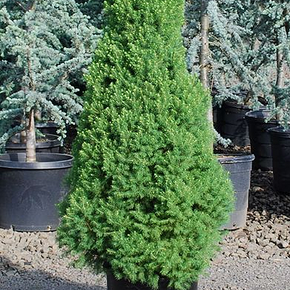
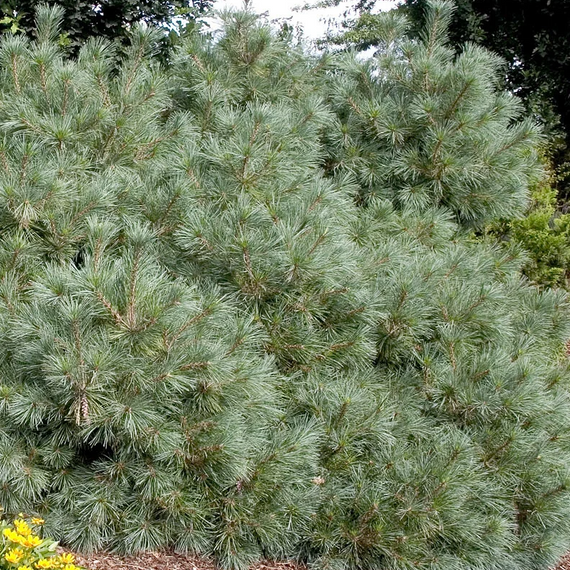
The Dwarf Eastern White Pine (Pinus strobus 'Nana') is a needled evergreen shrub and slow-growing dwarf selection of the native Eastern White Pine. It develops a dense, globe-shaped to broadly rounded form when young that gradually becomes more broadly conical with age. Branching is symmetrical and radiates upward and outward in an organized, layered fashion. The plant is covered in soft, fluffy needles arranged in clusters of five per bundle, giving the foliage a feathery, fine-textured appearance that is distinctly softer to the touch than most other pine species. The overall effect is a refined, architectural shrub that provides visual interest and structure throughout every season of the year.
Foliage Details
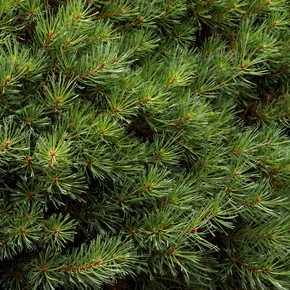
The needles of the Dwarf Eastern White Pine are soft, flexible, and aromatic, growing in fascicles (bundles) of five — a hallmark characteristic of all Eastern White Pines. Individual needles are 1 to 1.5 inches long, somewhat shorter than those of the straight species, and display a notably fluffy, dense appearance. Needle color ranges from bright blue-green to silvery blue-green, giving the plant a cool, sophisticated tone that pairs beautifully with gold, chartreuse, or deep burgundy companion plants. The foliage is retained year-round, providing persistent color and texture through winter when much of the garden is dormant.
Mature Size and Growth Rate
| Characteristic | Detail |
|---|---|
| Mature Height | Typically 6 to 7 feet; may reach up to 10 feet over many decades |
| Mature Spread | 6 to 10 feet wide |
| Annual Growth Rate | 6 to 8 inches per year (slow-growing) |
| 10-Year Size | Approximately 6 feet tall and 6 feet wide |
| Growth Habit | Globose when young, becoming broadly conical with age |
Hardiness Zones
The Dwarf Eastern White Pine is one of the most cold-hardy dwarf conifers available, performing reliably across a very wide range of climates. It is rated for USDA Plant Hardiness Zones 3a through 8b, tolerating winter temperatures as low as -40 degrees Fahrenheit. In Southern Oregon and Northern California, it is well suited to Zones 6 through 8, thriving in the varied climates of the Siskiyou Mountains, the Rogue Valley, and the higher-elevation communities of the region. It does best in cool to moderate climates and may show some stress in areas with prolonged extreme summer heat combined with low humidity.
Sunlight Requirements
Dwarf Eastern White Pine performs best in full sun, defined as 6 or more hours of direct sunlight per day, which encourages the densest, most compact growth and the richest blue-green needle color. It will also grow acceptably in partial shade (2 to 6 hours of direct sun) and can tolerate dappled light filtered through an upper canopy. In shaded conditions, growth may become slightly more open and less compact, and needle color can appear less vibrant. In hot inland areas, some afternoon shade during the peak of summer can help reduce heat stress. Avoid dense, full shade, which produces weak, sparse growth over time.
Soil and pH Preferences
This plant grows best in fertile, moist, but well-drained soils with a slightly acidic to neutral pH. It is adaptable to a range of soil textures, including sandy soils, loams, and soils with high organic matter content, as long as drainage is adequate. Soggy, waterlogged soils should be avoided, as prolonged standing water around the roots can lead to root rot and decline. A target pH of 4.5 to 6.5 is ideal, though the plant can tolerate a neutral to slightly alkaline pH. It is not tolerant of heavy salt spray or compacted urban soils, and does not perform well in highly polluted air environments.
Watering Guide
Newly planted Dwarf Eastern White Pines require consistent moisture during the establishment period, typically the first one to two growing seasons. Water deeply and thoroughly at planting, and continue to irrigate regularly — approximately once or twice per week depending on temperatures and soil drainage — until the plant is established. Once established, it has moderate drought tolerance but performs best with consistent soil moisture. Avoid letting the root zone dry out completely during extended hot, dry periods, which is especially important in inland Southern Oregon and Northern California summers. Mulching around the root zone helps retain moisture and moderate soil temperatures. Reduce irrigation in fall and winter to allow the plant to harden off appropriately.
Fertilizing
The Dwarf Eastern White Pine is a relatively light feeder and can thrive in reasonably fertile soils without heavy fertilization. If fertilizing, apply a balanced, slow-release fertilizer formulated for conifers or acid-loving plants in early spring, just as new growth begins. A product with an acidifying effect is particularly beneficial if your native soil tends toward neutral or slightly alkaline pH. Avoid applying fertilizer late in the growing season, as this can stimulate tender new growth that is vulnerable to frost damage. Over-fertilizing with high-nitrogen products can cause unnaturally rapid, leggy growth that detracts from the plant's naturally compact form. A light topdressing of compost around the root zone each spring can also provide gentle, ongoing nutrition.
Pruning and Maintenance
One of the most appealing qualities of the Dwarf Eastern White Pine is its naturally tidy, self-maintaining form, which requires very little pruning under normal garden conditions. Light shaping can be performed in early summer when the new "candle" growth is still soft and elongating. Pinching back the candles by one-half to two-thirds slows elongation and encourages even denser, more compact branching. Avoid cutting back into old wood, as Eastern White Pines do not reliably regenerate growth from bare, woody stems. Remove any dead, damaged, or diseased branches at any time of year using clean, sharp pruning tools. In general, the goal is to work with the plant's natural shape rather than force it into an artificial form.
Planting Instructions
- Choose a planting location with adequate sun (at least partial sun) and well-drained soil away from low-lying wet areas.
- Dig a hole that is two to three times wider than the root ball and equal to its depth. Avoid planting too deep.
- Remove the plant from its container and gently loosen any circling or compressed roots.
- Set the plant in the hole so the top of the root ball is level with or very slightly above the surrounding grade to promote drainage.
- Backfill with the native soil, tamping gently to eliminate air pockets. Amending with a small amount of compost or acidifying organic matter is acceptable but not required.
- Water deeply and thoroughly after planting to settle the soil.
- Apply 2 to 3 inches of organic mulch (wood chips or shredded bark) in a wide ring around the plant, keeping it a few inches away from the trunk to prevent crown rot.
- Protect from strong, desiccating winds during the first winter after planting, particularly in exposed sites.
Landscape Uses
The Dwarf Eastern White Pine is an extraordinarily versatile landscape plant thanks to its manageable size, refined appearance, and year-round evergreen presence. Common uses include:
- Specimen planting: A single plant placed in a prominent garden bed or lawn area creates a striking, four-season focal point.
- Rock gardens: The plant's compact scale and textural needles pair perfectly with boulders, gravel, and low-growing alpine perennials.
- Mixed conifer borders: Combine with other dwarf conifers of varying color and form for a low-maintenance, year-round display.
- Winter gardens: Its blue-green foliage adds warmth and structure to the landscape during the coldest months.
- Foundation plantings: Slow growth means it won't quickly outgrow its space near structures or walkways.
- Container growing: Well suited to large decorative containers on patios and entryways.
- Meadow and naturalistic plantings: Can be incorporated into informal naturalized settings for a native feel.
Container Growing
The Dwarf Eastern White Pine is an excellent choice for growing in large containers or decorative planters, making it a sophisticated option for patios, entryways, and rooftop gardens. Choose a container with ample drainage holes and a minimum diameter of 18 to 24 inches to allow root development. Use a well-draining potting mix amended with coarse perlite or bark fines to prevent waterlogging. Container-grown plants may need more frequent watering than in-ground plants, especially during warm weather, but should never be allowed to sit in standing water. Fertilize lightly with a slow-release, acid-formulated conifer fertilizer in early spring. In very cold winter climates, container plants may need protection such as wrapping or moving to an unheated garage during extreme freezes, as container roots are more exposed to temperature extremes than in-ground roots.
Pests and Diseases
While generally a tough and resilient plant, the Dwarf Eastern White Pine can be affected by several common pests and diseases. Awareness and early intervention are the best tools for keeping the plant healthy.
- White Pine Aphid and Powdery Pine Needle Aphid: These sap-sucking insects can cause needle discoloration and distortion. Insecticidal soap or horticultural oil sprays are effective controls.
- Introduced Pine Sawfly: Larvae feed on needles, potentially causing significant defoliation. Hand-picking or targeted insecticide applications when larvae are small are recommended.
- Two-Spotted Spider Mites: More common during hot, dry conditions. Regular water sprays on the foliage and miticide applications can help.
- Pine Bark Adelgid: Causes white, woolly masses on bark and can weaken plants over time. Horticultural oil applied during the dormant season is effective.
- Pine Engraver Beetles and Bark Beetles: Typically target stressed or weakened trees. Maintaining plant health through proper watering and siting is the best prevention.
- Pine Spittlebug: Creates frothy masses on stems. Generally a cosmetic nuisance on healthy plants.
- White Pine Blister Rust: A fungal disease that can affect white pines when five-needled Ribes (currants and gooseberries) are planted nearby. Avoid planting Ribes species in close proximity.
- Wind Damage: This plant is susceptible to desiccation and physical damage from strong, persistent winds. Sheltered planting locations are preferred.
Wildlife Value
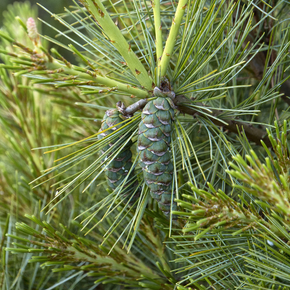
The Dwarf Eastern White Pine offers meaningful wildlife benefits despite its compact size. Dense evergreen foliage provides important shelter and nesting cover for small birds and mammals, particularly during winter months when other vegetation is bare. The plant is noted to attract small mammals as part of the broader Eastern White Pine ecosystem. Mature specimens produce small pine cones whose seeds are eaten by songbirds, squirrels, and chipmunks. Because of its deer and rabbit resistance, this plant is reliable in wildlife-heavy gardens where many other ornamentals suffer significant browsing damage. Its evergreen structure also serves as a windbreak and thermal cover for overwintering birds and beneficial insects.
Companion Plants
The Dwarf Eastern White Pine's soft blue-green foliage and rounded form pair beautifully with a wide range of companion plants. Consider these combinations for a striking, cohesive design:
- Dwarf Japanese Maples (Acer palmatum cultivars): The fine-textured, colorful foliage of compact maples creates a dramatic contrast with the pine's blue-green needles.
- Dwarf Blue Spruce (Picea pungens cultivars): Cool blue tones echo and amplify the color palette while offering contrasting conical form.
- Heaths and Heathers (Erica and Calluna spp.): Low-growing, acid-loving companions that bloom in winter and early spring, filling in around the base of the pine.
- Ornamental grasses (Festuca glauca, Helictotrichon sempervirens): Blue fescue and blue oat grass mirror the cool tones of the pine while adding movement and fine texture.
- Dwarf Hinoki Cypress (Chamaecyparis obtusa cultivars): Deep green or gold-tipped foliage provides strong textural and color contrast.
- Bergenia and Hellebores: Shade-tolerant, broad-leaved perennials that thrive in the dappled light beneath the pine's canopy.
- Boulders and ornamental stone: The pine's natural affinity for rock gardens means it is beautifully set off by large stones, gravel mulch, and natural rock features.
Seasonal Interest
The Dwarf Eastern White Pine earns its place in the garden through strong year-round visual appeal:
- Spring: Bright, elongating candles (new growth shoots) emerge from branch tips, often displaying a lighter, almost silver-green color before maturing. This new growth is soft and particularly attractive against the older blue-green needles.
- Summer: Dense, full foliage reaches peak richness in its blue-green color. The layered branching structure is most visible and lush.
- Fall: Some inner needle drop (normal for pines) may occur, with older needles yellowing and shedding while outer growth remains vibrant. The plant retains its overall evergreen appearance.
- Winter: One of its finest seasons — the blue-green foliage stands out dramatically against bare deciduous plants, snow, and gray winter skies. The rounded, sculptural form adds strong architectural structure to the dormant garden and provides critical wildlife cover.
- Compact, globe-shaped evergreen with soft, blue-green needles in bundles of five — adds refined, year-round texture to any landscape.
- Exceptionally cold-hardy in USDA Zones 3-8, making it one of the most adaptable dwarf conifers for gardens across a wide range of climates.
- Slow-growing and low-maintenance — gaining only 6 to 8 inches per year, it requires minimal pruning and retains its tidy form for decades.
- Naturally deer and rabbit resistant, ideal for gardens and landscapes where browsing pressure is a constant challenge.
Pinus strobus 'Nana', commonly known as the Dwarf Eastern White Pine, is a refined, compact selection of the beloved native Eastern White Pine that brings all the grace of the species into a garden-friendly, manageable package. Forming a dense, rounded to broadly globose mound that slowly evolves to a gently conical silhouette with age, this needled evergreen shrub grows just 6 to 8 inches per year, reaching approximately 6 feet tall and wide after a decade of growth. Its soft, fluffy needles are carried in bundles of five and display a distinctive blue-green color that complements a wide range of landscape palettes in every season. Exceptionally cold-hardy from USDA Zones 3 through 8, the Dwarf Eastern White Pine thrives in well-drained, fertile soils with a slightly acidic to neutral pH, and performs best with at least partial sun. Its naturally symmetrical branching, low-maintenance nature, and long-lived constitution make it a standout specimen plant for rock gardens, mixed conifer borders, winter gardens, and containers, as well as a reliable anchor in year-round landscape designs throughout Southern Oregon and Northern California.
Plant Description
The Dwarf Eastern White Pine (Pinus strobus 'Nana') is a needled evergreen shrub and slow-growing dwarf selection of the native Eastern White Pine. It develops a dense, globe-shaped to broadly rounded form when young that gradually becomes more broadly conical with age. Branching is symmetrical and radiates upward and outward in an organized, layered fashion. The plant is covered in soft, fluffy needles arranged in clusters of five per bundle, giving the foliage a feathery, fine-textured appearance that is distinctly softer to the touch than most other pine species. The overall effect is a refined, architectural shrub that provides visual interest and structure throughout every season of the year.
Foliage Details
The needles of the Dwarf Eastern White Pine are soft, flexible, and aromatic, growing in fascicles (bundles) of five — a hallmark characteristic of all Eastern White Pines. Individual needles are 1 to 1.5 inches long, somewhat shorter than those of the straight species, and display a notably fluffy, dense appearance. Needle color ranges from bright blue-green to silvery blue-green, giving the plant a cool, sophisticated tone that pairs beautifully with gold, chartreuse, or deep burgundy companion plants. The foliage is retained year-round, providing persistent color and texture through winter when much of the garden is dormant.
Mature Size and Growth Rate
| Characteristic | Detail |
|---|---|
| Mature Height | Typically 6 to 7 feet; may reach up to 10 feet over many decades |
| Mature Spread | 6 to 10 feet wide |
| Annual Growth Rate | 6 to 8 inches per year (slow-growing) |
| 10-Year Size | Approximately 6 feet tall and 6 feet wide |
| Growth Habit | Globose when young, becoming broadly conical with age |
Hardiness Zones
The Dwarf Eastern White Pine is one of the most cold-hardy dwarf conifers available, performing reliably across a very wide range of climates. It is rated for USDA Plant Hardiness Zones 3a through 8b, tolerating winter temperatures as low as -40 degrees Fahrenheit. In Southern Oregon and Northern California, it is well suited to Zones 6 through 8, thriving in the varied climates of the Siskiyou Mountains, the Rogue Valley, and the higher-elevation communities of the region. It does best in cool to moderate climates and may show some stress in areas with prolonged extreme summer heat combined with low humidity.
Sunlight Requirements
Dwarf Eastern White Pine performs best in full sun, defined as 6 or more hours of direct sunlight per day, which encourages the densest, most compact growth and the richest blue-green needle color. It will also grow acceptably in partial shade (2 to 6 hours of direct sun) and can tolerate dappled light filtered through an upper canopy. In shaded conditions, growth may become slightly more open and less compact, and needle color can appear less vibrant. In hot inland areas, some afternoon shade during the peak of summer can help reduce heat stress. Avoid dense, full shade, which produces weak, sparse growth over time.
Soil and pH Preferences
This plant grows best in fertile, moist, but well-drained soils with a slightly acidic to neutral pH. It is adaptable to a range of soil textures, including sandy soils, loams, and soils with high organic matter content, as long as drainage is adequate. Soggy, waterlogged soils should be avoided, as prolonged standing water around the roots can lead to root rot and decline. A target pH of 4.5 to 6.5 is ideal, though the plant can tolerate a neutral to slightly alkaline pH. It is not tolerant of heavy salt spray or compacted urban soils, and does not perform well in highly polluted air environments.
Watering Guide
Newly planted Dwarf Eastern White Pines require consistent moisture during the establishment period, typically the first one to two growing seasons. Water deeply and thoroughly at planting, and continue to irrigate regularly — approximately once or twice per week depending on temperatures and soil drainage — until the plant is established. Once established, it has moderate drought tolerance but performs best with consistent soil moisture. Avoid letting the root zone dry out completely during extended hot, dry periods, which is especially important in inland Southern Oregon and Northern California summers. Mulching around the root zone helps retain moisture and moderate soil temperatures. Reduce irrigation in fall and winter to allow the plant to harden off appropriately.
Fertilizing
The Dwarf Eastern White Pine is a relatively light feeder and can thrive in reasonably fertile soils without heavy fertilization. If fertilizing, apply a balanced, slow-release fertilizer formulated for conifers or acid-loving plants in early spring, just as new growth begins. A product with an acidifying effect is particularly beneficial if your native soil tends toward neutral or slightly alkaline pH. Avoid applying fertilizer late in the growing season, as this can stimulate tender new growth that is vulnerable to frost damage. Over-fertilizing with high-nitrogen products can cause unnaturally rapid, leggy growth that detracts from the plant's naturally compact form. A light topdressing of compost around the root zone each spring can also provide gentle, ongoing nutrition.
Pruning and Maintenance
One of the most appealing qualities of the Dwarf Eastern White Pine is its naturally tidy, self-maintaining form, which requires very little pruning under normal garden conditions. Light shaping can be performed in early summer when the new "candle" growth is still soft and elongating. Pinching back the candles by one-half to two-thirds slows elongation and encourages even denser, more compact branching. Avoid cutting back into old wood, as Eastern White Pines do not reliably regenerate growth from bare, woody stems. Remove any dead, damaged, or diseased branches at any time of year using clean, sharp pruning tools. In general, the goal is to work with the plant's natural shape rather than force it into an artificial form.
Planting Instructions
- Choose a planting location with adequate sun (at least partial sun) and well-drained soil away from low-lying wet areas.
- Dig a hole that is two to three times wider than the root ball and equal to its depth. Avoid planting too deep.
- Remove the plant from its container and gently loosen any circling or compressed roots.
- Set the plant in the hole so the top of the root ball is level with or very slightly above the surrounding grade to promote drainage.
- Backfill with the native soil, tamping gently to eliminate air pockets. Amending with a small amount of compost or acidifying organic matter is acceptable but not required.
- Water deeply and thoroughly after planting to settle the soil.
- Apply 2 to 3 inches of organic mulch (wood chips or shredded bark) in a wide ring around the plant, keeping it a few inches away from the trunk to prevent crown rot.
- Protect from strong, desiccating winds during the first winter after planting, particularly in exposed sites.
Landscape Uses
The Dwarf Eastern White Pine is an extraordinarily versatile landscape plant thanks to its manageable size, refined appearance, and year-round evergreen presence. Common uses include:
- Specimen planting: A single plant placed in a prominent garden bed or lawn area creates a striking, four-season focal point.
- Rock gardens: The plant's compact scale and textural needles pair perfectly with boulders, gravel, and low-growing alpine perennials.
- Mixed conifer borders: Combine with other dwarf conifers of varying color and form for a low-maintenance, year-round display.
- Winter gardens: Its blue-green foliage adds warmth and structure to the landscape during the coldest months.
- Foundation plantings: Slow growth means it won't quickly outgrow its space near structures or walkways.
- Container growing: Well suited to large decorative containers on patios and entryways.
- Meadow and naturalistic plantings: Can be incorporated into informal naturalized settings for a native feel.
Container Growing
The Dwarf Eastern White Pine is an excellent choice for growing in large containers or decorative planters, making it a sophisticated option for patios, entryways, and rooftop gardens. Choose a container with ample drainage holes and a minimum diameter of 18 to 24 inches to allow root development. Use a well-draining potting mix amended with coarse perlite or bark fines to prevent waterlogging. Container-grown plants may need more frequent watering than in-ground plants, especially during warm weather, but should never be allowed to sit in standing water. Fertilize lightly with a slow-release, acid-formulated conifer fertilizer in early spring. In very cold winter climates, container plants may need protection such as wrapping or moving to an unheated garage during extreme freezes, as container roots are more exposed to temperature extremes than in-ground roots.
Pests and Diseases
While generally a tough and resilient plant, the Dwarf Eastern White Pine can be affected by several common pests and diseases. Awareness and early intervention are the best tools for keeping the plant healthy.
- White Pine Aphid and Powdery Pine Needle Aphid: These sap-sucking insects can cause needle discoloration and distortion. Insecticidal soap or horticultural oil sprays are effective controls.
- Introduced Pine Sawfly: Larvae feed on needles, potentially causing significant defoliation. Hand-picking or targeted insecticide applications when larvae are small are recommended.
- Two-Spotted Spider Mites: More common during hot, dry conditions. Regular water sprays on the foliage and miticide applications can help.
- Pine Bark Adelgid: Causes white, woolly masses on bark and can weaken plants over time. Horticultural oil applied during the dormant season is effective.
- Pine Engraver Beetles and Bark Beetles: Typically target stressed or weakened trees. Maintaining plant health through proper watering and siting is the best prevention.
- Pine Spittlebug: Creates frothy masses on stems. Generally a cosmetic nuisance on healthy plants.
- White Pine Blister Rust: A fungal disease that can affect white pines when five-needled Ribes (currants and gooseberries) are planted nearby. Avoid planting Ribes species in close proximity.
- Wind Damage: This plant is susceptible to desiccation and physical damage from strong, persistent winds. Sheltered planting locations are preferred.
Wildlife Value
The Dwarf Eastern White Pine offers meaningful wildlife benefits despite its compact size. Dense evergreen foliage provides important shelter and nesting cover for small birds and mammals, particularly during winter months when other vegetation is bare. The plant is noted to attract small mammals as part of the broader Eastern White Pine ecosystem. Mature specimens produce small pine cones whose seeds are eaten by songbirds, squirrels, and chipmunks. Because of its deer and rabbit resistance, this plant is reliable in wildlife-heavy gardens where many other ornamentals suffer significant browsing damage. Its evergreen structure also serves as a windbreak and thermal cover for overwintering birds and beneficial insects.
Companion Plants
The Dwarf Eastern White Pine's soft blue-green foliage and rounded form pair beautifully with a wide range of companion plants. Consider these combinations for a striking, cohesive design:
- Dwarf Japanese Maples (Acer palmatum cultivars): The fine-textured, colorful foliage of compact maples creates a dramatic contrast with the pine's blue-green needles.
- Dwarf Blue Spruce (Picea pungens cultivars): Cool blue tones echo and amplify the color palette while offering contrasting conical form.
- Heaths and Heathers (Erica and Calluna spp.): Low-growing, acid-loving companions that bloom in winter and early spring, filling in around the base of the pine.
- Ornamental grasses (Festuca glauca, Helictotrichon sempervirens): Blue fescue and blue oat grass mirror the cool tones of the pine while adding movement and fine texture.
- Dwarf Hinoki Cypress (Chamaecyparis obtusa cultivars): Deep green or gold-tipped foliage provides strong textural and color contrast.
- Bergenia and Hellebores: Shade-tolerant, broad-leaved perennials that thrive in the dappled light beneath the pine's canopy.
- Boulders and ornamental stone: The pine's natural affinity for rock gardens means it is beautifully set off by large stones, gravel mulch, and natural rock features.
Seasonal Interest
The Dwarf Eastern White Pine earns its place in the garden through strong year-round visual appeal:
- Spring: Bright, elongating candles (new growth shoots) emerge from branch tips, often displaying a lighter, almost silver-green color before maturing. This new growth is soft and particularly attractive against the older blue-green needles.
- Summer: Dense, full foliage reaches peak richness in its blue-green color. The layered branching structure is most visible and lush.
- Fall: Some inner needle drop (normal for pines) may occur, with older needles yellowing and shedding while outer growth remains vibrant. The plant retains its overall evergreen appearance.
- Winter: One of its finest seasons — the blue-green foliage stands out dramatically against bare deciduous plants, snow, and gray winter skies. The rounded, sculptural form adds strong architectural structure to the dormant garden and provides critical wildlife cover.