
Zoom the image with the mouse
Dwarf Pomegranate - 1 Gallon
SKU:
105350
UPC:
014949674512
$21.99
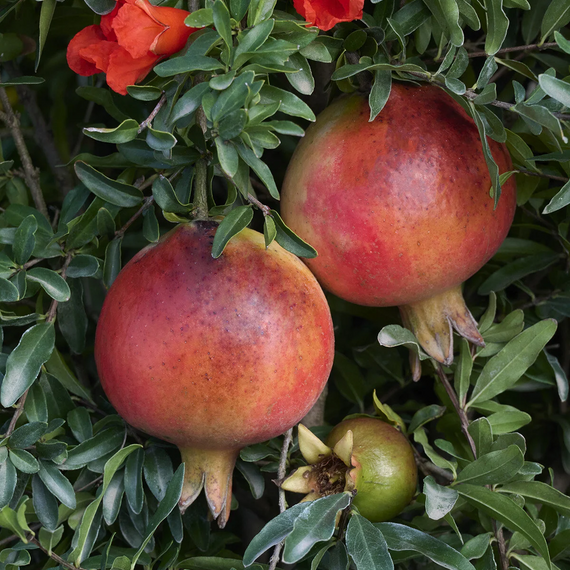
- Brilliant orange-red tubular flowers bloom from late spring through summer, followed by jewel-toned miniature pomegranate fruits that persist into fall for season-long ornamental interest.
- A naturally compact, low-maintenance deciduous shrub that tops out at just 2 to 4 feet tall and wide, making it ideal for small garden beds, patio containers, and even bonsai culture.
- Thrives in heat, drought, and a wide range of soil types once established, performing beautifully in the dry summers of Southern Oregon and Northern California.
- Attracts bees, butterflies, and hummingbirds with its vivid nectar-rich blossoms, while being notably resistant to deer and rabbits.
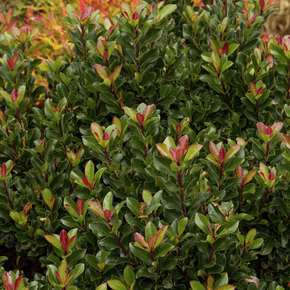
Dwarf Pomegranate (Punica granatum 'Nana') is a charming, compact deciduous shrub that delivers remarkable four-season interest in a tidy, manageable package. Believed to be a natural dwarf variant of the species first documented in botanical literature in the early 1800s, this miniature cultivar originates from the greater Middle East and Himalayan region, where the full-sized pomegranate has been prized for thousands of years. Unlike its larger relative, 'Nana' maintains a dense, rounded form just 2 to 4 feet tall and wide, with proportionately small leaves, flowers, and fruits that give it an intrinsically ornamental quality. Emerging spring foliage carries a bronzy flush that matures to glossy, bright green through summer before transitioning to warm golden yellow in fall. From late spring through summer, the plant puts on a spectacular show of vivid orange-red, tubular flowers that attract bees, butterflies, and hummingbirds. These blooms give way to deep red, approximately 2-inch miniature pomegranate fruits that are edible though primarily ornamental, persisting on the plant well into autumn. Hardy in USDA Zones 7 through 11 and tolerant of temperatures down to about 10 degrees F, Dwarf Pomegranate is perfectly suited to the hot, sunny, low-humidity conditions of Southern Oregon and Northern California. It thrives in rocky, sandy, or clay soils as long as drainage is adequate, and it exhibits solid drought tolerance once established. Whether planted in a sunny border, used as a low informal hedge, grown in a decorative patio container, or trained as an eye-catching bonsai specimen, Punica granatum 'Nana' offers an exceptional combination of beauty, toughness, and versatility that few ornamental shrubs can match.
Plant Description
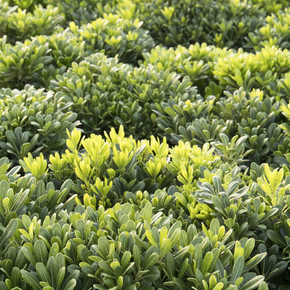
Dwarf Pomegranate is a multi-stemmed, deciduous shrub with a naturally rounded, densely branched form. Stems are somewhat thorny, adding a textural element to the plant's structure. The small, lance-shaped leaves measure roughly 1 inch in length and are arranged opposite or in whorls along the branches. New spring growth emerges with an attractive bronzy tint before maturing to a vivid, shimmering green throughout the summer months. In fall, the foliage transitions to a warm golden yellow before dropping for winter dormancy. The tubular, crinkle-petaled flowers are a striking orange-red with flesh-colored petal margins and appear singly or in small clusters at branch tips. Each bloom is followed by a miniature, globose fruit with a leathery, deep red skin enclosing small arils that are edible, though more tart and less juicy than those of full-sized commercial pomegranate varieties. The plant has a moderate growth rate and is considered low-maintenance relative to most fruiting shrubs.
Mature Size
| Attribute | Typical Range |
|---|---|
| Mature Height | 2 to 4 feet (occasionally to 6 feet in older specimens) |
| Mature Spread | 2 to 4 feet |
| Recommended Spacing | 36 to 48 inches on center |
| Growth Rate | Moderate |
| Plant Form | Dense, rounded, multi-stemmed shrub |
| Bonsai Potential | Can be trained and pruned to maintain under 1 foot |
Hardiness and Climate
Dwarf Pomegranate is rated for USDA Hardiness Zones 7 through 11 and is cold hardy down to approximately 10 degrees F. It performs exceptionally well in the hot, dry summers typical of Southern Oregon and Northern California, thriving where full-sized fruiting trees often struggle. It loves heat and aridity, and once established it handles summer temperatures extremely well. In climates where winter temperatures stay consistently above 40 degrees F, the plant may retain some foliage and can produce miniature fruit reliably. Frost will cause foliage and fruit to drop, but established plants will re-flush with vigor the following spring. It is well-suited to Sunset Climate Zones 5 through 24 and Hawaii zones H1 and H2, covering a wide range of Western US conditions.
Sunlight Requirements
Dwarf Pomegranate performs best in full sun, requiring a minimum of 6 to 8 hours of direct sunlight per day. Full sun exposure promotes the densest foliage, the greatest number of flower buds, and the best chance of fruit set. While the plant can tolerate partial shade, blooming and fruiting will be noticeably reduced in shadier positions. If growing in a container and bringing the plant indoors for winter, a south-facing window with as much direct light as possible is essential. Plants that receive insufficient light will remain attractive as foliage shrubs but will be reluctant to bloom. When transitioning a containerized plant from an indoor location to full outdoor sun in spring, acclimate it gradually over one to two weeks to avoid leaf scorch.
Soil and pH Preferences
One of the most versatile aspects of Dwarf Pomegranate is its adaptability to a wide range of soil conditions. It grows well in rocky, sandy, loamy, or even clay soils, provided that drainage is adequate. Unlike most fruiting plants, it actually prefers slightly alkaline soil, though it tolerates acidic to neutral pH levels as well. The key requirement is that soil does not remain waterlogged, as persistently wet roots will lead to decline and root rot. For in-ground planting in native soils, soil amendment is generally not necessary or recommended. For container growing, use a well-draining potting mix amended with perlite or coarse sand to ensure rapid drainage and good root aeration. A mix of one part peat moss, one part loam, and two parts sand is a time-tested formula for this plant in containers.
Watering Guide
Newly Planted Shrubs: Establish a consistent watering schedule for the first several weeks after planting to help the root system develop. Water deeply every 3 to 4 days for the first two weeks, then gradually reduce frequency over the following 6 to 8 weeks as the plant becomes established.
Established In-Ground Plants: Once established, Dwarf Pomegranate is moderately drought tolerant. Water deeply but infrequently during the growing season, allowing the soil to dry somewhat between waterings. During active flowering, plants may benefit from slightly more frequent irrigation. Reduce watering significantly in fall and winter while the plant is dormant.
Container-Grown Plants: Potted plants dry out more quickly than those in the ground and may need watering twice per week during warm weather. Water thoroughly until water drains from the bottom of the pot, then allow the top inch or two of soil to dry before watering again. Never allow a containerized plant to sit in standing water, as this leads directly to root rot.
Overwatering Warning: Consistently soggy soil is one of the most common problems with this plant. When in doubt, err on the side of slightly drier conditions rather than wetter ones.
Fertilizing
Dwarf Pomegranate is not a heavy feeder, but regular fertilization during the growing season will reward you with stronger growth and more prolific blooming. Apply a balanced, all-purpose fertilizer or a fertilizer formulated for fruit trees in late winter before new growth begins. For in-ground plants, one application per year combined with a generous top-dressing of compost is typically sufficient unless the plant shows signs of nutrient deficiency such as pale foliage or reduced vigor. For container-grown plants, fertilize every two weeks from spring through fall using a water-soluble, balanced fertilizer, then discontinue feeding during winter dormancy. Organic options such as fish emulsion, worm castings, compost tea, or seaweed extract are excellent choices that feed the plant gently without risk of chemical buildup. Phosphorus and potassium are particularly important nutrients for supporting flowering and fruit production, so a fertilizer with a balanced or slightly higher P-K ratio is beneficial during the bloom period.
Pruning and Maintenance
Dwarf Pomegranate naturally develops a tidy, rounded, multi-stemmed form and requires minimal pruning to maintain its shape. The best time for significant pruning is late winter or very early spring while the plant is still dormant and before new growth emerges. At that time, remove any dead, damaged, or crossing branches, and thin out any inward-growing stems to improve air circulation and light penetration through the canopy. Because flowers are produced on new growth, light selective pruning after a flush of growth, or heading cuts to the tips of branches, can encourage more lateral branching and increase the number of flowering shoots in subsequent seasons. Avoid shearing this plant into rigid geometric shapes, which destroys its naturally graceful form and can reduce flowering. Root suckers should be removed at their base as they appear. Do not remove spent flowers, as these will develop into the ornamental fruit. Light grooming throughout the growing season to remove only fully dead leaves or spent stems is all that is needed between annual pruning sessions.
Planting Instructions
- Select a planting site that receives at least 6 to 8 hours of direct sunlight daily and has well-draining soil. Avoid low-lying areas where water pools after rain.
- The best times to plant are fall (ideal, giving the root system three seasons to establish before summer heat) or in spring after the last frost has passed.
- Dig a planting hole three times as wide as the root ball but no deeper than the root ball itself. This encourages lateral root development without burying the crown.
- In native soil conditions, backfill with the same soil removed from the hole without amendments. This encourages roots to grow outward rather than remaining in a small enriched pocket.
- Position the plant so the top of the root ball is level with or very slightly above the surrounding soil grade to ensure good drainage away from the crown.
- Water thoroughly at planting to settle the soil and eliminate air pockets around the roots.
- Apply a 2 to 3 inch layer of mulch around the base of the plant, keeping mulch a few inches away from the main stems, to conserve moisture and moderate soil temperature during establishment.
- Follow the new plant watering schedule, gradually reducing frequency as the plant establishes over 8 to 12 weeks.
Seasonal Interest
| Season | What to Expect |
|---|---|
| Spring | Bronzy new foliage emerges and quickly transitions to glossy bright green; flower buds begin forming; first wave of vivid orange-red blooms opens in late spring. |
| Summer | Continued flushing of brilliant orange-red tubular flowers through the warmest months; miniature green fruits begin developing from spent blossoms; rich green canopy provides dense, attractive foliage mass. |
| Fall | Miniature fruits ripen to deep red and persist as ornamental accents; foliage transitions to warm golden yellow before leaf drop; fruit may remain on bare branches adding winter interest. |
| Winter | Plant is dormant; leaf drop is normal and expected; attractive branching structure and any remaining fruits provide subtle winter interest; some leaf retention may occur in milder winters. |
Landscape Uses
- Mixed Shrub Borders: Works beautifully as a front-to-mid border plant, providing bold seasonal color and a proportionally compact structure among larger companion shrubs.
- Low Informal Hedging: Its naturally dense, rounded habit makes it effective as a low seasonal screen or garden divider without the need for shearing.
- Patio and Deck Containers: An outstanding container specimen that adds vibrant color to patios, courtyards, and entryways through the growing season; can be moved to a protected location over winter in colder zones.
- Mediterranean and Xeriscape Gardens: Perfectly suited to low-water landscape designs featuring drought-tolerant, sun-loving plants with strong visual impact.
- Accent or Specimen Planting: Its unique multi-season floral and fruit display makes it a natural focal point in small garden spaces.
- Bonsai Culture: One of the most popular subjects for bonsai training due to its naturally small leaves, showy flowers, and ornamental fruit; can be restricted to under one foot with regular root and canopy management.
- Pollinator Garden: An excellent addition to any garden designed to support bees, butterflies, and hummingbirds.
- Wall-Side and Courtyard Plantings: Thrives in the reflected heat of south- or west-facing walls, where the extra warmth enhances flowering and fruiting performance.
Container Growing
Dwarf Pomegranate is one of the finest fruiting shrubs available for container culture. Choose a container that is at least 20 inches in diameter and depth, with ample drainage holes. Terra cotta or glazed ceramic pots are preferred over plastic, as plastic can overheat in the summer sun and stress the roots. Use a well-draining potting mix lightened with perlite or coarse sand rather than native garden soil, which compacts too readily in containers. This plant actually blooms most prolifically when it is somewhat pot-bound, so resist the urge to repot too frequently. When repotting is necessary, move up only one container size at a time. Containerized plants require more frequent watering than in-ground plants, especially during summer, but should never be allowed to sit in accumulated water. Bring containers to a cool, bright indoor location before nighttime temperatures drop to around 50 degrees F in fall. A south-facing window is ideal for overwintering. Resume regular watering and fertilizing when new growth appears in spring, and move the container back outdoors gradually once frost risk has passed.
Wildlife Value
The vivid tubular flowers of Dwarf Pomegranate are highly attractive to a range of beneficial wildlife. The deep, nectar-rich blooms are particularly favored by hummingbirds, whose long bills are well-suited to accessing the floral nectar. Bees of many species are drawn to the flowers as a pollen and nectar source through the long bloom season, making this plant a valuable addition to any pollinator-friendly garden. Butterflies also regularly visit the blooms. The small ornamental fruits can attract birds in fall and winter when other food sources become scarce. On the practical side, Dwarf Pomegranate is notably resistant to browsing by deer and rabbits, making it a reliable choice in landscapes where these animals are a persistent concern. Its somewhat thorny stems provide additional natural deterrence.
Pests and Diseases
Dwarf Pomegranate is considered largely trouble-free and is one of the more pest- and disease-resistant ornamental fruiting shrubs available. When problems do occur, they are typically manageable with prompt attention.
- Aphids: The most commonly encountered pest, particularly on soft new growth and flower buds. Inspect plants regularly and treat with a strong water spray, insecticidal soap, or neem oil at the first sign of infestation, as populations can build quickly.
- Spider Mites: May appear in hot, dry conditions. Improve air circulation and apply insecticidal soap or neem oil. Keeping the plant well-watered during heat events reduces susceptibility.
- Whiteflies, Mealybugs, and Scale: Occasional pests, especially on container-grown plants. Treat with horticultural oil or insecticidal soap and inspect new purchases carefully before introducing them near other plants.
- Thrips: Can cause distorted flowers and foliage. Remove affected growth and apply appropriate organic treatments as needed.
- Root Rot: The most serious disease concern, caused by overwatering or poorly drained soil rather than a pathogen. Prevent by ensuring excellent soil drainage and never allowing plants to sit in standing water. If root rot is suspected, remove the plant from its container, trim any blackened or mushy roots, and repot in fresh, well-draining mix.
- Frost Damage: Foliage and fruit will drop if exposed to hard frost conditions, though established plants typically recover in spring. In Zones 7 and 8, provide some protection during severe cold snaps.
Companion Plants
Dwarf Pomegranate pairs beautifully with plants that share its preference for full sun, good drainage, and low to moderate water needs. The following companions complement its Mediterranean character and extend seasonal interest in the same planting area:
- English Lavender (Lavandula angustifolia): Shares the same sun and drainage requirements; soft purple blooms provide a stunning color contrast to the orange-red pomegranate flowers, and both attract pollinators in abundance.
- Salvia (Salvia spp.): Bold-colored salvias in blue, purple, or red echo the vibrant energy of the pomegranate blooms while providing continuous color and pollinator support from spring through fall.
- Rosemary (Salvia rosmarinus): A natural companion in Mediterranean-style gardens; evergreen structure provides year-round interest while Dwarf Pomegranate delivers the seasonal drama.
- Nasturtium (Tropaeolum majus): Low-growing, easy-care annual with warm-toned flowers that complement the pomegranate's color palette; can be used as a ground-level skirt planting beneath the shrub.
- Ornamental Grasses (Festuca, Muhlenbergia): Fine-textured grasses contrast beautifully with the dense canopy of the pomegranate and add movement and softness to the planting composition.
- Agave and Low Succulents: Bold-textured drought-tolerant companions that reinforce the xeric, sun-loving character of a planting featuring Dwarf Pomegranate.
Propagation
From Cuttings (Preferred Method): Take semi-hardwood stem cuttings 6 to 10 inches long from the current season's growth in late spring or early summer. Remove all but the top two or three leaves, dip the cut end in rooting hormone powder or gel, and insert into a well-draining propagation mix of perlite and peat or coco coir. Keep the medium consistently moist but not wet and place in a warm location with bright indirect light. Roots typically form within 6 to 8 weeks. Once rooted, gradually acclimate cuttings to more direct light before potting up into a regular well-draining mix.
From Seed: Seeds can be sown in spring. Soak seeds in warm water overnight before sowing shallowly, about 1/4 inch deep, in a moist seed-starting mix. Keep warm and in bright indirect light. Germination typically occurs within 3 to 4 weeks. Note that seed-grown plants may show some variability from the parent, and vegetative propagation via cuttings is generally preferred to maintain consistent dwarf characteristics.
History and Botanical Notes
The pomegranate (Punica granatum) is one of humanity's oldest cultivated fruits, with a history of cultivation spanning more than 4,000 years across the Middle East, Mediterranean basin, and South Asia. Its genus name Punica derives from the Latin punicum malum, meaning "Carthaginian apple," a reference to its association with ancient Carthage (modern-day Tunisia). The species epithet granatum means "many-seeded," a direct nod to the fruit's interior packed with arils. The dwarf cultivar 'Nana' is believed to be a natural variant of the species rather than a deliberate hybridization. It was first formally described in botanical literature in 1803, though it had been observed and grown in European gardens for some time before that. Its exact origin as a distinct dwarf form remains something of a botanical mystery. The plant has been widely propagated by both seed and cuttings for centuries, and numerous specimens in cultivation today represent generations of selection for compact habit, prolific flowering, and ornamental fruit production. Its resilience, adaptability, and year-round beauty have made it one of the most enduring ornamental shrubs in Mediterranean and warm-climate horticulture.
- Brilliant orange-red tubular flowers bloom from late spring through summer, followed by jewel-toned miniature pomegranate fruits that persist into fall for season-long ornamental interest.
- A naturally compact, low-maintenance deciduous shrub that tops out at just 2 to 4 feet tall and wide, making it ideal for small garden beds, patio containers, and even bonsai culture.
- Thrives in heat, drought, and a wide range of soil types once established, performing beautifully in the dry summers of Southern Oregon and Northern California.
- Attracts bees, butterflies, and hummingbirds with its vivid nectar-rich blossoms, while being notably resistant to deer and rabbits.
Dwarf Pomegranate (Punica granatum 'Nana') is a charming, compact deciduous shrub that delivers remarkable four-season interest in a tidy, manageable package. Believed to be a natural dwarf variant of the species first documented in botanical literature in the early 1800s, this miniature cultivar originates from the greater Middle East and Himalayan region, where the full-sized pomegranate has been prized for thousands of years. Unlike its larger relative, 'Nana' maintains a dense, rounded form just 2 to 4 feet tall and wide, with proportionately small leaves, flowers, and fruits that give it an intrinsically ornamental quality. Emerging spring foliage carries a bronzy flush that matures to glossy, bright green through summer before transitioning to warm golden yellow in fall. From late spring through summer, the plant puts on a spectacular show of vivid orange-red, tubular flowers that attract bees, butterflies, and hummingbirds. These blooms give way to deep red, approximately 2-inch miniature pomegranate fruits that are edible though primarily ornamental, persisting on the plant well into autumn. Hardy in USDA Zones 7 through 11 and tolerant of temperatures down to about 10 degrees F, Dwarf Pomegranate is perfectly suited to the hot, sunny, low-humidity conditions of Southern Oregon and Northern California. It thrives in rocky, sandy, or clay soils as long as drainage is adequate, and it exhibits solid drought tolerance once established. Whether planted in a sunny border, used as a low informal hedge, grown in a decorative patio container, or trained as an eye-catching bonsai specimen, Punica granatum 'Nana' offers an exceptional combination of beauty, toughness, and versatility that few ornamental shrubs can match.
Plant Description
Dwarf Pomegranate is a multi-stemmed, deciduous shrub with a naturally rounded, densely branched form. Stems are somewhat thorny, adding a textural element to the plant's structure. The small, lance-shaped leaves measure roughly 1 inch in length and are arranged opposite or in whorls along the branches. New spring growth emerges with an attractive bronzy tint before maturing to a vivid, shimmering green throughout the summer months. In fall, the foliage transitions to a warm golden yellow before dropping for winter dormancy. The tubular, crinkle-petaled flowers are a striking orange-red with flesh-colored petal margins and appear singly or in small clusters at branch tips. Each bloom is followed by a miniature, globose fruit with a leathery, deep red skin enclosing small arils that are edible, though more tart and less juicy than those of full-sized commercial pomegranate varieties. The plant has a moderate growth rate and is considered low-maintenance relative to most fruiting shrubs.
Mature Size
| Attribute | Typical Range |
|---|---|
| Mature Height | 2 to 4 feet (occasionally to 6 feet in older specimens) |
| Mature Spread | 2 to 4 feet |
| Recommended Spacing | 36 to 48 inches on center |
| Growth Rate | Moderate |
| Plant Form | Dense, rounded, multi-stemmed shrub |
| Bonsai Potential | Can be trained and pruned to maintain under 1 foot |
Hardiness and Climate
Dwarf Pomegranate is rated for USDA Hardiness Zones 7 through 11 and is cold hardy down to approximately 10 degrees F. It performs exceptionally well in the hot, dry summers typical of Southern Oregon and Northern California, thriving where full-sized fruiting trees often struggle. It loves heat and aridity, and once established it handles summer temperatures extremely well. In climates where winter temperatures stay consistently above 40 degrees F, the plant may retain some foliage and can produce miniature fruit reliably. Frost will cause foliage and fruit to drop, but established plants will re-flush with vigor the following spring. It is well-suited to Sunset Climate Zones 5 through 24 and Hawaii zones H1 and H2, covering a wide range of Western US conditions.
Sunlight Requirements
Dwarf Pomegranate performs best in full sun, requiring a minimum of 6 to 8 hours of direct sunlight per day. Full sun exposure promotes the densest foliage, the greatest number of flower buds, and the best chance of fruit set. While the plant can tolerate partial shade, blooming and fruiting will be noticeably reduced in shadier positions. If growing in a container and bringing the plant indoors for winter, a south-facing window with as much direct light as possible is essential. Plants that receive insufficient light will remain attractive as foliage shrubs but will be reluctant to bloom. When transitioning a containerized plant from an indoor location to full outdoor sun in spring, acclimate it gradually over one to two weeks to avoid leaf scorch.
Soil and pH Preferences
One of the most versatile aspects of Dwarf Pomegranate is its adaptability to a wide range of soil conditions. It grows well in rocky, sandy, loamy, or even clay soils, provided that drainage is adequate. Unlike most fruiting plants, it actually prefers slightly alkaline soil, though it tolerates acidic to neutral pH levels as well. The key requirement is that soil does not remain waterlogged, as persistently wet roots will lead to decline and root rot. For in-ground planting in native soils, soil amendment is generally not necessary or recommended. For container growing, use a well-draining potting mix amended with perlite or coarse sand to ensure rapid drainage and good root aeration. A mix of one part peat moss, one part loam, and two parts sand is a time-tested formula for this plant in containers.
Watering Guide
Newly Planted Shrubs: Establish a consistent watering schedule for the first several weeks after planting to help the root system develop. Water deeply every 3 to 4 days for the first two weeks, then gradually reduce frequency over the following 6 to 8 weeks as the plant becomes established.
Established In-Ground Plants: Once established, Dwarf Pomegranate is moderately drought tolerant. Water deeply but infrequently during the growing season, allowing the soil to dry somewhat between waterings. During active flowering, plants may benefit from slightly more frequent irrigation. Reduce watering significantly in fall and winter while the plant is dormant.
Container-Grown Plants: Potted plants dry out more quickly than those in the ground and may need watering twice per week during warm weather. Water thoroughly until water drains from the bottom of the pot, then allow the top inch or two of soil to dry before watering again. Never allow a containerized plant to sit in standing water, as this leads directly to root rot.
Overwatering Warning: Consistently soggy soil is one of the most common problems with this plant. When in doubt, err on the side of slightly drier conditions rather than wetter ones.
Fertilizing
Dwarf Pomegranate is not a heavy feeder, but regular fertilization during the growing season will reward you with stronger growth and more prolific blooming. Apply a balanced, all-purpose fertilizer or a fertilizer formulated for fruit trees in late winter before new growth begins. For in-ground plants, one application per year combined with a generous top-dressing of compost is typically sufficient unless the plant shows signs of nutrient deficiency such as pale foliage or reduced vigor. For container-grown plants, fertilize every two weeks from spring through fall using a water-soluble, balanced fertilizer, then discontinue feeding during winter dormancy. Organic options such as fish emulsion, worm castings, compost tea, or seaweed extract are excellent choices that feed the plant gently without risk of chemical buildup. Phosphorus and potassium are particularly important nutrients for supporting flowering and fruit production, so a fertilizer with a balanced or slightly higher P-K ratio is beneficial during the bloom period.
Pruning and Maintenance
Dwarf Pomegranate naturally develops a tidy, rounded, multi-stemmed form and requires minimal pruning to maintain its shape. The best time for significant pruning is late winter or very early spring while the plant is still dormant and before new growth emerges. At that time, remove any dead, damaged, or crossing branches, and thin out any inward-growing stems to improve air circulation and light penetration through the canopy. Because flowers are produced on new growth, light selective pruning after a flush of growth, or heading cuts to the tips of branches, can encourage more lateral branching and increase the number of flowering shoots in subsequent seasons. Avoid shearing this plant into rigid geometric shapes, which destroys its naturally graceful form and can reduce flowering. Root suckers should be removed at their base as they appear. Do not remove spent flowers, as these will develop into the ornamental fruit. Light grooming throughout the growing season to remove only fully dead leaves or spent stems is all that is needed between annual pruning sessions.
Planting Instructions
- Select a planting site that receives at least 6 to 8 hours of direct sunlight daily and has well-draining soil. Avoid low-lying areas where water pools after rain.
- The best times to plant are fall (ideal, giving the root system three seasons to establish before summer heat) or in spring after the last frost has passed.
- Dig a planting hole three times as wide as the root ball but no deeper than the root ball itself. This encourages lateral root development without burying the crown.
- In native soil conditions, backfill with the same soil removed from the hole without amendments. This encourages roots to grow outward rather than remaining in a small enriched pocket.
- Position the plant so the top of the root ball is level with or very slightly above the surrounding soil grade to ensure good drainage away from the crown.
- Water thoroughly at planting to settle the soil and eliminate air pockets around the roots.
- Apply a 2 to 3 inch layer of mulch around the base of the plant, keeping mulch a few inches away from the main stems, to conserve moisture and moderate soil temperature during establishment.
- Follow the new plant watering schedule, gradually reducing frequency as the plant establishes over 8 to 12 weeks.
Seasonal Interest
| Season | What to Expect |
|---|---|
| Spring | Bronzy new foliage emerges and quickly transitions to glossy bright green; flower buds begin forming; first wave of vivid orange-red blooms opens in late spring. |
| Summer | Continued flushing of brilliant orange-red tubular flowers through the warmest months; miniature green fruits begin developing from spent blossoms; rich green canopy provides dense, attractive foliage mass. |
| Fall | Miniature fruits ripen to deep red and persist as ornamental accents; foliage transitions to warm golden yellow before leaf drop; fruit may remain on bare branches adding winter interest. |
| Winter | Plant is dormant; leaf drop is normal and expected; attractive branching structure and any remaining fruits provide subtle winter interest; some leaf retention may occur in milder winters. |
Landscape Uses
- Mixed Shrub Borders: Works beautifully as a front-to-mid border plant, providing bold seasonal color and a proportionally compact structure among larger companion shrubs.
- Low Informal Hedging: Its naturally dense, rounded habit makes it effective as a low seasonal screen or garden divider without the need for shearing.
- Patio and Deck Containers: An outstanding container specimen that adds vibrant color to patios, courtyards, and entryways through the growing season; can be moved to a protected location over winter in colder zones.
- Mediterranean and Xeriscape Gardens: Perfectly suited to low-water landscape designs featuring drought-tolerant, sun-loving plants with strong visual impact.
- Accent or Specimen Planting: Its unique multi-season floral and fruit display makes it a natural focal point in small garden spaces.
- Bonsai Culture: One of the most popular subjects for bonsai training due to its naturally small leaves, showy flowers, and ornamental fruit; can be restricted to under one foot with regular root and canopy management.
- Pollinator Garden: An excellent addition to any garden designed to support bees, butterflies, and hummingbirds.
- Wall-Side and Courtyard Plantings: Thrives in the reflected heat of south- or west-facing walls, where the extra warmth enhances flowering and fruiting performance.
Container Growing
Dwarf Pomegranate is one of the finest fruiting shrubs available for container culture. Choose a container that is at least 20 inches in diameter and depth, with ample drainage holes. Terra cotta or glazed ceramic pots are preferred over plastic, as plastic can overheat in the summer sun and stress the roots. Use a well-draining potting mix lightened with perlite or coarse sand rather than native garden soil, which compacts too readily in containers. This plant actually blooms most prolifically when it is somewhat pot-bound, so resist the urge to repot too frequently. When repotting is necessary, move up only one container size at a time. Containerized plants require more frequent watering than in-ground plants, especially during summer, but should never be allowed to sit in accumulated water. Bring containers to a cool, bright indoor location before nighttime temperatures drop to around 50 degrees F in fall. A south-facing window is ideal for overwintering. Resume regular watering and fertilizing when new growth appears in spring, and move the container back outdoors gradually once frost risk has passed.
Wildlife Value
The vivid tubular flowers of Dwarf Pomegranate are highly attractive to a range of beneficial wildlife. The deep, nectar-rich blooms are particularly favored by hummingbirds, whose long bills are well-suited to accessing the floral nectar. Bees of many species are drawn to the flowers as a pollen and nectar source through the long bloom season, making this plant a valuable addition to any pollinator-friendly garden. Butterflies also regularly visit the blooms. The small ornamental fruits can attract birds in fall and winter when other food sources become scarce. On the practical side, Dwarf Pomegranate is notably resistant to browsing by deer and rabbits, making it a reliable choice in landscapes where these animals are a persistent concern. Its somewhat thorny stems provide additional natural deterrence.
Pests and Diseases
Dwarf Pomegranate is considered largely trouble-free and is one of the more pest- and disease-resistant ornamental fruiting shrubs available. When problems do occur, they are typically manageable with prompt attention.
- Aphids: The most commonly encountered pest, particularly on soft new growth and flower buds. Inspect plants regularly and treat with a strong water spray, insecticidal soap, or neem oil at the first sign of infestation, as populations can build quickly.
- Spider Mites: May appear in hot, dry conditions. Improve air circulation and apply insecticidal soap or neem oil. Keeping the plant well-watered during heat events reduces susceptibility.
- Whiteflies, Mealybugs, and Scale: Occasional pests, especially on container-grown plants. Treat with horticultural oil or insecticidal soap and inspect new purchases carefully before introducing them near other plants.
- Thrips: Can cause distorted flowers and foliage. Remove affected growth and apply appropriate organic treatments as needed.
- Root Rot: The most serious disease concern, caused by overwatering or poorly drained soil rather than a pathogen. Prevent by ensuring excellent soil drainage and never allowing plants to sit in standing water. If root rot is suspected, remove the plant from its container, trim any blackened or mushy roots, and repot in fresh, well-draining mix.
- Frost Damage: Foliage and fruit will drop if exposed to hard frost conditions, though established plants typically recover in spring. In Zones 7 and 8, provide some protection during severe cold snaps.
Companion Plants
Dwarf Pomegranate pairs beautifully with plants that share its preference for full sun, good drainage, and low to moderate water needs. The following companions complement its Mediterranean character and extend seasonal interest in the same planting area:
- English Lavender (Lavandula angustifolia): Shares the same sun and drainage requirements; soft purple blooms provide a stunning color contrast to the orange-red pomegranate flowers, and both attract pollinators in abundance.
- Salvia (Salvia spp.): Bold-colored salvias in blue, purple, or red echo the vibrant energy of the pomegranate blooms while providing continuous color and pollinator support from spring through fall.
- Rosemary (Salvia rosmarinus): A natural companion in Mediterranean-style gardens; evergreen structure provides year-round interest while Dwarf Pomegranate delivers the seasonal drama.
- Nasturtium (Tropaeolum majus): Low-growing, easy-care annual with warm-toned flowers that complement the pomegranate's color palette; can be used as a ground-level skirt planting beneath the shrub.
- Ornamental Grasses (Festuca, Muhlenbergia): Fine-textured grasses contrast beautifully with the dense canopy of the pomegranate and add movement and softness to the planting composition.
- Agave and Low Succulents: Bold-textured drought-tolerant companions that reinforce the xeric, sun-loving character of a planting featuring Dwarf Pomegranate.
Propagation
From Cuttings (Preferred Method): Take semi-hardwood stem cuttings 6 to 10 inches long from the current season's growth in late spring or early summer. Remove all but the top two or three leaves, dip the cut end in rooting hormone powder or gel, and insert into a well-draining propagation mix of perlite and peat or coco coir. Keep the medium consistently moist but not wet and place in a warm location with bright indirect light. Roots typically form within 6 to 8 weeks. Once rooted, gradually acclimate cuttings to more direct light before potting up into a regular well-draining mix.
From Seed: Seeds can be sown in spring. Soak seeds in warm water overnight before sowing shallowly, about 1/4 inch deep, in a moist seed-starting mix. Keep warm and in bright indirect light. Germination typically occurs within 3 to 4 weeks. Note that seed-grown plants may show some variability from the parent, and vegetative propagation via cuttings is generally preferred to maintain consistent dwarf characteristics.
History and Botanical Notes
The pomegranate (Punica granatum) is one of humanity's oldest cultivated fruits, with a history of cultivation spanning more than 4,000 years across the Middle East, Mediterranean basin, and South Asia. Its genus name Punica derives from the Latin punicum malum, meaning "Carthaginian apple," a reference to its association with ancient Carthage (modern-day Tunisia). The species epithet granatum means "many-seeded," a direct nod to the fruit's interior packed with arils. The dwarf cultivar 'Nana' is believed to be a natural variant of the species rather than a deliberate hybridization. It was first formally described in botanical literature in 1803, though it had been observed and grown in European gardens for some time before that. Its exact origin as a distinct dwarf form remains something of a botanical mystery. The plant has been widely propagated by both seed and cuttings for centuries, and numerous specimens in cultivation today represent generations of selection for compact habit, prolific flowering, and ornamental fruit production. Its resilience, adaptability, and year-round beauty have made it one of the most enduring ornamental shrubs in Mediterranean and warm-climate horticulture.