
Zoom the image with the mouse
Duke Gardens Japanese Plum Yew - 2 Gallon
SKU:
2036840
UPC:
541537546659
$39.99
- A truly garden-worthy, slow-growing compact evergreen with a graceful vase-shaped form, dense glossy needle-like foliage, and outstanding year-round dark green color.
- Exceptionally shade-tolerant — thrives in deep to partial shade where most needled evergreens simply cannot perform, making it ideal for woodland gardens, shaded foundations, and low-light borders.
- Remarkably tough once established: heat-tolerant, drought-resistant, deer-resistant, and adaptable to a wide range of soil types including clay, sandy, and dry soils.
- A living piece of horticultural history — this cultivar was discovered at the Sarah P. Duke Gardens in 1958 and has since become one of the most trusted compact conifers for shaded landscapes across the country.
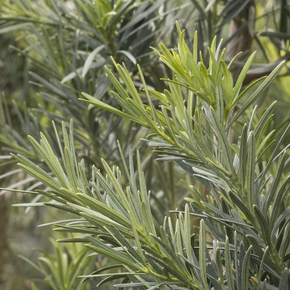
Duke Gardens Japanese Plum Yew (Cephalotaxus harringtonia 'Duke Gardens') is a distinguished compact evergreen conifer shrub celebrated for its graceful vase-shaped, spreading mounded habit and exceptionally fine-textured, glossy dark green needled foliage. Needles emerge a vivid bright green in spring before deepening to a rich, lustrous dark green that holds beautifully through every season, providing reliable year-round structure and color in the garden. This cultivar originated as a branch mutation — known botanically as a "sport" — discovered in 1958 at the Sarah P. Duke Gardens in Durham, North Carolina, and was subsequently trialed at the United States National Arboretum before being introduced to horticulture. A slow grower that matures to approximately 2 to 4 feet tall and equally wide, 'Duke Gardens' is perfectly scaled for smaller garden spaces, low hedges, border edging, foundation plantings, and mass plantings in shaded or partly shaded landscapes. It stands out from other needled evergreens in its exceptional ability to thrive in partial to full shade while also tolerating summer heat and humidity — qualities that make it a superb alternative to true yews (Taxus) in challenging warm-climate settings. Hardy in USDA Zones 5b through 9, this male clone is pest-resistant, deer-resistant, drought-tolerant once established, and virtually trouble-free, making it one of the most dependable low-maintenance evergreen shrubs available for the home landscape in Southern Oregon and Northern California.
Plant Description
Duke Gardens Japanese Plum Yew is a needled evergreen conifer shrub in the family Taxaceae, sharing lineage with true yews but offering superior heat and shade tolerance. Its botanical name, Cephalotaxus, is derived from the Greek words kephale ("head") and taxus ("yew"), referencing the plant's resemblance to yews and its hard, round seeds. The cultivar name 'Duke Gardens' honors its place of origin at the Sarah P. Duke Gardens at Duke University in Durham, North Carolina, where it was discovered in 1958 by horticulturist Richard Fillmore as a branch sport on a Cephalotaxus harringtonia 'Fastigiata' plant. Unlike its columnar, bottlebrush-foliaged parent, 'Duke Gardens' produces a graceful vase-shaped to spreading mounded form with two-ranked foliage — meaning the needles are arranged in a single horizontal plane along each stem — giving the plant a refined, layered appearance. This is a male clone and will not produce fruit. The species is native to shaded woodland areas of Japan, northeastern China, and Korea, which explains its outstanding adaptability to low-light garden situations.
Foliage Details
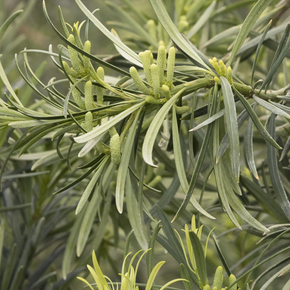
The foliage of 'Duke Gardens' is one of its greatest ornamental assets. The linear, needle-like leaves measure approximately 1 to 2.5 inches long and are arranged in a two-ranked, flattened pattern along the stems, creating an elegant, feathery visual effect distinctly different from the spiral foliage arrangement seen on many other conifers. Needles emerge a bright, fresh light green in spring, adding seasonal contrast and interest, before maturing to a deep, glossy, rich dark green that is maintained consistently through fall and winter. The undersides of the needles feature two whitish to glaucous bands that further distinguish this cultivar. The foliage has a pleasant, subtle fragrance when handled. The fine texture of the needles lends the plant a delicate, exotic appearance that provides a welcome contrast to coarser-textured shrubs and perennials in the landscape.
Mature Size and Growth Rate
| Characteristic | Detail |
|---|---|
| Mature Height | 2 to 4 feet (may reach up to 4 to 8 feet wide over 20 years in ideal conditions) |
| Mature Spread | 2 to 8 feet wide depending on conditions and age |
| Growth Rate | Slow — typically less than 12 inches per year |
| Growth Habit | Vase-shaped to spreading mounded; branches horizontal to partially ascending |
| Time to Reach 4 feet | Can take up to 10 years under average conditions |
| Expected Lifespan | 70 to 150 years with proper care |
Hardiness Zones and Climate Tolerance
Duke Gardens Japanese Plum Yew is rated hardy in USDA Zones 5b through 9, making it suitable for a broad range of climates including the mild winters and warm, dry summers typical of Southern Oregon and Northern California. It is notably more heat- and humidity-tolerant than true yews (Taxus), which often struggle south of Zone 7, making this an excellent substitute in warmer landscapes. In regions with hot summers such as USDA Zones 8 and 9, partial to full shade is strongly preferred to protect the foliage and maintain vigor. In cooler summer climates such as USDA Zones 5 through 7, the plant can tolerate and even thrive in full sun. Once established, it handles periods of drought reliably. It also demonstrates good tolerance to urban pollution, making it a practical choice for urban and suburban landscapes alike.
Sunlight Requirements
'Duke Gardens' offers exceptional flexibility in light exposure — a quality that sets it apart from the vast majority of needled evergreens:
- Full Shade to Partial Shade (Preferred in warm climates): Thrives in conditions ranging from dappled light under large trees to deeply shaded north-facing foundations. This is the preferred placement in Southern Oregon and Northern California summers.
- Partial Sun (2 to 6 hours of direct light): Performs beautifully with morning sun and afternoon shade, which helps maintain foliage color and reduces heat stress.
- Full Sun (6+ hours): Tolerated where summers are cool, such as coastal locations. In hot inland areas, full sun exposure can stress the plant and should be avoided.
Its capacity to tolerate deep shade better than almost any other needled evergreen makes it an outstanding solution for the challenging shaded corners of the landscape where few conifers are suited.
Soil and pH Preferences
'Duke Gardens' is notably adaptable when it comes to soil type and chemistry, but performs best under the following conditions:
- Preferred Soil: Moist, rich, sandy loam or well-drained garden soil with consistent moisture.
- Soil Drainage: Good drainage is essential — the plant will not tolerate standing water or waterlogged conditions, which can lead to root rot.
- Tolerated Soils: Adapts well to clay soils, sandy soils, and dry soils once established. Amending heavy clay with compost at planting time improves drainage and early establishment.
- pH Range: Performs well across a wide pH range from moderately acidic to neutral soils. Highly acidic to mildly acidic (pH 5.5 to 7.0) conditions are ideal.
- Urban Soils: Demonstrates good tolerance of compacted and poor urban soils, which broadens its usefulness in challenging planting situations.
Watering Guide
Proper watering is most critical during the establishment period immediately following planting. Once the root system is well established, 'Duke Gardens' becomes quite drought-tolerant.
- At Planting: Water thoroughly immediately after planting to settle the soil and eliminate air pockets around the root ball.
- First Growing Season: Water regularly — approximately once per week, or more frequently during hot, dry spells — to encourage deep root establishment. Keep soil consistently moist but not waterlogged.
- Established Plants: Once established (generally after the first full growing season), supplemental watering is needed only during prolonged dry spells or periods of exceptional heat. Deep, infrequent watering is more beneficial than shallow, frequent irrigation.
- What to Avoid: Avoid overwatering and poorly drained sites. Standing water around the root zone is the most common cause of decline and should be prevented at all times.
- Mulching: Applying a 2 to 3 inch layer of organic mulch around the base (kept several inches away from the stem) helps retain soil moisture, moderate soil temperature, and reduce watering frequency.
Fertilizing
'Duke Gardens' Japanese Plum Yew is a light feeder and does not require heavy fertilization. Over-fertilizing can result in excessive, leggy growth and may reduce the plant's natural resilience and compact form.
- General Recommendation: Apply a light application of a balanced, slow-release granular fertilizer formulated for evergreen shrubs or conifers in early spring as new growth begins.
- Established Plants in Average Soil: May need little to no supplemental fertilizer once well established in reasonably fertile soil.
- Poor or Sandy Soils: Plants growing in nutrient-poor or sandy soils benefit most from an annual light feeding in early spring.
- Avoid Late-Season Feeding: Do not fertilize after midsummer, as this can stimulate tender new growth that may be damaged by early fall frosts.
- Soil pH Adjustment: If a soil test reveals pH outside the preferred range, amend accordingly with sulfur to lower pH or lime to raise it before applying fertilizer.
Pruning and Maintenance
'Duke Gardens' has a naturally attractive, dense, and well-behaved growth habit that requires minimal pruning. Its slow growth rate means formal shaping is rarely necessary.
- Natural Form: Left unpruned, the plant develops a graceful vase-shaped to spreading mounded habit that is ornamentally attractive in its own right and requires no intervention.
- Light Shaping: If desired, lightly trim in early spring to refine the shape or control size. Pruning just as new growth is beginning allows the fresh growth to fill in quickly and naturally.
- Hard Pruning: Unlike many conifers, Cephalotaxus tolerates severe pruning and can be cut back significantly to rejuvenate overgrown plants or maintain a lower hedge profile. This is best done in late winter once the threat of extreme cold has passed.
- Hedge Maintenance: When used as a formal low hedge, shear lightly 1 to 2 times per year to maintain the desired profile. It can be kept as low as 12 inches tall with consistent trimming.
- Removing Dead Wood: Remove any dead, damaged, or crossing branches in late winter to improve air circulation and plant health.
- Overall Maintenance Level: Low. This is one of the most undemanding evergreen shrubs available for shaded landscapes.
Planting Instructions
- Choose the Right Site: Select a location with partial to full shade, especially in Southern Oregon and Northern California where summer heat is a factor. Ensure the site has good soil drainage.
- Timing: Plant in early spring or fall when temperatures are moderate and evaporation stress is reduced. Avoid planting during the peak of summer heat.
- Prepare the Hole: Dig a hole twice as wide as the root ball and no deeper than the root ball height. A shallow, wide hole encourages lateral root development.
- Amend the Soil: If planting in heavy clay, incorporate organic compost into the backfill to improve drainage and soil structure. Sandy soils benefit from added compost to improve moisture retention.
- Position the Plant: Place the plant so the top of the root ball is level with or very slightly above the surrounding soil grade. Planting too deeply is a common cause of failure.
- Backfill and Firm: Fill in around the root ball with the amended native soil, firming gently in stages to eliminate air pockets.
- Water In: Water thoroughly and slowly immediately after planting to settle the soil.
- Mulch: Apply a 2 to 3 inch layer of organic mulch in a wide ring around the plant, keeping it several inches away from the stem to prevent rot.
- Spacing: For mass plantings or hedges, space plants 3 to 5 feet apart to allow for mature spread without overcrowding.
Landscape Uses
'Duke Gardens' is a remarkably versatile landscape shrub with a wide range of design applications, particularly valued in challenging shaded or dry-shade situations where options are limited:
- Foundation Plantings: An ideal choice for north- or east-facing foundations and shaded building walls where its compact, tidy habit softens architecture year-round.
- Low Hedges and Borders: Creates a refined, formal or informal evergreen edge along pathways, driveways, and garden beds. Responds well to shearing into a maintained hedge form.
- Shade and Woodland Gardens: Provides essential evergreen structure under the canopy of large trees and in shaded woodland settings, adding texture and form through the winter months.
- Accent or Specimen Planting: Its graceful vase shape and glossy fine-textured foliage make it an eye-catching focal point when used as a solo specimen.
- Mass Plantings: Planted in drifts or masses under trees or along shaded slopes, 'Duke Gardens' creates a cohesive, low-maintenance evergreen ground layer.
- Small Spaces: Its compact mature size and slow growth rate make it perfectly suited to urban lots, courtyard gardens, and tight planting areas between structures.
- Erosion Control on Shaded Slopes: The spreading root system and dense mounding habit help stabilize soil on shaded banks and slopes.
Companion Plants
'Duke Gardens' Japanese Plum Yew pairs exceptionally well with other shade-loving plants, creating layered, texturally rich combinations in woodland, shade, and mixed border gardens. Consider these companions for a cohesive planting design:
- Hostas (Hosta spp.): The bold, broad leaves of hostas provide a striking textural contrast to the fine needle-like foliage of 'Duke Gardens', and both thrive in partial to full shade.
- Ferns (Polystichum, Dryopteris, Athyrium spp.): Native and ornamental ferns complement the evergreen structure of 'Duke Gardens' with their airy, arching fronds in the same shaded conditions.
- Hellebores (Helleborus spp.): Winter- and spring-blooming hellebores share the same preference for dappled shade and moist, well-drained soils, adding seasonal flower interest beneath or beside the plum yew.
- Astilbes (Astilbe spp.): Feathery summer plumes in shades of pink, red, and white provide colorful contrast against the dark green backdrop of 'Duke Gardens' foliage.
- Japanese Forest Grass (Hakonechloa macra): The golden, arching blades of this ornamental grass create a luminous foil against the deep green needles in a shaded border.
- Rhododendrons and Azaleas: Larger broadleaf evergreens sharing similar shade and acidic soil preferences make natural companions in layered woodland plantings.
- Holly Fern (Cyrtomium falcatum): Bold, glossy dark green fronds echo the glossy quality of 'Duke Gardens' needles while adding a contrasting leaf shape.
- Epimedium (Epimedium spp.): Shade-tolerant, low-growing groundcovers that fill in beautifully around and beneath the spreading form of 'Duke Gardens'.
Pests and Diseases
One of the most appealing features of 'Duke Gardens' Japanese Plum Yew is its exceptional resistance to pests and diseases. It is considered a very low-maintenance, trouble-free shrub under typical garden conditions.
- Pest Resistance: No significant insect pests are associated with this plant under normal growing conditions. It is largely free from the scale, spider mite, and borer problems that can afflict true yews (Taxus).
- Deer Resistance: Deer generally avoid Cephalotaxus, making it a reliable choice for gardens in deer-prone areas of Southern Oregon and Northern California.
- Root Rot: The most common disease concern is Phytophthora root rot, which can occur in poorly drained or waterlogged soils. Always ensure good drainage at the planting site to prevent this issue.
- Mushroom Root Rot (Armillaria): Occasionally reported in soils with a history of infected woody plant debris. Improving drainage and avoiding plant stress reduces susceptibility.
- Soil Nematodes: In some regions, soil nematodes can affect plant health. This is rarely a significant concern in typical garden soils in the Pacific Northwest.
- Urban Tolerance: Demonstrates good tolerance to urban air pollution and compacted soils, further reducing stress-related disease vulnerability in city and suburban plantings.
Toxicity and Safety
As a member of the Taxaceae (yew) family, Duke Gardens Japanese Plum Yew contains alkaloid compounds that are toxic if any plant parts are ingested. The following safety information is important for households with children, pets, or foraging animals:
- Toxic Parts: All parts of the plant — including bark, leaves, and seeds — are considered toxic if ingested in quantity. The toxic principles are alkaloid taxines and volatile oils.
- Symptoms of Ingestion: Can include nervousness, trembling, slow pulse, pupil dilation, difficulty breathing, abdominal pain, vomiting, diarrhea, and in severe cases, convulsions or sudden heart failure.
- Contact Dermatitis: Does not cause contact dermatitis — the plant is safe to handle during pruning and planting.
- Deer and Wildlife: Deer generally avoid consuming this plant, likely due to its chemical properties.
- Note on Fruit: This cultivar is a male clone and does not produce fruit. The fleshy, plum-like fruits produced by female Cephalotaxus plants are reported to have edible flesh, but the seeds within are toxic. Since 'Duke Gardens' produces no fruit, this is not a concern with this cultivar.
- Precaution: Keep children and pets away from any pruned plant material. Wash hands after handling as a general good practice.
Container Growing
While 'Duke Gardens' is most commonly planted in the ground, its compact, slow-growing nature makes it a viable candidate for large container plantings in shaded patios, entryways, courtyards, and covered outdoor living spaces.
- Container Size: Select a large, sturdy container — at least 18 to 24 inches in diameter and depth — with ample drainage holes to accommodate root development and prevent waterlogging.
- Potting Mix: Use a high-quality, well-draining potting mix. Incorporating perlite or coarse grit at a ratio of roughly 20 to 30 percent improves drainage and reduces the risk of root rot.
- Placement: Position containers in a shaded to partially shaded location, away from afternoon sun and drying winds. A north- or east-facing patio or covered deck is ideal.
- Watering in Containers: Container plants dry out more quickly than in-ground plants and will require more frequent monitoring and watering, especially in warm weather. Water when the top inch of soil feels dry, ensuring water drains freely from the bottom.
- Fertilizing in Containers: Container-grown plants benefit from a light application of slow-release balanced fertilizer in spring, as nutrients are depleted more rapidly through regular irrigation.
- Winter Protection: In Zone 6 and cooler areas, container-grown plants may need protection from hard freezes, as root systems in containers are more vulnerable to cold than in-ground roots. Move to an unheated garage or shelter during extended freezing periods.
- Repotting: Due to its slow growth rate, repotting is needed infrequently — typically every 3 to 5 years or when roots become visibly pot-bound.
Seasonal Interest
'Duke Gardens' Japanese Plum Yew offers genuine four-season ornamental value, making it a dependable landscape anchor throughout the year in Southern Oregon and Northern California gardens:
- Spring: New needle growth emerges in a vivid, bright lime-green, creating a two-toned effect against the existing dark foliage and adding a fresh, invigorating appearance to the garden as other plants emerge from winter dormancy.
- Summer: Foliage matures to a deep, rich, glossy dark green. The dense, layered form provides cooling visual depth and shade-garden structure during the warmest months.
- Fall: Unlike many deciduous companions, 'Duke Gardens' retains its full, lustrous dark green foliage as surrounding plants begin to change color and go dormant, providing anchor and continuity in the fall garden.
- Winter: A standout in the winter garden, the deep green needles hold their color without bronzing or yellowing, providing consistent structure, color, and texture when much of the landscape is bare. Its vase-shaped silhouette is particularly attractive when outlined against winter light.
Wildlife Value
While 'Duke Gardens' does not produce fruit (being a male clone), it still contributes meaningful value to the garden ecosystem:
- Bird Habitat: The dense, layered foliage provides excellent shelter and nesting cover for small songbirds seeking protection from predators and harsh weather, particularly during fall and winter months.
- Deer Resistance: Its strong resistance to deer browsing makes it a reliable plant for gardens in wildlife-heavy areas, where other ornamental shrubs may suffer significant damage.
- Insect Activity: Male pollen cones, produced in late winter to early spring, offer a minor early-season pollen resource to foraging bees and other beneficial insects before most other garden plants have begun flowering.
- Low Wildlife Damage Risk: Unlike many garden shrubs, 'Duke Gardens' is left largely undisturbed by browsing mammals, reducing the need for protective fencing or deterrents in deer-populated landscapes.
- A truly garden-worthy, slow-growing compact evergreen with a graceful vase-shaped form, dense glossy needle-like foliage, and outstanding year-round dark green color.
- Exceptionally shade-tolerant — thrives in deep to partial shade where most needled evergreens simply cannot perform, making it ideal for woodland gardens, shaded foundations, and low-light borders.
- Remarkably tough once established: heat-tolerant, drought-resistant, deer-resistant, and adaptable to a wide range of soil types including clay, sandy, and dry soils.
- A living piece of horticultural history — this cultivar was discovered at the Sarah P. Duke Gardens in 1958 and has since become one of the most trusted compact conifers for shaded landscapes across the country.
Duke Gardens Japanese Plum Yew (Cephalotaxus harringtonia 'Duke Gardens') is a distinguished compact evergreen conifer shrub celebrated for its graceful vase-shaped, spreading mounded habit and exceptionally fine-textured, glossy dark green needled foliage. Needles emerge a vivid bright green in spring before deepening to a rich, lustrous dark green that holds beautifully through every season, providing reliable year-round structure and color in the garden. This cultivar originated as a branch mutation — known botanically as a "sport" — discovered in 1958 at the Sarah P. Duke Gardens in Durham, North Carolina, and was subsequently trialed at the United States National Arboretum before being introduced to horticulture. A slow grower that matures to approximately 2 to 4 feet tall and equally wide, 'Duke Gardens' is perfectly scaled for smaller garden spaces, low hedges, border edging, foundation plantings, and mass plantings in shaded or partly shaded landscapes. It stands out from other needled evergreens in its exceptional ability to thrive in partial to full shade while also tolerating summer heat and humidity — qualities that make it a superb alternative to true yews (Taxus) in challenging warm-climate settings. Hardy in USDA Zones 5b through 9, this male clone is pest-resistant, deer-resistant, drought-tolerant once established, and virtually trouble-free, making it one of the most dependable low-maintenance evergreen shrubs available for the home landscape in Southern Oregon and Northern California.
Plant Description
Duke Gardens Japanese Plum Yew is a needled evergreen conifer shrub in the family Taxaceae, sharing lineage with true yews but offering superior heat and shade tolerance. Its botanical name, Cephalotaxus, is derived from the Greek words kephale ("head") and taxus ("yew"), referencing the plant's resemblance to yews and its hard, round seeds. The cultivar name 'Duke Gardens' honors its place of origin at the Sarah P. Duke Gardens at Duke University in Durham, North Carolina, where it was discovered in 1958 by horticulturist Richard Fillmore as a branch sport on a Cephalotaxus harringtonia 'Fastigiata' plant. Unlike its columnar, bottlebrush-foliaged parent, 'Duke Gardens' produces a graceful vase-shaped to spreading mounded form with two-ranked foliage — meaning the needles are arranged in a single horizontal plane along each stem — giving the plant a refined, layered appearance. This is a male clone and will not produce fruit. The species is native to shaded woodland areas of Japan, northeastern China, and Korea, which explains its outstanding adaptability to low-light garden situations.
Foliage Details
The foliage of 'Duke Gardens' is one of its greatest ornamental assets. The linear, needle-like leaves measure approximately 1 to 2.5 inches long and are arranged in a two-ranked, flattened pattern along the stems, creating an elegant, feathery visual effect distinctly different from the spiral foliage arrangement seen on many other conifers. Needles emerge a bright, fresh light green in spring, adding seasonal contrast and interest, before maturing to a deep, glossy, rich dark green that is maintained consistently through fall and winter. The undersides of the needles feature two whitish to glaucous bands that further distinguish this cultivar. The foliage has a pleasant, subtle fragrance when handled. The fine texture of the needles lends the plant a delicate, exotic appearance that provides a welcome contrast to coarser-textured shrubs and perennials in the landscape.
Mature Size and Growth Rate
| Characteristic | Detail |
|---|---|
| Mature Height | 2 to 4 feet (may reach up to 4 to 8 feet wide over 20 years in ideal conditions) |
| Mature Spread | 2 to 8 feet wide depending on conditions and age |
| Growth Rate | Slow — typically less than 12 inches per year |
| Growth Habit | Vase-shaped to spreading mounded; branches horizontal to partially ascending |
| Time to Reach 4 feet | Can take up to 10 years under average conditions |
| Expected Lifespan | 70 to 150 years with proper care |
Hardiness Zones and Climate Tolerance
Duke Gardens Japanese Plum Yew is rated hardy in USDA Zones 5b through 9, making it suitable for a broad range of climates including the mild winters and warm, dry summers typical of Southern Oregon and Northern California. It is notably more heat- and humidity-tolerant than true yews (Taxus), which often struggle south of Zone 7, making this an excellent substitute in warmer landscapes. In regions with hot summers such as USDA Zones 8 and 9, partial to full shade is strongly preferred to protect the foliage and maintain vigor. In cooler summer climates such as USDA Zones 5 through 7, the plant can tolerate and even thrive in full sun. Once established, it handles periods of drought reliably. It also demonstrates good tolerance to urban pollution, making it a practical choice for urban and suburban landscapes alike.
Sunlight Requirements
'Duke Gardens' offers exceptional flexibility in light exposure — a quality that sets it apart from the vast majority of needled evergreens:
- Full Shade to Partial Shade (Preferred in warm climates): Thrives in conditions ranging from dappled light under large trees to deeply shaded north-facing foundations. This is the preferred placement in Southern Oregon and Northern California summers.
- Partial Sun (2 to 6 hours of direct light): Performs beautifully with morning sun and afternoon shade, which helps maintain foliage color and reduces heat stress.
- Full Sun (6+ hours): Tolerated where summers are cool, such as coastal locations. In hot inland areas, full sun exposure can stress the plant and should be avoided.
Its capacity to tolerate deep shade better than almost any other needled evergreen makes it an outstanding solution for the challenging shaded corners of the landscape where few conifers are suited.
Soil and pH Preferences
'Duke Gardens' is notably adaptable when it comes to soil type and chemistry, but performs best under the following conditions:
- Preferred Soil: Moist, rich, sandy loam or well-drained garden soil with consistent moisture.
- Soil Drainage: Good drainage is essential — the plant will not tolerate standing water or waterlogged conditions, which can lead to root rot.
- Tolerated Soils: Adapts well to clay soils, sandy soils, and dry soils once established. Amending heavy clay with compost at planting time improves drainage and early establishment.
- pH Range: Performs well across a wide pH range from moderately acidic to neutral soils. Highly acidic to mildly acidic (pH 5.5 to 7.0) conditions are ideal.
- Urban Soils: Demonstrates good tolerance of compacted and poor urban soils, which broadens its usefulness in challenging planting situations.
Watering Guide
Proper watering is most critical during the establishment period immediately following planting. Once the root system is well established, 'Duke Gardens' becomes quite drought-tolerant.
- At Planting: Water thoroughly immediately after planting to settle the soil and eliminate air pockets around the root ball.
- First Growing Season: Water regularly — approximately once per week, or more frequently during hot, dry spells — to encourage deep root establishment. Keep soil consistently moist but not waterlogged.
- Established Plants: Once established (generally after the first full growing season), supplemental watering is needed only during prolonged dry spells or periods of exceptional heat. Deep, infrequent watering is more beneficial than shallow, frequent irrigation.
- What to Avoid: Avoid overwatering and poorly drained sites. Standing water around the root zone is the most common cause of decline and should be prevented at all times.
- Mulching: Applying a 2 to 3 inch layer of organic mulch around the base (kept several inches away from the stem) helps retain soil moisture, moderate soil temperature, and reduce watering frequency.
Fertilizing
'Duke Gardens' Japanese Plum Yew is a light feeder and does not require heavy fertilization. Over-fertilizing can result in excessive, leggy growth and may reduce the plant's natural resilience and compact form.
- General Recommendation: Apply a light application of a balanced, slow-release granular fertilizer formulated for evergreen shrubs or conifers in early spring as new growth begins.
- Established Plants in Average Soil: May need little to no supplemental fertilizer once well established in reasonably fertile soil.
- Poor or Sandy Soils: Plants growing in nutrient-poor or sandy soils benefit most from an annual light feeding in early spring.
- Avoid Late-Season Feeding: Do not fertilize after midsummer, as this can stimulate tender new growth that may be damaged by early fall frosts.
- Soil pH Adjustment: If a soil test reveals pH outside the preferred range, amend accordingly with sulfur to lower pH or lime to raise it before applying fertilizer.
Pruning and Maintenance
'Duke Gardens' has a naturally attractive, dense, and well-behaved growth habit that requires minimal pruning. Its slow growth rate means formal shaping is rarely necessary.
- Natural Form: Left unpruned, the plant develops a graceful vase-shaped to spreading mounded habit that is ornamentally attractive in its own right and requires no intervention.
- Light Shaping: If desired, lightly trim in early spring to refine the shape or control size. Pruning just as new growth is beginning allows the fresh growth to fill in quickly and naturally.
- Hard Pruning: Unlike many conifers, Cephalotaxus tolerates severe pruning and can be cut back significantly to rejuvenate overgrown plants or maintain a lower hedge profile. This is best done in late winter once the threat of extreme cold has passed.
- Hedge Maintenance: When used as a formal low hedge, shear lightly 1 to 2 times per year to maintain the desired profile. It can be kept as low as 12 inches tall with consistent trimming.
- Removing Dead Wood: Remove any dead, damaged, or crossing branches in late winter to improve air circulation and plant health.
- Overall Maintenance Level: Low. This is one of the most undemanding evergreen shrubs available for shaded landscapes.
Planting Instructions
- Choose the Right Site: Select a location with partial to full shade, especially in Southern Oregon and Northern California where summer heat is a factor. Ensure the site has good soil drainage.
- Timing: Plant in early spring or fall when temperatures are moderate and evaporation stress is reduced. Avoid planting during the peak of summer heat.
- Prepare the Hole: Dig a hole twice as wide as the root ball and no deeper than the root ball height. A shallow, wide hole encourages lateral root development.
- Amend the Soil: If planting in heavy clay, incorporate organic compost into the backfill to improve drainage and soil structure. Sandy soils benefit from added compost to improve moisture retention.
- Position the Plant: Place the plant so the top of the root ball is level with or very slightly above the surrounding soil grade. Planting too deeply is a common cause of failure.
- Backfill and Firm: Fill in around the root ball with the amended native soil, firming gently in stages to eliminate air pockets.
- Water In: Water thoroughly and slowly immediately after planting to settle the soil.
- Mulch: Apply a 2 to 3 inch layer of organic mulch in a wide ring around the plant, keeping it several inches away from the stem to prevent rot.
- Spacing: For mass plantings or hedges, space plants 3 to 5 feet apart to allow for mature spread without overcrowding.
Landscape Uses
'Duke Gardens' is a remarkably versatile landscape shrub with a wide range of design applications, particularly valued in challenging shaded or dry-shade situations where options are limited:
- Foundation Plantings: An ideal choice for north- or east-facing foundations and shaded building walls where its compact, tidy habit softens architecture year-round.
- Low Hedges and Borders: Creates a refined, formal or informal evergreen edge along pathways, driveways, and garden beds. Responds well to shearing into a maintained hedge form.
- Shade and Woodland Gardens: Provides essential evergreen structure under the canopy of large trees and in shaded woodland settings, adding texture and form through the winter months.
- Accent or Specimen Planting: Its graceful vase shape and glossy fine-textured foliage make it an eye-catching focal point when used as a solo specimen.
- Mass Plantings: Planted in drifts or masses under trees or along shaded slopes, 'Duke Gardens' creates a cohesive, low-maintenance evergreen ground layer.
- Small Spaces: Its compact mature size and slow growth rate make it perfectly suited to urban lots, courtyard gardens, and tight planting areas between structures.
- Erosion Control on Shaded Slopes: The spreading root system and dense mounding habit help stabilize soil on shaded banks and slopes.
Companion Plants
'Duke Gardens' Japanese Plum Yew pairs exceptionally well with other shade-loving plants, creating layered, texturally rich combinations in woodland, shade, and mixed border gardens. Consider these companions for a cohesive planting design:
- Hostas (Hosta spp.): The bold, broad leaves of hostas provide a striking textural contrast to the fine needle-like foliage of 'Duke Gardens', and both thrive in partial to full shade.
- Ferns (Polystichum, Dryopteris, Athyrium spp.): Native and ornamental ferns complement the evergreen structure of 'Duke Gardens' with their airy, arching fronds in the same shaded conditions.
- Hellebores (Helleborus spp.): Winter- and spring-blooming hellebores share the same preference for dappled shade and moist, well-drained soils, adding seasonal flower interest beneath or beside the plum yew.
- Astilbes (Astilbe spp.): Feathery summer plumes in shades of pink, red, and white provide colorful contrast against the dark green backdrop of 'Duke Gardens' foliage.
- Japanese Forest Grass (Hakonechloa macra): The golden, arching blades of this ornamental grass create a luminous foil against the deep green needles in a shaded border.
- Rhododendrons and Azaleas: Larger broadleaf evergreens sharing similar shade and acidic soil preferences make natural companions in layered woodland plantings.
- Holly Fern (Cyrtomium falcatum): Bold, glossy dark green fronds echo the glossy quality of 'Duke Gardens' needles while adding a contrasting leaf shape.
- Epimedium (Epimedium spp.): Shade-tolerant, low-growing groundcovers that fill in beautifully around and beneath the spreading form of 'Duke Gardens'.
Pests and Diseases
One of the most appealing features of 'Duke Gardens' Japanese Plum Yew is its exceptional resistance to pests and diseases. It is considered a very low-maintenance, trouble-free shrub under typical garden conditions.
- Pest Resistance: No significant insect pests are associated with this plant under normal growing conditions. It is largely free from the scale, spider mite, and borer problems that can afflict true yews (Taxus).
- Deer Resistance: Deer generally avoid Cephalotaxus, making it a reliable choice for gardens in deer-prone areas of Southern Oregon and Northern California.
- Root Rot: The most common disease concern is Phytophthora root rot, which can occur in poorly drained or waterlogged soils. Always ensure good drainage at the planting site to prevent this issue.
- Mushroom Root Rot (Armillaria): Occasionally reported in soils with a history of infected woody plant debris. Improving drainage and avoiding plant stress reduces susceptibility.
- Soil Nematodes: In some regions, soil nematodes can affect plant health. This is rarely a significant concern in typical garden soils in the Pacific Northwest.
- Urban Tolerance: Demonstrates good tolerance to urban air pollution and compacted soils, further reducing stress-related disease vulnerability in city and suburban plantings.
Toxicity and Safety
As a member of the Taxaceae (yew) family, Duke Gardens Japanese Plum Yew contains alkaloid compounds that are toxic if any plant parts are ingested. The following safety information is important for households with children, pets, or foraging animals:
- Toxic Parts: All parts of the plant — including bark, leaves, and seeds — are considered toxic if ingested in quantity. The toxic principles are alkaloid taxines and volatile oils.
- Symptoms of Ingestion: Can include nervousness, trembling, slow pulse, pupil dilation, difficulty breathing, abdominal pain, vomiting, diarrhea, and in severe cases, convulsions or sudden heart failure.
- Contact Dermatitis: Does not cause contact dermatitis — the plant is safe to handle during pruning and planting.
- Deer and Wildlife: Deer generally avoid consuming this plant, likely due to its chemical properties.
- Note on Fruit: This cultivar is a male clone and does not produce fruit. The fleshy, plum-like fruits produced by female Cephalotaxus plants are reported to have edible flesh, but the seeds within are toxic. Since 'Duke Gardens' produces no fruit, this is not a concern with this cultivar.
- Precaution: Keep children and pets away from any pruned plant material. Wash hands after handling as a general good practice.
Container Growing
While 'Duke Gardens' is most commonly planted in the ground, its compact, slow-growing nature makes it a viable candidate for large container plantings in shaded patios, entryways, courtyards, and covered outdoor living spaces.
- Container Size: Select a large, sturdy container — at least 18 to 24 inches in diameter and depth — with ample drainage holes to accommodate root development and prevent waterlogging.
- Potting Mix: Use a high-quality, well-draining potting mix. Incorporating perlite or coarse grit at a ratio of roughly 20 to 30 percent improves drainage and reduces the risk of root rot.
- Placement: Position containers in a shaded to partially shaded location, away from afternoon sun and drying winds. A north- or east-facing patio or covered deck is ideal.
- Watering in Containers: Container plants dry out more quickly than in-ground plants and will require more frequent monitoring and watering, especially in warm weather. Water when the top inch of soil feels dry, ensuring water drains freely from the bottom.
- Fertilizing in Containers: Container-grown plants benefit from a light application of slow-release balanced fertilizer in spring, as nutrients are depleted more rapidly through regular irrigation.
- Winter Protection: In Zone 6 and cooler areas, container-grown plants may need protection from hard freezes, as root systems in containers are more vulnerable to cold than in-ground roots. Move to an unheated garage or shelter during extended freezing periods.
- Repotting: Due to its slow growth rate, repotting is needed infrequently — typically every 3 to 5 years or when roots become visibly pot-bound.
Seasonal Interest
'Duke Gardens' Japanese Plum Yew offers genuine four-season ornamental value, making it a dependable landscape anchor throughout the year in Southern Oregon and Northern California gardens:
- Spring: New needle growth emerges in a vivid, bright lime-green, creating a two-toned effect against the existing dark foliage and adding a fresh, invigorating appearance to the garden as other plants emerge from winter dormancy.
- Summer: Foliage matures to a deep, rich, glossy dark green. The dense, layered form provides cooling visual depth and shade-garden structure during the warmest months.
- Fall: Unlike many deciduous companions, 'Duke Gardens' retains its full, lustrous dark green foliage as surrounding plants begin to change color and go dormant, providing anchor and continuity in the fall garden.
- Winter: A standout in the winter garden, the deep green needles hold their color without bronzing or yellowing, providing consistent structure, color, and texture when much of the landscape is bare. Its vase-shaped silhouette is particularly attractive when outlined against winter light.
Wildlife Value
While 'Duke Gardens' does not produce fruit (being a male clone), it still contributes meaningful value to the garden ecosystem:
- Bird Habitat: The dense, layered foliage provides excellent shelter and nesting cover for small songbirds seeking protection from predators and harsh weather, particularly during fall and winter months.
- Deer Resistance: Its strong resistance to deer browsing makes it a reliable plant for gardens in wildlife-heavy areas, where other ornamental shrubs may suffer significant damage.
- Insect Activity: Male pollen cones, produced in late winter to early spring, offer a minor early-season pollen resource to foraging bees and other beneficial insects before most other garden plants have begun flowering.
- Low Wildlife Damage Risk: Unlike many garden shrubs, 'Duke Gardens' is left largely undisturbed by browsing mammals, reducing the need for protective fencing or deterrents in deer-populated landscapes.