



Black Dragon Japanese Cedar (Cryptomeria japonica ‘Black Dragon’) delivers year‑round drama with luminous lime spring tips that deepen to a rich, black‑green through summer, building a dense, irregular pyramid that reads refined and architectural. Scaled for modern landscapes and small spaces, it shines as a specimen or in grouped plantings, and its dependable, low‑care nature makes it just as at home in borders or large containers as it is anchoring an Asian‑inspired vignette. Provide slightly acidic, well‑draining soil and steady moisture during establishment, then enjoy enduring structure with minimal effort.
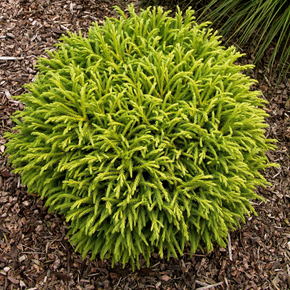
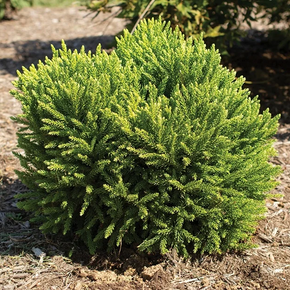
Evergreen conifer with light green spring flush that matures to deep black‑green; forms a dense, irregular pyramidal outline with layered, finely textured branching.
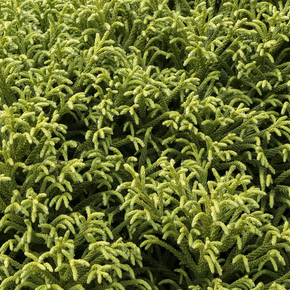
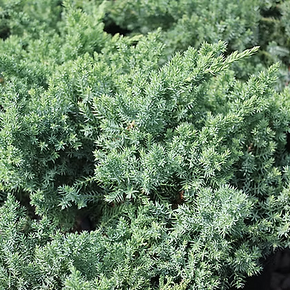
Soft, awl‑like sprays emerge bright and fresh, darkening to a saturated black‑green that provides striking contrast to maples, azaleas, and light‑toned evergreens.
Naturally slow‑growing, upright‑pyramidal habit with a compact footprint—ideal as a single specimen or in rhythmically spaced repeats.
Full sun to partial sun; morning sun with light afternoon shade is suitable in hotter exposures.
Water deeply and regularly during the first growing season to establish a broad root system; once established, reduce frequency and water when the top 2 inches of soil are dry.
Prefers fertile, slightly acidic, well‑draining soil enriched with organic matter; avoid chronically wet or compacted sites.
Typically reaches about 6–7 ft. tall and 3–4 ft. wide; may ultimately mature near 10 ft. tall in favorable conditions.
Attractive bark; easy‑care once established; tolerant of coastal exposure; generally rabbit resistant.
Excellent as a small evergreen specimen, in Asian or formal English compositions, for textural hedging, privacy accents, borders, and large container displays.
Feed with an acid‑formulating fertilizer before spring growth. Maintain a mulch ring to conserve moisture and moderate soil temperature (keep mulch several inches from the trunk). Pruning is rarely needed—tip‑prune only to refine outline.
Black Dragon Japanese Cedar (Cryptomeria japonica ‘Black Dragon’) delivers year‑round drama with luminous lime spring tips that deepen to a rich, black‑green through summer, building a dense, irregular pyramid that reads refined and architectural. Scaled for modern landscapes and small spaces, it shines as a specimen or in grouped plantings, and its dependable, low‑care nature makes it just as at home in borders or large containers as it is anchoring an Asian‑inspired vignette. Provide slightly acidic, well‑draining soil and steady moisture during establishment, then enjoy enduring structure with minimal effort.
Evergreen conifer with light green spring flush that matures to deep black‑green; forms a dense, irregular pyramidal outline with layered, finely textured branching.
Soft, awl‑like sprays emerge bright and fresh, darkening to a saturated black‑green that provides striking contrast to maples, azaleas, and light‑toned evergreens.
Naturally slow‑growing, upright‑pyramidal habit with a compact footprint—ideal as a single specimen or in rhythmically spaced repeats.
Full sun to partial sun; morning sun with light afternoon shade is suitable in hotter exposures.
Water deeply and regularly during the first growing season to establish a broad root system; once established, reduce frequency and water when the top 2 inches of soil are dry.
Prefers fertile, slightly acidic, well‑draining soil enriched with organic matter; avoid chronically wet or compacted sites.
Typically reaches about 6–7 ft. tall and 3–4 ft. wide; may ultimately mature near 10 ft. tall in favorable conditions.
Attractive bark; easy‑care once established; tolerant of coastal exposure; generally rabbit resistant.
Excellent as a small evergreen specimen, in Asian or formal English compositions, for textural hedging, privacy accents, borders, and large container displays.
Feed with an acid‑formulating fertilizer before spring growth. Maintain a mulch ring to conserve moisture and moderate soil temperature (keep mulch several inches from the trunk). Pruning is rarely needed—tip‑prune only to refine outline.