


Zoom the image with the mouse
Dazzle Rocks Sea Lavender - 1 Gallon
SKU:
2325170
UPC:
014949043608
$13.99
- Exceptionally hardy perennial sea lavender (USDA Zones 3-9) producing abundant frothy sprays of lilac-purple blooms on upright branching stems from early summer well into fall
- Drought tolerant, heat resistant, and salt tolerant — an outstanding choice for low-water landscapes, coastal gardens, rock gardens, and xeriscaping
- A pollinator magnet that draws bees and butterflies, plus an outstanding fresh or dried cut flower that retains its rich color long after harvest
- Low-maintenance, deer-resistant semi-evergreen perennial with a tidy basal rosette of rich green foliage that anchors the garden year-round
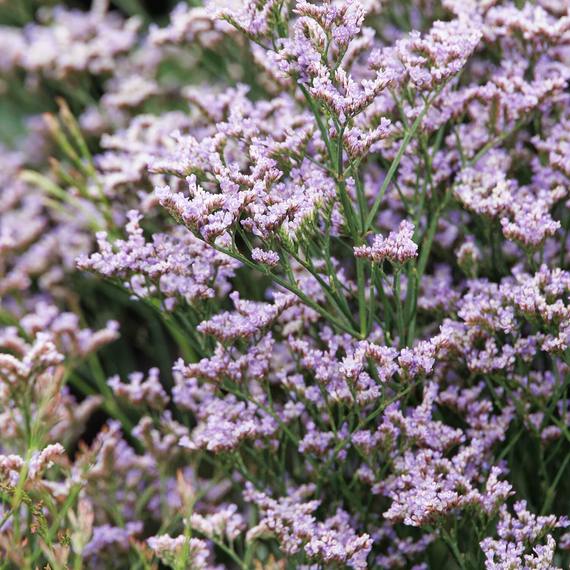
Limonium gmelinii 'Dazzle Rocks' (PP #33,240), commonly known as Dazzle Rocks Sea Lavender, is a breakthrough patented perennial statice that delivers season-long color with remarkably little effort. Rising from a compact, low-growing basal rosette of rich green, lance-shaped leaves, tall, wiry branching stems shoot upward — reaching 12 to 15 inches in bloom — and erupt into dense, airy clouds of small, papery lilac-purple florets that persist from June through September. Unlike many members of the sea lavender family, 'Dazzle Rocks' is genuinely cold-hardy well beyond what is typical of the genus, surviving winters in USDA Zones 3 through 9, making it an exceptional choice for gardens throughout Southern Oregon and Northern California. A member of the Plumbaginaceae (leadwort) family rather than the true lavender family, this semi-evergreen perennial thrives in full sun and well-drained soils, tolerating poor fertility, moderate drought, and even elevated soil salinity — qualities that make it ideal for rock gardens, dry borders, coastal plantings, and water-wise xeriscape designs. The high volume of nectar-rich florets makes it an irresistible magnet for bees, butterflies, and other beneficial pollinators, while its deer and rabbit resistance adds further garden value. The papery blooms also excel as fresh-cut or dried flowers, holding their vivid color beautifully in arrangements and adding lasting texture to bouquets — a favorite of floral designers everywhere.
Plant Description
Dazzle Rocks Sea Lavender is a patented semi-evergreen perennial (Limonium gmelinii 'Dazzle Rocks', PP #33,240) belonging to the Plumbaginaceae family. It forms a ground-hugging basal rosette of rich green, lance-shaped leaves from which tall, wiry, much-branched flower stems arise. The stems are topped with dense, frothy sprays of small, papery lilac-purple florets that closely resemble crepe paper in texture — characteristic of statice. Because the colorful calyces persist even after the tiny true flowers have faded, the ornamental display remains vibrant and long-lasting. The plant is notably hardier than most other sea lavender species, bred specifically to combine cold hardiness with exceptional floral productivity for both garden and cut-flower use.
Mature Size
| Measurement | Dimension |
|---|---|
| Height (in bloom) | 12 to 15 inches |
| Spread | 12 to 18 inches |
| Growth Habit | Low basal rosette with upright flower stems |
| Growth Rate | Moderate to fast once established |
Hardiness Zones
Dazzle Rocks Sea Lavender is hardy in USDA Hardiness Zones 3 through 9, making it significantly more cold-tolerant than many other sea lavender species. It thrives across a broad range of climates, from cold-winter northern gardens to warm coastal and Mediterranean-climate regions like those found throughout Southern Oregon and Northern California. In colder zones (3-5), applying a light layer of mulch around the base in late autumn helps protect the root crown and any remaining foliage through the winter. The plant is a semi-evergreen perennial — it may lose some or all of its basal foliage in harsh winters but will reliably resprout from the crown each spring with no lasting harm to the plant.
Sunlight Requirements
Dazzle Rocks Sea Lavender performs best in full sun, receiving a minimum of 6 to 8 hours of direct sunlight per day. Full sun encourages the most prolific flowering, the sturdiest stems, and the richest leaf color. It will also tolerate partial shade (4 to 6 hours of direct sun), though flowering may be somewhat reduced and stems can become slightly more lax in lower light conditions. In hot inland climates, a location that receives some light afternoon shade can help extend bloom longevity during peak summer heat.
Soil and pH Preferences
This sea lavender thrives in well-drained soils and is quite tolerant of poor to moderately fertile conditions. Heavy, clay soils with poor drainage are the most significant limiting factor — standing water around the crown, especially in winter, is the most common cause of plant loss. Ideal soil types include sandy loam, gritty, or rocky soils that drain freely. The plant grows well in slightly acidic to slightly alkaline soils, with a preferred pH range of approximately 6.5 to 7.5. It has a notable tolerance for elevated soil salinity, making it an excellent candidate for coastal gardens or areas with naturally salty soils. Amending dense soils with coarse sand, perlite, or fine gravel will greatly improve drainage and plant performance.
Watering Guide
Once established, Dazzle Rocks Sea Lavender is notably drought tolerant and requires only moderate watering. Allow the soil to dry out somewhat between waterings — the plant is far more forgiving of brief dry spells than of persistently wet roots. During the first growing season, water regularly (approximately every 4 to 7 days depending on temperature and soil type) to help establish a deep, healthy root system. After establishment, reduce frequency and water deeply but infrequently, mimicking the natural Mediterranean and semi-arid conditions in which this genus thrives. Avoid overhead irrigation when possible, as consistently wet foliage can encourage fungal disease. In winter, reduce watering significantly; good drainage during the dormant season is critical to plant survival in cooler climates.
- New plantings: Water every 4-7 days until established
- Established plants: Water deeply every 7-14 days during active growth
- Summer heat: Monitor soil moisture; supplement if plants show signs of wilt
- Winter: Reduce significantly; prioritize drainage over moisture retention
- Overwatering: The leading cause of decline — always err on the drier side
Fertilizing
Dazzle Rocks Sea Lavender is a light feeder and does not require heavy fertilization. Excessive nitrogen in particular will produce overly lush, floppy foliage at the expense of flowers. In spring, a single application of a balanced, slow-release granular fertilizer (such as a 10-10-10 or similar) worked lightly into the soil around the base of the plant is generally all that is needed for the season. Alternatively, a half-strength balanced liquid fertilizer applied once or twice during the active growing season (spring through early summer) will adequately support healthy growth and flowering. Plants growing in naturally fertile soils may need no supplemental feeding at all. Avoid fertilizing in late summer or fall, as this can stimulate tender new growth that is vulnerable to cold damage.
Pruning and Maintenance
Dazzle Rocks Sea Lavender is a low-maintenance perennial that requires very little pruning. The most important maintenance task is removing spent flower stalks after blooming has finished — cutting them back to the basal rosette before seeds set helps preserve the plant's vigor and encourages a tidy appearance. Deadheading individual spent stems throughout the bloom season can also modestly extend the overall flowering period. In late winter to early spring, remove any dead or damaged foliage from the rosette to make way for fresh new growth. An autumn mulch applied around (but not directly over) the crown will help protect roots in colder climates and suppress weeds. Division of established clumps in early spring every 3 to 4 years is the best method to rejuvenate older plants and maintain vigorous flowering.
Planting Instructions
- Choose a planting location in full sun with well-drained soil. Avoid low-lying areas or spots prone to standing water.
- Prepare the planting hole to twice the width of the root ball and the same depth. If the soil is heavy clay, incorporate coarse sand, perlite, or fine gravel to improve drainage.
- Remove the plant from its container and gently loosen any circling roots.
- Set the plant so the top of the root ball sits level with or very slightly above the surrounding soil grade to ensure excellent drainage around the crown.
- Backfill with the native soil (amended if necessary), firming gently around the roots to eliminate air pockets.
- Water thoroughly at planting and maintain consistent moisture during the establishment period (typically the first growing season).
- Apply a 1- to 2-inch layer of mulch around the plant, keeping it a few inches away from the crown, to conserve moisture and moderate soil temperature.
- Spring and early fall are the ideal planting times; however, container-grown plants can be planted throughout the growing season with adequate follow-up watering.
Seasonal Interest
| Season | Ornamental Interest |
|---|---|
| Spring | Fresh rosette of rich green lance-shaped foliage emerges and expands; new flower stems begin to develop |
| Early Summer (June) | Bloom season begins; wiry stems rise above the foliage bearing clusters of papery lilac-purple florets |
| Midsummer (July-August) | Peak bloom; masses of small flowers attract bees, butterflies, and other pollinators |
| Late Summer-Fall (September) | Continued bloom; persistent colorful calyces extend ornamental display even as individual flowers finish |
| Winter | Semi-evergreen basal rosette may persist in mild climates; plant goes dormant or semi-dormant in cold winters but reliably returns |
Landscape Uses
Dazzle Rocks Sea Lavender is a remarkably versatile perennial suited to a wide range of landscape applications. Its drought tolerance, salt tolerance, and low-fertility adaptability make it especially valuable in challenging sites where other plants struggle. Consider these uses:
- Xeriscape and water-wise garden designs as a reliable, colorful anchor plant
- Rock gardens and gravelly slopes where excellent drainage is naturally present
- Coastal and seaside gardens where salt spray and wind are factors
- Front-of-border or edging plantings in sunny mixed perennial borders
- Pollinator gardens and wildlife-friendly plantings to attract bees and butterflies
- Cutting gardens for fresh or dried floral arrangements
- Container plantings on sunny patios or terraces in well-draining potting mixes
- Naturalistic and Mediterranean-style garden beds alongside ornamental grasses and drought-tolerant perennials
- Slope stabilization and erosion control on well-drained banks with full sun exposure
Companion Plants
Dazzle Rocks Sea Lavender pairs beautifully with other sun-loving, drought-tolerant plants that share its preference for well-drained soils. Consider these companion plant combinations for a cohesive, low-water garden design:
- Lavandula (Lavender) — shared Mediterranean character, complementary purple tones, and similar care needs
- Salvia (Ornamental Sage) — bold flower spikes in blue, purple, or red provide contrasting vertical form
- Festuca glauca (Blue Fescue) — fine-textured blue-gray foliage provides a striking contrast to the airy flower clouds
- Achillea (Yarrow) — flat-topped blooms in gold, cream, or red offer color and textural contrast with similar drought tolerance
- Armeria (Sea Thrift) — fellow coastal native with globe-shaped pink or white blooms and a similar compact rosette habit
- Agastache (Hyssop) — upright, fragrant flower spikes that extend the pollinator season alongside sea lavender
- Centranthus ruber (Jupiter's Beard) — cheerful red or white blooms with equal drought and poor-soil tolerance
- Stipa or Nassella (Ornamental Bunch Grasses) — flowing, naturalistic texture that softens the flower display
- Sedum / Hylotelephium (Stonecrop) — fleshy, drought-tolerant companions with contrasting foliage texture and late-season interest
Cut and Dried Flower Use
One of the most celebrated attributes of Dazzle Rocks Sea Lavender is its exceptional performance as both a fresh-cut and dried flower. The papery florets and persistent colorful calyces hold their rich lilac-purple color remarkably well after cutting — a trait that makes them a perennial favorite of floral designers and home gardeners alike. For fresh arrangements, cut stems when approximately half to two-thirds of the florets on a stem are open, place them immediately in water, and enjoy their beauty for an extended vase life. For drying, cut stems at peak bloom and hang them upside-down in small bunches in a warm, dry, well-ventilated location away from direct light. Dried stems retain their color and form for months or even years, making them ideal for everlasting wreaths, dried arrangements, and potpourri.
Wildlife Value
Dazzle Rocks Sea Lavender is a standout pollinator plant, particularly well-suited to supporting beneficial insect populations throughout its long summer bloom season. The abundance of small, nectar-rich florets makes it especially attractive to bees — including honey bees and a wide range of native bee species — as well as butterflies, skippers, and other beneficial insects. Its long bloom window from June through September provides a sustained and reliable nectar source during mid-to-late summer when many other garden flowers have finished. The plant is reported to be unattractive to deer and rabbits, making it a valuable choice in landscapes where browsing pressure is a concern. It does not have significant value as a seed source for birds but contributes meaningfully to the broader garden ecosystem by supporting pollinator health.
Pests and Diseases
Dazzle Rocks Sea Lavender is generally a robust and trouble-free plant with good resistance to most common garden pests and diseases when grown in the right conditions. The most important preventive measure is ensuring excellent soil drainage, as consistently wet roots are the primary driver of disease problems.
- Root Rot: The most significant threat. Caused by overwatering or poorly drained soils. Prevent by planting in well-drained sites and avoiding excessive irrigation. Symptoms include yellowing leaves, wilting, and crown collapse.
- Aphids: Occasional infestations on new growth. Treat with a strong stream of water, insecticidal soap, or neem oil. Usually a minor problem on healthy, established plants.
- Spider Mites: May appear in hot, dry conditions. Increase air circulation, avoid water stress, and treat with neem oil or insecticidal soap if populations build.
- Powdery Mildew / Gray Mold (Botrytis): Can occur in humid conditions with poor air circulation. Plant in open, breezy locations and avoid overhead irrigation to minimize risk.
- Thrips: Occasional minor pest on flower buds. Treat with insecticidal soap or neem oil if damage is significant.
Overall, plants growing in full sun with well-drained soil and good air circulation rarely experience serious pest or disease issues.
Container Growing
Dazzle Rocks Sea Lavender adapts well to container culture, making it an excellent choice for sunny patios, balconies, entryways, and terraces. Select a container with multiple drainage holes — drainage is non-negotiable for success with this plant. A pot diameter of at least 12 inches allows adequate root development and reduces the frequency of watering needed. Use a well-draining potting mix, ideally one amended with extra perlite or coarse sand (roughly 1 part perlite to 3 parts potting mix) to ensure the rapid drainage this plant demands. In containers, water when the top inch of soil is dry, and never allow the pot to sit in a saucer of standing water. Container-grown plants benefit from a light application of balanced slow-release fertilizer in spring. In USDA Zones 3 to 6, bring containers into an unheated garage or sheltered location over winter to protect roots from hard freezes, as containers expose roots to colder temperatures than in-ground planting.
Toxicity and Safety
Dazzle Rocks Sea Lavender (Limonium gmelinii 'Dazzle Rocks') is not known to be toxic to humans, dogs, or cats. It is generally considered a safe plant for gardens frequented by children and pets. As with all plant material, ingestion in large quantities is not recommended, and individuals with known sensitivities to plants in the Plumbaginaceae family should exercise general caution. If accidental ingestion occurs or a concern arises, consult a physician or veterinarian. The plant does not produce irritating sap or contact-dermatitis-causing compounds under normal handling conditions, making it easy and safe to work with during planting, pruning, and cutting.
- Exceptionally hardy perennial sea lavender (USDA Zones 3-9) producing abundant frothy sprays of lilac-purple blooms on upright branching stems from early summer well into fall
- Drought tolerant, heat resistant, and salt tolerant — an outstanding choice for low-water landscapes, coastal gardens, rock gardens, and xeriscaping
- A pollinator magnet that draws bees and butterflies, plus an outstanding fresh or dried cut flower that retains its rich color long after harvest
- Low-maintenance, deer-resistant semi-evergreen perennial with a tidy basal rosette of rich green foliage that anchors the garden year-round
Limonium gmelinii 'Dazzle Rocks' (PP #33,240), commonly known as Dazzle Rocks Sea Lavender, is a breakthrough patented perennial statice that delivers season-long color with remarkably little effort. Rising from a compact, low-growing basal rosette of rich green, lance-shaped leaves, tall, wiry branching stems shoot upward — reaching 12 to 15 inches in bloom — and erupt into dense, airy clouds of small, papery lilac-purple florets that persist from June through September. Unlike many members of the sea lavender family, 'Dazzle Rocks' is genuinely cold-hardy well beyond what is typical of the genus, surviving winters in USDA Zones 3 through 9, making it an exceptional choice for gardens throughout Southern Oregon and Northern California. A member of the Plumbaginaceae (leadwort) family rather than the true lavender family, this semi-evergreen perennial thrives in full sun and well-drained soils, tolerating poor fertility, moderate drought, and even elevated soil salinity — qualities that make it ideal for rock gardens, dry borders, coastal plantings, and water-wise xeriscape designs. The high volume of nectar-rich florets makes it an irresistible magnet for bees, butterflies, and other beneficial pollinators, while its deer and rabbit resistance adds further garden value. The papery blooms also excel as fresh-cut or dried flowers, holding their vivid color beautifully in arrangements and adding lasting texture to bouquets — a favorite of floral designers everywhere.
Plant Description
Dazzle Rocks Sea Lavender is a patented semi-evergreen perennial (Limonium gmelinii 'Dazzle Rocks', PP #33,240) belonging to the Plumbaginaceae family. It forms a ground-hugging basal rosette of rich green, lance-shaped leaves from which tall, wiry, much-branched flower stems arise. The stems are topped with dense, frothy sprays of small, papery lilac-purple florets that closely resemble crepe paper in texture — characteristic of statice. Because the colorful calyces persist even after the tiny true flowers have faded, the ornamental display remains vibrant and long-lasting. The plant is notably hardier than most other sea lavender species, bred specifically to combine cold hardiness with exceptional floral productivity for both garden and cut-flower use.
Mature Size
| Measurement | Dimension |
|---|---|
| Height (in bloom) | 12 to 15 inches |
| Spread | 12 to 18 inches |
| Growth Habit | Low basal rosette with upright flower stems |
| Growth Rate | Moderate to fast once established |
Hardiness Zones
Dazzle Rocks Sea Lavender is hardy in USDA Hardiness Zones 3 through 9, making it significantly more cold-tolerant than many other sea lavender species. It thrives across a broad range of climates, from cold-winter northern gardens to warm coastal and Mediterranean-climate regions like those found throughout Southern Oregon and Northern California. In colder zones (3-5), applying a light layer of mulch around the base in late autumn helps protect the root crown and any remaining foliage through the winter. The plant is a semi-evergreen perennial — it may lose some or all of its basal foliage in harsh winters but will reliably resprout from the crown each spring with no lasting harm to the plant.
Sunlight Requirements
Dazzle Rocks Sea Lavender performs best in full sun, receiving a minimum of 6 to 8 hours of direct sunlight per day. Full sun encourages the most prolific flowering, the sturdiest stems, and the richest leaf color. It will also tolerate partial shade (4 to 6 hours of direct sun), though flowering may be somewhat reduced and stems can become slightly more lax in lower light conditions. In hot inland climates, a location that receives some light afternoon shade can help extend bloom longevity during peak summer heat.
Soil and pH Preferences
This sea lavender thrives in well-drained soils and is quite tolerant of poor to moderately fertile conditions. Heavy, clay soils with poor drainage are the most significant limiting factor — standing water around the crown, especially in winter, is the most common cause of plant loss. Ideal soil types include sandy loam, gritty, or rocky soils that drain freely. The plant grows well in slightly acidic to slightly alkaline soils, with a preferred pH range of approximately 6.5 to 7.5. It has a notable tolerance for elevated soil salinity, making it an excellent candidate for coastal gardens or areas with naturally salty soils. Amending dense soils with coarse sand, perlite, or fine gravel will greatly improve drainage and plant performance.
Watering Guide
Once established, Dazzle Rocks Sea Lavender is notably drought tolerant and requires only moderate watering. Allow the soil to dry out somewhat between waterings — the plant is far more forgiving of brief dry spells than of persistently wet roots. During the first growing season, water regularly (approximately every 4 to 7 days depending on temperature and soil type) to help establish a deep, healthy root system. After establishment, reduce frequency and water deeply but infrequently, mimicking the natural Mediterranean and semi-arid conditions in which this genus thrives. Avoid overhead irrigation when possible, as consistently wet foliage can encourage fungal disease. In winter, reduce watering significantly; good drainage during the dormant season is critical to plant survival in cooler climates.
- New plantings: Water every 4-7 days until established
- Established plants: Water deeply every 7-14 days during active growth
- Summer heat: Monitor soil moisture; supplement if plants show signs of wilt
- Winter: Reduce significantly; prioritize drainage over moisture retention
- Overwatering: The leading cause of decline — always err on the drier side
Fertilizing
Dazzle Rocks Sea Lavender is a light feeder and does not require heavy fertilization. Excessive nitrogen in particular will produce overly lush, floppy foliage at the expense of flowers. In spring, a single application of a balanced, slow-release granular fertilizer (such as a 10-10-10 or similar) worked lightly into the soil around the base of the plant is generally all that is needed for the season. Alternatively, a half-strength balanced liquid fertilizer applied once or twice during the active growing season (spring through early summer) will adequately support healthy growth and flowering. Plants growing in naturally fertile soils may need no supplemental feeding at all. Avoid fertilizing in late summer or fall, as this can stimulate tender new growth that is vulnerable to cold damage.
Pruning and Maintenance
Dazzle Rocks Sea Lavender is a low-maintenance perennial that requires very little pruning. The most important maintenance task is removing spent flower stalks after blooming has finished — cutting them back to the basal rosette before seeds set helps preserve the plant's vigor and encourages a tidy appearance. Deadheading individual spent stems throughout the bloom season can also modestly extend the overall flowering period. In late winter to early spring, remove any dead or damaged foliage from the rosette to make way for fresh new growth. An autumn mulch applied around (but not directly over) the crown will help protect roots in colder climates and suppress weeds. Division of established clumps in early spring every 3 to 4 years is the best method to rejuvenate older plants and maintain vigorous flowering.
Planting Instructions
- Choose a planting location in full sun with well-drained soil. Avoid low-lying areas or spots prone to standing water.
- Prepare the planting hole to twice the width of the root ball and the same depth. If the soil is heavy clay, incorporate coarse sand, perlite, or fine gravel to improve drainage.
- Remove the plant from its container and gently loosen any circling roots.
- Set the plant so the top of the root ball sits level with or very slightly above the surrounding soil grade to ensure excellent drainage around the crown.
- Backfill with the native soil (amended if necessary), firming gently around the roots to eliminate air pockets.
- Water thoroughly at planting and maintain consistent moisture during the establishment period (typically the first growing season).
- Apply a 1- to 2-inch layer of mulch around the plant, keeping it a few inches away from the crown, to conserve moisture and moderate soil temperature.
- Spring and early fall are the ideal planting times; however, container-grown plants can be planted throughout the growing season with adequate follow-up watering.
Seasonal Interest
| Season | Ornamental Interest |
|---|---|
| Spring | Fresh rosette of rich green lance-shaped foliage emerges and expands; new flower stems begin to develop |
| Early Summer (June) | Bloom season begins; wiry stems rise above the foliage bearing clusters of papery lilac-purple florets |
| Midsummer (July-August) | Peak bloom; masses of small flowers attract bees, butterflies, and other pollinators |
| Late Summer-Fall (September) | Continued bloom; persistent colorful calyces extend ornamental display even as individual flowers finish |
| Winter | Semi-evergreen basal rosette may persist in mild climates; plant goes dormant or semi-dormant in cold winters but reliably returns |
Landscape Uses
Dazzle Rocks Sea Lavender is a remarkably versatile perennial suited to a wide range of landscape applications. Its drought tolerance, salt tolerance, and low-fertility adaptability make it especially valuable in challenging sites where other plants struggle. Consider these uses:
- Xeriscape and water-wise garden designs as a reliable, colorful anchor plant
- Rock gardens and gravelly slopes where excellent drainage is naturally present
- Coastal and seaside gardens where salt spray and wind are factors
- Front-of-border or edging plantings in sunny mixed perennial borders
- Pollinator gardens and wildlife-friendly plantings to attract bees and butterflies
- Cutting gardens for fresh or dried floral arrangements
- Container plantings on sunny patios or terraces in well-draining potting mixes
- Naturalistic and Mediterranean-style garden beds alongside ornamental grasses and drought-tolerant perennials
- Slope stabilization and erosion control on well-drained banks with full sun exposure
Companion Plants
Dazzle Rocks Sea Lavender pairs beautifully with other sun-loving, drought-tolerant plants that share its preference for well-drained soils. Consider these companion plant combinations for a cohesive, low-water garden design:
- Lavandula (Lavender) — shared Mediterranean character, complementary purple tones, and similar care needs
- Salvia (Ornamental Sage) — bold flower spikes in blue, purple, or red provide contrasting vertical form
- Festuca glauca (Blue Fescue) — fine-textured blue-gray foliage provides a striking contrast to the airy flower clouds
- Achillea (Yarrow) — flat-topped blooms in gold, cream, or red offer color and textural contrast with similar drought tolerance
- Armeria (Sea Thrift) — fellow coastal native with globe-shaped pink or white blooms and a similar compact rosette habit
- Agastache (Hyssop) — upright, fragrant flower spikes that extend the pollinator season alongside sea lavender
- Centranthus ruber (Jupiter's Beard) — cheerful red or white blooms with equal drought and poor-soil tolerance
- Stipa or Nassella (Ornamental Bunch Grasses) — flowing, naturalistic texture that softens the flower display
- Sedum / Hylotelephium (Stonecrop) — fleshy, drought-tolerant companions with contrasting foliage texture and late-season interest
Cut and Dried Flower Use
One of the most celebrated attributes of Dazzle Rocks Sea Lavender is its exceptional performance as both a fresh-cut and dried flower. The papery florets and persistent colorful calyces hold their rich lilac-purple color remarkably well after cutting — a trait that makes them a perennial favorite of floral designers and home gardeners alike. For fresh arrangements, cut stems when approximately half to two-thirds of the florets on a stem are open, place them immediately in water, and enjoy their beauty for an extended vase life. For drying, cut stems at peak bloom and hang them upside-down in small bunches in a warm, dry, well-ventilated location away from direct light. Dried stems retain their color and form for months or even years, making them ideal for everlasting wreaths, dried arrangements, and potpourri.
Wildlife Value
Dazzle Rocks Sea Lavender is a standout pollinator plant, particularly well-suited to supporting beneficial insect populations throughout its long summer bloom season. The abundance of small, nectar-rich florets makes it especially attractive to bees — including honey bees and a wide range of native bee species — as well as butterflies, skippers, and other beneficial insects. Its long bloom window from June through September provides a sustained and reliable nectar source during mid-to-late summer when many other garden flowers have finished. The plant is reported to be unattractive to deer and rabbits, making it a valuable choice in landscapes where browsing pressure is a concern. It does not have significant value as a seed source for birds but contributes meaningfully to the broader garden ecosystem by supporting pollinator health.
Pests and Diseases
Dazzle Rocks Sea Lavender is generally a robust and trouble-free plant with good resistance to most common garden pests and diseases when grown in the right conditions. The most important preventive measure is ensuring excellent soil drainage, as consistently wet roots are the primary driver of disease problems.
- Root Rot: The most significant threat. Caused by overwatering or poorly drained soils. Prevent by planting in well-drained sites and avoiding excessive irrigation. Symptoms include yellowing leaves, wilting, and crown collapse.
- Aphids: Occasional infestations on new growth. Treat with a strong stream of water, insecticidal soap, or neem oil. Usually a minor problem on healthy, established plants.
- Spider Mites: May appear in hot, dry conditions. Increase air circulation, avoid water stress, and treat with neem oil or insecticidal soap if populations build.
- Powdery Mildew / Gray Mold (Botrytis): Can occur in humid conditions with poor air circulation. Plant in open, breezy locations and avoid overhead irrigation to minimize risk.
- Thrips: Occasional minor pest on flower buds. Treat with insecticidal soap or neem oil if damage is significant.
Overall, plants growing in full sun with well-drained soil and good air circulation rarely experience serious pest or disease issues.
Container Growing
Dazzle Rocks Sea Lavender adapts well to container culture, making it an excellent choice for sunny patios, balconies, entryways, and terraces. Select a container with multiple drainage holes — drainage is non-negotiable for success with this plant. A pot diameter of at least 12 inches allows adequate root development and reduces the frequency of watering needed. Use a well-draining potting mix, ideally one amended with extra perlite or coarse sand (roughly 1 part perlite to 3 parts potting mix) to ensure the rapid drainage this plant demands. In containers, water when the top inch of soil is dry, and never allow the pot to sit in a saucer of standing water. Container-grown plants benefit from a light application of balanced slow-release fertilizer in spring. In USDA Zones 3 to 6, bring containers into an unheated garage or sheltered location over winter to protect roots from hard freezes, as containers expose roots to colder temperatures than in-ground planting.
Toxicity and Safety
Dazzle Rocks Sea Lavender (Limonium gmelinii 'Dazzle Rocks') is not known to be toxic to humans, dogs, or cats. It is generally considered a safe plant for gardens frequented by children and pets. As with all plant material, ingestion in large quantities is not recommended, and individuals with known sensitivities to plants in the Plumbaginaceae family should exercise general caution. If accidental ingestion occurs or a concern arises, consult a physician or veterinarian. The plant does not produce irritating sap or contact-dermatitis-causing compounds under normal handling conditions, making it easy and safe to work with during planting, pruning, and cutting.


