

Zoom the image with the mouse
Braeburn Apple - 7 Gallon
SKU:
1271005
UPC:
757316077799
$109.99
- Superb late-season apple with an irresistible balance of sweet and tangy flavor, crisp pale cream flesh, and exceptional firmness that holds up beautifully during baking
- A New Zealand-born chance seedling with a storied history, now one of the most consistently high-scoring apple varieties in formal taste tests
- Self-fruitful and highly productive, ripening in October to November and storing well for up to 4 months under proper refrigeration
- Versatile in the kitchen — outstanding fresh off the tree, and a top performer in pies, cobblers, sauces, ciders, and preserves
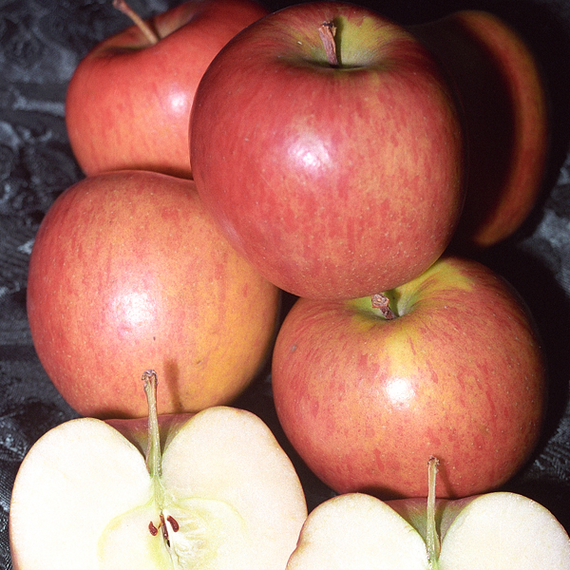
The Braeburn Apple (Malus x domestica 'Braeburn') is a prized late-season variety beloved by home orchardists and culinary enthusiasts throughout USDA Zones 5 to 9 for its exceptional combination of crisp texture, complex spicy-sweet flavor, and remarkable versatility. Discovered in 1952 as a chance seedling in the Nelson region of New Zealand's South Island, Braeburn quickly rose to become one of the world's most celebrated apple cultivars and was introduced to the United States in the 1980s, where it has earned an enthusiastic following in Pacific Northwest orchards and backyard gardens alike. Medium to large in size and beautifully colored with green-gold skin overlaid with rich orange-red streaking and blushing, Braeburn apples offer a refreshing tartness backed by a satisfying underlying sweetness, with subtle hints of pear drop and warm autumn spice. The firm, juicy flesh holds its shape remarkably well during cooking, making it a premier choice for pies, cobblers, sauces, and baked desserts, while its bold flavor also makes it an excellent fresh-eating apple and a highly regarded ingredient in apple ciders. Braeburn is self-fruitful, meaning it can produce fruit on its own, though planting a compatible pollinator such as Gala, Honeycrisp, or Granny Smith will maximize yield. With an estimated chilling requirement of approximately 700 hours and a harvest window from October through November, Braeburn is ideally suited to the cool winters and warm summers of Southern Oregon and Northern California, where conditions allow this outstanding variety to develop its full, complex flavor profile.
Plant Description
Braeburn is a deciduous apple tree that puts on a beautiful seasonal show from spring through fall. In early to mid-spring, the tree bursts into bloom with fragrant, delicate white to pale pink blossoms that are highly attractive to bees and other pollinators. As the season progresses, the foliage fills in with lush green leaves that form an attractive, spreading canopy. By autumn, the tree rewards with a generous crop of medium to large apples featuring smooth, clean skin in a distinctive green-gold base color with vivid orange-red striping and a deep red blush. The flesh is pale cream in color, firm, dense, and exceptionally juicy. The flavor profile is complex — refreshingly tart up front with a background sweetness and distinctive notes of spice and pear drop, creating a well-rounded, satisfying taste that has made Braeburn one of the most acclaimed apple varieties in formal tasting evaluations. Trees are vigorous growers with a naturally spreading form and tend to come into production relatively quickly, often producing fruit as early as the first or second year after planting.
Mature Size
| Rootstock Type | Estimated Mature Height | Notes |
|---|---|---|
| Dwarf (e.g., M-9, M-26) | 8 to 12 feet | Easiest to manage; earliest fruiting; requires staking |
| Semi-Dwarf (e.g., M-7, M-111) | 12 to 18 feet | Good balance of productivity and manageability |
| Standard | 20 to 25 feet | Long-lived; maximum yield; requires more space |
Regardless of rootstock, Braeburn trees produce full-sized fruit. Spread is typically similar to or slightly less than height. Mature height is generally reached within 8 to 12 years. Dwarf and semi-dwarf trees are the most popular choices for home gardens due to their ease of pruning, spraying, and harvesting. The rootstock does not affect fruit quality — only tree size and vigor.
Hardiness Zones and Chill Hours
Braeburn Apple is rated for USDA Hardiness Zones 5 through 9, making it an excellent choice for the climates of Southern Oregon and Northern California. It requires approximately 700 chill hours — defined as hours spent between 32°F and 45°F during winter dormancy — in order to break dormancy properly, flower reliably, and set a full crop. Without adequate chilling, the tree may leaf out unevenly or fail to flower and fruit well. In the warmest parts of Zone 9 and in Zone 10 or warmer, chill hour accumulation may be insufficient for reliable cropping, and a lower-chill alternative should be considered. Braeburn has been shown in trial plantings to perform well and produce decent crops even in locations that accumulate somewhat fewer than the estimated 700 chill hours, making it more adaptable than its chill requirement might suggest in borderline climates.
Sunlight Requirements
Braeburn Apple trees require full sun for optimal growth, flowering, and fruit production. Plant in a location that receives a minimum of 6 to 8 hours of direct sunlight per day. Morning sun with afternoon shade is acceptable and can even be beneficial in the hottest inland valleys, helping to reduce heat stress on developing fruit. Avoid planting under or immediately adjacent to large shade trees, buildings, or structures that would significantly limit sun exposure. Insufficient sunlight leads to reduced fruit production, smaller apples, poor color development, and increased susceptibility to fungal diseases due to poor air circulation and slow drying of foliage after rain or irrigation.
Soil and pH Preferences
Braeburn apple trees perform best in organically rich, loamy, well-draining soil. Good drainage is essential — standing water or consistently saturated soil leads to root rot and overall tree decline. Braeburn tolerates a range of soil types, including moderately sandy or clay-based soils, provided drainage is adequate. In heavy clay soils, consider planting on a raised berm or bed to improve drainage around the root zone. The ideal soil pH range is 6.0 to 7.0 (slightly acidic to neutral). Test your soil before planting and amend with lime to raise pH or sulfur to lower it if necessary. Incorporating compost or aged organic matter into the planting hole and surrounding area will improve soil structure, moisture retention, and microbial activity to support healthy root development.
Watering Guide
Consistent moisture is important throughout the growing season, particularly during fruit development. Follow these general guidelines:
- After planting: Water thoroughly at planting and maintain consistent soil moisture throughout the first growing season while the tree establishes. Check soil moisture by inserting a finger 2 inches into the root zone — water if it feels dry.
- Established trees: Water deeply and less frequently to encourage deep root development. In the warm, dry summers typical of Southern Oregon and Northern California, supplemental irrigation is essential.
- During drought: Braeburn is moderately drought tolerant once established but is not drought resistant. Insufficient water during dry periods leads to reduced fruit size, premature fruit drop, and poor overall yield.
- Avoid overwatering: Do not allow water to pool around the base of the tree. Soggy soil promotes root disease and can be fatal over time.
- Mulching: Apply 3 to 4 inches of organic mulch around the base of the tree, keeping it a few inches away from the trunk, to conserve soil moisture, moderate soil temperature, and suppress weeds.
Fertilizing
Avoid fertilizing during the first year after planting — focus on establishment and consistent watering instead. Beginning in the second year, follow these fertilizing guidelines:
- When to fertilize: Apply fertilizer in early spring just as new growth begins to emerge. Avoid fertilizing from midsummer through fall, as late-season nitrogen promotes tender new growth that is susceptible to frost damage and fire blight infection.
- What to use: A balanced, slow-release fruit tree fertilizer is ideal. Look for formulations that include phosphorus to support flowering and fruit set, as well as calcium to help prevent bitter pit disorder in the fruit.
- Soil testing: Test soil every few years to identify specific nutrient deficiencies and adjust fertilizer type and rate accordingly. Braeburn is particularly prone to calcium deficiency issues (bitter pit), so ensuring adequate calcium levels is important.
- Avoid excess nitrogen: Too much nitrogen produces excessive leafy vegetative growth at the expense of fruit production and can increase fire blight susceptibility.
Pollination
Braeburn is self-fruitful, which is relatively uncommon among apple varieties, meaning it can set fruit without a second tree present. However, planting a compatible cross-pollinator nearby will significantly increase fruit set and overall yield. Braeburn falls into pollination group 4 (midseason bloom), so ideal cross-pollinators should bloom at the same time or in adjacent groups (groups 3, 4, or 5). Recommended companion pollinators include:
- Gala (Group 4)
- Honeycrisp (Group 4)
- Fuji (Group 4)
- Delicious (Group 4)
- Granny Smith (Group 3)
- Northern Spy (Group 5)
- McIntosh (Group 3)
For pollination to be effective, the companion tree should be planted within approximately 50 to 100 feet of the Braeburn tree. Bees and other native pollinators are the primary agents of cross-pollination, so supporting pollinator habitat in and around the garden is highly beneficial.
Pruning and Maintenance
Annual pruning is one of the most important maintenance tasks for a productive Braeburn apple tree. Follow this seasonal approach:
- Winter / Dormant Pruning (late winter, before bud break): This is the primary pruning time. Remove dead, damaged, or diseased wood, crossing or rubbing branches, branches with narrow crotch angles, water sprouts, and any suckers growing from the base or below the graft union. Thin the interior canopy to improve light penetration and air circulation. Remove any double leaders and maintain a clear central leader or open-center form.
- Summer Pruning: Lightly prune in summer to control excessive vegetative growth, remove water sprouts, and shape the canopy. Avoid heavy summer pruning.
- Fruit Thinning: Braeburn has a natural tendency toward biennial bearing if not thinned. Thin fruit clusters when developing apples are no larger than a dime, leaving one fruit per spur and spacing fruit clusters approximately 4 to 6 inches apart. This prevents branch breakage from fruit weight overload and encourages consistently large, high-quality fruit each year.
- Dormant Spraying: Apply a horticultural dormant oil spray during winter dormancy to smother overwintering pest eggs and reduce disease pressure. Always use products labeled for edible fruit trees.
Planting Instructions
- Select a planting site with full sun (6 to 8 or more hours per day), good air circulation, and well-draining soil. Avoid low-lying frost pockets.
- Dig a hole at least twice as wide as the root ball and deep enough so that the graft union sits 1 to 3 inches above the finished soil grade.
- Loosen and inspect the root ball. Trim any circling, damaged, or broken roots. For pot-bound trees, gently tease apart the outer roots to encourage outward growth.
- Place the tree in the hole and backfill with native soil mixed with organic compost. Tamp gently to remove air pockets.
- Water thoroughly after planting. Check after 10 minutes — if the water has fully absorbed, water a second time.
- Apply 3 to 4 inches of organic mulch (wood chips, bark, or straw) over the root zone, keeping mulch several inches away from the trunk to prevent rot and rodent damage.
- Install a tree stake for the first year to stabilize the young tree against wind. Also consider installing a trunk guard to protect against voles and rabbits.
- Space standard trees 20 to 25 feet apart, semi-dwarf trees 12 to 18 feet apart, and dwarf trees 8 to 10 feet apart.
Harvest and Storage
Braeburn is a late-season apple with a harvest window typically running from early October through early November in most growing regions, approximately 160 to 170 days after petal drop. Tips for harvesting and storing Braeburn apples:
- How to tell when ripe: The background skin color transitions from green toward golden-yellow; the red blush deepens; the flesh gives slightly when pressed; seeds are dark brown; and the apple separates easily from the spur with a gentle upward twist.
- Harvest method: Cradle each apple in your palm and gently twist upward — ripe fruit will release cleanly from the spur without pulling the spur from the branch.
- Storage life: Braeburn stores exceptionally well. Refrigerated at 30 to 35°F with moderate humidity, the fruit will hold for up to 4 months while retaining its flavor. Extended storage beyond 4 months may cause the texture to become dry or mealy, though flavor typically holds well.
- Culinary versatility: Braeburn is outstanding eaten fresh off the tree, and its firm flesh and balanced flavor make it one of the best apples for pies, cobblers, apple sauce, ciders, juicing, and freezing. The flesh holds its shape well during baking and does not release excessive juice when cooked.
Pests and Diseases
Braeburn has moderate to high susceptibility to several common apple pests and diseases. Proactive management through good cultural practices, dormant spraying, and timely interventions will keep the tree healthy and productive.
| Pest or Disease | Susceptibility Level | Management Tips |
|---|---|---|
| Apple Scab (Venturia inaequalis) | Susceptible (moderate) | Apply fungicide sprays starting at bud break and through wet spring weather; rake and remove fallen leaves in autumn |
| Fire Blight (Erwinia amylovora) | Susceptible (moderate) | Avoid excess nitrogen; prune blighted wood 12 inches below visible infection with sterilized tools; apply copper-based sprays at bloom |
| Powdery Mildew | Susceptible (moderate to high) | Ensure good air circulation through pruning; apply fungicide if needed; avoid overhead irrigation |
| Bitter Pit (calcium deficiency disorder) | Susceptible (moderate) | Maintain consistent watering; apply foliar calcium sprays during fruit development; avoid over-application of nitrogen |
| Braeburn Browning Disorder | Susceptible (Braeburn-specific) | Avoid heat stress during fruit development; harvest at proper maturity; do not store fruit at temperatures below 32°F |
| Codling Moth | Moderate (common to all apples) | Use pheromone traps to monitor; apply appropriate sprays at egg hatch timing; use kaolin clay or bagging as physical barriers |
| Aphids | Common | Inspect new growth regularly; encourage beneficial insects; use insecticidal soap or neem oil for heavy infestations |
| Cedar Apple Rust | Susceptible | Avoid planting near juniper or cedar hosts; apply fungicide during bloom period if rust is present in the area |
Seasonal Interest
- Spring: The tree emerges from dormancy with a stunning flush of fragrant white to soft pink blossoms in mid-spring, drawing in honeybees, bumble bees, and butterflies. Fresh green foliage follows, filling out the canopy quickly.
- Summer: The dense green canopy provides dappled shade as developing apples swell and begin to show their characteristic orange-red blushing over a yellow-green background color.
- Fall: The highlight of the year — mature Braeburn apples ripen to their full striped red and gold glory from October into November. Fall foliage turns warm gold and amber tones before leaf drop.
- Winter: The bare, sculptural branch structure adds architectural interest to the winter garden. Dormant pruning and spraying during this period sets the tree up for another successful season.
Companion Plants and Landscape Uses
Braeburn Apple is a highly productive and ornamentally appealing tree that works beautifully in a wide range of landscape settings:
- Home orchard: Excellent as a centerpiece or anchor tree in a backyard orchard planting alongside other apple varieties, pears, plums, or cherries.
- Edible landscape: Pairs naturally with berry shrubs such as blueberries, currants, and gooseberries, as well as espaliered pears or other fruit trees along fences or walls.
- Companion plants: Consider underplanting with chives, garlic, or daffodil bulbs (which deter burrowing pests), aromatic herbs such as lavender, thyme, and mint (which attract beneficial insects and pollinators), and low-growing clovers as a pollinator-friendly ground cover. Comfrey is an excellent dynamic accumulator to plant in the tree guild, providing mulch material and supporting soil health.
- Pollinator garden integration: The spring blossoms make Braeburn a valuable early nectar source; placing it near other flowering plants ensures strong cross-pollination and supports beneficial insect populations throughout the property.
- Screening and structure: Larger standard or semi-dwarf specimens can provide seasonal privacy screening and structural shade in a mixed orchard planting.
Wildlife Value
Braeburn Apple trees provide meaningful habitat and food value for local wildlife throughout the growing season:
- Pollinators: The abundant midseason blossoms are a rich source of nectar and pollen for honeybees, native bumble bees, mason bees, butterflies, and other beneficial insects.
- Birds: Fruit that remains on the tree or drops to the ground in late fall and winter is eagerly consumed by robins, cedar waxwings, thrushes, and other fruit-eating birds.
- Small mammals: Fallen apples provide an important late-season food source for deer, squirrels, and other wildlife. Note that deer may also browse on young trees, so trunk guards and fencing may be advisable in areas with high deer pressure.
- Beneficial insects: The tree canopy and surrounding guild plantings support populations of beneficial predatory insects, including ladybugs and lacewings, that help naturally suppress aphids and other pest populations.
- Superb late-season apple with an irresistible balance of sweet and tangy flavor, crisp pale cream flesh, and exceptional firmness that holds up beautifully during baking
- A New Zealand-born chance seedling with a storied history, now one of the most consistently high-scoring apple varieties in formal taste tests
- Self-fruitful and highly productive, ripening in October to November and storing well for up to 4 months under proper refrigeration
- Versatile in the kitchen — outstanding fresh off the tree, and a top performer in pies, cobblers, sauces, ciders, and preserves
The Braeburn Apple (Malus x domestica 'Braeburn') is a prized late-season variety beloved by home orchardists and culinary enthusiasts throughout USDA Zones 5 to 9 for its exceptional combination of crisp texture, complex spicy-sweet flavor, and remarkable versatility. Discovered in 1952 as a chance seedling in the Nelson region of New Zealand's South Island, Braeburn quickly rose to become one of the world's most celebrated apple cultivars and was introduced to the United States in the 1980s, where it has earned an enthusiastic following in Pacific Northwest orchards and backyard gardens alike. Medium to large in size and beautifully colored with green-gold skin overlaid with rich orange-red streaking and blushing, Braeburn apples offer a refreshing tartness backed by a satisfying underlying sweetness, with subtle hints of pear drop and warm autumn spice. The firm, juicy flesh holds its shape remarkably well during cooking, making it a premier choice for pies, cobblers, sauces, and baked desserts, while its bold flavor also makes it an excellent fresh-eating apple and a highly regarded ingredient in apple ciders. Braeburn is self-fruitful, meaning it can produce fruit on its own, though planting a compatible pollinator such as Gala, Honeycrisp, or Granny Smith will maximize yield. With an estimated chilling requirement of approximately 700 hours and a harvest window from October through November, Braeburn is ideally suited to the cool winters and warm summers of Southern Oregon and Northern California, where conditions allow this outstanding variety to develop its full, complex flavor profile.
Plant Description
Braeburn is a deciduous apple tree that puts on a beautiful seasonal show from spring through fall. In early to mid-spring, the tree bursts into bloom with fragrant, delicate white to pale pink blossoms that are highly attractive to bees and other pollinators. As the season progresses, the foliage fills in with lush green leaves that form an attractive, spreading canopy. By autumn, the tree rewards with a generous crop of medium to large apples featuring smooth, clean skin in a distinctive green-gold base color with vivid orange-red striping and a deep red blush. The flesh is pale cream in color, firm, dense, and exceptionally juicy. The flavor profile is complex — refreshingly tart up front with a background sweetness and distinctive notes of spice and pear drop, creating a well-rounded, satisfying taste that has made Braeburn one of the most acclaimed apple varieties in formal tasting evaluations. Trees are vigorous growers with a naturally spreading form and tend to come into production relatively quickly, often producing fruit as early as the first or second year after planting.
Mature Size
| Rootstock Type | Estimated Mature Height | Notes |
|---|---|---|
| Dwarf (e.g., M-9, M-26) | 8 to 12 feet | Easiest to manage; earliest fruiting; requires staking |
| Semi-Dwarf (e.g., M-7, M-111) | 12 to 18 feet | Good balance of productivity and manageability |
| Standard | 20 to 25 feet | Long-lived; maximum yield; requires more space |
Regardless of rootstock, Braeburn trees produce full-sized fruit. Spread is typically similar to or slightly less than height. Mature height is generally reached within 8 to 12 years. Dwarf and semi-dwarf trees are the most popular choices for home gardens due to their ease of pruning, spraying, and harvesting. The rootstock does not affect fruit quality — only tree size and vigor.
Hardiness Zones and Chill Hours
Braeburn Apple is rated for USDA Hardiness Zones 5 through 9, making it an excellent choice for the climates of Southern Oregon and Northern California. It requires approximately 700 chill hours — defined as hours spent between 32°F and 45°F during winter dormancy — in order to break dormancy properly, flower reliably, and set a full crop. Without adequate chilling, the tree may leaf out unevenly or fail to flower and fruit well. In the warmest parts of Zone 9 and in Zone 10 or warmer, chill hour accumulation may be insufficient for reliable cropping, and a lower-chill alternative should be considered. Braeburn has been shown in trial plantings to perform well and produce decent crops even in locations that accumulate somewhat fewer than the estimated 700 chill hours, making it more adaptable than its chill requirement might suggest in borderline climates.
Sunlight Requirements
Braeburn Apple trees require full sun for optimal growth, flowering, and fruit production. Plant in a location that receives a minimum of 6 to 8 hours of direct sunlight per day. Morning sun with afternoon shade is acceptable and can even be beneficial in the hottest inland valleys, helping to reduce heat stress on developing fruit. Avoid planting under or immediately adjacent to large shade trees, buildings, or structures that would significantly limit sun exposure. Insufficient sunlight leads to reduced fruit production, smaller apples, poor color development, and increased susceptibility to fungal diseases due to poor air circulation and slow drying of foliage after rain or irrigation.
Soil and pH Preferences
Braeburn apple trees perform best in organically rich, loamy, well-draining soil. Good drainage is essential — standing water or consistently saturated soil leads to root rot and overall tree decline. Braeburn tolerates a range of soil types, including moderately sandy or clay-based soils, provided drainage is adequate. In heavy clay soils, consider planting on a raised berm or bed to improve drainage around the root zone. The ideal soil pH range is 6.0 to 7.0 (slightly acidic to neutral). Test your soil before planting and amend with lime to raise pH or sulfur to lower it if necessary. Incorporating compost or aged organic matter into the planting hole and surrounding area will improve soil structure, moisture retention, and microbial activity to support healthy root development.
Watering Guide
Consistent moisture is important throughout the growing season, particularly during fruit development. Follow these general guidelines:
- After planting: Water thoroughly at planting and maintain consistent soil moisture throughout the first growing season while the tree establishes. Check soil moisture by inserting a finger 2 inches into the root zone — water if it feels dry.
- Established trees: Water deeply and less frequently to encourage deep root development. In the warm, dry summers typical of Southern Oregon and Northern California, supplemental irrigation is essential.
- During drought: Braeburn is moderately drought tolerant once established but is not drought resistant. Insufficient water during dry periods leads to reduced fruit size, premature fruit drop, and poor overall yield.
- Avoid overwatering: Do not allow water to pool around the base of the tree. Soggy soil promotes root disease and can be fatal over time.
- Mulching: Apply 3 to 4 inches of organic mulch around the base of the tree, keeping it a few inches away from the trunk, to conserve soil moisture, moderate soil temperature, and suppress weeds.
Fertilizing
Avoid fertilizing during the first year after planting — focus on establishment and consistent watering instead. Beginning in the second year, follow these fertilizing guidelines:
- When to fertilize: Apply fertilizer in early spring just as new growth begins to emerge. Avoid fertilizing from midsummer through fall, as late-season nitrogen promotes tender new growth that is susceptible to frost damage and fire blight infection.
- What to use: A balanced, slow-release fruit tree fertilizer is ideal. Look for formulations that include phosphorus to support flowering and fruit set, as well as calcium to help prevent bitter pit disorder in the fruit.
- Soil testing: Test soil every few years to identify specific nutrient deficiencies and adjust fertilizer type and rate accordingly. Braeburn is particularly prone to calcium deficiency issues (bitter pit), so ensuring adequate calcium levels is important.
- Avoid excess nitrogen: Too much nitrogen produces excessive leafy vegetative growth at the expense of fruit production and can increase fire blight susceptibility.
Pollination
Braeburn is self-fruitful, which is relatively uncommon among apple varieties, meaning it can set fruit without a second tree present. However, planting a compatible cross-pollinator nearby will significantly increase fruit set and overall yield. Braeburn falls into pollination group 4 (midseason bloom), so ideal cross-pollinators should bloom at the same time or in adjacent groups (groups 3, 4, or 5). Recommended companion pollinators include:
- Gala (Group 4)
- Honeycrisp (Group 4)
- Fuji (Group 4)
- Delicious (Group 4)
- Granny Smith (Group 3)
- Northern Spy (Group 5)
- McIntosh (Group 3)
For pollination to be effective, the companion tree should be planted within approximately 50 to 100 feet of the Braeburn tree. Bees and other native pollinators are the primary agents of cross-pollination, so supporting pollinator habitat in and around the garden is highly beneficial.
Pruning and Maintenance
Annual pruning is one of the most important maintenance tasks for a productive Braeburn apple tree. Follow this seasonal approach:
- Winter / Dormant Pruning (late winter, before bud break): This is the primary pruning time. Remove dead, damaged, or diseased wood, crossing or rubbing branches, branches with narrow crotch angles, water sprouts, and any suckers growing from the base or below the graft union. Thin the interior canopy to improve light penetration and air circulation. Remove any double leaders and maintain a clear central leader or open-center form.
- Summer Pruning: Lightly prune in summer to control excessive vegetative growth, remove water sprouts, and shape the canopy. Avoid heavy summer pruning.
- Fruit Thinning: Braeburn has a natural tendency toward biennial bearing if not thinned. Thin fruit clusters when developing apples are no larger than a dime, leaving one fruit per spur and spacing fruit clusters approximately 4 to 6 inches apart. This prevents branch breakage from fruit weight overload and encourages consistently large, high-quality fruit each year.
- Dormant Spraying: Apply a horticultural dormant oil spray during winter dormancy to smother overwintering pest eggs and reduce disease pressure. Always use products labeled for edible fruit trees.
Planting Instructions
- Select a planting site with full sun (6 to 8 or more hours per day), good air circulation, and well-draining soil. Avoid low-lying frost pockets.
- Dig a hole at least twice as wide as the root ball and deep enough so that the graft union sits 1 to 3 inches above the finished soil grade.
- Loosen and inspect the root ball. Trim any circling, damaged, or broken roots. For pot-bound trees, gently tease apart the outer roots to encourage outward growth.
- Place the tree in the hole and backfill with native soil mixed with organic compost. Tamp gently to remove air pockets.
- Water thoroughly after planting. Check after 10 minutes — if the water has fully absorbed, water a second time.
- Apply 3 to 4 inches of organic mulch (wood chips, bark, or straw) over the root zone, keeping mulch several inches away from the trunk to prevent rot and rodent damage.
- Install a tree stake for the first year to stabilize the young tree against wind. Also consider installing a trunk guard to protect against voles and rabbits.
- Space standard trees 20 to 25 feet apart, semi-dwarf trees 12 to 18 feet apart, and dwarf trees 8 to 10 feet apart.
Harvest and Storage
Braeburn is a late-season apple with a harvest window typically running from early October through early November in most growing regions, approximately 160 to 170 days after petal drop. Tips for harvesting and storing Braeburn apples:
- How to tell when ripe: The background skin color transitions from green toward golden-yellow; the red blush deepens; the flesh gives slightly when pressed; seeds are dark brown; and the apple separates easily from the spur with a gentle upward twist.
- Harvest method: Cradle each apple in your palm and gently twist upward — ripe fruit will release cleanly from the spur without pulling the spur from the branch.
- Storage life: Braeburn stores exceptionally well. Refrigerated at 30 to 35°F with moderate humidity, the fruit will hold for up to 4 months while retaining its flavor. Extended storage beyond 4 months may cause the texture to become dry or mealy, though flavor typically holds well.
- Culinary versatility: Braeburn is outstanding eaten fresh off the tree, and its firm flesh and balanced flavor make it one of the best apples for pies, cobblers, apple sauce, ciders, juicing, and freezing. The flesh holds its shape well during baking and does not release excessive juice when cooked.
Pests and Diseases
Braeburn has moderate to high susceptibility to several common apple pests and diseases. Proactive management through good cultural practices, dormant spraying, and timely interventions will keep the tree healthy and productive.
| Pest or Disease | Susceptibility Level | Management Tips |
|---|---|---|
| Apple Scab (Venturia inaequalis) | Susceptible (moderate) | Apply fungicide sprays starting at bud break and through wet spring weather; rake and remove fallen leaves in autumn |
| Fire Blight (Erwinia amylovora) | Susceptible (moderate) | Avoid excess nitrogen; prune blighted wood 12 inches below visible infection with sterilized tools; apply copper-based sprays at bloom |
| Powdery Mildew | Susceptible (moderate to high) | Ensure good air circulation through pruning; apply fungicide if needed; avoid overhead irrigation |
| Bitter Pit (calcium deficiency disorder) | Susceptible (moderate) | Maintain consistent watering; apply foliar calcium sprays during fruit development; avoid over-application of nitrogen |
| Braeburn Browning Disorder | Susceptible (Braeburn-specific) | Avoid heat stress during fruit development; harvest at proper maturity; do not store fruit at temperatures below 32°F |
| Codling Moth | Moderate (common to all apples) | Use pheromone traps to monitor; apply appropriate sprays at egg hatch timing; use kaolin clay or bagging as physical barriers |
| Aphids | Common | Inspect new growth regularly; encourage beneficial insects; use insecticidal soap or neem oil for heavy infestations |
| Cedar Apple Rust | Susceptible | Avoid planting near juniper or cedar hosts; apply fungicide during bloom period if rust is present in the area |
Seasonal Interest
- Spring: The tree emerges from dormancy with a stunning flush of fragrant white to soft pink blossoms in mid-spring, drawing in honeybees, bumble bees, and butterflies. Fresh green foliage follows, filling out the canopy quickly.
- Summer: The dense green canopy provides dappled shade as developing apples swell and begin to show their characteristic orange-red blushing over a yellow-green background color.
- Fall: The highlight of the year — mature Braeburn apples ripen to their full striped red and gold glory from October into November. Fall foliage turns warm gold and amber tones before leaf drop.
- Winter: The bare, sculptural branch structure adds architectural interest to the winter garden. Dormant pruning and spraying during this period sets the tree up for another successful season.
Companion Plants and Landscape Uses
Braeburn Apple is a highly productive and ornamentally appealing tree that works beautifully in a wide range of landscape settings:
- Home orchard: Excellent as a centerpiece or anchor tree in a backyard orchard planting alongside other apple varieties, pears, plums, or cherries.
- Edible landscape: Pairs naturally with berry shrubs such as blueberries, currants, and gooseberries, as well as espaliered pears or other fruit trees along fences or walls.
- Companion plants: Consider underplanting with chives, garlic, or daffodil bulbs (which deter burrowing pests), aromatic herbs such as lavender, thyme, and mint (which attract beneficial insects and pollinators), and low-growing clovers as a pollinator-friendly ground cover. Comfrey is an excellent dynamic accumulator to plant in the tree guild, providing mulch material and supporting soil health.
- Pollinator garden integration: The spring blossoms make Braeburn a valuable early nectar source; placing it near other flowering plants ensures strong cross-pollination and supports beneficial insect populations throughout the property.
- Screening and structure: Larger standard or semi-dwarf specimens can provide seasonal privacy screening and structural shade in a mixed orchard planting.
Wildlife Value
Braeburn Apple trees provide meaningful habitat and food value for local wildlife throughout the growing season:
- Pollinators: The abundant midseason blossoms are a rich source of nectar and pollen for honeybees, native bumble bees, mason bees, butterflies, and other beneficial insects.
- Birds: Fruit that remains on the tree or drops to the ground in late fall and winter is eagerly consumed by robins, cedar waxwings, thrushes, and other fruit-eating birds.
- Small mammals: Fallen apples provide an important late-season food source for deer, squirrels, and other wildlife. Note that deer may also browse on young trees, so trunk guards and fencing may be advisable in areas with high deer pressure.
- Beneficial insects: The tree canopy and surrounding guild plantings support populations of beneficial predatory insects, including ladybugs and lacewings, that help naturally suppress aphids and other pest populations.
Related Products