


Zoom the image with the mouse
Blue Star Juniper
SKU:
106180-P
UPC:
753768007759
$11.99 - $69.99
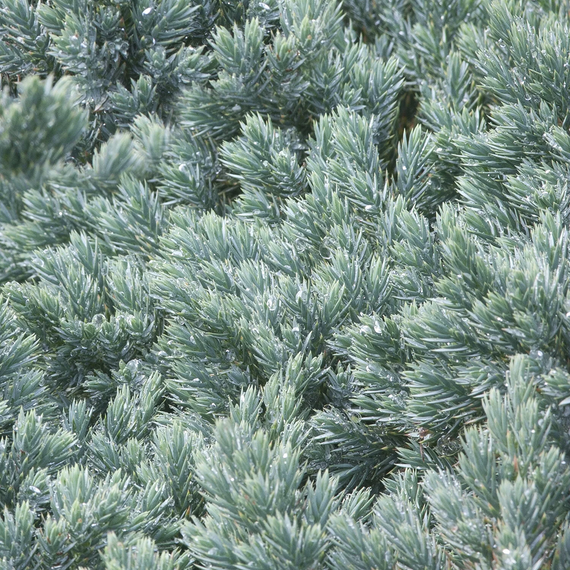
- Striking steel-blue, needle-like foliage delivers vivid, year-round color that seems to glow in the landscape, making this dwarf evergreen a true four-season showstopper.
- Naturally compact and slow-growing, it forms a tidy mounded habit reaching just 2-3 feet tall and up to 4 feet wide with minimal pruning or maintenance required.
- Exceptionally tough and adaptable — drought-tolerant once established, cold-hardy to USDA Zone 4, and highly resistant to pests and diseases in well-drained soils.
- Incredibly versatile in the landscape, excelling in rock gardens, xeriscape plantings, mixed borders, erosion-control slopes, foundation beds, and container gardens.
Blue Star Juniper (Juniperus squamata 'Blue Star') is one of the most beloved and widely planted dwarf conifers in American horticulture, and it's easy to see why. This compact, mounding evergreen shrub dazzles with intensely silvery steel-blue needles that hold their striking color throughout every season, providing a luminous focal point in the landscape even when the rest of the garden is dormant in winter. A cultivar of the singleseed juniper native to Afghanistan, the Himalayas, and western China, 'Blue Star' originated as a witch's-broom mutation discovered on a 'Meyeri' juniper in 1950 and was introduced to the nursery trade in the Netherlands in 1965 — quickly becoming a global garden staple. Growing slowly to a mature height of 2-3 feet with a spread of up to 4 feet, its naturally dense, symmetrical mound rarely needs shaping, and its thick, weed-suppressing canopy keeps garden maintenance to a minimum. Fully established plants are impressively drought-tolerant and thrive in full sun with well-draining soil, making Blue Star Juniper an outstanding choice for water-wise and low-maintenance landscapes across Southern Oregon and Northern California. Whether used as a specimen planting, a groundcover on sunny slopes, a textural anchor in a rock garden, or a container subject for a patio or entryway, Juniperus squamata 'Blue Star' rewards gardeners with effortless elegance and dependable year-round beauty.
Plant Description
Blue Star Juniper is a dwarf, mounding evergreen shrub prized above all else for its extraordinary foliage color. The densely packed needles are sharply pointed and arranged in star-like whorls along each stem, covering branches from tip to base and creating lush, full plumes of foliage. Each needle displays a vivid silvery steel-blue color — more intense than virtually any other juniper cultivar — giving the plant an almost luminous quality in the garden. The bark on mature woody stems becomes attractively scaly and ridged over time, adding subtle winter interest at the base of the plant. Small, ornamental blue-black berry-like cones may occasionally appear on mature specimens, adding another layer of visual interest. The overall growth habit is naturally symmetrical and mounded, remaining tidy without any formal shearing, and the plant retains its compact form reliably throughout its life. 'Blue Star' is the result of a natural genetic mutation (a witch's broom) that arose on a 'Meyeri' juniper in 1950 and was cultivated and introduced to the trade in 1965 — and its extraordinary qualities have made it one of the best-selling dwarf conifers in the world ever since.
Mature Size and Growth Rate
| Characteristic | Detail |
|---|---|
| Mature Height | 2-3 feet |
| Mature Spread | Up to 4 feet |
| Growth Rate | Slow — approximately 3-6 inches per year |
| Time to Maturity | Approximately 20 years to reach full size |
| 5-Year Height | Approximately 1 foot tall |
| Recommended Spacing | 4 feet on center |
| Plant Form | Compact, symmetrical mound |
Because of its slow growth rate, Blue Star Juniper is ideal for smaller garden spaces where you want a permanent, reliable presence without the plant outgrowing its allotted space. Its slow pace is actually a major selling point — it holds its intended scale and form for decades with virtually no corrective pruning.
Hardiness Zones and Climate
Blue Star Juniper is reliably cold-hardy in USDA Plant Hardiness Zones 4a through 8b, making it an excellent choice for the wide range of climates found across Southern Oregon and Northern California. It handles heavy snow loads and hard freezes without the need for any winter protection — its dense, low mounding habit actually sheds snow naturally. In our region's Mediterranean-influenced climate, with dry summers and cool, wet winters, Blue Star Juniper performs exceptionally well. It is important to note, however, that this cultivar does not fare well in hot, humid conditions such as those found in the Deep South, as high ambient humidity increases susceptibility to fungal diseases. In the Pacific Northwest and Northern California, our characteristically dry summers pair perfectly with the plant's drought tolerance, and our mild winters present no threat to its hardiness. In extremely cold zones, new growth may show minor winter tip burn after a particularly severe season, but the plant rebounds quickly in spring.
Sunlight Requirements
Blue Star Juniper performs best in full sun, defined as a minimum of 6 hours of direct sunlight per day. Ample sun exposure is the most important factor in maintaining the plant's signature vibrant steel-blue foliage color, its naturally compact and dense growth habit, and its overall health and resilience. Plants grown in partial shade will survive but will tend to produce looser, less dense foliage, take on a less intense blue color, and become more vulnerable to pests and fungal diseases. Deep or full shade is not tolerated and should be avoided entirely. In the hottest inland areas of Southern Oregon and Northern California, a little afternoon shade can reduce heat stress, but an open, south- or west-facing exposure is generally ideal. Avoid planting Blue Star Juniper in the shadow of buildings, fences, or large trees where it will receive less than the recommended daily minimum of direct light.
Soil and pH Preferences
- Drainage: Excellent drainage is the single most critical soil requirement. Blue Star Juniper will not tolerate soggy or waterlogged conditions, which quickly lead to fatal root rot. If your native soil is heavy clay, amend generously with compost, coarse sand, or grit before planting, or consider a raised bed.
- Soil Texture: Performs best in loamy or sandy soils. It is notably tolerant of poor, low-nutrient soils and even compacted or rocky ground — conditions that would stress many other ornamentals.
- Soil pH: Prefers a slightly acidic to neutral pH in the range of 5.5 to 7.0. It will tolerate mildly alkaline conditions but may show minor nutrient deficiencies at higher pH levels.
- Pollution Tolerance: Demonstrates good tolerance of urban soil conditions including compaction and mild pollution, making it suitable for streetside and parking-area plantings.
- Organic Matter: While tolerant of low-nutrient soils, incorporating a modest amount of compost at planting time improves establishment. Avoid overly rich, high-fertility soils that encourage overly lush, soft growth.
Watering Guide
Proper watering is one of the most important aspects of Blue Star Juniper care, and the most common mistake is overwatering. Follow these guidelines for healthy, long-lived plants:
- After planting: Water thoroughly immediately after planting and keep the root zone consistently moist (not soggy) for the first several weeks while the plant establishes. Check the soil regularly and water when the top 2-3 inches begin to dry out.
- First growing season: Water deeply and regularly throughout the first season to encourage deep root development. Reduce frequency as temperatures cool in fall.
- Established plants: Once fully established (typically after 1-2 growing seasons), Blue Star Juniper is highly drought-tolerant and requires little to no supplemental irrigation in areas with regular rainfall. In the dry summer climate of Southern Oregon and Northern California, water deeply every 2-3 weeks during prolonged dry spells.
- General rule: Always allow the soil to dry out between waterings. It is far easier to kill this plant through overwatering than underwatering. Never let the root zone sit in standing water.
- Container plants: Potted specimens dry out faster than in-ground plants. Use the finger test — insert your finger 2 inches into the soil and water only when it feels dry at that depth.
Fertilizing
Blue Star Juniper has modest nutritional needs and generally does not require regular fertilization when grown in average garden soil. Over-fertilizing can actually be harmful, stimulating lush, soft growth that is more susceptible to pests and diseases and detracts from the plant's naturally compact habit. Here are the key guidelines:
- In-ground plants: A 2-3 inch layer of organic mulch (compost, shredded bark, or wood chips) applied around the root zone each year is typically sufficient to maintain soil fertility. Avoid piling mulch directly against the trunk.
- Young or newly planted shrubs: A light application of a balanced, slow-release granular fertilizer formulated for conifers or acid-loving shrubs in early spring can support establishment during the first 1-2 years.
- Established in-ground plants: Fertilizer is generally unnecessary unless a soil test reveals a specific deficiency in nitrogen (N), phosphorus (P), or potassium (K), or if the plant shows signs of nutrient deficiency such as yellowing foliage.
- Container plants: Potted Blue Star Junipers benefit from a very light application of a diluted, slow-release conifer fertilizer in spring — use approximately one quarter of the label-recommended rate to avoid burning the roots or stimulating excessive growth.
- Timing: Never fertilize in late summer or fall, as this encourages tender new growth that is vulnerable to winter cold damage.
Pruning and Maintenance
One of Blue Star Juniper's most appreciated traits is its very low maintenance requirements. Its naturally symmetrical, mounding habit means formal shearing is rarely, if ever, necessary. Here is what you need to know:
- Routine pruning: Generally not required. The plant maintains its compact form on its own throughout its life without any intervention.
- Light shaping: If desired, the tips of outer branches can be lightly trimmed in late spring after new growth has emerged to encourage a slightly denser habit or to fine-tune the shape.
- Dead or damaged wood: Promptly remove any dead, damaged, or diseased branches by cutting them back to a healthy lateral branch. This is the most important maintenance task.
- Winter damage: After an unusually severe winter, some needle tip burn may occur. Wait until spring when new growth begins to emerge, then trim off any visibly dead or brown branch tips.
- Important caution: Never cut back into the thick, woody interior stems. Junipers will not regenerate new growth from old, bare wood, so cutting back past the foliage zone will leave permanent, unsightly bare patches.
- Weed suppression: The plant's dense, spreading canopy is highly effective at shading out weeds once it matures. A layer of mulch around young plants helps suppress weeds until the plant fills in.
Planting Instructions
- Choose the right site: Select a location with full sun (6+ hours daily) and well-draining soil. Avoid low spots where water pools after rain.
- Timing: Plant in spring or fall when temperatures are mild. Avoid planting during the hottest weeks of summer or the coldest weeks of winter.
- Prepare the hole: Dig a hole as deep as the root ball and approximately twice as wide. Loosen the sides of the hole to help roots spread easily.
- Amend if needed: If your soil is heavy clay or compacted, mix the removed soil with compost or coarse grit to improve drainage before backfilling.
- Position the plant: Set the plant in the hole so the top of the root ball is level with — or very slightly above — the surrounding soil surface. Do not plant too deeply.
- Backfill and firm: Fill in around the root ball with the amended soil, gently firming it as you go to eliminate large air pockets. Do not compact the soil aggressively.
- Water thoroughly: Water deeply immediately after planting to settle the soil around the roots. Check the soil and add a bit more backfill if any settling occurs and leaves gaps.
- Mulch: Apply a 2-3 inch layer of organic mulch over the root zone to retain moisture, moderate soil temperature, and suppress weeds. Keep mulch several inches away from the trunk.
- Avoid planting near susceptible hosts: Do not plant Blue Star Juniper near apple, crabapple, hawthorn, or quince trees, as junipers can host cedar apple rust, a fungal disease that affects these plants.
Seasonal Interest
Blue Star Juniper is a true four-season garden plant that earns its place in the landscape year-round:
- Spring: Bright, fresh new growth emerges with an especially vivid blue-silver intensity, energizing the garden as other plants come back to life. The contrast between new and mature needles creates subtle two-toned texture.
- Summer: The dense, silvery steel-blue mound provides a cooling visual counterpoint to the warm colors of summer flowers. Its thick canopy effectively suppresses weeds during the growing season.
- Fall: Foliage retains its striking blue color as surrounding deciduous trees and shrubs begin to change, making Blue Star Juniper a reliable anchor of color as the season transitions. Small, ornamental blue-black berry-like cones may be visible on mature plants.
- Winter: This is where Blue Star Juniper truly shines. When the garden is stripped of color and most plants are dormant, its luminous silvery-blue mound remains vibrant and full, providing structure, texture, and color that is invaluable in the winter landscape. It is exceptionally cold-hardy and requires no winter protection.
Landscape Uses
Few dwarf shrubs are as versatile in the landscape as Blue Star Juniper. Consider these applications:
- Rock gardens: An outstanding choice for rocky, well-drained settings where its silvery color and mounding form complement boulders and gravel beautifully.
- Xeriscape and water-wise gardens: Highly drought-tolerant once established, making it ideal for low-water landscapes and dry gardens in our region's summer-dry climate.
- Mixed shrub borders: Acts as a striking textural and color anchor among other conifers, ornamental grasses, and flowering perennials in mixed border plantings.
- Foundation planting: Its slow, compact growth makes it a safe, long-term choice near building foundations where overgrown shrubs are a common problem.
- Erosion control: Dense rooting and low spreading habit make it effective on slopes and banks where soil stabilization is needed.
- Mass planting and groundcover: Planting multiple specimens 4 feet apart creates a weed-suppressing, evergreen groundcover for large sunny areas.
- Specimen or focal point: Its unique steel-blue color makes a single plant a standout specimen in a prominent garden location.
- Container and bonsai: Adapts well to container growing for patios, entryways, and decks, and is a popular subject for bonsai culture.
Companion Plants
Blue Star Juniper's intense steel-blue foliage and sun-loving, drought-tolerant nature make it a natural companion for a wide range of plants that share similar cultural needs. Focus on plants that contrast with its color and texture while thriving in the same full-sun, well-drained conditions:
- Lavender (Lavandula spp.): A classic pairing — the purple flower spikes and silvery-green foliage of lavender echo and complement the juniper's blue hues, and both thrive in the same hot, sunny, and well-drained conditions.
- Blue Fescue (Festuca glauca): The fine, spiky blue clumps of ornamental fescue reinforce the cool blue color palette while providing contrasting fine texture and graceful movement.
- Creeping Thyme (Thymus serpyllum): Low-growing, fragrant, and drought-tolerant, creeping thyme fills in beautifully around juniper while attracting beneficial pollinators.
- Sedum / Stonecrop (Sedum spp.): Succulent sedums share the juniper's love of sun and excellent drainage, and provide seasonal flower color from summer through fall.
- Dusty Miller (Jacobaea maritima): The silvery-white, lacy foliage creates striking contrast in color and texture alongside the steel-blue juniper needles.
- Lamb's Ear (Stachys byzantina): Velvety, silver-green leaves provide a soft textural counterpoint and visually tie in with the juniper's cool silver tones.
- Dwarf Mugo Pine (Pinus mugo 'Mops'): The dark green, rounded form of dwarf mugo pine provides strong color contrast and a complementary evergreen texture.
- Little Bluestem Grass (Schizachyrium scoparium): Blue-green summer foliage transitions to rich russet in fall and winter, creating a stunning seasonal contrast with the year-round blue juniper.
- Salvia (Salvia nemorosa cultivars): Deep purple-blue flower spikes in summer create a harmonious color echo with the juniper's foliage, and both plants thrive in full sun with minimal water.
- Heather (Calluna vulgaris): Low-growing and evergreen, heather provides seasonal pink, purple, or white blooms and lush foliage that contrasts with the juniper's spiky texture.
Avoid planting Blue Star Juniper near apple, crabapple, hawthorn, or quince, as junipers serve as an alternate host for cedar apple rust, which can defoliate these fruit and ornamental trees.
Pests and Diseases
Blue Star Juniper is one of the more pest- and disease-resistant shrubs available, and plants grown in the right conditions — full sun, well-draining soil, and moderate water — rarely encounter serious problems. Be aware of the following potential issues:
- Spider mites: The most common insect pest, particularly during hot, dry weather. Signs include fine webbing and a bronze or dusty appearance to the foliage. Treat with a strong stream of water to dislodge colonies or apply insecticidal soap or horticultural oil.
- Aphids: May feed on tender new spring growth. Populations typically diminish as foliage hardens. Dislodge with a garden hose or treat with insecticidal soap if colonies are heavy.
- Bagworms: Caterpillars that construct bag-like cases from foliage. Hand-pick bags and destroy them before larvae hatch. Treat active infestations with Bt (Bacillus thuringiensis) or spinosad.
- Scale insects: Armored scale can appear on stems. Remove by hand with gloves and hose off, or treat with horticultural oil during dormancy.
- Juniper webworm: Larvae web together and feed on foliage near branch tips. Prune out and destroy affected branch tips; treat severe infestations with an appropriate insecticide.
- Root rot (Phytophthora spp.): The primary disease threat, caused almost exclusively by overwatering or poorly draining soils. Prevention — through proper siting and watering practices — is the only reliable control.
- Cedar apple rust (Gymnosporangium juniperi-virginianae): A fungal disease that uses junipers as an alternate host. It causes orange, gelatinous galls on juniper stems in wet spring weather but is rarely lethal to the juniper itself. The greater concern is for nearby apple and crabapple trees. Avoid planting Blue Star Juniper near susceptible hosts.
- Twig blight and needle cast: Fungal diseases that can occur in conditions of high moisture and poor air circulation. Ensure good spacing and full-sun siting to minimize risk. Remove and dispose of any affected branches.
Container Growing
Blue Star Juniper is an excellent candidate for container culture on patios, decks, entryways, and balconies. Its slow growth rate means it remains appropriately sized in a container for many years. Follow these tips for success:
- Container selection: Choose a pot with ample drainage holes. Unglazed terra cotta, wood, or frost-resistant ceramic containers work well. The container should be large enough to accommodate the root ball with a few inches of space around it.
- Potting mix: Use a fast-draining mix formulated for conifers, bonsai, or cacti rather than standard potting soil. Adding perlite or coarse grit improves drainage further.
- Sunlight: Position containers in a spot that receives at least 6 hours of direct sun daily. Move as needed throughout the seasons to maintain adequate light exposure.
- Watering: Container plants dry out more quickly than in-ground specimens. Check the soil moisture regularly using the finger test — water thoroughly when the top 2 inches are dry, and allow the pot to drain fully. Never allow the container to sit in standing water.
- Fertilizing: Apply a very light dose (about one quarter of the recommended rate) of a diluted, slow-release conifer fertilizer in spring only.
- Winter care: In Zones 4-5, container roots are more exposed to freezing than in-ground roots. Move pots to an unheated garage or shelter against a building wall during the coldest months, or insulate the pot with burlap or bubble wrap. In Zones 7-8, containers can remain outdoors year-round.
- Bonsai: Blue Star Juniper is a highly popular and rewarding bonsai subject, prized for its exceptional foliage color, dense habit, and tolerance of training. It requires the same full-sun conditions and careful watering management as any other container specimen.
Wildlife Value
Blue Star Juniper provides several valuable ecological functions in the home landscape, particularly for local wildlife:
- Bird habitat and cover: The dense, low mounding form of Blue Star Juniper provides excellent shelter and nesting cover for ground-nesting and low-nesting songbirds. Its thick interior offers protection from predators and harsh weather.
- Berry-like cones: Mature plants occasionally produce small, ornamental blue-black berry-like seed cones that may be consumed by certain bird species, particularly thrushes and waxwings that are known to seek out juniper berries.
- Pollinator support: While the plant itself is wind-pollinated, its use alongside flowering companion plants creates a more ecologically rich habitat that benefits bees, butterflies, and other beneficial insects.
- Deer resistance: Blue Star Juniper is generally considered deer-resistant, especially in mature, established plantings. While no plant is entirely deer-proof, mature junipers are far less frequently browsed than many other landscape shrubs. Young plants and those in areas with heavy deer pressure may require temporary protection.
- Erosion control: The spreading root system stabilizes slopes and banks, reducing soil loss from rain and wind and improving the habitat quality of the surrounding area.
- Note on berries: The berry-like cones of Juniperus squamata are not known for culinary use or edibility. For wildlife-focused juniper berry production, Juniperus communis cultivars are the preferred choice.
- Striking steel-blue, needle-like foliage delivers vivid, year-round color that seems to glow in the landscape, making this dwarf evergreen a true four-season showstopper.
- Naturally compact and slow-growing, it forms a tidy mounded habit reaching just 2-3 feet tall and up to 4 feet wide with minimal pruning or maintenance required.
- Exceptionally tough and adaptable — drought-tolerant once established, cold-hardy to USDA Zone 4, and highly resistant to pests and diseases in well-drained soils.
- Incredibly versatile in the landscape, excelling in rock gardens, xeriscape plantings, mixed borders, erosion-control slopes, foundation beds, and container gardens.
Blue Star Juniper (Juniperus squamata 'Blue Star') is one of the most beloved and widely planted dwarf conifers in American horticulture, and it's easy to see why. This compact, mounding evergreen shrub dazzles with intensely silvery steel-blue needles that hold their striking color throughout every season, providing a luminous focal point in the landscape even when the rest of the garden is dormant in winter. A cultivar of the singleseed juniper native to Afghanistan, the Himalayas, and western China, 'Blue Star' originated as a witch's-broom mutation discovered on a 'Meyeri' juniper in 1950 and was introduced to the nursery trade in the Netherlands in 1965 — quickly becoming a global garden staple. Growing slowly to a mature height of 2-3 feet with a spread of up to 4 feet, its naturally dense, symmetrical mound rarely needs shaping, and its thick, weed-suppressing canopy keeps garden maintenance to a minimum. Fully established plants are impressively drought-tolerant and thrive in full sun with well-draining soil, making Blue Star Juniper an outstanding choice for water-wise and low-maintenance landscapes across Southern Oregon and Northern California. Whether used as a specimen planting, a groundcover on sunny slopes, a textural anchor in a rock garden, or a container subject for a patio or entryway, Juniperus squamata 'Blue Star' rewards gardeners with effortless elegance and dependable year-round beauty.
Plant Description
Blue Star Juniper is a dwarf, mounding evergreen shrub prized above all else for its extraordinary foliage color. The densely packed needles are sharply pointed and arranged in star-like whorls along each stem, covering branches from tip to base and creating lush, full plumes of foliage. Each needle displays a vivid silvery steel-blue color — more intense than virtually any other juniper cultivar — giving the plant an almost luminous quality in the garden. The bark on mature woody stems becomes attractively scaly and ridged over time, adding subtle winter interest at the base of the plant. Small, ornamental blue-black berry-like cones may occasionally appear on mature specimens, adding another layer of visual interest. The overall growth habit is naturally symmetrical and mounded, remaining tidy without any formal shearing, and the plant retains its compact form reliably throughout its life. 'Blue Star' is the result of a natural genetic mutation (a witch's broom) that arose on a 'Meyeri' juniper in 1950 and was cultivated and introduced to the trade in 1965 — and its extraordinary qualities have made it one of the best-selling dwarf conifers in the world ever since.
Mature Size and Growth Rate
| Characteristic | Detail |
|---|---|
| Mature Height | 2-3 feet |
| Mature Spread | Up to 4 feet |
| Growth Rate | Slow — approximately 3-6 inches per year |
| Time to Maturity | Approximately 20 years to reach full size |
| 5-Year Height | Approximately 1 foot tall |
| Recommended Spacing | 4 feet on center |
| Plant Form | Compact, symmetrical mound |
Because of its slow growth rate, Blue Star Juniper is ideal for smaller garden spaces where you want a permanent, reliable presence without the plant outgrowing its allotted space. Its slow pace is actually a major selling point — it holds its intended scale and form for decades with virtually no corrective pruning.
Hardiness Zones and Climate
Blue Star Juniper is reliably cold-hardy in USDA Plant Hardiness Zones 4a through 8b, making it an excellent choice for the wide range of climates found across Southern Oregon and Northern California. It handles heavy snow loads and hard freezes without the need for any winter protection — its dense, low mounding habit actually sheds snow naturally. In our region's Mediterranean-influenced climate, with dry summers and cool, wet winters, Blue Star Juniper performs exceptionally well. It is important to note, however, that this cultivar does not fare well in hot, humid conditions such as those found in the Deep South, as high ambient humidity increases susceptibility to fungal diseases. In the Pacific Northwest and Northern California, our characteristically dry summers pair perfectly with the plant's drought tolerance, and our mild winters present no threat to its hardiness. In extremely cold zones, new growth may show minor winter tip burn after a particularly severe season, but the plant rebounds quickly in spring.
Sunlight Requirements
Blue Star Juniper performs best in full sun, defined as a minimum of 6 hours of direct sunlight per day. Ample sun exposure is the most important factor in maintaining the plant's signature vibrant steel-blue foliage color, its naturally compact and dense growth habit, and its overall health and resilience. Plants grown in partial shade will survive but will tend to produce looser, less dense foliage, take on a less intense blue color, and become more vulnerable to pests and fungal diseases. Deep or full shade is not tolerated and should be avoided entirely. In the hottest inland areas of Southern Oregon and Northern California, a little afternoon shade can reduce heat stress, but an open, south- or west-facing exposure is generally ideal. Avoid planting Blue Star Juniper in the shadow of buildings, fences, or large trees where it will receive less than the recommended daily minimum of direct light.
Soil and pH Preferences
- Drainage: Excellent drainage is the single most critical soil requirement. Blue Star Juniper will not tolerate soggy or waterlogged conditions, which quickly lead to fatal root rot. If your native soil is heavy clay, amend generously with compost, coarse sand, or grit before planting, or consider a raised bed.
- Soil Texture: Performs best in loamy or sandy soils. It is notably tolerant of poor, low-nutrient soils and even compacted or rocky ground — conditions that would stress many other ornamentals.
- Soil pH: Prefers a slightly acidic to neutral pH in the range of 5.5 to 7.0. It will tolerate mildly alkaline conditions but may show minor nutrient deficiencies at higher pH levels.
- Pollution Tolerance: Demonstrates good tolerance of urban soil conditions including compaction and mild pollution, making it suitable for streetside and parking-area plantings.
- Organic Matter: While tolerant of low-nutrient soils, incorporating a modest amount of compost at planting time improves establishment. Avoid overly rich, high-fertility soils that encourage overly lush, soft growth.
Watering Guide
Proper watering is one of the most important aspects of Blue Star Juniper care, and the most common mistake is overwatering. Follow these guidelines for healthy, long-lived plants:
- After planting: Water thoroughly immediately after planting and keep the root zone consistently moist (not soggy) for the first several weeks while the plant establishes. Check the soil regularly and water when the top 2-3 inches begin to dry out.
- First growing season: Water deeply and regularly throughout the first season to encourage deep root development. Reduce frequency as temperatures cool in fall.
- Established plants: Once fully established (typically after 1-2 growing seasons), Blue Star Juniper is highly drought-tolerant and requires little to no supplemental irrigation in areas with regular rainfall. In the dry summer climate of Southern Oregon and Northern California, water deeply every 2-3 weeks during prolonged dry spells.
- General rule: Always allow the soil to dry out between waterings. It is far easier to kill this plant through overwatering than underwatering. Never let the root zone sit in standing water.
- Container plants: Potted specimens dry out faster than in-ground plants. Use the finger test — insert your finger 2 inches into the soil and water only when it feels dry at that depth.
Fertilizing
Blue Star Juniper has modest nutritional needs and generally does not require regular fertilization when grown in average garden soil. Over-fertilizing can actually be harmful, stimulating lush, soft growth that is more susceptible to pests and diseases and detracts from the plant's naturally compact habit. Here are the key guidelines:
- In-ground plants: A 2-3 inch layer of organic mulch (compost, shredded bark, or wood chips) applied around the root zone each year is typically sufficient to maintain soil fertility. Avoid piling mulch directly against the trunk.
- Young or newly planted shrubs: A light application of a balanced, slow-release granular fertilizer formulated for conifers or acid-loving shrubs in early spring can support establishment during the first 1-2 years.
- Established in-ground plants: Fertilizer is generally unnecessary unless a soil test reveals a specific deficiency in nitrogen (N), phosphorus (P), or potassium (K), or if the plant shows signs of nutrient deficiency such as yellowing foliage.
- Container plants: Potted Blue Star Junipers benefit from a very light application of a diluted, slow-release conifer fertilizer in spring — use approximately one quarter of the label-recommended rate to avoid burning the roots or stimulating excessive growth.
- Timing: Never fertilize in late summer or fall, as this encourages tender new growth that is vulnerable to winter cold damage.
Pruning and Maintenance
One of Blue Star Juniper's most appreciated traits is its very low maintenance requirements. Its naturally symmetrical, mounding habit means formal shearing is rarely, if ever, necessary. Here is what you need to know:
- Routine pruning: Generally not required. The plant maintains its compact form on its own throughout its life without any intervention.
- Light shaping: If desired, the tips of outer branches can be lightly trimmed in late spring after new growth has emerged to encourage a slightly denser habit or to fine-tune the shape.
- Dead or damaged wood: Promptly remove any dead, damaged, or diseased branches by cutting them back to a healthy lateral branch. This is the most important maintenance task.
- Winter damage: After an unusually severe winter, some needle tip burn may occur. Wait until spring when new growth begins to emerge, then trim off any visibly dead or brown branch tips.
- Important caution: Never cut back into the thick, woody interior stems. Junipers will not regenerate new growth from old, bare wood, so cutting back past the foliage zone will leave permanent, unsightly bare patches.
- Weed suppression: The plant's dense, spreading canopy is highly effective at shading out weeds once it matures. A layer of mulch around young plants helps suppress weeds until the plant fills in.
Planting Instructions
- Choose the right site: Select a location with full sun (6+ hours daily) and well-draining soil. Avoid low spots where water pools after rain.
- Timing: Plant in spring or fall when temperatures are mild. Avoid planting during the hottest weeks of summer or the coldest weeks of winter.
- Prepare the hole: Dig a hole as deep as the root ball and approximately twice as wide. Loosen the sides of the hole to help roots spread easily.
- Amend if needed: If your soil is heavy clay or compacted, mix the removed soil with compost or coarse grit to improve drainage before backfilling.
- Position the plant: Set the plant in the hole so the top of the root ball is level with — or very slightly above — the surrounding soil surface. Do not plant too deeply.
- Backfill and firm: Fill in around the root ball with the amended soil, gently firming it as you go to eliminate large air pockets. Do not compact the soil aggressively.
- Water thoroughly: Water deeply immediately after planting to settle the soil around the roots. Check the soil and add a bit more backfill if any settling occurs and leaves gaps.
- Mulch: Apply a 2-3 inch layer of organic mulch over the root zone to retain moisture, moderate soil temperature, and suppress weeds. Keep mulch several inches away from the trunk.
- Avoid planting near susceptible hosts: Do not plant Blue Star Juniper near apple, crabapple, hawthorn, or quince trees, as junipers can host cedar apple rust, a fungal disease that affects these plants.
Seasonal Interest
Blue Star Juniper is a true four-season garden plant that earns its place in the landscape year-round:
- Spring: Bright, fresh new growth emerges with an especially vivid blue-silver intensity, energizing the garden as other plants come back to life. The contrast between new and mature needles creates subtle two-toned texture.
- Summer: The dense, silvery steel-blue mound provides a cooling visual counterpoint to the warm colors of summer flowers. Its thick canopy effectively suppresses weeds during the growing season.
- Fall: Foliage retains its striking blue color as surrounding deciduous trees and shrubs begin to change, making Blue Star Juniper a reliable anchor of color as the season transitions. Small, ornamental blue-black berry-like cones may be visible on mature plants.
- Winter: This is where Blue Star Juniper truly shines. When the garden is stripped of color and most plants are dormant, its luminous silvery-blue mound remains vibrant and full, providing structure, texture, and color that is invaluable in the winter landscape. It is exceptionally cold-hardy and requires no winter protection.
Landscape Uses
Few dwarf shrubs are as versatile in the landscape as Blue Star Juniper. Consider these applications:
- Rock gardens: An outstanding choice for rocky, well-drained settings where its silvery color and mounding form complement boulders and gravel beautifully.
- Xeriscape and water-wise gardens: Highly drought-tolerant once established, making it ideal for low-water landscapes and dry gardens in our region's summer-dry climate.
- Mixed shrub borders: Acts as a striking textural and color anchor among other conifers, ornamental grasses, and flowering perennials in mixed border plantings.
- Foundation planting: Its slow, compact growth makes it a safe, long-term choice near building foundations where overgrown shrubs are a common problem.
- Erosion control: Dense rooting and low spreading habit make it effective on slopes and banks where soil stabilization is needed.
- Mass planting and groundcover: Planting multiple specimens 4 feet apart creates a weed-suppressing, evergreen groundcover for large sunny areas.
- Specimen or focal point: Its unique steel-blue color makes a single plant a standout specimen in a prominent garden location.
- Container and bonsai: Adapts well to container growing for patios, entryways, and decks, and is a popular subject for bonsai culture.
Companion Plants
Blue Star Juniper's intense steel-blue foliage and sun-loving, drought-tolerant nature make it a natural companion for a wide range of plants that share similar cultural needs. Focus on plants that contrast with its color and texture while thriving in the same full-sun, well-drained conditions:
- Lavender (Lavandula spp.): A classic pairing — the purple flower spikes and silvery-green foliage of lavender echo and complement the juniper's blue hues, and both thrive in the same hot, sunny, and well-drained conditions.
- Blue Fescue (Festuca glauca): The fine, spiky blue clumps of ornamental fescue reinforce the cool blue color palette while providing contrasting fine texture and graceful movement.
- Creeping Thyme (Thymus serpyllum): Low-growing, fragrant, and drought-tolerant, creeping thyme fills in beautifully around juniper while attracting beneficial pollinators.
- Sedum / Stonecrop (Sedum spp.): Succulent sedums share the juniper's love of sun and excellent drainage, and provide seasonal flower color from summer through fall.
- Dusty Miller (Jacobaea maritima): The silvery-white, lacy foliage creates striking contrast in color and texture alongside the steel-blue juniper needles.
- Lamb's Ear (Stachys byzantina): Velvety, silver-green leaves provide a soft textural counterpoint and visually tie in with the juniper's cool silver tones.
- Dwarf Mugo Pine (Pinus mugo 'Mops'): The dark green, rounded form of dwarf mugo pine provides strong color contrast and a complementary evergreen texture.
- Little Bluestem Grass (Schizachyrium scoparium): Blue-green summer foliage transitions to rich russet in fall and winter, creating a stunning seasonal contrast with the year-round blue juniper.
- Salvia (Salvia nemorosa cultivars): Deep purple-blue flower spikes in summer create a harmonious color echo with the juniper's foliage, and both plants thrive in full sun with minimal water.
- Heather (Calluna vulgaris): Low-growing and evergreen, heather provides seasonal pink, purple, or white blooms and lush foliage that contrasts with the juniper's spiky texture.
Avoid planting Blue Star Juniper near apple, crabapple, hawthorn, or quince, as junipers serve as an alternate host for cedar apple rust, which can defoliate these fruit and ornamental trees.
Pests and Diseases
Blue Star Juniper is one of the more pest- and disease-resistant shrubs available, and plants grown in the right conditions — full sun, well-draining soil, and moderate water — rarely encounter serious problems. Be aware of the following potential issues:
- Spider mites: The most common insect pest, particularly during hot, dry weather. Signs include fine webbing and a bronze or dusty appearance to the foliage. Treat with a strong stream of water to dislodge colonies or apply insecticidal soap or horticultural oil.
- Aphids: May feed on tender new spring growth. Populations typically diminish as foliage hardens. Dislodge with a garden hose or treat with insecticidal soap if colonies are heavy.
- Bagworms: Caterpillars that construct bag-like cases from foliage. Hand-pick bags and destroy them before larvae hatch. Treat active infestations with Bt (Bacillus thuringiensis) or spinosad.
- Scale insects: Armored scale can appear on stems. Remove by hand with gloves and hose off, or treat with horticultural oil during dormancy.
- Juniper webworm: Larvae web together and feed on foliage near branch tips. Prune out and destroy affected branch tips; treat severe infestations with an appropriate insecticide.
- Root rot (Phytophthora spp.): The primary disease threat, caused almost exclusively by overwatering or poorly draining soils. Prevention — through proper siting and watering practices — is the only reliable control.
- Cedar apple rust (Gymnosporangium juniperi-virginianae): A fungal disease that uses junipers as an alternate host. It causes orange, gelatinous galls on juniper stems in wet spring weather but is rarely lethal to the juniper itself. The greater concern is for nearby apple and crabapple trees. Avoid planting Blue Star Juniper near susceptible hosts.
- Twig blight and needle cast: Fungal diseases that can occur in conditions of high moisture and poor air circulation. Ensure good spacing and full-sun siting to minimize risk. Remove and dispose of any affected branches.
Container Growing
Blue Star Juniper is an excellent candidate for container culture on patios, decks, entryways, and balconies. Its slow growth rate means it remains appropriately sized in a container for many years. Follow these tips for success:
- Container selection: Choose a pot with ample drainage holes. Unglazed terra cotta, wood, or frost-resistant ceramic containers work well. The container should be large enough to accommodate the root ball with a few inches of space around it.
- Potting mix: Use a fast-draining mix formulated for conifers, bonsai, or cacti rather than standard potting soil. Adding perlite or coarse grit improves drainage further.
- Sunlight: Position containers in a spot that receives at least 6 hours of direct sun daily. Move as needed throughout the seasons to maintain adequate light exposure.
- Watering: Container plants dry out more quickly than in-ground specimens. Check the soil moisture regularly using the finger test — water thoroughly when the top 2 inches are dry, and allow the pot to drain fully. Never allow the container to sit in standing water.
- Fertilizing: Apply a very light dose (about one quarter of the recommended rate) of a diluted, slow-release conifer fertilizer in spring only.
- Winter care: In Zones 4-5, container roots are more exposed to freezing than in-ground roots. Move pots to an unheated garage or shelter against a building wall during the coldest months, or insulate the pot with burlap or bubble wrap. In Zones 7-8, containers can remain outdoors year-round.
- Bonsai: Blue Star Juniper is a highly popular and rewarding bonsai subject, prized for its exceptional foliage color, dense habit, and tolerance of training. It requires the same full-sun conditions and careful watering management as any other container specimen.
Wildlife Value
Blue Star Juniper provides several valuable ecological functions in the home landscape, particularly for local wildlife:
- Bird habitat and cover: The dense, low mounding form of Blue Star Juniper provides excellent shelter and nesting cover for ground-nesting and low-nesting songbirds. Its thick interior offers protection from predators and harsh weather.
- Berry-like cones: Mature plants occasionally produce small, ornamental blue-black berry-like seed cones that may be consumed by certain bird species, particularly thrushes and waxwings that are known to seek out juniper berries.
- Pollinator support: While the plant itself is wind-pollinated, its use alongside flowering companion plants creates a more ecologically rich habitat that benefits bees, butterflies, and other beneficial insects.
- Deer resistance: Blue Star Juniper is generally considered deer-resistant, especially in mature, established plantings. While no plant is entirely deer-proof, mature junipers are far less frequently browsed than many other landscape shrubs. Young plants and those in areas with heavy deer pressure may require temporary protection.
- Erosion control: The spreading root system stabilizes slopes and banks, reducing soil loss from rain and wind and improving the habitat quality of the surrounding area.
- Note on berries: The berry-like cones of Juniperus squamata are not known for culinary use or edibility. For wildlife-focused juniper berry production, Juniperus communis cultivars are the preferred choice.
Related Products


