
null Skip to main content
Zoom the image with the mouse

Blue Rug Juniper - 5 Gallon

SKU: 195795
$22.99
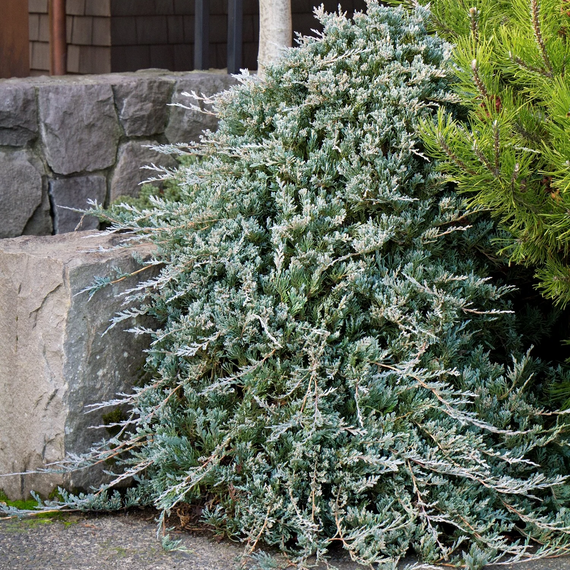
  • Stunning silver-blue foliage forms an ultra-low, dense carpet that hugs the ground and transitions to rich purple tones in winter for year-round visual interest.
  • Exceptionally tough and drought tolerant once established, thriving in full sun, poor soils, coastal salt spray, and hot, dry slopes where other plants struggle.
  • A top-performing groundcover for erosion control, cascading over retaining walls, rock gardens, and mass plantings across a wide range of climates.
  • Naturally deer resistant and low maintenance with no regular pruning required, making it one of the most reliable and hardworking landscape plants available.

Blue Rug Juniper (Juniperus horizontalis 'Wiltonii') is one of the finest and most dependable creeping groundcover conifers available, prized for its intense silver-blue, fine-textured evergreen foliage that spreads into a strikingly beautiful, uniform carpet just inches above the ground. A naturally occurring cultivar originally discovered on Vinalhaven Island in Penobscot Bay, Maine and introduced through South Wilton Nurseries in Connecticut, this female selection has proven itself across decades of landscape use and remains a benchmark against which all other low, prostrate junipers are measured. Throughout spring and summer the dense, scale-like needles — closely appressed to long, trailing branches — maintain their signature cool silver-blue color, then shift to stunning shades of plum and purple as temperatures drop in fall and winter, delivering color interest in every season. Blue Rug Juniper is remarkably adaptable, tolerating hot dry conditions, sandy or rocky soils, moderate coastal salt and wind exposure, urban air pollutants, and periods of drought once established, making it an ideal low-water landscaping solution for the challenging sites common across Southern Oregon and Northern California. With a low, spreading habit that makes it equally effective as a large-scale groundcover on sunny banks, a softening element over walls and borders, or a striking specimen in rock gardens, this is a true workhorse plant that delivers exceptional beauty with minimal care.


Plant Description

Blue Rug Juniper is a prostrate, needled evergreen shrub in the cypress family (Cupressaceae). Its branches are long, trailing, and flexible, forming a broad, dense mat that lies remarkably flat against the ground. The foliage is composed almost entirely of adult scale-like leaves that are tightly appressed to the stems and arranged in a fine-textured, plume-like spray. The overall effect is of a smooth, lush, silver-blue rug draped across the landscape. This is a female cultivar, meaning established plants will occasionally produce small, fleshy, globose cones approximately 1/4 inch in diameter that ripen to a bluish or greenish-black color in fall, adding a subtle ornamental detail and providing food for wildlife. The cultivar name 'Wiltonii' is synonymous with the common trade name 'Blue Rug,' and both names refer to the same exceptional plant. Its origin as a natural mutation gives it a rugged, proven constitution that performs reliably across a wide variety of growing conditions.

Mature Size
Attribute Measurement
Mature Height 4 to 6 inches
Mature Spread 6 to 8 feet wide
Growth Rate Moderate to fast spreading
Habit Prostrate, creeping, trailing
Recommended Spacing 5 to 8 feet on center for mass plantings
Hardiness Zones

Blue Rug Juniper is exceptionally cold hardy and adaptable across a very broad range of climates. It is rated for USDA Hardiness Zones 3 through 9, making it one of the most climatically versatile groundcover junipers available. It withstands the deep freezes of northern winters, adapts well to the temperature swings of high desert environments, and also performs reliably in the milder, coastal climates of the Pacific Coast. It is equally at home in the cool mountain regions, the Siskiyou foothills, and the warmer valley floors of Southern Oregon and Northern California.

Sunlight Requirements

Blue Rug Juniper thrives in full sun and requires a minimum of 6 hours of direct sunlight per day for best performance, most compact form, and the most vibrant silver-blue foliage color. Full sun exposure also helps keep the foliage dry and reduces the risk of fungal issues. While the plant may tolerate very light, open shade in hotter inland climates, planting in shadier conditions will result in looser, less dense growth and diminished foliage color. For the best results — especially on slopes, in rock gardens, and in hot, dry areas — choose the sunniest spot available.

Soil and pH Preferences

One of the great strengths of Blue Rug Juniper is its adaptability to a wide range of soil types and pH levels. It performs well in:

  • Sandy, loam, clay, or rocky soils — as long as drainage is good
  • Average to moderately poor soils — it does not require fertile conditions
  • Soil pH ranging from acidic (below 6.0) to slightly alkaline (above 8.0)
  • Shallow or gravelly soils common in rocky hillside settings

The single non-negotiable requirement is excellent drainage. Blue Rug Juniper will not tolerate standing water or consistently wet, poorly drained soils, which can lead to root rot. A dryish, sandy, or gravelly soil is actually preferred over a rich, moisture-retentive soil.

Watering Guide

During the establishment period — typically the first one to two growing seasons after planting — water deeply and regularly to encourage the root system to develop. Once established, Blue Rug Juniper is highly drought tolerant and requires very little supplemental irrigation in most climates. Follow this general watering guide:

  • At planting: Water thoroughly to settle the soil around the roots.
  • First season: Water deeply once or twice per week depending on heat and soil type, allowing the soil to partially dry between waterings.
  • After establishment: Reduce irrigation significantly. In most Pacific Coast climates, established plants need little to no supplemental summer water once roots are deep and wide.
  • Avoid overwatering: Wet feet are the primary cause of decline. Never allow water to pool around the base of the plant.

This plant is ideally suited to low-water, drought-tolerant landscape designs and performs exceptionally well on slopes where soil naturally drains quickly.

Planting Instructions
  1. Choose a site in full sun with well-draining soil. Avoid any areas prone to standing water or poorly drained clay without amendment.
  2. Dig a planting hole two to three times as wide as the root ball and equal to the depth of the container. Avoid planting too deep — the top of the root ball should sit at or just slightly above the surrounding soil grade.
  3. Gently remove the plant from the container and loosen any circling roots before placing it in the hole.
  4. Backfill with the native soil. Blue Rug Juniper generally does not require soil amendment, especially in sandy or rocky soils. In heavy clay, mixing in coarse sand or pumice to improve drainage is beneficial.
  5. Water in thoroughly to eliminate air pockets around the roots.
  6. Apply a 2 to 3 inch layer of mulch around the plant, keeping mulch a few inches away from the main stems to prevent moisture buildup and disease.
  7. For erosion control or mass planting applications, space plants 5 to 8 feet apart on center to allow branches to spread and eventually fill in the area.
Fertilizing

Blue Rug Juniper has modest nutrient requirements and does not need heavy feeding. In fact, overly fertile soils can promote excessive, loose growth that detracts from its naturally tight, prostrate form. Follow these simple guidelines:

  • Apply a slow-release, balanced granular fertilizer formulated for evergreen shrubs or conifers once in early spring as new growth begins.
  • A light application of a balanced fertilizer such as a 10-10-10 or a granular conifer-specific product is sufficient in most cases.
  • In nutrient-poor sandy soils, a second light application in early summer may be beneficial during the establishment period.
  • Avoid high-nitrogen fertilizers, which can encourage overly lush, soft growth that may be more susceptible to pest and disease issues.
  • Established plants in decent soils often require no fertilizing at all once they are mature and spreading well.
Pruning and Maintenance

Blue Rug Juniper is genuinely low maintenance and requires very little pruning under normal circumstances. Key maintenance points include:

  • Routine pruning: Generally not required. The plant maintains an attractive, naturally flat form on its own.
  • Edge trimming: If branches spread beyond their intended boundary — along a walkway, over a wall, or into adjacent planting areas — simply trim back the individual branch tips with sharp hand pruners in early spring before new growth begins.
  • Dead wood removal: Remove any dead or damaged stems at their point of origin. On mature plants, occasional dieback in the interior of the mat is normal; clean it up by carefully pulling out dead material and trimming back dead branches to living wood.
  • Avoid heavy shearing: Do not shear this plant into a hedge shape or cut back into bare wood. Juniper branches do not reliably regenerate from old, bare wood.
  • Weed management: Keep the area around newly planted specimens free of weeds until the branches fill in and shade out competition. Once established, the dense mat naturally suppresses most weed growth.
Seasonal Interest

Blue Rug Juniper provides genuine four-season landscape interest, making it an outstanding year-round performer:

  • Spring: Fresh new growth emerges with bright, silvery blue-green color, and the mat fills back in vigorously after winter dormancy.
  • Summer: The foliage reaches its peak of lush, dense, silver-blue coverage. The low, spreading form creates a striking cooling visual effect in hot, sun-drenched areas.
  • Fall: The foliage begins to shift as temperatures drop, taking on warm violet undertones. Small blue-black cones may be visible on mature female plants.
  • Winter: The foliage develops its most dramatic display, turning rich shades of plum, lavender, and purple — providing exceptional color and texture in the winter landscape when few other ground covers remain visually interesting.
Landscape Uses

Few groundcover plants match the versatility and reliability of Blue Rug Juniper in a landscape setting. Excellent applications include:

  • Large-scale groundcover for sunny, open areas and parking lot islands
  • Erosion control on slopes, banks, hillsides, and cut-and-fill areas
  • Cascading over retaining walls and boulders for a dramatic, softening effect
  • Rock gardens and xeriscape plantings where drainage is excellent
  • Foundation plantings at the base of buildings where other plants may struggle
  • Front-of-border accent paired with upright conifers or ornamental grasses
  • Mass plantings along roadsides, driveways, and pathways
  • Coastal gardens where salt spray and wind challenge less tolerant plants
  • Naturalized areas and low-maintenance utility spaces
Companion Plants

Blue Rug Juniper pairs beautifully with plants that share its preference for full sun, excellent drainage, and low to moderate water needs. Excellent companion plant choices include:

  • Upright junipers (such as 'Sky Rocket' or 'Blue Arrow') — dramatic vertical contrast to the horizontal mat
  • Ornamental grasses (such as Blue Oat Grass or Feather Reed Grass) — complementary texture and movement
  • Lavender — shares water needs and adds fragrant purple blooms above the blue-green mat
  • Dwarf conifers (such as Mugo Pine or dwarf Alberta Spruce) — contrasting forms in rock garden and mixed conifer designs
  • Sedum and stonecrops — thrive in similar dry, rocky conditions
  • Russian Sage — tall, airy silver-blue blooms echo the foliage tones
  • Japanese Maples — the silver-blue carpet creates a stunning backdrop for colorful foliage overhead
  • Yarrow — drought-tolerant perennial that blends naturally in low-water plantings
Pests and Diseases

Blue Rug Juniper is generally a tough and resilient plant with no serious pest or disease problems under good growing conditions. Be aware of the following occasional issues:

  • Spider mites: The most common pest concern, particularly in hot, dry conditions. Look for stippled or bronzed foliage and fine webbing. Treat with a miticide or strong water spray to knock mites off foliage.
  • Bagworms: Caterpillars that construct small debris-covered bags on the branches. Hand-pick bags in fall and winter, or treat with an appropriate insecticide when larvae are young and actively feeding in late spring.
  • Aphids and scale: Occasional infestations can be managed with horticultural oil or insecticidal soap applied per label directions.
  • Juniper tip blight: A fungal disease that causes dieback at branch tips, most common in wet springs. Prune out and dispose of affected tissue; improve air circulation.
  • Cedar-apple rust: A fungal disease that alternates between junipers and apple family trees. Avoid planting near crabapples, apples, or hawthorns if rust is a local concern.
  • Root rot: Caused by poorly drained, overly wet soils — the single most preventable problem. Always plant in well-draining soil and avoid overwatering.
  • Interior dieback: On older, very dense mats, the interior foliage may thin or die back as the center becomes shaded out. This is a natural aging process and can be cleaned up by removing dead material.
Wildlife Value

Blue Rug Juniper offers meaningful value to local wildlife while also helping to deter deer browsing in the home landscape:

  • Birds: The small, fleshy blue-black cones produced by female plants are a food source for various songbirds and thrushes, including cedar waxwings, robins, and bluebirds. The dense, low mat also provides valuable ground-level nesting cover and protective shelter for birds and small mammals.
  • Pollinators: While not a major nectar source, the plant contributes structure to pollinator-friendly garden designs.
  • Deer resistance: The aromatic foliage is unappealing to deer, making it an excellent choice in areas with high deer pressure. It is considered reliably deer resistant under most conditions.
  • Erosion and habitat: Dense spreading mats stabilize bare soil on slopes, creating stable micro-habitat for ground-dwelling insects and small wildlife.
Tolerance and Resilience

Blue Rug Juniper stands out among groundcover plants for its exceptional ability to thrive in challenging conditions that defeat less adaptable plants:

  • Drought tolerance: Highly drought tolerant once established, requiring little to no supplemental irrigation in most Western climates
  • Heat tolerance: Thrives in hot, sun-baked exposures and reflected heat environments such as along pavement and building foundations
  • Wind tolerance: Handles strong, drying winds that damage more sensitive plants
  • Salt tolerance: One of the most salt-tolerant groundcover junipers available — excellent for coastal gardens and roadside plantings where de-icing salts are used
  • Poor soil tolerance: Adapts to lean, rocky, or sandy soils with minimal organic matter
  • Urban conditions: Tolerates air pollutants and compacted conditions common in urban and suburban landscapes
  • Cold hardiness: Extremely cold hardy, surviving well into Zone 3 with proper siting
 
  • Stunning silver-blue foliage forms an ultra-low, dense carpet that hugs the ground and transitions to rich purple tones in winter for year-round visual interest.
  • Exceptionally tough and drought tolerant once established, thriving in full sun, poor soils, coastal salt spray, and hot, dry slopes where other plants struggle.
  • A top-performing groundcover for erosion control, cascading over retaining walls, rock gardens, and mass plantings across a wide range of climates.
  • Naturally deer resistant and low maintenance with no regular pruning required, making it one of the most reliable and hardworking landscape plants available.

Blue Rug Juniper (Juniperus horizontalis 'Wiltonii') is one of the finest and most dependable creeping groundcover conifers available, prized for its intense silver-blue, fine-textured evergreen foliage that spreads into a strikingly beautiful, uniform carpet just inches above the ground. A naturally occurring cultivar originally discovered on Vinalhaven Island in Penobscot Bay, Maine and introduced through South Wilton Nurseries in Connecticut, this female selection has proven itself across decades of landscape use and remains a benchmark against which all other low, prostrate junipers are measured. Throughout spring and summer the dense, scale-like needles — closely appressed to long, trailing branches — maintain their signature cool silver-blue color, then shift to stunning shades of plum and purple as temperatures drop in fall and winter, delivering color interest in every season. Blue Rug Juniper is remarkably adaptable, tolerating hot dry conditions, sandy or rocky soils, moderate coastal salt and wind exposure, urban air pollutants, and periods of drought once established, making it an ideal low-water landscaping solution for the challenging sites common across Southern Oregon and Northern California. With a low, spreading habit that makes it equally effective as a large-scale groundcover on sunny banks, a softening element over walls and borders, or a striking specimen in rock gardens, this is a true workhorse plant that delivers exceptional beauty with minimal care.


Plant Description

Blue Rug Juniper is a prostrate, needled evergreen shrub in the cypress family (Cupressaceae). Its branches are long, trailing, and flexible, forming a broad, dense mat that lies remarkably flat against the ground. The foliage is composed almost entirely of adult scale-like leaves that are tightly appressed to the stems and arranged in a fine-textured, plume-like spray. The overall effect is of a smooth, lush, silver-blue rug draped across the landscape. This is a female cultivar, meaning established plants will occasionally produce small, fleshy, globose cones approximately 1/4 inch in diameter that ripen to a bluish or greenish-black color in fall, adding a subtle ornamental detail and providing food for wildlife. The cultivar name 'Wiltonii' is synonymous with the common trade name 'Blue Rug,' and both names refer to the same exceptional plant. Its origin as a natural mutation gives it a rugged, proven constitution that performs reliably across a wide variety of growing conditions.

Mature Size
Attribute Measurement
Mature Height 4 to 6 inches
Mature Spread 6 to 8 feet wide
Growth Rate Moderate to fast spreading
Habit Prostrate, creeping, trailing
Recommended Spacing 5 to 8 feet on center for mass plantings
Hardiness Zones

Blue Rug Juniper is exceptionally cold hardy and adaptable across a very broad range of climates. It is rated for USDA Hardiness Zones 3 through 9, making it one of the most climatically versatile groundcover junipers available. It withstands the deep freezes of northern winters, adapts well to the temperature swings of high desert environments, and also performs reliably in the milder, coastal climates of the Pacific Coast. It is equally at home in the cool mountain regions, the Siskiyou foothills, and the warmer valley floors of Southern Oregon and Northern California.

Sunlight Requirements

Blue Rug Juniper thrives in full sun and requires a minimum of 6 hours of direct sunlight per day for best performance, most compact form, and the most vibrant silver-blue foliage color. Full sun exposure also helps keep the foliage dry and reduces the risk of fungal issues. While the plant may tolerate very light, open shade in hotter inland climates, planting in shadier conditions will result in looser, less dense growth and diminished foliage color. For the best results — especially on slopes, in rock gardens, and in hot, dry areas — choose the sunniest spot available.

Soil and pH Preferences

One of the great strengths of Blue Rug Juniper is its adaptability to a wide range of soil types and pH levels. It performs well in:

  • Sandy, loam, clay, or rocky soils — as long as drainage is good
  • Average to moderately poor soils — it does not require fertile conditions
  • Soil pH ranging from acidic (below 6.0) to slightly alkaline (above 8.0)
  • Shallow or gravelly soils common in rocky hillside settings

The single non-negotiable requirement is excellent drainage. Blue Rug Juniper will not tolerate standing water or consistently wet, poorly drained soils, which can lead to root rot. A dryish, sandy, or gravelly soil is actually preferred over a rich, moisture-retentive soil.

Watering Guide

During the establishment period — typically the first one to two growing seasons after planting — water deeply and regularly to encourage the root system to develop. Once established, Blue Rug Juniper is highly drought tolerant and requires very little supplemental irrigation in most climates. Follow this general watering guide:

  • At planting: Water thoroughly to settle the soil around the roots.
  • First season: Water deeply once or twice per week depending on heat and soil type, allowing the soil to partially dry between waterings.
  • After establishment: Reduce irrigation significantly. In most Pacific Coast climates, established plants need little to no supplemental summer water once roots are deep and wide.
  • Avoid overwatering: Wet feet are the primary cause of decline. Never allow water to pool around the base of the plant.

This plant is ideally suited to low-water, drought-tolerant landscape designs and performs exceptionally well on slopes where soil naturally drains quickly.

Planting Instructions
  1. Choose a site in full sun with well-draining soil. Avoid any areas prone to standing water or poorly drained clay without amendment.
  2. Dig a planting hole two to three times as wide as the root ball and equal to the depth of the container. Avoid planting too deep — the top of the root ball should sit at or just slightly above the surrounding soil grade.
  3. Gently remove the plant from the container and loosen any circling roots before placing it in the hole.
  4. Backfill with the native soil. Blue Rug Juniper generally does not require soil amendment, especially in sandy or rocky soils. In heavy clay, mixing in coarse sand or pumice to improve drainage is beneficial.
  5. Water in thoroughly to eliminate air pockets around the roots.
  6. Apply a 2 to 3 inch layer of mulch around the plant, keeping mulch a few inches away from the main stems to prevent moisture buildup and disease.
  7. For erosion control or mass planting applications, space plants 5 to 8 feet apart on center to allow branches to spread and eventually fill in the area.
Fertilizing

Blue Rug Juniper has modest nutrient requirements and does not need heavy feeding. In fact, overly fertile soils can promote excessive, loose growth that detracts from its naturally tight, prostrate form. Follow these simple guidelines:

  • Apply a slow-release, balanced granular fertilizer formulated for evergreen shrubs or conifers once in early spring as new growth begins.
  • A light application of a balanced fertilizer such as a 10-10-10 or a granular conifer-specific product is sufficient in most cases.
  • In nutrient-poor sandy soils, a second light application in early summer may be beneficial during the establishment period.
  • Avoid high-nitrogen fertilizers, which can encourage overly lush, soft growth that may be more susceptible to pest and disease issues.
  • Established plants in decent soils often require no fertilizing at all once they are mature and spreading well.
Pruning and Maintenance

Blue Rug Juniper is genuinely low maintenance and requires very little pruning under normal circumstances. Key maintenance points include:

  • Routine pruning: Generally not required. The plant maintains an attractive, naturally flat form on its own.
  • Edge trimming: If branches spread beyond their intended boundary — along a walkway, over a wall, or into adjacent planting areas — simply trim back the individual branch tips with sharp hand pruners in early spring before new growth begins.
  • Dead wood removal: Remove any dead or damaged stems at their point of origin. On mature plants, occasional dieback in the interior of the mat is normal; clean it up by carefully pulling out dead material and trimming back dead branches to living wood.
  • Avoid heavy shearing: Do not shear this plant into a hedge shape or cut back into bare wood. Juniper branches do not reliably regenerate from old, bare wood.
  • Weed management: Keep the area around newly planted specimens free of weeds until the branches fill in and shade out competition. Once established, the dense mat naturally suppresses most weed growth.
Seasonal Interest

Blue Rug Juniper provides genuine four-season landscape interest, making it an outstanding year-round performer:

  • Spring: Fresh new growth emerges with bright, silvery blue-green color, and the mat fills back in vigorously after winter dormancy.
  • Summer: The foliage reaches its peak of lush, dense, silver-blue coverage. The low, spreading form creates a striking cooling visual effect in hot, sun-drenched areas.
  • Fall: The foliage begins to shift as temperatures drop, taking on warm violet undertones. Small blue-black cones may be visible on mature female plants.
  • Winter: The foliage develops its most dramatic display, turning rich shades of plum, lavender, and purple — providing exceptional color and texture in the winter landscape when few other ground covers remain visually interesting.
Landscape Uses

Few groundcover plants match the versatility and reliability of Blue Rug Juniper in a landscape setting. Excellent applications include:

  • Large-scale groundcover for sunny, open areas and parking lot islands
  • Erosion control on slopes, banks, hillsides, and cut-and-fill areas
  • Cascading over retaining walls and boulders for a dramatic, softening effect
  • Rock gardens and xeriscape plantings where drainage is excellent
  • Foundation plantings at the base of buildings where other plants may struggle
  • Front-of-border accent paired with upright conifers or ornamental grasses
  • Mass plantings along roadsides, driveways, and pathways
  • Coastal gardens where salt spray and wind challenge less tolerant plants
  • Naturalized areas and low-maintenance utility spaces
Companion Plants

Blue Rug Juniper pairs beautifully with plants that share its preference for full sun, excellent drainage, and low to moderate water needs. Excellent companion plant choices include:

  • Upright junipers (such as 'Sky Rocket' or 'Blue Arrow') — dramatic vertical contrast to the horizontal mat
  • Ornamental grasses (such as Blue Oat Grass or Feather Reed Grass) — complementary texture and movement
  • Lavender — shares water needs and adds fragrant purple blooms above the blue-green mat
  • Dwarf conifers (such as Mugo Pine or dwarf Alberta Spruce) — contrasting forms in rock garden and mixed conifer designs
  • Sedum and stonecrops — thrive in similar dry, rocky conditions
  • Russian Sage — tall, airy silver-blue blooms echo the foliage tones
  • Japanese Maples — the silver-blue carpet creates a stunning backdrop for colorful foliage overhead
  • Yarrow — drought-tolerant perennial that blends naturally in low-water plantings
Pests and Diseases

Blue Rug Juniper is generally a tough and resilient plant with no serious pest or disease problems under good growing conditions. Be aware of the following occasional issues:

  • Spider mites: The most common pest concern, particularly in hot, dry conditions. Look for stippled or bronzed foliage and fine webbing. Treat with a miticide or strong water spray to knock mites off foliage.
  • Bagworms: Caterpillars that construct small debris-covered bags on the branches. Hand-pick bags in fall and winter, or treat with an appropriate insecticide when larvae are young and actively feeding in late spring.
  • Aphids and scale: Occasional infestations can be managed with horticultural oil or insecticidal soap applied per label directions.
  • Juniper tip blight: A fungal disease that causes dieback at branch tips, most common in wet springs. Prune out and dispose of affected tissue; improve air circulation.
  • Cedar-apple rust: A fungal disease that alternates between junipers and apple family trees. Avoid planting near crabapples, apples, or hawthorns if rust is a local concern.
  • Root rot: Caused by poorly drained, overly wet soils — the single most preventable problem. Always plant in well-draining soil and avoid overwatering.
  • Interior dieback: On older, very dense mats, the interior foliage may thin or die back as the center becomes shaded out. This is a natural aging process and can be cleaned up by removing dead material.
Wildlife Value

Blue Rug Juniper offers meaningful value to local wildlife while also helping to deter deer browsing in the home landscape:

  • Birds: The small, fleshy blue-black cones produced by female plants are a food source for various songbirds and thrushes, including cedar waxwings, robins, and bluebirds. The dense, low mat also provides valuable ground-level nesting cover and protective shelter for birds and small mammals.
  • Pollinators: While not a major nectar source, the plant contributes structure to pollinator-friendly garden designs.
  • Deer resistance: The aromatic foliage is unappealing to deer, making it an excellent choice in areas with high deer pressure. It is considered reliably deer resistant under most conditions.
  • Erosion and habitat: Dense spreading mats stabilize bare soil on slopes, creating stable micro-habitat for ground-dwelling insects and small wildlife.
Tolerance and Resilience

Blue Rug Juniper stands out among groundcover plants for its exceptional ability to thrive in challenging conditions that defeat less adaptable plants:

  • Drought tolerance: Highly drought tolerant once established, requiring little to no supplemental irrigation in most Western climates
  • Heat tolerance: Thrives in hot, sun-baked exposures and reflected heat environments such as along pavement and building foundations
  • Wind tolerance: Handles strong, drying winds that damage more sensitive plants
  • Salt tolerance: One of the most salt-tolerant groundcover junipers available — excellent for coastal gardens and roadside plantings where de-icing salts are used
  • Poor soil tolerance: Adapts to lean, rocky, or sandy soils with minimal organic matter
  • Urban conditions: Tolerates air pollutants and compacted conditions common in urban and suburban landscapes
  • Cold hardiness: Extremely cold hardy, surviving well into Zone 3 with proper siting