

Zoom the image with the mouse
Blue Beaked Yucca - 10 Gallon
SKU:
2325220
UPC:
014949051580
$159.99
- Striking architectural evergreen featuring a globe-shaped rosette of fine, sword-like blue-gray leaves atop a single, rugged trunk — a true sculptural showstopper in any dry landscape.
- Exceptionally drought tolerant and cold hardy to USDA Zone 5, thriving with minimal water and care once established in well-drained, sunny conditions.
- Deer resistant, rabbit resistant, and virtually pest free — a low-maintenance specimen that delivers year-round interest without the fuss.
- Produces dramatic 2-foot-tall panicles of creamy white, bell-shaped flowers in late spring that attract hummingbirds, pollinators, and the fascinating yucca moth.
Blue Beaked Yucca (Yucca rostrata) is one of the most captivating and architecturally bold plants available for Western gardens, bringing a striking combination of form, color, and resilience that few other ornamentals can match. Native to the high desert canyons and rocky slopes of West Texas and northern Mexico, this slow-growing, trunk-forming evergreen develops a perfectly symmetrical, pom-pom-like crown of hundreds of slender, stiff, blue-gray leaves that shimmer silver in sunlight and glow under moonlight, making it equally stunning by day or in a nighttime garden setting. A single thick trunk — wrapped in the soft, pale fibers of spent foliage — elevates the rosette like a living sculpture, ultimately reaching 6 to 15 feet tall and 4 to 10 feet wide at maturity. In late spring, mature plants send up bold, yellow-orange flower spikes that burst into cascading clusters of waxy, creamy white blooms, drawing hummingbirds, butterflies, bees, and the specialized yucca moth to the garden. Unusually cold hardy for a trunk-forming yucca, Yucca rostrata thrives in USDA Zones 5 through 12 as long as it is planted in fast-draining soil and receives full sun. Its exceptional drought tolerance, deer and rabbit resistance, and low-maintenance nature make it a premier choice for xeriscape gardens, rock gardens, modern desert landscapes, and bold specimen plantings across Southern Oregon and Northern California.
Plant Description
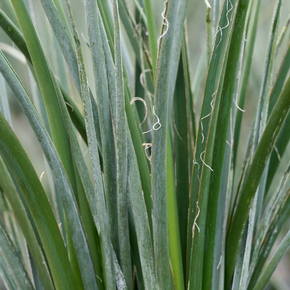
Blue Beaked Yucca is a tree-like, trunk-forming evergreen succulent in the family Asparagaceae. Over time it develops a single, stout trunk covered in soft, pale gray fibers formed from the dried remains of old leaves, creating what appears as a silver haze along the stem. At the top of the trunk sits a dense, perfectly spherical rosette of over one hundred narrow, sharp-tipped, blue-gray leaves, each up to 2 feet long and less than 1 inch wide with finely serrated margins. The leaves are somewhat more flexible and less dangerously rigid than those of related species such as Yucca rigida, making this a relatively safer choice in garden settings with foot traffic. The overall effect is that of a living fountain or oversized pom-pom, shimmering and dancing in the breeze. Although technically classified as a large herbaceous perennial rather than a true woody tree, its stout trunk, sculptural form, and commanding presence give it all the visual authority of a small ornamental tree. The species epithet rostrata is Latin for "beaked," a reference to the distinctive pointed tip of the plant's fruit capsule.
Mature Size
| Dimension | Range |
|---|---|
| Height | 6 to 15 feet |
| Width / Spread | 4 to 10 feet |
| Leaf Length | Up to 24 inches |
| Flower Spike Height | Up to 24 inches above the crown |
| Growth Rate | Slow; may take 10+ years to reach maximum height |
Because of its slow growth rate, Blue Beaked Yucca remains a manageable size for many years before reaching its impressive potential. Plan for a planting area of at least 10 feet in diameter to allow for the eventual spread of a mature specimen. As the plant ages, it may branch near the top, producing two or more crowns of foliage for an even more dramatic effect.
Hardiness Zones and Climate
Blue Beaked Yucca is one of the hardiest trunk-forming yuccas available, rated for USDA Hardiness Zones 5 through 12. It can tolerate temperatures as low as -10°F (-23°C) when grown in well-drained soil, making it surprisingly cold tolerant for a plant with such a tropical appearance. In Southern Oregon and Northern California, it is well suited to the diverse climate zones of the region, from the warmer valleys to areas with colder winters, provided drainage is excellent. The critical caveat for cold-climate success is soil moisture: wet, waterlogged soil combined with freezing temperatures is far more damaging than cold temperatures alone. In areas with wet winters, planting in raised beds, on slopes, or in gravelly soil is strongly recommended. The plant handles intense summer heat and drought without complaint and is equally at home in semi-arid, Mediterranean, and high-desert climates.
Sunlight Requirements
Blue Beaked Yucca demands full sun and performs best with a minimum of 6 hours of direct sunlight per day. As a native of open desert canyons and rocky slopes, it has evolved under intense, unobstructed sunlight, and full sun exposure is essential for developing its characteristic dense, compact crown and vivid blue-gray leaf color. Plants grown in insufficient light tend to produce weaker, more elongated foliage, a less tightly packed rosette, and reduced overall vigor. Choose the hottest, brightest, most open spot in your landscape for the best results. While it can tolerate partial shade for a portion of the day, especially in extremely hot inland areas, prolonged low-light conditions will negatively impact its form and health.
Soil and pH Preferences
Blue Beaked Yucca is highly adaptable to a wide range of soil types as long as drainage is excellent. In its native habitat it grows in rocky, sandy, and gravelly desert soils that shed water quickly and stay relatively dry between rain events. It is not at all suited to heavy clay soils or any location where water can pool or stand around the root zone. The acceptable pH range is broad — from acidic soils below 6.0 to alkaline soils above 8.0 — though a neutral to slightly acidic pH is considered ideal. For gardens with dense or clay-heavy native soils, amend the planting area generously with coarse sand, pumice, perlite, or fine gravel to open the structure and ensure rapid drainage. For container growing, use a commercial cactus or succulent soil mix enhanced with additional perlite or pumice for extra drainage. Nutrient-rich soils are neither necessary nor particularly beneficial — this plant is adapted to low-fertility conditions and will thrive in lean, mineral soils.
Watering Guide
One of Blue Beaked Yucca's greatest attributes is its exceptional drought tolerance. Once established in the ground — typically after one to two full growing seasons — it requires very little supplemental irrigation and can thrive on natural rainfall alone in most parts of Southern Oregon and Northern California. During the establishment period, water deeply once per week during the growing season, tapering off as the plant roots in. For established in-ground plants, water only during extended dry periods of two weeks or more without measurable rainfall. During the active growing season in containers, allow the soil to dry out completely between waterings, then soak thoroughly — generally every 10 to 14 days in warm weather. In fall and winter, reduce watering significantly to once a month or less. The number one threat to this plant's health is overwatering or poor drainage leading to root rot. When in doubt, water less rather than more. Signs of overwatering include yellowing or pale leaves, a soft or spongy trunk base, and wilting despite moist soil.
Fertilizing
Blue Beaked Yucca is native to nutrient-poor desert soils and generally does not require fertilization to thrive. In most garden situations, no feeding is necessary. If you wish to support vigorous growth during the active spring and summer season, a single light application of a balanced, slow-release granular fertilizer in early spring is sufficient. Avoid high-nitrogen fertilizers, which can promote excessive leafy growth at the expense of the plant's natural compact form and may reduce flowering. Do not fertilize in fall or winter when the plant's growth naturally slows. Container-grown specimens may benefit from a diluted, balanced liquid fertilizer applied once in spring and once in early summer, as nutrients can leach out of containers more readily than in garden beds. Always water thoroughly after any fertilizer application.
Planting Instructions
- Select a planting site with full sun exposure (at least 6 hours of direct sunlight daily) and excellent natural drainage. Avoid low spots, lawn areas, or locations that receive regular irrigation.
- Dig a planting hole as wide and as deep as the root ball of your nursery plant. For sites with dense or clay-heavy soil, dig the hole 2 to 3 times as wide and amend the native soil generously with coarse sand, pumice, or fine gravel before backfilling.
- Carefully remove the plant from its container and gently loosen any circling or compacted roots.
- Position the plant so that the base of the trunk sits at or just slightly above the surrounding soil grade — never below — to prevent moisture from collecting around the crown.
- Backfill with the amended soil mix, firming it gently around the root ball to eliminate air pockets. Do not bury the base of the trunk or pack soil tightly against the stem.
- Water in thoroughly after planting to settle the soil around the roots.
- Apply a 2 to 3 inch layer of gravel mulch around the base of the plant, keeping it several inches away from the trunk, to help moderate soil temperature and reduce moisture retention at the surface.
- Water once per week during the first growing season to encourage deep root establishment, then taper watering as the plant becomes established.
Pruning and Maintenance
Blue Beaked Yucca is remarkably low maintenance and requires very little pruning to stay attractive. The plant naturally maintains its symmetrical form without intervention. Routine maintenance is generally limited to the following tasks:
- Removing dead lower leaves: As the plant grows, older leaves in the lower portion of the rosette die and hang downward along the trunk, eventually forming a fibrous "skirt." These can be left in place as natural wildlife habitat, or carefully pulled downward and removed to tidy the appearance. Use thick leather gloves, as the leaf tips are sharp.
- Removing spent flower stalks: After flowering, the tall bloom spike will dry and brown. Cut it back to its base using clean, sharp loppers or a pruning saw once it has completely finished blooming.
- Diseased or damaged foliage: In humid conditions, if leaf spot appears, prune out affected leaves and increase air circulation around the crown. Always use clean, disinfected pruning tools to avoid spreading pathogens.
Never prune into the living center of the rosette or remove a large number of healthy leaves at once, as this can stress the plant and damage its symmetrical crown. The protective layer of fibrous old leaves along the trunk also helps insulate the stem in cold weather, so consider leaving it intact in colder climates.
Seasonal Interest
| Season | Ornamental Features |
|---|---|
| Spring | Tall yellow-orange flower spikes emerge, topped with cascading clusters of creamy white, bell-shaped blooms; fresh leaf growth intensifies the blue-gray color of the crown |
| Summer | Bold architectural form anchors the landscape; papery seed capsules develop after flowering; leaves shimmer and dance in summer breezes |
| Fall | Foliage retains its vibrant blue-gray coloration; dried seed capsules add textural interest |
| Winter | Striking evergreen presence provides structure when other plants are dormant; silvery leaves are especially dramatic against frost or snow; moonlit foliage creates a spectacular nighttime garden effect |
Landscape Uses
Blue Beaked Yucca is one of the most versatile architectural plants for dry, sunny landscapes. Its bold form, distinctive blue-gray color, and year-round evergreen presence make it a natural focal point in a wide variety of garden styles. Common and highly effective landscape applications include:
- Specimen or accent planting: Its perfectly symmetrical crown and upright trunk make it ideal as a standalone focal point in a garden bed, courtyard, or entrance area.
- Xeriscape and water-wise gardens: One of the premier plants for low-water landscapes, it pairs beautifully with ornamental grasses, agaves, and other drought-tolerant perennials.
- Rock and gravel gardens: Thrives in rocky or gravelly settings that replicate its native canyon habitat; looks at home nestled among boulders and gravel mulch.
- Firewise and defensible space plantings: Its low moisture content and dry-adapted nature make it appropriate for fire-safe landscaping zones.
- Modern and Mediterranean garden designs: The sculptural trunk and blue foliage complement contemporary, minimalist, and Mediterranean-style landscapes.
- Nighttime garden: The silvery-blue foliage glows beautifully under moonlight, making it an outstanding choice for gardens enjoyed in the evening.
- Container planting: Young and mid-sized plants make dramatic patio or courtyard features in large, heavy containers with excellent drainage.
- Slope and canyon planting: Excellent for stabilizing dry slopes while providing dramatic visual structure.
Companion Plants
Blue Beaked Yucca pairs beautifully with other drought-tolerant and dry-adapted plants that share its preference for full sun, excellent drainage, and lean soils. Consider the following companions to create a cohesive, water-wise planting composition:
- Agave species (Agave americana, Agave parryi) — share the same desert aesthetic and cultural requirements; bold rosette forms echo the yucca's crown
- Desert Marigold (Baileya multiradiata) — cheerful yellow blooms provide season-long color contrast against the blue-gray foliage
- Blue Oat Grass (Helictotrichon sempervirens) — the fine blue-gray texture of this ornamental grass harmonizes beautifully with the yucca's leaf color
- Mexican Feather Grass (Nassella tenuissima) — airy, flowing texture creates a soft contrast to the yucca's architectural rigidity
- Russian Sage (Salvia yangii) — lavender-blue flower spikes and silver stems complement the yucca's coloration while tolerating the same dry conditions
- Penstemon species — native penstemons provide vertical, colorful flower spikes and thrive in similar well-drained, dry garden conditions
- Lavender (Lavandula angustifolia) — shares the need for full sun and excellent drainage; silver foliage and purple blooms complement the yucca's blue tones
- Desert Willow (Chilopsis linearis) — provides airy canopy structure and seasonal flower color as a complementary backdrop
Wildlife Value
Despite its desert origin, Blue Beaked Yucca supports a fascinating array of wildlife and plays an important ecological role in the garden ecosystem:
- Yucca moth (Tegeticula species): This plant and the yucca moth share one of the most well-known examples of mutualistic pollination in the plant kingdom. Adult female yucca moths are the primary pollinators of Yucca rostrata, deliberately collecting and depositing pollen on the stigmas of the flowers while simultaneously laying their eggs inside the developing seed capsules. The moth larvae feed on a small portion of the seeds as they develop — a fair exchange that benefits both species.
- Hummingbirds: The tall flower spikes and nectar-rich blooms attract hummingbirds during the spring blooming period, adding movement and life to the garden.
- Bees and butterflies: The creamy white flowers also attract a variety of native bees, butterflies, and other beneficial pollinators.
- Wildlife habitat: The fibrous skirt of dried lower leaves that accumulates along the trunk provides important nesting and shelter habitat for small lizards, insects, and birds.
- Deer and rabbit resistant: The stiff, sharp-tipped leaves and fibrous texture of the foliage make this plant highly unpalatable to deer and rabbits, making it an excellent choice for gardens in wildlife-active areas.
Note: While Blue Beaked Yucca is valuable to native wildlife, it is considered mildly toxic if ingested by dogs, cats, and horses. Plant placement should be considered accordingly in households with free-roaming pets.
Pests and Diseases
Blue Beaked Yucca is exceptionally resistant to pests and diseases when grown in its preferred conditions of full sun and sharply drained soil. The vast majority of problems are directly linked to excess moisture, poor drainage, or overly humid growing conditions.
Potential Pests:
- Spider mites and red spiders: May appear during hot, dry periods. Periodically misting the foliage and wiping leaves with a damp cloth helps prevent and manage infestations.
- Mealybugs: Small white insects that may cluster near the base of leaves or in sheltered areas of the crown. Remove manually with an alcohol-dampened swab or treat with insecticidal soap.
- Scale insects: Can occasionally attach to leaves and stems. Remove by hand or treat with horticultural oil.
- Aphids: Rarely a serious problem; a strong blast of water from a garden hose is generally sufficient to dislodge them.
Potential Diseases:
- Root rot: The most serious threat to this plant, caused by consistently wet or poorly drained soil. Symptoms include yellowing leaves, a spongy or discolored trunk base, and general decline. Prevention through proper drainage and careful watering is essential; once advanced, root rot is often fatal.
- Fungal leaf spot: May appear as yellow, brown, or black spots on foliage in humid conditions or when air circulation is poor. Rarely serious; manage by removing affected leaves, improving airflow, and keeping the root zone as dry as possible.
Container Growing
Blue Beaked Yucca is an excellent candidate for container growing, particularly in its younger years, and makes a dramatic statement on patios, courtyards, and entryways. Follow these guidelines for success in containers:
- Container selection: Choose a heavy, stable container such as terracotta or thick ceramic to anchor the plant as its crown grows top-heavy. The container must have large, unobstructed drainage holes. Avoid lightweight plastic pots that may tip in wind.
- Soil mix: Use a high-quality cactus and succulent potting mix enhanced with additional perlite, pumice, or coarse sand (a 2:1 ratio of cactus mix to perlite works well). Drainage is paramount in container growing.
- Watering in containers: Allow the soil to dry out completely between waterings during the growing season (approximately every 10 to 14 days in warm weather). Reduce watering to once a month or less in fall and winter. Never allow the pot to sit in standing water.
- Sunlight: Position the container in the hottest, sunniest location available — a south- or west-facing patio is ideal.
- Repotting: Because of its slow growth rate, repotting is only needed every 3 to 5 years. Repot in spring into a container only slightly larger than the current one. Wear thick gloves and eye protection during repotting. Trim 1 to 2 inches from the root mass if necessary and replant in fresh soil.
- Winter care for containers: In areas with hard freezes, move containers to a sheltered but still bright location, such as an unheated garage or covered porch, during extended periods of subfreezing temperatures.
- Striking architectural evergreen featuring a globe-shaped rosette of fine, sword-like blue-gray leaves atop a single, rugged trunk — a true sculptural showstopper in any dry landscape.
- Exceptionally drought tolerant and cold hardy to USDA Zone 5, thriving with minimal water and care once established in well-drained, sunny conditions.
- Deer resistant, rabbit resistant, and virtually pest free — a low-maintenance specimen that delivers year-round interest without the fuss.
- Produces dramatic 2-foot-tall panicles of creamy white, bell-shaped flowers in late spring that attract hummingbirds, pollinators, and the fascinating yucca moth.
Blue Beaked Yucca (Yucca rostrata) is one of the most captivating and architecturally bold plants available for Western gardens, bringing a striking combination of form, color, and resilience that few other ornamentals can match. Native to the high desert canyons and rocky slopes of West Texas and northern Mexico, this slow-growing, trunk-forming evergreen develops a perfectly symmetrical, pom-pom-like crown of hundreds of slender, stiff, blue-gray leaves that shimmer silver in sunlight and glow under moonlight, making it equally stunning by day or in a nighttime garden setting. A single thick trunk — wrapped in the soft, pale fibers of spent foliage — elevates the rosette like a living sculpture, ultimately reaching 6 to 15 feet tall and 4 to 10 feet wide at maturity. In late spring, mature plants send up bold, yellow-orange flower spikes that burst into cascading clusters of waxy, creamy white blooms, drawing hummingbirds, butterflies, bees, and the specialized yucca moth to the garden. Unusually cold hardy for a trunk-forming yucca, Yucca rostrata thrives in USDA Zones 5 through 12 as long as it is planted in fast-draining soil and receives full sun. Its exceptional drought tolerance, deer and rabbit resistance, and low-maintenance nature make it a premier choice for xeriscape gardens, rock gardens, modern desert landscapes, and bold specimen plantings across Southern Oregon and Northern California.
Plant Description
Blue Beaked Yucca is a tree-like, trunk-forming evergreen succulent in the family Asparagaceae. Over time it develops a single, stout trunk covered in soft, pale gray fibers formed from the dried remains of old leaves, creating what appears as a silver haze along the stem. At the top of the trunk sits a dense, perfectly spherical rosette of over one hundred narrow, sharp-tipped, blue-gray leaves, each up to 2 feet long and less than 1 inch wide with finely serrated margins. The leaves are somewhat more flexible and less dangerously rigid than those of related species such as Yucca rigida, making this a relatively safer choice in garden settings with foot traffic. The overall effect is that of a living fountain or oversized pom-pom, shimmering and dancing in the breeze. Although technically classified as a large herbaceous perennial rather than a true woody tree, its stout trunk, sculptural form, and commanding presence give it all the visual authority of a small ornamental tree. The species epithet rostrata is Latin for "beaked," a reference to the distinctive pointed tip of the plant's fruit capsule.
Mature Size
| Dimension | Range |
|---|---|
| Height | 6 to 15 feet |
| Width / Spread | 4 to 10 feet |
| Leaf Length | Up to 24 inches |
| Flower Spike Height | Up to 24 inches above the crown |
| Growth Rate | Slow; may take 10+ years to reach maximum height |
Because of its slow growth rate, Blue Beaked Yucca remains a manageable size for many years before reaching its impressive potential. Plan for a planting area of at least 10 feet in diameter to allow for the eventual spread of a mature specimen. As the plant ages, it may branch near the top, producing two or more crowns of foliage for an even more dramatic effect.
Hardiness Zones and Climate
Blue Beaked Yucca is one of the hardiest trunk-forming yuccas available, rated for USDA Hardiness Zones 5 through 12. It can tolerate temperatures as low as -10°F (-23°C) when grown in well-drained soil, making it surprisingly cold tolerant for a plant with such a tropical appearance. In Southern Oregon and Northern California, it is well suited to the diverse climate zones of the region, from the warmer valleys to areas with colder winters, provided drainage is excellent. The critical caveat for cold-climate success is soil moisture: wet, waterlogged soil combined with freezing temperatures is far more damaging than cold temperatures alone. In areas with wet winters, planting in raised beds, on slopes, or in gravelly soil is strongly recommended. The plant handles intense summer heat and drought without complaint and is equally at home in semi-arid, Mediterranean, and high-desert climates.
Sunlight Requirements
Blue Beaked Yucca demands full sun and performs best with a minimum of 6 hours of direct sunlight per day. As a native of open desert canyons and rocky slopes, it has evolved under intense, unobstructed sunlight, and full sun exposure is essential for developing its characteristic dense, compact crown and vivid blue-gray leaf color. Plants grown in insufficient light tend to produce weaker, more elongated foliage, a less tightly packed rosette, and reduced overall vigor. Choose the hottest, brightest, most open spot in your landscape for the best results. While it can tolerate partial shade for a portion of the day, especially in extremely hot inland areas, prolonged low-light conditions will negatively impact its form and health.
Soil and pH Preferences
Blue Beaked Yucca is highly adaptable to a wide range of soil types as long as drainage is excellent. In its native habitat it grows in rocky, sandy, and gravelly desert soils that shed water quickly and stay relatively dry between rain events. It is not at all suited to heavy clay soils or any location where water can pool or stand around the root zone. The acceptable pH range is broad — from acidic soils below 6.0 to alkaline soils above 8.0 — though a neutral to slightly acidic pH is considered ideal. For gardens with dense or clay-heavy native soils, amend the planting area generously with coarse sand, pumice, perlite, or fine gravel to open the structure and ensure rapid drainage. For container growing, use a commercial cactus or succulent soil mix enhanced with additional perlite or pumice for extra drainage. Nutrient-rich soils are neither necessary nor particularly beneficial — this plant is adapted to low-fertility conditions and will thrive in lean, mineral soils.
Watering Guide
One of Blue Beaked Yucca's greatest attributes is its exceptional drought tolerance. Once established in the ground — typically after one to two full growing seasons — it requires very little supplemental irrigation and can thrive on natural rainfall alone in most parts of Southern Oregon and Northern California. During the establishment period, water deeply once per week during the growing season, tapering off as the plant roots in. For established in-ground plants, water only during extended dry periods of two weeks or more without measurable rainfall. During the active growing season in containers, allow the soil to dry out completely between waterings, then soak thoroughly — generally every 10 to 14 days in warm weather. In fall and winter, reduce watering significantly to once a month or less. The number one threat to this plant's health is overwatering or poor drainage leading to root rot. When in doubt, water less rather than more. Signs of overwatering include yellowing or pale leaves, a soft or spongy trunk base, and wilting despite moist soil.
Fertilizing
Blue Beaked Yucca is native to nutrient-poor desert soils and generally does not require fertilization to thrive. In most garden situations, no feeding is necessary. If you wish to support vigorous growth during the active spring and summer season, a single light application of a balanced, slow-release granular fertilizer in early spring is sufficient. Avoid high-nitrogen fertilizers, which can promote excessive leafy growth at the expense of the plant's natural compact form and may reduce flowering. Do not fertilize in fall or winter when the plant's growth naturally slows. Container-grown specimens may benefit from a diluted, balanced liquid fertilizer applied once in spring and once in early summer, as nutrients can leach out of containers more readily than in garden beds. Always water thoroughly after any fertilizer application.
Planting Instructions
- Select a planting site with full sun exposure (at least 6 hours of direct sunlight daily) and excellent natural drainage. Avoid low spots, lawn areas, or locations that receive regular irrigation.
- Dig a planting hole as wide and as deep as the root ball of your nursery plant. For sites with dense or clay-heavy soil, dig the hole 2 to 3 times as wide and amend the native soil generously with coarse sand, pumice, or fine gravel before backfilling.
- Carefully remove the plant from its container and gently loosen any circling or compacted roots.
- Position the plant so that the base of the trunk sits at or just slightly above the surrounding soil grade — never below — to prevent moisture from collecting around the crown.
- Backfill with the amended soil mix, firming it gently around the root ball to eliminate air pockets. Do not bury the base of the trunk or pack soil tightly against the stem.
- Water in thoroughly after planting to settle the soil around the roots.
- Apply a 2 to 3 inch layer of gravel mulch around the base of the plant, keeping it several inches away from the trunk, to help moderate soil temperature and reduce moisture retention at the surface.
- Water once per week during the first growing season to encourage deep root establishment, then taper watering as the plant becomes established.
Pruning and Maintenance
Blue Beaked Yucca is remarkably low maintenance and requires very little pruning to stay attractive. The plant naturally maintains its symmetrical form without intervention. Routine maintenance is generally limited to the following tasks:
- Removing dead lower leaves: As the plant grows, older leaves in the lower portion of the rosette die and hang downward along the trunk, eventually forming a fibrous "skirt." These can be left in place as natural wildlife habitat, or carefully pulled downward and removed to tidy the appearance. Use thick leather gloves, as the leaf tips are sharp.
- Removing spent flower stalks: After flowering, the tall bloom spike will dry and brown. Cut it back to its base using clean, sharp loppers or a pruning saw once it has completely finished blooming.
- Diseased or damaged foliage: In humid conditions, if leaf spot appears, prune out affected leaves and increase air circulation around the crown. Always use clean, disinfected pruning tools to avoid spreading pathogens.
Never prune into the living center of the rosette or remove a large number of healthy leaves at once, as this can stress the plant and damage its symmetrical crown. The protective layer of fibrous old leaves along the trunk also helps insulate the stem in cold weather, so consider leaving it intact in colder climates.
Seasonal Interest
| Season | Ornamental Features |
|---|---|
| Spring | Tall yellow-orange flower spikes emerge, topped with cascading clusters of creamy white, bell-shaped blooms; fresh leaf growth intensifies the blue-gray color of the crown |
| Summer | Bold architectural form anchors the landscape; papery seed capsules develop after flowering; leaves shimmer and dance in summer breezes |
| Fall | Foliage retains its vibrant blue-gray coloration; dried seed capsules add textural interest |
| Winter | Striking evergreen presence provides structure when other plants are dormant; silvery leaves are especially dramatic against frost or snow; moonlit foliage creates a spectacular nighttime garden effect |
Landscape Uses
Blue Beaked Yucca is one of the most versatile architectural plants for dry, sunny landscapes. Its bold form, distinctive blue-gray color, and year-round evergreen presence make it a natural focal point in a wide variety of garden styles. Common and highly effective landscape applications include:
- Specimen or accent planting: Its perfectly symmetrical crown and upright trunk make it ideal as a standalone focal point in a garden bed, courtyard, or entrance area.
- Xeriscape and water-wise gardens: One of the premier plants for low-water landscapes, it pairs beautifully with ornamental grasses, agaves, and other drought-tolerant perennials.
- Rock and gravel gardens: Thrives in rocky or gravelly settings that replicate its native canyon habitat; looks at home nestled among boulders and gravel mulch.
- Firewise and defensible space plantings: Its low moisture content and dry-adapted nature make it appropriate for fire-safe landscaping zones.
- Modern and Mediterranean garden designs: The sculptural trunk and blue foliage complement contemporary, minimalist, and Mediterranean-style landscapes.
- Nighttime garden: The silvery-blue foliage glows beautifully under moonlight, making it an outstanding choice for gardens enjoyed in the evening.
- Container planting: Young and mid-sized plants make dramatic patio or courtyard features in large, heavy containers with excellent drainage.
- Slope and canyon planting: Excellent for stabilizing dry slopes while providing dramatic visual structure.
Companion Plants
Blue Beaked Yucca pairs beautifully with other drought-tolerant and dry-adapted plants that share its preference for full sun, excellent drainage, and lean soils. Consider the following companions to create a cohesive, water-wise planting composition:
- Agave species (Agave americana, Agave parryi) — share the same desert aesthetic and cultural requirements; bold rosette forms echo the yucca's crown
- Desert Marigold (Baileya multiradiata) — cheerful yellow blooms provide season-long color contrast against the blue-gray foliage
- Blue Oat Grass (Helictotrichon sempervirens) — the fine blue-gray texture of this ornamental grass harmonizes beautifully with the yucca's leaf color
- Mexican Feather Grass (Nassella tenuissima) — airy, flowing texture creates a soft contrast to the yucca's architectural rigidity
- Russian Sage (Salvia yangii) — lavender-blue flower spikes and silver stems complement the yucca's coloration while tolerating the same dry conditions
- Penstemon species — native penstemons provide vertical, colorful flower spikes and thrive in similar well-drained, dry garden conditions
- Lavender (Lavandula angustifolia) — shares the need for full sun and excellent drainage; silver foliage and purple blooms complement the yucca's blue tones
- Desert Willow (Chilopsis linearis) — provides airy canopy structure and seasonal flower color as a complementary backdrop
Wildlife Value
Despite its desert origin, Blue Beaked Yucca supports a fascinating array of wildlife and plays an important ecological role in the garden ecosystem:
- Yucca moth (Tegeticula species): This plant and the yucca moth share one of the most well-known examples of mutualistic pollination in the plant kingdom. Adult female yucca moths are the primary pollinators of Yucca rostrata, deliberately collecting and depositing pollen on the stigmas of the flowers while simultaneously laying their eggs inside the developing seed capsules. The moth larvae feed on a small portion of the seeds as they develop — a fair exchange that benefits both species.
- Hummingbirds: The tall flower spikes and nectar-rich blooms attract hummingbirds during the spring blooming period, adding movement and life to the garden.
- Bees and butterflies: The creamy white flowers also attract a variety of native bees, butterflies, and other beneficial pollinators.
- Wildlife habitat: The fibrous skirt of dried lower leaves that accumulates along the trunk provides important nesting and shelter habitat for small lizards, insects, and birds.
- Deer and rabbit resistant: The stiff, sharp-tipped leaves and fibrous texture of the foliage make this plant highly unpalatable to deer and rabbits, making it an excellent choice for gardens in wildlife-active areas.
Note: While Blue Beaked Yucca is valuable to native wildlife, it is considered mildly toxic if ingested by dogs, cats, and horses. Plant placement should be considered accordingly in households with free-roaming pets.
Pests and Diseases
Blue Beaked Yucca is exceptionally resistant to pests and diseases when grown in its preferred conditions of full sun and sharply drained soil. The vast majority of problems are directly linked to excess moisture, poor drainage, or overly humid growing conditions.
Potential Pests:
- Spider mites and red spiders: May appear during hot, dry periods. Periodically misting the foliage and wiping leaves with a damp cloth helps prevent and manage infestations.
- Mealybugs: Small white insects that may cluster near the base of leaves or in sheltered areas of the crown. Remove manually with an alcohol-dampened swab or treat with insecticidal soap.
- Scale insects: Can occasionally attach to leaves and stems. Remove by hand or treat with horticultural oil.
- Aphids: Rarely a serious problem; a strong blast of water from a garden hose is generally sufficient to dislodge them.
Potential Diseases:
- Root rot: The most serious threat to this plant, caused by consistently wet or poorly drained soil. Symptoms include yellowing leaves, a spongy or discolored trunk base, and general decline. Prevention through proper drainage and careful watering is essential; once advanced, root rot is often fatal.
- Fungal leaf spot: May appear as yellow, brown, or black spots on foliage in humid conditions or when air circulation is poor. Rarely serious; manage by removing affected leaves, improving airflow, and keeping the root zone as dry as possible.
Container Growing
Blue Beaked Yucca is an excellent candidate for container growing, particularly in its younger years, and makes a dramatic statement on patios, courtyards, and entryways. Follow these guidelines for success in containers:
- Container selection: Choose a heavy, stable container such as terracotta or thick ceramic to anchor the plant as its crown grows top-heavy. The container must have large, unobstructed drainage holes. Avoid lightweight plastic pots that may tip in wind.
- Soil mix: Use a high-quality cactus and succulent potting mix enhanced with additional perlite, pumice, or coarse sand (a 2:1 ratio of cactus mix to perlite works well). Drainage is paramount in container growing.
- Watering in containers: Allow the soil to dry out completely between waterings during the growing season (approximately every 10 to 14 days in warm weather). Reduce watering to once a month or less in fall and winter. Never allow the pot to sit in standing water.
- Sunlight: Position the container in the hottest, sunniest location available — a south- or west-facing patio is ideal.
- Repotting: Because of its slow growth rate, repotting is only needed every 3 to 5 years. Repot in spring into a container only slightly larger than the current one. Wear thick gloves and eye protection during repotting. Trim 1 to 2 inches from the root mass if necessary and replant in fresh soil.
- Winter care for containers: In areas with hard freezes, move containers to a sheltered but still bright location, such as an unheated garage or covered porch, during extended periods of subfreezing temperatures.