Zoom the image with the mouse
Yellow Yucca (Yellow False Yucca) - 1 Gallon
SKU:
2055830
UPC:
014949072523
$22.99
- Brilliant buttery-yellow trumpet flowers rise on dramatic 5-foot spires from spring through fall, making this rare yellow form of the classic Southwestern native an eye-catching focal point in any xeric garden.
- Tough, nearly care-free, and spineless — this evergreen succulent thrives in full sun, intense heat, and drought conditions once established, making it a perfect low-maintenance choice for water-wise landscapes.
- A magnet for hummingbirds and butterflies throughout its exceptionally long bloom season, providing valuable nectar from late spring all the way into fall.
- Remarkably cold-hardy for a desert plant, performing reliably in USDA Zones 5-11 and tolerating temperatures well below freezing while maintaining its attractive evergreen foliage year-round.
Hesperaloe parviflora 'Yellow', commonly known as Yellow Yucca or Yellow False Yucca, is a naturally occurring yellow-blooming form of the beloved Southwestern native red yucca, and one of the most desirable and uncommon selections for today's water-wise, xeric, and pollinator-friendly gardens. Despite sharing its common name with true yuccas, this spineless, unarmed evergreen succulent belongs to the Asparagaceae family and is native to the Chihuahuan Desert of western Texas and northeastern Mexico, where it thrives in rocky slopes, desert prairies, and mesquite groves. From its graceful, arching clump of narrow, sword-like, gray-green succulent foliage — accented by delicate thread-like white fibers along the leaf margins — emerge towering flower spikes reaching up to 5 feet tall, laden with waxy, 1-inch, buttery-yellow tubular blooms from spring through fall. The foliage mound itself typically reaches 3 to 4 feet tall and 3 to 5 feet wide at maturity. Its exceptional heat tolerance, deep drought resistance, and surprisingly cold hardiness down through USDA Zone 5 make Yellow Yucca an extraordinarily versatile landscape plant suited to Southern Oregon and Northern California gardens alike. Whether planted as a bold specimen, massed for a sweeping display, tucked into a rock garden, used along a dry border, or grown in a large container, this stunning accent plant delivers maximum visual impact with minimal maintenance across the entire growing season.
Plant Description
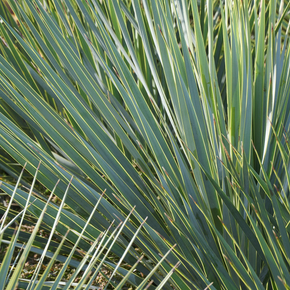
Yellow Yucca (Hesperaloe parviflora 'Yellow') is a naturally occurring yellow-flowering form of the classic red yucca of the Chihuahuan Desert. Although it carries the common name "yucca," it is not a true yucca at all — it belongs to the Asparagaceae family and is more closely related to agaves. It is a trunkless, clump-forming evergreen succulent that produces a graceful basal rosette of long, narrow, arching, blue-green leaves that are leathery and succulent in texture, typically 2 to 3 feet long and about 1 inch wide, with distinctive fine, curling, thread-like white fibers running along the leaf margins. Unlike many desert plants, Yellow Yucca is completely unarmed — it has no thorns, spines, prickles, or irritating hairs, making it a safe and inviting choice near walkways, patios, and play areas. In cold winter climates, the foliage often takes on attractive reddish-purple to bronze tints before returning to its blue-green hue in spring. From late spring onward, tall branching flower stalks shoot upward 4 to 5 feet above the foliage, bearing loose, airy panicles of waxy, inch-long, buttery-yellow tubular trumpet flowers that persist from spring well into fall. After flowering, the stalks produce ornamental woody seed capsules that add continued winter interest to the plant.
Mature Size
| Characteristic | Measurement |
|---|---|
| Foliage Height | 3 to 4 feet |
| Foliage Spread | 3 to 5 feet |
| Flower Spike Height | 4 to 5 feet above foliage |
| Overall Height in Bloom | Up to 8 to 9 feet |
| Growth Rate | Slow to moderate |
| Plant Form | Arching, clumping rosette |
Yellow Yucca is a slow to moderately growing plant, particularly when grown without supplemental irrigation. Expect the foliage clump to expand gradually over several years. Once established and in its prime blooming season, the towering flower spikes can add dramatic vertical height to the garden. The plant spreads slowly by offsets but is generally well-behaved and will not become invasive.
Hardiness Zones and Climate Tolerance
Yellow Yucca is hardy in USDA Zones 5 through 11, making it one of the most cold-tolerant desert succulents available. It is native to extreme desert environments where it experiences wide temperature swings — scorching summer heat and surprisingly cold winters. The foliage can tolerate temperatures down to 0 degrees F, and the plant has been reported to survive brief dips to -20 degrees F. In colder winter climates the leaves may temporarily turn purple or reddish-bronze but will recover fully in spring. In warm winter climates such as Southern Oregon and Northern California, this plant can bloom nearly year-round. It thrives in the intense heat and reflected radiance common to sunny southwestern exposures, urban heat islands, and coastal inland valleys alike.
Sunlight Requirements
Yellow Yucca performs best in full sun, requiring at least 6 hours of direct sunlight per day. It will tolerate partial shade (2 to 6 hours of direct sun), but flowering will be noticeably reduced in lower light conditions. It actually thrives in reflected heat from walls, hardscaping, driveways, and south- or west-facing exposures — conditions that challenge most other plants. Avoid deep shade, as this leads to stretched, weak foliage and poor flowering. For the most prolific bloom display and the most compact, attractive foliage habit, choose the sunniest spot in your garden.
Soil and pH Preferences
Excellent drainage is the single most critical requirement for Yellow Yucca. In its native Chihuahuan Desert habitat, it grows in a wide variety of soils including sand, loam, caliche, limestone-based rocky soil, and even clay — provided the drainage is fast. In garden settings, it will thrive in any well-draining soil type, including decomposed granite, sandy loam, and rocky native soils common to Southern Oregon and Northern California. Avoid heavy clay soils that hold moisture, as prolonged wet conditions will cause fungal root rot and decline. If your native soil is slow-draining, amend it with coarse sand, pea gravel, or decomposed granite to improve drainage before planting. Yellow Yucca tolerates a broad soil pH range, from slightly acidic to moderately alkaline, and thrives in the neutral to alkaline soils typical of arid and semi-arid regions. It also demonstrates good tolerance for poor, nutrient-lean soils and urban conditions including compacted soils and road salt exposure.
Watering Guide
Yellow Yucca is highly drought-tolerant once established and is an excellent choice for water-wise and xeriscape gardens. However, the key to success in the establishment phase is careful attention to watering. Unlike most new transplants, it is best to wait 1 to 2 weeks after planting before providing the first irrigation, allowing the roots to begin acclimating without risk of rot.
- Establishment phase (first year): Water every 5 to 10 days during spring and summer, and every 10 to 14 days in fall and winter.
- Established plants — spring and fall: Water every 1 to 2 weeks depending on heat and rainfall.
- Established plants — summer: Water every 1 to 2 weeks; more frequent watering during heat waves encourages better flowering.
- Established plants — winter: Reduce watering to every 3 to 4 weeks or rely on natural rainfall.
- Container-grown plants: Water more frequently than in-ground plants; allow the soil to dry out thoroughly between waterings.
Always allow the soil to dry out between waterings. Overwatering is the most common cause of failure with this plant and will result in yellowing foliage, mushy roots, and eventual crown rot. In native garden settings with well-draining soil and average regional rainfall, established plants typically require little to no supplemental irrigation.
Fertilizing
Yellow Yucca is a lean feeder that thrives in low-nutrient desert soils and generally does not require regular fertilization when planted in the ground. In-ground plants in typical garden soils rarely benefit from added fertilizer and may actually perform better without it, as excess nitrogen can lead to overly lush, floppy foliage at the expense of flowers. However, the following guidelines apply:
- In-ground plants: Fertilization is generally unnecessary. If the plant appears pale or weak after the establishment year, a single light application of a balanced, low-nitrogen, slow-release fertilizer in early spring is sufficient.
- Container-grown plants: Feed lightly with a balanced, water-soluble succulent or cactus fertilizer every 4 to 6 weeks during the active growing season (spring through summer). Do not fertilize in fall or winter when growth slows.
- Avoid high-nitrogen fertilizers, which promote excessive leafy growth at the expense of flowering.
Pruning and Maintenance
Yellow Yucca is one of the most maintenance-free plants you can grow in a xeric or water-wise garden. Its annual care requirements are minimal:
- Spent flower stalks: Once flowering is complete and the flower stalks begin to look spent or dry, cut them back to the base of the plant. You may also choose to leave the stalks standing through winter, as the ornamental woody seed capsules can provide seasonal interest and attract seed-eating birds.
- Dead leaves: Occasionally, lower leaves will die back naturally. These can be removed by hand or with pruners at any time of year to keep the plant looking tidy.
- Never shear: Do not shear or trim the foliage clump. Shearing destroys the plant's naturally beautiful arching form and can damage the growing crown. If the clump has outgrown its space, divide it rather than shearing it.
- Division: If the clump becomes too large for its location, dig and divide it in early spring, replanting divisions into well-draining soil.
- Self-seeding: Yellow Yucca may self-seed modestly in the landscape. Seedlings are easy to remove when young if unwanted.
Planting Instructions
Follow these steps for a successful planting:
- Choose a planting location with full sun and excellent soil drainage. Avoid low spots or areas where water pools after rain.
- The ideal planting time is late spring (April or May), when warm soil temperatures will encourage rapid root development. Fall planting is also possible in mild climates.
- Dig a planting hole the same depth as the root ball and approximately twice as wide.
- If your native soil drains well, backfill with the unamended native soil. If drainage is poor, blend the native soil with coarse sand, pea gravel, or decomposed granite to improve drainage before backfilling.
- Set the plant at the same depth it was growing in its container — do not bury the crown deeper than it was growing previously.
- Firm the soil around the root zone to eliminate air pockets.
- Do not water immediately after planting — wait 1 to 2 weeks before the first irrigation to encourage the roots to reach outward in search of moisture.
- A light top-dressing of decomposed granite or coarse gravel mulch around (but not touching) the crown will help moderate soil temperature, reduce moisture fluctuation, and give the planting a finished appearance.
- Space multiple plants 4 to 5 feet apart to allow for full mature spread.
Seasonal Interest
Yellow Yucca delivers multi-season appeal throughout the entire year:
- Spring: New flower stalks begin emerging from the center of the foliage rosette, lengthening rapidly. First blooms open in late spring, typically beginning in May. The fresh blue-green foliage looks its best after winter.
- Summer: Peak bloom period. Flower spikes reach their full height of 4 to 5 feet and are densely covered in bright buttery-yellow tubular flowers, drawing hummingbirds and butterflies throughout the season. Blooming continues through the summer months.
- Fall: Flowering continues into fall in many climates, providing late-season color when many other plants have finished. Woody seed capsules begin developing on the stalks after flowers fade.
- Winter: The evergreen foliage provides year-round structure and texture in the garden. In cold climates, the foliage takes on attractive reddish-purple or bronze tints. Spent flower stalks bearing ornamental seed pods can remain standing for winter interest and wildlife value before being cut back.
Landscape Uses
Yellow Yucca is an exceptionally versatile accent plant that fits naturally into a wide range of garden styles and applications:
- Specimen or focal point plant: Its bold, architectural form and dramatic flower spikes make it a natural standalone showpiece in any garden.
- Mass planting: Grouping multiple plants together creates a sweeping, high-impact display of yellow blooms that is particularly stunning when viewed from a distance.
- Xeriscape and water-wise gardens: An ideal cornerstone plant for low-water garden design in Southern Oregon and Northern California.
- Rock gardens and crevice gardens: Perfectly at home among boulders, gravel, and other drought-tolerant rock garden plants.
- Desert and Southwest-style gardens: A natural companion to agaves, cacti, ornamental grasses, and native shrubs.
- Poolside and patio planting: Its tidy, litter-free habit makes it ideal near pools, patios, and entertaining areas.
- Roadside, median, and slope planting: Extremely tough and tolerant of urban conditions, road salt, reflected heat, and erosion-prone slopes.
- Pollinator and hummingbird gardens: An outstanding nectar source for hummingbirds and butterflies across a long bloom season.
- Container gardening: Grows beautifully in large containers with fast-draining cactus soil, adding a bold desert accent to patios and courtyards.
- Firewise landscaping: Its succulent, moisture-rich foliage offers good fire-resistance properties, making it suitable for fire-smart landscape designs.
Companion Plants
Yellow Yucca pairs beautifully with plants that share its preference for full sun, excellent drainage, and low to moderate water. Consider these excellent companions to build a cohesive, low-water planting scheme:
- Agave species (Agave americana, Agave parryi, etc.) — Bold, sculptural succulents that share the same heat, drought, and soil requirements.
- Red Yucca (Hesperaloe parviflora — red-flowering form) — Planting the yellow and red forms together creates a striking color contrast on matching flower spikes.
- Mexican Feather Grass (Nassella tenuissima) — Airy, fine-textured grass that softens the bold form of Yellow Yucca and sways beautifully in the breeze.
- Blue Fescue (Festuca glauca) — Low, silver-blue mounding grass that provides excellent textural contrast at the base of Yellow Yucca clumps.
- Russian Sage (Perovskia atriplicifolia) — Tall, airy spires of purple-blue flowers complement the yellow blooms and thrive in the same dry, sunny conditions.
- Lavender (Lavandula spp.) — Low water, full sun, and fragrant — a natural partner in any xeric garden palette.
- Salvia species (Salvia greggii, Salvia nemorosa) — Reliable drought-tolerant bloomers that attract the same hummingbirds and butterflies as Yellow Yucca.
- Sedum / Stonecrop (Sedum spp.) — Low-growing, drought-tolerant succulents ideal as groundcover beneath and around Yellow Yucca.
- Penstemon (Penstemon spp.) — Native to the western U.S., penstemons thrive in the same lean, well-drained soils and attract hummingbirds alongside Yellow Yucca's blooms.
- Desert Marigold (Baileya multiradiata) — Cheerful yellow daisy flowers in a low-water annual that echoes the golden tones of Yellow Yucca's blooms.
Wildlife Value
Yellow Yucca is a outstanding plant for supporting local wildlife, particularly in western and southwestern garden ecosystems:
- Hummingbirds: The long, tubular, yellow trumpet flowers are perfectly shaped for hummingbird feeding and are one of the most reliable hummingbird attractors available for summer and fall gardens. Plants in full bloom are frequently visited throughout the day.
- Butterflies: A wide variety of butterfly species are attracted to the nectar-rich blooms. The long bloom season ensures sustained pollinator support from late spring through fall.
- Native bees and other pollinators: The flowers provide a valuable nectar and pollen source for native bees and other beneficial insects throughout the bloom season.
- Seed-eating birds: The woody seed capsules that develop after flowering can persist through winter, providing food for seed-eating birds when left standing on the plant.
- Deer resistance: While deer may occasionally browse young or newly planted specimens, established Yellow Yucca plants are generally considered deer-resistant in most landscapes.
Pests and Diseases
Yellow Yucca is notably resistant to serious pest and disease problems and is considered a very tough, reliable plant in the landscape. The following minor issues may occasionally occur:
- Aphids: Small colonies of aphids may appear on flower stalks during early bloom in spring. These are generally harmless and can be dislodged with a strong spray of water from a garden hose. No chemical treatment is typically necessary.
- Scale insects: Occasionally, scale can appear on the foliage. Monitor for waxy or shell-like bumps on leaves and treat with horticultural oil if infestations become significant.
- Root rot (Phytophthora/Pythium): The most serious threat to Yellow Yucca is fungal root rot caused by consistently wet or poorly draining soil. Symptoms include yellowing foliage, soft or mushy stems at the base, and plant collapse. Prevention through proper site selection and well-draining soil is the best approach. There is no effective cure once root rot is advanced.
- Deer: Deer may occasionally browse the unarmed foliage and flower spikes, particularly on young plants. Wire caging during the first season or two provides effective protection until the plant is well established.
- Rabbits and javelinas: In areas with high rabbit or javelina pressure, young plants may be nibbled. Protect with wire caging until the plant is established and mature.
Container Growing
Yellow Yucca makes an exceptional container plant, bringing bold architectural form and spectacular summer blooms to patios, courtyards, entryways, and rooftop gardens. Follow these guidelines for success in containers:
- Choose a large container — at minimum 15 to 20 inches in diameter — with generous drainage holes. Terracotta, concrete, or stone pots with wide bases complement the plant's bold form.
- Use a high-quality cactus and succulent potting mix, or blend standard potting soil with 50% coarse perlite or coarse sand to ensure fast drainage.
- Position the container in a location that receives full sun for at least 6 hours per day. A south- or west-facing patio or courtyard wall is ideal.
- Water container plants more frequently than in-ground plants, but always allow the soil to dry out completely between waterings. In summer heat, this may mean watering once or twice per week; in winter, reduce to every 3 to 4 weeks.
- Feed container-grown plants lightly with a balanced, diluted succulent fertilizer every 4 to 6 weeks during spring and summer. Do not fertilize in fall or winter.
- Repot every 2 to 3 years as the plant grows, stepping up to a larger container as needed to accommodate the expanding root system.
- In regions with hard freezes, container plants can be moved to a sheltered, frost-free location for the winter, though established plants can tolerate considerable cold.
Propagation
Yellow Yucca can be propagated by two primary methods:
- Division: The most reliable method for preserving the yellow-flowering form. In early spring, carefully dig the entire clump and use a sharp, clean spade or knife to divide the offsets from the main crown, ensuring each division has a healthy root system. Replant divisions immediately into well-draining soil and withhold water for 1 to 2 weeks to allow cut surfaces to callous. Division provides a head start over seed-grown plants and guarantees the yellow flower color.
- Seed: Yellow Yucca will self-seed modestly in the garden. Seeds can also be collected from the dried woody capsules and sown in shallow flats in a warm greenhouse setting. Cover seeds to a depth equal to their diameter and maintain warm temperatures for germination. Seedlings are sturdy but slow-growing in their first year. Note that seedlings grown from the yellow form may occasionally revert toward the red-flowered parent species; to preserve true yellow-flowering plants, division is preferred over seed propagation.
- Brilliant buttery-yellow trumpet flowers rise on dramatic 5-foot spires from spring through fall, making this rare yellow form of the classic Southwestern native an eye-catching focal point in any xeric garden.
- Tough, nearly care-free, and spineless — this evergreen succulent thrives in full sun, intense heat, and drought conditions once established, making it a perfect low-maintenance choice for water-wise landscapes.
- A magnet for hummingbirds and butterflies throughout its exceptionally long bloom season, providing valuable nectar from late spring all the way into fall.
- Remarkably cold-hardy for a desert plant, performing reliably in USDA Zones 5-11 and tolerating temperatures well below freezing while maintaining its attractive evergreen foliage year-round.
Hesperaloe parviflora 'Yellow', commonly known as Yellow Yucca or Yellow False Yucca, is a naturally occurring yellow-blooming form of the beloved Southwestern native red yucca, and one of the most desirable and uncommon selections for today's water-wise, xeric, and pollinator-friendly gardens. Despite sharing its common name with true yuccas, this spineless, unarmed evergreen succulent belongs to the Asparagaceae family and is native to the Chihuahuan Desert of western Texas and northeastern Mexico, where it thrives in rocky slopes, desert prairies, and mesquite groves. From its graceful, arching clump of narrow, sword-like, gray-green succulent foliage — accented by delicate thread-like white fibers along the leaf margins — emerge towering flower spikes reaching up to 5 feet tall, laden with waxy, 1-inch, buttery-yellow tubular blooms from spring through fall. The foliage mound itself typically reaches 3 to 4 feet tall and 3 to 5 feet wide at maturity. Its exceptional heat tolerance, deep drought resistance, and surprisingly cold hardiness down through USDA Zone 5 make Yellow Yucca an extraordinarily versatile landscape plant suited to Southern Oregon and Northern California gardens alike. Whether planted as a bold specimen, massed for a sweeping display, tucked into a rock garden, used along a dry border, or grown in a large container, this stunning accent plant delivers maximum visual impact with minimal maintenance across the entire growing season.
Plant Description
Yellow Yucca (Hesperaloe parviflora 'Yellow') is a naturally occurring yellow-flowering form of the classic red yucca of the Chihuahuan Desert. Although it carries the common name "yucca," it is not a true yucca at all — it belongs to the Asparagaceae family and is more closely related to agaves. It is a trunkless, clump-forming evergreen succulent that produces a graceful basal rosette of long, narrow, arching, blue-green leaves that are leathery and succulent in texture, typically 2 to 3 feet long and about 1 inch wide, with distinctive fine, curling, thread-like white fibers running along the leaf margins. Unlike many desert plants, Yellow Yucca is completely unarmed — it has no thorns, spines, prickles, or irritating hairs, making it a safe and inviting choice near walkways, patios, and play areas. In cold winter climates, the foliage often takes on attractive reddish-purple to bronze tints before returning to its blue-green hue in spring. From late spring onward, tall branching flower stalks shoot upward 4 to 5 feet above the foliage, bearing loose, airy panicles of waxy, inch-long, buttery-yellow tubular trumpet flowers that persist from spring well into fall. After flowering, the stalks produce ornamental woody seed capsules that add continued winter interest to the plant.
Mature Size
| Characteristic | Measurement |
|---|---|
| Foliage Height | 3 to 4 feet |
| Foliage Spread | 3 to 5 feet |
| Flower Spike Height | 4 to 5 feet above foliage |
| Overall Height in Bloom | Up to 8 to 9 feet |
| Growth Rate | Slow to moderate |
| Plant Form | Arching, clumping rosette |
Yellow Yucca is a slow to moderately growing plant, particularly when grown without supplemental irrigation. Expect the foliage clump to expand gradually over several years. Once established and in its prime blooming season, the towering flower spikes can add dramatic vertical height to the garden. The plant spreads slowly by offsets but is generally well-behaved and will not become invasive.
Hardiness Zones and Climate Tolerance
Yellow Yucca is hardy in USDA Zones 5 through 11, making it one of the most cold-tolerant desert succulents available. It is native to extreme desert environments where it experiences wide temperature swings — scorching summer heat and surprisingly cold winters. The foliage can tolerate temperatures down to 0 degrees F, and the plant has been reported to survive brief dips to -20 degrees F. In colder winter climates the leaves may temporarily turn purple or reddish-bronze but will recover fully in spring. In warm winter climates such as Southern Oregon and Northern California, this plant can bloom nearly year-round. It thrives in the intense heat and reflected radiance common to sunny southwestern exposures, urban heat islands, and coastal inland valleys alike.
Sunlight Requirements
Yellow Yucca performs best in full sun, requiring at least 6 hours of direct sunlight per day. It will tolerate partial shade (2 to 6 hours of direct sun), but flowering will be noticeably reduced in lower light conditions. It actually thrives in reflected heat from walls, hardscaping, driveways, and south- or west-facing exposures — conditions that challenge most other plants. Avoid deep shade, as this leads to stretched, weak foliage and poor flowering. For the most prolific bloom display and the most compact, attractive foliage habit, choose the sunniest spot in your garden.
Soil and pH Preferences
Excellent drainage is the single most critical requirement for Yellow Yucca. In its native Chihuahuan Desert habitat, it grows in a wide variety of soils including sand, loam, caliche, limestone-based rocky soil, and even clay — provided the drainage is fast. In garden settings, it will thrive in any well-draining soil type, including decomposed granite, sandy loam, and rocky native soils common to Southern Oregon and Northern California. Avoid heavy clay soils that hold moisture, as prolonged wet conditions will cause fungal root rot and decline. If your native soil is slow-draining, amend it with coarse sand, pea gravel, or decomposed granite to improve drainage before planting. Yellow Yucca tolerates a broad soil pH range, from slightly acidic to moderately alkaline, and thrives in the neutral to alkaline soils typical of arid and semi-arid regions. It also demonstrates good tolerance for poor, nutrient-lean soils and urban conditions including compacted soils and road salt exposure.
Watering Guide
Yellow Yucca is highly drought-tolerant once established and is an excellent choice for water-wise and xeriscape gardens. However, the key to success in the establishment phase is careful attention to watering. Unlike most new transplants, it is best to wait 1 to 2 weeks after planting before providing the first irrigation, allowing the roots to begin acclimating without risk of rot.
- Establishment phase (first year): Water every 5 to 10 days during spring and summer, and every 10 to 14 days in fall and winter.
- Established plants — spring and fall: Water every 1 to 2 weeks depending on heat and rainfall.
- Established plants — summer: Water every 1 to 2 weeks; more frequent watering during heat waves encourages better flowering.
- Established plants — winter: Reduce watering to every 3 to 4 weeks or rely on natural rainfall.
- Container-grown plants: Water more frequently than in-ground plants; allow the soil to dry out thoroughly between waterings.
Always allow the soil to dry out between waterings. Overwatering is the most common cause of failure with this plant and will result in yellowing foliage, mushy roots, and eventual crown rot. In native garden settings with well-draining soil and average regional rainfall, established plants typically require little to no supplemental irrigation.
Fertilizing
Yellow Yucca is a lean feeder that thrives in low-nutrient desert soils and generally does not require regular fertilization when planted in the ground. In-ground plants in typical garden soils rarely benefit from added fertilizer and may actually perform better without it, as excess nitrogen can lead to overly lush, floppy foliage at the expense of flowers. However, the following guidelines apply:
- In-ground plants: Fertilization is generally unnecessary. If the plant appears pale or weak after the establishment year, a single light application of a balanced, low-nitrogen, slow-release fertilizer in early spring is sufficient.
- Container-grown plants: Feed lightly with a balanced, water-soluble succulent or cactus fertilizer every 4 to 6 weeks during the active growing season (spring through summer). Do not fertilize in fall or winter when growth slows.
- Avoid high-nitrogen fertilizers, which promote excessive leafy growth at the expense of flowering.
Pruning and Maintenance
Yellow Yucca is one of the most maintenance-free plants you can grow in a xeric or water-wise garden. Its annual care requirements are minimal:
- Spent flower stalks: Once flowering is complete and the flower stalks begin to look spent or dry, cut them back to the base of the plant. You may also choose to leave the stalks standing through winter, as the ornamental woody seed capsules can provide seasonal interest and attract seed-eating birds.
- Dead leaves: Occasionally, lower leaves will die back naturally. These can be removed by hand or with pruners at any time of year to keep the plant looking tidy.
- Never shear: Do not shear or trim the foliage clump. Shearing destroys the plant's naturally beautiful arching form and can damage the growing crown. If the clump has outgrown its space, divide it rather than shearing it.
- Division: If the clump becomes too large for its location, dig and divide it in early spring, replanting divisions into well-draining soil.
- Self-seeding: Yellow Yucca may self-seed modestly in the landscape. Seedlings are easy to remove when young if unwanted.
Planting Instructions
Follow these steps for a successful planting:
- Choose a planting location with full sun and excellent soil drainage. Avoid low spots or areas where water pools after rain.
- The ideal planting time is late spring (April or May), when warm soil temperatures will encourage rapid root development. Fall planting is also possible in mild climates.
- Dig a planting hole the same depth as the root ball and approximately twice as wide.
- If your native soil drains well, backfill with the unamended native soil. If drainage is poor, blend the native soil with coarse sand, pea gravel, or decomposed granite to improve drainage before backfilling.
- Set the plant at the same depth it was growing in its container — do not bury the crown deeper than it was growing previously.
- Firm the soil around the root zone to eliminate air pockets.
- Do not water immediately after planting — wait 1 to 2 weeks before the first irrigation to encourage the roots to reach outward in search of moisture.
- A light top-dressing of decomposed granite or coarse gravel mulch around (but not touching) the crown will help moderate soil temperature, reduce moisture fluctuation, and give the planting a finished appearance.
- Space multiple plants 4 to 5 feet apart to allow for full mature spread.
Seasonal Interest
Yellow Yucca delivers multi-season appeal throughout the entire year:
- Spring: New flower stalks begin emerging from the center of the foliage rosette, lengthening rapidly. First blooms open in late spring, typically beginning in May. The fresh blue-green foliage looks its best after winter.
- Summer: Peak bloom period. Flower spikes reach their full height of 4 to 5 feet and are densely covered in bright buttery-yellow tubular flowers, drawing hummingbirds and butterflies throughout the season. Blooming continues through the summer months.
- Fall: Flowering continues into fall in many climates, providing late-season color when many other plants have finished. Woody seed capsules begin developing on the stalks after flowers fade.
- Winter: The evergreen foliage provides year-round structure and texture in the garden. In cold climates, the foliage takes on attractive reddish-purple or bronze tints. Spent flower stalks bearing ornamental seed pods can remain standing for winter interest and wildlife value before being cut back.
Landscape Uses
Yellow Yucca is an exceptionally versatile accent plant that fits naturally into a wide range of garden styles and applications:
- Specimen or focal point plant: Its bold, architectural form and dramatic flower spikes make it a natural standalone showpiece in any garden.
- Mass planting: Grouping multiple plants together creates a sweeping, high-impact display of yellow blooms that is particularly stunning when viewed from a distance.
- Xeriscape and water-wise gardens: An ideal cornerstone plant for low-water garden design in Southern Oregon and Northern California.
- Rock gardens and crevice gardens: Perfectly at home among boulders, gravel, and other drought-tolerant rock garden plants.
- Desert and Southwest-style gardens: A natural companion to agaves, cacti, ornamental grasses, and native shrubs.
- Poolside and patio planting: Its tidy, litter-free habit makes it ideal near pools, patios, and entertaining areas.
- Roadside, median, and slope planting: Extremely tough and tolerant of urban conditions, road salt, reflected heat, and erosion-prone slopes.
- Pollinator and hummingbird gardens: An outstanding nectar source for hummingbirds and butterflies across a long bloom season.
- Container gardening: Grows beautifully in large containers with fast-draining cactus soil, adding a bold desert accent to patios and courtyards.
- Firewise landscaping: Its succulent, moisture-rich foliage offers good fire-resistance properties, making it suitable for fire-smart landscape designs.
Companion Plants
Yellow Yucca pairs beautifully with plants that share its preference for full sun, excellent drainage, and low to moderate water. Consider these excellent companions to build a cohesive, low-water planting scheme:
- Agave species (Agave americana, Agave parryi, etc.) — Bold, sculptural succulents that share the same heat, drought, and soil requirements.
- Red Yucca (Hesperaloe parviflora — red-flowering form) — Planting the yellow and red forms together creates a striking color contrast on matching flower spikes.
- Mexican Feather Grass (Nassella tenuissima) — Airy, fine-textured grass that softens the bold form of Yellow Yucca and sways beautifully in the breeze.
- Blue Fescue (Festuca glauca) — Low, silver-blue mounding grass that provides excellent textural contrast at the base of Yellow Yucca clumps.
- Russian Sage (Perovskia atriplicifolia) — Tall, airy spires of purple-blue flowers complement the yellow blooms and thrive in the same dry, sunny conditions.
- Lavender (Lavandula spp.) — Low water, full sun, and fragrant — a natural partner in any xeric garden palette.
- Salvia species (Salvia greggii, Salvia nemorosa) — Reliable drought-tolerant bloomers that attract the same hummingbirds and butterflies as Yellow Yucca.
- Sedum / Stonecrop (Sedum spp.) — Low-growing, drought-tolerant succulents ideal as groundcover beneath and around Yellow Yucca.
- Penstemon (Penstemon spp.) — Native to the western U.S., penstemons thrive in the same lean, well-drained soils and attract hummingbirds alongside Yellow Yucca's blooms.
- Desert Marigold (Baileya multiradiata) — Cheerful yellow daisy flowers in a low-water annual that echoes the golden tones of Yellow Yucca's blooms.
Wildlife Value
Yellow Yucca is a outstanding plant for supporting local wildlife, particularly in western and southwestern garden ecosystems:
- Hummingbirds: The long, tubular, yellow trumpet flowers are perfectly shaped for hummingbird feeding and are one of the most reliable hummingbird attractors available for summer and fall gardens. Plants in full bloom are frequently visited throughout the day.
- Butterflies: A wide variety of butterfly species are attracted to the nectar-rich blooms. The long bloom season ensures sustained pollinator support from late spring through fall.
- Native bees and other pollinators: The flowers provide a valuable nectar and pollen source for native bees and other beneficial insects throughout the bloom season.
- Seed-eating birds: The woody seed capsules that develop after flowering can persist through winter, providing food for seed-eating birds when left standing on the plant.
- Deer resistance: While deer may occasionally browse young or newly planted specimens, established Yellow Yucca plants are generally considered deer-resistant in most landscapes.
Pests and Diseases
Yellow Yucca is notably resistant to serious pest and disease problems and is considered a very tough, reliable plant in the landscape. The following minor issues may occasionally occur:
- Aphids: Small colonies of aphids may appear on flower stalks during early bloom in spring. These are generally harmless and can be dislodged with a strong spray of water from a garden hose. No chemical treatment is typically necessary.
- Scale insects: Occasionally, scale can appear on the foliage. Monitor for waxy or shell-like bumps on leaves and treat with horticultural oil if infestations become significant.
- Root rot (Phytophthora/Pythium): The most serious threat to Yellow Yucca is fungal root rot caused by consistently wet or poorly draining soil. Symptoms include yellowing foliage, soft or mushy stems at the base, and plant collapse. Prevention through proper site selection and well-draining soil is the best approach. There is no effective cure once root rot is advanced.
- Deer: Deer may occasionally browse the unarmed foliage and flower spikes, particularly on young plants. Wire caging during the first season or two provides effective protection until the plant is well established.
- Rabbits and javelinas: In areas with high rabbit or javelina pressure, young plants may be nibbled. Protect with wire caging until the plant is established and mature.
Container Growing
Yellow Yucca makes an exceptional container plant, bringing bold architectural form and spectacular summer blooms to patios, courtyards, entryways, and rooftop gardens. Follow these guidelines for success in containers:
- Choose a large container — at minimum 15 to 20 inches in diameter — with generous drainage holes. Terracotta, concrete, or stone pots with wide bases complement the plant's bold form.
- Use a high-quality cactus and succulent potting mix, or blend standard potting soil with 50% coarse perlite or coarse sand to ensure fast drainage.
- Position the container in a location that receives full sun for at least 6 hours per day. A south- or west-facing patio or courtyard wall is ideal.
- Water container plants more frequently than in-ground plants, but always allow the soil to dry out completely between waterings. In summer heat, this may mean watering once or twice per week; in winter, reduce to every 3 to 4 weeks.
- Feed container-grown plants lightly with a balanced, diluted succulent fertilizer every 4 to 6 weeks during spring and summer. Do not fertilize in fall or winter.
- Repot every 2 to 3 years as the plant grows, stepping up to a larger container as needed to accommodate the expanding root system.
- In regions with hard freezes, container plants can be moved to a sheltered, frost-free location for the winter, though established plants can tolerate considerable cold.
Propagation
Yellow Yucca can be propagated by two primary methods:
- Division: The most reliable method for preserving the yellow-flowering form. In early spring, carefully dig the entire clump and use a sharp, clean spade or knife to divide the offsets from the main crown, ensuring each division has a healthy root system. Replant divisions immediately into well-draining soil and withhold water for 1 to 2 weeks to allow cut surfaces to callous. Division provides a head start over seed-grown plants and guarantees the yellow flower color.
- Seed: Yellow Yucca will self-seed modestly in the garden. Seeds can also be collected from the dried woody capsules and sown in shallow flats in a warm greenhouse setting. Cover seeds to a depth equal to their diameter and maintain warm temperatures for germination. Seedlings are sturdy but slow-growing in their first year. Note that seedlings grown from the yellow form may occasionally revert toward the red-flowered parent species; to preserve true yellow-flowering plants, division is preferred over seed propagation.