


Zoom the image with the mouse
Blue Sedge - 1 Gallon
SKU:
2325110
UPC:
014949226612
$16.99
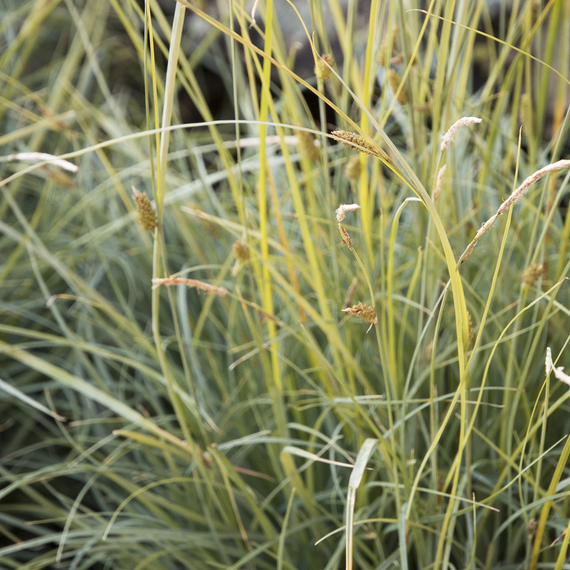
- Striking blue-gray foliage forms graceful, low-growing mounds that provide year-round color and fine texture in the landscape
- Exceptionally low maintenance and deer resistant — thrives in full sun to partial shade and tolerates wet soil, drought once established, and even light foot traffic near edges
- Spreads steadily via rhizomes to create a dense, weed-suppressing ground cover ideal for borders, rain gardens, pond edges, and sloped banks
- Adaptable to a wide range of soils including clay, chalk, loam, and sand — tolerates alkaline conditions and light salinity
Blue Sedge (Carex flacca) is a versatile, cool-season evergreen perennial that delivers year-round landscape appeal with its distinctive blue-gray, arching foliage. Native to Mediterranean calcareous grasslands, coastal dunes, and marshy areas of southern Europe and North Africa, this hardy sedge forms tidy, slowly spreading mounds of narrow, grass-like leaves that are blue-green on top and a deeper glaucous blue on the undersides, creating a two-toned shimmer that moves beautifully in the breeze. In early summer, slender brown flower spikes rise above the foliage — upright at first, then gently nodding — adding a subtle seasonal accent. Reaching just 6 to 12 inches tall and spreading 12 to 18 inches wide, Blue Sedge is perfectly suited for use as a ground cover, border edging, rock garden specimen, or container accent. Its spreading rhizomes gradually weave together to form a dense, fine-textured mat that effectively crowds out weeds, making it an excellent low-input alternative to traditional turf in tricky spots. Hardy in USDA Zones 4 through 9, this tough yet beautiful sedge tolerates a remarkable range of conditions — from moist and boggy soils to drought once established — while remaining virtually pest- and disease-free. Whether used to soften a pathway edge, stabilize a sloped bank, or bring cool color to a rain garden or woodland planting, Carex flacca is an outstanding choice for low-maintenance, high-impact landscaping in Southern Oregon and Northern California gardens.
Plant Description
Blue Sedge (Carex flacca) is a low-growing, evergreen perennial sedge in the family Cyperaceae. It is not a true grass, despite its grass-like appearance — sedges are distinguished by their triangular stems, as captured in the classic phrase "sedges have edges." The foliage consists of narrow, arching blades 6 to 8 inches long that are blue-green on the upper surface and a distinctly glaucous, powdery blue on the underside. This waxy coating, called a glaucous bloom, is a natural UV-protective adaptation that gives the plant its common name and its cool, silvery-blue color palette. In early summer, inconspicuous slender brown flower spikes emerge upright above the foliage before gently nodding over as they mature. The plant spreads gradually via shallow rhizomes, over time forming a weed-suppressing, fine-textured ground cover. It is sometimes sold or listed under the synonym Carex glauca, which was the name widely used in the American nursery trade for decades.
Mature Size
| Attribute | Measurement |
|---|---|
| Mature Height | 6 to 12 inches |
| Mature Spread | 12 to 18 inches |
| Recommended Spacing | 12 to 18 inches on center |
| Growth Rate | Slow to moderate; reaches mature form in 2 to 3 years |
| Spread Habit | Slowly spreading via rhizomes to form a dense colony |
Hardiness Zones and Climate
Blue Sedge is hardy in USDA Zones 4 through 9, making it an excellent choice across a very wide range of climates, including the mild winters and warm, dry summers typical of Southern Oregon and Northern California. It is also well-suited to Sunset Climate Zones 3, 3A, 3B, 4 through 9, and 14 through 24, covering most of the western United States. As a cool-season plant, it performs best in moderate climates and appreciates some afternoon shade when temperatures regularly exceed 90 degrees Fahrenheit. The foliage remains evergreen in regions with mild winters, while in colder climates with hard freezes, the foliage may die back to the ground but will re-emerge in spring. A light layer of mulch around the base can help protect the root zone in the coldest parts of its range.
Sunlight Requirements
Blue Sedge performs well in a range of light exposures, from full sun to partial shade. In cooler coastal or inland climates, it thrives in full sun and develops its richest blue-gray color under direct light. In hotter inland valleys, providing afternoon shade will prevent leaf scorch and help the plant stay lush and vibrant through summer. A site receiving 3 to 6 hours of direct sunlight per day is ideal in warmer locations. In general, more sun will produce a more compact, intensely colored plant, while shadier conditions tend to produce slightly softer, more arching growth. Avoid dense, full shade, which can cause sparse growth and diminished foliage color.
Soil and pH Preferences
One of Blue Sedge's most valuable traits is its exceptional soil adaptability. It grows well in a wide range of soil textures, including chalk, clay, loam, and sand. It is notably tolerant of alkaline and neutral pH levels (approximately 6.0 to 7.5) and can even handle slightly acidic soils down to a pH of around 5.5. It is one of the few ornamental grasses and sedges that performs reliably in alkaline conditions, making it useful in areas with lime-rich soils. Blue Sedge tolerates both well-drained soils and consistently moist or even poorly drained conditions, and it can grow in standing water up to approximately 2 inches deep. For best establishment, amending heavy clay soils with compost to improve drainage and structure is beneficial, though the plant will ultimately adapt to most garden situations.
Watering Guide
Blue Sedge has moderate water needs that decrease significantly once the plant is established. During the first growing season, water regularly — approximately once or twice per week — to keep the soil consistently moist and encourage deep root establishment. Avoid waterlogging the crown, as this can lead to rot. Once established, typically by the second season, the plant becomes quite drought tolerant and can often survive on natural rainfall in most Pacific Northwest and Northern California climates. In hot, dry summers or prolonged drought conditions, provide deep, infrequent supplemental irrigation, allowing the top 2 to 3 inches of soil to dry slightly between waterings. Blue Sedge is also perfectly content in moist, rain garden, or streamside settings, tolerating consistently wet soils and even occasional flooding.
Fertilizing
Blue Sedge is a light feeder and generally does not require regular fertilization, especially when planted in reasonably fertile garden soil. In most home landscape situations, an annual top-dressing of compost in early spring is all that is needed to maintain healthy, vigorous growth. If the plant appears pale or shows slow growth, apply a light, balanced granular or liquid fertilizer (such as a 10-10-10 formula) once per year in early spring as new growth begins. Young transplants benefit from the addition of a phosphorus-containing starter fertilizer to support early root development. Avoid over-fertilizing, as excessive nitrogen will produce overly lush, floppy growth and may dilute the distinctive blue-gray foliage color. Organic options such as fish emulsion or compost tea are well-suited to this plant's modest nutritional needs.
Pruning and Maintenance
Blue Sedge is one of the lowest-maintenance plants available for the landscape. In mild-winter climates like Southern Oregon and Northern California, the foliage remains evergreen and can simply be tidied up in late winter or very early spring by trimming off any dead, brown, or winter-damaged leaf tips. In colder climates where the foliage dies back completely, cut the clumps to the ground in late winter before new growth emerges. If a neater, more uniform appearance is desired throughout the growing season, the plant can also be lightly mown to about 4 inches once in early spring and again in midsummer as needed. Clumps may be divided in spring or early fall every 3 to 4 years to rejuvenate older plants and to propagate new starts. Simply dig and split the root mass with a sharp spade and replant divisions immediately.
Planting Instructions
- Choose a site with full sun to partial shade and well-drained to moist soil. Blue Sedge is adaptable and tolerates a wide range of conditions.
- In Southern Oregon and Northern California, the best planting times are fall (September through November) for easy establishment over the cool, wet season, or early spring after the last frost.
- Dig a planting hole approximately twice as wide as the root ball and equal in depth. Avoid planting too deeply — the crown should sit at or just slightly above the surrounding soil level.
- Amend heavy clay soils with compost to improve drainage. For sandy or lean soils, work in compost to boost moisture retention and fertility.
- Space plants 12 to 18 inches apart for a ground cover planting; individual specimen plants may be spaced 18 inches apart.
- Backfill the hole, firm the soil gently around the root ball, and water in thoroughly to eliminate air pockets.
- Apply a 2- to 3-inch layer of organic mulch around the plant, keeping it a few inches away from the crown, to retain soil moisture and suppress weeds during establishment.
- Water regularly throughout the first growing season to establish a strong root system.
Seasonal Interest
Blue Sedge earns its keep in the garden across all four seasons. Its narrow, arching, blue-gray foliage is the primary ornamental feature and remains attractive throughout the year in mild-winter climates, providing cool color and fine texture even during the winter months when most herbaceous plants are dormant. In late spring through early summer, slender brown flower spikes emerge above the foliage, starting upright then gradually arching over for a delicate, airy effect. As temperatures cool in autumn, the glaucous blue hue of the leaves often deepens and intensifies, enhancing the plant's ornamental value during the fall season. The evergreen habit and consistent color make Blue Sedge especially valuable in winter garden compositions where it pairs beautifully with berried shrubs, ornamental conifers, and other cool-season plants.
Landscape Uses
- Ground Cover: Spreading rhizomes fill in over time to create a dense, weed-suppressing carpet ideal beneath trees, along slopes, and in mass plantings.
- Border Edging: The low, tidy mounding habit creates a clean, soft edge along walkways, driveways, garden paths, and planting bed borders.
- Rain Gardens and Wet Areas: Exceptional tolerance of moist and poorly drained soils makes it a top choice for rain gardens and bioswales.
- Pond and Stream Edges: Its affinity for moist soil and ability to tolerate shallow standing water make it a natural fit for softening the edges of water features.
- Rock and Gravel Gardens: Drought tolerance once established and its compact form work beautifully in dry rock gardens and xeriscape designs.
- Woodland Gardens: Performs well in partial shade beneath trees, adding a cool, refined texture to shaded naturalistic plantings.
- Containers and Planters: The arching, fountain-like habit provides beautiful texture and color in mixed container arrangements.
- Slope Stabilization: Spreading rhizomes help bind soil and reduce erosion on gently sloped banks and hillsides.
- Lawn Alternative: In low-traffic areas, a mass planting of Blue Sedge can serve as a low-mow, water-conserving alternative to traditional turf grass.
Companion Plants
Blue Sedge's cool blue-gray foliage serves as an elegant contrast or complement to a wide variety of garden plants. Consider these companions for visually striking combinations:
- Hellebores (Helleborus spp.): Shade-tolerant, evergreen foliage and nodding winter blooms pair beautifully with Blue Sedge in woodland settings.
- Coral Bells (Heuchera spp.): Deep burgundy, caramel, or chartreuse heuchera foliage creates a vivid contrast with the cool blue sedge mounds.
- Ajuga (Ajuga reptans): Low-growing and spreading, ajuga's purple foliage and blue flower spikes complement Blue Sedge in shaded ground cover schemes.
- Japanese Anemone (Anemone x hybrida): Tall, airy fall blooms provide vertical interest above the low carpet of Blue Sedge.
- Astilbe: Feathery plumes and bold, textured foliage pair well in moist, partially shaded beds where both plants thrive.
- Black Mondo Grass (Ophiopogon planiscapus 'Nigrescens'): Near-black foliage creates a dramatic, high-contrast combination with the silvery-blue sedge.
- Blue Chalk Sticks (Senecio mandraliscae): For a water-wise, blue-toned composition in sunny Southern California-style gardens, this succulent echoes the cool tones of Blue Sedge.
- Liriope (Liriope muscari): A similarly textured but bolder-growing companion for edging and borders in sun to partial shade.
- Creeping Jenny (Lysimachia nummularia 'Aurea'): Golden, trailing foliage weaves through Blue Sedge mounds for a two-tone groundcover effect in moist, partly shaded areas.
Pests and Diseases
Blue Sedge is remarkably resistant to both pests and diseases, making it one of the most trouble-free ornamental plants available. Under normal growing conditions, it is generally considered pest- and disease-free. The following occasional issues may arise:
- Root and Crown Rot: The most common disease concern, caused by consistently waterlogged soil combined with poor drainage. Avoid overwatering and ensure adequate soil drainage to prevent this issue. If rot is detected, remove and discard affected portions of the crown and roots.
- Rust (Fungal): Occasionally seen in humid conditions with poor air circulation. Thin congested clumps to improve airflow. Treat severe cases with a copper-based antifungal spray and remove affected foliage.
- Snails and Slugs: May occasionally feed on young, tender foliage, especially in moist garden settings. Remove debris around the base of the plant, apply iron phosphate slug bait if needed, or encourage natural predators such as ground beetles.
- Scale Insects: Rare; if observed, treat with horticultural oil applied in early spring before new growth emerges.
- Aphids: Uncommon, and rarely cause significant damage. A strong spray of water or insecticidal soap is sufficient if needed.
Blue Sedge is non-toxic to humans and pets, and deer largely avoid it, making it a safe and practical choice for family gardens and wildlife-friendly landscapes.
Container Growing
Blue Sedge adapts well to container culture and makes a striking addition to mixed patio planters, window boxes, and decorative urns. Its arching, fountain-like habit adds graceful texture and cool color to container compositions. Use a standard, high-quality potting mix with good drainage for best results. Choose a container with adequate drainage holes to prevent water from accumulating at the root zone. Because containers dry out more quickly than in-ground plantings, monitor soil moisture regularly and water when the top inch of potting mix feels dry to the touch — container-grown Blue Sedge will need more frequent watering than established in-ground plants, especially during warm summer months. Fertilize lightly with a balanced, slow-release granular fertilizer in spring to support healthy seasonal growth. In the coldest parts of Zone 4 or 5, move containers to a sheltered location or unheated garage over winter to protect roots from hard freezes. Blue Sedge combines beautifully in containers with shade-tolerant flowering perennials, bold-leafed hostas, trailing plants, and ornamental annuals that share its preference for moderate moisture.
Wildlife Value
Blue Sedge offers meaningful ecological value in a naturalistic or wildlife-friendly garden setting. The dense, low foliage provides important ground-level shelter and nesting material for small beneficial insects, ground-nesting bees, and small mammals. The seeds produced by the brown flower spikes attract foraging birds, including sparrows and finches, particularly during fall and winter when other food sources are scarce. As a sedge, Carex flacca is a larval host plant for certain species of skippers and other native butterflies and moths, contributing to the support of local pollinator populations. Its dense spreading habit and evergreen foliage also provide year-round ground cover that helps reduce soil erosion, retain soil moisture, and moderate soil temperature — all of which support the broader soil ecosystem and beneficial soil microorganisms. While not a North American native, it integrates well into mixed plantings designed for habitat support and is deer resistant, allowing wildlife-friendly gardens to flourish without heavy browsing pressure.
Propagation
Blue Sedge is most reliably and easily propagated by division, which produces true-to-type plants and is the preferred method for home gardeners. Divide established clumps in early spring as new growth begins, or in early fall at least 6 to 8 weeks before the first expected frost. Use a sharp spade or garden fork to dig up a healthy clump, then slice or pull the root mass apart into smaller sections, each with several healthy shoots and an intact root system. Replant divisions immediately at the same depth as the parent plant, water well, and keep the soil consistently moist until the new divisions are established. Clumps benefit from division every 3 to 4 years to maintain vigor and prevent the center of the plant from dying out. Propagation from seed is possible but less predictable — seeds require cold stratification (approximately 90 days at refrigerator temperatures) to improve germination rates and should be sown in early spring in a moist, well-draining seed-starting mix kept consistently moist through the germination period.
- Striking blue-gray foliage forms graceful, low-growing mounds that provide year-round color and fine texture in the landscape
- Exceptionally low maintenance and deer resistant — thrives in full sun to partial shade and tolerates wet soil, drought once established, and even light foot traffic near edges
- Spreads steadily via rhizomes to create a dense, weed-suppressing ground cover ideal for borders, rain gardens, pond edges, and sloped banks
- Adaptable to a wide range of soils including clay, chalk, loam, and sand — tolerates alkaline conditions and light salinity
Blue Sedge (Carex flacca) is a versatile, cool-season evergreen perennial that delivers year-round landscape appeal with its distinctive blue-gray, arching foliage. Native to Mediterranean calcareous grasslands, coastal dunes, and marshy areas of southern Europe and North Africa, this hardy sedge forms tidy, slowly spreading mounds of narrow, grass-like leaves that are blue-green on top and a deeper glaucous blue on the undersides, creating a two-toned shimmer that moves beautifully in the breeze. In early summer, slender brown flower spikes rise above the foliage — upright at first, then gently nodding — adding a subtle seasonal accent. Reaching just 6 to 12 inches tall and spreading 12 to 18 inches wide, Blue Sedge is perfectly suited for use as a ground cover, border edging, rock garden specimen, or container accent. Its spreading rhizomes gradually weave together to form a dense, fine-textured mat that effectively crowds out weeds, making it an excellent low-input alternative to traditional turf in tricky spots. Hardy in USDA Zones 4 through 9, this tough yet beautiful sedge tolerates a remarkable range of conditions — from moist and boggy soils to drought once established — while remaining virtually pest- and disease-free. Whether used to soften a pathway edge, stabilize a sloped bank, or bring cool color to a rain garden or woodland planting, Carex flacca is an outstanding choice for low-maintenance, high-impact landscaping in Southern Oregon and Northern California gardens.
Plant Description
Blue Sedge (Carex flacca) is a low-growing, evergreen perennial sedge in the family Cyperaceae. It is not a true grass, despite its grass-like appearance — sedges are distinguished by their triangular stems, as captured in the classic phrase "sedges have edges." The foliage consists of narrow, arching blades 6 to 8 inches long that are blue-green on the upper surface and a distinctly glaucous, powdery blue on the underside. This waxy coating, called a glaucous bloom, is a natural UV-protective adaptation that gives the plant its common name and its cool, silvery-blue color palette. In early summer, inconspicuous slender brown flower spikes emerge upright above the foliage before gently nodding over as they mature. The plant spreads gradually via shallow rhizomes, over time forming a weed-suppressing, fine-textured ground cover. It is sometimes sold or listed under the synonym Carex glauca, which was the name widely used in the American nursery trade for decades.
Mature Size
| Attribute | Measurement |
|---|---|
| Mature Height | 6 to 12 inches |
| Mature Spread | 12 to 18 inches |
| Recommended Spacing | 12 to 18 inches on center |
| Growth Rate | Slow to moderate; reaches mature form in 2 to 3 years |
| Spread Habit | Slowly spreading via rhizomes to form a dense colony |
Hardiness Zones and Climate
Blue Sedge is hardy in USDA Zones 4 through 9, making it an excellent choice across a very wide range of climates, including the mild winters and warm, dry summers typical of Southern Oregon and Northern California. It is also well-suited to Sunset Climate Zones 3, 3A, 3B, 4 through 9, and 14 through 24, covering most of the western United States. As a cool-season plant, it performs best in moderate climates and appreciates some afternoon shade when temperatures regularly exceed 90 degrees Fahrenheit. The foliage remains evergreen in regions with mild winters, while in colder climates with hard freezes, the foliage may die back to the ground but will re-emerge in spring. A light layer of mulch around the base can help protect the root zone in the coldest parts of its range.
Sunlight Requirements
Blue Sedge performs well in a range of light exposures, from full sun to partial shade. In cooler coastal or inland climates, it thrives in full sun and develops its richest blue-gray color under direct light. In hotter inland valleys, providing afternoon shade will prevent leaf scorch and help the plant stay lush and vibrant through summer. A site receiving 3 to 6 hours of direct sunlight per day is ideal in warmer locations. In general, more sun will produce a more compact, intensely colored plant, while shadier conditions tend to produce slightly softer, more arching growth. Avoid dense, full shade, which can cause sparse growth and diminished foliage color.
Soil and pH Preferences
One of Blue Sedge's most valuable traits is its exceptional soil adaptability. It grows well in a wide range of soil textures, including chalk, clay, loam, and sand. It is notably tolerant of alkaline and neutral pH levels (approximately 6.0 to 7.5) and can even handle slightly acidic soils down to a pH of around 5.5. It is one of the few ornamental grasses and sedges that performs reliably in alkaline conditions, making it useful in areas with lime-rich soils. Blue Sedge tolerates both well-drained soils and consistently moist or even poorly drained conditions, and it can grow in standing water up to approximately 2 inches deep. For best establishment, amending heavy clay soils with compost to improve drainage and structure is beneficial, though the plant will ultimately adapt to most garden situations.
Watering Guide
Blue Sedge has moderate water needs that decrease significantly once the plant is established. During the first growing season, water regularly — approximately once or twice per week — to keep the soil consistently moist and encourage deep root establishment. Avoid waterlogging the crown, as this can lead to rot. Once established, typically by the second season, the plant becomes quite drought tolerant and can often survive on natural rainfall in most Pacific Northwest and Northern California climates. In hot, dry summers or prolonged drought conditions, provide deep, infrequent supplemental irrigation, allowing the top 2 to 3 inches of soil to dry slightly between waterings. Blue Sedge is also perfectly content in moist, rain garden, or streamside settings, tolerating consistently wet soils and even occasional flooding.
Fertilizing
Blue Sedge is a light feeder and generally does not require regular fertilization, especially when planted in reasonably fertile garden soil. In most home landscape situations, an annual top-dressing of compost in early spring is all that is needed to maintain healthy, vigorous growth. If the plant appears pale or shows slow growth, apply a light, balanced granular or liquid fertilizer (such as a 10-10-10 formula) once per year in early spring as new growth begins. Young transplants benefit from the addition of a phosphorus-containing starter fertilizer to support early root development. Avoid over-fertilizing, as excessive nitrogen will produce overly lush, floppy growth and may dilute the distinctive blue-gray foliage color. Organic options such as fish emulsion or compost tea are well-suited to this plant's modest nutritional needs.
Pruning and Maintenance
Blue Sedge is one of the lowest-maintenance plants available for the landscape. In mild-winter climates like Southern Oregon and Northern California, the foliage remains evergreen and can simply be tidied up in late winter or very early spring by trimming off any dead, brown, or winter-damaged leaf tips. In colder climates where the foliage dies back completely, cut the clumps to the ground in late winter before new growth emerges. If a neater, more uniform appearance is desired throughout the growing season, the plant can also be lightly mown to about 4 inches once in early spring and again in midsummer as needed. Clumps may be divided in spring or early fall every 3 to 4 years to rejuvenate older plants and to propagate new starts. Simply dig and split the root mass with a sharp spade and replant divisions immediately.
Planting Instructions
- Choose a site with full sun to partial shade and well-drained to moist soil. Blue Sedge is adaptable and tolerates a wide range of conditions.
- In Southern Oregon and Northern California, the best planting times are fall (September through November) for easy establishment over the cool, wet season, or early spring after the last frost.
- Dig a planting hole approximately twice as wide as the root ball and equal in depth. Avoid planting too deeply — the crown should sit at or just slightly above the surrounding soil level.
- Amend heavy clay soils with compost to improve drainage. For sandy or lean soils, work in compost to boost moisture retention and fertility.
- Space plants 12 to 18 inches apart for a ground cover planting; individual specimen plants may be spaced 18 inches apart.
- Backfill the hole, firm the soil gently around the root ball, and water in thoroughly to eliminate air pockets.
- Apply a 2- to 3-inch layer of organic mulch around the plant, keeping it a few inches away from the crown, to retain soil moisture and suppress weeds during establishment.
- Water regularly throughout the first growing season to establish a strong root system.
Seasonal Interest
Blue Sedge earns its keep in the garden across all four seasons. Its narrow, arching, blue-gray foliage is the primary ornamental feature and remains attractive throughout the year in mild-winter climates, providing cool color and fine texture even during the winter months when most herbaceous plants are dormant. In late spring through early summer, slender brown flower spikes emerge above the foliage, starting upright then gradually arching over for a delicate, airy effect. As temperatures cool in autumn, the glaucous blue hue of the leaves often deepens and intensifies, enhancing the plant's ornamental value during the fall season. The evergreen habit and consistent color make Blue Sedge especially valuable in winter garden compositions where it pairs beautifully with berried shrubs, ornamental conifers, and other cool-season plants.
Landscape Uses
- Ground Cover: Spreading rhizomes fill in over time to create a dense, weed-suppressing carpet ideal beneath trees, along slopes, and in mass plantings.
- Border Edging: The low, tidy mounding habit creates a clean, soft edge along walkways, driveways, garden paths, and planting bed borders.
- Rain Gardens and Wet Areas: Exceptional tolerance of moist and poorly drained soils makes it a top choice for rain gardens and bioswales.
- Pond and Stream Edges: Its affinity for moist soil and ability to tolerate shallow standing water make it a natural fit for softening the edges of water features.
- Rock and Gravel Gardens: Drought tolerance once established and its compact form work beautifully in dry rock gardens and xeriscape designs.
- Woodland Gardens: Performs well in partial shade beneath trees, adding a cool, refined texture to shaded naturalistic plantings.
- Containers and Planters: The arching, fountain-like habit provides beautiful texture and color in mixed container arrangements.
- Slope Stabilization: Spreading rhizomes help bind soil and reduce erosion on gently sloped banks and hillsides.
- Lawn Alternative: In low-traffic areas, a mass planting of Blue Sedge can serve as a low-mow, water-conserving alternative to traditional turf grass.
Companion Plants
Blue Sedge's cool blue-gray foliage serves as an elegant contrast or complement to a wide variety of garden plants. Consider these companions for visually striking combinations:
- Hellebores (Helleborus spp.): Shade-tolerant, evergreen foliage and nodding winter blooms pair beautifully with Blue Sedge in woodland settings.
- Coral Bells (Heuchera spp.): Deep burgundy, caramel, or chartreuse heuchera foliage creates a vivid contrast with the cool blue sedge mounds.
- Ajuga (Ajuga reptans): Low-growing and spreading, ajuga's purple foliage and blue flower spikes complement Blue Sedge in shaded ground cover schemes.
- Japanese Anemone (Anemone x hybrida): Tall, airy fall blooms provide vertical interest above the low carpet of Blue Sedge.
- Astilbe: Feathery plumes and bold, textured foliage pair well in moist, partially shaded beds where both plants thrive.
- Black Mondo Grass (Ophiopogon planiscapus 'Nigrescens'): Near-black foliage creates a dramatic, high-contrast combination with the silvery-blue sedge.
- Blue Chalk Sticks (Senecio mandraliscae): For a water-wise, blue-toned composition in sunny Southern California-style gardens, this succulent echoes the cool tones of Blue Sedge.
- Liriope (Liriope muscari): A similarly textured but bolder-growing companion for edging and borders in sun to partial shade.
- Creeping Jenny (Lysimachia nummularia 'Aurea'): Golden, trailing foliage weaves through Blue Sedge mounds for a two-tone groundcover effect in moist, partly shaded areas.
Pests and Diseases
Blue Sedge is remarkably resistant to both pests and diseases, making it one of the most trouble-free ornamental plants available. Under normal growing conditions, it is generally considered pest- and disease-free. The following occasional issues may arise:
- Root and Crown Rot: The most common disease concern, caused by consistently waterlogged soil combined with poor drainage. Avoid overwatering and ensure adequate soil drainage to prevent this issue. If rot is detected, remove and discard affected portions of the crown and roots.
- Rust (Fungal): Occasionally seen in humid conditions with poor air circulation. Thin congested clumps to improve airflow. Treat severe cases with a copper-based antifungal spray and remove affected foliage.
- Snails and Slugs: May occasionally feed on young, tender foliage, especially in moist garden settings. Remove debris around the base of the plant, apply iron phosphate slug bait if needed, or encourage natural predators such as ground beetles.
- Scale Insects: Rare; if observed, treat with horticultural oil applied in early spring before new growth emerges.
- Aphids: Uncommon, and rarely cause significant damage. A strong spray of water or insecticidal soap is sufficient if needed.
Blue Sedge is non-toxic to humans and pets, and deer largely avoid it, making it a safe and practical choice for family gardens and wildlife-friendly landscapes.
Container Growing
Blue Sedge adapts well to container culture and makes a striking addition to mixed patio planters, window boxes, and decorative urns. Its arching, fountain-like habit adds graceful texture and cool color to container compositions. Use a standard, high-quality potting mix with good drainage for best results. Choose a container with adequate drainage holes to prevent water from accumulating at the root zone. Because containers dry out more quickly than in-ground plantings, monitor soil moisture regularly and water when the top inch of potting mix feels dry to the touch — container-grown Blue Sedge will need more frequent watering than established in-ground plants, especially during warm summer months. Fertilize lightly with a balanced, slow-release granular fertilizer in spring to support healthy seasonal growth. In the coldest parts of Zone 4 or 5, move containers to a sheltered location or unheated garage over winter to protect roots from hard freezes. Blue Sedge combines beautifully in containers with shade-tolerant flowering perennials, bold-leafed hostas, trailing plants, and ornamental annuals that share its preference for moderate moisture.
Wildlife Value
Blue Sedge offers meaningful ecological value in a naturalistic or wildlife-friendly garden setting. The dense, low foliage provides important ground-level shelter and nesting material for small beneficial insects, ground-nesting bees, and small mammals. The seeds produced by the brown flower spikes attract foraging birds, including sparrows and finches, particularly during fall and winter when other food sources are scarce. As a sedge, Carex flacca is a larval host plant for certain species of skippers and other native butterflies and moths, contributing to the support of local pollinator populations. Its dense spreading habit and evergreen foliage also provide year-round ground cover that helps reduce soil erosion, retain soil moisture, and moderate soil temperature — all of which support the broader soil ecosystem and beneficial soil microorganisms. While not a North American native, it integrates well into mixed plantings designed for habitat support and is deer resistant, allowing wildlife-friendly gardens to flourish without heavy browsing pressure.
Propagation
Blue Sedge is most reliably and easily propagated by division, which produces true-to-type plants and is the preferred method for home gardeners. Divide established clumps in early spring as new growth begins, or in early fall at least 6 to 8 weeks before the first expected frost. Use a sharp spade or garden fork to dig up a healthy clump, then slice or pull the root mass apart into smaller sections, each with several healthy shoots and an intact root system. Replant divisions immediately at the same depth as the parent plant, water well, and keep the soil consistently moist until the new divisions are established. Clumps benefit from division every 3 to 4 years to maintain vigor and prevent the center of the plant from dying out. Propagation from seed is possible but less predictable — seeds require cold stratification (approximately 90 days at refrigerator temperatures) to improve germination rates and should be sown in early spring in a moist, well-draining seed-starting mix kept consistently moist through the germination period.


