

Zoom the image with the mouse
Diabolo Ninebark - 7 Gallon
SKU:
195295
$61.99
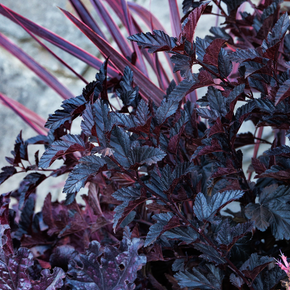
- Striking deep burgundy-to-near-black foliage holds rich color all season long, intensifying in full sun for a dramatic landscape statement
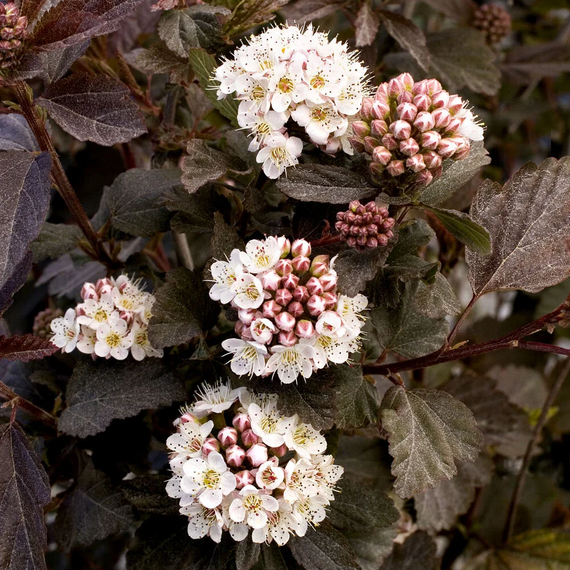
- Profuse clusters of creamy-white, pink-tinged blossoms erupt in late spring, creating a stunning contrast against the dark purple leaves
- Exceptionally tough and adaptable — tolerates drought, clay soil, rocky slopes, and a wide range of pH levels once established
- Award-winning, low-maintenance deciduous shrub with four-season appeal, from spring flowers and summer foliage to ornamental seed pods and exfoliating winter bark
Physocarpus opulifolius 'Diabolo' — commonly known as Diabolo Ninebark — is one of the most dramatic and versatile deciduous shrubs available to home gardeners and landscape professionals alike. This award-winning cultivar, recipient of both the Royal Horticultural Society's Award of Garden Merit and the Gold Medal Award of the Pennsylvania Horticultural Society, commands attention from the moment its deeply lobed, maple-like leaves emerge in a rich burgundy-purple in spring. In full sun, the foliage deepens to an almost-black purple throughout the summer, offering bold, season-long color that few other shrubs can match. In late spring, dense, rounded corymbs of creamy-white, delicately pink-tinged flowers blanket the arching branches, providing a spectacular contrast against the dark foliage and attracting butterflies and other beneficial pollinators. As summer progresses, inflated reddish seed capsules follow the blooms, adding further ornamental interest while drawing in birds. Come winter, the multi-stemmed fountain form reveals its exfoliating bark, which peels in papery strips to expose layers of rich reddish-brown inner bark — a feature that gives the ninebark its distinctive common name. Growing 4 to 8 feet tall and wide with a graceful, arching habit, Diabolo Ninebark thrives in USDA Hardiness Zones 2 through 7, making it an outstanding choice for the cool-summer climates of Southern Oregon and Northern California. It is remarkably adaptable, tolerating clay, loam, sandy, and rocky soils, and requires minimal care once established, making it an ideal choice for hedges, mixed borders, erosion control on slopes, wildlife gardens, and bold specimen plantings.
Plant Description
Diabolo Ninebark (Physocarpus opulifolius 'Diabolo') is an upright, spreading, multi-stemmed deciduous shrub in the rose family (Rosaceae). It is a cultivar of the North American native common ninebark, selected specifically for its strikingly dark purple foliage. The leaves are ovate to rounded, typically 3 to 5 lobed, and grow up to 4 inches long, closely resembling the leaf shape of a maple or Viburnum opulus. In full sun, the foliage is a deep, saturated burgundy-purple that can appear nearly black — one of the darkest of any garden shrub. In partial shade or during very hot summers, the color may soften toward green-purple. In late spring, the arching branches are smothered in dense, flat-topped, 1 to 2 inch diameter clusters (corymbs) of small, five-petaled, creamy-white flowers with a delicate pink blush, very similar in appearance to those of spirea, to which ninebark is closely related. These give way to drooping clusters of inflated, reddish seed capsules that persist through fall and provide ornamental interest into winter. On older, mature canes, the bark exfoliates in long, papery, cinnamon-brown strips — an eye-catching winter feature that is responsible for the plant's evocative common name.
Mature Size and Growth Rate
Diabolo Ninebark is a vigorous, fast-growing shrub that typically reaches its full size within 3 to 4 years under good growing conditions. Expect a mature plant to reach the following dimensions:
| Attribute | Typical Range |
|---|---|
| Mature Height | 4 to 8 feet (occasionally to 10 feet) |
| Mature Spread | 4 to 8 feet |
| Growth Rate | Fast (vigorous) |
| Growth Habit | Upright, arching, fountain-shaped |
| Recommended Spacing | 4 to 8 feet on center |
Its naturally graceful, fountain-like form requires minimal corrective pruning when given adequate space. Crowding the plant will reduce air circulation and can lead to disease. Allow generous spacing when planting in hedges or mass groupings.
Hardiness Zones and Climate
Diabolo Ninebark is an exceptionally cold-hardy shrub, performing reliably across a wide range of climates. It is rated for USDA Hardiness Zones 2 through 7, with the best and most consistent deep-purple foliage color occurring in Zones 3 through 7. The cool-summer climates of Southern Oregon and Northern California fall within its ideal performance range.
- USDA Hardiness Zones: 2 to 7
- AHS Heat Zones: 1 to 10
- Performs best where summers are mild to moderate and humidity is low
- In regions with prolonged high heat and humidity (Zone 8 and above), foliage color may fade significantly toward green and overall vigor may be reduced
- In hot climates, afternoon shade helps preserve the deep purple leaf color and reduces plant stress
- Fully deciduous; goes dormant in winter and is reliably root-hardy well below freezing
Sunlight Requirements
Diabolo Ninebark thrives in full sun to partial shade, but sun exposure has a direct and dramatic impact on foliage color intensity:
- Full Sun (6+ hours of direct sun daily): Produces the deepest, richest burgundy-to-near-black foliage color. Best flowering and most compact growth habit. This is the ideal exposure for most gardens in Southern Oregon and Northern California.
- Partial Sun / Partial Shade (3 to 6 hours of direct sun): The plant grows well, but foliage color will be less intense, trending toward green-purple. Flower production may also be slightly reduced.
- Full Shade: Not recommended. Deep shade results in poor color, leggy growth, and significantly reduced flowering.
In areas with very hot afternoon sun, providing light afternoon shade can help prevent leaf scorch while still maintaining good foliage color. Morning sun with some afternoon protection is an ideal compromise in warmer planting sites.
Soil and pH Preferences
One of Diabolo Ninebark's most valuable traits is its remarkable soil adaptability. While it has preferred conditions, it tolerates a range of situations that would stress many ornamental shrubs:
| Attribute | Details |
|---|---|
| Preferred Soil Texture | Loamy, well-drained; adapts to clay, sandy, or rocky soils |
| Soil pH | 5.0 to 7.0 (slightly acidic to neutral); best color in slightly acidic soil |
| Drainage | Moist but well-drained; does not tolerate consistently waterlogged or boggy conditions |
| Moisture Level | Dry to medium; drought-tolerant once established |
| Tolerates | Clay soil, dry soil, rocky or shallow soil, some erosion-prone slopes |
| Avoid | Consistently waterlogged, poorly drained, or overly wet sites |
Amending heavy clay or very sandy soils with compost at planting time will improve drainage and fertility, giving your new plant the best possible start.
Watering Guide
Diabolo Ninebark has moderate water needs that vary by establishment stage and season. Following this guide will help keep your plant healthy while avoiding the most common watering mistakes:
- First Growing Season: Water regularly and deeply to encourage deep, extensive root development. Aim for consistent moisture — check the root zone weekly and water when the top 2 to 3 inches of soil begin to dry out.
- Established Plants (Year 2 onward): Once established, Diabolo Ninebark is notably drought-tolerant. Deep, infrequent watering is preferred over frequent shallow irrigation. In Southern Oregon and Northern California, supplemental irrigation during the dry summer months is recommended, especially during periods of heat or drought.
- Overwatering: Avoid waterlogged soil at all times. Poor drainage and consistently wet roots can lead to root rot and other fungal issues.
- Mulching: Apply 2 to 3 inches of organic mulch around the base of the plant (keeping mulch away from the crown) to retain soil moisture, moderate soil temperature, and reduce weed pressure.
Fertilizing
Diabolo Ninebark is not a heavy feeder, but a thoughtful fertilization program supports vigorous growth, rich foliage color, and abundant flowering:
- When to Fertilize: Apply fertilizer once in early spring as new growth begins. A second, lighter application can be made in late July to early August if the plant shows signs of reduced vigor or pale foliage. Do not fertilize after mid-August, as late-season feeding can stimulate new growth that is vulnerable to frost damage.
- Fertilizer Type: A balanced, slow-release granular fertilizer (such as a 10-10-10 formula) or a formula slightly higher in phosphorus (such as 5-10-5) works well for promoting both foliage and flowering. Organic options such as compost, fish emulsion, or bone meal are also excellent and improve overall soil health over time.
- Application: Spread granular fertilizer evenly around the drip line, avoiding direct contact with stems or the crown. Water in thoroughly after application. For liquid fertilizers, dilute according to package directions and apply at the base of the plant.
- Soil Testing: Conduct a periodic soil test (every 2 to 3 years) to verify nutrient levels and pH before adjusting your fertilization routine. Ninebark in slightly acidic, nutrient-balanced soil rarely requires heavy supplemental feeding.
- Mulch as Fertilizer: Maintaining a layer of decomposing organic mulch around the plant adds a continuous slow-release source of nutrients while improving soil structure.
Pruning and Maintenance
Diabolo Ninebark is a low-maintenance shrub, but regular pruning keeps it looking its best and promotes a healthy, open structure. Follow these guidelines for best results:
- Best Time to Prune: Prune immediately after flowering in late spring to early summer. Since Diabolo blooms on the previous season's wood, pruning too late in the season removes next year's flower buds. Complete all shaping and thinning cuts no later than mid-August.
- Annual Thinning: Each year, remove the oldest, thickest canes (one-third of the oldest stems at the base) to encourage vigorous new growth and maintain the shrub's graceful, fountain-like shape. This "renewal pruning" approach keeps the plant open and well-structured.
- Late-Winter Rejuvenation: If the shrub becomes overgrown or leggy, it can be cut back hard — nearly to the ground — in late winter or early spring (February to March) before new growth emerges. It will regenerate vigorously, though flowering may be reduced for one season following a hard cut.
- Deadheading: Deadheading spent flower clusters is not necessary, as the ornamental seed pods that follow are attractive and provide wildlife value. However, removing some spent clusters can encourage slightly denser regrowth.
- Dead Wood Removal: Remove any dead, damaged, or crossing branches at any time of year to maintain plant health and air circulation.
Planting Instructions
- Choose the Right Site: Select a location that receives at least 6 hours of full sun daily for the best foliage color. Ensure the site has well-drained soil and adequate space for the shrub to reach its mature size of 4 to 8 feet wide without crowding.
- Timing: Plant in spring or fall when temperatures are mild. Spring planting in Southern Oregon and Northern California gives the plant a full growing season to establish before its first summer dry period.
- Dig the Hole: Dig a hole twice as wide as the root ball and approximately the same depth. Avoid planting too deep — the top of the root ball should sit level with or very slightly above the surrounding soil grade.
- Amend Soil if Needed: In very sandy or heavy clay soils, mix compost or aged organic matter into the backfill at a ratio of roughly 1 part amendment to 2 parts native soil.
- Position the Plant: Remove the plant from its container and gently tease apart any circling or matted roots before placing it in the hole.
- Backfill and Water: Fill the hole with your amended backfill, firming gently to eliminate air pockets. Water deeply and thoroughly immediately after planting.
- Mulch: Apply 2 to 3 inches of organic mulch around the base, keeping it several inches away from the main stems to prevent crown rot and rodent damage.
- Follow-Up Watering: Water consistently throughout the first growing season — approximately once per week during dry periods — to help establish a deep root system.
Seasonal Interest
Diabolo Ninebark delivers something of beauty in every season, making it a true four-season asset in the landscape:
| Season | Features |
|---|---|
| Spring | New leaves emerge in rich burgundy-purple; dense, rounded clusters of creamy-white, pink-tinged flowers bloom in late spring, attracting pollinators |
| Summer | Deep purple-to-near-black foliage holds color in full sun; inflated reddish seed capsules develop and provide additional texture and ornamental interest |
| Fall | Foliage deepens to richer reddish-burgundy tones as temperatures cool; persistent seed pods attract birds and other wildlife |
| Winter | After leaf drop, the multi-stemmed, arching framework is revealed; mature canes display attractive exfoliating bark that peels in papery cinnamon-brown strips, providing significant textural winter interest |
Landscape Uses
The bold color, adaptable nature, and versatile size of Diabolo Ninebark make it one of the most useful shrubs for a wide range of landscape applications:
- Specimen or Focal Point: Its dramatic dark foliage and fountain shape make it a standout as a single specimen planting in a lawn or garden bed where it can be appreciated from all sides.
- Mixed Shrub Borders: Provides powerful color contrast when combined with silver, chartreuse, or gold-foliaged plants and bright-flowering perennials.
- Informal Hedges and Privacy Screens: Plant 4 to 6 feet apart in a row for an attractive, dense seasonal privacy screen or property border hedge.
- Erosion Control: Its robust, spreading root system stabilizes slopes, banks, and difficult terrain. An excellent choice for challenging erosion-prone areas.
- Rain Gardens: Tolerates periodic wet conditions and naturally thrives along drainage swales or in rain garden settings.
- Wildlife and Native Gardens: Supports pollinators during bloom and provides seed and shelter for birds through fall and winter.
- Low-Maintenance Landscapes: Highly suitable for low-water or low-input landscape designs once established.
Companion Plants
Diabolo Ninebark's deep burgundy-purple foliage is one of the most effective contrast elements in the garden. It pairs beautifully with plants that offer contrasting colors, textures, and forms:
- Coral Bells (Heuchera spp.): Lime-green, golden, or silver-leaved varieties create a striking foliage contrast at the base of Diabolo.
- Hydrangea (Hydrangea paniculata 'Limelight'): The chartreuse-to-white blooms of panicle hydrangeas harmonize beautifully with Diabolo's dark backdrop.
- Ornamental Grasses: Golden or blue-green grasses such as Hakonechloa macra 'Aureola' or blue oat grass (Helictotrichon sempervirens) create elegant textural contrasts.
- Daylilies (Hemerocallis): Yellow or orange daylilies pop brilliantly against the dark purple foliage throughout summer.
- Weigela: Pink- or red-flowering weigelas planted nearby extend the late-spring color show alongside Diabolo's blossoms.
- Potentilla: Yellow-flowering shrubby cinquefoil provides cheerful summer color at a lower height, complementing Diabolo's height and dark color.
- Spirea (Spiraea japonica): Gold-leaved or pink-flowering spireas work well as low-growing companions, echoing the family resemblance while providing color contrast.
- Evergreen Conifers: Dark green or blue-green conifers provide a year-round backdrop that accentuates Diabolo's foliage and winter bark structure.
Pests and Diseases
Diabolo Ninebark is notably resistant to most serious pests and diseases, making it one of the easier shrubs to maintain in the home landscape. However, a few issues may occasionally arise:
- Powdery Mildew: The most common issue, especially in humid conditions or where air circulation is poor. Improve airflow through thinning pruning, avoid overhead irrigation, and apply sulfur-based fungicides if the infection is severe.
- Fireblight: A bacterial disease that can cause branch tips to appear scorched and die back. Prune out affected wood well below the damaged area using sterilized tools and dispose of infected material. Do not compost.
- Leaf Spot Diseases: Various fungal leaf spots may appear in wet seasons. Typically cosmetic rather than threatening — improve air circulation and avoid wetting foliage when irrigating.
- Sawfly Larvae: Occasional defoliation by sawfly caterpillars can occur. Infestations are generally not serious; treat with insecticidal soap or neem oil if damage is widespread.
- Spider Mites: May appear during hot, dry weather. Knock mites off with a strong stream of water or apply neem oil if populations are high.
- Leaf Beetles: Minor leaf-feeding damage is occasionally seen; remove affected leaves or apply neem oil for widespread infestations.
The best defense against all pest and disease issues is proper siting, good air circulation, appropriate watering practices, and annual renewal pruning to remove old, crowded canes.
Wildlife Value
Diabolo Ninebark contributes meaningfully to the local garden ecosystem throughout the year:
- Pollinators: The abundant late-spring flower clusters are a reliable nectar and pollen source for bees, butterflies, and other beneficial insects. The flowers are particularly attractive to native bees and small butterflies.
- Birds: The persistent red seed capsules provide a valuable food source for birds through fall and into winter, when other food sources are scarce. The dense, multi-stemmed branching also offers protective cover and potential nesting habitat.
- General Wildlife Shelter: The shrub's dense structure provides cover and shelter for small birds and other wildlife seeking refuge from predators and harsh weather.
- Native Plant Ecosystem Support: As a cultivar of a North American native species, Diabolo Ninebark supports native insect populations — including specialist insects that depend on Physocarpus — far more effectively than exotic ornamentals of similar appearance.
- Striking deep burgundy-to-near-black foliage holds rich color all season long, intensifying in full sun for a dramatic landscape statement
- Profuse clusters of creamy-white, pink-tinged blossoms erupt in late spring, creating a stunning contrast against the dark purple leaves
- Exceptionally tough and adaptable — tolerates drought, clay soil, rocky slopes, and a wide range of pH levels once established
- Award-winning, low-maintenance deciduous shrub with four-season appeal, from spring flowers and summer foliage to ornamental seed pods and exfoliating winter bark
Physocarpus opulifolius 'Diabolo' — commonly known as Diabolo Ninebark — is one of the most dramatic and versatile deciduous shrubs available to home gardeners and landscape professionals alike. This award-winning cultivar, recipient of both the Royal Horticultural Society's Award of Garden Merit and the Gold Medal Award of the Pennsylvania Horticultural Society, commands attention from the moment its deeply lobed, maple-like leaves emerge in a rich burgundy-purple in spring. In full sun, the foliage deepens to an almost-black purple throughout the summer, offering bold, season-long color that few other shrubs can match. In late spring, dense, rounded corymbs of creamy-white, delicately pink-tinged flowers blanket the arching branches, providing a spectacular contrast against the dark foliage and attracting butterflies and other beneficial pollinators. As summer progresses, inflated reddish seed capsules follow the blooms, adding further ornamental interest while drawing in birds. Come winter, the multi-stemmed fountain form reveals its exfoliating bark, which peels in papery strips to expose layers of rich reddish-brown inner bark — a feature that gives the ninebark its distinctive common name. Growing 4 to 8 feet tall and wide with a graceful, arching habit, Diabolo Ninebark thrives in USDA Hardiness Zones 2 through 7, making it an outstanding choice for the cool-summer climates of Southern Oregon and Northern California. It is remarkably adaptable, tolerating clay, loam, sandy, and rocky soils, and requires minimal care once established, making it an ideal choice for hedges, mixed borders, erosion control on slopes, wildlife gardens, and bold specimen plantings.
Plant Description
Diabolo Ninebark (Physocarpus opulifolius 'Diabolo') is an upright, spreading, multi-stemmed deciduous shrub in the rose family (Rosaceae). It is a cultivar of the North American native common ninebark, selected specifically for its strikingly dark purple foliage. The leaves are ovate to rounded, typically 3 to 5 lobed, and grow up to 4 inches long, closely resembling the leaf shape of a maple or Viburnum opulus. In full sun, the foliage is a deep, saturated burgundy-purple that can appear nearly black — one of the darkest of any garden shrub. In partial shade or during very hot summers, the color may soften toward green-purple. In late spring, the arching branches are smothered in dense, flat-topped, 1 to 2 inch diameter clusters (corymbs) of small, five-petaled, creamy-white flowers with a delicate pink blush, very similar in appearance to those of spirea, to which ninebark is closely related. These give way to drooping clusters of inflated, reddish seed capsules that persist through fall and provide ornamental interest into winter. On older, mature canes, the bark exfoliates in long, papery, cinnamon-brown strips — an eye-catching winter feature that is responsible for the plant's evocative common name.
Mature Size and Growth Rate
Diabolo Ninebark is a vigorous, fast-growing shrub that typically reaches its full size within 3 to 4 years under good growing conditions. Expect a mature plant to reach the following dimensions:
| Attribute | Typical Range |
|---|---|
| Mature Height | 4 to 8 feet (occasionally to 10 feet) |
| Mature Spread | 4 to 8 feet |
| Growth Rate | Fast (vigorous) |
| Growth Habit | Upright, arching, fountain-shaped |
| Recommended Spacing | 4 to 8 feet on center |
Its naturally graceful, fountain-like form requires minimal corrective pruning when given adequate space. Crowding the plant will reduce air circulation and can lead to disease. Allow generous spacing when planting in hedges or mass groupings.
Hardiness Zones and Climate
Diabolo Ninebark is an exceptionally cold-hardy shrub, performing reliably across a wide range of climates. It is rated for USDA Hardiness Zones 2 through 7, with the best and most consistent deep-purple foliage color occurring in Zones 3 through 7. The cool-summer climates of Southern Oregon and Northern California fall within its ideal performance range.
- USDA Hardiness Zones: 2 to 7
- AHS Heat Zones: 1 to 10
- Performs best where summers are mild to moderate and humidity is low
- In regions with prolonged high heat and humidity (Zone 8 and above), foliage color may fade significantly toward green and overall vigor may be reduced
- In hot climates, afternoon shade helps preserve the deep purple leaf color and reduces plant stress
- Fully deciduous; goes dormant in winter and is reliably root-hardy well below freezing
Sunlight Requirements
Diabolo Ninebark thrives in full sun to partial shade, but sun exposure has a direct and dramatic impact on foliage color intensity:
- Full Sun (6+ hours of direct sun daily): Produces the deepest, richest burgundy-to-near-black foliage color. Best flowering and most compact growth habit. This is the ideal exposure for most gardens in Southern Oregon and Northern California.
- Partial Sun / Partial Shade (3 to 6 hours of direct sun): The plant grows well, but foliage color will be less intense, trending toward green-purple. Flower production may also be slightly reduced.
- Full Shade: Not recommended. Deep shade results in poor color, leggy growth, and significantly reduced flowering.
In areas with very hot afternoon sun, providing light afternoon shade can help prevent leaf scorch while still maintaining good foliage color. Morning sun with some afternoon protection is an ideal compromise in warmer planting sites.
Soil and pH Preferences
One of Diabolo Ninebark's most valuable traits is its remarkable soil adaptability. While it has preferred conditions, it tolerates a range of situations that would stress many ornamental shrubs:
| Attribute | Details |
|---|---|
| Preferred Soil Texture | Loamy, well-drained; adapts to clay, sandy, or rocky soils |
| Soil pH | 5.0 to 7.0 (slightly acidic to neutral); best color in slightly acidic soil |
| Drainage | Moist but well-drained; does not tolerate consistently waterlogged or boggy conditions |
| Moisture Level | Dry to medium; drought-tolerant once established |
| Tolerates | Clay soil, dry soil, rocky or shallow soil, some erosion-prone slopes |
| Avoid | Consistently waterlogged, poorly drained, or overly wet sites |
Amending heavy clay or very sandy soils with compost at planting time will improve drainage and fertility, giving your new plant the best possible start.
Watering Guide
Diabolo Ninebark has moderate water needs that vary by establishment stage and season. Following this guide will help keep your plant healthy while avoiding the most common watering mistakes:
- First Growing Season: Water regularly and deeply to encourage deep, extensive root development. Aim for consistent moisture — check the root zone weekly and water when the top 2 to 3 inches of soil begin to dry out.
- Established Plants (Year 2 onward): Once established, Diabolo Ninebark is notably drought-tolerant. Deep, infrequent watering is preferred over frequent shallow irrigation. In Southern Oregon and Northern California, supplemental irrigation during the dry summer months is recommended, especially during periods of heat or drought.
- Overwatering: Avoid waterlogged soil at all times. Poor drainage and consistently wet roots can lead to root rot and other fungal issues.
- Mulching: Apply 2 to 3 inches of organic mulch around the base of the plant (keeping mulch away from the crown) to retain soil moisture, moderate soil temperature, and reduce weed pressure.
Fertilizing
Diabolo Ninebark is not a heavy feeder, but a thoughtful fertilization program supports vigorous growth, rich foliage color, and abundant flowering:
- When to Fertilize: Apply fertilizer once in early spring as new growth begins. A second, lighter application can be made in late July to early August if the plant shows signs of reduced vigor or pale foliage. Do not fertilize after mid-August, as late-season feeding can stimulate new growth that is vulnerable to frost damage.
- Fertilizer Type: A balanced, slow-release granular fertilizer (such as a 10-10-10 formula) or a formula slightly higher in phosphorus (such as 5-10-5) works well for promoting both foliage and flowering. Organic options such as compost, fish emulsion, or bone meal are also excellent and improve overall soil health over time.
- Application: Spread granular fertilizer evenly around the drip line, avoiding direct contact with stems or the crown. Water in thoroughly after application. For liquid fertilizers, dilute according to package directions and apply at the base of the plant.
- Soil Testing: Conduct a periodic soil test (every 2 to 3 years) to verify nutrient levels and pH before adjusting your fertilization routine. Ninebark in slightly acidic, nutrient-balanced soil rarely requires heavy supplemental feeding.
- Mulch as Fertilizer: Maintaining a layer of decomposing organic mulch around the plant adds a continuous slow-release source of nutrients while improving soil structure.
Pruning and Maintenance
Diabolo Ninebark is a low-maintenance shrub, but regular pruning keeps it looking its best and promotes a healthy, open structure. Follow these guidelines for best results:
- Best Time to Prune: Prune immediately after flowering in late spring to early summer. Since Diabolo blooms on the previous season's wood, pruning too late in the season removes next year's flower buds. Complete all shaping and thinning cuts no later than mid-August.
- Annual Thinning: Each year, remove the oldest, thickest canes (one-third of the oldest stems at the base) to encourage vigorous new growth and maintain the shrub's graceful, fountain-like shape. This "renewal pruning" approach keeps the plant open and well-structured.
- Late-Winter Rejuvenation: If the shrub becomes overgrown or leggy, it can be cut back hard — nearly to the ground — in late winter or early spring (February to March) before new growth emerges. It will regenerate vigorously, though flowering may be reduced for one season following a hard cut.
- Deadheading: Deadheading spent flower clusters is not necessary, as the ornamental seed pods that follow are attractive and provide wildlife value. However, removing some spent clusters can encourage slightly denser regrowth.
- Dead Wood Removal: Remove any dead, damaged, or crossing branches at any time of year to maintain plant health and air circulation.
Planting Instructions
- Choose the Right Site: Select a location that receives at least 6 hours of full sun daily for the best foliage color. Ensure the site has well-drained soil and adequate space for the shrub to reach its mature size of 4 to 8 feet wide without crowding.
- Timing: Plant in spring or fall when temperatures are mild. Spring planting in Southern Oregon and Northern California gives the plant a full growing season to establish before its first summer dry period.
- Dig the Hole: Dig a hole twice as wide as the root ball and approximately the same depth. Avoid planting too deep — the top of the root ball should sit level with or very slightly above the surrounding soil grade.
- Amend Soil if Needed: In very sandy or heavy clay soils, mix compost or aged organic matter into the backfill at a ratio of roughly 1 part amendment to 2 parts native soil.
- Position the Plant: Remove the plant from its container and gently tease apart any circling or matted roots before placing it in the hole.
- Backfill and Water: Fill the hole with your amended backfill, firming gently to eliminate air pockets. Water deeply and thoroughly immediately after planting.
- Mulch: Apply 2 to 3 inches of organic mulch around the base, keeping it several inches away from the main stems to prevent crown rot and rodent damage.
- Follow-Up Watering: Water consistently throughout the first growing season — approximately once per week during dry periods — to help establish a deep root system.
Seasonal Interest
Diabolo Ninebark delivers something of beauty in every season, making it a true four-season asset in the landscape:
| Season | Features |
|---|---|
| Spring | New leaves emerge in rich burgundy-purple; dense, rounded clusters of creamy-white, pink-tinged flowers bloom in late spring, attracting pollinators |
| Summer | Deep purple-to-near-black foliage holds color in full sun; inflated reddish seed capsules develop and provide additional texture and ornamental interest |
| Fall | Foliage deepens to richer reddish-burgundy tones as temperatures cool; persistent seed pods attract birds and other wildlife |
| Winter | After leaf drop, the multi-stemmed, arching framework is revealed; mature canes display attractive exfoliating bark that peels in papery cinnamon-brown strips, providing significant textural winter interest |
Landscape Uses
The bold color, adaptable nature, and versatile size of Diabolo Ninebark make it one of the most useful shrubs for a wide range of landscape applications:
- Specimen or Focal Point: Its dramatic dark foliage and fountain shape make it a standout as a single specimen planting in a lawn or garden bed where it can be appreciated from all sides.
- Mixed Shrub Borders: Provides powerful color contrast when combined with silver, chartreuse, or gold-foliaged plants and bright-flowering perennials.
- Informal Hedges and Privacy Screens: Plant 4 to 6 feet apart in a row for an attractive, dense seasonal privacy screen or property border hedge.
- Erosion Control: Its robust, spreading root system stabilizes slopes, banks, and difficult terrain. An excellent choice for challenging erosion-prone areas.
- Rain Gardens: Tolerates periodic wet conditions and naturally thrives along drainage swales or in rain garden settings.
- Wildlife and Native Gardens: Supports pollinators during bloom and provides seed and shelter for birds through fall and winter.
- Low-Maintenance Landscapes: Highly suitable for low-water or low-input landscape designs once established.
Companion Plants
Diabolo Ninebark's deep burgundy-purple foliage is one of the most effective contrast elements in the garden. It pairs beautifully with plants that offer contrasting colors, textures, and forms:
- Coral Bells (Heuchera spp.): Lime-green, golden, or silver-leaved varieties create a striking foliage contrast at the base of Diabolo.
- Hydrangea (Hydrangea paniculata 'Limelight'): The chartreuse-to-white blooms of panicle hydrangeas harmonize beautifully with Diabolo's dark backdrop.
- Ornamental Grasses: Golden or blue-green grasses such as Hakonechloa macra 'Aureola' or blue oat grass (Helictotrichon sempervirens) create elegant textural contrasts.
- Daylilies (Hemerocallis): Yellow or orange daylilies pop brilliantly against the dark purple foliage throughout summer.
- Weigela: Pink- or red-flowering weigelas planted nearby extend the late-spring color show alongside Diabolo's blossoms.
- Potentilla: Yellow-flowering shrubby cinquefoil provides cheerful summer color at a lower height, complementing Diabolo's height and dark color.
- Spirea (Spiraea japonica): Gold-leaved or pink-flowering spireas work well as low-growing companions, echoing the family resemblance while providing color contrast.
- Evergreen Conifers: Dark green or blue-green conifers provide a year-round backdrop that accentuates Diabolo's foliage and winter bark structure.
Pests and Diseases
Diabolo Ninebark is notably resistant to most serious pests and diseases, making it one of the easier shrubs to maintain in the home landscape. However, a few issues may occasionally arise:
- Powdery Mildew: The most common issue, especially in humid conditions or where air circulation is poor. Improve airflow through thinning pruning, avoid overhead irrigation, and apply sulfur-based fungicides if the infection is severe.
- Fireblight: A bacterial disease that can cause branch tips to appear scorched and die back. Prune out affected wood well below the damaged area using sterilized tools and dispose of infected material. Do not compost.
- Leaf Spot Diseases: Various fungal leaf spots may appear in wet seasons. Typically cosmetic rather than threatening — improve air circulation and avoid wetting foliage when irrigating.
- Sawfly Larvae: Occasional defoliation by sawfly caterpillars can occur. Infestations are generally not serious; treat with insecticidal soap or neem oil if damage is widespread.
- Spider Mites: May appear during hot, dry weather. Knock mites off with a strong stream of water or apply neem oil if populations are high.
- Leaf Beetles: Minor leaf-feeding damage is occasionally seen; remove affected leaves or apply neem oil for widespread infestations.
The best defense against all pest and disease issues is proper siting, good air circulation, appropriate watering practices, and annual renewal pruning to remove old, crowded canes.
Wildlife Value
Diabolo Ninebark contributes meaningfully to the local garden ecosystem throughout the year:
- Pollinators: The abundant late-spring flower clusters are a reliable nectar and pollen source for bees, butterflies, and other beneficial insects. The flowers are particularly attractive to native bees and small butterflies.
- Birds: The persistent red seed capsules provide a valuable food source for birds through fall and into winter, when other food sources are scarce. The dense, multi-stemmed branching also offers protective cover and potential nesting habitat.
- General Wildlife Shelter: The shrub's dense structure provides cover and shelter for small birds and other wildlife seeking refuge from predators and harsh weather.
- Native Plant Ecosystem Support: As a cultivar of a North American native species, Diabolo Ninebark supports native insect populations — including specialist insects that depend on Physocarpus — far more effectively than exotic ornamentals of similar appearance.
Related Products


