

Zoom the image with the mouse
Fantasia Nectarine - 7 Gallon
SKU:
1606575
UPC:
757316077997
$119.99
- Exceptionally large freestone nectarines with brilliant red-blushed skin over a golden-yellow base and rich, sweet-tart golden flesh that only deepens in flavor when left to fully ripen on the tree.
- Self-fertile and highly productive, ripening mid- to late-season (late July through mid-August) for an extended fresh-eating window of summer stone fruit.
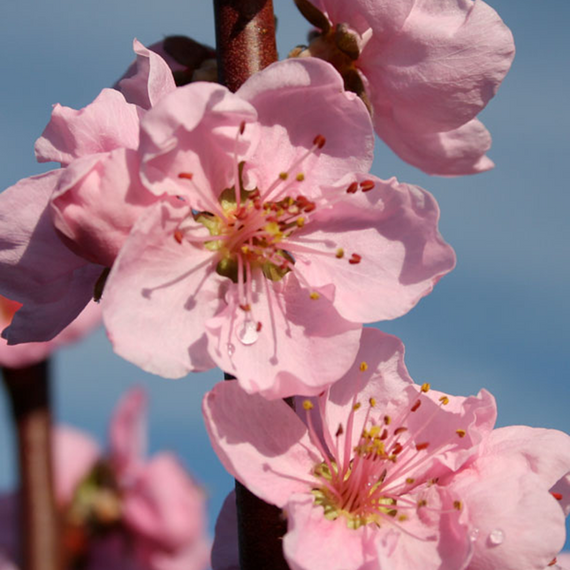
- Puts on a spectacular spring show with bold, bright pink blossoms that cover the branches before leafout, attracting bees and other pollinators to the garden.
- Adaptable and vigorous, thriving in USDA Zones 5-9 with a moderate chill requirement of 500-600 hours, making it an outstanding choice for home orchards across Southern Oregon and Northern California.
The Fantasia Nectarine (Prunus persica var. nucipersica 'Fantasia') is one of the most celebrated mid- to late-season nectarine varieties for the home orchard, prized equally for its ornamental beauty and its outstanding, market-quality fruit. Each season opens with a breathtaking canopy of vivid pink blossoms that emerge before the leaves in early spring, signaling the start of another fruitful year and drawing in valuable pollinators. By late July through mid-August, the tree rewards the patient gardener with an abundant crop of very large, oval, smooth-skinned nectarines displaying a stunning golden-yellow base overlaid with roughly 75% deep red blush. The freestone pit separates cleanly from the firm, juicy, golden-yellow flesh, making every fruit effortless to prep for fresh eating, baking, canning, preserving, or freezing. Flavor is a crowd-pleasing balance of sweet and tart when harvested at first color, transitioning to intensely sweet and richly aromatic when allowed extra hang time on the tree. A self-fertile, fast-growing deciduous tree that matures to 15-20 feet tall with a graceful spreading canopy, Fantasia thrives in full sun in well-drained soil across USDA Zones 5-9, needing only 500-600 chill hours to satisfy its winter dormancy requirement - a threshold easily met throughout the inland valleys and foothills of Southern Oregon and Northern California. Whether you are planting a single specimen or anchoring a full home orchard, the Fantasia Nectarine delivers season after season of show-stopping spring color and exceptional summer harvests.
Plant Description
Fantasia Nectarine is a vigorous, deciduous fruit tree belonging to the species Prunus persica var. nucipersica. It is a true nectarine - botanically identical to a peach but carrying a single recessive gene that produces its signature smooth, fuzz-free skin. The tree has an upright to broadly spreading growth habit with lance-shaped mid-green foliage. In early spring, before the leaves emerge, the bare branches become densely covered in bright, showy pink, five-petaled blossoms that are both ornamental and highly attractive to pollinators. The fruit that follows is among the largest-sized nectarines available to home gardeners, displaying a vibrant golden-yellow skin overlaid with approximately 75% brilliant red blush. The interior flesh is firm, juicy, and a rich golden-yellow color, surrounding a freestone pit that releases cleanly for easy slicing and preparation. Fantasia is self-fertile, meaning a single tree will produce fruit without the need for a second pollinator variety, though planting a compatible companion variety nearby can further improve yields. It is a fast-growing tree that bears fruit within 3-5 years of planting and reaches peak production shortly thereafter.
Mature Size
| Attribute | Detail |
|---|---|
| Mature Height | 15-20 feet |
| Mature Spread | 12-15 feet |
| Growth Rate | Fast |
| Tree Form | Upright to broadly spreading, deciduous |
| Recommended Spacing | 12-15 feet apart (standard); 8-12 feet for dwarfing rootstocks |
| Years to First Fruit | 3-5 years from planting |
Hardiness Zones and Chill Hours
Fantasia Nectarine is rated for USDA Hardiness Zones 5 through 9, covering a wide range of climates from the cold-winter northern states through the mild-winter regions of the Pacific Coast and the Southwest. It is an ideal nectarine selection for the Rogue Valley and Umpqua Valley of Southern Oregon and the Sacramento Valley and inland foothills of Northern California, where winters reliably deliver the chill hours this variety needs.
| Attribute | Detail |
|---|---|
| USDA Zones | 5, 6, 7, 8, 9 |
| Chill Hour Requirement | 500-600 hours (temperatures below 45°F) |
| Winter Dormancy Tolerance | Hardy to approximately -15°F (-26°C) when fully dormant |
| Frost Sensitivity | Open flowers are sensitive to temperatures below 28°F (-2°C); avoid low frost pockets |
Sunlight Requirements
Fantasia Nectarine demands full sun for maximum fruit quality, sweetness, and productivity. Select a planting site that receives a minimum of 6-8 hours of direct sunlight daily, with 8 or more hours being ideal. Insufficient sun leads to reduced fruit set, poor sugar development, lighter fruit coloring, and increased vulnerability to fungal diseases due to limited airflow and slow drying of the canopy. Avoid sites shaded by buildings, fences, or established trees, particularly on the south and west exposures. A south- or southwest-facing slope is ideal in cooler climates, as it maximizes heat accumulation and encourages earlier ripening. In very hot inland valleys where summer temperatures regularly exceed 95°F, the tree performs well and minor sunburn on exposed fruit is normal and does not affect overall tree health or productivity.
Soil and pH Preferences
Fantasia Nectarine grows best in well-drained, fertile, loamy to sandy loam soil. Good drainage is the single most important soil factor - standing water around the root zone, even briefly, can cause root rot and rapid decline. If your native soil is heavy clay or drains poorly, plant in a raised bed at least 10-12 inches tall and 5-6 feet in diameter, or amend generously with coarse sand and compost to improve porosity before planting.
- Preferred soil pH: 6.0-7.0 (slightly acidic to neutral)
- Soil type: Well-drained sandy loam or loamy soil; avoid heavy clay or waterlogged sites
- Recommended amendments at planting: Compost or aged manure to improve fertility and structure; perlite or coarse sand if drainage is a concern
- Mulch: Apply a 3-4 inch layer of organic mulch around the base of the tree (kept away from the trunk) to conserve moisture, moderate soil temperature, and suppress weeds
- Avoid: Excessively sandy or nutrient-poor soils without amendment, and soils with a history of Verticillium wilt or root-knot nematodes
Watering Guide
Consistent, deep watering is essential for healthy growth and quality fruit development in Fantasia Nectarine. The goal is to keep the root zone evenly moist but never waterlogged, especially during the active growing season from bud break through harvest.
- Water deeply once per week during the growing season, providing approximately 1-1.5 inches of water per week
- Increase watering frequency during hot, dry summer spells, particularly as fruit is sizing up and approaching ripeness - irregular moisture during this period can cause fruit splitting
- Use drip irrigation or soaker hoses to deliver water directly to the root zone and keep foliage and trunk dry, which significantly reduces the risk of fungal disease
- Water in the early morning to allow any surface moisture to evaporate during the day
- Reduce irrigation after harvest and during the fall to encourage the tree to harden off and enter dormancy naturally
- Avoid overhead watering, which promotes the spread of brown rot, peach leaf curl, and bacterial spot
- Monitor soil moisture during wet winters and reduce supplemental irrigation accordingly to prevent root saturation
Fertilizing
Fantasia Nectarine is a fast-growing, productive tree that benefits from regular fertilization to support vigorous shoot growth, healthy foliage, and abundant fruit production. Follow a consistent annual feeding schedule and avoid over-application of nitrogen, which leads to excessive soft vegetative growth, poor fruit color, reduced flavor, and increased pest and disease pressure.
- New trees: Apply a balanced 10-10-10 fertilizer approximately one week after planting, broadcast 8-12 inches away from the trunk base
- Established trees: Apply a balanced fertilizer (such as 10-10-10) in early March, again in May, and once more after harvest to replenish nutrients
- Alternatively, use a slow-release balanced granular fertilizer in early spring at label rates
- Keep all fertilizer at least 8-12 inches away from the trunk to avoid root burn and to encourage outward root development
- Watch for signs of zinc deficiency (small, undersized new leaves) - use a fertilizer containing micronutrients including zinc to maintain balanced nutrition
- Avoid heavy nitrogen applications after June, as this promotes disease susceptibility and can reduce fruit quality heading into harvest
Pruning and Maintenance
Annual pruning is one of the most important practices for keeping a Fantasia Nectarine healthy, productive, and structurally sound. Nectarines bear fruit primarily on one-year-old wood, so consistent annual pruning is necessary to continually renew fruiting wood and maintain an open, well-lit canopy. Train the tree to an open-center (vase) form with 3-4 main scaffold branches.
- Best time to prune: Late winter while the tree is still dormant but close to bud swell - this minimizes the risk of disease entry through pruning cuts
- At planting: Cut the newly planted whip back to approximately 30 inches to encourage strong lateral branching
- Year 1: Select 3-4 well-spaced scaffold branches pointing in different directions, angled approximately 45 degrees from the trunk, at least 3-4 inches apart vertically; remove all other growth
- Mature trees: Remove all damaged, dead, or diseased wood first; then remove branches growing toward the center of the canopy; cut back approximately 40-50% of the previous season's new growth; prune remaining new shoots back to 18-24 inches, cutting just above an outward-facing bud
- Fruit thinning: Thin developing fruit about one month after bloom when fruits are roughly walnut-sized; remove misshapen or smallest fruits and space remaining fruits 6-8 inches apart on each branch; thinning produces much larger, higher-quality nectarines and prevents limb breakage
- Post-harvest: Light cleanup pruning can be done after harvest to remove any spent or diseased wood before dormancy
Fruit Characteristics and Harvest
Fantasia is celebrated for producing some of the most visually striking and flavorful nectarines available to home gardeners. The fruit's combination of size, color, and versatile flavor profile makes it equally at home eaten fresh off the tree or transformed into preserves, baked goods, and frozen treats.
| Characteristic | Detail |
|---|---|
| Fruit Size | Very large, averaging 3 inches or more in diameter |
| Skin Color | Bright golden-yellow base with approximately 75% deep red blush overlay |
| Flesh Color | Firm, juicy golden-yellow |
| Pit Type | Freestone - pit separates cleanly from the flesh |
| Flavor Profile | Sweet-tart when harvested at first color; rich, full sweetness when allowed to fully ripen on the tree |
| Ripening Season | Mid- to late-season: late July through mid-August |
| Harvest Cue | Full color development, slight give at the stem end, and a rich fruity aroma |
| Culinary Uses | Fresh eating, fruit salads, baking, tarts, cobblers, canning, jam, jelly, freezing |
Harvest nectarines in the early morning when they are coolest. Fruit that has been picked firm will continue to ripen at room temperature over 1-3 days. For storage, refrigerate ripe fruit for up to 2 weeks; allow refrigerated fruit to return to room temperature before eating for peak flavor.
Planting Instructions
- Choose the right site: Select a location with full sun (8+ hours daily), excellent drainage, and protection from strong prevailing winds. A south- or southwest-facing exposure is ideal in cooler areas. Allow adequate space for the tree's mature spread of 12-15 feet.
- Timing: Plant in early spring while the tree is still dormant, or in early fall in mild-winter climates, to give roots time to establish before stress periods.
- Prepare the hole: Dig a hole at least twice as wide as the root ball and the same depth. Loosen the soil around the edges of the hole to encourage root spread. If drainage is poor, plant in a raised bed or mound.
- Position the tree: Place the tree in the hole so that the graft union (the slight knob near the base of the trunk) sits 2-3 inches above the final soil level. Never bury the graft union.
- Backfill: Fill the hole with the native soil, gently firming as you go to eliminate air pockets. Do not add large amounts of fertilizer or compost directly into the planting hole, which can burn young roots.
- Water in thoroughly: Water deeply immediately after planting to settle the soil around the roots.
- Mulch: Apply a 3-4 inch layer of organic mulch in a wide circle around the tree, keeping it pulled 4-6 inches away from the trunk to prevent rot and rodent damage.
- Initial pruning: Cut the newly planted tree back to approximately 30 inches to encourage branching and establish the open-center framework.
- Staking: Stake young trees in windy locations for the first year, using a soft tie that will not damage the bark, and remove the stake after roots are established.
Pests and Diseases
Like all stone fruit in the Prunus family, Fantasia Nectarine can be affected by several common pests and diseases. Good cultural practices - including proper pruning for airflow, drip irrigation, timely fruit removal, and dormant-season spray programs - are the most effective first line of defense.
- Peach Leaf Curl (Taphrina deformans): Causes thickened, puckered, and reddened leaves in spring. Prevent with a dormant copper fungicide spray applied in December and again in late January or February before buds swell. Once symptoms appear in spring, treatment is not effective for that season.
- Brown Rot (Monilinia fructicola): A serious fungal disease that can destroy ripening fruit rapidly in warm, humid conditions. Remove and destroy all mummified fruit and infected twigs. Thin fruit for airflow. Apply sulfur or copper-based fungicide at bloom and biweekly during warm, wet weather. Avoid overhead watering.
- Bacterial Spot / Shot Hole Fungus: Causes dark spots and holes in leaves and fruit skin. Apply copper fungicide after leaf drop in fall and at bud break in spring. Prune for airflow and avoid wetting foliage.
- Peachtree Borer (Synanthedon exitiosa): Larvae bore into the trunk and crown, causing gumming at the base of the tree. Apply neem oil or spinosad to the lower trunk every 1-2 weeks from May through September. Use pheromone traps to monitor adult populations.
- Aphids: Small soft-bodied insects that curl and yellow new growth. Attract beneficial insects, knock off with a strong stream of water, or treat with insecticidal soap or horticultural oil for heavy infestations.
- Oriental Fruit Moth (Grapholita molesta): Larvae tunnel into shoot tips and developing fruit. Use pheromone traps to time spray applications; apply spinosad at first sustained trap catches and repeat every 10-14 days during peak periods.
- Scale Insects: Appear on twigs and branches; produce sooty mold on foliage below. Control with dormant horticultural oil applied in late winter before bud break.
- Red Spider Mites: Cause stippled yellowing of leaves in hot, dry conditions. Horticultural oil or insecticidal soap is effective; maintain adequate irrigation to reduce plant stress.
Seasonal Interest
- Early Spring: Bare branches erupt in a stunning display of bright, vivid pink blossoms before any foliage emerges, making the tree a standout ornamental feature in the early-season garden. Blooms attract bees, butterflies, and other early pollinators.
- Late Spring: Lance-shaped, glossy mid-green foliage emerges as small developing fruit sets. The canopy fills in quickly, providing a lush, leafy backdrop in the landscape.
- Summer: Fruit swells and develops its brilliant red-over-gold coloring as harvest approaches in late July and August. The ripening nectarines add vibrant color to the canopy, and the sweet fruity fragrance is delightful near outdoor living spaces.
- Fall: Foliage transitions to golden-yellow tones before dropping, adding a secondary season of warm color to the yard before the tree enters its winter dormancy.
- Winter: The clean, architectural branch structure of the dormant tree provides year-round garden structure and interest even without foliage or fruit.
Landscape Uses
- Home orchard anchor: One of the most productive and reliable mid-season nectarines for a dedicated home fruit garden; pairs well with early- and late-season varieties to extend the harvest window.
- Edible landscape specimen: The spring floral display, attractive summer fruiting, and fall foliage color make Fantasia a true four-season ornamental that earns its place in a designed landscape - not just the back corner of a yard.
- Garden border or property edge: The upright-to-spreading form and moderate mature size make it well-suited as a garden boundary tree or informal espalier along a south-facing fence or wall, which also provides frost protection in cooler climates.
- Mixed fruit guild: Plant alongside other stone fruits, apples, and pears to create a productive edible garden that offers something to harvest from June through October.
- Pollinator garden integration: The abundant early-season blossoms provide a critical nectar source for honeybees and native bees emerging from winter dormancy.
- Container growing: When grafted onto a dwarfing rootstock, Fantasia can be grown in a large container (15-20 gallons minimum) on a sunny patio or deck, bringing the orchard experience to even smaller outdoor spaces.
Companion Plants
Thoughtful companion planting near Fantasia Nectarine can improve pollination, deter pests, attract beneficial insects, and enhance overall garden health.
- Borage: Attracts pollinators and beneficial predatory insects; reportedly deters some pest insects when planted near fruit trees
- Marigold: Repels nematodes and many pest insects; bright flowers attract beneficial predators
- Chives and Garlic: Alliums planted near the base of the tree can help deter aphids and other soft-bodied pests
- Comfrey: Deep tap roots mine minerals and bring them to the surface; cut-and-drop leaves make a nutrient-rich mulch under the tree
- Nasturtium: Acts as a trap crop for aphids and attracts beneficial hoverflies and wasps that prey on caterpillars and other pests
- Buckwheat: Fast-growing cover crop under and around the tree that attracts hoverflies and breaks up compacted soil
- Compatible pollinator varieties: While self-fertile, Fantasia benefits from proximity to other nectarines such as Hardired, Mericrest, or Independence, which can boost fruit set and overall yield
Avoid planting near: Fennel (allelopathic to many fruit trees), black walnut (produces juglone, which is toxic to many plants), and potatoes or tomatoes (shared disease susceptibility with Verticillium wilt).
Wildlife Value
- Pollinators: The profuse pink spring blossoms are a premier early-season nectar and pollen source for honeybees, native bumblebees, mason bees, and other emerging pollinators at a time when few other flowers are available.
- Butterflies and beneficial insects: The flowers attract a variety of butterfly species and beneficial predatory insects, including hoverflies and parasitic wasps that help control garden pest populations throughout the season.
- Birds: Ripe and fallen fruit attracts a variety of birds, including robins, cedar waxwings, and thrushes, which can be an enjoyable bonus or managed with netting if fruit protection is desired.
- Small mammals: Fallen ripe fruit may attract squirrels, raccoons, and deer in some areas; manage with tree guards or harvest promptly when fruit reaches peak ripeness.
- Exceptionally large freestone nectarines with brilliant red-blushed skin over a golden-yellow base and rich, sweet-tart golden flesh that only deepens in flavor when left to fully ripen on the tree.
- Self-fertile and highly productive, ripening mid- to late-season (late July through mid-August) for an extended fresh-eating window of summer stone fruit.
- Puts on a spectacular spring show with bold, bright pink blossoms that cover the branches before leafout, attracting bees and other pollinators to the garden.
- Adaptable and vigorous, thriving in USDA Zones 5-9 with a moderate chill requirement of 500-600 hours, making it an outstanding choice for home orchards across Southern Oregon and Northern California.
The Fantasia Nectarine (Prunus persica var. nucipersica 'Fantasia') is one of the most celebrated mid- to late-season nectarine varieties for the home orchard, prized equally for its ornamental beauty and its outstanding, market-quality fruit. Each season opens with a breathtaking canopy of vivid pink blossoms that emerge before the leaves in early spring, signaling the start of another fruitful year and drawing in valuable pollinators. By late July through mid-August, the tree rewards the patient gardener with an abundant crop of very large, oval, smooth-skinned nectarines displaying a stunning golden-yellow base overlaid with roughly 75% deep red blush. The freestone pit separates cleanly from the firm, juicy, golden-yellow flesh, making every fruit effortless to prep for fresh eating, baking, canning, preserving, or freezing. Flavor is a crowd-pleasing balance of sweet and tart when harvested at first color, transitioning to intensely sweet and richly aromatic when allowed extra hang time on the tree. A self-fertile, fast-growing deciduous tree that matures to 15-20 feet tall with a graceful spreading canopy, Fantasia thrives in full sun in well-drained soil across USDA Zones 5-9, needing only 500-600 chill hours to satisfy its winter dormancy requirement - a threshold easily met throughout the inland valleys and foothills of Southern Oregon and Northern California. Whether you are planting a single specimen or anchoring a full home orchard, the Fantasia Nectarine delivers season after season of show-stopping spring color and exceptional summer harvests.
Plant Description
Fantasia Nectarine is a vigorous, deciduous fruit tree belonging to the species Prunus persica var. nucipersica. It is a true nectarine - botanically identical to a peach but carrying a single recessive gene that produces its signature smooth, fuzz-free skin. The tree has an upright to broadly spreading growth habit with lance-shaped mid-green foliage. In early spring, before the leaves emerge, the bare branches become densely covered in bright, showy pink, five-petaled blossoms that are both ornamental and highly attractive to pollinators. The fruit that follows is among the largest-sized nectarines available to home gardeners, displaying a vibrant golden-yellow skin overlaid with approximately 75% brilliant red blush. The interior flesh is firm, juicy, and a rich golden-yellow color, surrounding a freestone pit that releases cleanly for easy slicing and preparation. Fantasia is self-fertile, meaning a single tree will produce fruit without the need for a second pollinator variety, though planting a compatible companion variety nearby can further improve yields. It is a fast-growing tree that bears fruit within 3-5 years of planting and reaches peak production shortly thereafter.
Mature Size
| Attribute | Detail |
|---|---|
| Mature Height | 15-20 feet |
| Mature Spread | 12-15 feet |
| Growth Rate | Fast |
| Tree Form | Upright to broadly spreading, deciduous |
| Recommended Spacing | 12-15 feet apart (standard); 8-12 feet for dwarfing rootstocks |
| Years to First Fruit | 3-5 years from planting |
Hardiness Zones and Chill Hours
Fantasia Nectarine is rated for USDA Hardiness Zones 5 through 9, covering a wide range of climates from the cold-winter northern states through the mild-winter regions of the Pacific Coast and the Southwest. It is an ideal nectarine selection for the Rogue Valley and Umpqua Valley of Southern Oregon and the Sacramento Valley and inland foothills of Northern California, where winters reliably deliver the chill hours this variety needs.
| Attribute | Detail |
|---|---|
| USDA Zones | 5, 6, 7, 8, 9 |
| Chill Hour Requirement | 500-600 hours (temperatures below 45°F) |
| Winter Dormancy Tolerance | Hardy to approximately -15°F (-26°C) when fully dormant |
| Frost Sensitivity | Open flowers are sensitive to temperatures below 28°F (-2°C); avoid low frost pockets |
Sunlight Requirements
Fantasia Nectarine demands full sun for maximum fruit quality, sweetness, and productivity. Select a planting site that receives a minimum of 6-8 hours of direct sunlight daily, with 8 or more hours being ideal. Insufficient sun leads to reduced fruit set, poor sugar development, lighter fruit coloring, and increased vulnerability to fungal diseases due to limited airflow and slow drying of the canopy. Avoid sites shaded by buildings, fences, or established trees, particularly on the south and west exposures. A south- or southwest-facing slope is ideal in cooler climates, as it maximizes heat accumulation and encourages earlier ripening. In very hot inland valleys where summer temperatures regularly exceed 95°F, the tree performs well and minor sunburn on exposed fruit is normal and does not affect overall tree health or productivity.
Soil and pH Preferences
Fantasia Nectarine grows best in well-drained, fertile, loamy to sandy loam soil. Good drainage is the single most important soil factor - standing water around the root zone, even briefly, can cause root rot and rapid decline. If your native soil is heavy clay or drains poorly, plant in a raised bed at least 10-12 inches tall and 5-6 feet in diameter, or amend generously with coarse sand and compost to improve porosity before planting.
- Preferred soil pH: 6.0-7.0 (slightly acidic to neutral)
- Soil type: Well-drained sandy loam or loamy soil; avoid heavy clay or waterlogged sites
- Recommended amendments at planting: Compost or aged manure to improve fertility and structure; perlite or coarse sand if drainage is a concern
- Mulch: Apply a 3-4 inch layer of organic mulch around the base of the tree (kept away from the trunk) to conserve moisture, moderate soil temperature, and suppress weeds
- Avoid: Excessively sandy or nutrient-poor soils without amendment, and soils with a history of Verticillium wilt or root-knot nematodes
Watering Guide
Consistent, deep watering is essential for healthy growth and quality fruit development in Fantasia Nectarine. The goal is to keep the root zone evenly moist but never waterlogged, especially during the active growing season from bud break through harvest.
- Water deeply once per week during the growing season, providing approximately 1-1.5 inches of water per week
- Increase watering frequency during hot, dry summer spells, particularly as fruit is sizing up and approaching ripeness - irregular moisture during this period can cause fruit splitting
- Use drip irrigation or soaker hoses to deliver water directly to the root zone and keep foliage and trunk dry, which significantly reduces the risk of fungal disease
- Water in the early morning to allow any surface moisture to evaporate during the day
- Reduce irrigation after harvest and during the fall to encourage the tree to harden off and enter dormancy naturally
- Avoid overhead watering, which promotes the spread of brown rot, peach leaf curl, and bacterial spot
- Monitor soil moisture during wet winters and reduce supplemental irrigation accordingly to prevent root saturation
Fertilizing
Fantasia Nectarine is a fast-growing, productive tree that benefits from regular fertilization to support vigorous shoot growth, healthy foliage, and abundant fruit production. Follow a consistent annual feeding schedule and avoid over-application of nitrogen, which leads to excessive soft vegetative growth, poor fruit color, reduced flavor, and increased pest and disease pressure.
- New trees: Apply a balanced 10-10-10 fertilizer approximately one week after planting, broadcast 8-12 inches away from the trunk base
- Established trees: Apply a balanced fertilizer (such as 10-10-10) in early March, again in May, and once more after harvest to replenish nutrients
- Alternatively, use a slow-release balanced granular fertilizer in early spring at label rates
- Keep all fertilizer at least 8-12 inches away from the trunk to avoid root burn and to encourage outward root development
- Watch for signs of zinc deficiency (small, undersized new leaves) - use a fertilizer containing micronutrients including zinc to maintain balanced nutrition
- Avoid heavy nitrogen applications after June, as this promotes disease susceptibility and can reduce fruit quality heading into harvest
Pruning and Maintenance
Annual pruning is one of the most important practices for keeping a Fantasia Nectarine healthy, productive, and structurally sound. Nectarines bear fruit primarily on one-year-old wood, so consistent annual pruning is necessary to continually renew fruiting wood and maintain an open, well-lit canopy. Train the tree to an open-center (vase) form with 3-4 main scaffold branches.
- Best time to prune: Late winter while the tree is still dormant but close to bud swell - this minimizes the risk of disease entry through pruning cuts
- At planting: Cut the newly planted whip back to approximately 30 inches to encourage strong lateral branching
- Year 1: Select 3-4 well-spaced scaffold branches pointing in different directions, angled approximately 45 degrees from the trunk, at least 3-4 inches apart vertically; remove all other growth
- Mature trees: Remove all damaged, dead, or diseased wood first; then remove branches growing toward the center of the canopy; cut back approximately 40-50% of the previous season's new growth; prune remaining new shoots back to 18-24 inches, cutting just above an outward-facing bud
- Fruit thinning: Thin developing fruit about one month after bloom when fruits are roughly walnut-sized; remove misshapen or smallest fruits and space remaining fruits 6-8 inches apart on each branch; thinning produces much larger, higher-quality nectarines and prevents limb breakage
- Post-harvest: Light cleanup pruning can be done after harvest to remove any spent or diseased wood before dormancy
Fruit Characteristics and Harvest
Fantasia is celebrated for producing some of the most visually striking and flavorful nectarines available to home gardeners. The fruit's combination of size, color, and versatile flavor profile makes it equally at home eaten fresh off the tree or transformed into preserves, baked goods, and frozen treats.
| Characteristic | Detail |
|---|---|
| Fruit Size | Very large, averaging 3 inches or more in diameter |
| Skin Color | Bright golden-yellow base with approximately 75% deep red blush overlay |
| Flesh Color | Firm, juicy golden-yellow |
| Pit Type | Freestone - pit separates cleanly from the flesh |
| Flavor Profile | Sweet-tart when harvested at first color; rich, full sweetness when allowed to fully ripen on the tree |
| Ripening Season | Mid- to late-season: late July through mid-August |
| Harvest Cue | Full color development, slight give at the stem end, and a rich fruity aroma |
| Culinary Uses | Fresh eating, fruit salads, baking, tarts, cobblers, canning, jam, jelly, freezing |
Harvest nectarines in the early morning when they are coolest. Fruit that has been picked firm will continue to ripen at room temperature over 1-3 days. For storage, refrigerate ripe fruit for up to 2 weeks; allow refrigerated fruit to return to room temperature before eating for peak flavor.
Planting Instructions
- Choose the right site: Select a location with full sun (8+ hours daily), excellent drainage, and protection from strong prevailing winds. A south- or southwest-facing exposure is ideal in cooler areas. Allow adequate space for the tree's mature spread of 12-15 feet.
- Timing: Plant in early spring while the tree is still dormant, or in early fall in mild-winter climates, to give roots time to establish before stress periods.
- Prepare the hole: Dig a hole at least twice as wide as the root ball and the same depth. Loosen the soil around the edges of the hole to encourage root spread. If drainage is poor, plant in a raised bed or mound.
- Position the tree: Place the tree in the hole so that the graft union (the slight knob near the base of the trunk) sits 2-3 inches above the final soil level. Never bury the graft union.
- Backfill: Fill the hole with the native soil, gently firming as you go to eliminate air pockets. Do not add large amounts of fertilizer or compost directly into the planting hole, which can burn young roots.
- Water in thoroughly: Water deeply immediately after planting to settle the soil around the roots.
- Mulch: Apply a 3-4 inch layer of organic mulch in a wide circle around the tree, keeping it pulled 4-6 inches away from the trunk to prevent rot and rodent damage.
- Initial pruning: Cut the newly planted tree back to approximately 30 inches to encourage branching and establish the open-center framework.
- Staking: Stake young trees in windy locations for the first year, using a soft tie that will not damage the bark, and remove the stake after roots are established.
Pests and Diseases
Like all stone fruit in the Prunus family, Fantasia Nectarine can be affected by several common pests and diseases. Good cultural practices - including proper pruning for airflow, drip irrigation, timely fruit removal, and dormant-season spray programs - are the most effective first line of defense.
- Peach Leaf Curl (Taphrina deformans): Causes thickened, puckered, and reddened leaves in spring. Prevent with a dormant copper fungicide spray applied in December and again in late January or February before buds swell. Once symptoms appear in spring, treatment is not effective for that season.
- Brown Rot (Monilinia fructicola): A serious fungal disease that can destroy ripening fruit rapidly in warm, humid conditions. Remove and destroy all mummified fruit and infected twigs. Thin fruit for airflow. Apply sulfur or copper-based fungicide at bloom and biweekly during warm, wet weather. Avoid overhead watering.
- Bacterial Spot / Shot Hole Fungus: Causes dark spots and holes in leaves and fruit skin. Apply copper fungicide after leaf drop in fall and at bud break in spring. Prune for airflow and avoid wetting foliage.
- Peachtree Borer (Synanthedon exitiosa): Larvae bore into the trunk and crown, causing gumming at the base of the tree. Apply neem oil or spinosad to the lower trunk every 1-2 weeks from May through September. Use pheromone traps to monitor adult populations.
- Aphids: Small soft-bodied insects that curl and yellow new growth. Attract beneficial insects, knock off with a strong stream of water, or treat with insecticidal soap or horticultural oil for heavy infestations.
- Oriental Fruit Moth (Grapholita molesta): Larvae tunnel into shoot tips and developing fruit. Use pheromone traps to time spray applications; apply spinosad at first sustained trap catches and repeat every 10-14 days during peak periods.
- Scale Insects: Appear on twigs and branches; produce sooty mold on foliage below. Control with dormant horticultural oil applied in late winter before bud break.
- Red Spider Mites: Cause stippled yellowing of leaves in hot, dry conditions. Horticultural oil or insecticidal soap is effective; maintain adequate irrigation to reduce plant stress.
Seasonal Interest
- Early Spring: Bare branches erupt in a stunning display of bright, vivid pink blossoms before any foliage emerges, making the tree a standout ornamental feature in the early-season garden. Blooms attract bees, butterflies, and other early pollinators.
- Late Spring: Lance-shaped, glossy mid-green foliage emerges as small developing fruit sets. The canopy fills in quickly, providing a lush, leafy backdrop in the landscape.
- Summer: Fruit swells and develops its brilliant red-over-gold coloring as harvest approaches in late July and August. The ripening nectarines add vibrant color to the canopy, and the sweet fruity fragrance is delightful near outdoor living spaces.
- Fall: Foliage transitions to golden-yellow tones before dropping, adding a secondary season of warm color to the yard before the tree enters its winter dormancy.
- Winter: The clean, architectural branch structure of the dormant tree provides year-round garden structure and interest even without foliage or fruit.
Landscape Uses
- Home orchard anchor: One of the most productive and reliable mid-season nectarines for a dedicated home fruit garden; pairs well with early- and late-season varieties to extend the harvest window.
- Edible landscape specimen: The spring floral display, attractive summer fruiting, and fall foliage color make Fantasia a true four-season ornamental that earns its place in a designed landscape - not just the back corner of a yard.
- Garden border or property edge: The upright-to-spreading form and moderate mature size make it well-suited as a garden boundary tree or informal espalier along a south-facing fence or wall, which also provides frost protection in cooler climates.
- Mixed fruit guild: Plant alongside other stone fruits, apples, and pears to create a productive edible garden that offers something to harvest from June through October.
- Pollinator garden integration: The abundant early-season blossoms provide a critical nectar source for honeybees and native bees emerging from winter dormancy.
- Container growing: When grafted onto a dwarfing rootstock, Fantasia can be grown in a large container (15-20 gallons minimum) on a sunny patio or deck, bringing the orchard experience to even smaller outdoor spaces.
Companion Plants
Thoughtful companion planting near Fantasia Nectarine can improve pollination, deter pests, attract beneficial insects, and enhance overall garden health.
- Borage: Attracts pollinators and beneficial predatory insects; reportedly deters some pest insects when planted near fruit trees
- Marigold: Repels nematodes and many pest insects; bright flowers attract beneficial predators
- Chives and Garlic: Alliums planted near the base of the tree can help deter aphids and other soft-bodied pests
- Comfrey: Deep tap roots mine minerals and bring them to the surface; cut-and-drop leaves make a nutrient-rich mulch under the tree
- Nasturtium: Acts as a trap crop for aphids and attracts beneficial hoverflies and wasps that prey on caterpillars and other pests
- Buckwheat: Fast-growing cover crop under and around the tree that attracts hoverflies and breaks up compacted soil
- Compatible pollinator varieties: While self-fertile, Fantasia benefits from proximity to other nectarines such as Hardired, Mericrest, or Independence, which can boost fruit set and overall yield
Avoid planting near: Fennel (allelopathic to many fruit trees), black walnut (produces juglone, which is toxic to many plants), and potatoes or tomatoes (shared disease susceptibility with Verticillium wilt).
Wildlife Value
- Pollinators: The profuse pink spring blossoms are a premier early-season nectar and pollen source for honeybees, native bumblebees, mason bees, and other emerging pollinators at a time when few other flowers are available.
- Butterflies and beneficial insects: The flowers attract a variety of butterfly species and beneficial predatory insects, including hoverflies and parasitic wasps that help control garden pest populations throughout the season.
- Birds: Ripe and fallen fruit attracts a variety of birds, including robins, cedar waxwings, and thrushes, which can be an enjoyable bonus or managed with netting if fruit protection is desired.
- Small mammals: Fallen ripe fruit may attract squirrels, raccoons, and deer in some areas; manage with tree guards or harvest promptly when fruit reaches peak ripeness.
Related Products