
Zoom the image with the mouse
Little Joker Ninebark
SKU:
2099665-P
UPC:
014949452592
$19.99 - $29.99
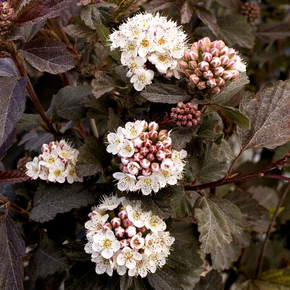
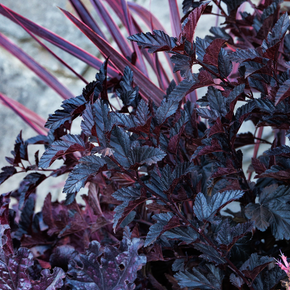
- Striking dark burgundy-purple foliage with deeply incised lobes deepens even further as fall approaches, delivering season-long color that electrifies borders, hedgerows, and foundation plantings.
- Compact dwarf habit tops out at just 3-4 feet tall and wide, making it ideal for small urban gardens, low hedges, mass plantings, and tight foundation spaces where full-sized ninebarks would overwhelm.
- Coral-pink buds burst into abundant clusters of soft pink-flushed white flowers from late spring into midsummer, attracting butterflies, bees, hummingbirds, and other beneficial pollinators.
- Exceptionally tough and low-maintenance — cold-hardy to -40°F, drought-tolerant once established, mildew-resistant, and adaptable to a wide range of soil types including clay and rocky ground.
Little Joker Ninebark (Physocarpus opulifolius 'Hoogi021' PP #27,986) is a dwarf, full-branching deciduous shrub that delivers outstanding four-season ornamental appeal in a remarkably compact and easy-care package. A native North American species selection, it forms a tidy, rounded mound clothed in dense, deeply incised dark burgundy-purple foliage with rich green undertones — a refined texture that sets it apart from coarser landscape shrubs. From late spring through midsummer, coral-pink buds unfurl into clustered, spirea-like blossoms of white tinged with soft pink, creating a luminous contrast against the dark leaves and drawing in butterflies, hummingbirds, and a wide range of beneficial pollinators. As summer gives way to fall, the foliage deepens to an even richer purple before dropping to reveal exfoliating, papery bark in warm cinnamon and dark burgundy tones — a captivating winter silhouette that earned this plant the common name "ninebark." Bright red seed capsules follow the flowers and persist into autumn, providing an additional ornamental accent and a feast for songbirds. Remarkably adaptable, Little Joker Ninebark thrives in clay, loam, sandy, or silty soils, tolerates both moist and dry conditions once established, and performs beautifully in full sun to mostly sunny exposures. With outstanding resistance to powdery mildew, deer, drought, insects, erosion, and urban pollution, it is a superb low-maintenance choice for accent plantings, natural low hedges, pollinator gardens, cottage gardens, white or purple-themed borders, and xeriscape landscapes across USDA Zones 3-7.
Plant Description
Little Joker Ninebark is a dwarf cultivar of Eastern Ninebark, a species native to North America and a member of the rose family (Rosaceae). It grows as a dense, multi-stemmed deciduous shrub with a naturally rounded, mounded form. Its most immediately striking feature is its foliage: small, deeply incised, three-to-five-lobed leaves in an intense dark burgundy-purple hue with rich green undertones. The fine leaf texture gives the plant a refined, lacy appearance compared to other landscape shrubs. In late spring and early summer, the branch tips are covered in rounded clusters of small, spirea-like flowers opening from coral-pink buds to blossoms of white with soft pink overtones. These are followed by clusters of bright red seed capsules that persist well into fall. As the season cools, the foliage deepens to a dramatically dark purple before the leaves drop. In winter, the plant reveals its namesake feature: exfoliating, papery bark that peels away in strips to reveal rich cinnamon-brown and burgundy inner layers, creating striking multi-season interest. Dark burgundy stems add further winter color. This cultivar was selected for its distinctly compact size, superior foliage color, and notably improved resistance to powdery mildew compared to older ninebark selections.
Mature Size and Growth Rate
| Characteristic | Detail |
|---|---|
| Mature Height | 3 to 4 feet |
| Mature Spread | 3 to 4 feet |
| Growth Habit | Upright, rounded mound; dense and multi-stemmed |
| Growth Rate | Moderate |
| Expected Lifespan | Approximately 30 years under ideal conditions |
Little Joker is considered a true dwarf ninebark, staying well within a 3-4 foot range both in height and width without frequent heavy pruning. Its moderate growth rate means it fills in attractively over a few seasons without quickly outgrowing its allotted space. This compact habit makes it one of the most versatile ninebark cultivars available for smaller residential gardens and tighter landscape applications.
Hardiness Zones and Climate Tolerance
Little Joker Ninebark is rated for USDA Plant Hardiness Zones 3 through 7, with some sources noting potential for success into Zone 8 with afternoon shade protection in hotter climates. It is exceptionally cold-hardy, tolerating winter temperatures as low as -40°F, making it suitable for a very wide swath of North America. It handles the frigid winters of the upper Midwest and mountain West, as well as the milder conditions found throughout the Pacific Northwest and mid-Atlantic regions. In warmer zones at the edge of its range, situating the plant where it receives morning sun and some afternoon relief from intense heat will promote the best foliage color and overall plant vigor. It is also tolerant of urban heat, pollution, and a broad range of environmental stressors.
Sunlight Requirements
For the most vibrant and deeply saturated burgundy-purple foliage color, plant Little Joker Ninebark in full sun, providing a minimum of six hours of direct sunlight per day. It can tolerate partial shade (four to six hours of sun), but foliage color will be less intense in lower light conditions, trending toward a more muted purplish-green. In the hottest inland gardens at the warm edge of its hardiness range, some light afternoon shade can prevent leaf scorch while still supporting healthy growth and excellent color. Avoid dense, full shade, which significantly diminishes both foliage color intensity and flower production.
Soil and pH Preferences
One of Little Joker Ninebark's greatest virtues is its adaptability to a wide variety of soil conditions. It performs well in clay, loam, sandy, and silty soils, and is not particular about soil pH, tolerating a range from slightly acidic to moderately alkaline (approximately 6.0 to 7.5). It is also tolerant of rocky soils and urban soils compacted by foot traffic or construction. For best results, the soil should be well-drained; while the plant tolerates moist conditions, it does not appreciate standing water or chronically waterlogged roots. Amending planting holes with compost improves drainage in clay soils and water retention in sandy soils, giving the plant the best possible start. Good soil drainage is especially important for preventing root rot.
Watering Guide
During the first growing season after planting, water Little Joker Ninebark regularly to help it establish a deep, extensive root system. Aim to keep the soil consistently moist but never waterlogged, allowing the top inch or two of soil to dry slightly between waterings. Once established — typically after its first full growing season — this shrub becomes notably drought-tolerant and requires only supplemental watering during extended dry spells or periods of intense summer heat. Avoid overhead irrigation when possible, as wet foliage can encourage fungal issues; instead, water at the base of the plant. A 2-3 inch layer of mulch around the root zone (kept a few inches away from the main stems) helps conserve soil moisture, moderate soil temperature, and reduce weed competition.
Fertilizing
Little Joker Ninebark is not a heavy feeder and performs well in average garden soils without intensive fertilization. For the most vigorous growth and prolific flowering, apply a balanced granular shrub fertilizer (such as a 10-10-10 or similar formulation) once in early spring as new growth begins to emerge. Organic alternatives such as compost worked into the soil at planting time, or an annual top-dressing of aged compost, provide a gentle, slow-release nutrient supply that supports healthy foliage and flowering. A second, lighter application of fertilizer in late June to early July can be beneficial if the plant shows signs of reduced vigor or pale foliage, but avoid fertilizing after late summer as this may stimulate tender new growth vulnerable to early frost damage. Incorporating a 2-3 inch layer of organic mulch around the base of the plant also gradually enriches the soil as it breaks down over time.
Pruning and Maintenance
Little Joker Ninebark is a low-maintenance shrub that requires minimal pruning to look its best. Its naturally compact, rounded form means it rarely needs shaping to stay tidy. Follow these guidelines for best results:
- Deadheading and post-bloom shaping: Light shaping after the flowers fade in early to midsummer is the best time for any corrective pruning, as the shrub blooms on old wood. This timing preserves the flower buds for the following season.
- Early spring cleanup: Before new growth begins in spring, remove any dead, damaged, or crossing branches. This is also the best time to assess the plant's overall structure and make any size-reducing cuts if necessary.
- Never remove more than one-third: Avoid cutting back more than one-third of the shrub's total height or volume in any single season to prevent shock and dieback.
- Rejuvenation pruning: On older or overgrown plants, remove one-third of the oldest stems at ground level each year over three consecutive years to gradually renew the plant with vigorous new growth.
- Tool hygiene: Always use clean, sharp pruning shears or loppers and disinfect blades between cuts when removing diseased wood to avoid spreading pathogens.
- Avoid late fall/winter pruning: Heavy pruning in late fall or winter can stimulate new growth that may be damaged by cold temperatures.
Planting Instructions
- Choose the right site: Select a location with full to mostly sunny exposure and well-draining soil. Ensure adequate air circulation around the planting area to minimize fungal disease risk.
- Timing: Plant in early spring or fall when temperatures are moderate. Avoid planting during the hottest part of summer if possible.
- Dig the planting hole: Dig a hole two to three times as wide as the root ball and equal to its depth. Avoid planting too deep — the top of the root ball should sit level with or very slightly above the surrounding soil grade.
- Amend the backfill: Mix compost or aged organic matter into the backfill soil at a ratio of about 1:3 (one part compost to three parts native soil) to improve drainage and nutrient availability, especially in clay or sandy soils.
- Loosen the roots: Gently tease apart any circling or densely packed roots before placing the plant in the hole to encourage outward root growth.
- Backfill and firm: Fill the hole halfway, water thoroughly to settle the soil, then fill the remainder and firm gently without compacting.
- Mulch: Apply a 2-3 inch layer of organic mulch around the planting area, keeping mulch a few inches away from the main stems to prevent rot.
- Spacing: For solid hedges or mass plantings, space plants approximately 3 feet on center. For individual specimens or mixed shrub borders, allow 6 feet or more between plants.
- Water in well: Water deeply immediately after planting and maintain consistent moisture throughout the first growing season until established.
Seasonal Interest
| Season | Ornamental Features |
|---|---|
| Spring | Fresh burgundy-purple foliage emerges with a rich, deep color; coral-pink flower buds begin to form at branch tips by late spring |
| Early to Midsummer | Peak flowering — abundant clusters of soft pink-flushed white blossoms open along the branch tips, providing a stunning contrast against the dark foliage; pollinators are highly active |
| Late Summer to Fall | Foliage deepens to a more saturated, dramatic dark purple; clusters of bright red seed capsules ripen and attract songbirds |
| Winter | Exfoliating papery bark peels to reveal rich cinnamon-brown and burgundy inner layers; dark red stems add color and structure to the winter garden |
Landscape Uses
Little Joker Ninebark is an extremely versatile landscape shrub suited to a wide range of garden styles and settings. Its compact size, bold foliage color, and multi-season interest make it one of the most hardworking small shrubs available. Recommended uses include:
- Specimen or accent plant: Use as a focal point in small gardens or mixed borders where its dramatic foliage color draws the eye.
- Low hedge or edging: Plant 3 feet apart for a dense, low-maintenance flowering hedge along walkways, driveways, or property borders.
- Mass planting: Repeated groupings create bold sweeps of color in larger landscape beds and commercial settings.
- Foundation planting: Its compact size makes it ideal for planting near home foundations without risk of overgrowing windows or architectural features.
- Mixed shrub borders: Pairs beautifully with plants that have silver, gold, or chartreuse foliage, creating striking color contrast combinations.
- Pollinator and wildlife gardens: An excellent addition to butterfly gardens, native plant collections, and wildlife-friendly landscapes.
- Cottage and informal gardens: Its relaxed, rounded form and soft floral display suit cottage-style plantings perfectly.
- Xeriscape and low-water gardens: Once established, its drought tolerance makes it suitable for water-wise landscape designs.
- Erosion control: Its fibrous root system and tolerance of varied soils make it useful on slopes and banks.
Companion Plants
Little Joker Ninebark's deep burgundy-purple foliage creates some of the most dramatic contrasts when paired with plants in lighter or contrasting hues. Consider these companion planting combinations:
- Gold and chartreuse foliage: Plants like 'Gold Mound' Spirea, 'Ogon' Spirea, or Golden Creeping Jenny create a vivid dark-on-light foliage contrast.
- Silver and gray foliage: Russian Sage (Perovskia), Lamb's Ear (Stachys), or 'Silver Mound' Artemisia highlight the purple tones of the ninebark beautifully.
- White-flowering perennials and shrubs: White-blooming Shasta Daisies, Iceberg Roses, or white Hydrangeas echo the plant's own soft white flower clusters.
- Purple-themed companions: Catmint (Nepeta), Salvia nemorosa varieties, and Alliums reinforce a cool-toned purple planting scheme.
- Native plant pairings: Pair with other native shrubs such as Serviceberry (Amelanchier), native Viburnums, or Spicebush (Lindera benzoin) for a wildlife-focused planting.
- Ornamental grasses: Blue Oat Grass (Helictotrichon) or Karl Foerster Feather Reed Grass provide fine-textured contrast that complements the ninebark's bold leaf shape.
Wildlife Value
Little Joker Ninebark is a superb plant for supporting local wildlife and biodiversity in the garden. As a North American native species selection, it has evolved alongside local wildlife and provides significant ecological benefits:
- Pollinators: The late spring and summer flowers are highly attractive to butterflies, native bees, honeybees, and a wide variety of other beneficial insect pollinators.
- Hummingbirds: Hummingbirds are regularly observed visiting the flower clusters for nectar.
- Songbirds: The clusters of red seed capsules that form after flowering provide a food source for numerous songbird species in late summer and fall.
- Nesting habitat: The dense, branching structure offers cover and potential nesting sites for small birds.
- Beneficial insects: The diverse floral display supports predatory insects like lacewings and parasitic wasps that naturally control garden pest populations.
- Deer resistance: While no plant is completely deer-proof, Little Joker Ninebark has demonstrated good resistance to deer browsing, making it a more reliable choice in areas with heavy deer pressure.
Pests and Diseases
Little Joker Ninebark is notably tough and disease-resistant, particularly notable for its improved resistance to powdery mildew compared to older ninebark cultivars. However, like all plants, it may occasionally encounter the following issues:
- Powdery mildew: While this cultivar is mildew-resistant, powdery mildew can still appear in poorly ventilated, humid conditions. Maintain good air circulation around the plant and avoid overhead watering. Treat with neem oil or potassium bicarbonate if needed.
- Leaf spot: Brown to black lesions with yellow halos may develop during wet seasons. Remove and dispose of affected leaves, water at the base of the plant in the morning, and apply a labeled fungicide if needed.
- Anthracnose: Dark lesions on leaves and stems may occur during cool, wet weather. Regular pruning to improve airflow and mulching to prevent soil splash reduces risk. Fungicides can be applied preventively during prolonged wet periods.
- Root rot: Caused by overwatering or poorly drained soils. Ensure the planting site has good drainage and allow soil to partially dry between waterings. Amend heavy clay soils before planting.
- Aphids: Occasionally cluster on tender new growth. Dislodge with a strong stream of water or treat with insecticidal soap. Natural predators such as ladybugs are very effective at controlling small populations.
- Spider mites: More likely during hot, dry conditions. Look for fine webbing and stippled leaf surfaces. Treat with insecticidal soap or neem oil and improve air circulation.
- Japanese beetles: May skeletonize foliage during mid-summer. Handpick small populations or use targeted organic treatments; avoid broad-spectrum insecticides that harm pollinators.
Overall, Little Joker Ninebark is considered a low-pest, low-disease shrub when sited correctly with good drainage, adequate sunlight, and proper air circulation.
Container Growing
Little Joker Ninebark's compact size makes it one of the most practical ninebark cultivars for container culture, allowing gardeners with limited ground space to enjoy its outstanding foliage and flowering display on patios, decks, or entryways.
- Container size: Choose a pot at least 18-24 inches in diameter with multiple drainage holes. A larger container helps moderate soil temperature and reduces the frequency of watering.
- Potting mix: Use a high-quality, well-draining potting mix containing peat moss or coir, perlite, and compost. Avoid using heavy native garden soil, which compacts in containers and inhibits drainage.
- Watering: Containers dry out much faster than garden beds. Check soil moisture regularly and water when the top inch of potting mix feels dry. Ensure excess water drains freely from the bottom of the pot after each watering.
- Fertilizing: Container-grown plants benefit from more regular feeding than those in the ground. Apply a balanced, slow-release granular fertilizer in early spring and supplement with a diluted liquid fertilizer monthly through the growing season.
- Winter care: In Zones 6 and colder, the roots of containerized plants are more exposed to freezing than those planted in the ground. Move containers against a sheltered wall, wrap pots with burlap or bubble wrap, or overwinter the plant in an unheated garage or shed to protect roots from freeze-thaw damage.
- Repotting: Repot every 2-3 years or when roots begin to emerge from drainage holes and growth stalls. Move up to the next container size and refresh the potting mix.
Bark and Winter Interest
The common name "ninebark" refers to one of this plant's most distinctive and celebrated features — its exfoliating bark. On mature stems, the outer bark peels and curls away in papery strips and layers, revealing rich cinnamon-brown and burgundy inner bark beneath. This creates the visual impression of multiple distinct layers of bark on a single branch, which inspired the plant's evocative name. This bark characteristic is especially ornamental in the winter garden when the deciduous foliage has dropped, exposing the full beauty of the peeling stem architecture. The dark red-to-burgundy color of the bare stems further enhances winter garden interest, especially when backlit by low winter sun or contrasted against snow. Little Joker's compact size makes this bark detail easy to appreciate up close, making it a particularly rewarding choice for planting near pathways, garden seating areas, or entryways where guests can observe the fine winter detail of the stems throughout the dormant season.
- Striking dark burgundy-purple foliage with deeply incised lobes deepens even further as fall approaches, delivering season-long color that electrifies borders, hedgerows, and foundation plantings.
- Compact dwarf habit tops out at just 3-4 feet tall and wide, making it ideal for small urban gardens, low hedges, mass plantings, and tight foundation spaces where full-sized ninebarks would overwhelm.
- Coral-pink buds burst into abundant clusters of soft pink-flushed white flowers from late spring into midsummer, attracting butterflies, bees, hummingbirds, and other beneficial pollinators.
- Exceptionally tough and low-maintenance — cold-hardy to -40°F, drought-tolerant once established, mildew-resistant, and adaptable to a wide range of soil types including clay and rocky ground.
Little Joker Ninebark (Physocarpus opulifolius 'Hoogi021' PP #27,986) is a dwarf, full-branching deciduous shrub that delivers outstanding four-season ornamental appeal in a remarkably compact and easy-care package. A native North American species selection, it forms a tidy, rounded mound clothed in dense, deeply incised dark burgundy-purple foliage with rich green undertones — a refined texture that sets it apart from coarser landscape shrubs. From late spring through midsummer, coral-pink buds unfurl into clustered, spirea-like blossoms of white tinged with soft pink, creating a luminous contrast against the dark leaves and drawing in butterflies, hummingbirds, and a wide range of beneficial pollinators. As summer gives way to fall, the foliage deepens to an even richer purple before dropping to reveal exfoliating, papery bark in warm cinnamon and dark burgundy tones — a captivating winter silhouette that earned this plant the common name "ninebark." Bright red seed capsules follow the flowers and persist into autumn, providing an additional ornamental accent and a feast for songbirds. Remarkably adaptable, Little Joker Ninebark thrives in clay, loam, sandy, or silty soils, tolerates both moist and dry conditions once established, and performs beautifully in full sun to mostly sunny exposures. With outstanding resistance to powdery mildew, deer, drought, insects, erosion, and urban pollution, it is a superb low-maintenance choice for accent plantings, natural low hedges, pollinator gardens, cottage gardens, white or purple-themed borders, and xeriscape landscapes across USDA Zones 3-7.
Plant Description
Little Joker Ninebark is a dwarf cultivar of Eastern Ninebark, a species native to North America and a member of the rose family (Rosaceae). It grows as a dense, multi-stemmed deciduous shrub with a naturally rounded, mounded form. Its most immediately striking feature is its foliage: small, deeply incised, three-to-five-lobed leaves in an intense dark burgundy-purple hue with rich green undertones. The fine leaf texture gives the plant a refined, lacy appearance compared to other landscape shrubs. In late spring and early summer, the branch tips are covered in rounded clusters of small, spirea-like flowers opening from coral-pink buds to blossoms of white with soft pink overtones. These are followed by clusters of bright red seed capsules that persist well into fall. As the season cools, the foliage deepens to a dramatically dark purple before the leaves drop. In winter, the plant reveals its namesake feature: exfoliating, papery bark that peels away in strips to reveal rich cinnamon-brown and burgundy inner layers, creating striking multi-season interest. Dark burgundy stems add further winter color. This cultivar was selected for its distinctly compact size, superior foliage color, and notably improved resistance to powdery mildew compared to older ninebark selections.
Mature Size and Growth Rate
| Characteristic | Detail |
|---|---|
| Mature Height | 3 to 4 feet |
| Mature Spread | 3 to 4 feet |
| Growth Habit | Upright, rounded mound; dense and multi-stemmed |
| Growth Rate | Moderate |
| Expected Lifespan | Approximately 30 years under ideal conditions |
Little Joker is considered a true dwarf ninebark, staying well within a 3-4 foot range both in height and width without frequent heavy pruning. Its moderate growth rate means it fills in attractively over a few seasons without quickly outgrowing its allotted space. This compact habit makes it one of the most versatile ninebark cultivars available for smaller residential gardens and tighter landscape applications.
Hardiness Zones and Climate Tolerance
Little Joker Ninebark is rated for USDA Plant Hardiness Zones 3 through 7, with some sources noting potential for success into Zone 8 with afternoon shade protection in hotter climates. It is exceptionally cold-hardy, tolerating winter temperatures as low as -40°F, making it suitable for a very wide swath of North America. It handles the frigid winters of the upper Midwest and mountain West, as well as the milder conditions found throughout the Pacific Northwest and mid-Atlantic regions. In warmer zones at the edge of its range, situating the plant where it receives morning sun and some afternoon relief from intense heat will promote the best foliage color and overall plant vigor. It is also tolerant of urban heat, pollution, and a broad range of environmental stressors.
Sunlight Requirements
For the most vibrant and deeply saturated burgundy-purple foliage color, plant Little Joker Ninebark in full sun, providing a minimum of six hours of direct sunlight per day. It can tolerate partial shade (four to six hours of sun), but foliage color will be less intense in lower light conditions, trending toward a more muted purplish-green. In the hottest inland gardens at the warm edge of its hardiness range, some light afternoon shade can prevent leaf scorch while still supporting healthy growth and excellent color. Avoid dense, full shade, which significantly diminishes both foliage color intensity and flower production.
Soil and pH Preferences
One of Little Joker Ninebark's greatest virtues is its adaptability to a wide variety of soil conditions. It performs well in clay, loam, sandy, and silty soils, and is not particular about soil pH, tolerating a range from slightly acidic to moderately alkaline (approximately 6.0 to 7.5). It is also tolerant of rocky soils and urban soils compacted by foot traffic or construction. For best results, the soil should be well-drained; while the plant tolerates moist conditions, it does not appreciate standing water or chronically waterlogged roots. Amending planting holes with compost improves drainage in clay soils and water retention in sandy soils, giving the plant the best possible start. Good soil drainage is especially important for preventing root rot.
Watering Guide
During the first growing season after planting, water Little Joker Ninebark regularly to help it establish a deep, extensive root system. Aim to keep the soil consistently moist but never waterlogged, allowing the top inch or two of soil to dry slightly between waterings. Once established — typically after its first full growing season — this shrub becomes notably drought-tolerant and requires only supplemental watering during extended dry spells or periods of intense summer heat. Avoid overhead irrigation when possible, as wet foliage can encourage fungal issues; instead, water at the base of the plant. A 2-3 inch layer of mulch around the root zone (kept a few inches away from the main stems) helps conserve soil moisture, moderate soil temperature, and reduce weed competition.
Fertilizing
Little Joker Ninebark is not a heavy feeder and performs well in average garden soils without intensive fertilization. For the most vigorous growth and prolific flowering, apply a balanced granular shrub fertilizer (such as a 10-10-10 or similar formulation) once in early spring as new growth begins to emerge. Organic alternatives such as compost worked into the soil at planting time, or an annual top-dressing of aged compost, provide a gentle, slow-release nutrient supply that supports healthy foliage and flowering. A second, lighter application of fertilizer in late June to early July can be beneficial if the plant shows signs of reduced vigor or pale foliage, but avoid fertilizing after late summer as this may stimulate tender new growth vulnerable to early frost damage. Incorporating a 2-3 inch layer of organic mulch around the base of the plant also gradually enriches the soil as it breaks down over time.
Pruning and Maintenance
Little Joker Ninebark is a low-maintenance shrub that requires minimal pruning to look its best. Its naturally compact, rounded form means it rarely needs shaping to stay tidy. Follow these guidelines for best results:
- Deadheading and post-bloom shaping: Light shaping after the flowers fade in early to midsummer is the best time for any corrective pruning, as the shrub blooms on old wood. This timing preserves the flower buds for the following season.
- Early spring cleanup: Before new growth begins in spring, remove any dead, damaged, or crossing branches. This is also the best time to assess the plant's overall structure and make any size-reducing cuts if necessary.
- Never remove more than one-third: Avoid cutting back more than one-third of the shrub's total height or volume in any single season to prevent shock and dieback.
- Rejuvenation pruning: On older or overgrown plants, remove one-third of the oldest stems at ground level each year over three consecutive years to gradually renew the plant with vigorous new growth.
- Tool hygiene: Always use clean, sharp pruning shears or loppers and disinfect blades between cuts when removing diseased wood to avoid spreading pathogens.
- Avoid late fall/winter pruning: Heavy pruning in late fall or winter can stimulate new growth that may be damaged by cold temperatures.
Planting Instructions
- Choose the right site: Select a location with full to mostly sunny exposure and well-draining soil. Ensure adequate air circulation around the planting area to minimize fungal disease risk.
- Timing: Plant in early spring or fall when temperatures are moderate. Avoid planting during the hottest part of summer if possible.
- Dig the planting hole: Dig a hole two to three times as wide as the root ball and equal to its depth. Avoid planting too deep — the top of the root ball should sit level with or very slightly above the surrounding soil grade.
- Amend the backfill: Mix compost or aged organic matter into the backfill soil at a ratio of about 1:3 (one part compost to three parts native soil) to improve drainage and nutrient availability, especially in clay or sandy soils.
- Loosen the roots: Gently tease apart any circling or densely packed roots before placing the plant in the hole to encourage outward root growth.
- Backfill and firm: Fill the hole halfway, water thoroughly to settle the soil, then fill the remainder and firm gently without compacting.
- Mulch: Apply a 2-3 inch layer of organic mulch around the planting area, keeping mulch a few inches away from the main stems to prevent rot.
- Spacing: For solid hedges or mass plantings, space plants approximately 3 feet on center. For individual specimens or mixed shrub borders, allow 6 feet or more between plants.
- Water in well: Water deeply immediately after planting and maintain consistent moisture throughout the first growing season until established.
Seasonal Interest
| Season | Ornamental Features |
|---|---|
| Spring | Fresh burgundy-purple foliage emerges with a rich, deep color; coral-pink flower buds begin to form at branch tips by late spring |
| Early to Midsummer | Peak flowering — abundant clusters of soft pink-flushed white blossoms open along the branch tips, providing a stunning contrast against the dark foliage; pollinators are highly active |
| Late Summer to Fall | Foliage deepens to a more saturated, dramatic dark purple; clusters of bright red seed capsules ripen and attract songbirds |
| Winter | Exfoliating papery bark peels to reveal rich cinnamon-brown and burgundy inner layers; dark red stems add color and structure to the winter garden |
Landscape Uses
Little Joker Ninebark is an extremely versatile landscape shrub suited to a wide range of garden styles and settings. Its compact size, bold foliage color, and multi-season interest make it one of the most hardworking small shrubs available. Recommended uses include:
- Specimen or accent plant: Use as a focal point in small gardens or mixed borders where its dramatic foliage color draws the eye.
- Low hedge or edging: Plant 3 feet apart for a dense, low-maintenance flowering hedge along walkways, driveways, or property borders.
- Mass planting: Repeated groupings create bold sweeps of color in larger landscape beds and commercial settings.
- Foundation planting: Its compact size makes it ideal for planting near home foundations without risk of overgrowing windows or architectural features.
- Mixed shrub borders: Pairs beautifully with plants that have silver, gold, or chartreuse foliage, creating striking color contrast combinations.
- Pollinator and wildlife gardens: An excellent addition to butterfly gardens, native plant collections, and wildlife-friendly landscapes.
- Cottage and informal gardens: Its relaxed, rounded form and soft floral display suit cottage-style plantings perfectly.
- Xeriscape and low-water gardens: Once established, its drought tolerance makes it suitable for water-wise landscape designs.
- Erosion control: Its fibrous root system and tolerance of varied soils make it useful on slopes and banks.
Companion Plants
Little Joker Ninebark's deep burgundy-purple foliage creates some of the most dramatic contrasts when paired with plants in lighter or contrasting hues. Consider these companion planting combinations:
- Gold and chartreuse foliage: Plants like 'Gold Mound' Spirea, 'Ogon' Spirea, or Golden Creeping Jenny create a vivid dark-on-light foliage contrast.
- Silver and gray foliage: Russian Sage (Perovskia), Lamb's Ear (Stachys), or 'Silver Mound' Artemisia highlight the purple tones of the ninebark beautifully.
- White-flowering perennials and shrubs: White-blooming Shasta Daisies, Iceberg Roses, or white Hydrangeas echo the plant's own soft white flower clusters.
- Purple-themed companions: Catmint (Nepeta), Salvia nemorosa varieties, and Alliums reinforce a cool-toned purple planting scheme.
- Native plant pairings: Pair with other native shrubs such as Serviceberry (Amelanchier), native Viburnums, or Spicebush (Lindera benzoin) for a wildlife-focused planting.
- Ornamental grasses: Blue Oat Grass (Helictotrichon) or Karl Foerster Feather Reed Grass provide fine-textured contrast that complements the ninebark's bold leaf shape.
Wildlife Value
Little Joker Ninebark is a superb plant for supporting local wildlife and biodiversity in the garden. As a North American native species selection, it has evolved alongside local wildlife and provides significant ecological benefits:
- Pollinators: The late spring and summer flowers are highly attractive to butterflies, native bees, honeybees, and a wide variety of other beneficial insect pollinators.
- Hummingbirds: Hummingbirds are regularly observed visiting the flower clusters for nectar.
- Songbirds: The clusters of red seed capsules that form after flowering provide a food source for numerous songbird species in late summer and fall.
- Nesting habitat: The dense, branching structure offers cover and potential nesting sites for small birds.
- Beneficial insects: The diverse floral display supports predatory insects like lacewings and parasitic wasps that naturally control garden pest populations.
- Deer resistance: While no plant is completely deer-proof, Little Joker Ninebark has demonstrated good resistance to deer browsing, making it a more reliable choice in areas with heavy deer pressure.
Pests and Diseases
Little Joker Ninebark is notably tough and disease-resistant, particularly notable for its improved resistance to powdery mildew compared to older ninebark cultivars. However, like all plants, it may occasionally encounter the following issues:
- Powdery mildew: While this cultivar is mildew-resistant, powdery mildew can still appear in poorly ventilated, humid conditions. Maintain good air circulation around the plant and avoid overhead watering. Treat with neem oil or potassium bicarbonate if needed.
- Leaf spot: Brown to black lesions with yellow halos may develop during wet seasons. Remove and dispose of affected leaves, water at the base of the plant in the morning, and apply a labeled fungicide if needed.
- Anthracnose: Dark lesions on leaves and stems may occur during cool, wet weather. Regular pruning to improve airflow and mulching to prevent soil splash reduces risk. Fungicides can be applied preventively during prolonged wet periods.
- Root rot: Caused by overwatering or poorly drained soils. Ensure the planting site has good drainage and allow soil to partially dry between waterings. Amend heavy clay soils before planting.
- Aphids: Occasionally cluster on tender new growth. Dislodge with a strong stream of water or treat with insecticidal soap. Natural predators such as ladybugs are very effective at controlling small populations.
- Spider mites: More likely during hot, dry conditions. Look for fine webbing and stippled leaf surfaces. Treat with insecticidal soap or neem oil and improve air circulation.
- Japanese beetles: May skeletonize foliage during mid-summer. Handpick small populations or use targeted organic treatments; avoid broad-spectrum insecticides that harm pollinators.
Overall, Little Joker Ninebark is considered a low-pest, low-disease shrub when sited correctly with good drainage, adequate sunlight, and proper air circulation.
Container Growing
Little Joker Ninebark's compact size makes it one of the most practical ninebark cultivars for container culture, allowing gardeners with limited ground space to enjoy its outstanding foliage and flowering display on patios, decks, or entryways.
- Container size: Choose a pot at least 18-24 inches in diameter with multiple drainage holes. A larger container helps moderate soil temperature and reduces the frequency of watering.
- Potting mix: Use a high-quality, well-draining potting mix containing peat moss or coir, perlite, and compost. Avoid using heavy native garden soil, which compacts in containers and inhibits drainage.
- Watering: Containers dry out much faster than garden beds. Check soil moisture regularly and water when the top inch of potting mix feels dry. Ensure excess water drains freely from the bottom of the pot after each watering.
- Fertilizing: Container-grown plants benefit from more regular feeding than those in the ground. Apply a balanced, slow-release granular fertilizer in early spring and supplement with a diluted liquid fertilizer monthly through the growing season.
- Winter care: In Zones 6 and colder, the roots of containerized plants are more exposed to freezing than those planted in the ground. Move containers against a sheltered wall, wrap pots with burlap or bubble wrap, or overwinter the plant in an unheated garage or shed to protect roots from freeze-thaw damage.
- Repotting: Repot every 2-3 years or when roots begin to emerge from drainage holes and growth stalls. Move up to the next container size and refresh the potting mix.
Bark and Winter Interest
The common name "ninebark" refers to one of this plant's most distinctive and celebrated features — its exfoliating bark. On mature stems, the outer bark peels and curls away in papery strips and layers, revealing rich cinnamon-brown and burgundy inner bark beneath. This creates the visual impression of multiple distinct layers of bark on a single branch, which inspired the plant's evocative name. This bark characteristic is especially ornamental in the winter garden when the deciduous foliage has dropped, exposing the full beauty of the peeling stem architecture. The dark red-to-burgundy color of the bare stems further enhances winter garden interest, especially when backlit by low winter sun or contrasted against snow. Little Joker's compact size makes this bark detail easy to appreciate up close, making it a particularly rewarding choice for planting near pathways, garden seating areas, or entryways where guests can observe the fine winter detail of the stems throughout the dormant season.
Related Products