
Zoom the image with the mouse
Blue Passion Vine - 1 Gallon
SKU:
1010630
$19.99
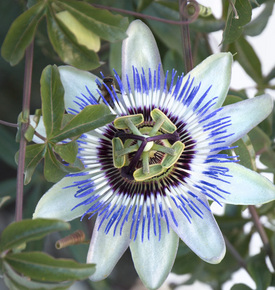
- Jaw-dropping, 3-inch blooms feature intricate rings of blue, white, and purple filaments atop creamy white petals — a true conversation piece that transforms any trellis, fence, or arbor into a living work of art.
- A vigorous semi-evergreen climber that grows up to 20-30 feet, producing exotic blooms from early summer through early fall, followed by ornamental egg-shaped orange fruits in late summer.
- Surprisingly cold-hardy for a tropical-looking vine, tolerating temperatures down to around 5°F — roots can survive hard winters and resprout with enthusiasm each spring.
- An irresistible magnet for butterflies and pollinators, making it a stunning and ecologically valuable addition to wildlife-friendly gardens across USDA Zones 6-10.
Blue Passion Vine (Passiflora caerulea) is one of the most exotic and visually arresting climbing vines you can grow in a temperate garden, delivering a bold tropical flair without the fussy tropical care requirements. Native to the warm regions of southern South America — primarily Brazil and Argentina — this vigorous semi-evergreen twining climber adorns its glossy, rich green, palmately lobed leaves (each with 5 to 7 fingers) with a succession of spectacular 3-inch flowers from early summer well into fall. Each bloom is a masterpiece of natural design: creamy white petals are encircled by a mesmerizing corona of banded blue, white, and purple filaments, giving the flower an otherworldly, mandala-like appearance that stops visitors in their tracks. As the season progresses, the flowers give way to egg-shaped fruits that ripen to a brilliant deep orange, adding yet another layer of ornamental interest. One of the hardiest passion vines available, Blue Passion Vine is reliably perennial in USDA Zones 6-10, where established plants can die back to their roots in cold winters and resprout vigorously each spring. Its tendrils allow it to clamber over trellises, arbors, fences, and pergolas without damaging masonry or wood, making it an ideal choice for adding fast-growing vertical color and lush coverage to outdoor living spaces. Butterflies and other pollinators flock to its nectar-rich blooms throughout the growing season, enhancing its value as both a landscape showpiece and a wildlife habitat plant. Whether trained over a garden arch, cascading across a sunny fence line, or grown as a dramatic container specimen on a patio, Blue Passion Vine rewards gardeners with months of breathtaking floral display and easy, low-maintenance performance.
Plant Description
Blue Passion Vine (Passiflora caerulea) is a fast-growing, twining, semi-evergreen perennial climber in the Passifloraceae family. Its stems carry elegant, glossy dark green leaves that are palmately lobed into 5 to 7 distinct fingers, lending the vine a lush, tropical texture even when not in bloom. The plant climbs by means of slender, coiling tendrils that attach to any nearby support without penetrating or damaging surfaces. From early summer through early fall, it bears a continuous succession of exotic, 3-inch flowers composed of white to pale pink petals and sepals surrounding a striking corona of banded filaments in shades of blue, white, and purple, with prominent central stamens and pistils that add further architectural interest. Blooms are short-lived individually but produced in abundance, so a mature vine appears to be in near-constant flower throughout the warm season. In late summer and fall, rounded, egg-shaped fruits ripen from green to a vivid deep orange, providing a second season of ornamental appeal. The plant is deciduous to semi-evergreen depending on winter temperatures — in mild climates it retains much of its foliage year-round, while in colder areas it dies back to its hardy root system and regrows each spring.
Mature Size
| Attribute | Detail |
|---|---|
| Mature Length | 20 to 30 feet (up to 40 feet under ideal conditions) |
| Spread | 6 to 10 feet or more, depending on support structure |
| Growth Rate | Fast — can put on many feet of new growth in a single season |
| Growth Habit | Twining climber with tendrils; does not penetrate masonry or wood |
| Plant Type | Semi-evergreen to deciduous perennial vine |
Hardiness Zones
Blue Passion Vine is reliably hardy in USDA Zones 6-10, making it one of the most cold-tolerant passion vines available. Established plants have been documented surviving temperatures as low as 5°F (-15°C) when their root systems are well established and insulated with mulch, though the above-ground stems and foliage may be killed back in harsh freezes. In Zones 8-10 — including much of Southern Oregon and Northern California — the vine typically behaves as an evergreen or semi-evergreen and may retain most of its foliage through mild winters. In Zone 6 and 7 gardens, it is best treated as a die-back perennial: mulch the root zone generously in late fall, and expect vigorous regrowth from the base each spring once soil warms. In all zones, a sheltered south- or west-facing position with protection from harsh, drying winter winds will significantly improve winter survival and spring performance.
Sunlight Requirements
Blue Passion Vine performs best in a full sun location, receiving a minimum of 6 hours of direct sunlight per day. Abundant sunshine promotes the most prolific blooming, the richest flower color, and the best fruit development. In very hot, dry inland climates — such as parts of Northern California's interior valleys — some light afternoon shade can prevent leaf scorch and heat stress, particularly for younger or container-grown plants. Avoid deep shade, as insufficient light results in poor flowering and weak, leggy growth. The flowers themselves respond to sunlight and will open more fully and readily on bright days, closing or partially closing during overcast or rainy weather.
Soil and pH Preferences
- Drainage: Well-draining soil is the single most important soil requirement. Blue Passion Vine will not tolerate waterlogged or consistently soggy conditions, which promote root and crown rot. Sandy, loamy, or gravelly soils are ideal.
- Soil pH: Prefers a slightly acidic to neutral pH in the range of 6.0 to 6.5. Avoid strongly alkaline soils.
- Soil texture: While the vine tolerates a range of soil types, including sandy and moderately clay soils, it thrives best in loose, open-structured soils that allow the roots to penetrate deeply.
- Amendments: Work compost or aged organic matter into the planting hole to improve soil structure, nutrient availability, and moisture retention without sacrificing drainage. In heavy clay soils, incorporate coarse sand or perlite to improve drainage.
- Moisture: Keep soil consistently moist but never waterlogged during the growing season. Allow soil to dry out slightly more between waterings in fall and winter.
Watering Guide
During the first growing season, water Blue Passion Vine deeply and regularly to help establish a robust, deep root system. Allow the top inch or two of soil to dry slightly between waterings rather than keeping it constantly saturated. Deep, infrequent watering is strongly preferred over frequent shallow watering, as it encourages roots to grow deep into the soil, improving the plant's drought tolerance and winter hardiness. Once fully established — typically after the first full season in the ground — the vine is reasonably drought-tolerant and requires supplemental irrigation mainly during prolonged dry spells or heat waves. In the hot, dry summers common to Southern Oregon and Northern California, plan to water established plants every 1 to 2 weeks depending on heat and soil type. Reduce watering significantly in the fall and winter, keeping the root zone drier during the dormant period to help prevent root rot. Container-grown plants will need more frequent irrigation than those in the ground, as pots dry out faster — check soil moisture every few days during summer heat.
Fertilizing
Blue Passion Vine is naturally a vigorous, fast-growing plant and does not require heavy feeding. In fact, over-fertilizing — particularly with high-nitrogen fertilizers — tends to encourage excessive leafy, vegetative growth at the expense of flowers. For best results, apply a balanced, slow-release fertilizer (such as a 10-10-10 or similar) once in early spring as new growth begins. During the active growing season (spring through summer), you may supplement with a diluted liquid balanced fertilizer once or twice a month, but reduce the application rate to about half the label-recommended strength to avoid pushing too much foliage. Avoid feeding in late summer and fall, as this can promote tender new growth that is vulnerable to frost damage. Incorporating compost or well-aged organic matter into the soil at planting time provides a gentle, slow-release source of nutrients that supports healthy growth without triggering excessive vegetative vigor.
Pruning and Maintenance
Blue Passion Vine blooms exclusively on new growth produced in the current season, so annual pruning is an important tool for maximizing flowering and managing the vine's vigorous spread. The best time to prune is in late winter or early spring, just before new growth emerges. At this time, cut back the previous season's stems to a manageable framework, removing dead, damaged, or overcrowded growth and shortening long wandering stems. The vine is extremely resilient and tolerates hard pruning — it can be cut back to near ground level if needed for a complete rejuvenation, and it will regrow vigorously. During the growing season, avoid the temptation to prune too aggressively for a neat appearance; the naturally hanging and drooping side branches are typically the most productive flowering stems, so a somewhat informal, relaxed growth habit yields the most blooms. Thin out crowded stems periodically to maintain good air circulation through the canopy, which helps prevent fungal disease. Remove any dead wood in winter and clear away fallen leaves and debris from the base of the plant.
Planting Instructions
- Choose the right site: Select a location in full sun to partial shade with well-draining soil and a sturdy support structure — trellis, fence, arbor, or pergola — already in place. A south- or west-facing exposure with some wind protection is ideal.
- Prepare the soil: Dig a hole approximately twice as wide and equal in depth to the root ball. Amend the backfill with compost to improve drainage and fertility, especially in heavy clay soils.
- Plant at the right depth: Set the plant so the top of the root ball sits level with or just slightly below the surrounding soil surface. Avoid planting too deeply.
- Backfill and firm: Replace the amended soil around the roots, gently firming it to eliminate air pockets without compacting the soil tightly.
- Water thoroughly: Water deeply immediately after planting to settle the soil and make good root-to-soil contact.
- Mulch: Apply a 2- to 3-inch layer of organic mulch (bark chips, straw, or compost) around the base, keeping it several inches away from the stems. Mulch conserves moisture, moderates soil temperature, and protects the root zone from frost in colder winters.
- Provide support: Guide the young vine toward its support and loosely tie stems with soft garden ties until the tendrils take hold on their own.
- Best planting time: Spring through early fall in the Southern Oregon and Northern California climate — spring planting gives the longest establishment period before the first frost.
Seasonal Interest
| Season | What to Expect |
|---|---|
| Spring | Fresh, glossy green foliage emerges and vine begins rapid growth; new stems extend quickly to cover supports |
| Early Summer | First exotic blooms appear — white petals ringed by banded blue, white, and purple filaments; butterfly activity begins |
| Summer | Peak flowering period with a continuous succession of dramatic 3-inch blooms; lush, tropical foliage at its fullest |
| Late Summer – Early Fall | Flowers continue; egg-shaped fruits ripen from green to vivid deep orange, adding bold color contrast to the foliage |
| Fall | Orange fruits persist; foliage may begin to yellow and drop in cooler climates; vine slows growth as temperatures drop |
| Winter | Evergreen to semi-evergreen in mild climates (Zones 8-10); dies back to hardy roots in colder zones, with regrowth in spring |
Landscape Uses
- Trellises and arbors: Train over a sturdy trellis or garden arch for a dramatic floral tunnel effect at the height of summer bloom.
- Fences and walls: Use to soften or completely cover chain-link, wood, or masonry fences; attaches via tendrils without damaging surfaces.
- Pergolas and patio covers: Creates a living canopy of lush foliage and exotic blooms overhead for shaded outdoor seating areas.
- Screening and privacy: Fast-growing and dense enough to provide a living privacy screen within one to two seasons.
- Cottage and Mediterranean gardens: Pairs beautifully with roses, lavender, salvias, and other sun-loving perennials in relaxed, romantic garden styles.
- Tropical-themed gardens: Combines with cannas, palms, and bold tropical foliage plants for a resort-style, exotic feel around pools or patios.
- Container specimen: Grown in a large container with a decorative obelisk or tuteur, it makes a stunning patio or balcony focal point and can be moved under cover in colder winters.
- Slope and embankment cover: Its vigorous, spreading root system can help stabilize slopes while providing ornamental ground or vertical coverage.
Container Growing
Blue Passion Vine adapts well to large container culture, which is a particularly useful approach for gardeners who want to control the vine's vigorous spread, move it to a more sheltered location during cold spells, or display it as a focal point on a patio, deck, or balcony. Choose a large, sturdy container — at least 15 to 20 gallons — with ample drainage holes. Use a high-quality, well-draining potting mix amended with perlite or coarse sand to ensure excellent drainage. Provide a strong obelisk, trellis, or cage within the container as a support structure. Container-grown plants dry out faster than in-ground specimens, so check soil moisture more frequently during the warm season and water when the top inch or two feels dry. Feed container plants with a balanced liquid fertilizer at half strength every two to three weeks during active growth. Repot into a container one size larger every two to three years, or when the plant becomes visibly root-bound. In Zone 6 and 7 gardens, container growing allows you to move the vine into a frost-free garage, greenhouse, or cool indoor space over winter to protect above-ground growth.
Wildlife Value
Blue Passion Vine is an exceptional plant for attracting and supporting beneficial wildlife in the garden. Its large, nectar-rich flowers are highly attractive to a wide range of pollinators, with butterflies being particularly enthusiastic visitors — the intricate floral structure provides easy landing platforms and abundant nectar. Bees and hummingbirds are also regularly seen visiting the blooms. The colorful orange fruits that ripen in late summer and fall are attractive to birds, who may feed on the pulp and seeds, helping to add a layer of wildlife interest beyond the flowering season. The dense, twining foliage also provides shelter and nesting habitat for small garden birds and beneficial insects. For gardeners in Southern Oregon and Northern California who are working to create pollinator corridors or wildlife-friendly habitat gardens, Blue Passion Vine is an excellent high-impact addition that offers beauty and ecological value simultaneously.
Pests and Diseases
Blue Passion Vine is generally a vigorous and resilient plant with relatively few serious pest or disease problems when grown in appropriate conditions. The most common issues to watch for include:
- Aphids: Small, soft-bodied insects that cluster on new growth and leaf undersides; can cause curled or distorted leaves. Control with a strong jet of water, insecticidal soap, or neem oil spray. Avoid over-fertilizing with nitrogen, which produces the soft new growth aphids prefer.
- Spider mites: More common during hot, dry weather; cause stippled, bronzed foliage and fine webbing. Increase humidity around the plant, and treat with neem oil or insecticidal soap if populations are heavy.
- Whiteflies and scale: Occasional pests, especially in warm, sheltered locations. Treat with horticultural oil or insecticidal soap as needed.
- Slugs and snails: Can cause significant damage to young plants, particularly new foliage in spring. Use physical barriers, iron phosphate bait, or diatomaceous earth around the base.
- Root rot: The most serious disease concern, caused by overly wet or waterlogged soil. Prevent by ensuring excellent drainage and avoiding overwatering, especially in winter.
- Fusarium wilt: A soil-borne fungal disease that causes yellowing foliage, branch dieback, and eventual plant decline. There is no cure; remove and dispose of affected plants and avoid replanting in the same spot.
- Cucumber mosaic virus: Can cause mosaic-patterned, distorted foliage; spread by aphids. Control aphid populations to minimize risk.
Blue Passion Vine has a notable resistance to honey fungus (Armillaria), which is a significant advantage in gardens where this soil pathogen is present.
Toxicity and Safety
While the fully ripe orange fruits of Blue Passion Vine are technically edible, the leaves, stems, and roots of Passiflora caerulea are considered toxic. These plant parts contain cyanogenic glycosides, which can release cyanide compounds when metabolized. Ingestion of leaves or stems can cause symptoms in humans including nausea, vomiting, drowsiness, and irregular heartbeat. In pets — particularly dogs, cats, and horses — similar or more severe symptoms may result, including gastrointestinal upset, lethargy, and in large quantities, more serious toxic effects. It is important to keep children and pets away from the foliage and stems of this plant. The ripe fruit pulp is generally considered safe in modest quantities for adults but is not particularly flavorful and is not typically grown for culinary use — species such as Passiflora edulis are far better choices for edible passion fruit. Always wash hands after handling the plant, and site it thoughtfully in gardens frequented by curious pets or young children.
Companion Plants
- Climbing roses: Pairing Blue Passion Vine with climbing roses on a shared trellis or arbor creates a lush, romantic tapestry of contrasting flower forms and colors.
- Salvia (Salvia spp.): Tall salvias planted at the base of the trellis complement the vine's exotic blooms with vertical spikes of deep blue or purple flowers that extend the pollinator season.
- Lavender (Lavandula spp.): The silver-gray foliage and fragrant purple blooms of lavender provide a beautiful, low-growing contrast at the base of the vine while attracting the same pollinator community.
- Clematis (Clematis spp.): Co-training a clematis with Blue Passion Vine on the same support creates a striking combination of flower shapes and extends the blooming season on either end.
- Canna (Canna spp.): The bold, paddle-like tropical foliage of cannas echoes the exotic character of the passion vine, making for a cohesive tropical-style garden vignette.
- Purple coneflower (Echinacea purpurea): A natural companion for wildlife gardens; both plants attract butterflies and beneficial insects throughout the summer months.
- Agapanthus: Globe-shaped blue or white blooms of agapanthus planted in front of the vine echo the blue and white tones in the passion flower's filament corona for a cohesive color scheme.
- Jaw-dropping, 3-inch blooms feature intricate rings of blue, white, and purple filaments atop creamy white petals — a true conversation piece that transforms any trellis, fence, or arbor into a living work of art.
- A vigorous semi-evergreen climber that grows up to 20-30 feet, producing exotic blooms from early summer through early fall, followed by ornamental egg-shaped orange fruits in late summer.
- Surprisingly cold-hardy for a tropical-looking vine, tolerating temperatures down to around 5°F — roots can survive hard winters and resprout with enthusiasm each spring.
- An irresistible magnet for butterflies and pollinators, making it a stunning and ecologically valuable addition to wildlife-friendly gardens across USDA Zones 6-10.
Blue Passion Vine (Passiflora caerulea) is one of the most exotic and visually arresting climbing vines you can grow in a temperate garden, delivering a bold tropical flair without the fussy tropical care requirements. Native to the warm regions of southern South America — primarily Brazil and Argentina — this vigorous semi-evergreen twining climber adorns its glossy, rich green, palmately lobed leaves (each with 5 to 7 fingers) with a succession of spectacular 3-inch flowers from early summer well into fall. Each bloom is a masterpiece of natural design: creamy white petals are encircled by a mesmerizing corona of banded blue, white, and purple filaments, giving the flower an otherworldly, mandala-like appearance that stops visitors in their tracks. As the season progresses, the flowers give way to egg-shaped fruits that ripen to a brilliant deep orange, adding yet another layer of ornamental interest. One of the hardiest passion vines available, Blue Passion Vine is reliably perennial in USDA Zones 6-10, where established plants can die back to their roots in cold winters and resprout vigorously each spring. Its tendrils allow it to clamber over trellises, arbors, fences, and pergolas without damaging masonry or wood, making it an ideal choice for adding fast-growing vertical color and lush coverage to outdoor living spaces. Butterflies and other pollinators flock to its nectar-rich blooms throughout the growing season, enhancing its value as both a landscape showpiece and a wildlife habitat plant. Whether trained over a garden arch, cascading across a sunny fence line, or grown as a dramatic container specimen on a patio, Blue Passion Vine rewards gardeners with months of breathtaking floral display and easy, low-maintenance performance.
Plant Description
Blue Passion Vine (Passiflora caerulea) is a fast-growing, twining, semi-evergreen perennial climber in the Passifloraceae family. Its stems carry elegant, glossy dark green leaves that are palmately lobed into 5 to 7 distinct fingers, lending the vine a lush, tropical texture even when not in bloom. The plant climbs by means of slender, coiling tendrils that attach to any nearby support without penetrating or damaging surfaces. From early summer through early fall, it bears a continuous succession of exotic, 3-inch flowers composed of white to pale pink petals and sepals surrounding a striking corona of banded filaments in shades of blue, white, and purple, with prominent central stamens and pistils that add further architectural interest. Blooms are short-lived individually but produced in abundance, so a mature vine appears to be in near-constant flower throughout the warm season. In late summer and fall, rounded, egg-shaped fruits ripen from green to a vivid deep orange, providing a second season of ornamental appeal. The plant is deciduous to semi-evergreen depending on winter temperatures — in mild climates it retains much of its foliage year-round, while in colder areas it dies back to its hardy root system and regrows each spring.
Mature Size
| Attribute | Detail |
|---|---|
| Mature Length | 20 to 30 feet (up to 40 feet under ideal conditions) |
| Spread | 6 to 10 feet or more, depending on support structure |
| Growth Rate | Fast — can put on many feet of new growth in a single season |
| Growth Habit | Twining climber with tendrils; does not penetrate masonry or wood |
| Plant Type | Semi-evergreen to deciduous perennial vine |
Hardiness Zones
Blue Passion Vine is reliably hardy in USDA Zones 6-10, making it one of the most cold-tolerant passion vines available. Established plants have been documented surviving temperatures as low as 5°F (-15°C) when their root systems are well established and insulated with mulch, though the above-ground stems and foliage may be killed back in harsh freezes. In Zones 8-10 — including much of Southern Oregon and Northern California — the vine typically behaves as an evergreen or semi-evergreen and may retain most of its foliage through mild winters. In Zone 6 and 7 gardens, it is best treated as a die-back perennial: mulch the root zone generously in late fall, and expect vigorous regrowth from the base each spring once soil warms. In all zones, a sheltered south- or west-facing position with protection from harsh, drying winter winds will significantly improve winter survival and spring performance.
Sunlight Requirements
Blue Passion Vine performs best in a full sun location, receiving a minimum of 6 hours of direct sunlight per day. Abundant sunshine promotes the most prolific blooming, the richest flower color, and the best fruit development. In very hot, dry inland climates — such as parts of Northern California's interior valleys — some light afternoon shade can prevent leaf scorch and heat stress, particularly for younger or container-grown plants. Avoid deep shade, as insufficient light results in poor flowering and weak, leggy growth. The flowers themselves respond to sunlight and will open more fully and readily on bright days, closing or partially closing during overcast or rainy weather.
Soil and pH Preferences
- Drainage: Well-draining soil is the single most important soil requirement. Blue Passion Vine will not tolerate waterlogged or consistently soggy conditions, which promote root and crown rot. Sandy, loamy, or gravelly soils are ideal.
- Soil pH: Prefers a slightly acidic to neutral pH in the range of 6.0 to 6.5. Avoid strongly alkaline soils.
- Soil texture: While the vine tolerates a range of soil types, including sandy and moderately clay soils, it thrives best in loose, open-structured soils that allow the roots to penetrate deeply.
- Amendments: Work compost or aged organic matter into the planting hole to improve soil structure, nutrient availability, and moisture retention without sacrificing drainage. In heavy clay soils, incorporate coarse sand or perlite to improve drainage.
- Moisture: Keep soil consistently moist but never waterlogged during the growing season. Allow soil to dry out slightly more between waterings in fall and winter.
Watering Guide
During the first growing season, water Blue Passion Vine deeply and regularly to help establish a robust, deep root system. Allow the top inch or two of soil to dry slightly between waterings rather than keeping it constantly saturated. Deep, infrequent watering is strongly preferred over frequent shallow watering, as it encourages roots to grow deep into the soil, improving the plant's drought tolerance and winter hardiness. Once fully established — typically after the first full season in the ground — the vine is reasonably drought-tolerant and requires supplemental irrigation mainly during prolonged dry spells or heat waves. In the hot, dry summers common to Southern Oregon and Northern California, plan to water established plants every 1 to 2 weeks depending on heat and soil type. Reduce watering significantly in the fall and winter, keeping the root zone drier during the dormant period to help prevent root rot. Container-grown plants will need more frequent irrigation than those in the ground, as pots dry out faster — check soil moisture every few days during summer heat.
Fertilizing
Blue Passion Vine is naturally a vigorous, fast-growing plant and does not require heavy feeding. In fact, over-fertilizing — particularly with high-nitrogen fertilizers — tends to encourage excessive leafy, vegetative growth at the expense of flowers. For best results, apply a balanced, slow-release fertilizer (such as a 10-10-10 or similar) once in early spring as new growth begins. During the active growing season (spring through summer), you may supplement with a diluted liquid balanced fertilizer once or twice a month, but reduce the application rate to about half the label-recommended strength to avoid pushing too much foliage. Avoid feeding in late summer and fall, as this can promote tender new growth that is vulnerable to frost damage. Incorporating compost or well-aged organic matter into the soil at planting time provides a gentle, slow-release source of nutrients that supports healthy growth without triggering excessive vegetative vigor.
Pruning and Maintenance
Blue Passion Vine blooms exclusively on new growth produced in the current season, so annual pruning is an important tool for maximizing flowering and managing the vine's vigorous spread. The best time to prune is in late winter or early spring, just before new growth emerges. At this time, cut back the previous season's stems to a manageable framework, removing dead, damaged, or overcrowded growth and shortening long wandering stems. The vine is extremely resilient and tolerates hard pruning — it can be cut back to near ground level if needed for a complete rejuvenation, and it will regrow vigorously. During the growing season, avoid the temptation to prune too aggressively for a neat appearance; the naturally hanging and drooping side branches are typically the most productive flowering stems, so a somewhat informal, relaxed growth habit yields the most blooms. Thin out crowded stems periodically to maintain good air circulation through the canopy, which helps prevent fungal disease. Remove any dead wood in winter and clear away fallen leaves and debris from the base of the plant.
Planting Instructions
- Choose the right site: Select a location in full sun to partial shade with well-draining soil and a sturdy support structure — trellis, fence, arbor, or pergola — already in place. A south- or west-facing exposure with some wind protection is ideal.
- Prepare the soil: Dig a hole approximately twice as wide and equal in depth to the root ball. Amend the backfill with compost to improve drainage and fertility, especially in heavy clay soils.
- Plant at the right depth: Set the plant so the top of the root ball sits level with or just slightly below the surrounding soil surface. Avoid planting too deeply.
- Backfill and firm: Replace the amended soil around the roots, gently firming it to eliminate air pockets without compacting the soil tightly.
- Water thoroughly: Water deeply immediately after planting to settle the soil and make good root-to-soil contact.
- Mulch: Apply a 2- to 3-inch layer of organic mulch (bark chips, straw, or compost) around the base, keeping it several inches away from the stems. Mulch conserves moisture, moderates soil temperature, and protects the root zone from frost in colder winters.
- Provide support: Guide the young vine toward its support and loosely tie stems with soft garden ties until the tendrils take hold on their own.
- Best planting time: Spring through early fall in the Southern Oregon and Northern California climate — spring planting gives the longest establishment period before the first frost.
Seasonal Interest
| Season | What to Expect |
|---|---|
| Spring | Fresh, glossy green foliage emerges and vine begins rapid growth; new stems extend quickly to cover supports |
| Early Summer | First exotic blooms appear — white petals ringed by banded blue, white, and purple filaments; butterfly activity begins |
| Summer | Peak flowering period with a continuous succession of dramatic 3-inch blooms; lush, tropical foliage at its fullest |
| Late Summer – Early Fall | Flowers continue; egg-shaped fruits ripen from green to vivid deep orange, adding bold color contrast to the foliage |
| Fall | Orange fruits persist; foliage may begin to yellow and drop in cooler climates; vine slows growth as temperatures drop |
| Winter | Evergreen to semi-evergreen in mild climates (Zones 8-10); dies back to hardy roots in colder zones, with regrowth in spring |
Landscape Uses
- Trellises and arbors: Train over a sturdy trellis or garden arch for a dramatic floral tunnel effect at the height of summer bloom.
- Fences and walls: Use to soften or completely cover chain-link, wood, or masonry fences; attaches via tendrils without damaging surfaces.
- Pergolas and patio covers: Creates a living canopy of lush foliage and exotic blooms overhead for shaded outdoor seating areas.
- Screening and privacy: Fast-growing and dense enough to provide a living privacy screen within one to two seasons.
- Cottage and Mediterranean gardens: Pairs beautifully with roses, lavender, salvias, and other sun-loving perennials in relaxed, romantic garden styles.
- Tropical-themed gardens: Combines with cannas, palms, and bold tropical foliage plants for a resort-style, exotic feel around pools or patios.
- Container specimen: Grown in a large container with a decorative obelisk or tuteur, it makes a stunning patio or balcony focal point and can be moved under cover in colder winters.
- Slope and embankment cover: Its vigorous, spreading root system can help stabilize slopes while providing ornamental ground or vertical coverage.
Container Growing
Blue Passion Vine adapts well to large container culture, which is a particularly useful approach for gardeners who want to control the vine's vigorous spread, move it to a more sheltered location during cold spells, or display it as a focal point on a patio, deck, or balcony. Choose a large, sturdy container — at least 15 to 20 gallons — with ample drainage holes. Use a high-quality, well-draining potting mix amended with perlite or coarse sand to ensure excellent drainage. Provide a strong obelisk, trellis, or cage within the container as a support structure. Container-grown plants dry out faster than in-ground specimens, so check soil moisture more frequently during the warm season and water when the top inch or two feels dry. Feed container plants with a balanced liquid fertilizer at half strength every two to three weeks during active growth. Repot into a container one size larger every two to three years, or when the plant becomes visibly root-bound. In Zone 6 and 7 gardens, container growing allows you to move the vine into a frost-free garage, greenhouse, or cool indoor space over winter to protect above-ground growth.
Wildlife Value
Blue Passion Vine is an exceptional plant for attracting and supporting beneficial wildlife in the garden. Its large, nectar-rich flowers are highly attractive to a wide range of pollinators, with butterflies being particularly enthusiastic visitors — the intricate floral structure provides easy landing platforms and abundant nectar. Bees and hummingbirds are also regularly seen visiting the blooms. The colorful orange fruits that ripen in late summer and fall are attractive to birds, who may feed on the pulp and seeds, helping to add a layer of wildlife interest beyond the flowering season. The dense, twining foliage also provides shelter and nesting habitat for small garden birds and beneficial insects. For gardeners in Southern Oregon and Northern California who are working to create pollinator corridors or wildlife-friendly habitat gardens, Blue Passion Vine is an excellent high-impact addition that offers beauty and ecological value simultaneously.
Pests and Diseases
Blue Passion Vine is generally a vigorous and resilient plant with relatively few serious pest or disease problems when grown in appropriate conditions. The most common issues to watch for include:
- Aphids: Small, soft-bodied insects that cluster on new growth and leaf undersides; can cause curled or distorted leaves. Control with a strong jet of water, insecticidal soap, or neem oil spray. Avoid over-fertilizing with nitrogen, which produces the soft new growth aphids prefer.
- Spider mites: More common during hot, dry weather; cause stippled, bronzed foliage and fine webbing. Increase humidity around the plant, and treat with neem oil or insecticidal soap if populations are heavy.
- Whiteflies and scale: Occasional pests, especially in warm, sheltered locations. Treat with horticultural oil or insecticidal soap as needed.
- Slugs and snails: Can cause significant damage to young plants, particularly new foliage in spring. Use physical barriers, iron phosphate bait, or diatomaceous earth around the base.
- Root rot: The most serious disease concern, caused by overly wet or waterlogged soil. Prevent by ensuring excellent drainage and avoiding overwatering, especially in winter.
- Fusarium wilt: A soil-borne fungal disease that causes yellowing foliage, branch dieback, and eventual plant decline. There is no cure; remove and dispose of affected plants and avoid replanting in the same spot.
- Cucumber mosaic virus: Can cause mosaic-patterned, distorted foliage; spread by aphids. Control aphid populations to minimize risk.
Blue Passion Vine has a notable resistance to honey fungus (Armillaria), which is a significant advantage in gardens where this soil pathogen is present.
Toxicity and Safety
While the fully ripe orange fruits of Blue Passion Vine are technically edible, the leaves, stems, and roots of Passiflora caerulea are considered toxic. These plant parts contain cyanogenic glycosides, which can release cyanide compounds when metabolized. Ingestion of leaves or stems can cause symptoms in humans including nausea, vomiting, drowsiness, and irregular heartbeat. In pets — particularly dogs, cats, and horses — similar or more severe symptoms may result, including gastrointestinal upset, lethargy, and in large quantities, more serious toxic effects. It is important to keep children and pets away from the foliage and stems of this plant. The ripe fruit pulp is generally considered safe in modest quantities for adults but is not particularly flavorful and is not typically grown for culinary use — species such as Passiflora edulis are far better choices for edible passion fruit. Always wash hands after handling the plant, and site it thoughtfully in gardens frequented by curious pets or young children.
Companion Plants
- Climbing roses: Pairing Blue Passion Vine with climbing roses on a shared trellis or arbor creates a lush, romantic tapestry of contrasting flower forms and colors.
- Salvia (Salvia spp.): Tall salvias planted at the base of the trellis complement the vine's exotic blooms with vertical spikes of deep blue or purple flowers that extend the pollinator season.
- Lavender (Lavandula spp.): The silver-gray foliage and fragrant purple blooms of lavender provide a beautiful, low-growing contrast at the base of the vine while attracting the same pollinator community.
- Clematis (Clematis spp.): Co-training a clematis with Blue Passion Vine on the same support creates a striking combination of flower shapes and extends the blooming season on either end.
- Canna (Canna spp.): The bold, paddle-like tropical foliage of cannas echoes the exotic character of the passion vine, making for a cohesive tropical-style garden vignette.
- Purple coneflower (Echinacea purpurea): A natural companion for wildlife gardens; both plants attract butterflies and beneficial insects throughout the summer months.
- Agapanthus: Globe-shaped blue or white blooms of agapanthus planted in front of the vine echo the blue and white tones in the passion flower's filament corona for a cohesive color scheme.