
Zoom the image with the mouse
Black Forest Cake Heuchera - 1 Gallon
SKU:
2321325
UPC:
014949483411
$15.99
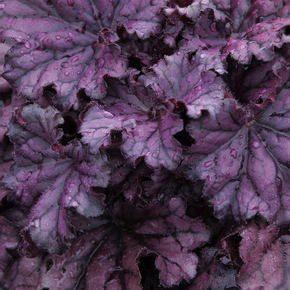
- Stunning near-black to deep chocolate-purple foliage forms a glossy, polished mound that delivers bold color contrast and dramatic texture in shaded borders, mixed beds, and containers throughout the entire growing season.
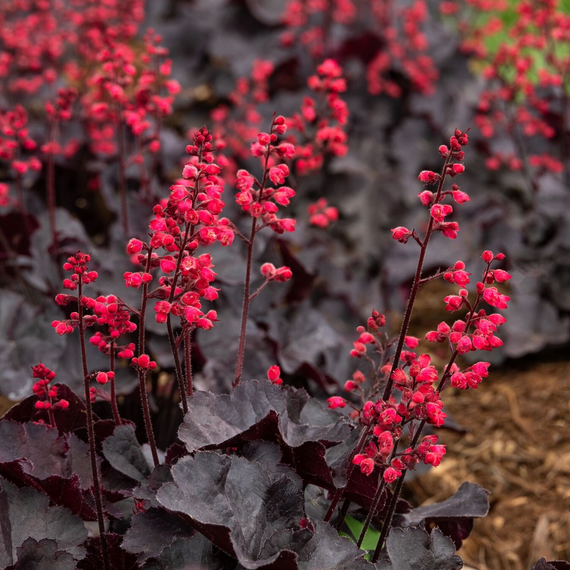
- Bright cherry-red to pink-red bell-shaped flowers rise on slender stems above the dark foliage from late spring into early summer, attracting bees, butterflies, and hummingbirds.
- A compact, low-maintenance evergreen to semi-evergreen perennial that holds its rich, saturated leaf color without fading, even through summer heat, and is tolerant of deer and drought once established.
- Exceptionally versatile in the landscape — use it as an edger, groundcover, accent plant, or showstopping container companion that pairs beautifully with virtually any color palette.
Heuchera 'Black Forest Cake' (Coral Bells) is a standout compact perennial celebrated for its extraordinarily dark, glossy foliage that ranges from deep chocolate-brown to near-black, creating an instant focal point in any garden setting. Forming a tidy, well-branched mound typically 8 to 12 inches tall and up to 12 to 18 inches wide, this low-growing evergreen to semi-evergreen perennial is perfectly suited for Southern Oregon and Northern California gardens in USDA Hardiness Zones 4 through 9. In late spring to early summer, slender stems emerge from the dark foliage and carry airy panicles of small, bell-shaped cherry-red to pink-red blooms that pollinators absolutely love. Unlike some dark-leaved heuchera varieties that fade to a muddy brown in summer heat, 'Black Forest Cake' maintains its rich, saturated color through the seasons, making it a reliable four-season performer. Its smooth, rounded, slightly ruffled leaves hold a subtle gloss that catches morning light beautifully, and the foliage serves as a sophisticated dark anchor in mixed plantings — making surrounding colors appear more vibrant by contrast. Hardy, deer-resistant, and requiring minimal upkeep, this patented coral bells selection (PP33532) thrives in partial shade to full sun with afternoon protection and is equally at home in woodland borders, rock gardens, pathway edges, and mixed patio containers.
Plant Description
Heuchera 'Black Forest Cake' is a compact, clump-forming, herbaceous perennial belonging to the Saxifragaceae family. It is prized above all for its smooth, rounded leaves that emerge and hold a remarkable deep chocolate-purple to near-black color throughout the growing season. Unlike many dark-leaved heuchera selections that fade or take on a muddy, brownish tone in summer heat, 'Black Forest Cake' maintains its rich, saturated depth and a subtle glossy sheen that makes it look almost lacquered when light catches the foliage. The leaves are slightly ruffled at the margins and layer densely, producing a polished, structured mound with a full, well-branched habit that never becomes sparse or open in the center. In late spring to early summer, slender, wiry stems rise 6 to 12 inches above the foliage and bear loose panicles of small, bell-shaped flowers in a vivid cherry-red to bright pink-red. While the blooms are showy and attract pollinators enthusiastically, the foliage remains the star of the show year-round. In mild-winter climates like those found in Southern Oregon and Northern California, the plant is essentially evergreen, maintaining foliar color and structure even in winter when most perennials have disappeared. This cultivar is protected by plant patent PP33532 and propagation without license is prohibited.
Mature Size
| Attribute | Measurement |
|---|---|
| Foliage Height | 6 to 8 inches |
| Overall Height (in bloom) | 8 to 12 inches |
| Spread | 12 to 18 inches |
| Recommended Spacing | 12 inches on center |
| Growth Habit | Dense, low-mounding, well-branched |
| Growth Rate | Moderate |
'Black Forest Cake' remains petite and tidy, making it an excellent choice for smaller garden spaces, front-of-border plantings, and combination containers where a compact but visually impactful plant is needed. It does not sprawl or become invasive.
Hardiness Zones and Climate
Heuchera 'Black Forest Cake' is hardy in USDA Zones 4 through 9, covering a wide range of climates from cold northern gardens to warm southern and Pacific Coast landscapes. It also tolerates AHS Heat Zones 1 through 8. Sunset Climate Zones applicable to this plant include Zones 1 through 10 and 14 through 24, making it ideally suited for gardens throughout Southern Oregon and Northern California. In warm-winter areas like Zones 8 and 9, the foliage is essentially evergreen, persisting through the winter months and providing year-round color in the landscape. In colder zones, some foliage dieback may occur, but the plant reliably re-emerges from the roots in spring. It shows good tolerance for the coastal conditions found in Northern California, including salt-laden air.
Sunlight Requirements
Heuchera 'Black Forest Cake' performs best in partial shade to full sun, though the ideal exposure depends on your local climate conditions:
- Partial shade (preferred): Morning sun with afternoon shade is the ideal exposure in most climates, especially in warmer inland areas of Southern Oregon and Northern California. This keeps the foliage color richest and prevents leaf scorch.
- Full sun: Tolerated in cooler coastal and northern climates, provided soil moisture is consistently maintained. In hotter inland locations, full sun without adequate moisture will cause foliage decline and color fading.
- Full shade: The plant will survive in deep shade but may produce fewer flowers and looser, less compact growth. Two to four hours of dappled or filtered light is recommended as a minimum.
For the most vibrant, near-black foliage color and the best floral display, aim for a location that receives bright morning light and is shielded from harsh afternoon sun during the hottest months of the year.
Soil and pH Preferences
This heuchera thrives in organically rich, humusy, well-drained soil. It is adaptable to clay, loam, and sandy soils, but drainage is the most critical factor — soggy or waterlogged conditions will cause crown and root rot. Heavy clay soils should be amended generously with compost or aged organic matter before planting to improve drainage and aeration. A preferred soil pH range is slightly acidic to neutral, approximately 6.0 to 7.0. 'Black Forest Cake' is notably salt-tolerant, making it a good candidate for coastal garden beds and roadside plantings. It will also thrive in dry shade once well established, giving it an advantage in the drier summer conditions common to Southern Oregon gardens.
Watering Guide
- Newly planted: Water deeply 2 to 3 times per week for the first few weeks after planting to help establish a strong root system.
- Established plants: Water approximately once per week during the growing season, increasing frequency during hot or dry spells. Allow the top inch of soil to dry slightly between waterings, but do not allow the soil to dry out completely.
- Summer heat: In the inland valleys of Southern Oregon and Northern California, increase watering during heat waves, particularly if the plant is in a sunnier location. Consistent soil moisture is essential to prevent foliage scorch and color decline.
- Overwatering: Avoid standing water around the crown, as this is the primary cause of root rot. Ensure drainage is excellent at the planting site.
- Container plants: Check soil moisture every 2 to 3 days, as containers dry out considerably faster than in-ground plantings. Water when the top inch of potting mix feels dry.
- Drought tolerance: Once well established, 'Black Forest Cake' shows moderate drought tolerance, especially in shaded locations. However, extended dry periods will stress the plant and dull the foliage color.
Fertilizing
Heuchera 'Black Forest Cake' is a light feeder and does not require heavy fertilization. Follow these guidelines for best results:
- At planting: Incorporate a generous amount of compost or well-aged organic matter into the planting hole and surrounding soil to provide a rich, nutrient-filled environment from the start.
- Spring feeding: Apply a balanced, slow-release granular fertilizer such as a 10-10-10 or 5-10-5 formulation in early spring as new growth begins to emerge. This supports healthy foliage development and encourages strong blooming.
- Midseason: A light supplemental feeding with compost tea or a diluted balanced liquid fertilizer every 4 to 6 weeks during the growing season can help sustain vigor, particularly in containers or lean soils.
- Avoid excess nitrogen: Too much nitrogen promotes excessive, soft leaf growth at the expense of flower production and can make plants more susceptible to disease. Use fertilizers as directed and avoid overapplication.
- Fall: Do not fertilize in late summer or fall, as this can stimulate tender new growth that is vulnerable to early frost damage.
Pruning and Maintenance
One of the great appeals of 'Black Forest Cake' is its genuinely low maintenance nature. Here are the key care tasks throughout the year:
- Deadheading: Remove spent flower stalks by cutting them off at the base once blooms have faded. This encourages the plant to redirect energy back into foliage and may prompt additional bloom flushes.
- Spring cleanup: In early spring, trim away any damaged, tattered, or winter-burned leaves to tidy the mound and make way for fresh new growth. Avoid heavy cutting back, as heucheras grow from a woody crown.
- Mulching: Apply a 2- to 3-inch layer of organic mulch around the base of the plant in spring to conserve soil moisture, regulate soil temperature, and suppress weeds. Keep mulch pulled back slightly from the crown to prevent rot. In colder parts of the growing range, apply a light mulch after the ground freezes in fall to prevent frost heaving of the shallow roots.
- Division: Divide clumps every 3 to 4 years in spring or fall to prevent overcrowding, rejuvenate growth, and maintain the dense, compact mound habit. When dividing, replant divisions at the same soil depth as the original plant, keeping the crown just slightly above the soil surface.
- Root heaving: In areas where winter temperatures fluctuate widely, check plants after freezing and thawing cycles and gently firm any heaved crowns back into the soil.
Planting Instructions
- Timing: Plant in early spring after the risk of hard frost has passed, or in fall at least 6 weeks before the first expected frost. Avoid planting during the peak of summer heat.
- Site selection: Choose a location with partial shade to morning sun, ideally with well-drained, rich soil. Avoid low spots where water collects.
- Soil preparation: Loosen the soil to a depth of 12 inches and work in 2 to 3 inches of compost or aged organic matter to improve drainage, aeration, and nutrient content. Amend heavy clay soils thoroughly.
- Digging the hole: Dig a hole approximately twice as wide as the root ball but no deeper than the plant's existing root depth. The crown — where the stems meet the roots — should sit at or just slightly above the surrounding soil level. Planting too deeply is a common cause of crown rot.
- Planting: Remove the plant from its container, gently loosen any circling roots, and set it in the hole. Backfill with the amended soil, firming gently around the roots to eliminate air pockets.
- Watering in: Water thoroughly immediately after planting to settle the soil and establish good root-to-soil contact.
- Mulching: Apply a 2-inch layer of mulch around the plant, keeping it a few inches away from the crown, to help retain moisture and moderate soil temperature.
- Spacing: Space plants approximately 12 inches apart for a groundcover effect, or 12 to 18 inches apart for individual specimens in borders.
Seasonal Interest
| Season | What to Expect |
|---|---|
| Spring | Fresh deep chocolate-purple to near-black leaves emerge with a rich, glossy sheen. Cherry-red to pink-red flower spikes rise above the foliage from late spring onward, attracting early pollinators. |
| Summer | Foliage holds its deep, saturated color without fading — a standout trait of this variety. Blooming continues into early summer. The dense, polished mound provides consistent textural contrast in borders and containers. |
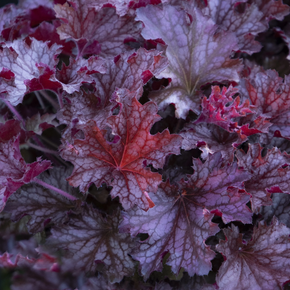
| Fall | Foliage color often deepens or takes on additional purple and burgundy tones as temperatures cool. The plant remains attractive and structural as surrounding perennials die back. |
| Winter | In Southern Oregon and Northern California, foliage is largely evergreen, providing valuable structure and dark color in the winter garden when little else is growing. Some leaf browning may occur in colder spots, but the plant reliably returns in spring. |
Landscape Uses
'Black Forest Cake' is one of the most versatile perennials available for the Pacific Coast and Southern Oregon garden. Its compact size and dramatic foliage make it suitable for a wide range of landscape applications:
- Shade and woodland gardens: Thrives under the dappled canopy of trees and shrubs, where its dark leaves provide deep contrast against lighter-toned ferns and hostas.
- Border edging: The tidy, low mounding habit makes it an excellent front-of-border or pathway edging plant, cleanly defining garden beds without sprawling.
- Mass plantings and groundcover: When planted in groups or drifts, the near-black foliage creates a dramatic, cohesive carpet effect that suppresses weeds and anchors the planting visually.
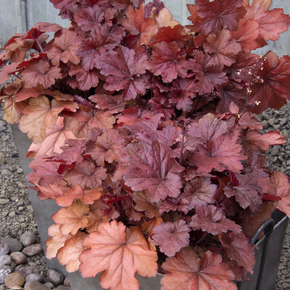
- Mixed containers and patio pots: An outstanding thriller, filler, or spiller element in container combinations. The deep foliage color makes surrounding flowers and bright companions pop.
- Rock gardens: Its compact size and tolerance for varied light levels make it well-suited for rock garden pockets and slopes.
- Banks and slopes: The spreading habit and fibrous root system help stabilize soil on gentle slopes while providing season-long color.
- Underplanting: Excellent beneath roses, ornamental shrubs, and small ornamental trees, where it fills the understory with rich color.
- Coastal gardens: Salt tolerance makes it a reliable performer in coastal landscapes of Northern California.
Companion Plants
The near-black foliage of 'Black Forest Cake' is one of the garden's most effective contrasting elements. It pairs strikingly with plants that offer lighter, brighter, or textural contrast:
- Hostas: Blue-green or chartreuse-leaved hostas create stunning foliage combinations with the near-black leaves of 'Black Forest Cake', especially in shaded woodland settings.
- Japanese Painted Fern (Athyrium niponicum): The silvery-gray and burgundy fronds of Japanese Painted Fern echo the dark tones while adding delicate, airy texture.
- Astilbe: Feathery plumes in pink, red, or white bloom at a similar time and provide elegant vertical contrast against the low, dark mounds.
- Bleeding Heart (Dicentra): Soft, arching foliage and delicate heart-shaped blooms complement the bold, dark leaves beautifully in a shade border.
- Hellebores (Helleborus): Early spring blooms and evergreen foliage make hellebores a natural companion in woodland and shade garden settings.
- Brunnera (Siberian Bugloss): The silver-splashed, heart-shaped leaves and airy blue flowers of Brunnera create a sophisticated pairing with the dark heuchera foliage.
- Creeping Jenny (Lysimachia nummularia 'Aurea'): Bright chartreuse trailing foliage provides intense color contrast in containers and border edges.
- Bugleweed (Ajuga reptans): Low-growing with dark bronze-purple foliage and blue flower spikes, ajuga harmonizes in tone while filling in at a complementary height.
- Ornamental Grasses (fine-textured varieties): Blue fescue or bronze sedge add linear texture that contrasts with the rounded, smooth heuchera leaves.
Wildlife Value
Heuchera 'Black Forest Cake' offers meaningful wildlife value despite its modest size:
- Hummingbirds: The tubular, bell-shaped cherry-red flowers are highly attractive to hummingbirds, which are common pollinators in Southern Oregon and Northern California gardens. Plant near other hummingbird favorites like salvia and agastache to create a dedicated hummingbird corridor.
- Bees and native bees: The nectar-rich flowers attract honeybees, bumblebees, and a variety of native bee species during their late spring to early summer bloom period.
- Butterflies: Butterflies will visit the flowers for nectar, adding additional seasonal movement and interest to the garden.
- Deer resistance: 'Black Forest Cake' is largely ignored by deer, making it an excellent choice for gardens in Southern Oregon and Northern California where deer pressure is significant.
- Rabbit resistance: Generally resistant to rabbit browsing as well.
Pests and Diseases
Heuchera 'Black Forest Cake' is considered virtually pest- and disease-free under good growing conditions. However, a few issues can occasionally arise:
- Vine Weevils: The most significant pest of heucheras. Adult weevils notch leaf margins, while larvae feed on roots, causing sudden wilting and decline. Manage with beneficial nematodes, diatomaceous earth, or targeted insecticide soil drenches. Good drainage and avoiding overly wet soil reduces risk.
- Aphids: Occasionally appear on tender new growth. Easily controlled with a strong jet of water, insecticidal soap, or neem oil spray.
- Slugs and Snails: Can damage leaves, particularly in moist, shaded locations. Use organic iron phosphate slug bait, or hand-pick pests at night.
- Powdery Mildew: A fungal disease that appears as a white, powdery coating on leaves, usually when air circulation is poor or humidity is high. Improve spacing and airflow, avoid overhead watering, and treat with a fungicide if severe.
- Heuchera Rust: An occasional fungal issue that creates orange or brown pustules on leaf undersides. Remove affected foliage and treat with a copper-based fungicide if necessary.
- Crown and Root Rot: Caused by consistently soggy, poorly drained soil. Prevention through proper site selection and soil amendment is the best approach. Ensure the crown is never buried too deeply.
- Bacterial Leaf Spot: Brown or black spots on leaves, often during wet periods. Remove affected foliage, avoid overhead irrigation, and ensure good air circulation.
- Frost Heaving: In areas with fluctuating winter temperatures, shallow roots can be pushed out of the soil. Apply a mulch layer after the ground freezes to buffer temperature swings, and check plants after freeze-thaw cycles, pressing heaved crowns back into the ground gently.
Container Growing
'Black Forest Cake' is an outstanding container plant and one of the most popular heuchera varieties for patio and deck displays. Here is how to grow it successfully in pots:
- Container selection: Choose a container at least 10 to 12 inches in diameter with ample drainage holes. Terracotta, ceramic, or plastic pots all work well.
- Potting mix: Use a high-quality, well-draining potting mix amended with perlite or coarse sand for additional drainage. Avoid heavy garden soil, which compacts in containers and restricts root development.
- Placement: Position containers where they receive morning sun and afternoon shade for the best foliage color. Containers allow you to move the plant seasonally to optimize light exposure.
- Watering: Containers dry out faster than in-ground plantings. Check soil moisture every 2 to 3 days and water when the top inch feels dry. Ensure water drains freely from the bottom of the pot.
- Fertilizing: Feed container-grown plants with a balanced, slow-release fertilizer in spring and supplement with diluted liquid fertilizer every 4 to 6 weeks through summer.
- Overwintering containers: In colder parts of the growing range, move containers to a sheltered, frost-free location such as an unheated garage or covered porch over winter, or insulate pots with burlap and straw.
- Design ideas: Pair the near-black foliage with trailing plants like golden creeping Jenny, silvery dichondra, or bright purple calibrachoa for a sophisticated, high-contrast combination planting.
- Stunning near-black to deep chocolate-purple foliage forms a glossy, polished mound that delivers bold color contrast and dramatic texture in shaded borders, mixed beds, and containers throughout the entire growing season.
- Bright cherry-red to pink-red bell-shaped flowers rise on slender stems above the dark foliage from late spring into early summer, attracting bees, butterflies, and hummingbirds.
- A compact, low-maintenance evergreen to semi-evergreen perennial that holds its rich, saturated leaf color without fading, even through summer heat, and is tolerant of deer and drought once established.
- Exceptionally versatile in the landscape — use it as an edger, groundcover, accent plant, or showstopping container companion that pairs beautifully with virtually any color palette.
Heuchera 'Black Forest Cake' (Coral Bells) is a standout compact perennial celebrated for its extraordinarily dark, glossy foliage that ranges from deep chocolate-brown to near-black, creating an instant focal point in any garden setting. Forming a tidy, well-branched mound typically 8 to 12 inches tall and up to 12 to 18 inches wide, this low-growing evergreen to semi-evergreen perennial is perfectly suited for Southern Oregon and Northern California gardens in USDA Hardiness Zones 4 through 9. In late spring to early summer, slender stems emerge from the dark foliage and carry airy panicles of small, bell-shaped cherry-red to pink-red blooms that pollinators absolutely love. Unlike some dark-leaved heuchera varieties that fade to a muddy brown in summer heat, 'Black Forest Cake' maintains its rich, saturated color through the seasons, making it a reliable four-season performer. Its smooth, rounded, slightly ruffled leaves hold a subtle gloss that catches morning light beautifully, and the foliage serves as a sophisticated dark anchor in mixed plantings — making surrounding colors appear more vibrant by contrast. Hardy, deer-resistant, and requiring minimal upkeep, this patented coral bells selection (PP33532) thrives in partial shade to full sun with afternoon protection and is equally at home in woodland borders, rock gardens, pathway edges, and mixed patio containers.
Plant Description
Heuchera 'Black Forest Cake' is a compact, clump-forming, herbaceous perennial belonging to the Saxifragaceae family. It is prized above all for its smooth, rounded leaves that emerge and hold a remarkable deep chocolate-purple to near-black color throughout the growing season. Unlike many dark-leaved heuchera selections that fade or take on a muddy, brownish tone in summer heat, 'Black Forest Cake' maintains its rich, saturated depth and a subtle glossy sheen that makes it look almost lacquered when light catches the foliage. The leaves are slightly ruffled at the margins and layer densely, producing a polished, structured mound with a full, well-branched habit that never becomes sparse or open in the center. In late spring to early summer, slender, wiry stems rise 6 to 12 inches above the foliage and bear loose panicles of small, bell-shaped flowers in a vivid cherry-red to bright pink-red. While the blooms are showy and attract pollinators enthusiastically, the foliage remains the star of the show year-round. In mild-winter climates like those found in Southern Oregon and Northern California, the plant is essentially evergreen, maintaining foliar color and structure even in winter when most perennials have disappeared. This cultivar is protected by plant patent PP33532 and propagation without license is prohibited.
Mature Size
| Attribute | Measurement |
|---|---|
| Foliage Height | 6 to 8 inches |
| Overall Height (in bloom) | 8 to 12 inches |
| Spread | 12 to 18 inches |
| Recommended Spacing | 12 inches on center |
| Growth Habit | Dense, low-mounding, well-branched |
| Growth Rate | Moderate |
'Black Forest Cake' remains petite and tidy, making it an excellent choice for smaller garden spaces, front-of-border plantings, and combination containers where a compact but visually impactful plant is needed. It does not sprawl or become invasive.
Hardiness Zones and Climate
Heuchera 'Black Forest Cake' is hardy in USDA Zones 4 through 9, covering a wide range of climates from cold northern gardens to warm southern and Pacific Coast landscapes. It also tolerates AHS Heat Zones 1 through 8. Sunset Climate Zones applicable to this plant include Zones 1 through 10 and 14 through 24, making it ideally suited for gardens throughout Southern Oregon and Northern California. In warm-winter areas like Zones 8 and 9, the foliage is essentially evergreen, persisting through the winter months and providing year-round color in the landscape. In colder zones, some foliage dieback may occur, but the plant reliably re-emerges from the roots in spring. It shows good tolerance for the coastal conditions found in Northern California, including salt-laden air.
Sunlight Requirements
Heuchera 'Black Forest Cake' performs best in partial shade to full sun, though the ideal exposure depends on your local climate conditions:
- Partial shade (preferred): Morning sun with afternoon shade is the ideal exposure in most climates, especially in warmer inland areas of Southern Oregon and Northern California. This keeps the foliage color richest and prevents leaf scorch.
- Full sun: Tolerated in cooler coastal and northern climates, provided soil moisture is consistently maintained. In hotter inland locations, full sun without adequate moisture will cause foliage decline and color fading.
- Full shade: The plant will survive in deep shade but may produce fewer flowers and looser, less compact growth. Two to four hours of dappled or filtered light is recommended as a minimum.
For the most vibrant, near-black foliage color and the best floral display, aim for a location that receives bright morning light and is shielded from harsh afternoon sun during the hottest months of the year.
Soil and pH Preferences
This heuchera thrives in organically rich, humusy, well-drained soil. It is adaptable to clay, loam, and sandy soils, but drainage is the most critical factor — soggy or waterlogged conditions will cause crown and root rot. Heavy clay soils should be amended generously with compost or aged organic matter before planting to improve drainage and aeration. A preferred soil pH range is slightly acidic to neutral, approximately 6.0 to 7.0. 'Black Forest Cake' is notably salt-tolerant, making it a good candidate for coastal garden beds and roadside plantings. It will also thrive in dry shade once well established, giving it an advantage in the drier summer conditions common to Southern Oregon gardens.
Watering Guide
- Newly planted: Water deeply 2 to 3 times per week for the first few weeks after planting to help establish a strong root system.
- Established plants: Water approximately once per week during the growing season, increasing frequency during hot or dry spells. Allow the top inch of soil to dry slightly between waterings, but do not allow the soil to dry out completely.
- Summer heat: In the inland valleys of Southern Oregon and Northern California, increase watering during heat waves, particularly if the plant is in a sunnier location. Consistent soil moisture is essential to prevent foliage scorch and color decline.
- Overwatering: Avoid standing water around the crown, as this is the primary cause of root rot. Ensure drainage is excellent at the planting site.
- Container plants: Check soil moisture every 2 to 3 days, as containers dry out considerably faster than in-ground plantings. Water when the top inch of potting mix feels dry.
- Drought tolerance: Once well established, 'Black Forest Cake' shows moderate drought tolerance, especially in shaded locations. However, extended dry periods will stress the plant and dull the foliage color.
Fertilizing
Heuchera 'Black Forest Cake' is a light feeder and does not require heavy fertilization. Follow these guidelines for best results:
- At planting: Incorporate a generous amount of compost or well-aged organic matter into the planting hole and surrounding soil to provide a rich, nutrient-filled environment from the start.
- Spring feeding: Apply a balanced, slow-release granular fertilizer such as a 10-10-10 or 5-10-5 formulation in early spring as new growth begins to emerge. This supports healthy foliage development and encourages strong blooming.
- Midseason: A light supplemental feeding with compost tea or a diluted balanced liquid fertilizer every 4 to 6 weeks during the growing season can help sustain vigor, particularly in containers or lean soils.
- Avoid excess nitrogen: Too much nitrogen promotes excessive, soft leaf growth at the expense of flower production and can make plants more susceptible to disease. Use fertilizers as directed and avoid overapplication.
- Fall: Do not fertilize in late summer or fall, as this can stimulate tender new growth that is vulnerable to early frost damage.
Pruning and Maintenance
One of the great appeals of 'Black Forest Cake' is its genuinely low maintenance nature. Here are the key care tasks throughout the year:
- Deadheading: Remove spent flower stalks by cutting them off at the base once blooms have faded. This encourages the plant to redirect energy back into foliage and may prompt additional bloom flushes.
- Spring cleanup: In early spring, trim away any damaged, tattered, or winter-burned leaves to tidy the mound and make way for fresh new growth. Avoid heavy cutting back, as heucheras grow from a woody crown.
- Mulching: Apply a 2- to 3-inch layer of organic mulch around the base of the plant in spring to conserve soil moisture, regulate soil temperature, and suppress weeds. Keep mulch pulled back slightly from the crown to prevent rot. In colder parts of the growing range, apply a light mulch after the ground freezes in fall to prevent frost heaving of the shallow roots.
- Division: Divide clumps every 3 to 4 years in spring or fall to prevent overcrowding, rejuvenate growth, and maintain the dense, compact mound habit. When dividing, replant divisions at the same soil depth as the original plant, keeping the crown just slightly above the soil surface.
- Root heaving: In areas where winter temperatures fluctuate widely, check plants after freezing and thawing cycles and gently firm any heaved crowns back into the soil.
Planting Instructions
- Timing: Plant in early spring after the risk of hard frost has passed, or in fall at least 6 weeks before the first expected frost. Avoid planting during the peak of summer heat.
- Site selection: Choose a location with partial shade to morning sun, ideally with well-drained, rich soil. Avoid low spots where water collects.
- Soil preparation: Loosen the soil to a depth of 12 inches and work in 2 to 3 inches of compost or aged organic matter to improve drainage, aeration, and nutrient content. Amend heavy clay soils thoroughly.
- Digging the hole: Dig a hole approximately twice as wide as the root ball but no deeper than the plant's existing root depth. The crown — where the stems meet the roots — should sit at or just slightly above the surrounding soil level. Planting too deeply is a common cause of crown rot.
- Planting: Remove the plant from its container, gently loosen any circling roots, and set it in the hole. Backfill with the amended soil, firming gently around the roots to eliminate air pockets.
- Watering in: Water thoroughly immediately after planting to settle the soil and establish good root-to-soil contact.
- Mulching: Apply a 2-inch layer of mulch around the plant, keeping it a few inches away from the crown, to help retain moisture and moderate soil temperature.
- Spacing: Space plants approximately 12 inches apart for a groundcover effect, or 12 to 18 inches apart for individual specimens in borders.
Seasonal Interest
| Season | What to Expect |
|---|---|
| Spring | Fresh deep chocolate-purple to near-black leaves emerge with a rich, glossy sheen. Cherry-red to pink-red flower spikes rise above the foliage from late spring onward, attracting early pollinators. |
| Summer | Foliage holds its deep, saturated color without fading — a standout trait of this variety. Blooming continues into early summer. The dense, polished mound provides consistent textural contrast in borders and containers. |
| Fall | Foliage color often deepens or takes on additional purple and burgundy tones as temperatures cool. The plant remains attractive and structural as surrounding perennials die back. |
| Winter | In Southern Oregon and Northern California, foliage is largely evergreen, providing valuable structure and dark color in the winter garden when little else is growing. Some leaf browning may occur in colder spots, but the plant reliably returns in spring. |
Landscape Uses
'Black Forest Cake' is one of the most versatile perennials available for the Pacific Coast and Southern Oregon garden. Its compact size and dramatic foliage make it suitable for a wide range of landscape applications:
- Shade and woodland gardens: Thrives under the dappled canopy of trees and shrubs, where its dark leaves provide deep contrast against lighter-toned ferns and hostas.
- Border edging: The tidy, low mounding habit makes it an excellent front-of-border or pathway edging plant, cleanly defining garden beds without sprawling.
- Mass plantings and groundcover: When planted in groups or drifts, the near-black foliage creates a dramatic, cohesive carpet effect that suppresses weeds and anchors the planting visually.
- Mixed containers and patio pots: An outstanding thriller, filler, or spiller element in container combinations. The deep foliage color makes surrounding flowers and bright companions pop.
- Rock gardens: Its compact size and tolerance for varied light levels make it well-suited for rock garden pockets and slopes.
- Banks and slopes: The spreading habit and fibrous root system help stabilize soil on gentle slopes while providing season-long color.
- Underplanting: Excellent beneath roses, ornamental shrubs, and small ornamental trees, where it fills the understory with rich color.
- Coastal gardens: Salt tolerance makes it a reliable performer in coastal landscapes of Northern California.
Companion Plants
The near-black foliage of 'Black Forest Cake' is one of the garden's most effective contrasting elements. It pairs strikingly with plants that offer lighter, brighter, or textural contrast:
- Hostas: Blue-green or chartreuse-leaved hostas create stunning foliage combinations with the near-black leaves of 'Black Forest Cake', especially in shaded woodland settings.
- Japanese Painted Fern (Athyrium niponicum): The silvery-gray and burgundy fronds of Japanese Painted Fern echo the dark tones while adding delicate, airy texture.
- Astilbe: Feathery plumes in pink, red, or white bloom at a similar time and provide elegant vertical contrast against the low, dark mounds.
- Bleeding Heart (Dicentra): Soft, arching foliage and delicate heart-shaped blooms complement the bold, dark leaves beautifully in a shade border.
- Hellebores (Helleborus): Early spring blooms and evergreen foliage make hellebores a natural companion in woodland and shade garden settings.
- Brunnera (Siberian Bugloss): The silver-splashed, heart-shaped leaves and airy blue flowers of Brunnera create a sophisticated pairing with the dark heuchera foliage.
- Creeping Jenny (Lysimachia nummularia 'Aurea'): Bright chartreuse trailing foliage provides intense color contrast in containers and border edges.
- Bugleweed (Ajuga reptans): Low-growing with dark bronze-purple foliage and blue flower spikes, ajuga harmonizes in tone while filling in at a complementary height.
- Ornamental Grasses (fine-textured varieties): Blue fescue or bronze sedge add linear texture that contrasts with the rounded, smooth heuchera leaves.
Wildlife Value
Heuchera 'Black Forest Cake' offers meaningful wildlife value despite its modest size:
- Hummingbirds: The tubular, bell-shaped cherry-red flowers are highly attractive to hummingbirds, which are common pollinators in Southern Oregon and Northern California gardens. Plant near other hummingbird favorites like salvia and agastache to create a dedicated hummingbird corridor.
- Bees and native bees: The nectar-rich flowers attract honeybees, bumblebees, and a variety of native bee species during their late spring to early summer bloom period.
- Butterflies: Butterflies will visit the flowers for nectar, adding additional seasonal movement and interest to the garden.
- Deer resistance: 'Black Forest Cake' is largely ignored by deer, making it an excellent choice for gardens in Southern Oregon and Northern California where deer pressure is significant.
- Rabbit resistance: Generally resistant to rabbit browsing as well.
Pests and Diseases
Heuchera 'Black Forest Cake' is considered virtually pest- and disease-free under good growing conditions. However, a few issues can occasionally arise:
- Vine Weevils: The most significant pest of heucheras. Adult weevils notch leaf margins, while larvae feed on roots, causing sudden wilting and decline. Manage with beneficial nematodes, diatomaceous earth, or targeted insecticide soil drenches. Good drainage and avoiding overly wet soil reduces risk.
- Aphids: Occasionally appear on tender new growth. Easily controlled with a strong jet of water, insecticidal soap, or neem oil spray.
- Slugs and Snails: Can damage leaves, particularly in moist, shaded locations. Use organic iron phosphate slug bait, or hand-pick pests at night.
- Powdery Mildew: A fungal disease that appears as a white, powdery coating on leaves, usually when air circulation is poor or humidity is high. Improve spacing and airflow, avoid overhead watering, and treat with a fungicide if severe.
- Heuchera Rust: An occasional fungal issue that creates orange or brown pustules on leaf undersides. Remove affected foliage and treat with a copper-based fungicide if necessary.
- Crown and Root Rot: Caused by consistently soggy, poorly drained soil. Prevention through proper site selection and soil amendment is the best approach. Ensure the crown is never buried too deeply.
- Bacterial Leaf Spot: Brown or black spots on leaves, often during wet periods. Remove affected foliage, avoid overhead irrigation, and ensure good air circulation.
- Frost Heaving: In areas with fluctuating winter temperatures, shallow roots can be pushed out of the soil. Apply a mulch layer after the ground freezes to buffer temperature swings, and check plants after freeze-thaw cycles, pressing heaved crowns back into the ground gently.
Container Growing
'Black Forest Cake' is an outstanding container plant and one of the most popular heuchera varieties for patio and deck displays. Here is how to grow it successfully in pots:
- Container selection: Choose a container at least 10 to 12 inches in diameter with ample drainage holes. Terracotta, ceramic, or plastic pots all work well.
- Potting mix: Use a high-quality, well-draining potting mix amended with perlite or coarse sand for additional drainage. Avoid heavy garden soil, which compacts in containers and restricts root development.
- Placement: Position containers where they receive morning sun and afternoon shade for the best foliage color. Containers allow you to move the plant seasonally to optimize light exposure.
- Watering: Containers dry out faster than in-ground plantings. Check soil moisture every 2 to 3 days and water when the top inch feels dry. Ensure water drains freely from the bottom of the pot.
- Fertilizing: Feed container-grown plants with a balanced, slow-release fertilizer in spring and supplement with diluted liquid fertilizer every 4 to 6 weeks through summer.
- Overwintering containers: In colder parts of the growing range, move containers to a sheltered, frost-free location such as an unheated garage or covered porch over winter, or insulate pots with burlap and straw.
- Design ideas: Pair the near-black foliage with trailing plants like golden creeping Jenny, silvery dichondra, or bright purple calibrachoa for a sophisticated, high-contrast combination planting.