
Zoom the image with the mouse
Georgia Peach Heuchera -1 Gallon
SKU:
1931560
UPC:
014949255957
$13.99
- Stunning season-long foliage transitions from brilliant peach-orange with silver overlay in spring through warm rose tones in summer to frosted rose-purple in fall, delivering color interest across three seasons.
- Specially bred for superior heat and humidity tolerance, making it an exceptionally vigorous and reliable performer in challenging warm-climate gardens.
- Low-maintenance, semi-evergreen perennial that is naturally deer resistant, drought tolerant once established, and virtually pest and disease free.
- Versatile landscape plant that thrives in borders, woodland gardens, containers, and as a ground cover or edging plant in partial shade to part sun situations.
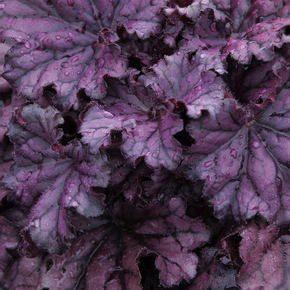
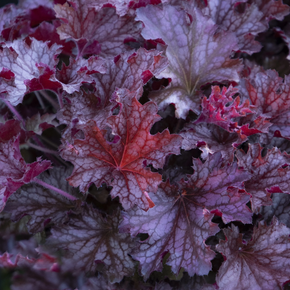
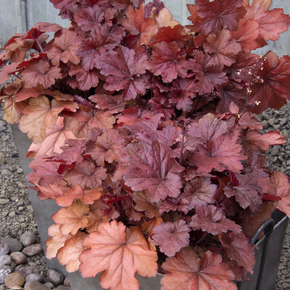
Heuchera 'Georgia Peach' Coral Bells is a spectacular, clump-forming herbaceous perennial prized above all for its bold, shapely foliage that puts on a breathtaking color show from spring through fall. Large, rounded, palmately lobed leaves — measuring up to 8 inches across — emerge in spring in a warm, luminous peach-orange accented by a striking silver-white overlay and contrasting darker veins. As the season progresses, the foliage deepens to rich rose tones in summer before shifting to a moody rose-purple draped in a beautiful frosted veil come autumn, making this one of the most dynamic foliage perennials available. In early to midsummer, delicate panicles of small, creamy white, bell-shaped flowers rise on slender stems up to 30 inches above the mounded foliage, adding a soft, airy elegance that attracts bees, butterflies, and hummingbirds. A member of the Saxifragaceae family and a cultivar developed with extra heat and humidity tolerance in mind, 'Georgia Peach' forms tidy, low-growing mounds that mature to about 12 to 14 inches tall and spread up to 24 inches wide, making it ideal for edging paths, mass planting under deciduous trees, underplanting shrubs and roses, or creating vibrant container combinations. It performs best in partial shade with rich, humus-amended, moist but well-drained soil and is hardy in USDA Zones 4 through 9, thriving beautifully across the mild climate range of Southern Oregon and Northern California gardens.
Plant Description
Heuchera 'Georgia Peach' is a semi-evergreen, clump-forming herbaceous perennial belonging to the Saxifragaceae (saxifrage) family. It is commonly known as Coral Bells or Alum Root. This cultivar was specifically bred for improved heat and humidity tolerance, setting it apart from many other Heuchera varieties. Its most celebrated feature is its extraordinarily large, rounded to heart-shaped, palmately lobed leaves that can reach up to 8 inches in diameter. A shimmering silver-white overlay gives the foliage an almost metallic, frosted appearance, while darker contrasting veins add bold graphic detail. Small, bell-shaped, creamy white flowers appear on slender, upright stems in early to midsummer, rising gracefully well above the foliage mound. The plant is vigorous, easy to grow, and requires minimal maintenance once established.
Foliage Color and Seasonal Change
One of the most remarkable qualities of 'Georgia Peach' is its dramatic, season-long foliage color progression that transforms the garden from spring through fall:
- Spring: Leaves emerge in a vibrant peach-orange tone with a distinctive silver-white overlay and contrasting darker veins — creating a warm, luminous, almost iridescent effect.
- Summer: As temperatures rise, the foliage deepens and warms into rich rose and peachy-rose tones, maintaining its eye-catching appeal throughout the hottest months.
- Fall: The leaves intensify further to a deep rose-purple, taking on a beautiful decorative frosted veil that adds elegance and drama to the autumn garden.
- Winter: In mild climates such as those of Southern Oregon and Northern California, foliage often persists as semi-evergreen, providing visual interest even through the cooler months.
Mature Size
| Attribute | Measurement |
|---|---|
| Foliage Mound Height | 12 to 14 inches |
| Flower Stem Height | Up to 24 to 30 inches |
| Spread | 18 to 24 inches |
| Recommended Spacing | 18 to 24 inches apart |
| Leaf Size | Up to 8 inches across |
| Growth Rate | Medium |
Hardiness and Climate Zones
Heuchera 'Georgia Peach' is a reliably cold-hardy and heat-tolerant perennial suited to a wide range of climates across the country, and it performs exceptionally well in the Pacific Northwest and Northern California regions.
- USDA Hardiness Zones: 4 through 9
- AHS Heat Zones: 1 through 8
- Sunset Climate Zones: 1 through 10, 14 through 24
- Unlike many other Heuchera cultivars, 'Georgia Peach' was specifically bred for improved tolerance of heat and humidity, making it an outstanding performer where summers can be warm.
- In Southern Oregon and Northern California, it thrives in both the mild coastal climates and the warmer inland valleys, making it an excellent all-around perennial choice for the region.
Sunlight Requirements
'Georgia Peach' performs best in partial shade to part sun conditions. Understanding its light preferences will help maximize the brilliance of its foliage coloration and overall plant vigor:
- Ideal exposure: Partial shade — dappled light or filtered sun for 2 to 6 hours per day is optimal.
- Full sun tolerance: This cultivar can tolerate more sun than many other Heuchera varieties, but in full sun the soil must be kept consistently moist to prevent leaf scorch and foliage decline.
- Deep shade: While it tolerates dry shade once established, very dense shade may reduce foliage color intensity and overall vigor.
- Best color: Many gardeners find that morning sun with afternoon shade strikes the perfect balance, intensifying the peachy-rose foliage hues without stressing the plant.
Soil and pH Preferences
Providing the right soil conditions is key to growing a vigorous, healthy 'Georgia Peach' plant. This cultivar is adaptable but performs best in the following conditions:
- Soil type: Rich, humusy loam is ideal; it also adapts to sandy and chalky soils. Avoid heavy, poorly drained clay soils, which can lead to crown rot.
- Soil drainage: Moist but well-drained. Good drainage is essential, especially in winter, to prevent root and crown rot.
- Organic matter: Amend planting beds with generous amounts of compost, leaf mold, or aged bark to improve drainage, moisture retention, and fertility.
- Soil pH: Prefers slightly acidic to neutral soil, approximately pH 6.0 to 7.0. It does not perform well in highly alkaline conditions.
- Crown placement: When planting, position the crown at or slightly above the soil surface to promote good air circulation and reduce the risk of crown rot.
Watering Guide
Heuchera 'Georgia Peach' has average to moderate water needs. Proper watering practices will keep the foliage vibrant and healthy throughout the growing season.
- Newly planted: Water regularly and consistently during the first growing season to establish a deep, robust root system.
- Established plants: Once established, 'Georgia Peach' has good drought tolerance. Water deeply but allow the soil to partially dry between waterings.
- Hot and dry spells: During prolonged dry or hot weather, supplement with deep waterings to maintain attractive foliage and prevent leaf scorch, particularly for plants in sunnier positions.
- Dry shade: Once well established, it can thrive in dry shade conditions, making it useful under trees or along dry borders.
- Avoid overwatering: Consistently wet or waterlogged soil, especially in winter, can cause crown and root rot. Always ensure good drainage.
- Mulching: Apply a 2- to 3-inch layer of organic mulch around the base (but not directly over the crown) to retain soil moisture, moderate temperature, and reduce irrigation needs.
Fertilizing
Heuchera 'Georgia Peach' is not a heavy feeder, but it does benefit from light, regular fertilizing to support vigorous growth and rich foliage color.
- Timing: Apply a balanced, slow-release granular fertilizer in early spring as new growth emerges. A single spring application is generally sufficient for the entire season.
- Fertilizer type: A balanced all-purpose fertilizer (such as a 10-10-10 formula) or one formulated for shade perennials works well. Alternatively, top-dress with a generous layer of rich compost each spring.
- Avoid excess nitrogen: Too much nitrogen will push lush, soft growth that is more susceptible to pests and disease, and can reduce the vibrancy of foliage color.
- Soil amendment: Incorporating organic compost at planting time and as an annual top-dressing is often the most reliable way to maintain soil fertility and long-term plant health.
Pruning and Maintenance
Heuchera 'Georgia Peach' is a low-maintenance perennial that requires only minimal care to look its best year-round.
- Deadheading: Remove spent flower stems at the base once blooming finishes. This tidies the plant's appearance and may encourage additional flower production.
- Foliage cleanup: In late winter or early spring, remove any tattered, damaged, or dead leaves to refresh the plant's appearance before new growth emerges. In mild climates, the foliage is semi-evergreen and may only need light cleanup.
- Rejuvenating ragged foliage: If foliage looks particularly shabby at any point during the season, you can cut all leaves back to encourage a fresh flush of new, colorful growth.
- Crown heaving: In colder parts of its range, the crown may heave upward out of the soil through winter freeze-thaw cycles. Gently firm it back down in spring and add mulch to help prevent recurrence.
- Mulching: Apply winter mulch after the ground freezes in colder zones to insulate roots and reduce heaving. Remove excess mulch in early spring.
- Division: Divide clumps every 3 to 4 years in spring to rejuvenate vigor, maintain plant health, and propagate new plants. Divisions establish quickly when replanted in prepared soil.
Planting Instructions
- Select a site with partial shade and well-drained soil. Morning sun and afternoon shade is often ideal.
- Prepare the planting area by loosening the soil to a depth of 12 to 15 inches and incorporating 2 to 3 inches of compost or aged organic matter to improve drainage and fertility.
- Dig a hole slightly wider than the root ball and just deep enough so the crown sits at or slightly above soil level. Planting too deeply can cause crown rot.
- Remove the plant from its container, gently loosen circling roots, and place it in the hole. Backfill with the amended soil and firm gently around the roots.
- Water thoroughly after planting to settle the soil around the roots and eliminate air pockets.
- Apply a 2- to 3-inch layer of mulch around the plant, keeping mulch a few inches away from the crown to ensure good air circulation.
- Water regularly during the first growing season to help the plant establish. Once established, reduce frequency as drought tolerance improves.
- Best planting times are spring or early fall when temperatures are moderate and conditions are not stressful for newly planted perennials.
Landscape Uses
Heuchera 'Georgia Peach' is an exceptionally versatile landscape plant whose bold, colorful foliage makes it a valuable design element in a wide variety of garden settings:
- Mixed perennial borders: Use the warm peach, rose, and purple tones to add striking foliage contrast and color continuity among flowering perennials.
- Woodland and shade gardens: A natural fit under deciduous trees and in dappled light settings where its foliage brightens dark corners.
- Ground cover: Mass plant in groups for an effective, colorful, low-maintenance ground cover on slopes, banks, and shaded areas.
- Edging: Plant along pathways, borders, and garden beds as a tidy, colorful edging plant that maintains interest all season.
- Container gardens: Excellent in patio pots and mixed containers, pairing beautifully with annuals, ornamental grasses, and other shade-loving perennials.
- Underplanting roses and shrubs: The colorful foliage fills in beautifully beneath roses, hydrangeas, and other shrubs while suppressing weeds.
- Rock gardens: Works well in well-drained rock garden settings where it provides season-long foliage color.
- Cut flower gardens: The airy flower stems make a graceful filler in floral arrangements.
Companion Plants
The warm peach, rose, and frosted purple foliage of 'Georgia Peach' pairs beautifully with a wide range of garden companions. Consider the following plant combinations:
- Hostas: The bold, solid blue-green or chartreuse foliage of hostas creates a striking foliage contrast alongside the warm tones of 'Georgia Peach'.
- Astilbe: Feathery plumes in pink, white, or red provide vertical interest and bloom alongside the Heuchera in summer.
- Heuchera 'Obsidian': The near-black, glossy leaves of this dark-leaved Heuchera create a bold and dramatic contrast with the peachy foliage.
- Ferns: The fine, lacy texture of Japanese painted ferns or autumn ferns complements the bold leaf shape of 'Georgia Peach' beautifully.
- Carex (Sedges): Fine-textured ornamental sedges like Carex comans 'Frosted Curls' add graceful movement and textural contrast.
- Echinacea (Coneflowers): Warm-toned coneflowers in peach, orange, or gold echo the foliage color palette harmoniously.
- Agastache: Vertical spikes of hummingbird mint in purple, blue, or orange provide exciting color and pollinator appeal.
- Lavender: The silver-gray foliage and purple flower spikes of lavender beautifully pick up the frosted, silver tones in the Heuchera leaves.
- Sedum 'Autumn Joy': Provides complementary late-season color and structural contrast in sunnier mixed borders.
- Tiarella (Foamflower): A natural companion in shaded woodland gardens, offering delicate spring bloom and interesting foliage texture.
Wildlife Value
Heuchera 'Georgia Peach' offers meaningful wildlife value in the garden, supporting a range of beneficial creatures while remaining resistant to common pest animals:
- Hummingbirds: The small, tubular, bell-shaped flowers are well-suited to hummingbird feeding and are reliably visited when in bloom.
- Butterflies: The nectar-rich flowers attract various butterfly species during the summer bloom period.
- Bees: Both native bees and honeybees are drawn to the flower panicles, making 'Georgia Peach' a valuable addition to pollinator-friendly gardens.
- Deer resistance: Tannins naturally present in Heuchera foliage make the leaves unpalatable to deer, making this an excellent choice for gardens in deer-prone areas of Southern Oregon and Northern California.
- Rabbit resistance: Similarly, rabbits tend to avoid Heuchera foliage, providing reliable protection in gardens where rabbits are a common nuisance.
Container Growing
Heuchera 'Georgia Peach' is an outstanding container plant, bringing season-long foliage color to patios, decks, entryways, and balconies. Follow these tips for best results:
- Container size: Choose a pot at least 10 to 12 inches in diameter with adequate drainage holes to prevent waterlogging.
- Potting mix: Use a high-quality, well-draining potting mix amended with perlite or coarse bark to improve drainage.
- Placement: Position in a spot that receives morning sun and afternoon shade, or bright indirect light for most of the day.
- Watering: Containers dry out more quickly than garden beds. Check moisture regularly and water when the top inch of soil feels dry, but never allow the pot to sit in standing water.
- Fertilizing: Feed container-grown plants with a balanced liquid fertilizer every 4 to 6 weeks during the active growing season to compensate for nutrients that leach from the pot with watering.
- Combination planting: Pairs beautifully in mixed containers with shade-loving annuals such as impatiens, begonias, and fuchsias, as well as with ornamental grasses and other foliage perennials.
- Overwintering: In colder zones, move containers to a sheltered location or unheated garage over winter to protect roots from freezing. In zones 7 to 9, containers can often remain outdoors in a protected spot.
Pests and Diseases
Heuchera 'Georgia Peach' is generally a robust, low-problem perennial that is virtually pest and disease free under proper growing conditions. The following potential issues should be monitored:
- Leaf scorch: The most common problem, caused by excessive sun exposure or dry soil in hot weather. Remedy by providing more shade or ensuring consistent moisture.
- Crown rot / root rot: Can occur in poorly drained or overly wet soils. Ensure excellent drainage and avoid planting the crown too deeply. Good air circulation around the crown is essential.
- Powdery mildew: Occasionally affects foliage in conditions with poor air circulation or high humidity. Improve spacing and air flow, and avoid overhead watering.
- Rust and bacterial leaf spot: Rare fungal and bacterial issues that can occur in wet conditions. Remove affected foliage promptly and avoid wetting leaves when watering.
- Vine weevils: The larvae of vine weevils may occasionally feed on roots. Look for notched leaf margins (adult feeding) as an early indicator.
- Foliar nematodes: Rare, but can cause wedge-shaped brown patches on leaves. Remove and dispose of infected foliage; avoid overhead irrigation.
- Mealybugs and aphids: Occasionally appear on new growth. Treat with a strong stream of water or insecticidal soap spray if infestations occur.
- Prevention: Planting in well-drained soil, maintaining good air circulation, avoiding crown burial, and dividing clumps every 3 to 4 years are the best preventive measures for keeping 'Georgia Peach' healthy and problem-free.
- Stunning season-long foliage transitions from brilliant peach-orange with silver overlay in spring through warm rose tones in summer to frosted rose-purple in fall, delivering color interest across three seasons.
- Specially bred for superior heat and humidity tolerance, making it an exceptionally vigorous and reliable performer in challenging warm-climate gardens.
- Low-maintenance, semi-evergreen perennial that is naturally deer resistant, drought tolerant once established, and virtually pest and disease free.
- Versatile landscape plant that thrives in borders, woodland gardens, containers, and as a ground cover or edging plant in partial shade to part sun situations.
Heuchera 'Georgia Peach' Coral Bells is a spectacular, clump-forming herbaceous perennial prized above all for its bold, shapely foliage that puts on a breathtaking color show from spring through fall. Large, rounded, palmately lobed leaves — measuring up to 8 inches across — emerge in spring in a warm, luminous peach-orange accented by a striking silver-white overlay and contrasting darker veins. As the season progresses, the foliage deepens to rich rose tones in summer before shifting to a moody rose-purple draped in a beautiful frosted veil come autumn, making this one of the most dynamic foliage perennials available. In early to midsummer, delicate panicles of small, creamy white, bell-shaped flowers rise on slender stems up to 30 inches above the mounded foliage, adding a soft, airy elegance that attracts bees, butterflies, and hummingbirds. A member of the Saxifragaceae family and a cultivar developed with extra heat and humidity tolerance in mind, 'Georgia Peach' forms tidy, low-growing mounds that mature to about 12 to 14 inches tall and spread up to 24 inches wide, making it ideal for edging paths, mass planting under deciduous trees, underplanting shrubs and roses, or creating vibrant container combinations. It performs best in partial shade with rich, humus-amended, moist but well-drained soil and is hardy in USDA Zones 4 through 9, thriving beautifully across the mild climate range of Southern Oregon and Northern California gardens.
Plant Description
Heuchera 'Georgia Peach' is a semi-evergreen, clump-forming herbaceous perennial belonging to the Saxifragaceae (saxifrage) family. It is commonly known as Coral Bells or Alum Root. This cultivar was specifically bred for improved heat and humidity tolerance, setting it apart from many other Heuchera varieties. Its most celebrated feature is its extraordinarily large, rounded to heart-shaped, palmately lobed leaves that can reach up to 8 inches in diameter. A shimmering silver-white overlay gives the foliage an almost metallic, frosted appearance, while darker contrasting veins add bold graphic detail. Small, bell-shaped, creamy white flowers appear on slender, upright stems in early to midsummer, rising gracefully well above the foliage mound. The plant is vigorous, easy to grow, and requires minimal maintenance once established.
Foliage Color and Seasonal Change
One of the most remarkable qualities of 'Georgia Peach' is its dramatic, season-long foliage color progression that transforms the garden from spring through fall:
- Spring: Leaves emerge in a vibrant peach-orange tone with a distinctive silver-white overlay and contrasting darker veins — creating a warm, luminous, almost iridescent effect.
- Summer: As temperatures rise, the foliage deepens and warms into rich rose and peachy-rose tones, maintaining its eye-catching appeal throughout the hottest months.
- Fall: The leaves intensify further to a deep rose-purple, taking on a beautiful decorative frosted veil that adds elegance and drama to the autumn garden.
- Winter: In mild climates such as those of Southern Oregon and Northern California, foliage often persists as semi-evergreen, providing visual interest even through the cooler months.
Mature Size
| Attribute | Measurement |
|---|---|
| Foliage Mound Height | 12 to 14 inches |
| Flower Stem Height | Up to 24 to 30 inches |
| Spread | 18 to 24 inches |
| Recommended Spacing | 18 to 24 inches apart |
| Leaf Size | Up to 8 inches across |
| Growth Rate | Medium |
Hardiness and Climate Zones
Heuchera 'Georgia Peach' is a reliably cold-hardy and heat-tolerant perennial suited to a wide range of climates across the country, and it performs exceptionally well in the Pacific Northwest and Northern California regions.
- USDA Hardiness Zones: 4 through 9
- AHS Heat Zones: 1 through 8
- Sunset Climate Zones: 1 through 10, 14 through 24
- Unlike many other Heuchera cultivars, 'Georgia Peach' was specifically bred for improved tolerance of heat and humidity, making it an outstanding performer where summers can be warm.
- In Southern Oregon and Northern California, it thrives in both the mild coastal climates and the warmer inland valleys, making it an excellent all-around perennial choice for the region.
Sunlight Requirements
'Georgia Peach' performs best in partial shade to part sun conditions. Understanding its light preferences will help maximize the brilliance of its foliage coloration and overall plant vigor:
- Ideal exposure: Partial shade — dappled light or filtered sun for 2 to 6 hours per day is optimal.
- Full sun tolerance: This cultivar can tolerate more sun than many other Heuchera varieties, but in full sun the soil must be kept consistently moist to prevent leaf scorch and foliage decline.
- Deep shade: While it tolerates dry shade once established, very dense shade may reduce foliage color intensity and overall vigor.
- Best color: Many gardeners find that morning sun with afternoon shade strikes the perfect balance, intensifying the peachy-rose foliage hues without stressing the plant.
Soil and pH Preferences
Providing the right soil conditions is key to growing a vigorous, healthy 'Georgia Peach' plant. This cultivar is adaptable but performs best in the following conditions:
- Soil type: Rich, humusy loam is ideal; it also adapts to sandy and chalky soils. Avoid heavy, poorly drained clay soils, which can lead to crown rot.
- Soil drainage: Moist but well-drained. Good drainage is essential, especially in winter, to prevent root and crown rot.
- Organic matter: Amend planting beds with generous amounts of compost, leaf mold, or aged bark to improve drainage, moisture retention, and fertility.
- Soil pH: Prefers slightly acidic to neutral soil, approximately pH 6.0 to 7.0. It does not perform well in highly alkaline conditions.
- Crown placement: When planting, position the crown at or slightly above the soil surface to promote good air circulation and reduce the risk of crown rot.
Watering Guide
Heuchera 'Georgia Peach' has average to moderate water needs. Proper watering practices will keep the foliage vibrant and healthy throughout the growing season.
- Newly planted: Water regularly and consistently during the first growing season to establish a deep, robust root system.
- Established plants: Once established, 'Georgia Peach' has good drought tolerance. Water deeply but allow the soil to partially dry between waterings.
- Hot and dry spells: During prolonged dry or hot weather, supplement with deep waterings to maintain attractive foliage and prevent leaf scorch, particularly for plants in sunnier positions.
- Dry shade: Once well established, it can thrive in dry shade conditions, making it useful under trees or along dry borders.
- Avoid overwatering: Consistently wet or waterlogged soil, especially in winter, can cause crown and root rot. Always ensure good drainage.
- Mulching: Apply a 2- to 3-inch layer of organic mulch around the base (but not directly over the crown) to retain soil moisture, moderate temperature, and reduce irrigation needs.
Fertilizing
Heuchera 'Georgia Peach' is not a heavy feeder, but it does benefit from light, regular fertilizing to support vigorous growth and rich foliage color.
- Timing: Apply a balanced, slow-release granular fertilizer in early spring as new growth emerges. A single spring application is generally sufficient for the entire season.
- Fertilizer type: A balanced all-purpose fertilizer (such as a 10-10-10 formula) or one formulated for shade perennials works well. Alternatively, top-dress with a generous layer of rich compost each spring.
- Avoid excess nitrogen: Too much nitrogen will push lush, soft growth that is more susceptible to pests and disease, and can reduce the vibrancy of foliage color.
- Soil amendment: Incorporating organic compost at planting time and as an annual top-dressing is often the most reliable way to maintain soil fertility and long-term plant health.
Pruning and Maintenance
Heuchera 'Georgia Peach' is a low-maintenance perennial that requires only minimal care to look its best year-round.
- Deadheading: Remove spent flower stems at the base once blooming finishes. This tidies the plant's appearance and may encourage additional flower production.
- Foliage cleanup: In late winter or early spring, remove any tattered, damaged, or dead leaves to refresh the plant's appearance before new growth emerges. In mild climates, the foliage is semi-evergreen and may only need light cleanup.
- Rejuvenating ragged foliage: If foliage looks particularly shabby at any point during the season, you can cut all leaves back to encourage a fresh flush of new, colorful growth.
- Crown heaving: In colder parts of its range, the crown may heave upward out of the soil through winter freeze-thaw cycles. Gently firm it back down in spring and add mulch to help prevent recurrence.
- Mulching: Apply winter mulch after the ground freezes in colder zones to insulate roots and reduce heaving. Remove excess mulch in early spring.
- Division: Divide clumps every 3 to 4 years in spring to rejuvenate vigor, maintain plant health, and propagate new plants. Divisions establish quickly when replanted in prepared soil.
Planting Instructions
- Select a site with partial shade and well-drained soil. Morning sun and afternoon shade is often ideal.
- Prepare the planting area by loosening the soil to a depth of 12 to 15 inches and incorporating 2 to 3 inches of compost or aged organic matter to improve drainage and fertility.
- Dig a hole slightly wider than the root ball and just deep enough so the crown sits at or slightly above soil level. Planting too deeply can cause crown rot.
- Remove the plant from its container, gently loosen circling roots, and place it in the hole. Backfill with the amended soil and firm gently around the roots.
- Water thoroughly after planting to settle the soil around the roots and eliminate air pockets.
- Apply a 2- to 3-inch layer of mulch around the plant, keeping mulch a few inches away from the crown to ensure good air circulation.
- Water regularly during the first growing season to help the plant establish. Once established, reduce frequency as drought tolerance improves.
- Best planting times are spring or early fall when temperatures are moderate and conditions are not stressful for newly planted perennials.
Landscape Uses
Heuchera 'Georgia Peach' is an exceptionally versatile landscape plant whose bold, colorful foliage makes it a valuable design element in a wide variety of garden settings:
- Mixed perennial borders: Use the warm peach, rose, and purple tones to add striking foliage contrast and color continuity among flowering perennials.
- Woodland and shade gardens: A natural fit under deciduous trees and in dappled light settings where its foliage brightens dark corners.
- Ground cover: Mass plant in groups for an effective, colorful, low-maintenance ground cover on slopes, banks, and shaded areas.
- Edging: Plant along pathways, borders, and garden beds as a tidy, colorful edging plant that maintains interest all season.
- Container gardens: Excellent in patio pots and mixed containers, pairing beautifully with annuals, ornamental grasses, and other shade-loving perennials.
- Underplanting roses and shrubs: The colorful foliage fills in beautifully beneath roses, hydrangeas, and other shrubs while suppressing weeds.
- Rock gardens: Works well in well-drained rock garden settings where it provides season-long foliage color.
- Cut flower gardens: The airy flower stems make a graceful filler in floral arrangements.
Companion Plants
The warm peach, rose, and frosted purple foliage of 'Georgia Peach' pairs beautifully with a wide range of garden companions. Consider the following plant combinations:
- Hostas: The bold, solid blue-green or chartreuse foliage of hostas creates a striking foliage contrast alongside the warm tones of 'Georgia Peach'.
- Astilbe: Feathery plumes in pink, white, or red provide vertical interest and bloom alongside the Heuchera in summer.
- Heuchera 'Obsidian': The near-black, glossy leaves of this dark-leaved Heuchera create a bold and dramatic contrast with the peachy foliage.
- Ferns: The fine, lacy texture of Japanese painted ferns or autumn ferns complements the bold leaf shape of 'Georgia Peach' beautifully.
- Carex (Sedges): Fine-textured ornamental sedges like Carex comans 'Frosted Curls' add graceful movement and textural contrast.
- Echinacea (Coneflowers): Warm-toned coneflowers in peach, orange, or gold echo the foliage color palette harmoniously.
- Agastache: Vertical spikes of hummingbird mint in purple, blue, or orange provide exciting color and pollinator appeal.
- Lavender: The silver-gray foliage and purple flower spikes of lavender beautifully pick up the frosted, silver tones in the Heuchera leaves.
- Sedum 'Autumn Joy': Provides complementary late-season color and structural contrast in sunnier mixed borders.
- Tiarella (Foamflower): A natural companion in shaded woodland gardens, offering delicate spring bloom and interesting foliage texture.
Wildlife Value
Heuchera 'Georgia Peach' offers meaningful wildlife value in the garden, supporting a range of beneficial creatures while remaining resistant to common pest animals:
- Hummingbirds: The small, tubular, bell-shaped flowers are well-suited to hummingbird feeding and are reliably visited when in bloom.
- Butterflies: The nectar-rich flowers attract various butterfly species during the summer bloom period.
- Bees: Both native bees and honeybees are drawn to the flower panicles, making 'Georgia Peach' a valuable addition to pollinator-friendly gardens.
- Deer resistance: Tannins naturally present in Heuchera foliage make the leaves unpalatable to deer, making this an excellent choice for gardens in deer-prone areas of Southern Oregon and Northern California.
- Rabbit resistance: Similarly, rabbits tend to avoid Heuchera foliage, providing reliable protection in gardens where rabbits are a common nuisance.
Container Growing
Heuchera 'Georgia Peach' is an outstanding container plant, bringing season-long foliage color to patios, decks, entryways, and balconies. Follow these tips for best results:
- Container size: Choose a pot at least 10 to 12 inches in diameter with adequate drainage holes to prevent waterlogging.
- Potting mix: Use a high-quality, well-draining potting mix amended with perlite or coarse bark to improve drainage.
- Placement: Position in a spot that receives morning sun and afternoon shade, or bright indirect light for most of the day.
- Watering: Containers dry out more quickly than garden beds. Check moisture regularly and water when the top inch of soil feels dry, but never allow the pot to sit in standing water.
- Fertilizing: Feed container-grown plants with a balanced liquid fertilizer every 4 to 6 weeks during the active growing season to compensate for nutrients that leach from the pot with watering.
- Combination planting: Pairs beautifully in mixed containers with shade-loving annuals such as impatiens, begonias, and fuchsias, as well as with ornamental grasses and other foliage perennials.
- Overwintering: In colder zones, move containers to a sheltered location or unheated garage over winter to protect roots from freezing. In zones 7 to 9, containers can often remain outdoors in a protected spot.
Pests and Diseases
Heuchera 'Georgia Peach' is generally a robust, low-problem perennial that is virtually pest and disease free under proper growing conditions. The following potential issues should be monitored:
- Leaf scorch: The most common problem, caused by excessive sun exposure or dry soil in hot weather. Remedy by providing more shade or ensuring consistent moisture.
- Crown rot / root rot: Can occur in poorly drained or overly wet soils. Ensure excellent drainage and avoid planting the crown too deeply. Good air circulation around the crown is essential.
- Powdery mildew: Occasionally affects foliage in conditions with poor air circulation or high humidity. Improve spacing and air flow, and avoid overhead watering.
- Rust and bacterial leaf spot: Rare fungal and bacterial issues that can occur in wet conditions. Remove affected foliage promptly and avoid wetting leaves when watering.
- Vine weevils: The larvae of vine weevils may occasionally feed on roots. Look for notched leaf margins (adult feeding) as an early indicator.
- Foliar nematodes: Rare, but can cause wedge-shaped brown patches on leaves. Remove and dispose of infected foliage; avoid overhead irrigation.
- Mealybugs and aphids: Occasionally appear on new growth. Treat with a strong stream of water or insecticidal soap spray if infestations occur.
- Prevention: Planting in well-drained soil, maintaining good air circulation, avoiding crown burial, and dividing clumps every 3 to 4 years are the best preventive measures for keeping 'Georgia Peach' healthy and problem-free.