
Zoom the image with the mouse
Forever Purple Heuchera - 1 Gallon
SKU:
2036910
UPC:
014949457634
$14.99
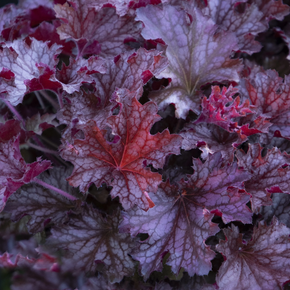
- Strikingly intense, glossy purple foliage with fluted edges holds its deep color through all four seasons, making it one of the most reliably purple-leaved perennials available.
- Airy sprays of soft violet-pink bell-shaped flowers bloom on deep burgundy stems from late spring through summer, attracting hummingbirds, butterflies, and bees.
- Exceptionally adaptable and low-maintenance — tolerates full sun to full shade, resists deer and drought once established, and thrives in borders, rock gardens, and mixed containers.
- A multi-award-winning performer with vigorous, multi-crown, mounding habit and a compact footprint that fits beautifully into nearly any garden style or landscape design.
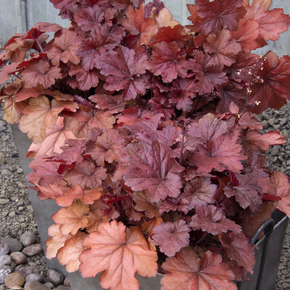
Heuchera Forever Purple Coral Bells (Heuchera x 'TNHEUFP' PP#26,358) is a showstopping, compact, clump-forming evergreen perennial celebrated for its unfaltering, ultra-deep purple, glossy foliage that holds its dramatic color year-round without fading. The richly hued leaves feature elegantly fluted edges and a lustrous surface that catches light in every season, making this one of the most striking foliage perennials available for gardens in USDA Zones 4 through 9. From late spring well into summer, short and airy sprays of small, soft violet-colored bell-shaped flowers rise on deep burgundy stems to about 15 inches above the evergreen mound, drawing in hummingbirds, butterflies, and bees for weeks on end. Bred as part of the FOREVER series and a multiple trial-garden award winner — including recognition at Colorado State University, Penn State University, the Massachusetts Horticultural Society, and the University of Minnesota — Forever Purple has proven itself a vigorous, reliable, and virtually carefree performer across a broad range of climates and conditions. Its mounding, multi-crown habit reaches about 12 inches tall and up to 22 inches wide, making it ideal as a bold edger along paths, a colorful groundcover in mass plantings, a standout specimen in mixed borders, or a stunning focal point in container designs. Equally at home in cottage gardens, coastal landscapes, woodland settings, and urban courtyard gardens, Forever Purple Coral Bells pairs beautifully with ornamental grasses, hostas, astilbe, ferns, and other shade or part-sun companions, and its flower stems even make lovely additions to fresh-cut bouquets.
Plant Description
Forever Purple Coral Bells is a compact, clump-forming evergreen perennial prized above all for its foliage. The glossy, rich purple leaves are distinctively fluted at the edges and retain their intense, jewel-like color throughout all four seasons — a quality that sets this variety apart from many other heucheras that tend to lose saturation during hot summers. The leaves form a tidy basal mound with a vigorous, multi-crown growth habit. In late spring and continuing through summer, the plant sends up slender, branching flower stems in deep burgundy, topped with airy sprays of small, bell-shaped flowers in soft violet-pink — a delicate and elegant contrast to the bold foliage below. The flowers are attractive to pollinators and also serve well in fresh-cut arrangements. The cultivar name 'TNHEUFP' reflects its origin with a specialty perennial breeder, and it carries Plant Patent PP#26,358. It is classified as herbaceous, but behaves as an evergreen in mild-winter climates such as those found in Southern Oregon and Northern California.
Mature Size
| Characteristic | Measurement |
|---|---|
| Foliage Height | Approximately 12 inches (30 cm) |
| Mature Width / Spread | 18 to 22 inches (45 to 55 cm) |
| Flower Stem Height | Up to 15 inches (37 cm) above the foliage |
| Recommended Spacing | 18 to 24 inches on center |
| Growth Habit | Mounding, multi-crown clump |
| Growth Rate | Moderate |
Hardiness and Climate Zones
Forever Purple Coral Bells is reliably cold-hardy across a wide range and performs beautifully in the climates of Southern Oregon and Northern California.
- USDA Hardiness Zones: 4 through 9
- AHS Heat Zones: 1 through 8
- Sunset Climate Zones: 1 through 10, 14 through 24
- Evergreen in mild-winter areas (Zones 7 and warmer); semi-evergreen to herbaceous in colder zones
- Demonstrated 100% survival through harsh winters with minimal snow cover in University of Minnesota trials (2014-2016)
- Awarded "Too Good to Wait Performer" and "Top Performer Perennial" at Colorado State University trials (2015, 2016)
- Earned "Best of Species" recognition at Penn State University trials (2015)
Sunlight Requirements
One of the most adaptable aspects of Forever Purple Coral Bells is its ability to thrive across a wide spectrum of light conditions.
- Ideal exposure: Part shade — approximately 4 to 6 hours of direct sunlight per day, particularly morning sun with protection from intense afternoon rays
- Full shade: Tolerated well; foliage color remains rich, though flowering may be reduced
- Full sun: Possible in cooler climates or coastal areas when consistent soil moisture is maintained; excessive heat and drought in full sun can cause foliage to scorch or decline
- The deep, saturated purple leaves of this variety handle more sun than lighter-colored heucheras, making it a more versatile choice for sunnier spots than many other cultivars
- In the warmer inland valleys of Southern Oregon and Northern California, a site with filtered afternoon shade is recommended for best foliage appearance during summer
Soil and pH Preferences
- Preferred soil type: Rich, humus-amended loam or sandy loam with good drainage
- Drainage: Moist but well-drained; soggy or waterlogged soils — especially in winter — are the leading cause of decline and death in heucheras
- Soil pH: Prefers a near-neutral range of approximately 6.0 to 7.0; greenhouse pH of 5.5 to 6.5 is optimal during propagation and establishment
- Clay soils: Tolerated but should be amended with compost or perlite to improve drainage before planting
- Salt tolerance: Good, making it suitable for coastal garden settings
- Adding organic matter such as compost at planting time improves soil structure, moisture retention, and nutrient availability, giving Forever Purple the best start
- Avoid planting in low-lying areas or spots where water pools after rain or irrigation
Watering Guide
Forever Purple Coral Bells has average water needs and becomes notably drought-tolerant once established, but consistent moisture helps it look its best — especially during its first growing season and during summer heat.
- First growing season: Check soil moisture once or twice per week and water whenever the top inch or two of soil is dry; consistent moisture helps the plant establish a strong root system
- Established plants: Water during extended dry spells; the plant is moderately drought-tolerant once roots are well developed
- Full-sun plantings: Require more frequent irrigation to prevent foliage stress and maintain the rich purple color
- Watering method: Water at the base of the plant to keep foliage dry; overhead watering can encourage fungal diseases such as rust and botrytis
- Winter: Reduce watering in winter; standing moisture around the crown during cold, wet periods is more harmful than frost itself
- A 2-inch layer of mulch around (but not touching) the crown helps retain soil moisture, moderate temperature extremes, and suppress weeds
Fertilizing
- Timing: Apply fertilizer in early spring as new growth emerges
- Recommended product: A balanced, slow-release granular fertilizer (such as a 10-10-10 or similar formulation) applied around the base of the plant according to label directions
- Organic option: Top-dress with a thin layer of compost each spring to provide gentle, sustained nutrition and improve soil health over time
- Container-grown plants: Supplement with a diluted balanced water-soluble fertilizer every 4 to 6 weeks during the active growing season (spring through late summer)
- Target NPP: Approximately 100 to 150 ppm nitrogen during active growth for optimal vigor
- Avoid over-fertilizing, particularly with high-nitrogen products, which can promote lush but weak growth more susceptible to pests and disease
- No fertilizer is needed in fall or winter, when the plant is not actively growing
Pruning and Maintenance
Forever Purple Coral Bells is a genuinely low-maintenance perennial. Minimal attention keeps it looking tidy and vigorous throughout the seasons.
- Deadheading: Remove spent flower stems promptly to maintain a neat appearance and encourage additional blooming during the season
- Spring cleanup: In early spring, trim away any tattered, winter-burned, or dead foliage to make room for fresh new growth; use clean, sharp shears and disinfect between plants
- Fall: In mild-winter areas where the foliage remains evergreen (including much of Southern Oregon and Northern California), avoid cutting the plant back in fall — the foliage continues to feed and protect the crown through winter
- Heaving prevention: In colder parts of its range, apply a light layer of mulch after the ground freezes to help prevent frost heaving, which can push the shallow crown out of the soil
- Crown check: If frost heaving exposes the crown in spring, gently press it back down and top-dress with a small amount of compost to re-anchor it
- Pinching: If a plant produces only one tall, stemmy crown, pinching the growing tip encourages branching and a fuller mound
- Always use sharp, clean pruning shears; disinfect with rubbing alcohol between each plant to prevent potential spread of rust or other pathogens
Planting Instructions
- Choose a site with part shade to filtered sun and well-drained soil. In warmer inland areas, ensure afternoon shade is available.
- Prepare the planting area by working in a generous amount of compost or aged organic matter to a depth of 8 to 10 inches to improve both drainage and fertility.
- Dig a hole slightly wider than the root ball and no deeper — the crown (where the stems meet the roots) must sit at or just above the soil surface; never bury the crown.
- Remove the plant from its container, gently loosen any circling roots, and set the plant in the hole at the correct depth.
- Backfill with the amended soil, firming gently around the roots to eliminate air pockets.
- Water thoroughly at planting to settle the soil and eliminate air pockets around the roots.
- Apply a 2-inch layer of mulch around the plant, keeping it a few inches away from the crown to prevent rot.
- Space multiple plants 18 to 24 inches on center to allow for mature spread and good air circulation.
- The best planting times are spring and early fall when temperatures are moderate and establishment is easiest.
Seasonal Interest
| Season | What to Expect |
|---|---|
| Spring | Foliage emerges fresh and intensely purple; flower spikes begin forming in late spring, signaling the start of the bloom period |
| Summer | Peak bloom period — airy sprays of soft violet-pink bell-shaped flowers float above the deep purple mound on burgundy stems; pollinators are active around the plant |
| Fall | Glossy foliage remains rich and saturated into autumn; cooler temperatures may intensify the purple even further, adding drama to fall borders |
| Winter | Evergreen in mild-winter climates; the bold purple rosette continues to add color and structure to the winter garden, making it a valuable off-season landscape asset |
Landscape Uses
- Mixed borders and beds: A bold foliage anchor that contrasts beautifully with silver, chartreuse, and bright-flowering neighbors
- Edging: The tidy, mounding habit makes it ideal for defining pathways, driveways, and garden borders
- Groundcover: Effective in mass plantings under trees, along slopes, or in shaded areas where lawn grass struggles
- Container gardening: Thrives in pots, window boxes, and mixed patio planters, providing vivid year-round color
- Rock and gravel gardens: Tolerates the sharper drainage and reflected heat typical of these settings when adequate moisture is maintained
- Woodland and shade gardens: A natural fit under deciduous trees or in dappled-light settings alongside ferns, hostas, and bleeding heart
- Coastal gardens: Its salt tolerance makes it a reliable choice near the coast in Northern California and Southern Oregon
- Underplanting: Works beautifully beneath roses, small ornamental trees, and open-canopied shrubs
- Cut flower gardens: Flower stems can be harvested for use in fresh floral arrangements
Companion Plants
The deep, saturated purple foliage of Forever Purple creates striking contrasts and harmonious combinations with a wide range of companion plants. Consider pairing it with:
- Shade and part-shade companions: Hostas (especially gold or blue-leafed varieties), astilbe, Japanese forest grass (Hakonechloa macra 'Aureola'), bleeding heart (Dicentra), ferns, hellebores, and pulmonaria
- Sunny border companions: Ornamental grasses, yarrow (Achillea), artemisia, daylilies, geranium, lady's mantle (Alchemilla), and catmint (Nepeta)
- Contrasting foliage partners: Chartreuse or gold sweet potato vine, lime-green Hakone grass, or silver artemisia provide vivid contrast in containers and mixed borders
- Flowering perennials for color harmony: Geum 'Fireball', purple coneflower (Echinacea), and salvias echo or contrast the purple tones of the foliage
- Shrub underplanting: Particularly effective planted beneath roses, as the purple mounds beautifully complement both red and pink blooms
Pests and Diseases
Forever Purple Coral Bells is considered virtually pest- and disease-free under good growing conditions. However, it is wise to be aware of the following potential issues:
- Vine weevil: The most common pest; adult weevils notch leaf margins while larvae feed on roots. Check for c-shaped grubs in the soil if plants show unexplained wilting. Beneficial nematodes or appropriate soil drenches can help control populations.
- Heuchera rust (Puccinia heucherae): A fungal disease that appears as raised white or yellow spots on the upper leaf surface with reddish-orange pustules beneath. Remove and dispose of (do not compost) affected foliage. Apply a fungicide if needed. Rust spores spread via wind and water splash, so avoid overhead watering.
- Powdery mildew: Presents as white or gray dusty coating on leaves. Encouraged by crowded conditions and poor air circulation. Improve spacing and airflow; treat with a labeled fungicide if necessary.
- Botrytis gray mold: Gray fuzzy mold on foliage and flowers during cool, humid conditions. Remove infected plant parts and improve air circulation.
- Downy mildew: Yellow spots on upper leaf surface with gray fuzz beneath. Remove infected leaves and treat with a fungicide.
- Leaf spots: Ringed fungal spots on foliage. Remove affected leaves; thin plants to increase air circulation.
- Prevention tips: Always water at the base of the plant rather than overhead, ensure good air circulation by proper spacing, divide crowded clumps every 3 to 4 years, and remove dead foliage promptly.
Container Growing
- Forever Purple is an outstanding container plant thanks to its compact, mounding habit, vivid year-round foliage color, and tolerance for the temperature fluctuations common in pots
- Container selection: Choose a pot with generous drainage holes; a container at least 10 to 12 inches in diameter provides adequate root space and stability
- Potting mix: Use a high-quality, well-draining potting mix; avoid heavy, moisture-retentive mixes that can lead to crown rot
- Watering: Containers dry out more quickly than garden beds — check moisture regularly and water when the top inch of potting mix is dry; never allow the container to sit in a saucer of standing water
- Fertilizing: Supplement with a balanced water-soluble fertilizer every 4 to 6 weeks through the growing season, as nutrients leach out of containers more rapidly than from garden soil
- Overwintering containers: In zones 7 and warmer (including most of Southern Oregon and Northern California), containers can remain outdoors year-round; in colder zones, move containers to a protected, unheated garage or covered porch to prevent the root ball from freezing solid
- Mixed container designs: Pairs beautifully as a "thriller" with trailing sweet potato vine or calibrachoa as a "spiller," and upright ornamental grasses or tall salvias as a "filler"
Wildlife Value
- Hummingbirds: The tubular, bell-shaped violet-pink flowers are a reliable nectar source and actively attract hummingbirds throughout the summer bloom period
- Butterflies: Several species of butterflies visit the flowers for nectar, making this a valuable addition to pollinator gardens
- Bees: Native and honey bees are attracted to the flowers, contributing to overall garden pollinator health
- Deer resistant: The foliage is generally avoided by deer, making it a dependable choice in garden areas subject to deer browsing pressure — a common concern in Southern Oregon and Northern California landscapes
- Rabbit resistant: Similarly unappealing to rabbits, adding to its ease of care in areas with active wildlife populations
Dividing and Propagation
- When to divide: Divide clumps every 3 to 4 years, either in early spring as growth resumes or in early fall (at least 6 weeks before the first expected frost to allow re-establishment)
- Why divide: Over time, heuchera crowns can become woody and elevated above the soil surface. Division rejuvenates the plant, improves vigor, and produces new plants for the garden
- How to divide: Dig up the entire clump and use a sharp, clean knife or garden fork to separate the crown into sections, each with several healthy roots and growing points attached. Replant divisions at the correct crown depth (at or just above soil level) and water in well.
- Propagation note: Forever Purple is a patented cultivar (PP#26,358). Propagation of this plant for resale or commercial distribution without a license from the patent holder is prohibited. Division for personal garden use is permitted.
- Discard any woody, unproductive sections of the old crown and retain only the vigorous outer portions for replanting
- Strikingly intense, glossy purple foliage with fluted edges holds its deep color through all four seasons, making it one of the most reliably purple-leaved perennials available.
- Airy sprays of soft violet-pink bell-shaped flowers bloom on deep burgundy stems from late spring through summer, attracting hummingbirds, butterflies, and bees.
- Exceptionally adaptable and low-maintenance — tolerates full sun to full shade, resists deer and drought once established, and thrives in borders, rock gardens, and mixed containers.
- A multi-award-winning performer with vigorous, multi-crown, mounding habit and a compact footprint that fits beautifully into nearly any garden style or landscape design.
Heuchera Forever Purple Coral Bells (Heuchera x 'TNHEUFP' PP#26,358) is a showstopping, compact, clump-forming evergreen perennial celebrated for its unfaltering, ultra-deep purple, glossy foliage that holds its dramatic color year-round without fading. The richly hued leaves feature elegantly fluted edges and a lustrous surface that catches light in every season, making this one of the most striking foliage perennials available for gardens in USDA Zones 4 through 9. From late spring well into summer, short and airy sprays of small, soft violet-colored bell-shaped flowers rise on deep burgundy stems to about 15 inches above the evergreen mound, drawing in hummingbirds, butterflies, and bees for weeks on end. Bred as part of the FOREVER series and a multiple trial-garden award winner — including recognition at Colorado State University, Penn State University, the Massachusetts Horticultural Society, and the University of Minnesota — Forever Purple has proven itself a vigorous, reliable, and virtually carefree performer across a broad range of climates and conditions. Its mounding, multi-crown habit reaches about 12 inches tall and up to 22 inches wide, making it ideal as a bold edger along paths, a colorful groundcover in mass plantings, a standout specimen in mixed borders, or a stunning focal point in container designs. Equally at home in cottage gardens, coastal landscapes, woodland settings, and urban courtyard gardens, Forever Purple Coral Bells pairs beautifully with ornamental grasses, hostas, astilbe, ferns, and other shade or part-sun companions, and its flower stems even make lovely additions to fresh-cut bouquets.
Plant Description
Forever Purple Coral Bells is a compact, clump-forming evergreen perennial prized above all for its foliage. The glossy, rich purple leaves are distinctively fluted at the edges and retain their intense, jewel-like color throughout all four seasons — a quality that sets this variety apart from many other heucheras that tend to lose saturation during hot summers. The leaves form a tidy basal mound with a vigorous, multi-crown growth habit. In late spring and continuing through summer, the plant sends up slender, branching flower stems in deep burgundy, topped with airy sprays of small, bell-shaped flowers in soft violet-pink — a delicate and elegant contrast to the bold foliage below. The flowers are attractive to pollinators and also serve well in fresh-cut arrangements. The cultivar name 'TNHEUFP' reflects its origin with a specialty perennial breeder, and it carries Plant Patent PP#26,358. It is classified as herbaceous, but behaves as an evergreen in mild-winter climates such as those found in Southern Oregon and Northern California.
Mature Size
| Characteristic | Measurement |
|---|---|
| Foliage Height | Approximately 12 inches (30 cm) |
| Mature Width / Spread | 18 to 22 inches (45 to 55 cm) |
| Flower Stem Height | Up to 15 inches (37 cm) above the foliage |
| Recommended Spacing | 18 to 24 inches on center |
| Growth Habit | Mounding, multi-crown clump |
| Growth Rate | Moderate |
Hardiness and Climate Zones
Forever Purple Coral Bells is reliably cold-hardy across a wide range and performs beautifully in the climates of Southern Oregon and Northern California.
- USDA Hardiness Zones: 4 through 9
- AHS Heat Zones: 1 through 8
- Sunset Climate Zones: 1 through 10, 14 through 24
- Evergreen in mild-winter areas (Zones 7 and warmer); semi-evergreen to herbaceous in colder zones
- Demonstrated 100% survival through harsh winters with minimal snow cover in University of Minnesota trials (2014-2016)
- Awarded "Too Good to Wait Performer" and "Top Performer Perennial" at Colorado State University trials (2015, 2016)
- Earned "Best of Species" recognition at Penn State University trials (2015)
Sunlight Requirements
One of the most adaptable aspects of Forever Purple Coral Bells is its ability to thrive across a wide spectrum of light conditions.
- Ideal exposure: Part shade — approximately 4 to 6 hours of direct sunlight per day, particularly morning sun with protection from intense afternoon rays
- Full shade: Tolerated well; foliage color remains rich, though flowering may be reduced
- Full sun: Possible in cooler climates or coastal areas when consistent soil moisture is maintained; excessive heat and drought in full sun can cause foliage to scorch or decline
- The deep, saturated purple leaves of this variety handle more sun than lighter-colored heucheras, making it a more versatile choice for sunnier spots than many other cultivars
- In the warmer inland valleys of Southern Oregon and Northern California, a site with filtered afternoon shade is recommended for best foliage appearance during summer
Soil and pH Preferences
- Preferred soil type: Rich, humus-amended loam or sandy loam with good drainage
- Drainage: Moist but well-drained; soggy or waterlogged soils — especially in winter — are the leading cause of decline and death in heucheras
- Soil pH: Prefers a near-neutral range of approximately 6.0 to 7.0; greenhouse pH of 5.5 to 6.5 is optimal during propagation and establishment
- Clay soils: Tolerated but should be amended with compost or perlite to improve drainage before planting
- Salt tolerance: Good, making it suitable for coastal garden settings
- Adding organic matter such as compost at planting time improves soil structure, moisture retention, and nutrient availability, giving Forever Purple the best start
- Avoid planting in low-lying areas or spots where water pools after rain or irrigation
Watering Guide
Forever Purple Coral Bells has average water needs and becomes notably drought-tolerant once established, but consistent moisture helps it look its best — especially during its first growing season and during summer heat.
- First growing season: Check soil moisture once or twice per week and water whenever the top inch or two of soil is dry; consistent moisture helps the plant establish a strong root system
- Established plants: Water during extended dry spells; the plant is moderately drought-tolerant once roots are well developed
- Full-sun plantings: Require more frequent irrigation to prevent foliage stress and maintain the rich purple color
- Watering method: Water at the base of the plant to keep foliage dry; overhead watering can encourage fungal diseases such as rust and botrytis
- Winter: Reduce watering in winter; standing moisture around the crown during cold, wet periods is more harmful than frost itself
- A 2-inch layer of mulch around (but not touching) the crown helps retain soil moisture, moderate temperature extremes, and suppress weeds
Fertilizing
- Timing: Apply fertilizer in early spring as new growth emerges
- Recommended product: A balanced, slow-release granular fertilizer (such as a 10-10-10 or similar formulation) applied around the base of the plant according to label directions
- Organic option: Top-dress with a thin layer of compost each spring to provide gentle, sustained nutrition and improve soil health over time
- Container-grown plants: Supplement with a diluted balanced water-soluble fertilizer every 4 to 6 weeks during the active growing season (spring through late summer)
- Target NPP: Approximately 100 to 150 ppm nitrogen during active growth for optimal vigor
- Avoid over-fertilizing, particularly with high-nitrogen products, which can promote lush but weak growth more susceptible to pests and disease
- No fertilizer is needed in fall or winter, when the plant is not actively growing
Pruning and Maintenance
Forever Purple Coral Bells is a genuinely low-maintenance perennial. Minimal attention keeps it looking tidy and vigorous throughout the seasons.
- Deadheading: Remove spent flower stems promptly to maintain a neat appearance and encourage additional blooming during the season
- Spring cleanup: In early spring, trim away any tattered, winter-burned, or dead foliage to make room for fresh new growth; use clean, sharp shears and disinfect between plants
- Fall: In mild-winter areas where the foliage remains evergreen (including much of Southern Oregon and Northern California), avoid cutting the plant back in fall — the foliage continues to feed and protect the crown through winter
- Heaving prevention: In colder parts of its range, apply a light layer of mulch after the ground freezes to help prevent frost heaving, which can push the shallow crown out of the soil
- Crown check: If frost heaving exposes the crown in spring, gently press it back down and top-dress with a small amount of compost to re-anchor it
- Pinching: If a plant produces only one tall, stemmy crown, pinching the growing tip encourages branching and a fuller mound
- Always use sharp, clean pruning shears; disinfect with rubbing alcohol between each plant to prevent potential spread of rust or other pathogens
Planting Instructions
- Choose a site with part shade to filtered sun and well-drained soil. In warmer inland areas, ensure afternoon shade is available.
- Prepare the planting area by working in a generous amount of compost or aged organic matter to a depth of 8 to 10 inches to improve both drainage and fertility.
- Dig a hole slightly wider than the root ball and no deeper — the crown (where the stems meet the roots) must sit at or just above the soil surface; never bury the crown.
- Remove the plant from its container, gently loosen any circling roots, and set the plant in the hole at the correct depth.
- Backfill with the amended soil, firming gently around the roots to eliminate air pockets.
- Water thoroughly at planting to settle the soil and eliminate air pockets around the roots.
- Apply a 2-inch layer of mulch around the plant, keeping it a few inches away from the crown to prevent rot.
- Space multiple plants 18 to 24 inches on center to allow for mature spread and good air circulation.
- The best planting times are spring and early fall when temperatures are moderate and establishment is easiest.
Seasonal Interest
| Season | What to Expect |
|---|---|
| Spring | Foliage emerges fresh and intensely purple; flower spikes begin forming in late spring, signaling the start of the bloom period |
| Summer | Peak bloom period — airy sprays of soft violet-pink bell-shaped flowers float above the deep purple mound on burgundy stems; pollinators are active around the plant |
| Fall | Glossy foliage remains rich and saturated into autumn; cooler temperatures may intensify the purple even further, adding drama to fall borders |
| Winter | Evergreen in mild-winter climates; the bold purple rosette continues to add color and structure to the winter garden, making it a valuable off-season landscape asset |
Landscape Uses
- Mixed borders and beds: A bold foliage anchor that contrasts beautifully with silver, chartreuse, and bright-flowering neighbors
- Edging: The tidy, mounding habit makes it ideal for defining pathways, driveways, and garden borders
- Groundcover: Effective in mass plantings under trees, along slopes, or in shaded areas where lawn grass struggles
- Container gardening: Thrives in pots, window boxes, and mixed patio planters, providing vivid year-round color
- Rock and gravel gardens: Tolerates the sharper drainage and reflected heat typical of these settings when adequate moisture is maintained
- Woodland and shade gardens: A natural fit under deciduous trees or in dappled-light settings alongside ferns, hostas, and bleeding heart
- Coastal gardens: Its salt tolerance makes it a reliable choice near the coast in Northern California and Southern Oregon
- Underplanting: Works beautifully beneath roses, small ornamental trees, and open-canopied shrubs
- Cut flower gardens: Flower stems can be harvested for use in fresh floral arrangements
Companion Plants
The deep, saturated purple foliage of Forever Purple creates striking contrasts and harmonious combinations with a wide range of companion plants. Consider pairing it with:
- Shade and part-shade companions: Hostas (especially gold or blue-leafed varieties), astilbe, Japanese forest grass (Hakonechloa macra 'Aureola'), bleeding heart (Dicentra), ferns, hellebores, and pulmonaria
- Sunny border companions: Ornamental grasses, yarrow (Achillea), artemisia, daylilies, geranium, lady's mantle (Alchemilla), and catmint (Nepeta)
- Contrasting foliage partners: Chartreuse or gold sweet potato vine, lime-green Hakone grass, or silver artemisia provide vivid contrast in containers and mixed borders
- Flowering perennials for color harmony: Geum 'Fireball', purple coneflower (Echinacea), and salvias echo or contrast the purple tones of the foliage
- Shrub underplanting: Particularly effective planted beneath roses, as the purple mounds beautifully complement both red and pink blooms
Pests and Diseases
Forever Purple Coral Bells is considered virtually pest- and disease-free under good growing conditions. However, it is wise to be aware of the following potential issues:
- Vine weevil: The most common pest; adult weevils notch leaf margins while larvae feed on roots. Check for c-shaped grubs in the soil if plants show unexplained wilting. Beneficial nematodes or appropriate soil drenches can help control populations.
- Heuchera rust (Puccinia heucherae): A fungal disease that appears as raised white or yellow spots on the upper leaf surface with reddish-orange pustules beneath. Remove and dispose of (do not compost) affected foliage. Apply a fungicide if needed. Rust spores spread via wind and water splash, so avoid overhead watering.
- Powdery mildew: Presents as white or gray dusty coating on leaves. Encouraged by crowded conditions and poor air circulation. Improve spacing and airflow; treat with a labeled fungicide if necessary.
- Botrytis gray mold: Gray fuzzy mold on foliage and flowers during cool, humid conditions. Remove infected plant parts and improve air circulation.
- Downy mildew: Yellow spots on upper leaf surface with gray fuzz beneath. Remove infected leaves and treat with a fungicide.
- Leaf spots: Ringed fungal spots on foliage. Remove affected leaves; thin plants to increase air circulation.
- Prevention tips: Always water at the base of the plant rather than overhead, ensure good air circulation by proper spacing, divide crowded clumps every 3 to 4 years, and remove dead foliage promptly.
Container Growing
- Forever Purple is an outstanding container plant thanks to its compact, mounding habit, vivid year-round foliage color, and tolerance for the temperature fluctuations common in pots
- Container selection: Choose a pot with generous drainage holes; a container at least 10 to 12 inches in diameter provides adequate root space and stability
- Potting mix: Use a high-quality, well-draining potting mix; avoid heavy, moisture-retentive mixes that can lead to crown rot
- Watering: Containers dry out more quickly than garden beds — check moisture regularly and water when the top inch of potting mix is dry; never allow the container to sit in a saucer of standing water
- Fertilizing: Supplement with a balanced water-soluble fertilizer every 4 to 6 weeks through the growing season, as nutrients leach out of containers more rapidly than from garden soil
- Overwintering containers: In zones 7 and warmer (including most of Southern Oregon and Northern California), containers can remain outdoors year-round; in colder zones, move containers to a protected, unheated garage or covered porch to prevent the root ball from freezing solid
- Mixed container designs: Pairs beautifully as a "thriller" with trailing sweet potato vine or calibrachoa as a "spiller," and upright ornamental grasses or tall salvias as a "filler"
Wildlife Value
- Hummingbirds: The tubular, bell-shaped violet-pink flowers are a reliable nectar source and actively attract hummingbirds throughout the summer bloom period
- Butterflies: Several species of butterflies visit the flowers for nectar, making this a valuable addition to pollinator gardens
- Bees: Native and honey bees are attracted to the flowers, contributing to overall garden pollinator health
- Deer resistant: The foliage is generally avoided by deer, making it a dependable choice in garden areas subject to deer browsing pressure — a common concern in Southern Oregon and Northern California landscapes
- Rabbit resistant: Similarly unappealing to rabbits, adding to its ease of care in areas with active wildlife populations
Dividing and Propagation
- When to divide: Divide clumps every 3 to 4 years, either in early spring as growth resumes or in early fall (at least 6 weeks before the first expected frost to allow re-establishment)
- Why divide: Over time, heuchera crowns can become woody and elevated above the soil surface. Division rejuvenates the plant, improves vigor, and produces new plants for the garden
- How to divide: Dig up the entire clump and use a sharp, clean knife or garden fork to separate the crown into sections, each with several healthy roots and growing points attached. Replant divisions at the correct crown depth (at or just above soil level) and water in well.
- Propagation note: Forever Purple is a patented cultivar (PP#26,358). Propagation of this plant for resale or commercial distribution without a license from the patent holder is prohibited. Division for personal garden use is permitted.
- Discard any woody, unproductive sections of the old crown and retain only the vigorous outer portions for replanting