

Zoom the image with the mouse
Sunny Days Lemon Coneflower - 1 Gallon
SKU:
2098995
UPC:
014949483756
$13.99
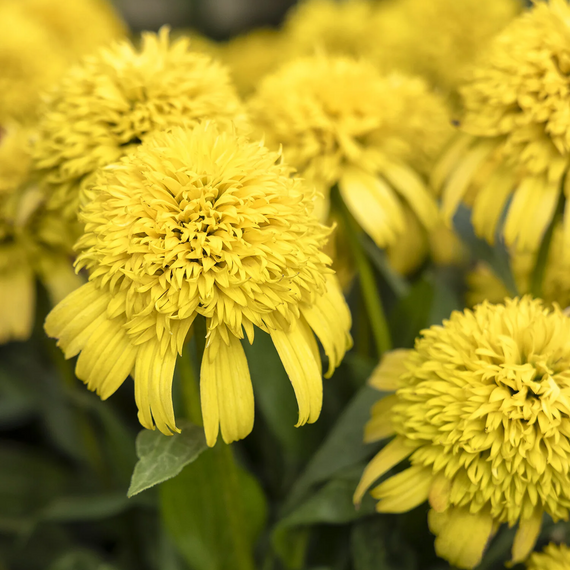
- Massive, lemon-yellow pompom double flowers smother upright, mounding plants from mid-summer through fall, delivering months of non-stop sunny color in the garden.
- Lightly fragrant blooms on strong stems make exceptional, long-lasting cut flowers, while deep emerald-green foliage provides a rich, clean backdrop all season long.
- A true pollinator magnet that draws butterflies, bees, and hummingbirds, while offering reliable deer resistance and impressive drought tolerance once established.
- Exceptionally versatile and low-maintenance, thriving in sunny borders, mass plantings, rain gardens, and containers across a wide range of climates in USDA Zones 4-9.
Echinacea Sunny Days Lemon is a showstopping herbaceous perennial coneflower that redefines what yellow can look like in a sunny garden bed. Part of the acclaimed Sunny Days series, this interspecific hybrid produces an extraordinary number of large, fully double blooms packed with densely layered lemon-yellow petals that form striking, globe-like pompoms atop sturdy upright stems. The flowers carry a pleasing light fragrance that adds an extra sensory dimension to borders and bouquets alike. Growing to approximately 22 inches tall with flower stems reaching up to 30 inches and spreading up to 30 inches wide, its compact, mounding habit makes it equally at home in the middle of a mixed perennial border or as the thriller centerpiece of a large patio container. Deep, rich emerald-green foliage extends all the way to the ground, creating a lush, full appearance that makes this plant stand out even when not in bloom. Blooming from July through October, it provides four months of vibrant color right when the summer garden needs it most. Hardy in USDA Zones 4 through 9, Sunny Days Lemon is well-suited to a broad range of climates, including the hot, dry summers of Southern Oregon and Northern California. It is considered drought tolerant once established, adapts well to average garden soils, and shrugs off deer pressure with ease. Whether used in cottage gardens, native-inspired plantings, pollinator gardens, or as a prolific cut flower crop, this remarkably floriferous coneflower delivers season-long impact with minimal fuss.
Plant Description
Sunny Days Lemon is a mounding, upright herbaceous perennial coneflower belonging to the Asteraceae family. It is an interspecific hybrid (Echinacea x 'TNECHSDL') developed for exceptional flower power and a long, reliable bloom season. Unlike traditional single-petaled coneflowers, this variety produces bold, fully double flowers with tightly packed layers of lemon-yellow petals arranged into large, eye-catching pompoms. The petals have a slight downward drape, giving each bloom a fluid, cometary appearance above the deep emerald-green foliage. The plant holds a lush, full silhouette from the ground up throughout the growing season, and its light fragrance makes it a delight near patios, walkways, and entryways. This cultivar holds US Plant Patent PP33,471.
Mature Size
| Attribute | Measurement |
|---|---|
| Foliage Height | Approximately 22 inches |
| Height in Bloom | Up to 30 inches |
| Spread | Up to 30 inches |
| Growth Rate | Fast to medium |
| Growth Habit | Upright, mounding, and dense |
| Recommended Spacing | 24 to 30 inches on center |
| Longevity | Up to 10 years under ideal conditions |
Hardiness Zones
Sunny Days Lemon is hardy in USDA Plant Hardiness Zones 4 through 9, making it suitable for a very wide range of North American climates. It thrives in the warm, dry summers of Southern Oregon and Northern California and handles cold winters well with no special protection needed in most regions. As an herbaceous perennial, it will die back to the crown each winter and reliably re-emerge from the base each spring. The crown can be difficult to spot in late winter, so take care not to disturb it during early-season garden cleanup. Plants grown in Zone 9 may benefit from afternoon shade during the most intense heat of summer.
Sunlight Requirements
This coneflower performs best in full sun, requiring a minimum of 6 to 8 hours of direct sunlight per day for optimal flowering. It will tolerate mostly sunny to partial shade conditions (at least 3 to 4 hours of direct sun), but flowering will be reduced and stems may become slightly more lax with less light. In the hottest inland climates of Southern Oregon and Northern California, a site with full morning sun and very light afternoon shade can help extend flower color and reduce heat stress without sacrificing bloom count. Avoid deeply shaded locations, as this will significantly diminish the plant's flowering potential and dense, mounding habit.
Soil and pH Preferences
Sunny Days Lemon is adaptable to a wide range of soil types, including average garden soils, clay, and coarser, slightly mineral or sandy loam soils. The single most important soil requirement is good drainage — this plant does not tolerate standing water or prolonged waterlogged conditions, which can cause root rot from Pythium and Phytophthora pathogens. Ideal soil pH ranges from 5.8 to 7.3, though slightly acidic to neutral (6.0 to 7.0) is optimal. Low soil pH can be detrimental to plant health. It is highly tolerant of urban conditions and poor soils, and it also performs well in rain gardens where drainage is adequate. Amending heavy clay soils with compost or coarse grit before planting will greatly improve drainage and long-term performance.
Watering Guide
Once established, Sunny Days Lemon is considered drought tolerant and requires only average to low water. During the first growing season after planting, water regularly and deeply to help the root system establish — allow the top inch or two of soil to dry out between waterings rather than keeping the soil constantly moist. Once established, deep, infrequent watering is far preferable to frequent shallow watering. Allow the soil to dry moderately between irrigation cycles, as maintaining a wet-and-dry cycle is important for overall plant health and disease prevention. Avoid overhead watering when possible; watering at the base of the plant in the morning allows foliage to stay dry and reduces the risk of foliar fungal issues. Container-grown plants will require more frequent monitoring and watering than those planted in the ground.
Fertilizing
Sunny Days Lemon has modest fertility needs and can thrive in average garden soil without heavy feeding. For in-ground plantings, apply a root stimulant or a balanced low-nitrogen fertilizer (such as a 4-3-3 formulation) at the time of initial planting to encourage root establishment. In subsequent years, a light top-dressing of compost or a single application of a balanced organic slow-release fertilizer in late winter to early spring is generally all that is needed. Avoid excessive nitrogen, which encourages lush foliage at the expense of flowers, and avoid late-season applications of slow-release fertilizers that may push soft, frost-susceptible growth heading into fall. For container plantings, a diluted balanced liquid fertilizer applied monthly through the growing season will maintain vigor and prolific blooming.
Pruning and Maintenance
Sunny Days Lemon is a low-maintenance perennial that requires minimal intervention to look its best. Follow these guidelines for optimal performance:
- Deadheading: Remove spent blooms throughout the growing season to encourage continuous flower production. Snip or pinch spent flower heads back to the next lateral bud or leaf node on the stem.
- Fall cleanup: If desired, leave seedheads in place through fall and winter — they provide excellent food for finches and other seed-eating birds and add attractive structural interest to the winter garden. If removing, leave the basal foliage rosette intact to protect the crown through winter.
- Spring cleanup: Cut all flower stalks and any remaining foliage back to just above soil level in early spring before new growth emerges. This is the preferred time for major cleanup, as it allows the crown maximum protection through winter.
- Division: Plants generally do not need frequent division, but clumps can be divided in early spring or early fall every 3 to 4 years to rejuvenate older plants and maintain vigor. Note that as a patented cultivar, propagation for sale or distribution is prohibited.
Planting Instructions
- Choose a planting site that receives at least 6 hours of direct sun daily and has well-draining soil.
- Amend heavy clay or compacted soils with compost or coarse grit to ensure adequate drainage before planting.
- Dig a hole approximately twice the width of the root ball and the same depth — it is critical that the crown of the plant sits at or just at the soil surface, not buried below it. Planting too deep is the most common cause of failure with Echinacea.
- Set the plant in the hole so that the soil level of the root ball matches the soil level of the surrounding ground. Backfill gently and firm the soil around the roots to eliminate air pockets.
- Water thoroughly after planting to settle the soil and encourage root contact.
- Space multiple plants 24 to 30 inches apart on center to allow for mature spread and good air circulation.
- Apply a 2-inch layer of mulch around (but not directly over) the crown to retain moisture, suppress weeds, and moderate soil temperature.
- Water regularly during the first season while the root system establishes. Reduce watering frequency once the plant is well rooted and showing active growth.
Bloom Season and Seasonal Interest
Sunny Days Lemon delivers an exceptionally long display of color compared to many perennials, typically blooming from mid-summer through mid-fall — July through October in most climates. The lemon-yellow double pompom flowers are the star attraction, appearing in prolific waves above lush dark green foliage for the better part of four months. As summer transitions to fall, the blooms age gracefully, and if seedheads are left in place, they provide attractive architectural interest well into winter — the dried cone centers catching snow and frost for a beautiful seasonal tableau. In spring, fresh deep-green foliage emerges at the base, signaling the start of another season. This plant is primarily valued as a summer-to-fall performer and does not offer significant spring bloom or notable fall foliage color, but its exceptionally long flowering window more than compensates.
Landscape Uses
The upright, mounding form and prolific flower production of Sunny Days Lemon make it one of the most versatile perennials for the sunny garden. Recommended landscape applications include:
- Mixed perennial borders: Ideal in the mid-border or background, where its 22 to 30-inch height adds mass and bold color from midsummer onward.
- Mass plantings: When planted in groups of three or more, the effect of dozens of lemon-yellow pompoms is spectacular and creates high visual impact from a distance.
- Pollinator and wildlife gardens: The flowers attract bees, butterflies, and hummingbirds, while the winter seedheads feed finches and other birds.
- Cut flower gardens: Strong stems and long-lasting, fragrant blooms make this an outstanding choice for fresh-cut flower arrangements.
- Container plantings: Its upright, thriller habit makes it an ideal centerpiece in large patio containers and mixed outdoor planters.
- Low-water and xeriscape gardens: Excellent drought tolerance once established suits it perfectly to water-wise landscapes common in Southern Oregon and Northern California.
- Rain gardens: Tolerates periodic wet conditions in rain garden settings provided drainage is present between rain events.
- Meadow and prairie-style plantings: Its naturalistic habit blends beautifully into relaxed, meadow-inspired garden designs.
Companion Plants
Sunny Days Lemon pairs beautifully with plants that share its preference for full sun, average to dry soil, and summer-to-fall bloom seasons. Its bright lemon-yellow flowers combine especially well with complementary and contrasting colors:
- Salvia (Salvia nemorosa and hybrids): Deep violet-blue flower spikes create a classic, high-contrast pairing with the yellow pompoms and share similar sun and soil requirements.
- Rudbeckia (Black-Eyed Susan): Golden-yellow and orange tones harmonize warmly with the lemon hues and extend the late-summer color scheme together.
- Liatris (Blazing Star): Vertical purple spikes provide excellent form contrast to the rounded pompom flowers of Sunny Days Lemon.
- Agastache (Hyssop): Fragrant, pollinator-friendly spikes in purple, pink, or orange complement both the color and the wildlife-friendly nature of this coneflower.
- Catmint (Nepeta): Soft lavender-blue mounding habit makes a beautiful foreground planting in front of Sunny Days Lemon.
- Perovskia (Russian Sage): Airy silver foliage and lavender-blue flowers create an elegant backdrop or companion for the bold yellow blooms.
- Heuchera (Coral Bells): Dark-leaved varieties planted at the border edge provide rich color contrast with the emerald foliage and lemon flowers above.
- Ornamental Grasses (e.g., Pennisetum, Panicum): The fine texture of ornamental grasses creates a beautiful visual contrast to the bold flower forms of Sunny Days Lemon.
Wildlife Value
Sunny Days Lemon earns high marks as a wildlife-supportive plant throughout the growing season and into winter. The fragrant flowers are a reliable source of nectar and pollen for a wide range of beneficial insects, including native bees, honey bees, butterflies, and moths. Hummingbirds are also known to visit the blooms regularly. While the fully double flower form can limit some nectar accessibility compared to single-petaled forms, the sheer volume of flowers produced over four months means pollinators are consistently rewarded. In fall and winter, if seedheads are left standing rather than deadheaded, finches (particularly American goldfinches) and other seed-eating birds will actively forage on the dried cone centers. This plant is considered deer resistant in most settings, though no plant is completely deer-proof in areas of very high deer pressure. It is not considered toxic to dogs, cats, or horses.
Pests and Diseases
Sunny Days Lemon is generally considered a robust and relatively pest- and disease-resistant perennial. However, the following issues can occasionally arise:
- Powdery mildew: Can appear on foliage during periods of high humidity and poor air circulation. Improve spacing and airflow, avoid overhead watering, and water in the morning rather than evening to reduce risk.
- Root and crown rot (Pythium, Phytophthora): Caused by prolonged waterlogged soil conditions. Ensure excellent drainage at planting and maintain a wet-and-dry watering cycle. This is the most serious disease risk for this plant.
- Botrytis (gray mold): Can occur in crowded conditions with poor air circulation and persistently wet foliage. Proper spacing and morning watering are the best preventive measures.
- Aphids: May cluster on new growth, leaving sticky honeydew residue. A strong spray of water or an application of insecticidal soap will control light infestations.
- Spider mites: Fine webbing on leaves during hot, dry conditions is the telltale sign. Neem oil or insecticidal soap applied in the cooler morning hours is effective.
- Thrips: Can become problematic as plants come into flower. Monitor buds and flowers and treat with an appropriate insecticide if populations are high.
- Aster yellows (phytoplasma): A disease spread by leafhoppers that causes distorted, green-tinged flowers and stunted growth. There is no cure; infected plants should be removed and destroyed. Control leafhoppers to reduce transmission.
Container Growing
Sunny Days Lemon is an excellent candidate for large outdoor containers and patio planters. Its upright, mounding habit and bold flower display make it a natural "thriller" plant in combination container designs — place it at the center or rear of the planter, surrounded by mid-height fillers and trailing spillers for a dynamic, season-long display. Choose a container with generous drainage holes and use a high-quality, well-draining potting mix. Container-grown plants will dry out more quickly than those in the ground, so monitor soil moisture more frequently — water when the top inch of soil feels dry. Fertilize monthly during the growing season with a diluted balanced liquid fertilizer to sustain vigorous growth and continuous blooming. In Zones 4 through 6, move containers to a sheltered, unheated location (garage or covered porch) over winter to protect the roots from hard freezes, as pots are more vulnerable to freeze-thaw cycles than in-ground plantings. Resume normal care in spring when new growth appears at the crown.
- Massive, lemon-yellow pompom double flowers smother upright, mounding plants from mid-summer through fall, delivering months of non-stop sunny color in the garden.
- Lightly fragrant blooms on strong stems make exceptional, long-lasting cut flowers, while deep emerald-green foliage provides a rich, clean backdrop all season long.
- A true pollinator magnet that draws butterflies, bees, and hummingbirds, while offering reliable deer resistance and impressive drought tolerance once established.
- Exceptionally versatile and low-maintenance, thriving in sunny borders, mass plantings, rain gardens, and containers across a wide range of climates in USDA Zones 4-9.
Echinacea Sunny Days Lemon is a showstopping herbaceous perennial coneflower that redefines what yellow can look like in a sunny garden bed. Part of the acclaimed Sunny Days series, this interspecific hybrid produces an extraordinary number of large, fully double blooms packed with densely layered lemon-yellow petals that form striking, globe-like pompoms atop sturdy upright stems. The flowers carry a pleasing light fragrance that adds an extra sensory dimension to borders and bouquets alike. Growing to approximately 22 inches tall with flower stems reaching up to 30 inches and spreading up to 30 inches wide, its compact, mounding habit makes it equally at home in the middle of a mixed perennial border or as the thriller centerpiece of a large patio container. Deep, rich emerald-green foliage extends all the way to the ground, creating a lush, full appearance that makes this plant stand out even when not in bloom. Blooming from July through October, it provides four months of vibrant color right when the summer garden needs it most. Hardy in USDA Zones 4 through 9, Sunny Days Lemon is well-suited to a broad range of climates, including the hot, dry summers of Southern Oregon and Northern California. It is considered drought tolerant once established, adapts well to average garden soils, and shrugs off deer pressure with ease. Whether used in cottage gardens, native-inspired plantings, pollinator gardens, or as a prolific cut flower crop, this remarkably floriferous coneflower delivers season-long impact with minimal fuss.
Plant Description
Sunny Days Lemon is a mounding, upright herbaceous perennial coneflower belonging to the Asteraceae family. It is an interspecific hybrid (Echinacea x 'TNECHSDL') developed for exceptional flower power and a long, reliable bloom season. Unlike traditional single-petaled coneflowers, this variety produces bold, fully double flowers with tightly packed layers of lemon-yellow petals arranged into large, eye-catching pompoms. The petals have a slight downward drape, giving each bloom a fluid, cometary appearance above the deep emerald-green foliage. The plant holds a lush, full silhouette from the ground up throughout the growing season, and its light fragrance makes it a delight near patios, walkways, and entryways. This cultivar holds US Plant Patent PP33,471.
Mature Size
| Attribute | Measurement |
|---|---|
| Foliage Height | Approximately 22 inches |
| Height in Bloom | Up to 30 inches |
| Spread | Up to 30 inches |
| Growth Rate | Fast to medium |
| Growth Habit | Upright, mounding, and dense |
| Recommended Spacing | 24 to 30 inches on center |
| Longevity | Up to 10 years under ideal conditions |
Hardiness Zones
Sunny Days Lemon is hardy in USDA Plant Hardiness Zones 4 through 9, making it suitable for a very wide range of North American climates. It thrives in the warm, dry summers of Southern Oregon and Northern California and handles cold winters well with no special protection needed in most regions. As an herbaceous perennial, it will die back to the crown each winter and reliably re-emerge from the base each spring. The crown can be difficult to spot in late winter, so take care not to disturb it during early-season garden cleanup. Plants grown in Zone 9 may benefit from afternoon shade during the most intense heat of summer.
Sunlight Requirements
This coneflower performs best in full sun, requiring a minimum of 6 to 8 hours of direct sunlight per day for optimal flowering. It will tolerate mostly sunny to partial shade conditions (at least 3 to 4 hours of direct sun), but flowering will be reduced and stems may become slightly more lax with less light. In the hottest inland climates of Southern Oregon and Northern California, a site with full morning sun and very light afternoon shade can help extend flower color and reduce heat stress without sacrificing bloom count. Avoid deeply shaded locations, as this will significantly diminish the plant's flowering potential and dense, mounding habit.
Soil and pH Preferences
Sunny Days Lemon is adaptable to a wide range of soil types, including average garden soils, clay, and coarser, slightly mineral or sandy loam soils. The single most important soil requirement is good drainage — this plant does not tolerate standing water or prolonged waterlogged conditions, which can cause root rot from Pythium and Phytophthora pathogens. Ideal soil pH ranges from 5.8 to 7.3, though slightly acidic to neutral (6.0 to 7.0) is optimal. Low soil pH can be detrimental to plant health. It is highly tolerant of urban conditions and poor soils, and it also performs well in rain gardens where drainage is adequate. Amending heavy clay soils with compost or coarse grit before planting will greatly improve drainage and long-term performance.
Watering Guide
Once established, Sunny Days Lemon is considered drought tolerant and requires only average to low water. During the first growing season after planting, water regularly and deeply to help the root system establish — allow the top inch or two of soil to dry out between waterings rather than keeping the soil constantly moist. Once established, deep, infrequent watering is far preferable to frequent shallow watering. Allow the soil to dry moderately between irrigation cycles, as maintaining a wet-and-dry cycle is important for overall plant health and disease prevention. Avoid overhead watering when possible; watering at the base of the plant in the morning allows foliage to stay dry and reduces the risk of foliar fungal issues. Container-grown plants will require more frequent monitoring and watering than those planted in the ground.
Fertilizing
Sunny Days Lemon has modest fertility needs and can thrive in average garden soil without heavy feeding. For in-ground plantings, apply a root stimulant or a balanced low-nitrogen fertilizer (such as a 4-3-3 formulation) at the time of initial planting to encourage root establishment. In subsequent years, a light top-dressing of compost or a single application of a balanced organic slow-release fertilizer in late winter to early spring is generally all that is needed. Avoid excessive nitrogen, which encourages lush foliage at the expense of flowers, and avoid late-season applications of slow-release fertilizers that may push soft, frost-susceptible growth heading into fall. For container plantings, a diluted balanced liquid fertilizer applied monthly through the growing season will maintain vigor and prolific blooming.
Pruning and Maintenance
Sunny Days Lemon is a low-maintenance perennial that requires minimal intervention to look its best. Follow these guidelines for optimal performance:
- Deadheading: Remove spent blooms throughout the growing season to encourage continuous flower production. Snip or pinch spent flower heads back to the next lateral bud or leaf node on the stem.
- Fall cleanup: If desired, leave seedheads in place through fall and winter — they provide excellent food for finches and other seed-eating birds and add attractive structural interest to the winter garden. If removing, leave the basal foliage rosette intact to protect the crown through winter.
- Spring cleanup: Cut all flower stalks and any remaining foliage back to just above soil level in early spring before new growth emerges. This is the preferred time for major cleanup, as it allows the crown maximum protection through winter.
- Division: Plants generally do not need frequent division, but clumps can be divided in early spring or early fall every 3 to 4 years to rejuvenate older plants and maintain vigor. Note that as a patented cultivar, propagation for sale or distribution is prohibited.
Planting Instructions
- Choose a planting site that receives at least 6 hours of direct sun daily and has well-draining soil.
- Amend heavy clay or compacted soils with compost or coarse grit to ensure adequate drainage before planting.
- Dig a hole approximately twice the width of the root ball and the same depth — it is critical that the crown of the plant sits at or just at the soil surface, not buried below it. Planting too deep is the most common cause of failure with Echinacea.
- Set the plant in the hole so that the soil level of the root ball matches the soil level of the surrounding ground. Backfill gently and firm the soil around the roots to eliminate air pockets.
- Water thoroughly after planting to settle the soil and encourage root contact.
- Space multiple plants 24 to 30 inches apart on center to allow for mature spread and good air circulation.
- Apply a 2-inch layer of mulch around (but not directly over) the crown to retain moisture, suppress weeds, and moderate soil temperature.
- Water regularly during the first season while the root system establishes. Reduce watering frequency once the plant is well rooted and showing active growth.
Bloom Season and Seasonal Interest
Sunny Days Lemon delivers an exceptionally long display of color compared to many perennials, typically blooming from mid-summer through mid-fall — July through October in most climates. The lemon-yellow double pompom flowers are the star attraction, appearing in prolific waves above lush dark green foliage for the better part of four months. As summer transitions to fall, the blooms age gracefully, and if seedheads are left in place, they provide attractive architectural interest well into winter — the dried cone centers catching snow and frost for a beautiful seasonal tableau. In spring, fresh deep-green foliage emerges at the base, signaling the start of another season. This plant is primarily valued as a summer-to-fall performer and does not offer significant spring bloom or notable fall foliage color, but its exceptionally long flowering window more than compensates.
Landscape Uses
The upright, mounding form and prolific flower production of Sunny Days Lemon make it one of the most versatile perennials for the sunny garden. Recommended landscape applications include:
- Mixed perennial borders: Ideal in the mid-border or background, where its 22 to 30-inch height adds mass and bold color from midsummer onward.
- Mass plantings: When planted in groups of three or more, the effect of dozens of lemon-yellow pompoms is spectacular and creates high visual impact from a distance.
- Pollinator and wildlife gardens: The flowers attract bees, butterflies, and hummingbirds, while the winter seedheads feed finches and other birds.
- Cut flower gardens: Strong stems and long-lasting, fragrant blooms make this an outstanding choice for fresh-cut flower arrangements.
- Container plantings: Its upright, thriller habit makes it an ideal centerpiece in large patio containers and mixed outdoor planters.
- Low-water and xeriscape gardens: Excellent drought tolerance once established suits it perfectly to water-wise landscapes common in Southern Oregon and Northern California.
- Rain gardens: Tolerates periodic wet conditions in rain garden settings provided drainage is present between rain events.
- Meadow and prairie-style plantings: Its naturalistic habit blends beautifully into relaxed, meadow-inspired garden designs.
Companion Plants
Sunny Days Lemon pairs beautifully with plants that share its preference for full sun, average to dry soil, and summer-to-fall bloom seasons. Its bright lemon-yellow flowers combine especially well with complementary and contrasting colors:
- Salvia (Salvia nemorosa and hybrids): Deep violet-blue flower spikes create a classic, high-contrast pairing with the yellow pompoms and share similar sun and soil requirements.
- Rudbeckia (Black-Eyed Susan): Golden-yellow and orange tones harmonize warmly with the lemon hues and extend the late-summer color scheme together.
- Liatris (Blazing Star): Vertical purple spikes provide excellent form contrast to the rounded pompom flowers of Sunny Days Lemon.
- Agastache (Hyssop): Fragrant, pollinator-friendly spikes in purple, pink, or orange complement both the color and the wildlife-friendly nature of this coneflower.
- Catmint (Nepeta): Soft lavender-blue mounding habit makes a beautiful foreground planting in front of Sunny Days Lemon.
- Perovskia (Russian Sage): Airy silver foliage and lavender-blue flowers create an elegant backdrop or companion for the bold yellow blooms.
- Heuchera (Coral Bells): Dark-leaved varieties planted at the border edge provide rich color contrast with the emerald foliage and lemon flowers above.
- Ornamental Grasses (e.g., Pennisetum, Panicum): The fine texture of ornamental grasses creates a beautiful visual contrast to the bold flower forms of Sunny Days Lemon.
Wildlife Value
Sunny Days Lemon earns high marks as a wildlife-supportive plant throughout the growing season and into winter. The fragrant flowers are a reliable source of nectar and pollen for a wide range of beneficial insects, including native bees, honey bees, butterflies, and moths. Hummingbirds are also known to visit the blooms regularly. While the fully double flower form can limit some nectar accessibility compared to single-petaled forms, the sheer volume of flowers produced over four months means pollinators are consistently rewarded. In fall and winter, if seedheads are left standing rather than deadheaded, finches (particularly American goldfinches) and other seed-eating birds will actively forage on the dried cone centers. This plant is considered deer resistant in most settings, though no plant is completely deer-proof in areas of very high deer pressure. It is not considered toxic to dogs, cats, or horses.
Pests and Diseases
Sunny Days Lemon is generally considered a robust and relatively pest- and disease-resistant perennial. However, the following issues can occasionally arise:
- Powdery mildew: Can appear on foliage during periods of high humidity and poor air circulation. Improve spacing and airflow, avoid overhead watering, and water in the morning rather than evening to reduce risk.
- Root and crown rot (Pythium, Phytophthora): Caused by prolonged waterlogged soil conditions. Ensure excellent drainage at planting and maintain a wet-and-dry watering cycle. This is the most serious disease risk for this plant.
- Botrytis (gray mold): Can occur in crowded conditions with poor air circulation and persistently wet foliage. Proper spacing and morning watering are the best preventive measures.
- Aphids: May cluster on new growth, leaving sticky honeydew residue. A strong spray of water or an application of insecticidal soap will control light infestations.
- Spider mites: Fine webbing on leaves during hot, dry conditions is the telltale sign. Neem oil or insecticidal soap applied in the cooler morning hours is effective.
- Thrips: Can become problematic as plants come into flower. Monitor buds and flowers and treat with an appropriate insecticide if populations are high.
- Aster yellows (phytoplasma): A disease spread by leafhoppers that causes distorted, green-tinged flowers and stunted growth. There is no cure; infected plants should be removed and destroyed. Control leafhoppers to reduce transmission.
Container Growing
Sunny Days Lemon is an excellent candidate for large outdoor containers and patio planters. Its upright, mounding habit and bold flower display make it a natural "thriller" plant in combination container designs — place it at the center or rear of the planter, surrounded by mid-height fillers and trailing spillers for a dynamic, season-long display. Choose a container with generous drainage holes and use a high-quality, well-draining potting mix. Container-grown plants will dry out more quickly than those in the ground, so monitor soil moisture more frequently — water when the top inch of soil feels dry. Fertilize monthly during the growing season with a diluted balanced liquid fertilizer to sustain vigorous growth and continuous blooming. In Zones 4 through 6, move containers to a sheltered, unheated location (garage or covered porch) over winter to protect the roots from hard freezes, as pots are more vulnerable to freeze-thaw cycles than in-ground plantings. Resume normal care in spring when new growth appears at the crown.