


Zoom the image with the mouse
Dark Knight Bluebeard - 1 Gallon
SKU:
104500
UPC:
757992608300
$11.99
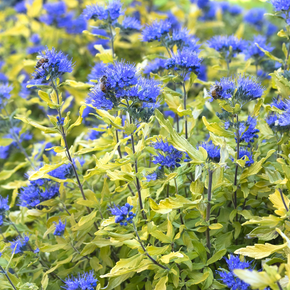
- Vivid deep blue-purple, fragrant flower clusters blanket this compact, mounded shrub from late summer through early fall, delivering bold color when most other shrubs have finished blooming.
- Aromatic gray-green foliage with silvery leaf undersides provides season-long ornamental interest while naturally deterring deer and rabbits.
- A proven pollinator magnet — butterflies, bees, and hummingbirds are irresistibly drawn to the rich, nectar-filled blooms throughout the late-season garden.
- Low-maintenance and drought-tolerant once established, thriving in full sun with well-drained soil and requiring little more than an annual spring pruning to stay vigorous and floriferous.
Dark Knight Bluebeard (Caryopteris x clandonensis 'Dark Knight') is a standout deciduous shrub that earns its keep in any sunny garden with a spectacular late-season display of deep, smoky blue-purple flower clusters that seem to float like clouds of blue mist above its mounded, aromatic gray-green foliage. A naturally occurring hybrid between Caryopteris incana and Caryopteris mongholica, this compact, rounded shrub typically reaches 2 to 4 feet tall and wide, making it perfectly proportioned for perennial borders, shrub beds, butterfly gardens, low informal hedges, and mixed container plantings. The lance-shaped leaves carry a pleasant, eucalyptus-like fragrance when brushed, and their silvery undersides lend a soft, two-toned texture even when the plant is not in bloom. Blooming reliably from mid-summer into fall on new season growth, Dark Knight is a workhorse for Southern Oregon and Northern California gardens — it tolerates summer heat, seasonal drought, and a wide range of well-drained soils, from sandy loams to chalky ground. Its deer and rabbit resistance, combined with virtually no serious pest or disease issues, make it one of the most carefree shrubs available for waterwise, wildlife-friendly, and cottage-style landscapes alike.
Plant Description
Dark Knight Bluebeard is a compact, low-mounded deciduous shrub prized for its profuse clusters of intensely deep blue-purple flowers that bloom in terminal and axillary whorls along the length of each stem. The blooms have a light, pleasant fragrance and create a billowing, misty effect reminiscent of blue smoke drifting through the garden. The lance-shaped to ovate leaves measure up to 1.5 inches long, are dull dark green on top with a silvery cast on the undersides, and release a refreshing eucalyptus-like aroma when touched. The overall plant habit is tidy and rounded, with stems that typically produce 18 to 30 inches of new growth per season. This cultivar may also be encountered under the alternate name 'Black Knight.'
Mature Size
| Attribute | Measurement |
|---|---|
| Mature Height | 2 to 4 feet |
| Mature Spread | 2 to 4 feet |
| Growth Rate | Moderate; 18 to 30 inches of new growth per season |
| Plant Habit | Compact, rounded mound |
| Recommended Spacing | 36 to 48 inches on center |
Hardiness and Climate
Dark Knight Bluebeard is hardy in USDA Zones 5 through 9, making it an excellent fit for the varied climates of Southern Oregon and Northern California. The root system is reliably cold-hardy to Zone 5, though top growth may die back to the ground during harsh winters in Zones 5 and 6. In the milder winters of Zones 7 through 9 — typical of much of the region — woody stems commonly survive intact from year to year. Regardless of winter stem survival, many gardeners elect to prune the plant back hard each spring to stimulate the most vigorous new growth and the most abundant flowering. This shrub also tolerates summer heat exceptionally well and is well-suited to the hot, dry summers characteristic of inland Southern Oregon and Northern California valleys.
Sunlight Requirements
Dark Knight Bluebeard performs best in full sun, requiring a minimum of 6 hours of direct sunlight each day. Full sun exposure produces the strongest stem growth, the most abundant flowering, and the most compact, tidy plant habit. While it can tolerate light afternoon shade, reduced sunlight often results in leggier growth, fewer blooms, and a less tidy appearance. For the most vibrant floral display and the best pollinator activity, choose a planting site that receives unobstructed morning and midday sun.
Soil and pH Preferences
This shrub is adaptable to a wide range of soil types but demands good drainage above all else. It thrives in average to lean soils including sandy loams, chalk-based soils, and loose, open loams. Heavy clay soils and sites where water pools or remains wet in winter are unsuitable and can lead to root and crown rot. Dark Knight Bluebeard tolerates acidic, neutral, and alkaline soil pH, so it rarely requires soil amendment for pH adjustment. If your native soil is heavy or slow-draining, incorporate generous amounts of coarse sand, pumice, or fine gravel at planting time to improve drainage and prevent root problems.
Watering Guide
Once established, Dark Knight Bluebeard is notably drought-tolerant and ideally suited to the dry-summer climates of Southern Oregon and Northern California. During the first growing season, water regularly and deeply — approximately once or twice per week — to help the root system become well established. After the first season, supplemental irrigation is only needed during extended dry spells or periods of exceptional heat. Avoid overwatering and never allow the root zone to remain consistently moist, as wet soil conditions, particularly in winter, are the primary cause of plant decline. Drip irrigation or deep, infrequent watering is far preferable to frequent shallow watering.
Fertilizing
Dark Knight Bluebeard is a light feeder that thrives in average to lean soils and requires minimal fertilizing. Over-fertilizing, particularly with high-nitrogen products, encourages excessive leafy growth at the expense of flower production. At planting time, working a modest amount of compost or a balanced slow-release granular fertilizer into the backfill soil is sufficient. In subsequent years, a single light application of a balanced granular fertilizer (such as a 10-10-10 formulation) in early spring as new growth emerges is all that is typically needed. Top-dressing with a thin layer of compost in spring also helps maintain soil structure and provides gentle, slow nutrition throughout the season.
Pruning and Maintenance
Dark Knight Bluebeard blooms exclusively on new season growth, so pruning does not reduce flowering — in fact, it greatly enhances it. Each spring, once new buds or shoots begin to emerge from the base or along the lower stems, prune all stems back hard to just above the lowest set of healthy new growth, typically 6 to 12 inches above ground level. This annual pruning encourages a dense, uniform mound of vigorous new growth and maximizes the late-season bloom. In Zones 5 and 6, where stems often die back completely in winter, simply remove all dead wood in spring and allow the root system to regenerate fresh stems. Deadheading spent flowers is not required for continued blooming, though removing seed heads before they mature can help minimize self-seeding if desired.
Planting Instructions
- Select a planting site in full sun with well-drained soil. Avoid low spots, clay-heavy areas, or locations prone to winter waterlogging.
- Plant in spring or early fall to avoid transplant stress from peak summer heat. Allow at least four to six weeks before the first hard frost for roots to establish.
- Dig a planting hole approximately twice the width of the root ball and equal in depth. Avoid planting too deep — the crown should sit at or slightly above the surrounding soil grade.
- If soil drainage is a concern, mix coarse sand, pumice, or pea gravel into the native soil at a ratio of roughly 1:3 before backfilling.
- Gently loosen any circling or compressed roots before setting the plant in the hole.
- Backfill with the amended native soil, firming gently around the root ball to eliminate air pockets.
- Water thoroughly immediately after planting. Apply a 2- to 3-inch layer of organic mulch around the base, keeping it a few inches away from the crown to discourage rot.
- Water regularly for the first season until the plant is fully established.
Seasonal Interest
While Dark Knight Bluebeard's show-stopping moment is undeniably its late-season bloom, it provides ornamental value across multiple seasons. In spring, attractive new gray-green foliage emerges fresh and aromatic, giving the plant an appealing presence in the border even before it flowers. Through summer, the soft mounding foliage mass adds textural contrast among bolder-leafed companions. The primary flowering season runs from late July through September and into October, bridging the gap between the summer and fall garden and providing vivid blue-purple color precisely when it is most scarce. After bloom, the dried seed heads and woody stems offer subtle winter structure, and in mild winters the persistent stems retain visual interest until the following spring pruning.
Landscape Uses
Dark Knight Bluebeard is a versatile landscape shrub suited to a wide variety of design applications. Its compact, rounded habit and late-season blooms make it especially valuable in the following settings:
- Perennial and mixed shrub borders, where it fills the late-season color gap
- Butterfly and pollinator gardens, where its nectar-rich blooms attract a diversity of beneficial insects
- Low informal hedges and fragrant border edging along walkways, patios, and driveways
- Mass plantings and large groupings for a dramatic sweep of deep blue color
- Waterwise and xeriscape gardens, thanks to its drought tolerance once established
- Cottage, Mediterranean, coastal, and gravel garden designs
- Large containers as a thriller or standalone specimen on sunny decks and patios
- Deer-resistant plantings in rural or wildlife-adjacent properties throughout Southern Oregon and Northern California
Companion Plants
Dark Knight Bluebeard pairs beautifully with plants that share its preference for full sun and well-drained soil. Its cool, deep blue-purple tones contrast dramatically against warm yellow, orange, and gold-toned companions while harmonizing with silver and lavender foliage. Excellent companion plant choices include:
- Russian sage (Perovskia atriplicifolia) — similar silver-gray foliage and airy blue flowers extend the late-season display
- English and Spanish lavender (Lavandula spp.) — fragrant, drought-tolerant, and visually complementary
- Black-eyed Susan (Rudbeckia fulgida) — warm golden-yellow blooms provide vivid color contrast in late summer
- Purple coneflower (Echinacea purpurea) — pollinator-friendly perennial that blooms alongside bluebeard
- Ornamental grasses such as Karl Foerster feather reed grass or blue oat grass add soft texture and movement
- Autumn Joy sedum (Hylotelephium 'Autumn Joy') — similar cultural needs with complementary pink to russet fall tones
- Butterfly bush (Buddleia spp.) — another late-season pollinator magnet that echoes the blue-purple color palette
- Blanket flower (Gaillardia spp.) and coreopsis — bright warm-toned companions that extend the contrasting color theme
Wildlife Value
Few shrubs rival Dark Knight Bluebeard as a late-season wildlife resource. The densely clustered, nectar-rich flowers are exceptionally attractive to a wide range of pollinators precisely when food sources begin to diminish in late summer and fall. Butterflies, including swallowtails, monarchs, and painted ladies, are regular visitors, as are numerous native bee species, honeybees, and hummingbirds. The aromatic foliage, however, is strongly unappealing to browsing mammals — deer and rabbits reliably avoid this plant, making it an outstanding choice for gardens in areas with heavy wildlife pressure. The dried seed heads that remain after flowering can also provide modest food value for seed-eating birds through the winter months.
Pests and Diseases
Dark Knight Bluebeard is notably pest- and disease-resistant and is considered virtually trouble-free under appropriate growing conditions. There are no serious insect pests or fungal diseases associated with this shrub when it is sited correctly. The primary threat to plant health is crown and root rot, which can develop when plants are grown in heavy, poorly drained soils or consistently overwatered — particularly during cool, wet winters. Occasionally, capsid bugs (plant bugs) may cause minor leaf distortion, but damage is rarely significant enough to warrant treatment. The best preventative strategy is simply to choose a well-drained planting site, avoid overwatering, and ensure good air circulation around the plant.
Container Growing
Dark Knight Bluebeard adapts well to container culture and makes a striking seasonal specimen on sunny decks, patios, and entryways. Choose a container at least 14 to 18 inches in diameter with generous drainage holes. Use a high-quality, well-draining potting mix blended with perlite or coarse sand to ensure excellent drainage. Container-grown plants will require more frequent watering than those in the ground — check soil moisture regularly and water when the top inch or two of the mix feels dry. Apply a balanced slow-release granular fertilizer at the start of the growing season and supplement with a diluted liquid fertilizer monthly through the bloom period. In colder parts of the region, move containers to a sheltered, unheated space such as a garage or covered patio for winter protection, as container roots are more vulnerable to freeze damage than in-ground roots.
- Vivid deep blue-purple, fragrant flower clusters blanket this compact, mounded shrub from late summer through early fall, delivering bold color when most other shrubs have finished blooming.
- Aromatic gray-green foliage with silvery leaf undersides provides season-long ornamental interest while naturally deterring deer and rabbits.
- A proven pollinator magnet — butterflies, bees, and hummingbirds are irresistibly drawn to the rich, nectar-filled blooms throughout the late-season garden.
- Low-maintenance and drought-tolerant once established, thriving in full sun with well-drained soil and requiring little more than an annual spring pruning to stay vigorous and floriferous.
Dark Knight Bluebeard (Caryopteris x clandonensis 'Dark Knight') is a standout deciduous shrub that earns its keep in any sunny garden with a spectacular late-season display of deep, smoky blue-purple flower clusters that seem to float like clouds of blue mist above its mounded, aromatic gray-green foliage. A naturally occurring hybrid between Caryopteris incana and Caryopteris mongholica, this compact, rounded shrub typically reaches 2 to 4 feet tall and wide, making it perfectly proportioned for perennial borders, shrub beds, butterfly gardens, low informal hedges, and mixed container plantings. The lance-shaped leaves carry a pleasant, eucalyptus-like fragrance when brushed, and their silvery undersides lend a soft, two-toned texture even when the plant is not in bloom. Blooming reliably from mid-summer into fall on new season growth, Dark Knight is a workhorse for Southern Oregon and Northern California gardens — it tolerates summer heat, seasonal drought, and a wide range of well-drained soils, from sandy loams to chalky ground. Its deer and rabbit resistance, combined with virtually no serious pest or disease issues, make it one of the most carefree shrubs available for waterwise, wildlife-friendly, and cottage-style landscapes alike.
Plant Description
Dark Knight Bluebeard is a compact, low-mounded deciduous shrub prized for its profuse clusters of intensely deep blue-purple flowers that bloom in terminal and axillary whorls along the length of each stem. The blooms have a light, pleasant fragrance and create a billowing, misty effect reminiscent of blue smoke drifting through the garden. The lance-shaped to ovate leaves measure up to 1.5 inches long, are dull dark green on top with a silvery cast on the undersides, and release a refreshing eucalyptus-like aroma when touched. The overall plant habit is tidy and rounded, with stems that typically produce 18 to 30 inches of new growth per season. This cultivar may also be encountered under the alternate name 'Black Knight.'
Mature Size
| Attribute | Measurement |
|---|---|
| Mature Height | 2 to 4 feet |
| Mature Spread | 2 to 4 feet |
| Growth Rate | Moderate; 18 to 30 inches of new growth per season |
| Plant Habit | Compact, rounded mound |
| Recommended Spacing | 36 to 48 inches on center |
Hardiness and Climate
Dark Knight Bluebeard is hardy in USDA Zones 5 through 9, making it an excellent fit for the varied climates of Southern Oregon and Northern California. The root system is reliably cold-hardy to Zone 5, though top growth may die back to the ground during harsh winters in Zones 5 and 6. In the milder winters of Zones 7 through 9 — typical of much of the region — woody stems commonly survive intact from year to year. Regardless of winter stem survival, many gardeners elect to prune the plant back hard each spring to stimulate the most vigorous new growth and the most abundant flowering. This shrub also tolerates summer heat exceptionally well and is well-suited to the hot, dry summers characteristic of inland Southern Oregon and Northern California valleys.
Sunlight Requirements
Dark Knight Bluebeard performs best in full sun, requiring a minimum of 6 hours of direct sunlight each day. Full sun exposure produces the strongest stem growth, the most abundant flowering, and the most compact, tidy plant habit. While it can tolerate light afternoon shade, reduced sunlight often results in leggier growth, fewer blooms, and a less tidy appearance. For the most vibrant floral display and the best pollinator activity, choose a planting site that receives unobstructed morning and midday sun.
Soil and pH Preferences
This shrub is adaptable to a wide range of soil types but demands good drainage above all else. It thrives in average to lean soils including sandy loams, chalk-based soils, and loose, open loams. Heavy clay soils and sites where water pools or remains wet in winter are unsuitable and can lead to root and crown rot. Dark Knight Bluebeard tolerates acidic, neutral, and alkaline soil pH, so it rarely requires soil amendment for pH adjustment. If your native soil is heavy or slow-draining, incorporate generous amounts of coarse sand, pumice, or fine gravel at planting time to improve drainage and prevent root problems.
Watering Guide
Once established, Dark Knight Bluebeard is notably drought-tolerant and ideally suited to the dry-summer climates of Southern Oregon and Northern California. During the first growing season, water regularly and deeply — approximately once or twice per week — to help the root system become well established. After the first season, supplemental irrigation is only needed during extended dry spells or periods of exceptional heat. Avoid overwatering and never allow the root zone to remain consistently moist, as wet soil conditions, particularly in winter, are the primary cause of plant decline. Drip irrigation or deep, infrequent watering is far preferable to frequent shallow watering.
Fertilizing
Dark Knight Bluebeard is a light feeder that thrives in average to lean soils and requires minimal fertilizing. Over-fertilizing, particularly with high-nitrogen products, encourages excessive leafy growth at the expense of flower production. At planting time, working a modest amount of compost or a balanced slow-release granular fertilizer into the backfill soil is sufficient. In subsequent years, a single light application of a balanced granular fertilizer (such as a 10-10-10 formulation) in early spring as new growth emerges is all that is typically needed. Top-dressing with a thin layer of compost in spring also helps maintain soil structure and provides gentle, slow nutrition throughout the season.
Pruning and Maintenance
Dark Knight Bluebeard blooms exclusively on new season growth, so pruning does not reduce flowering — in fact, it greatly enhances it. Each spring, once new buds or shoots begin to emerge from the base or along the lower stems, prune all stems back hard to just above the lowest set of healthy new growth, typically 6 to 12 inches above ground level. This annual pruning encourages a dense, uniform mound of vigorous new growth and maximizes the late-season bloom. In Zones 5 and 6, where stems often die back completely in winter, simply remove all dead wood in spring and allow the root system to regenerate fresh stems. Deadheading spent flowers is not required for continued blooming, though removing seed heads before they mature can help minimize self-seeding if desired.
Planting Instructions
- Select a planting site in full sun with well-drained soil. Avoid low spots, clay-heavy areas, or locations prone to winter waterlogging.
- Plant in spring or early fall to avoid transplant stress from peak summer heat. Allow at least four to six weeks before the first hard frost for roots to establish.
- Dig a planting hole approximately twice the width of the root ball and equal in depth. Avoid planting too deep — the crown should sit at or slightly above the surrounding soil grade.
- If soil drainage is a concern, mix coarse sand, pumice, or pea gravel into the native soil at a ratio of roughly 1:3 before backfilling.
- Gently loosen any circling or compressed roots before setting the plant in the hole.
- Backfill with the amended native soil, firming gently around the root ball to eliminate air pockets.
- Water thoroughly immediately after planting. Apply a 2- to 3-inch layer of organic mulch around the base, keeping it a few inches away from the crown to discourage rot.
- Water regularly for the first season until the plant is fully established.
Seasonal Interest
While Dark Knight Bluebeard's show-stopping moment is undeniably its late-season bloom, it provides ornamental value across multiple seasons. In spring, attractive new gray-green foliage emerges fresh and aromatic, giving the plant an appealing presence in the border even before it flowers. Through summer, the soft mounding foliage mass adds textural contrast among bolder-leafed companions. The primary flowering season runs from late July through September and into October, bridging the gap between the summer and fall garden and providing vivid blue-purple color precisely when it is most scarce. After bloom, the dried seed heads and woody stems offer subtle winter structure, and in mild winters the persistent stems retain visual interest until the following spring pruning.
Landscape Uses
Dark Knight Bluebeard is a versatile landscape shrub suited to a wide variety of design applications. Its compact, rounded habit and late-season blooms make it especially valuable in the following settings:
- Perennial and mixed shrub borders, where it fills the late-season color gap
- Butterfly and pollinator gardens, where its nectar-rich blooms attract a diversity of beneficial insects
- Low informal hedges and fragrant border edging along walkways, patios, and driveways
- Mass plantings and large groupings for a dramatic sweep of deep blue color
- Waterwise and xeriscape gardens, thanks to its drought tolerance once established
- Cottage, Mediterranean, coastal, and gravel garden designs
- Large containers as a thriller or standalone specimen on sunny decks and patios
- Deer-resistant plantings in rural or wildlife-adjacent properties throughout Southern Oregon and Northern California
Companion Plants
Dark Knight Bluebeard pairs beautifully with plants that share its preference for full sun and well-drained soil. Its cool, deep blue-purple tones contrast dramatically against warm yellow, orange, and gold-toned companions while harmonizing with silver and lavender foliage. Excellent companion plant choices include:
- Russian sage (Perovskia atriplicifolia) — similar silver-gray foliage and airy blue flowers extend the late-season display
- English and Spanish lavender (Lavandula spp.) — fragrant, drought-tolerant, and visually complementary
- Black-eyed Susan (Rudbeckia fulgida) — warm golden-yellow blooms provide vivid color contrast in late summer
- Purple coneflower (Echinacea purpurea) — pollinator-friendly perennial that blooms alongside bluebeard
- Ornamental grasses such as Karl Foerster feather reed grass or blue oat grass add soft texture and movement
- Autumn Joy sedum (Hylotelephium 'Autumn Joy') — similar cultural needs with complementary pink to russet fall tones
- Butterfly bush (Buddleia spp.) — another late-season pollinator magnet that echoes the blue-purple color palette
- Blanket flower (Gaillardia spp.) and coreopsis — bright warm-toned companions that extend the contrasting color theme
Wildlife Value
Few shrubs rival Dark Knight Bluebeard as a late-season wildlife resource. The densely clustered, nectar-rich flowers are exceptionally attractive to a wide range of pollinators precisely when food sources begin to diminish in late summer and fall. Butterflies, including swallowtails, monarchs, and painted ladies, are regular visitors, as are numerous native bee species, honeybees, and hummingbirds. The aromatic foliage, however, is strongly unappealing to browsing mammals — deer and rabbits reliably avoid this plant, making it an outstanding choice for gardens in areas with heavy wildlife pressure. The dried seed heads that remain after flowering can also provide modest food value for seed-eating birds through the winter months.
Pests and Diseases
Dark Knight Bluebeard is notably pest- and disease-resistant and is considered virtually trouble-free under appropriate growing conditions. There are no serious insect pests or fungal diseases associated with this shrub when it is sited correctly. The primary threat to plant health is crown and root rot, which can develop when plants are grown in heavy, poorly drained soils or consistently overwatered — particularly during cool, wet winters. Occasionally, capsid bugs (plant bugs) may cause minor leaf distortion, but damage is rarely significant enough to warrant treatment. The best preventative strategy is simply to choose a well-drained planting site, avoid overwatering, and ensure good air circulation around the plant.
Container Growing
Dark Knight Bluebeard adapts well to container culture and makes a striking seasonal specimen on sunny decks, patios, and entryways. Choose a container at least 14 to 18 inches in diameter with generous drainage holes. Use a high-quality, well-draining potting mix blended with perlite or coarse sand to ensure excellent drainage. Container-grown plants will require more frequent watering than those in the ground — check soil moisture regularly and water when the top inch or two of the mix feels dry. Apply a balanced slow-release granular fertilizer at the start of the growing season and supplement with a diluted liquid fertilizer monthly through the bloom period. In colder parts of the region, move containers to a sheltered, unheated space such as a garage or covered patio for winter protection, as container roots are more vulnerable to freeze damage than in-ground roots.
Related Products


