Zoom the image with the mouse
Zuni Crape Myrtle
SKU:
105065-P
UPC:
014949545713
$19.99 - $69.99
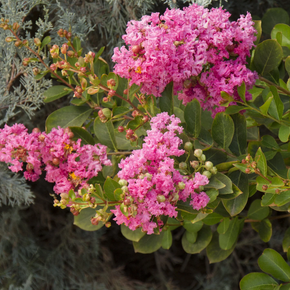
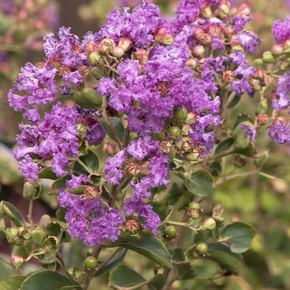
- Stunning lavender-violet flower panicles bloom from mid-summer through early fall, delivering months of bold, crinkled-petal color to the landscape
- Developed by the U.S. National Arboretum, this mildew-resistant hybrid offers superior disease toughness compared to older crape myrtle varieties
- Four-season appeal with deep green summer foliage, fiery orange-red fall color, showy winter seed capsules, and eye-catching exfoliating bark year-round
- Semi-dwarf, multi-stemmed habit matures to a manageable 10-15 feet tall, making it ideal for smaller yards, mixed borders, screening, and patio settings
The Zuni Crape Myrtle (Lagerstroemia indica x fauriei 'Zuni') is a standout ornamental shrub-tree that brings extraordinary four-season beauty to gardens across Southern Oregon and Northern California. A result of careful hybridization work at the U.S. National Arboretum, 'Zuni' crosses Lagerstroemia indica with the disease-hardy L. fauriei to produce a refined, semi-dwarf, multi-stemmed deciduous shrub that matures to approximately 10-15 feet tall and 8-10 feet wide. From mid-summer well into early fall, the canopy is blanketed with large, upright panicles of rich lavender-violet flowers featuring the signature crepe-papery petals that give this beloved genus its common name. The deep, glossy green foliage provides a lush summer backdrop before transitioning to striking shades of orange-red, deep red, and burgundy in autumn, while persistent round seed capsules extend the ornamental display into winter. As the plant matures, its smooth pinkish-gray bark exfoliates in attractive peeling layers to reveal warm cinnamon and tan tones beneath, delivering compelling year-round structure even after the leaves have fallen. Critically for Pacific Northwest and Northern California gardeners, 'Zuni' is noted as one of the best-performing larger crape myrtles for the region when sited in a hot, sunny location, and its excellent resistance to powdery mildew sets it apart from many older varieties. Whether used as a bold specimen, an informal screen, a mixed shrub border anchor, or a pollinator-friendly focal point, Zuni Crape Myrtle rewards gardeners with dependable, long-season beauty and surprisingly low maintenance once established.
Plant Description
Zuni Crape Myrtle is a deciduous, upright, multi-stemmed shrub-to-small-tree hybrid developed by the U.S. National Arboretum in Washington, D.C. It is a cross of (Lagerstroemia indica 'Dwarf Red' x L. fauriei) x L. indica 'Low Flame', made in 1972 and selected as a cultivar in 1977. Like all National Arboretum crape myrtle introductions, it carries a Native American tribal name. The plant's crepe-papery flower panicles measure 3-5 inches long and appear in large, terminal clusters of deep lavender to lavender-violet. Foliage emerges with a red tinge in spring, matures to a deep, glossy dark green through summer, then turns rich orange-red to dark burgundy-red in fall. Round seed capsules follow the flowers and persist attractively on the branches well into winter. On mature stems and the main trunk, the smooth pinkish-gray bark exfoliates with age to reveal a handsome mottled pattern of gray, tan, and cinnamon tones, providing striking year-round structural interest. The reddish-tinted young branches gradually turn light brown-gray as they age.
Mature Size
| Attribute | Measurement |
|---|---|
| Mature Height | 10-15 feet |
| Mature Spread | 8-10 feet |
| Growth Rate | Moderate |
| Habit | Upright, multi-stemmed, semi-dwarf shrub or small tree |
| Form | Can be trained as a single-trunk tree or left as a multi-stem shrub |
In warmer climates where above-ground winter hardiness is not a concern, 'Zuni' can reach the upper end of its size range. In areas at the cooler edge of its hardiness range, plants may grow somewhat smaller due to occasional winter dieback of top growth. The first growing season is primarily devoted to root establishment, with more vigorous top growth occurring in subsequent years. Allowing at least half of the plant's mature spread as clearance on each side will ensure good airflow and long-term performance.
Hardiness Zones
Zuni Crape Myrtle is hardy in USDA Zones 6-9, though performance and top-growth persistence vary by location within that range.
- Zones 7-9 (ideal range): Plants perform at their full potential, reliably maintaining woody top growth year to year and reaching maximum size. This includes most of Southern Oregon's inland valleys and Northern California.
- Zone 6 (marginal): Above-ground branches may suffer significant winter injury or die back to the base in harsh winters, particularly when temperatures drop below -5 degrees F. Roots are generally hardy to Zone 5. If tops die back, the plant will typically resprout from the roots in spring and still produce flowers on the new season's growth.
- Pacific Northwest performance: Oregon State University notes 'Zuni' as one of the best larger crape myrtles for the Pacific Northwest, provided it is sited in a full-sun, heat-absorbing location. In Corvallis, Oregon, flowering typically begins in late August.
In borderline-hardy locations, applying a 3-4 inch layer of mulch over the root zone in late fall provides valuable insulation to protect the root system through winter.
Sunlight Requirements
Full sun is essential for Zuni Crape Myrtle to produce its best flower display and maintain good plant health. A minimum of 6 hours of direct sunlight per day is required, and 8 or more hours is ideal. In the Pacific Northwest and Northern California foothills, placing this plant against a south- or west-facing wall or in the hottest, most sun-drenched area of the garden will significantly improve flowering performance and the length of the bloom season. Insufficient light is one of the most common reasons for sparse blooming. Avoid sites where the canopy of nearby trees creates shade for any significant part of the day.
Soil and pH Preferences
- Soil texture: Performs well in average, loamy, or clay soils provided drainage is adequate. Does not tolerate standing water or chronically saturated roots.
- Drainage: Well-drained soil is critical. In areas with heavy clay, amend planting areas with compost or build raised beds to improve drainage before planting.
- Soil pH: Prefers a slightly acidic to neutral pH range of approximately 5.5-7.0. Soils that are too alkaline can cause chlorosis (yellowing of foliage) due to limited nutrient uptake.
- Fertility: Average to moderately fertile soil is best. Overly rich or heavily fertilized soils tend to produce excessive leafy growth at the expense of flowering and can increase susceptibility to winter injury.
- Urban tolerance: 'Zuni' has demonstrated good tolerance of urban soil conditions, making it a strong candidate for street-side and paved-area plantings.
Watering Guide
At planting and during establishment (first 1-2 years): Water deeply and consistently to encourage strong, deep root development. Newly planted trees should receive approximately 1-2 gallons of water every 3-4 days during the first 2-3 months, adjusting for rainfall. Deep, infrequent watering is far more beneficial than shallow, frequent irrigation.
Once established: Zuni Crape Myrtle develops good drought tolerance. During extended dry summer periods — common in Southern Oregon and Northern California — provide deep supplemental irrigation every 1-2 weeks. The goal is to keep soil evenly moist but never waterlogged.
- Always water at the base of the plant, not overhead, to keep foliage dry and reduce the risk of fungal issues.
- Yellowing leaves may indicate overwatering or poor drainage; wilting or leaf scorch can indicate drought stress.
- Applying a 2-3 inch layer of organic mulch around the root zone (kept clear of the trunk) significantly reduces soil moisture loss between waterings.
Fertilizing
Zuni Crape Myrtle has modest fertility needs. Less is often more when it comes to fertilizing this plant — over-fertilizing, especially with nitrogen-heavy formulas, promotes excessive leafy growth at the direct expense of flower production.
- Product type: Apply a balanced, slow-release granular fertilizer (such as a 10-10-10 formula) or a product specially formulated for trees and shrubs in early spring as new growth begins.
- Optional mid-season boost: A light application of a phosphorus-rich formula in early summer can support robust bloom production.
- Application method: Spread fertilizer evenly around the drip line of the plant (the area beneath the outer canopy edge), keeping granules away from direct contact with the trunk. Water in thoroughly after application.
- Soil testing: A soil test every few years is the most reliable way to determine actual nutrient needs and avoid unnecessary applications.
- Avoid fertilizing: Do not fertilize after midsummer, as this can stimulate tender late-season growth that is more vulnerable to frost damage.
Pruning and Maintenance
Zuni Crape Myrtle requires only light, thoughtful pruning to maintain its natural, elegant form. The single most important rule is to avoid the practice of severe topping — often called "crape murder" — which produces ugly, knobby stubs, weakens the tree's structure, and results in a flush of thin, twiggy growth that produces fewer and smaller flower clusters.
When to prune: Late winter to early spring, just before new growth begins, is the ideal time. Flowers are produced on the current season's new wood, so late-winter pruning does not sacrifice the year's bloom.
What to remove:
- Suckers or root sprouts arising from the base of the plant
- Dead, damaged, or crossing branches
- Interior branches that reduce airflow through the canopy
- Any shoots growing inward or in an undesirable direction
Shaping: Decide early whether you prefer a shrub form (multiple stems) or a small tree form (1-3 main trunks). Prune lightly to reinforce your chosen structure. Once the basic form is established, annual maintenance pruning is minimal. Deadheading spent flower clusters during the bloom season can encourage additional flushes of bloom.
Planting Instructions
- Choose the right site: Select a location with full sun (6-8+ hours daily), good air circulation, and well-drained soil well away from low-lying areas where water collects.
- Timing: Plant in early spring after the last frost date has passed, or in early fall at least 6-8 weeks before the first expected frost to allow root establishment before winter.
- Dig the hole: Excavate a hole approximately twice as wide as the root ball but no deeper. The root flare (where the trunk begins to widen at the base) should sit at or very slightly above the surrounding soil grade.
- Amend if needed: In heavy clay soils, mix the native soil with compost to improve drainage and organic content. In most good garden soils, no amendment is necessary.
- Position and backfill: Set the plant in the hole, remove any container material, and backfill with soil. Tamp gently in layers to eliminate large air pockets. Do not compress the soil heavily around the roots.
- Water deeply: Thoroughly soak the entire planting area immediately after planting to settle the soil around the roots.
- Mulch: Apply a 2-3 inch layer of organic mulch (wood chips, bark, or shredded leaves) over the root zone, extending out to or just beyond the drip line. Keep mulch at least 2-3 inches away from the trunk to prevent rot and vole damage.
- Spacing: Allow a minimum of 6-8 feet between plants or from structures to accommodate mature spread and ensure adequate airflow.
Seasonal Interest
| Season | Ornamental Feature |
|---|---|
| Spring | Fresh red-tinged emerging foliage; reddish new stems; clean branching structure visible before leaf-out |
| Summer | Abundant, large lavender-violet flower panicles against a backdrop of deep, glossy dark green foliage; attracts pollinators |
| Early Fall | Continued flowering into early autumn; foliage begins transitioning through orange, red, and burgundy shades |
| Late Fall | Rich orange-red to deep burgundy-maroon fall foliage color; round seed capsules develop and persist on branches |
| Winter | Persistent decorative seed capsules; attractive exfoliating bark reveals smooth cinnamon, tan, and gray tones on branches and trunk |
Landscape Uses
Zuni Crape Myrtle's versatile semi-dwarf habit and multi-season ornamental value make it suitable for a wide range of landscape applications:
- Specimen or focal point: Exceptional as a stand-alone accent plant in a lawn, courtyard, or entry planting where its flowers, bark, and form can be fully appreciated.
- Informal hedge or screen: In Zones 7-9, mature plants can be used effectively as a tall informal screen or privacy planting along property lines.
- Mixed shrub border: Provides height, structure, and long bloom period as a back-of-border anchor in mixed plantings with perennials and ornamental grasses.
- Street tree or parking area planting: Its tolerance of heat, drought, and urban soil conditions makes it well-suited to streetside and hardscape-adjacent installations when given sufficient sun.
- Driveway accent: Planted in rows along a driveway, Zuni provides a stunning seasonal color corridor.
- Patio or courtyard tree: The manageable size and multi-season interest make it an ideal choice for areas where people gather outdoors.
- Pollinator garden: Abundant summer flowers are highly attractive to bees and butterflies, making it a valuable addition to wildlife-friendly garden designs.
Companion Plants
Zuni Crape Myrtle pairs beautifully with plants that complement its bold summer color, prefer similar well-drained, sunny conditions, and provide interest during the seasons when the crape myrtle is less prominent:
- Ornamental grasses (Miscanthus, Pennisetum, Nassella) - provide feathery textural contrast and extend fall and winter interest
- Russian Sage (Perovskia atriplicifolia) - airy lavender-blue spikes echo and complement the lavender-violet flower tones
- Salvia (Salvia nemorosa, S. greggii) - long-blooming companions that thrive in the same hot, dry conditions
- Lavender (Lavandula spp.) - shares the same sun and drainage requirements; reinforces the cool lavender color palette
- Coreopsis - golden yellow blooms create vivid contrast against the lavender-violet flowers
- Knock Out Roses - repeat-flowering roses complement the bloom period and provide color variety in the shrub border
- Agapanthus - blue-violet summer flowers harmonize with Zuni's color and thrive in similar warm, sunny conditions in Southern Oregon and Northern California
- Boxwood or Dwarf Nandina - evergreen foundation plants provide year-round structure and contrast with the deciduous crape myrtle
Pests and Diseases
Disease resistance: One of 'Zuni's' most valued attributes is its excellent resistance to powdery mildew, which is one of the most common and disfiguring problems affecting older crape myrtle varieties. This resistance is largely contributed by its Lagerstroemia fauriei parentage.
Potential pest issues:
- Aphids: Crape myrtle aphids (Tinocallis kahawaluokalani) are a species-specific pest that may colonize new growth, leaving sticky honeydew deposits and promoting sooty mold growth. A strong jet of water or an application of insecticidal soap is usually sufficient for control. Beneficial insects such as lacewings and ladybugs are natural predators.
- Scale insects: Bark scale or other scale species may occasionally appear on stems and branches. Treat with horticultural oil during the dormant season for best results.
- Japanese beetles: Where present, these beetles may feed on foliage. Hand-picking or neem oil applications can manage light infestations.
Potential disease issues:
- Fungal leaf spot: Can cause dark spots and premature leaf drop in humid conditions. Removing affected leaves and avoiding overhead irrigation helps prevent spread.
- Sooty mold: A secondary fungal issue that grows on honeydew deposited by aphids. Controlling the aphid population eliminates the source.
- Chlorosis: Yellowing foliage in alkaline soils indicates nutrient unavailability. A soil test and pH adjustment will address the root cause.
- Root rot: Results from chronically poor drainage. Ensure well-drained soil conditions at planting to prevent this issue entirely.
Container Growing
Zuni Crape Myrtle can be grown in a large container, offering flexibility for patios, decks, courtyards, and gardeners with limited in-ground planting space.
- Container size: Choose a pot at least 18-24 inches in diameter with multiple large drainage holes. A larger container provides more root space and reduces how frequently the plant needs water and repotting.
- Potting mix: Use a high-quality, well-draining potting mix blended with perlite or coarse sand to ensure excellent drainage and prevent waterlogging around the roots.
- Watering: Container plants dry out significantly faster than in-ground specimens and will require more frequent deep watering, especially during hot summer weather. Check soil moisture regularly.
- Fertilizing: Apply a slow-release fertilizer in spring and supplement with a liquid fertilizer periodically through the growing season, as nutrients leach out of containers more quickly with repeated watering.
- Sunlight: Position the container in the hottest, sunniest available spot — at least 6-8 hours of direct sun daily is needed for good blooming.
- Winter protection: In colder zones, containers can be moved to a sheltered, unheated garage or shed to protect the root system from hard freezes that would damage roots even though they are hardy in the ground.
- Repotting: Plan to repot into a slightly larger container every 2-3 years to refresh the growing medium and provide room for continued root development.
Wildlife Value
Zuni Crape Myrtle is a valuable addition to pollinator-friendly and wildlife-supporting landscapes:
- Bees: The abundant, nectar-rich flower panicles are highly attractive to honeybees, native bumblebees, and a wide variety of solitary bee species throughout the long bloom season.
- Butterflies: Multiple butterfly species, including swallowtails and skippers, visit the flowers for nectar during the summer and early fall bloom period.
- Birds: The persistent seed capsules that remain on the branches through fall and into winter provide a food source for seed-eating bird species.
- Deer resistance: Crape myrtles are generally considered deer-resistant due to their tough foliage texture, making Zuni a reliable choice in areas with moderate deer pressure. Very young or newly transplanted specimens may occasionally be browsed and can benefit from temporary protective fencing until established.
- Stunning lavender-violet flower panicles bloom from mid-summer through early fall, delivering months of bold, crinkled-petal color to the landscape
- Developed by the U.S. National Arboretum, this mildew-resistant hybrid offers superior disease toughness compared to older crape myrtle varieties
- Four-season appeal with deep green summer foliage, fiery orange-red fall color, showy winter seed capsules, and eye-catching exfoliating bark year-round
- Semi-dwarf, multi-stemmed habit matures to a manageable 10-15 feet tall, making it ideal for smaller yards, mixed borders, screening, and patio settings
The Zuni Crape Myrtle (Lagerstroemia indica x fauriei 'Zuni') is a standout ornamental shrub-tree that brings extraordinary four-season beauty to gardens across Southern Oregon and Northern California. A result of careful hybridization work at the U.S. National Arboretum, 'Zuni' crosses Lagerstroemia indica with the disease-hardy L. fauriei to produce a refined, semi-dwarf, multi-stemmed deciduous shrub that matures to approximately 10-15 feet tall and 8-10 feet wide. From mid-summer well into early fall, the canopy is blanketed with large, upright panicles of rich lavender-violet flowers featuring the signature crepe-papery petals that give this beloved genus its common name. The deep, glossy green foliage provides a lush summer backdrop before transitioning to striking shades of orange-red, deep red, and burgundy in autumn, while persistent round seed capsules extend the ornamental display into winter. As the plant matures, its smooth pinkish-gray bark exfoliates in attractive peeling layers to reveal warm cinnamon and tan tones beneath, delivering compelling year-round structure even after the leaves have fallen. Critically for Pacific Northwest and Northern California gardeners, 'Zuni' is noted as one of the best-performing larger crape myrtles for the region when sited in a hot, sunny location, and its excellent resistance to powdery mildew sets it apart from many older varieties. Whether used as a bold specimen, an informal screen, a mixed shrub border anchor, or a pollinator-friendly focal point, Zuni Crape Myrtle rewards gardeners with dependable, long-season beauty and surprisingly low maintenance once established.
Plant Description
Zuni Crape Myrtle is a deciduous, upright, multi-stemmed shrub-to-small-tree hybrid developed by the U.S. National Arboretum in Washington, D.C. It is a cross of (Lagerstroemia indica 'Dwarf Red' x L. fauriei) x L. indica 'Low Flame', made in 1972 and selected as a cultivar in 1977. Like all National Arboretum crape myrtle introductions, it carries a Native American tribal name. The plant's crepe-papery flower panicles measure 3-5 inches long and appear in large, terminal clusters of deep lavender to lavender-violet. Foliage emerges with a red tinge in spring, matures to a deep, glossy dark green through summer, then turns rich orange-red to dark burgundy-red in fall. Round seed capsules follow the flowers and persist attractively on the branches well into winter. On mature stems and the main trunk, the smooth pinkish-gray bark exfoliates with age to reveal a handsome mottled pattern of gray, tan, and cinnamon tones, providing striking year-round structural interest. The reddish-tinted young branches gradually turn light brown-gray as they age.
Mature Size
| Attribute | Measurement |
|---|---|
| Mature Height | 10-15 feet |
| Mature Spread | 8-10 feet |
| Growth Rate | Moderate |
| Habit | Upright, multi-stemmed, semi-dwarf shrub or small tree |
| Form | Can be trained as a single-trunk tree or left as a multi-stem shrub |
In warmer climates where above-ground winter hardiness is not a concern, 'Zuni' can reach the upper end of its size range. In areas at the cooler edge of its hardiness range, plants may grow somewhat smaller due to occasional winter dieback of top growth. The first growing season is primarily devoted to root establishment, with more vigorous top growth occurring in subsequent years. Allowing at least half of the plant's mature spread as clearance on each side will ensure good airflow and long-term performance.
Hardiness Zones
Zuni Crape Myrtle is hardy in USDA Zones 6-9, though performance and top-growth persistence vary by location within that range.
- Zones 7-9 (ideal range): Plants perform at their full potential, reliably maintaining woody top growth year to year and reaching maximum size. This includes most of Southern Oregon's inland valleys and Northern California.
- Zone 6 (marginal): Above-ground branches may suffer significant winter injury or die back to the base in harsh winters, particularly when temperatures drop below -5 degrees F. Roots are generally hardy to Zone 5. If tops die back, the plant will typically resprout from the roots in spring and still produce flowers on the new season's growth.
- Pacific Northwest performance: Oregon State University notes 'Zuni' as one of the best larger crape myrtles for the Pacific Northwest, provided it is sited in a full-sun, heat-absorbing location. In Corvallis, Oregon, flowering typically begins in late August.
In borderline-hardy locations, applying a 3-4 inch layer of mulch over the root zone in late fall provides valuable insulation to protect the root system through winter.
Sunlight Requirements
Full sun is essential for Zuni Crape Myrtle to produce its best flower display and maintain good plant health. A minimum of 6 hours of direct sunlight per day is required, and 8 or more hours is ideal. In the Pacific Northwest and Northern California foothills, placing this plant against a south- or west-facing wall or in the hottest, most sun-drenched area of the garden will significantly improve flowering performance and the length of the bloom season. Insufficient light is one of the most common reasons for sparse blooming. Avoid sites where the canopy of nearby trees creates shade for any significant part of the day.
Soil and pH Preferences
- Soil texture: Performs well in average, loamy, or clay soils provided drainage is adequate. Does not tolerate standing water or chronically saturated roots.
- Drainage: Well-drained soil is critical. In areas with heavy clay, amend planting areas with compost or build raised beds to improve drainage before planting.
- Soil pH: Prefers a slightly acidic to neutral pH range of approximately 5.5-7.0. Soils that are too alkaline can cause chlorosis (yellowing of foliage) due to limited nutrient uptake.
- Fertility: Average to moderately fertile soil is best. Overly rich or heavily fertilized soils tend to produce excessive leafy growth at the expense of flowering and can increase susceptibility to winter injury.
- Urban tolerance: 'Zuni' has demonstrated good tolerance of urban soil conditions, making it a strong candidate for street-side and paved-area plantings.
Watering Guide
At planting and during establishment (first 1-2 years): Water deeply and consistently to encourage strong, deep root development. Newly planted trees should receive approximately 1-2 gallons of water every 3-4 days during the first 2-3 months, adjusting for rainfall. Deep, infrequent watering is far more beneficial than shallow, frequent irrigation.
Once established: Zuni Crape Myrtle develops good drought tolerance. During extended dry summer periods — common in Southern Oregon and Northern California — provide deep supplemental irrigation every 1-2 weeks. The goal is to keep soil evenly moist but never waterlogged.
- Always water at the base of the plant, not overhead, to keep foliage dry and reduce the risk of fungal issues.
- Yellowing leaves may indicate overwatering or poor drainage; wilting or leaf scorch can indicate drought stress.
- Applying a 2-3 inch layer of organic mulch around the root zone (kept clear of the trunk) significantly reduces soil moisture loss between waterings.
Fertilizing
Zuni Crape Myrtle has modest fertility needs. Less is often more when it comes to fertilizing this plant — over-fertilizing, especially with nitrogen-heavy formulas, promotes excessive leafy growth at the direct expense of flower production.
- Product type: Apply a balanced, slow-release granular fertilizer (such as a 10-10-10 formula) or a product specially formulated for trees and shrubs in early spring as new growth begins.
- Optional mid-season boost: A light application of a phosphorus-rich formula in early summer can support robust bloom production.
- Application method: Spread fertilizer evenly around the drip line of the plant (the area beneath the outer canopy edge), keeping granules away from direct contact with the trunk. Water in thoroughly after application.
- Soil testing: A soil test every few years is the most reliable way to determine actual nutrient needs and avoid unnecessary applications.
- Avoid fertilizing: Do not fertilize after midsummer, as this can stimulate tender late-season growth that is more vulnerable to frost damage.
Pruning and Maintenance
Zuni Crape Myrtle requires only light, thoughtful pruning to maintain its natural, elegant form. The single most important rule is to avoid the practice of severe topping — often called "crape murder" — which produces ugly, knobby stubs, weakens the tree's structure, and results in a flush of thin, twiggy growth that produces fewer and smaller flower clusters.
When to prune: Late winter to early spring, just before new growth begins, is the ideal time. Flowers are produced on the current season's new wood, so late-winter pruning does not sacrifice the year's bloom.
What to remove:
- Suckers or root sprouts arising from the base of the plant
- Dead, damaged, or crossing branches
- Interior branches that reduce airflow through the canopy
- Any shoots growing inward or in an undesirable direction
Shaping: Decide early whether you prefer a shrub form (multiple stems) or a small tree form (1-3 main trunks). Prune lightly to reinforce your chosen structure. Once the basic form is established, annual maintenance pruning is minimal. Deadheading spent flower clusters during the bloom season can encourage additional flushes of bloom.
Planting Instructions
- Choose the right site: Select a location with full sun (6-8+ hours daily), good air circulation, and well-drained soil well away from low-lying areas where water collects.
- Timing: Plant in early spring after the last frost date has passed, or in early fall at least 6-8 weeks before the first expected frost to allow root establishment before winter.
- Dig the hole: Excavate a hole approximately twice as wide as the root ball but no deeper. The root flare (where the trunk begins to widen at the base) should sit at or very slightly above the surrounding soil grade.
- Amend if needed: In heavy clay soils, mix the native soil with compost to improve drainage and organic content. In most good garden soils, no amendment is necessary.
- Position and backfill: Set the plant in the hole, remove any container material, and backfill with soil. Tamp gently in layers to eliminate large air pockets. Do not compress the soil heavily around the roots.
- Water deeply: Thoroughly soak the entire planting area immediately after planting to settle the soil around the roots.
- Mulch: Apply a 2-3 inch layer of organic mulch (wood chips, bark, or shredded leaves) over the root zone, extending out to or just beyond the drip line. Keep mulch at least 2-3 inches away from the trunk to prevent rot and vole damage.
- Spacing: Allow a minimum of 6-8 feet between plants or from structures to accommodate mature spread and ensure adequate airflow.
Seasonal Interest
| Season | Ornamental Feature |
|---|---|
| Spring | Fresh red-tinged emerging foliage; reddish new stems; clean branching structure visible before leaf-out |
| Summer | Abundant, large lavender-violet flower panicles against a backdrop of deep, glossy dark green foliage; attracts pollinators |
| Early Fall | Continued flowering into early autumn; foliage begins transitioning through orange, red, and burgundy shades |
| Late Fall | Rich orange-red to deep burgundy-maroon fall foliage color; round seed capsules develop and persist on branches |
| Winter | Persistent decorative seed capsules; attractive exfoliating bark reveals smooth cinnamon, tan, and gray tones on branches and trunk |
Landscape Uses
Zuni Crape Myrtle's versatile semi-dwarf habit and multi-season ornamental value make it suitable for a wide range of landscape applications:
- Specimen or focal point: Exceptional as a stand-alone accent plant in a lawn, courtyard, or entry planting where its flowers, bark, and form can be fully appreciated.
- Informal hedge or screen: In Zones 7-9, mature plants can be used effectively as a tall informal screen or privacy planting along property lines.
- Mixed shrub border: Provides height, structure, and long bloom period as a back-of-border anchor in mixed plantings with perennials and ornamental grasses.
- Street tree or parking area planting: Its tolerance of heat, drought, and urban soil conditions makes it well-suited to streetside and hardscape-adjacent installations when given sufficient sun.
- Driveway accent: Planted in rows along a driveway, Zuni provides a stunning seasonal color corridor.
- Patio or courtyard tree: The manageable size and multi-season interest make it an ideal choice for areas where people gather outdoors.
- Pollinator garden: Abundant summer flowers are highly attractive to bees and butterflies, making it a valuable addition to wildlife-friendly garden designs.
Companion Plants
Zuni Crape Myrtle pairs beautifully with plants that complement its bold summer color, prefer similar well-drained, sunny conditions, and provide interest during the seasons when the crape myrtle is less prominent:
- Ornamental grasses (Miscanthus, Pennisetum, Nassella) - provide feathery textural contrast and extend fall and winter interest
- Russian Sage (Perovskia atriplicifolia) - airy lavender-blue spikes echo and complement the lavender-violet flower tones
- Salvia (Salvia nemorosa, S. greggii) - long-blooming companions that thrive in the same hot, dry conditions
- Lavender (Lavandula spp.) - shares the same sun and drainage requirements; reinforces the cool lavender color palette
- Coreopsis - golden yellow blooms create vivid contrast against the lavender-violet flowers
- Knock Out Roses - repeat-flowering roses complement the bloom period and provide color variety in the shrub border
- Agapanthus - blue-violet summer flowers harmonize with Zuni's color and thrive in similar warm, sunny conditions in Southern Oregon and Northern California
- Boxwood or Dwarf Nandina - evergreen foundation plants provide year-round structure and contrast with the deciduous crape myrtle
Pests and Diseases
Disease resistance: One of 'Zuni's' most valued attributes is its excellent resistance to powdery mildew, which is one of the most common and disfiguring problems affecting older crape myrtle varieties. This resistance is largely contributed by its Lagerstroemia fauriei parentage.
Potential pest issues:
- Aphids: Crape myrtle aphids (Tinocallis kahawaluokalani) are a species-specific pest that may colonize new growth, leaving sticky honeydew deposits and promoting sooty mold growth. A strong jet of water or an application of insecticidal soap is usually sufficient for control. Beneficial insects such as lacewings and ladybugs are natural predators.
- Scale insects: Bark scale or other scale species may occasionally appear on stems and branches. Treat with horticultural oil during the dormant season for best results.
- Japanese beetles: Where present, these beetles may feed on foliage. Hand-picking or neem oil applications can manage light infestations.
Potential disease issues:
- Fungal leaf spot: Can cause dark spots and premature leaf drop in humid conditions. Removing affected leaves and avoiding overhead irrigation helps prevent spread.
- Sooty mold: A secondary fungal issue that grows on honeydew deposited by aphids. Controlling the aphid population eliminates the source.
- Chlorosis: Yellowing foliage in alkaline soils indicates nutrient unavailability. A soil test and pH adjustment will address the root cause.
- Root rot: Results from chronically poor drainage. Ensure well-drained soil conditions at planting to prevent this issue entirely.
Container Growing
Zuni Crape Myrtle can be grown in a large container, offering flexibility for patios, decks, courtyards, and gardeners with limited in-ground planting space.
- Container size: Choose a pot at least 18-24 inches in diameter with multiple large drainage holes. A larger container provides more root space and reduces how frequently the plant needs water and repotting.
- Potting mix: Use a high-quality, well-draining potting mix blended with perlite or coarse sand to ensure excellent drainage and prevent waterlogging around the roots.
- Watering: Container plants dry out significantly faster than in-ground specimens and will require more frequent deep watering, especially during hot summer weather. Check soil moisture regularly.
- Fertilizing: Apply a slow-release fertilizer in spring and supplement with a liquid fertilizer periodically through the growing season, as nutrients leach out of containers more quickly with repeated watering.
- Sunlight: Position the container in the hottest, sunniest available spot — at least 6-8 hours of direct sun daily is needed for good blooming.
- Winter protection: In colder zones, containers can be moved to a sheltered, unheated garage or shed to protect the root system from hard freezes that would damage roots even though they are hardy in the ground.
- Repotting: Plan to repot into a slightly larger container every 2-3 years to refresh the growing medium and provide room for continued root development.
Wildlife Value
Zuni Crape Myrtle is a valuable addition to pollinator-friendly and wildlife-supporting landscapes:
- Bees: The abundant, nectar-rich flower panicles are highly attractive to honeybees, native bumblebees, and a wide variety of solitary bee species throughout the long bloom season.
- Butterflies: Multiple butterfly species, including swallowtails and skippers, visit the flowers for nectar during the summer and early fall bloom period.
- Birds: The persistent seed capsules that remain on the branches through fall and into winter provide a food source for seed-eating bird species.
- Deer resistance: Crape myrtles are generally considered deer-resistant due to their tough foliage texture, making Zuni a reliable choice in areas with moderate deer pressure. Very young or newly transplanted specimens may occasionally be browsed and can benefit from temporary protective fencing until established.
Related Products