
Zoom the image with the mouse
Tom Knudsen Camellia - 2 Gallon
SKU:
1979800
UPC:
014949428061
$54.99
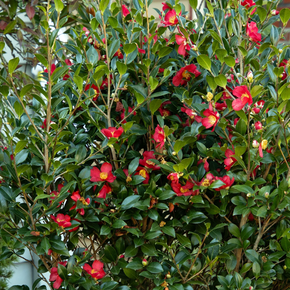
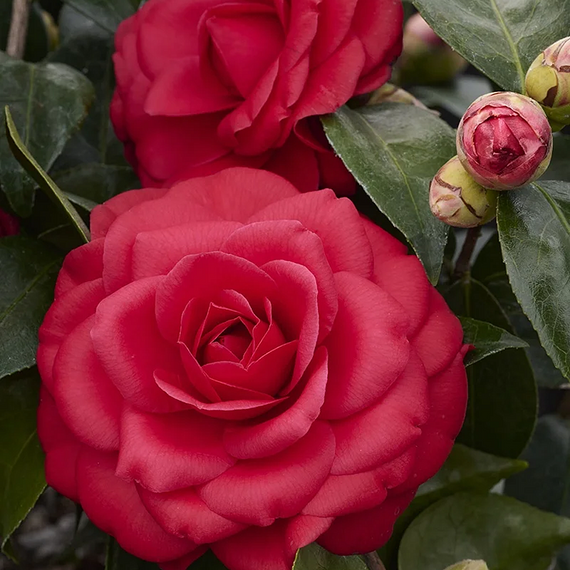
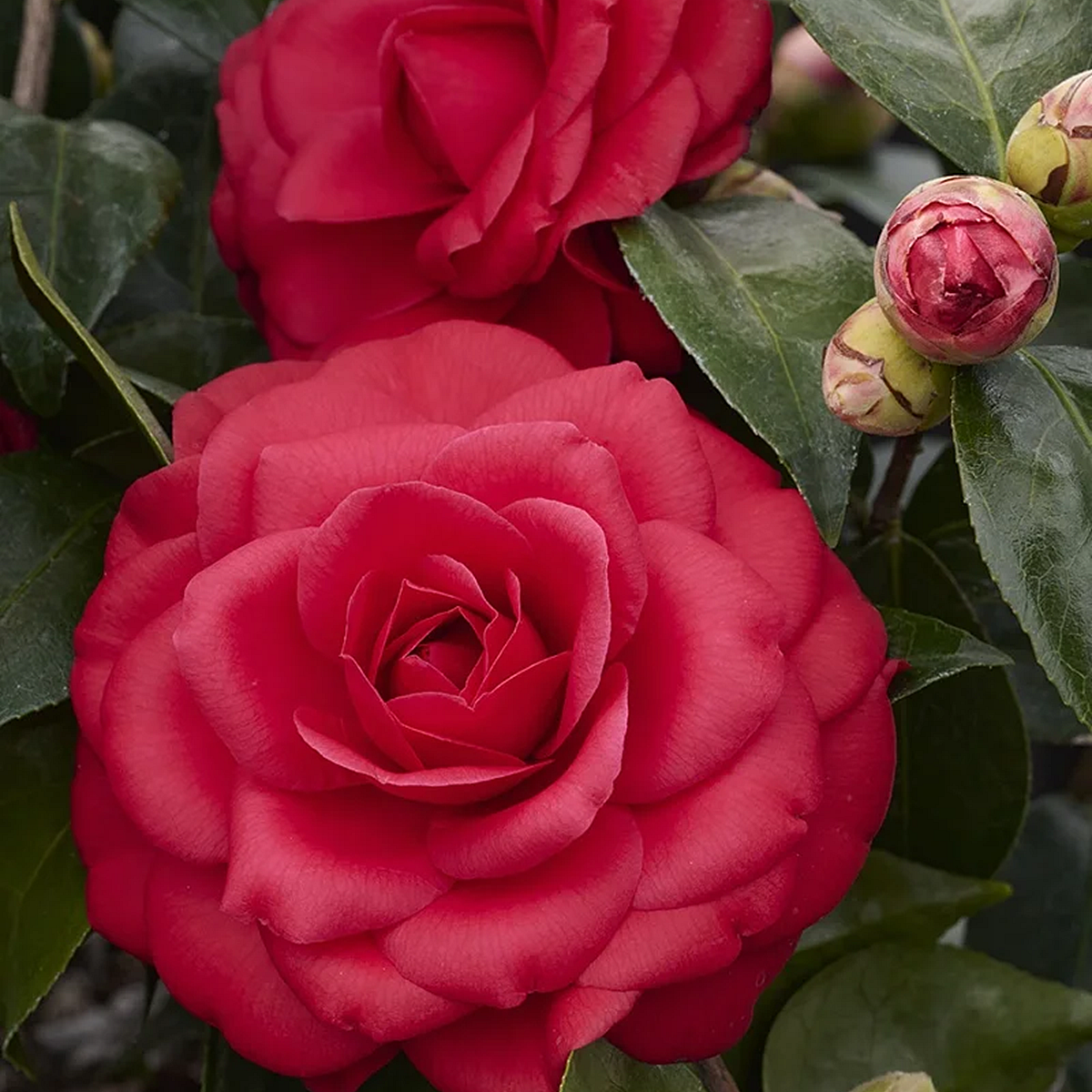
- Spectacular deep crimson blooms with rich dark red veining — formal double, peony, and rose-form flowers put on a breathtaking show from late fall through early spring when little else is in bloom.
- Lustrous, dark green evergreen foliage provides year-round structure and a stunning backdrop that makes the jewel-toned winter flowers pop with dramatic contrast.
- A versatile, upright evergreen shrub that works beautifully as a bold specimen, a dense privacy hedge, an espalier against a wall, or as an elegant large container plant on patios and entryways.
- Relatively low-maintenance once established, with a long lifespan of 40 years or more — a true garden heirloom that rewards generations of gardeners.
Camellia japonica 'Tom Knudsen' is a showstopping evergreen shrub that delivers magnificent color to the winter landscape precisely when the garden needs it most. Its large, fully double flowers are a rich, deep crimson red accented by striking darker red veining, and they appear in a range of formal double, peony, and rose forms from October through March, creating a dazzling seasonal display. The glossy, dark green foliage with finely serrated edges remains attractive throughout the entire year, providing dense, lush screening and four-season structure in the garden. Growing in an upright, spreading habit to approximately 6 to 12 feet tall and equally wide at maturity, Tom Knudsen Camellia is well-suited to USDA Hardiness Zones 7 through 9 and thrives in the mild winters of Southern Oregon and Northern California. It excels in partial shade to filtered sun and demands well-drained, rich, acidic soil with consistent moisture, making it a natural choice for woodland garden settings, foundation plantings, hedge borders, and shaded entryways. Whether grown as a stately specimen, mass-planted for a bold hedge, trained as an espalier against a north- or east-facing wall, or showcased in a large decorative container, this classic Japanese Camellia cultivar is a long-lived, elegant addition to any Pacific Coast garden.
Plant Description
Tom Knudsen Camellia (Camellia japonica 'Tom Knudsen') is a broadleaf evergreen shrub prized for its dramatic, large double flowers in deep crimson red with distinctive dark red veining running through each petal. Flowers can appear in formal double, peony form, or rose form, and blooms range from mid-size to large. The rich, jewel-toned color is exceptional even among red-flowered camellias. The foliage is composed of glossy, dark green, pointy leaves with finely serrated edges that remain attractive and deep green throughout the seasons, including winter. The overall growth habit is upright and spreading, giving the plant an elegant, structured silhouette. Tom Knudsen is native to Asia and belongs to the family Theaceae. It is also well-known as an excellent cut flower, bringing the beauty of winter blooms indoors.
Mature Size
| Attribute | Typical Range |
|---|---|
| Mature Height | 6 to 12 feet |
| Mature Width / Spread | 6 to 12 feet |
| Growth Rate | Medium |
| Time to Reach Ultimate Height | 10 to 20 years |
| Canopy Clearance | Approximately 1 foot from ground |
| Expected Lifespan | 40 years or more under ideal conditions |
Hardiness Zones and Climate
Tom Knudsen Camellia is hardy in USDA Zones 7a through 9b, making it an excellent choice for Southern Oregon and Northern California gardens. It is also listed for Sunset Zones 4 through 9, 12, and 14 through 24, including the H1 designation for Hawaii. This cultivar performs best in climates with mild winters and cool, moist conditions. It benefits from being planted in a sheltered location that protects it from cold, dry winds and early morning sun, which can damage the buds and open flowers during cold snaps. Avoid exposed, frost-pocket sites. In colder microclimates within its zones, a thick layer of mulch over the root zone provides additional winter protection.
Sunlight Requirements
Tom Knudsen Camellia thrives in partial shade to full shade and is best positioned where it receives filtered or dappled sunlight — such as beneath high-canopied trees or on the north- or east-facing side of a structure. Morning sun with afternoon shade is ideal. Direct, intense afternoon sun can scorch the glossy leaves and damage flowers. This camellia is notably tolerant of full shade, which makes it one of the more versatile flowering shrubs for shaded landscapes. Avoid sites with harsh western afternoon sun exposure, particularly in hot inland areas. In cooler coastal climates like much of Southern Oregon and Northern California, slightly more sun exposure may be tolerated.
Soil and pH Preferences
| Attribute | Preferred Range |
|---|---|
| Soil pH | 4.5 to 6.5 (ideally 5.1 to 6.0) |
| Soil Type | Rich, organic, well-drained; sandy loam to clay loam |
| Drainage | Moist but well-drained — will not tolerate standing water |
| Soil Amendments | Incorporate compost or acidic organic matter at planting |
| Mulch | 2 to 4 inches of organic mulch recommended year-round |
Tom Knudsen Camellia is particular about its soil conditions and strongly prefers rich, acidic, humus-rich ground. If your native soil is alkaline or heavy clay, amend generously with composted bark, pine needles, or peat moss to lower pH and improve drainage. A deep layer of organic mulch applied around — but not directly against — the base of the plant will conserve soil moisture, moderate soil temperature, suppress weeds, and gradually improve soil acidity as it breaks down.
Watering Guide
Consistent, even moisture is essential for Tom Knudsen Camellia, especially during its first two to three years of establishment. Water deeply and thoroughly at least once per week during the growing season, allowing the soil to become slightly dry in the top inch or two between waterings but never allowing it to dry out completely. Once established, this camellia has moderate water needs and will benefit from regular irrigation during dry summer months in Southern Oregon and Northern California. Avoid overhead watering late in the day, as wet foliage overnight encourages fungal diseases. Drip irrigation or soaker hoses at the root zone are ideal delivery methods. Never allow the plant to sit in waterlogged or poorly drained soil, as this promotes root rot. Applying a thick layer of mulch around the root zone significantly helps retain soil moisture and reduce the frequency of irrigation needed.
Fertilizing
Feed Tom Knudsen Camellia with a fertilizer formulated specifically for acid-loving plants, such as a camellia/azalea formula. Apply in early spring as new growth begins to emerge, and again in late spring or early summer after flowering has finished. Avoid fertilizing after midsummer, as late-season feeding can stimulate tender new growth that is vulnerable to early frosts. In autumn, supplement with organic matter such as composted leaf mold or pine bark to maintain soil acidity and feed soil microbiology. Do not over-fertilize — excess nitrogen produces lush, leafy growth at the expense of flower production. A slow-release granular acidic fertilizer works well and reduces the risk of over-application. Always water well before and after fertilizing to prevent root burn.
Pruning and Maintenance
Tom Knudsen Camellia requires minimal pruning to maintain its naturally attractive form. The most important rule is to prune only after flowering has finished — typically in late winter to early spring — to avoid cutting off buds that have already set for the current season's blooms. Light pruning at this time can be used to shape the plant, improve air circulation through the interior branches, and remove any dead, diseased, or crossing wood. When flower production is so dense that blooms cannot open fully, thin out weak or crowded interior growth to encourage better air movement and larger, more open flowers. This shrub tolerates pruning well and can be shaped more aggressively if renovation is needed, but limit removal to no more than one-third of the plant at a time. The plant is well-suited for training as an espalier against a sheltered wall, which also makes pruning and maintenance more straightforward. Apply mulch annually and monitor for soil pH drift in areas with alkaline water.
Planting Instructions
- Choose a site with partial to full shade, protection from cold or drying winds, and shelter from intense afternoon sun.
- Dig a planting hole twice as wide as the root ball and equal in depth. Avoid planting too deep — the top of the root ball should sit at or very slightly above the surrounding soil grade.
- Amend heavy or alkaline native soil generously with acidic compost, pine bark fines, or peat moss blended into the backfill.
- Remove the plant from its container and gently loosen any circling or pot-bound roots before placing it in the center of the hole.
- Backfill with the amended soil mixture, firming gently to eliminate large air pockets.
- Build a shallow water-retaining berm around the outer edge of the planting hole to direct irrigation water to the root zone.
- Apply 2 to 4 inches of organic mulch — such as shredded bark or pine needles — over the root zone, keeping mulch several inches away from the trunk to prevent crown rot.
- Water deeply and thoroughly immediately after planting, and maintain regular irrigation throughout the first growing season.
- Avoid planting in low spots or areas prone to standing water, as root rot is one of the most serious threats to camellias.
Bloom Season and Seasonal Interest
One of the greatest assets of Tom Knudsen Camellia is its ability to bloom during the cooler months when most other flowering shrubs are dormant. In the mild climates of Southern Oregon and Northern California, flowers typically open from October through March, with peak bloom occurring in late winter and early spring. The large, deep crimson flowers with dark red veining create a dramatic focal point in the winter garden against a backdrop of glossy evergreen foliage. Even outside of the bloom season, the rich, dark green leaves with their reflective, glossy surface provide year-round beauty, structure, and screening. In late winter to early spring, the emerging flower buds add anticipation, while the flowering stems make outstanding long-lasting cut flowers for indoor arrangements.
Landscape Uses
- Bold specimen or focal point in a shaded garden bed or courtyard
- Dense privacy hedge or screening plant along property borders
- Foundation planting on north- or east-facing sides of buildings
- Espalier trained flat against a sheltered fence or wall
- Corner accent plant for home foundation plantings
- Mass planting for large-scale winter color in shade gardens
- Woodland garden understory planting beneath tall conifers or oaks
- Large container or patio specimen on sheltered decks and entryways
- Background plant in mixed shrub borders, paired with finer or coarser textures for contrast
- Cut flower garden — blooms are exceptional for winter floral arrangements
Companion Plants
Tom Knudsen Camellia pairs beautifully with other shade-tolerant, acid-loving plants that share similar soil and moisture preferences. Consider combining it with the following for a cohesive, layered planting:
- Rhododendrons and azaleas — share the same acidic soil needs and complement the camellia's winter and spring bloom sequence
- Pieris japonica (Japanese Andromeda) — offers contrasting white or pink flower clusters and attractive bronze new growth in early spring
- Hellebores (Lenten Rose) — low-growing, shade-tolerant perennials that bloom in late winter alongside the camellia
- Mahonia species — structural, spine-leafed evergreens with yellow winter flowers that echo the camellia's bloom season
- Ferns (such as Western Sword Fern) — provide lush, textural contrast at the base of the shrub in woodland settings
- Hostas — shade-loving perennials that fill in the ground layer with bold, contrasting foliage in summer
- Japanese Maples (Acer palmatum) — their fine-textured, colorful foliage contrasts beautifully with the camellia's bold, glossy leaves
- Nandina domestica — upright, semi-evergreen shrub with colorful berries that bridges the transition between seasons
Pests and Diseases
Tom Knudsen Camellia is generally a healthy and resilient shrub, but gardeners should be aware of the following potential issues:
- Camellia Petal Blight (Ciborinia camelliae): The most common camellia disease, causing brown dry rot on flower petals that rapidly spreads to the base of the bloom. Remove and dispose of all fallen and infected flowers promptly — do not compost. A deep mulch layer (4 inches or more) helps prevent spores from reaching the surface.
- Phytophthora Root Rot: Caused by Phytophthora species, this disease occurs in poorly drained or waterlogged soils and causes wilting, yellowing foliage, and plant collapse. Prevention through proper drainage and avoiding overwatering is critical. Tom Knudsen has been identified as a cultivar susceptible to P. ramorum (Sudden Oak Death pathogen), so avoid planting in areas where this pathogen is known to be present.
- Aphids: Soft-bodied insects that cluster on new growth in spring. Wash off with a strong stream of water or treat with insecticidal soap.
- Scale Insects: Appear as small bumps on stems and leaves. Treat with horticultural oil applied in late winter before new growth emerges.
- Vine Weevil: Adults notch leaf edges; larvae feed on roots. Use beneficial nematodes or appropriate soil treatments for larval control.
- Camellia Gall and Leaf Blight: Fungal issues that can cause distorted or blighted foliage. Improve air circulation through light pruning and avoid overhead watering.
- Botrytis Gray Mold: Fuzzy gray mold on blossoms during cool, wet weather. Remove affected plant material and avoid wetting flowers during irrigation.
- Camellia Yellow Mottle Virus: Causes irregular yellow mottling on leaves. There is no cure; remove and replace severely affected plants.
Container Growing
Tom Knudsen Camellia is an excellent candidate for large container growing and performs beautifully on sheltered patios, entryways, and courtyard gardens. Use a large, well-draining container — at least 15 to 20 gallons for a mature specimen — with adequate drainage holes. Fill with a premium, acidic potting mix formulated for camellias, rhododendrons, or azaleas. Container-grown plants require more frequent watering than in-ground plants, as pots dry out faster, especially in warm weather. Water thoroughly until water flows from the drainage holes, then allow the top inch of soil to dry slightly before watering again — never allow the pot to sit in standing water. Fertilize container plants with a slow-release acidic fertilizer in spring and again in early summer. Repot every two to three years or when the plant becomes root-bound. In colder parts of Zone 7, move containers to a sheltered location or garage during hard freezes to protect the root zone. Container-grown specimens may grow somewhat smaller than their in-ground counterparts, which can be desirable for patio settings.
Wildlife Value
While Tom Knudsen Camellia is not a primary native wildlife plant, it does offer meaningful value to garden wildlife, particularly during the lean winter months. The nectar-rich flowers that bloom from late fall through early spring attract hummingbirds — especially Anna's Hummingbirds, which are year-round residents of Southern Oregon and Northern California and actively forage during winter. Early-emerging bumblebee queens and other pollinators may also visit the open flowers on warmer winter days. The dense, layered evergreen foliage provides valuable shelter and nesting habitat for small birds seeking cover from winter weather and predators. The plant does not produce berries or significant wildlife food, but its structure and winter bloom season make it a worthwhile addition to wildlife-friendly gardens, particularly when planted alongside other winter-blooming and fruiting shrubs.
- Spectacular deep crimson blooms with rich dark red veining — formal double, peony, and rose-form flowers put on a breathtaking show from late fall through early spring when little else is in bloom.
- Lustrous, dark green evergreen foliage provides year-round structure and a stunning backdrop that makes the jewel-toned winter flowers pop with dramatic contrast.
- A versatile, upright evergreen shrub that works beautifully as a bold specimen, a dense privacy hedge, an espalier against a wall, or as an elegant large container plant on patios and entryways.
- Relatively low-maintenance once established, with a long lifespan of 40 years or more — a true garden heirloom that rewards generations of gardeners.
Camellia japonica 'Tom Knudsen' is a showstopping evergreen shrub that delivers magnificent color to the winter landscape precisely when the garden needs it most. Its large, fully double flowers are a rich, deep crimson red accented by striking darker red veining, and they appear in a range of formal double, peony, and rose forms from October through March, creating a dazzling seasonal display. The glossy, dark green foliage with finely serrated edges remains attractive throughout the entire year, providing dense, lush screening and four-season structure in the garden. Growing in an upright, spreading habit to approximately 6 to 12 feet tall and equally wide at maturity, Tom Knudsen Camellia is well-suited to USDA Hardiness Zones 7 through 9 and thrives in the mild winters of Southern Oregon and Northern California. It excels in partial shade to filtered sun and demands well-drained, rich, acidic soil with consistent moisture, making it a natural choice for woodland garden settings, foundation plantings, hedge borders, and shaded entryways. Whether grown as a stately specimen, mass-planted for a bold hedge, trained as an espalier against a north- or east-facing wall, or showcased in a large decorative container, this classic Japanese Camellia cultivar is a long-lived, elegant addition to any Pacific Coast garden.
Plant Description
Tom Knudsen Camellia (Camellia japonica 'Tom Knudsen') is a broadleaf evergreen shrub prized for its dramatic, large double flowers in deep crimson red with distinctive dark red veining running through each petal. Flowers can appear in formal double, peony form, or rose form, and blooms range from mid-size to large. The rich, jewel-toned color is exceptional even among red-flowered camellias. The foliage is composed of glossy, dark green, pointy leaves with finely serrated edges that remain attractive and deep green throughout the seasons, including winter. The overall growth habit is upright and spreading, giving the plant an elegant, structured silhouette. Tom Knudsen is native to Asia and belongs to the family Theaceae. It is also well-known as an excellent cut flower, bringing the beauty of winter blooms indoors.
Mature Size
| Attribute | Typical Range |
|---|---|
| Mature Height | 6 to 12 feet |
| Mature Width / Spread | 6 to 12 feet |
| Growth Rate | Medium |
| Time to Reach Ultimate Height | 10 to 20 years |
| Canopy Clearance | Approximately 1 foot from ground |
| Expected Lifespan | 40 years or more under ideal conditions |
Hardiness Zones and Climate
Tom Knudsen Camellia is hardy in USDA Zones 7a through 9b, making it an excellent choice for Southern Oregon and Northern California gardens. It is also listed for Sunset Zones 4 through 9, 12, and 14 through 24, including the H1 designation for Hawaii. This cultivar performs best in climates with mild winters and cool, moist conditions. It benefits from being planted in a sheltered location that protects it from cold, dry winds and early morning sun, which can damage the buds and open flowers during cold snaps. Avoid exposed, frost-pocket sites. In colder microclimates within its zones, a thick layer of mulch over the root zone provides additional winter protection.
Sunlight Requirements
Tom Knudsen Camellia thrives in partial shade to full shade and is best positioned where it receives filtered or dappled sunlight — such as beneath high-canopied trees or on the north- or east-facing side of a structure. Morning sun with afternoon shade is ideal. Direct, intense afternoon sun can scorch the glossy leaves and damage flowers. This camellia is notably tolerant of full shade, which makes it one of the more versatile flowering shrubs for shaded landscapes. Avoid sites with harsh western afternoon sun exposure, particularly in hot inland areas. In cooler coastal climates like much of Southern Oregon and Northern California, slightly more sun exposure may be tolerated.
Soil and pH Preferences
| Attribute | Preferred Range |
|---|---|
| Soil pH | 4.5 to 6.5 (ideally 5.1 to 6.0) |
| Soil Type | Rich, organic, well-drained; sandy loam to clay loam |
| Drainage | Moist but well-drained — will not tolerate standing water |
| Soil Amendments | Incorporate compost or acidic organic matter at planting |
| Mulch | 2 to 4 inches of organic mulch recommended year-round |
Tom Knudsen Camellia is particular about its soil conditions and strongly prefers rich, acidic, humus-rich ground. If your native soil is alkaline or heavy clay, amend generously with composted bark, pine needles, or peat moss to lower pH and improve drainage. A deep layer of organic mulch applied around — but not directly against — the base of the plant will conserve soil moisture, moderate soil temperature, suppress weeds, and gradually improve soil acidity as it breaks down.
Watering Guide
Consistent, even moisture is essential for Tom Knudsen Camellia, especially during its first two to three years of establishment. Water deeply and thoroughly at least once per week during the growing season, allowing the soil to become slightly dry in the top inch or two between waterings but never allowing it to dry out completely. Once established, this camellia has moderate water needs and will benefit from regular irrigation during dry summer months in Southern Oregon and Northern California. Avoid overhead watering late in the day, as wet foliage overnight encourages fungal diseases. Drip irrigation or soaker hoses at the root zone are ideal delivery methods. Never allow the plant to sit in waterlogged or poorly drained soil, as this promotes root rot. Applying a thick layer of mulch around the root zone significantly helps retain soil moisture and reduce the frequency of irrigation needed.
Fertilizing
Feed Tom Knudsen Camellia with a fertilizer formulated specifically for acid-loving plants, such as a camellia/azalea formula. Apply in early spring as new growth begins to emerge, and again in late spring or early summer after flowering has finished. Avoid fertilizing after midsummer, as late-season feeding can stimulate tender new growth that is vulnerable to early frosts. In autumn, supplement with organic matter such as composted leaf mold or pine bark to maintain soil acidity and feed soil microbiology. Do not over-fertilize — excess nitrogen produces lush, leafy growth at the expense of flower production. A slow-release granular acidic fertilizer works well and reduces the risk of over-application. Always water well before and after fertilizing to prevent root burn.
Pruning and Maintenance
Tom Knudsen Camellia requires minimal pruning to maintain its naturally attractive form. The most important rule is to prune only after flowering has finished — typically in late winter to early spring — to avoid cutting off buds that have already set for the current season's blooms. Light pruning at this time can be used to shape the plant, improve air circulation through the interior branches, and remove any dead, diseased, or crossing wood. When flower production is so dense that blooms cannot open fully, thin out weak or crowded interior growth to encourage better air movement and larger, more open flowers. This shrub tolerates pruning well and can be shaped more aggressively if renovation is needed, but limit removal to no more than one-third of the plant at a time. The plant is well-suited for training as an espalier against a sheltered wall, which also makes pruning and maintenance more straightforward. Apply mulch annually and monitor for soil pH drift in areas with alkaline water.
Planting Instructions
- Choose a site with partial to full shade, protection from cold or drying winds, and shelter from intense afternoon sun.
- Dig a planting hole twice as wide as the root ball and equal in depth. Avoid planting too deep — the top of the root ball should sit at or very slightly above the surrounding soil grade.
- Amend heavy or alkaline native soil generously with acidic compost, pine bark fines, or peat moss blended into the backfill.
- Remove the plant from its container and gently loosen any circling or pot-bound roots before placing it in the center of the hole.
- Backfill with the amended soil mixture, firming gently to eliminate large air pockets.
- Build a shallow water-retaining berm around the outer edge of the planting hole to direct irrigation water to the root zone.
- Apply 2 to 4 inches of organic mulch — such as shredded bark or pine needles — over the root zone, keeping mulch several inches away from the trunk to prevent crown rot.
- Water deeply and thoroughly immediately after planting, and maintain regular irrigation throughout the first growing season.
- Avoid planting in low spots or areas prone to standing water, as root rot is one of the most serious threats to camellias.
Bloom Season and Seasonal Interest
One of the greatest assets of Tom Knudsen Camellia is its ability to bloom during the cooler months when most other flowering shrubs are dormant. In the mild climates of Southern Oregon and Northern California, flowers typically open from October through March, with peak bloom occurring in late winter and early spring. The large, deep crimson flowers with dark red veining create a dramatic focal point in the winter garden against a backdrop of glossy evergreen foliage. Even outside of the bloom season, the rich, dark green leaves with their reflective, glossy surface provide year-round beauty, structure, and screening. In late winter to early spring, the emerging flower buds add anticipation, while the flowering stems make outstanding long-lasting cut flowers for indoor arrangements.
Landscape Uses
- Bold specimen or focal point in a shaded garden bed or courtyard
- Dense privacy hedge or screening plant along property borders
- Foundation planting on north- or east-facing sides of buildings
- Espalier trained flat against a sheltered fence or wall
- Corner accent plant for home foundation plantings
- Mass planting for large-scale winter color in shade gardens
- Woodland garden understory planting beneath tall conifers or oaks
- Large container or patio specimen on sheltered decks and entryways
- Background plant in mixed shrub borders, paired with finer or coarser textures for contrast
- Cut flower garden — blooms are exceptional for winter floral arrangements
Companion Plants
Tom Knudsen Camellia pairs beautifully with other shade-tolerant, acid-loving plants that share similar soil and moisture preferences. Consider combining it with the following for a cohesive, layered planting:
- Rhododendrons and azaleas — share the same acidic soil needs and complement the camellia's winter and spring bloom sequence
- Pieris japonica (Japanese Andromeda) — offers contrasting white or pink flower clusters and attractive bronze new growth in early spring
- Hellebores (Lenten Rose) — low-growing, shade-tolerant perennials that bloom in late winter alongside the camellia
- Mahonia species — structural, spine-leafed evergreens with yellow winter flowers that echo the camellia's bloom season
- Ferns (such as Western Sword Fern) — provide lush, textural contrast at the base of the shrub in woodland settings
- Hostas — shade-loving perennials that fill in the ground layer with bold, contrasting foliage in summer
- Japanese Maples (Acer palmatum) — their fine-textured, colorful foliage contrasts beautifully with the camellia's bold, glossy leaves
- Nandina domestica — upright, semi-evergreen shrub with colorful berries that bridges the transition between seasons
Pests and Diseases
Tom Knudsen Camellia is generally a healthy and resilient shrub, but gardeners should be aware of the following potential issues:
- Camellia Petal Blight (Ciborinia camelliae): The most common camellia disease, causing brown dry rot on flower petals that rapidly spreads to the base of the bloom. Remove and dispose of all fallen and infected flowers promptly — do not compost. A deep mulch layer (4 inches or more) helps prevent spores from reaching the surface.
- Phytophthora Root Rot: Caused by Phytophthora species, this disease occurs in poorly drained or waterlogged soils and causes wilting, yellowing foliage, and plant collapse. Prevention through proper drainage and avoiding overwatering is critical. Tom Knudsen has been identified as a cultivar susceptible to P. ramorum (Sudden Oak Death pathogen), so avoid planting in areas where this pathogen is known to be present.
- Aphids: Soft-bodied insects that cluster on new growth in spring. Wash off with a strong stream of water or treat with insecticidal soap.
- Scale Insects: Appear as small bumps on stems and leaves. Treat with horticultural oil applied in late winter before new growth emerges.
- Vine Weevil: Adults notch leaf edges; larvae feed on roots. Use beneficial nematodes or appropriate soil treatments for larval control.
- Camellia Gall and Leaf Blight: Fungal issues that can cause distorted or blighted foliage. Improve air circulation through light pruning and avoid overhead watering.
- Botrytis Gray Mold: Fuzzy gray mold on blossoms during cool, wet weather. Remove affected plant material and avoid wetting flowers during irrigation.
- Camellia Yellow Mottle Virus: Causes irregular yellow mottling on leaves. There is no cure; remove and replace severely affected plants.
Container Growing
Tom Knudsen Camellia is an excellent candidate for large container growing and performs beautifully on sheltered patios, entryways, and courtyard gardens. Use a large, well-draining container — at least 15 to 20 gallons for a mature specimen — with adequate drainage holes. Fill with a premium, acidic potting mix formulated for camellias, rhododendrons, or azaleas. Container-grown plants require more frequent watering than in-ground plants, as pots dry out faster, especially in warm weather. Water thoroughly until water flows from the drainage holes, then allow the top inch of soil to dry slightly before watering again — never allow the pot to sit in standing water. Fertilize container plants with a slow-release acidic fertilizer in spring and again in early summer. Repot every two to three years or when the plant becomes root-bound. In colder parts of Zone 7, move containers to a sheltered location or garage during hard freezes to protect the root zone. Container-grown specimens may grow somewhat smaller than their in-ground counterparts, which can be desirable for patio settings.
Wildlife Value
While Tom Knudsen Camellia is not a primary native wildlife plant, it does offer meaningful value to garden wildlife, particularly during the lean winter months. The nectar-rich flowers that bloom from late fall through early spring attract hummingbirds — especially Anna's Hummingbirds, which are year-round residents of Southern Oregon and Northern California and actively forage during winter. Early-emerging bumblebee queens and other pollinators may also visit the open flowers on warmer winter days. The dense, layered evergreen foliage provides valuable shelter and nesting habitat for small birds seeking cover from winter weather and predators. The plant does not produce berries or significant wildlife food, but its structure and winter bloom season make it a worthwhile addition to wildlife-friendly gardens, particularly when planted alongside other winter-blooming and fruiting shrubs.
Related Products