
Zoom the image with the mouse
Chollipo Euonymus - 2 Gallon
SKU:
2102620
UPC:
014949336625
$39.99
- Bold, creamy-white-margined evergreen foliage delivers striking year-round color in hedges, screens, and foundation plantings without any seasonal maintenance gaps.
- Fast-growing, dense upright habit reaches up to 10-12 feet tall with a 4-6 foot spread, naturally filling vertical space with minimal shaping required.
- Exceptionally tough and adaptable — tolerates poor soils, heat, salt spray, urban pollution, and drought once established, making it a standout choice for challenging sites.
- Versatile landscaping workhorse suited for formal topiary, espalier, mass plantings, privacy screens, or as a bold container accent.
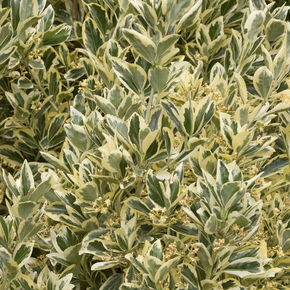
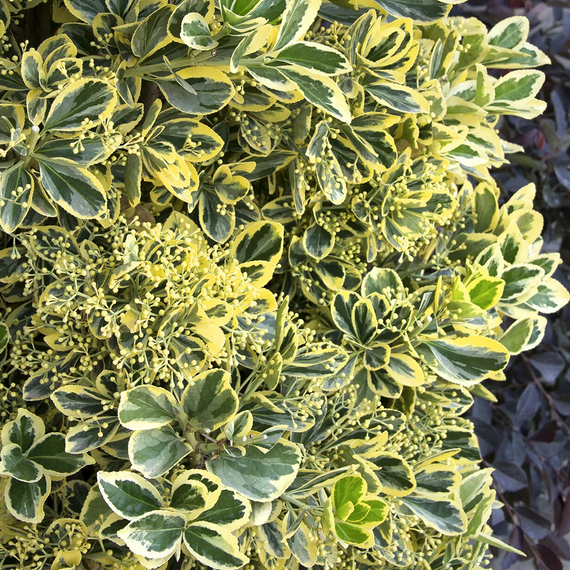
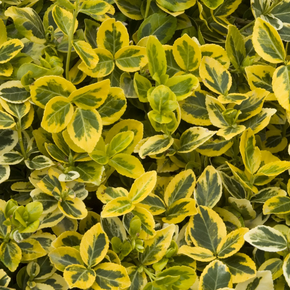
Euonymus japonicus 'Chollipo' — commonly known as Chollipo Euonymus or Japanese Spindle Tree — is a fast-growing, broadleaf evergreen shrub prized for its stunning, glossy dark green foliage elegantly edged in bold creamy-white to pale yellow margins. This handsome, densely branched cultivar grows in an upright, oval-to-pyramidal form, maturing to approximately 10-12 feet tall and 4-6 feet wide, making it a top performer as a privacy screen, formal hedge, foundation planting, or landscape accent. Hardy in USDA Zones 6-9, 'Chollipo' thrives in full sun to partial shade and adapts easily to a wide range of soil types, tolerating heat, poor soils, environmental salt spray, and urban pollution with remarkable resilience. Its tightly branched, compact growth habit responds beautifully to shearing, making it an outstanding candidate for topiary forms, espalier, and neatly maintained formal hedges. Unlike many variegated shrubs, 'Chollipo' holds its vivid foliage color even in direct sun, providing vibrant contrast and four-season interest in the Pacific Coast garden landscape. Deer resistant and low-maintenance once established, this reliable evergreen is equally at home in coastal gardens of Northern California, the valleys and foothills of Southern Oregon, urban streetscapes, or as a striking container specimen on a patio or entryway.
Plant Description
Chollipo Euonymus (Euonymus japonicus 'Chollipo') is a broadleaf evergreen shrub in the Celastraceae family, originating from Japan, Korea, and China. It is distinguished by its dense, upright-spreading growth habit and exceptionally ornamental foliage. Each glossy, oval leaf displays a rich dark green center dramatically edged in a bold creamy-white to pale yellow margin — a variegation that remains vivid and unaffected even in direct sun, setting 'Chollipo' apart from many other variegated euonymus cultivars. The leaf surface has a polished, high-gloss texture that adds luster to hedges and borders throughout every season. Small, inconspicuous greenish-white flowers may appear in late spring to early summer, followed occasionally by small pinkish-orange fruit capsules that split open to reveal orange seeds attractive to songbirds. The overall effect is a refined, bold, and luminous shrub that delivers maximum visual impact with minimum fuss.
Mature Size and Growth Rate
| Characteristic | Details |
|---|---|
| Mature Height | 10-12 feet (can reach up to 12 feet under ideal conditions) |
| Mature Spread | 4-6 feet |
| Growth Rate | Fast — one of the faster-growing euonymus cultivars |
| Growth Habit | Upright, oval to pyramidal; naturally dense and compact |
| Longevity | Long-lived; under ideal conditions can thrive for 40 years or more |
| Suitable Under Power Lines | Yes — mature height is generally compatible |
'Chollipo' tends to fill out densely right to the ground, so it does not necessarily require low-growing facer plants in front. Its rapid growth rate means new hedges and screens fill in quickly compared to slower-growing alternatives.
Hardiness Zones and Climate
Chollipo Euonymus is hardy in USDA Hardiness Zones 6-9, with some references citing adaptability into Zone 6a. This range makes it an excellent fit for the mild winters and warm summers of Southern Oregon and Northern California. It performs well in both coastal climates — where its notable tolerance of salt spray is a major asset — and inland valley conditions where summer heat can be intense. It benefits from a relatively sheltered planting location in the coldest end of its range. In the warmer portions of its hardiness range, such as the California Central Valley and the Rogue Valley of Southern Oregon, its heat tolerance and drought resilience make it especially valuable. While it can tolerate a range of humidity levels, it does best with good air circulation to reduce the risk of fungal issues in damp conditions.
Sunlight Requirements
'Chollipo' is highly adaptable when it comes to light. It performs best in full sun to partial shade (approximately 4-6 or more hours of direct sunlight daily). A key advantage of this cultivar over many variegated shrubs is that its creamy leaf margins retain their bold color even in full, direct sun without scorching or fading — a trait specifically noted by horticultural researchers. In deeper shade, the plant tends to develop a slightly more open, less compact habit. For the densest, most vividly variegated growth, a site with at least a half-day of direct sun is ideal. In the hot interior valleys of Southern Oregon and Northern California, afternoon shade can be beneficial during the peak of summer.
Soil and pH Preferences
'Chollipo' is one of the most soil-adaptable shrubs available for Pacific Coast landscapes. It thrives in a wide range of soil types, including loam, sandy soil, and even clay, provided drainage is adequate. It will even grow in notably poor soils where many other ornamentals struggle. Key soil preferences include:
- Well-drained soil is preferred, though it tolerates both moderately dry and moderately moist conditions
- Adaptable to a wide soil pH range of approximately 6.0-8.0 — tolerates both acidic and slightly alkaline conditions
- Tolerates environmental salt in the soil, making it suitable for roadsides and coastal areas
- Does not require particularly fertile soil, though amending the planting hole with compost at establishment will encourage faster early growth
- Avoid sites with standing water or chronically saturated soil, which can promote root rot
Watering Guide
Once established, Chollipo Euonymus is notably drought tolerant and requires only moderate supplemental irrigation. Follow these watering guidelines for best results:
- At planting and during establishment (first 1-2 seasons): Water deeply and regularly, keeping the root zone consistently moist but never waterlogged. Newly planted shrubs need consistent moisture to develop a strong root system.
- Established plants: Water deeply when the top 3 inches of soil feel dry to the touch. In the mild, dry summers of Southern Oregon and Northern California, this may mean watering every 1-2 weeks depending on soil type and temperature.
- Drought tolerance: Once fully established, 'Chollipo' can withstand periods of drought, making it a practical choice for low-water landscapes or areas with seasonal irrigation restrictions.
- Avoid overwatering: This cultivar is sensitive to chronically wet or waterlogged soil, which can lead to root rot. Always ensure good drainage before planting.
- Mulching: Applying a 2-3 inch layer of organic mulch around the root zone helps conserve soil moisture, regulate temperature, and reduce watering frequency.
Fertilizing
'Chollipo' is not a heavy feeder and generally thrives without intensive fertilization, especially in average to moderately fertile soils. Follow these simple guidelines:
- Apply a balanced, slow-release granular fertilizer (such as a 10-10-10 or similar all-purpose formulation) once per year in early spring as new growth begins.
- Alternatively, an application of a well-balanced fertilizer in early spring and a light follow-up in midsummer will support vigorous growth in leaner soils.
- Avoid excessive nitrogen fertilization, which can promote overly lush, soft growth more susceptible to pests and diseases.
- Newly planted shrubs benefit from a starter fertilizer or a light application of compost worked into the planting hole to encourage rapid establishment.
- In well-amended garden soils or where regular organic mulch is applied, annual fertilization may not be necessary at all.
Pruning and Maintenance
Chollipo Euonymus is a low-maintenance shrub that responds exceptionally well to pruning, making it one of the most versatile candidates for formal shaping in the landscape.
- Natural form: Without pruning, 'Chollipo' develops a naturally dense, upright oval shape that is attractive in informal settings without any intervention.
- Formal hedges and screens: Shear once or twice per year — typically in early spring before new growth flushes and again in midsummer if a tighter appearance is desired — to maintain a neat, formal hedge line.
- Topiary and espalier: The dense, tightly branched habit makes this cultivar excellent for shaping into spheres, columns, espalier patterns against walls or fences, and other decorative topiary forms.
- Best pruning time: Major shaping is best done in early spring after the last frost. Light corrective pruning or deadwood removal can be done at any time of year.
- Rejuvenation: If an established plant has become overgrown or leggy, it tolerates hard renovation pruning and will regenerate vigorously from old wood.
- Sanitation: Always remove and dispose of any diseased or heavily pest-infested branches promptly to prevent spread. Use clean, sterilized pruning tools.
Planting Instructions
- Timing: Plant in spring, summer, or fall. In the Southern Oregon and Northern California region, fall planting is often ideal, allowing roots to establish during the cool, moist season before summer heat arrives.
- Site selection: Choose a location with full sun to partial shade and well-drained soil. Avoid low-lying areas prone to standing water.
- Hole preparation: Dig a hole 2-3 times as wide as the root ball and approximately the same depth. Loosen the sides of the hole to encourage outward root growth.
- Soil amendment: In particularly poor or compacted soils, mix the removed soil with compost at a ratio of approximately 1 part compost to 3 parts native soil. In average garden soils, amendment is optional.
- Planting depth: Set the shrub so the top of the root ball sits level with or very slightly above the surrounding soil grade. Planting too deep is a common cause of establishment failure.
- Backfill and water in: Backfill with the prepared soil, firm gently around the roots to eliminate air pockets, and water thoroughly immediately after planting.
- Mulching: Apply a 2-3 inch layer of organic mulch (bark, wood chips, or compost) in a ring around the plant, keeping mulch a few inches away from the main stem to prevent crown rot.
- Spacing for hedges: For a solid privacy screen or formal hedge, space plants approximately 3-4 feet apart on center. For more open groupings or specimens, allow 5-6 feet between plants.
Landscape Uses
Chollipo Euonymus is one of the most versatile large evergreen shrubs available for Pacific Coast landscapes, filling a wide range of functional and ornamental roles:
- Privacy screens and hedges: Fast growth and a naturally dense, upright form make it outstanding for tall, full privacy barriers or formal clipped hedges.
- Foundation planting: Its bold variegated foliage anchors architectural corners and entries with year-round elegance.
- Topiary and formal gardens: The tight branching responds beautifully to shearing into globes, cones, columns, and other formal shapes.
- Espalier: Trains well flat against walls, fences, or trellises for a striking space-saving display.
- Mass planting: When planted in groups, the creamy-edged foliage creates a bold, unified textural sweep across a landscape bed.
- Large containers: Makes a dramatic statement in oversized patio containers flanking entries, driveways, or outdoor living areas.
- Coastal and urban gardens: Salt tolerance and urban pollution resistance make it ideal for streetscapes, coastal properties, and city gardens.
- Slopes and difficult sites: Adaptability to poor soils and drought tolerance makes it a good choice for challenging or low-maintenance areas.
Pests and Diseases
Chollipo Euonymus is generally a robust, trouble-free shrub when grown in appropriate conditions, but gardeners should be aware of the following potential issues:
- Euonymus scale (Unaspis euonymi): The most significant pest of Japanese euonymus. Female scales are brownish and males are white, and both nymphs and adults feed on plant sap, causing yellowing of leaves, dieback of branches, and in severe cases, plant death. Treat with horticultural oil or insecticidal soap spray targeting nymphs in early June, before they become armored adults. Systemic imidacloprid applied as a soil drench in autumn provides longer-term control. Removing and destroying heavily infested branches helps reduce populations.
- Anthracnose: A fungal disease that causes small brownish spots with lighter centers on leaves, most prevalent during cool, wet spring conditions. Prune out infected tissue and apply copper fungicide as a preventative during at-risk periods.
- Cercospora leaf spot: Produces small brown spots that can merge across leaf surfaces; rarely fatal but reduces aesthetics. Remove fallen infected leaves and treat with thiophanate-methyl fungicide sprays.
- Powdery mildew: 'Chollipo' has a notably high resistance to powdery mildew compared to many euonymus species, particularly when grown with good air circulation.
- Crown gall: A bacterial soil-borne disease causing irregular galls on roots and stems. There is no cure; prevent spread by using sterilized tools and disease-free planting stock.
- Root rot: 'Chollipo' shows high resistance to root rot but can be affected in chronically waterlogged soils. Always ensure good drainage.
- General prevention: Healthy, well-sited plants with adequate sunlight and air circulation are significantly more resistant to both pests and diseases. Avoid overhead irrigation, which can prolong leaf wetness.
Seasonal Interest
One of the greatest strengths of Chollipo Euonymus is its consistent, four-season visual appeal — a valuable trait in any landscape planting:
- Spring: Fresh flushes of new growth emerge with particularly vivid creamy-white margins contrasting against glossy deep green centers. Small, inconspicuous greenish-white flowers appear in late spring.
- Summer: Foliage remains bold and lustrous through the heat of summer. The creamy-white variegation is unaffected by full sun exposure, maintaining its striking contrast throughout the warmest months.
- Fall: Foliage color remains vibrant and unchanged as temperatures drop. Occasional small pinkish-orange fruit capsules may appear, opening to reveal orange seeds that attract songbirds.
- Winter: As a broadleaf evergreen, 'Chollipo' retains its glossy, variegated foliage through winter, providing structure, color, and screening in the garden even when deciduous plants are bare. The foliage may take on subtle silvery tones in very cold conditions.
Wildlife Value
While Chollipo Euonymus is primarily grown for its ornamental value, it does offer some meaningful benefits to garden wildlife:
- Birds: The small fruit capsules that develop in fall split open to reveal bright orange seeds that are attractive to a variety of songbirds, making it a useful food source in the late-season garden.
- Deer resistance: 'Chollipo' is notably deer resistant, making it a practical choice for gardens and properties in areas of Southern Oregon and Northern California where deer browsing is a common challenge.
- Toxicity caution: All parts of Euonymus japonicus — including the berries, leaves, and bark — are toxic if ingested by humans, dogs, cats, and other pets. Site this plant thoughtfully in households with children or free-roaming animals, and handle with gloves when pruning.
Container Growing
'Chollipo' can make a dramatic and long-lasting container specimen, particularly in large decorative pots flanking entries, driveways, gates, or patios. For best results in containers:
- Select a large, sturdy container with ample drainage holes — a minimum of 15-20 gallons for long-term growing.
- Use a high-quality, well-draining potting mix. Adding perlite to a standard mix improves drainage and helps prevent root rot.
- Container plants dry out more quickly than in-ground plants and will need more frequent watering — check soil moisture regularly and water when the top 1-2 inches are dry.
- Fertilize container-grown plants more regularly than in-ground plants, using a balanced slow-release fertilizer in spring and a liquid supplement through the growing season.
- Containers can be used to grow 'Chollipo' in formal topiary forms — regular shearing keeps the plant in bounds and enhances its architectural appeal.
- In regions at the cooler end of its hardiness range, containers allow the plant to be moved to a more protected location during unusually harsh cold snaps.
Companion Plants
Chollipo Euonymus pairs beautifully with a wide range of landscape plants. Its bold, upright form and creamy-white-edged dark foliage provide an excellent backdrop and contrast for many companions:
- Ornamental grasses: The fine, airy texture of grasses like Karl Foerster feather reed grass or blue oat grass contrasts elegantly with the dense, glossy foliage of 'Chollipo'.
- Lavender (Lavandula spp.): Low-growing, aromatic lavender planted in front of a 'Chollipo' hedge creates a classic, fragrant Mediterranean combination well-suited to the Southern Oregon and Northern California climate.
- Rosemary: Shares similar cultural requirements (well-drained soil, full sun, drought tolerance) and creates a cohesive evergreen palette with complementary textures.
- Agapanthus: Bold blue or white flower clusters in summer provide stunning color contrast against the variegated backdrop of 'Chollipo'.
- Pittosporum tenuifolium: Another tough, variegated evergreen that pairs naturally with 'Chollipo' for layered, multi-textured screening plantings.
- Boxwood (Buxus spp.): The formal, clipped character of boxwood complements the architectural presence of 'Chollipo' in structured garden designs.
- Salvia: Colorful flowering salvias planted in front of or alongside a 'Chollipo' screen provide seasonal color and pollinator interest without competing for dominance.
- Holly (Ilex spp.): Fellow evergreens with similar cultural needs that pair well for layered privacy plantings and winter interest.
- Bold, creamy-white-margined evergreen foliage delivers striking year-round color in hedges, screens, and foundation plantings without any seasonal maintenance gaps.
- Fast-growing, dense upright habit reaches up to 10-12 feet tall with a 4-6 foot spread, naturally filling vertical space with minimal shaping required.
- Exceptionally tough and adaptable — tolerates poor soils, heat, salt spray, urban pollution, and drought once established, making it a standout choice for challenging sites.
- Versatile landscaping workhorse suited for formal topiary, espalier, mass plantings, privacy screens, or as a bold container accent.
Euonymus japonicus 'Chollipo' — commonly known as Chollipo Euonymus or Japanese Spindle Tree — is a fast-growing, broadleaf evergreen shrub prized for its stunning, glossy dark green foliage elegantly edged in bold creamy-white to pale yellow margins. This handsome, densely branched cultivar grows in an upright, oval-to-pyramidal form, maturing to approximately 10-12 feet tall and 4-6 feet wide, making it a top performer as a privacy screen, formal hedge, foundation planting, or landscape accent. Hardy in USDA Zones 6-9, 'Chollipo' thrives in full sun to partial shade and adapts easily to a wide range of soil types, tolerating heat, poor soils, environmental salt spray, and urban pollution with remarkable resilience. Its tightly branched, compact growth habit responds beautifully to shearing, making it an outstanding candidate for topiary forms, espalier, and neatly maintained formal hedges. Unlike many variegated shrubs, 'Chollipo' holds its vivid foliage color even in direct sun, providing vibrant contrast and four-season interest in the Pacific Coast garden landscape. Deer resistant and low-maintenance once established, this reliable evergreen is equally at home in coastal gardens of Northern California, the valleys and foothills of Southern Oregon, urban streetscapes, or as a striking container specimen on a patio or entryway.
Plant Description
Chollipo Euonymus (Euonymus japonicus 'Chollipo') is a broadleaf evergreen shrub in the Celastraceae family, originating from Japan, Korea, and China. It is distinguished by its dense, upright-spreading growth habit and exceptionally ornamental foliage. Each glossy, oval leaf displays a rich dark green center dramatically edged in a bold creamy-white to pale yellow margin — a variegation that remains vivid and unaffected even in direct sun, setting 'Chollipo' apart from many other variegated euonymus cultivars. The leaf surface has a polished, high-gloss texture that adds luster to hedges and borders throughout every season. Small, inconspicuous greenish-white flowers may appear in late spring to early summer, followed occasionally by small pinkish-orange fruit capsules that split open to reveal orange seeds attractive to songbirds. The overall effect is a refined, bold, and luminous shrub that delivers maximum visual impact with minimum fuss.
Mature Size and Growth Rate
| Characteristic | Details |
|---|---|
| Mature Height | 10-12 feet (can reach up to 12 feet under ideal conditions) |
| Mature Spread | 4-6 feet |
| Growth Rate | Fast — one of the faster-growing euonymus cultivars |
| Growth Habit | Upright, oval to pyramidal; naturally dense and compact |
| Longevity | Long-lived; under ideal conditions can thrive for 40 years or more |
| Suitable Under Power Lines | Yes — mature height is generally compatible |
'Chollipo' tends to fill out densely right to the ground, so it does not necessarily require low-growing facer plants in front. Its rapid growth rate means new hedges and screens fill in quickly compared to slower-growing alternatives.
Hardiness Zones and Climate
Chollipo Euonymus is hardy in USDA Hardiness Zones 6-9, with some references citing adaptability into Zone 6a. This range makes it an excellent fit for the mild winters and warm summers of Southern Oregon and Northern California. It performs well in both coastal climates — where its notable tolerance of salt spray is a major asset — and inland valley conditions where summer heat can be intense. It benefits from a relatively sheltered planting location in the coldest end of its range. In the warmer portions of its hardiness range, such as the California Central Valley and the Rogue Valley of Southern Oregon, its heat tolerance and drought resilience make it especially valuable. While it can tolerate a range of humidity levels, it does best with good air circulation to reduce the risk of fungal issues in damp conditions.
Sunlight Requirements
'Chollipo' is highly adaptable when it comes to light. It performs best in full sun to partial shade (approximately 4-6 or more hours of direct sunlight daily). A key advantage of this cultivar over many variegated shrubs is that its creamy leaf margins retain their bold color even in full, direct sun without scorching or fading — a trait specifically noted by horticultural researchers. In deeper shade, the plant tends to develop a slightly more open, less compact habit. For the densest, most vividly variegated growth, a site with at least a half-day of direct sun is ideal. In the hot interior valleys of Southern Oregon and Northern California, afternoon shade can be beneficial during the peak of summer.
Soil and pH Preferences
'Chollipo' is one of the most soil-adaptable shrubs available for Pacific Coast landscapes. It thrives in a wide range of soil types, including loam, sandy soil, and even clay, provided drainage is adequate. It will even grow in notably poor soils where many other ornamentals struggle. Key soil preferences include:
- Well-drained soil is preferred, though it tolerates both moderately dry and moderately moist conditions
- Adaptable to a wide soil pH range of approximately 6.0-8.0 — tolerates both acidic and slightly alkaline conditions
- Tolerates environmental salt in the soil, making it suitable for roadsides and coastal areas
- Does not require particularly fertile soil, though amending the planting hole with compost at establishment will encourage faster early growth
- Avoid sites with standing water or chronically saturated soil, which can promote root rot
Watering Guide
Once established, Chollipo Euonymus is notably drought tolerant and requires only moderate supplemental irrigation. Follow these watering guidelines for best results:
- At planting and during establishment (first 1-2 seasons): Water deeply and regularly, keeping the root zone consistently moist but never waterlogged. Newly planted shrubs need consistent moisture to develop a strong root system.
- Established plants: Water deeply when the top 3 inches of soil feel dry to the touch. In the mild, dry summers of Southern Oregon and Northern California, this may mean watering every 1-2 weeks depending on soil type and temperature.
- Drought tolerance: Once fully established, 'Chollipo' can withstand periods of drought, making it a practical choice for low-water landscapes or areas with seasonal irrigation restrictions.
- Avoid overwatering: This cultivar is sensitive to chronically wet or waterlogged soil, which can lead to root rot. Always ensure good drainage before planting.
- Mulching: Applying a 2-3 inch layer of organic mulch around the root zone helps conserve soil moisture, regulate temperature, and reduce watering frequency.
Fertilizing
'Chollipo' is not a heavy feeder and generally thrives without intensive fertilization, especially in average to moderately fertile soils. Follow these simple guidelines:
- Apply a balanced, slow-release granular fertilizer (such as a 10-10-10 or similar all-purpose formulation) once per year in early spring as new growth begins.
- Alternatively, an application of a well-balanced fertilizer in early spring and a light follow-up in midsummer will support vigorous growth in leaner soils.
- Avoid excessive nitrogen fertilization, which can promote overly lush, soft growth more susceptible to pests and diseases.
- Newly planted shrubs benefit from a starter fertilizer or a light application of compost worked into the planting hole to encourage rapid establishment.
- In well-amended garden soils or where regular organic mulch is applied, annual fertilization may not be necessary at all.
Pruning and Maintenance
Chollipo Euonymus is a low-maintenance shrub that responds exceptionally well to pruning, making it one of the most versatile candidates for formal shaping in the landscape.
- Natural form: Without pruning, 'Chollipo' develops a naturally dense, upright oval shape that is attractive in informal settings without any intervention.
- Formal hedges and screens: Shear once or twice per year — typically in early spring before new growth flushes and again in midsummer if a tighter appearance is desired — to maintain a neat, formal hedge line.
- Topiary and espalier: The dense, tightly branched habit makes this cultivar excellent for shaping into spheres, columns, espalier patterns against walls or fences, and other decorative topiary forms.
- Best pruning time: Major shaping is best done in early spring after the last frost. Light corrective pruning or deadwood removal can be done at any time of year.
- Rejuvenation: If an established plant has become overgrown or leggy, it tolerates hard renovation pruning and will regenerate vigorously from old wood.
- Sanitation: Always remove and dispose of any diseased or heavily pest-infested branches promptly to prevent spread. Use clean, sterilized pruning tools.
Planting Instructions
- Timing: Plant in spring, summer, or fall. In the Southern Oregon and Northern California region, fall planting is often ideal, allowing roots to establish during the cool, moist season before summer heat arrives.
- Site selection: Choose a location with full sun to partial shade and well-drained soil. Avoid low-lying areas prone to standing water.
- Hole preparation: Dig a hole 2-3 times as wide as the root ball and approximately the same depth. Loosen the sides of the hole to encourage outward root growth.
- Soil amendment: In particularly poor or compacted soils, mix the removed soil with compost at a ratio of approximately 1 part compost to 3 parts native soil. In average garden soils, amendment is optional.
- Planting depth: Set the shrub so the top of the root ball sits level with or very slightly above the surrounding soil grade. Planting too deep is a common cause of establishment failure.
- Backfill and water in: Backfill with the prepared soil, firm gently around the roots to eliminate air pockets, and water thoroughly immediately after planting.
- Mulching: Apply a 2-3 inch layer of organic mulch (bark, wood chips, or compost) in a ring around the plant, keeping mulch a few inches away from the main stem to prevent crown rot.
- Spacing for hedges: For a solid privacy screen or formal hedge, space plants approximately 3-4 feet apart on center. For more open groupings or specimens, allow 5-6 feet between plants.
Landscape Uses
Chollipo Euonymus is one of the most versatile large evergreen shrubs available for Pacific Coast landscapes, filling a wide range of functional and ornamental roles:
- Privacy screens and hedges: Fast growth and a naturally dense, upright form make it outstanding for tall, full privacy barriers or formal clipped hedges.
- Foundation planting: Its bold variegated foliage anchors architectural corners and entries with year-round elegance.
- Topiary and formal gardens: The tight branching responds beautifully to shearing into globes, cones, columns, and other formal shapes.
- Espalier: Trains well flat against walls, fences, or trellises for a striking space-saving display.
- Mass planting: When planted in groups, the creamy-edged foliage creates a bold, unified textural sweep across a landscape bed.
- Large containers: Makes a dramatic statement in oversized patio containers flanking entries, driveways, or outdoor living areas.
- Coastal and urban gardens: Salt tolerance and urban pollution resistance make it ideal for streetscapes, coastal properties, and city gardens.
- Slopes and difficult sites: Adaptability to poor soils and drought tolerance makes it a good choice for challenging or low-maintenance areas.
Pests and Diseases
Chollipo Euonymus is generally a robust, trouble-free shrub when grown in appropriate conditions, but gardeners should be aware of the following potential issues:
- Euonymus scale (Unaspis euonymi): The most significant pest of Japanese euonymus. Female scales are brownish and males are white, and both nymphs and adults feed on plant sap, causing yellowing of leaves, dieback of branches, and in severe cases, plant death. Treat with horticultural oil or insecticidal soap spray targeting nymphs in early June, before they become armored adults. Systemic imidacloprid applied as a soil drench in autumn provides longer-term control. Removing and destroying heavily infested branches helps reduce populations.
- Anthracnose: A fungal disease that causes small brownish spots with lighter centers on leaves, most prevalent during cool, wet spring conditions. Prune out infected tissue and apply copper fungicide as a preventative during at-risk periods.
- Cercospora leaf spot: Produces small brown spots that can merge across leaf surfaces; rarely fatal but reduces aesthetics. Remove fallen infected leaves and treat with thiophanate-methyl fungicide sprays.
- Powdery mildew: 'Chollipo' has a notably high resistance to powdery mildew compared to many euonymus species, particularly when grown with good air circulation.
- Crown gall: A bacterial soil-borne disease causing irregular galls on roots and stems. There is no cure; prevent spread by using sterilized tools and disease-free planting stock.
- Root rot: 'Chollipo' shows high resistance to root rot but can be affected in chronically waterlogged soils. Always ensure good drainage.
- General prevention: Healthy, well-sited plants with adequate sunlight and air circulation are significantly more resistant to both pests and diseases. Avoid overhead irrigation, which can prolong leaf wetness.
Seasonal Interest
One of the greatest strengths of Chollipo Euonymus is its consistent, four-season visual appeal — a valuable trait in any landscape planting:
- Spring: Fresh flushes of new growth emerge with particularly vivid creamy-white margins contrasting against glossy deep green centers. Small, inconspicuous greenish-white flowers appear in late spring.
- Summer: Foliage remains bold and lustrous through the heat of summer. The creamy-white variegation is unaffected by full sun exposure, maintaining its striking contrast throughout the warmest months.
- Fall: Foliage color remains vibrant and unchanged as temperatures drop. Occasional small pinkish-orange fruit capsules may appear, opening to reveal orange seeds that attract songbirds.
- Winter: As a broadleaf evergreen, 'Chollipo' retains its glossy, variegated foliage through winter, providing structure, color, and screening in the garden even when deciduous plants are bare. The foliage may take on subtle silvery tones in very cold conditions.
Wildlife Value
While Chollipo Euonymus is primarily grown for its ornamental value, it does offer some meaningful benefits to garden wildlife:
- Birds: The small fruit capsules that develop in fall split open to reveal bright orange seeds that are attractive to a variety of songbirds, making it a useful food source in the late-season garden.
- Deer resistance: 'Chollipo' is notably deer resistant, making it a practical choice for gardens and properties in areas of Southern Oregon and Northern California where deer browsing is a common challenge.
- Toxicity caution: All parts of Euonymus japonicus — including the berries, leaves, and bark — are toxic if ingested by humans, dogs, cats, and other pets. Site this plant thoughtfully in households with children or free-roaming animals, and handle with gloves when pruning.
Container Growing
'Chollipo' can make a dramatic and long-lasting container specimen, particularly in large decorative pots flanking entries, driveways, gates, or patios. For best results in containers:
- Select a large, sturdy container with ample drainage holes — a minimum of 15-20 gallons for long-term growing.
- Use a high-quality, well-draining potting mix. Adding perlite to a standard mix improves drainage and helps prevent root rot.
- Container plants dry out more quickly than in-ground plants and will need more frequent watering — check soil moisture regularly and water when the top 1-2 inches are dry.
- Fertilize container-grown plants more regularly than in-ground plants, using a balanced slow-release fertilizer in spring and a liquid supplement through the growing season.
- Containers can be used to grow 'Chollipo' in formal topiary forms — regular shearing keeps the plant in bounds and enhances its architectural appeal.
- In regions at the cooler end of its hardiness range, containers allow the plant to be moved to a more protected location during unusually harsh cold snaps.
Companion Plants
Chollipo Euonymus pairs beautifully with a wide range of landscape plants. Its bold, upright form and creamy-white-edged dark foliage provide an excellent backdrop and contrast for many companions:
- Ornamental grasses: The fine, airy texture of grasses like Karl Foerster feather reed grass or blue oat grass contrasts elegantly with the dense, glossy foliage of 'Chollipo'.
- Lavender (Lavandula spp.): Low-growing, aromatic lavender planted in front of a 'Chollipo' hedge creates a classic, fragrant Mediterranean combination well-suited to the Southern Oregon and Northern California climate.
- Rosemary: Shares similar cultural requirements (well-drained soil, full sun, drought tolerance) and creates a cohesive evergreen palette with complementary textures.
- Agapanthus: Bold blue or white flower clusters in summer provide stunning color contrast against the variegated backdrop of 'Chollipo'.
- Pittosporum tenuifolium: Another tough, variegated evergreen that pairs naturally with 'Chollipo' for layered, multi-textured screening plantings.
- Boxwood (Buxus spp.): The formal, clipped character of boxwood complements the architectural presence of 'Chollipo' in structured garden designs.
- Salvia: Colorful flowering salvias planted in front of or alongside a 'Chollipo' screen provide seasonal color and pollinator interest without competing for dominance.
- Holly (Ilex spp.): Fellow evergreens with similar cultural needs that pair well for layered privacy plantings and winter interest.
Related Products