
Zoom the image with the mouse
Tasman Ruffles Pittosporum - 2 Gallon
SKU:
2036990
UPC:
014949356890
$49.99
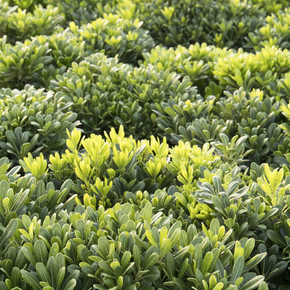
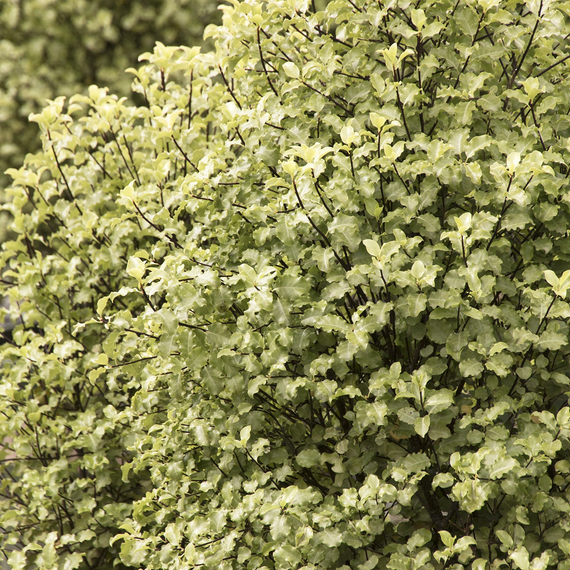
- Stunning pyramidal evergreen shrub with distinctive crimped, wavy-edged lime-green foliage accented by a subtle creamy-white margin and striking near-black reddish stems for year-round visual drama.
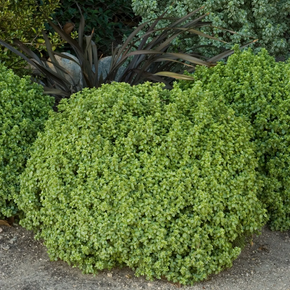
- Naturally forms a tidy, dense conical shape with little to no shearing required, making it one of the most low-maintenance choices for hedges, privacy screens, or bold specimen plantings.
- Fragrant clusters of deep purple flowers bloom from mid to late spring, offering a spectacular color contrast against the luminous foliage while attracting bees and other pollinators.
- Highly adaptable and tough — tolerates coastal salt winds, urban pollution, and a wide range of well-drained soils, thriving across USDA Zones 7b–10.
Pittosporum tenuifolium 'Tasman Ruffles' is a standout evergreen shrub that brings sophisticated, year-round texture and structure to any garden in Southern Oregon, Northern California, and beyond. Selected from the New Zealand native species known as Kohuhu, this refined cultivar is prized for its small, glossy, twisted oval leaves with distinctive crimped and wavy edges, a soft lime-green to grayish-green coloration with delicate creamy-white margins, and a vivid contrast against its slender, near-black reddish stems. Introduced in 2014, 'Tasman Ruffles' naturally grows into a dense, upright pyramidal to conical form reaching 8–10 feet tall and 5–6 feet wide at maturity — delivering the clean architectural presence of a formally sheared hedge without demanding constant pruning. In mid to late spring, showy, fragrant clusters of deep purple flowers emerge at branch tips, adding a bold seasonal accent and a sweet honeyed scent that drifts through the garden on still evenings. A genuinely low-maintenance performer, this shrub adapts readily to full sun or partial shade, handles coastal salt spray and urban conditions with ease, and establishes reliably in a wide range of well-drained soils. Whether used as a dramatic focal point, a lustrous informal hedge, a mass planting, or an elegant container specimen, Pittosporum tenuifolium 'Tasman Ruffles' delivers four seasons of visual interest with minimal fuss — a true workhorse of the Pacific Coast garden.
Plant Description
Tasman Ruffles Pittosporum (Pittosporum tenuifolium 'Tasman Ruffles') is a dense, multi-stemmed evergreen shrub selected from a species native to the lowland forests and scrublands of New Zealand, where it is commonly known as Kohuhu. The plant's most captivating feature is its foliage: small, twisted oval leaves with distinctly crimped and wavy edges in a luminous lime-green to grayish-green tone, often edged with a thin creamy-white margin that accentuates the ruffled leaf shape. In spring, fresh new growth emerges with a soft buttery-yellow hue before maturing to its characteristic silvery lime-green. The leaves are carried on slender, nearly black reddish-brown stems that create a beautiful contrast with the lighter foliage. In mid to late spring, clusters of fragrant, deep purple flowers appear at the branch tips, providing a striking seasonal display and a sweet, honey-like scent detectable from several feet away. After flowering, small woody seed capsules form and add additional interest in fall. The plant's naturally pyramidal to conical growth habit gives it a refined, architectural quality that is both distinctive and elegant throughout the year.
Mature Size and Growth Rate
| Characteristic | Detail |
|---|---|
| Mature Height | 8–10 feet |
| Mature Spread | 5–6 feet |
| Growth Habit | Upright, dense, pyramidal to conical |
| Growth Rate | Medium; approximately 12–24 inches per year under ideal conditions in years 2–5 |
| Canopy Height | Low-canopied; suitable for planting beneath power lines |
| Longevity | 40 years or more under ideal conditions |
Growth naturally slows as the plant matures and energy shifts toward flowering and root expansion. Its upright, conical form develops without requiring shearing, though annual light pruning encourages an even denser and more uniform silhouette.
Hardiness Zones
Tasman Ruffles Pittosporum is reliably hardy in USDA Zones 7b–10, performing exceptionally well throughout much of Southern Oregon and Northern California. It can tolerate brief temperature dips down to approximately 10–12°F (-11°C) when temperatures drop gradually, allowing the plant time to acclimate. Rapid, steep temperature drops are more damaging than absolute cold, so sheltered planting sites are preferable in the colder end of its range. In Zone 7b microclimates, planting near a south- or west-facing wall provides valuable protection from cold winds and frost. Apply a 3-inch layer of shredded mulch around the root zone in late fall to insulate roots in exposed locations. In areas with mild, frost-free winters such as coastal Northern California, this plant thrives with virtually no cold-weather intervention.
Sunlight Requirements
Tasman Ruffles Pittosporum performs best in full sun to partial shade. Full sun — defined as 6 or more hours of direct sunlight per day — produces the densest canopy, the most vibrant foliage color, and the heaviest flowering. In the warmer, inland areas of Southern Oregon and Northern California (Zones 9b–10b), providing light afternoon shade helps reduce leaf scorch during the hottest months and may extend the spring bloom period. In cooler coastal climates, full sun is ideal and ensures the wood ripens properly for winter. Avoid deep or dense shade, which results in sparse, leggy growth and dramatically reduced flowering.
Soil and pH Preferences
This adaptable shrub is not particularly fussy about soil type but has firm requirements when it comes to drainage. It grows well in loamy, sandy, or amended clay soils, but will not tolerate standing water or chronically saturated roots. Well-drained soil is non-negotiable — if water pools for more than a few hours after a heavy rain, amend the site with coarse horticultural sand and aged bark fines, or plant on a raised berm.
- Preferred soil pH: 5.5–7.0 (slightly acidic to neutral). If soil pH exceeds 7.2, amend with elemental sulfur before planting to improve iron and nutrient availability.
- Tolerates a wide range of soil types, including coastal sandy soils and mild urban soils.
- Salt-tolerant, making it well-suited for coastal gardens and areas exposed to salt spray or road salt.
- Somewhat tolerant of urban pollution.
- Avoid low-lying, compacted, or waterlogged areas — these conditions promote Phytophthora root rot.
- Incorporate a 2–3 inch layer of shredded mulch over the root zone to retain moisture, moderate soil temperature, and suppress weeds — keeping mulch several inches away from the base of the trunk.
Watering Guide
Establishing a strong, deep root system in the first one to two growing seasons is the most important factor in this shrub's long-term success. During establishment, water deeply and regularly — approximately every 2–4 days for the first two weeks, then transitioning to weekly deep watering for the first full growing season. Drip irrigation or soaker hoses delivering water slowly directly to the root zone are preferred over overhead sprinklers.
Once established (typically 12–18 months after planting), Tasman Ruffles is moderately drought-tolerant and benefits from a "deep and infrequent" watering approach rather than frequent shallow watering. Deep, infrequent irrigation encourages roots to descend 3–4 feet into the soil, improving drought resilience and wind firmness.
- Summer (June–August): Water deeply every 10–14 days in Zone 9; every 7–10 days in hotter Zone 10 conditions. Check soil moisture 6–12 inches below the surface before watering.
- Spring and Fall: Water every 2–3 weeks unless rainfall is sufficient.
- Winter: Reduce or eliminate supplemental irrigation if rainfall provides at least 1 inch per month.
- Avoid: Overwatering — symptoms include yellowing of older leaves, soft blackened stems near soil level, and fungal growth around the base. Never allow standing water around the root zone.
Fertilizing
Tasman Ruffles Pittosporum evolved in nutrient-poor soils and naturally forms beneficial associations with mycorrhizal soil fungi that aid in nutrient uptake — meaning it requires very little supplemental feeding. Over-fertilizing, especially with high-nitrogen or high-phosphorus synthetic fertilizers, can actually suppress these beneficial fungal partnerships, promote soft frost-vulnerable growth, and encourage pest problems such as aphids.
- Feed once in early spring before new growth emerges with a balanced, slow-release, low-analysis organic fertilizer such as alfalfa pellets or a general-purpose granular formula.
- For container-grown plants, a diluted balanced liquid fertilizer applied monthly during the active growing season (spring through summer) is beneficial.
- If leaves appear pale green with interveinal yellowing (a sign of iron chlorosis, common in alkaline soils), apply chelated iron in early spring at the labeled rate.
- Stop all fertilizing by mid-July to prevent the flush of soft late-season growth that is vulnerable to frost damage.
- Avoid high-NPK synthetic fertilizers, ammonium sulfate, and foliar sprays, which can burn roots and disrupt soil microbiology.
Pruning and Maintenance
One of the most appealing traits of Tasman Ruffles is its naturally tidy, conical form that requires minimal pruning to look polished. Unlike many hedging plants, it does not need constant shearing to stay in shape. However, thoughtful pruning rewards gardeners with a denser canopy and more prolific flowering. Because this species blooms on wood produced the previous season, timing is critical — pruning after mid-summer removes next year's flower buds.
- Early Spring (February–March): Remove any dead, damaged, or crossing branches. Cut to an outward-facing bud or lateral branch.
- Post-Flowering / Late Spring to Early Summer: This is the ideal window for shaping. Reduce overall height by up to one-third and thin interior branches by 20–30% to allow light and air into the canopy.
- Light Maintenance (Spring and Summer): Pinch soft growing tips in May and again in August to encourage bushiness and lateral branching.
- Hedge shearing: Avoid aggressive electric hedge trimming, which creates dense outer walls of foliage that shade inner branches and invite pest problems. Hand pruning or selective cutting with bypass pruners produces superior results.
- Tools: Always use clean, sharp pruning shears. Disinfect tools between plants to prevent the spread of any disease.
Planting Instructions
Follow these steps for a successful planting that sets Tasman Ruffles up for decades of healthy growth:
- Timing: The ideal planting windows are early fall (September–October) or late winter to early spring (February–March), avoiding the peak heat of summer and hard-frost periods.
- Site Preparation: Choose a location with well-drained soil and full sun to partial shade. Avoid low spots where water collects. If soil drainage is poor, build a raised bed or berm at least 12 inches high.
- Pre-Planting Soak: Soak the root ball in a bucket of water for 20 minutes before planting. Gently tease out any circling or girdling roots and trim them with clean bypass pruners.
- Digging the Hole: Dig a hole twice as wide as the root ball but no deeper. The top of the root ball should sit at or just slightly above the surrounding grade to allow for settling.
- Backfilling: Use the native soil removed from the hole — do not add compost, peat, or fertilizer directly into the backfill, as this can create drainage problems and discourage roots from spreading outward.
- Watering In: Water thoroughly at planting. Apply a 2–3 inch layer of shredded mulch over the root zone, keeping it several inches away from the base of the trunk.
- Spacing for Hedges: For a privacy screen or hedge, space plants 3–5 feet apart depending on the desired density and timeline to fill in.
Landscape Uses
Tasman Ruffles Pittosporum is one of the most versatile evergreen shrubs available for Pacific Coast gardens. Its upright, pyramidal form, fine-textured foliage, and year-round interest make it suitable for a wide range of landscape applications:
- Privacy Screens and Hedges: Its dense, multi-stemmed habit and naturally conical shape make it exceptional for informal or lightly clipped hedging and screening. It fills in reliably and holds its form with minimal maintenance.
- Specimen or Accent Plant: The striking contrast of near-black stems against ruffled, silvery-green foliage makes a single plant a compelling focal point in a mixed border or garden bed.
- Mass Planting: When planted in drifts of three or more, Tasman Ruffles creates a bold, unified textural statement that is highly effective in large residential or commercial landscapes.
- Foundation Planting: Its moderate mature size and tidy habit make it well-suited alongside structures and building entries.
- Container Planting: Substantial enough to serve as a single specimen in a large decorative container on a patio, deck, or entryway.
- Coastal Gardens: Salt tolerance and wind resistance make it an outstanding choice for seaside properties along the Northern California coast.
- Under Power Lines: Its low canopy height makes it appropriate for planting in utility easements and under overhead lines.
Seasonal Interest
| Season | What to Expect |
|---|---|
| Spring | New growth flushes in soft buttery-yellow before maturing to lime-green. Fragrant, deep purple flower clusters bloom at branch tips from mid to late spring, attracting bees and other pollinators. |
| Summer | Foliage matures to a rich grayish lime-green with creamy-white leaf margins. The dense, conical canopy provides structure and screening in the landscape. Small woody seed capsules begin to develop. |
| Fall | Foliage remains attractive and evergreen. Seed capsules ripen and add subtle textural interest. Ideal time for planting new specimens. |
| Winter | Evergreen foliage holds its silvery lime-green color through winter, providing form and structure when many other plants are dormant. Near-black stems are especially visible and ornamental. |
Container Growing
Tasman Ruffles adapts well to life in a large container, making it a versatile choice for patios, decks, entryways, and rooftop gardens in Zones 7b–10. Its upright, columnar form looks elegant as a standalone specimen in a substantial pot. Keep the following in mind for successful container culture:
- Choose a container at least 16–24 inches in diameter with ample drainage holes to prevent waterlogging.
- Use a high-quality, well-draining potting mix — a blend of professional potting soil and perlite or coarse bark fines works well.
- Container plants dry out more quickly than those in the ground, especially in warm weather. Check soil moisture frequently and water thoroughly when the top 2 inches of the mix are dry.
- Feed monthly during the growing season (spring through summer) with a balanced, diluted liquid fertilizer, as container plants are regularly flushed of nutrients by watering.
- Repot every 2–3 years or when roots begin to emerge from drainage holes, stepping up to the next size container.
- In the colder end of its hardiness range (Zone 7b), containers can be moved to a sheltered garage or covered porch when temperatures are forecast to drop below 18°F (-8°C) for more than a few hours.
- Container-grown specimens may grow slightly more slowly and stay somewhat more compact than in-ground plants, which can be an advantage in space-limited settings.
Companion Plants
Tasman Ruffles pairs beautifully with plants that complement its fine texture, silvery lime-green foliage, and upright form. Consider these compatible companions for cohesive planting combinations in Southern Oregon and Northern California gardens:
- Lavender (Lavandula spp.): Shares the same well-drained soil and full-sun preferences; purple lavender blooms echo the spring flowers of Tasman Ruffles.
- Rosemary (Salvia rosmarinus): Drought-tolerant, fragrant, and evergreen — a natural pairing for Mediterranean-style plantings.
- Nandina (Nandina domestica): Provides contrasting fine-textured red and orange winter foliage alongside Tasman Ruffles' cool greens.
- Escallonia (Escallonia spp.): Another coastal-tolerant evergreen shrub that pairs well in hedging or mixed border designs.
- Ornamental Grasses (e.g., Festuca glauca, Carex): Low-growing grasses at the base of Tasman Ruffles create a layered, textural contrast and soften its base.
- Heuchera (Heuchera spp.): Colorful, low-growing foliage perennials that thrive in partial shade and make excellent edging companions.
- Cistus (Rock Rose): Drought-tolerant Mediterranean shrub with complementary textural interest and cheerful blooms.
- Agapanthus: Bold, strap-leaved perennial with blue or white summer flowers that contrast elegantly with Tasman Ruffles' refined foliage.
Pests and Diseases
Tasman Ruffles Pittosporum is notably resistant to most common pests and diseases when sited correctly and provided with good drainage. Most problems arise from poor siting or overwatering rather than true pest pressure.
- Black Scale (Saissetia oleae): The most likely insect pest — look for sticky, honeydew-coated leaves and subsequent black sooty mold. Treat with a 2% horticultural oil spray applied in early spring at dusk; repeat in 10 days if live scales remain.
- Aphids: Occasional infestations on tender new growth in spring. A strong spray of water or insecticidal soap resolves minor outbreaks. Avoid high-nitrogen fertilizers, which promote the soft growth aphids prefer.
- Mealybugs: In humid climates, mealybugs may appear on stems and leaf undersides. Treat with insecticidal soap or neem oil at first sign.
- Phytophthora Root Rot: The most serious disease threat, caused entirely by poor drainage and overwatering — not a naturally occurring issue on well-sited plants. Symptoms include sudden leaf drop and mushy, blackened stems at soil level. Immediately reduce irrigation and improve drainage if this occurs.
- Powdery Mildew: Can occur in dry conditions with poor air circulation. Prevent with occasional deep watering during dry spells and by avoiding dense shearing that restricts airflow.
- Leaf Spot: Occasional fungal leaf spotting may appear in very humid conditions. Remove affected foliage and apply a layer of compost mulch to boost overall plant health.
- Wind Scorch: Brown patches on leaves in exposed locations are usually due to desiccating winds or frost rather than disease. A temporary burlap windbreak on the windward side can prevent this in winter.
This shrub has no significant negative landscape characteristics and is noted for being deer-resistant and tolerant of coastal salt spray.
Wildlife Value
Tasman Ruffles Pittosporum provides meaningful ecological value in the garden, particularly during the spring bloom season. Its fragrant, nectar-rich purple flowers are attractive to native bees, honey bees, and other beneficial pollinators, with the honey-scented blooms being especially effective at drawing pollinators during the important early-to-mid spring foraging window. The dense, evergreen canopy also provides year-round shelter and nesting habitat for small birds. The plant is deer-resistant, making it a practical choice for gardens in rural areas of Southern Oregon and Northern California where deer browsing is a concern. It is not considered invasive in North America.
- Stunning pyramidal evergreen shrub with distinctive crimped, wavy-edged lime-green foliage accented by a subtle creamy-white margin and striking near-black reddish stems for year-round visual drama.
- Naturally forms a tidy, dense conical shape with little to no shearing required, making it one of the most low-maintenance choices for hedges, privacy screens, or bold specimen plantings.
- Fragrant clusters of deep purple flowers bloom from mid to late spring, offering a spectacular color contrast against the luminous foliage while attracting bees and other pollinators.
- Highly adaptable and tough — tolerates coastal salt winds, urban pollution, and a wide range of well-drained soils, thriving across USDA Zones 7b–10.
Pittosporum tenuifolium 'Tasman Ruffles' is a standout evergreen shrub that brings sophisticated, year-round texture and structure to any garden in Southern Oregon, Northern California, and beyond. Selected from the New Zealand native species known as Kohuhu, this refined cultivar is prized for its small, glossy, twisted oval leaves with distinctive crimped and wavy edges, a soft lime-green to grayish-green coloration with delicate creamy-white margins, and a vivid contrast against its slender, near-black reddish stems. Introduced in 2014, 'Tasman Ruffles' naturally grows into a dense, upright pyramidal to conical form reaching 8–10 feet tall and 5–6 feet wide at maturity — delivering the clean architectural presence of a formally sheared hedge without demanding constant pruning. In mid to late spring, showy, fragrant clusters of deep purple flowers emerge at branch tips, adding a bold seasonal accent and a sweet honeyed scent that drifts through the garden on still evenings. A genuinely low-maintenance performer, this shrub adapts readily to full sun or partial shade, handles coastal salt spray and urban conditions with ease, and establishes reliably in a wide range of well-drained soils. Whether used as a dramatic focal point, a lustrous informal hedge, a mass planting, or an elegant container specimen, Pittosporum tenuifolium 'Tasman Ruffles' delivers four seasons of visual interest with minimal fuss — a true workhorse of the Pacific Coast garden.
Plant Description
Tasman Ruffles Pittosporum (Pittosporum tenuifolium 'Tasman Ruffles') is a dense, multi-stemmed evergreen shrub selected from a species native to the lowland forests and scrublands of New Zealand, where it is commonly known as Kohuhu. The plant's most captivating feature is its foliage: small, twisted oval leaves with distinctly crimped and wavy edges in a luminous lime-green to grayish-green tone, often edged with a thin creamy-white margin that accentuates the ruffled leaf shape. In spring, fresh new growth emerges with a soft buttery-yellow hue before maturing to its characteristic silvery lime-green. The leaves are carried on slender, nearly black reddish-brown stems that create a beautiful contrast with the lighter foliage. In mid to late spring, clusters of fragrant, deep purple flowers appear at the branch tips, providing a striking seasonal display and a sweet, honey-like scent detectable from several feet away. After flowering, small woody seed capsules form and add additional interest in fall. The plant's naturally pyramidal to conical growth habit gives it a refined, architectural quality that is both distinctive and elegant throughout the year.
Mature Size and Growth Rate
| Characteristic | Detail |
|---|---|
| Mature Height | 8–10 feet |
| Mature Spread | 5–6 feet |
| Growth Habit | Upright, dense, pyramidal to conical |
| Growth Rate | Medium; approximately 12–24 inches per year under ideal conditions in years 2–5 |
| Canopy Height | Low-canopied; suitable for planting beneath power lines |
| Longevity | 40 years or more under ideal conditions |
Growth naturally slows as the plant matures and energy shifts toward flowering and root expansion. Its upright, conical form develops without requiring shearing, though annual light pruning encourages an even denser and more uniform silhouette.
Hardiness Zones
Tasman Ruffles Pittosporum is reliably hardy in USDA Zones 7b–10, performing exceptionally well throughout much of Southern Oregon and Northern California. It can tolerate brief temperature dips down to approximately 10–12°F (-11°C) when temperatures drop gradually, allowing the plant time to acclimate. Rapid, steep temperature drops are more damaging than absolute cold, so sheltered planting sites are preferable in the colder end of its range. In Zone 7b microclimates, planting near a south- or west-facing wall provides valuable protection from cold winds and frost. Apply a 3-inch layer of shredded mulch around the root zone in late fall to insulate roots in exposed locations. In areas with mild, frost-free winters such as coastal Northern California, this plant thrives with virtually no cold-weather intervention.
Sunlight Requirements
Tasman Ruffles Pittosporum performs best in full sun to partial shade. Full sun — defined as 6 or more hours of direct sunlight per day — produces the densest canopy, the most vibrant foliage color, and the heaviest flowering. In the warmer, inland areas of Southern Oregon and Northern California (Zones 9b–10b), providing light afternoon shade helps reduce leaf scorch during the hottest months and may extend the spring bloom period. In cooler coastal climates, full sun is ideal and ensures the wood ripens properly for winter. Avoid deep or dense shade, which results in sparse, leggy growth and dramatically reduced flowering.
Soil and pH Preferences
This adaptable shrub is not particularly fussy about soil type but has firm requirements when it comes to drainage. It grows well in loamy, sandy, or amended clay soils, but will not tolerate standing water or chronically saturated roots. Well-drained soil is non-negotiable — if water pools for more than a few hours after a heavy rain, amend the site with coarse horticultural sand and aged bark fines, or plant on a raised berm.
- Preferred soil pH: 5.5–7.0 (slightly acidic to neutral). If soil pH exceeds 7.2, amend with elemental sulfur before planting to improve iron and nutrient availability.
- Tolerates a wide range of soil types, including coastal sandy soils and mild urban soils.
- Salt-tolerant, making it well-suited for coastal gardens and areas exposed to salt spray or road salt.
- Somewhat tolerant of urban pollution.
- Avoid low-lying, compacted, or waterlogged areas — these conditions promote Phytophthora root rot.
- Incorporate a 2–3 inch layer of shredded mulch over the root zone to retain moisture, moderate soil temperature, and suppress weeds — keeping mulch several inches away from the base of the trunk.
Watering Guide
Establishing a strong, deep root system in the first one to two growing seasons is the most important factor in this shrub's long-term success. During establishment, water deeply and regularly — approximately every 2–4 days for the first two weeks, then transitioning to weekly deep watering for the first full growing season. Drip irrigation or soaker hoses delivering water slowly directly to the root zone are preferred over overhead sprinklers.
Once established (typically 12–18 months after planting), Tasman Ruffles is moderately drought-tolerant and benefits from a "deep and infrequent" watering approach rather than frequent shallow watering. Deep, infrequent irrigation encourages roots to descend 3–4 feet into the soil, improving drought resilience and wind firmness.
- Summer (June–August): Water deeply every 10–14 days in Zone 9; every 7–10 days in hotter Zone 10 conditions. Check soil moisture 6–12 inches below the surface before watering.
- Spring and Fall: Water every 2–3 weeks unless rainfall is sufficient.
- Winter: Reduce or eliminate supplemental irrigation if rainfall provides at least 1 inch per month.
- Avoid: Overwatering — symptoms include yellowing of older leaves, soft blackened stems near soil level, and fungal growth around the base. Never allow standing water around the root zone.
Fertilizing
Tasman Ruffles Pittosporum evolved in nutrient-poor soils and naturally forms beneficial associations with mycorrhizal soil fungi that aid in nutrient uptake — meaning it requires very little supplemental feeding. Over-fertilizing, especially with high-nitrogen or high-phosphorus synthetic fertilizers, can actually suppress these beneficial fungal partnerships, promote soft frost-vulnerable growth, and encourage pest problems such as aphids.
- Feed once in early spring before new growth emerges with a balanced, slow-release, low-analysis organic fertilizer such as alfalfa pellets or a general-purpose granular formula.
- For container-grown plants, a diluted balanced liquid fertilizer applied monthly during the active growing season (spring through summer) is beneficial.
- If leaves appear pale green with interveinal yellowing (a sign of iron chlorosis, common in alkaline soils), apply chelated iron in early spring at the labeled rate.
- Stop all fertilizing by mid-July to prevent the flush of soft late-season growth that is vulnerable to frost damage.
- Avoid high-NPK synthetic fertilizers, ammonium sulfate, and foliar sprays, which can burn roots and disrupt soil microbiology.
Pruning and Maintenance
One of the most appealing traits of Tasman Ruffles is its naturally tidy, conical form that requires minimal pruning to look polished. Unlike many hedging plants, it does not need constant shearing to stay in shape. However, thoughtful pruning rewards gardeners with a denser canopy and more prolific flowering. Because this species blooms on wood produced the previous season, timing is critical — pruning after mid-summer removes next year's flower buds.
- Early Spring (February–March): Remove any dead, damaged, or crossing branches. Cut to an outward-facing bud or lateral branch.
- Post-Flowering / Late Spring to Early Summer: This is the ideal window for shaping. Reduce overall height by up to one-third and thin interior branches by 20–30% to allow light and air into the canopy.
- Light Maintenance (Spring and Summer): Pinch soft growing tips in May and again in August to encourage bushiness and lateral branching.
- Hedge shearing: Avoid aggressive electric hedge trimming, which creates dense outer walls of foliage that shade inner branches and invite pest problems. Hand pruning or selective cutting with bypass pruners produces superior results.
- Tools: Always use clean, sharp pruning shears. Disinfect tools between plants to prevent the spread of any disease.
Planting Instructions
Follow these steps for a successful planting that sets Tasman Ruffles up for decades of healthy growth:
- Timing: The ideal planting windows are early fall (September–October) or late winter to early spring (February–March), avoiding the peak heat of summer and hard-frost periods.
- Site Preparation: Choose a location with well-drained soil and full sun to partial shade. Avoid low spots where water collects. If soil drainage is poor, build a raised bed or berm at least 12 inches high.
- Pre-Planting Soak: Soak the root ball in a bucket of water for 20 minutes before planting. Gently tease out any circling or girdling roots and trim them with clean bypass pruners.
- Digging the Hole: Dig a hole twice as wide as the root ball but no deeper. The top of the root ball should sit at or just slightly above the surrounding grade to allow for settling.
- Backfilling: Use the native soil removed from the hole — do not add compost, peat, or fertilizer directly into the backfill, as this can create drainage problems and discourage roots from spreading outward.
- Watering In: Water thoroughly at planting. Apply a 2–3 inch layer of shredded mulch over the root zone, keeping it several inches away from the base of the trunk.
- Spacing for Hedges: For a privacy screen or hedge, space plants 3–5 feet apart depending on the desired density and timeline to fill in.
Landscape Uses
Tasman Ruffles Pittosporum is one of the most versatile evergreen shrubs available for Pacific Coast gardens. Its upright, pyramidal form, fine-textured foliage, and year-round interest make it suitable for a wide range of landscape applications:
- Privacy Screens and Hedges: Its dense, multi-stemmed habit and naturally conical shape make it exceptional for informal or lightly clipped hedging and screening. It fills in reliably and holds its form with minimal maintenance.
- Specimen or Accent Plant: The striking contrast of near-black stems against ruffled, silvery-green foliage makes a single plant a compelling focal point in a mixed border or garden bed.
- Mass Planting: When planted in drifts of three or more, Tasman Ruffles creates a bold, unified textural statement that is highly effective in large residential or commercial landscapes.
- Foundation Planting: Its moderate mature size and tidy habit make it well-suited alongside structures and building entries.
- Container Planting: Substantial enough to serve as a single specimen in a large decorative container on a patio, deck, or entryway.
- Coastal Gardens: Salt tolerance and wind resistance make it an outstanding choice for seaside properties along the Northern California coast.
- Under Power Lines: Its low canopy height makes it appropriate for planting in utility easements and under overhead lines.
Seasonal Interest
| Season | What to Expect |
|---|---|
| Spring | New growth flushes in soft buttery-yellow before maturing to lime-green. Fragrant, deep purple flower clusters bloom at branch tips from mid to late spring, attracting bees and other pollinators. |
| Summer | Foliage matures to a rich grayish lime-green with creamy-white leaf margins. The dense, conical canopy provides structure and screening in the landscape. Small woody seed capsules begin to develop. |
| Fall | Foliage remains attractive and evergreen. Seed capsules ripen and add subtle textural interest. Ideal time for planting new specimens. |
| Winter | Evergreen foliage holds its silvery lime-green color through winter, providing form and structure when many other plants are dormant. Near-black stems are especially visible and ornamental. |
Container Growing
Tasman Ruffles adapts well to life in a large container, making it a versatile choice for patios, decks, entryways, and rooftop gardens in Zones 7b–10. Its upright, columnar form looks elegant as a standalone specimen in a substantial pot. Keep the following in mind for successful container culture:
- Choose a container at least 16–24 inches in diameter with ample drainage holes to prevent waterlogging.
- Use a high-quality, well-draining potting mix — a blend of professional potting soil and perlite or coarse bark fines works well.
- Container plants dry out more quickly than those in the ground, especially in warm weather. Check soil moisture frequently and water thoroughly when the top 2 inches of the mix are dry.
- Feed monthly during the growing season (spring through summer) with a balanced, diluted liquid fertilizer, as container plants are regularly flushed of nutrients by watering.
- Repot every 2–3 years or when roots begin to emerge from drainage holes, stepping up to the next size container.
- In the colder end of its hardiness range (Zone 7b), containers can be moved to a sheltered garage or covered porch when temperatures are forecast to drop below 18°F (-8°C) for more than a few hours.
- Container-grown specimens may grow slightly more slowly and stay somewhat more compact than in-ground plants, which can be an advantage in space-limited settings.
Companion Plants
Tasman Ruffles pairs beautifully with plants that complement its fine texture, silvery lime-green foliage, and upright form. Consider these compatible companions for cohesive planting combinations in Southern Oregon and Northern California gardens:
- Lavender (Lavandula spp.): Shares the same well-drained soil and full-sun preferences; purple lavender blooms echo the spring flowers of Tasman Ruffles.
- Rosemary (Salvia rosmarinus): Drought-tolerant, fragrant, and evergreen — a natural pairing for Mediterranean-style plantings.
- Nandina (Nandina domestica): Provides contrasting fine-textured red and orange winter foliage alongside Tasman Ruffles' cool greens.
- Escallonia (Escallonia spp.): Another coastal-tolerant evergreen shrub that pairs well in hedging or mixed border designs.
- Ornamental Grasses (e.g., Festuca glauca, Carex): Low-growing grasses at the base of Tasman Ruffles create a layered, textural contrast and soften its base.
- Heuchera (Heuchera spp.): Colorful, low-growing foliage perennials that thrive in partial shade and make excellent edging companions.
- Cistus (Rock Rose): Drought-tolerant Mediterranean shrub with complementary textural interest and cheerful blooms.
- Agapanthus: Bold, strap-leaved perennial with blue or white summer flowers that contrast elegantly with Tasman Ruffles' refined foliage.
Pests and Diseases
Tasman Ruffles Pittosporum is notably resistant to most common pests and diseases when sited correctly and provided with good drainage. Most problems arise from poor siting or overwatering rather than true pest pressure.
- Black Scale (Saissetia oleae): The most likely insect pest — look for sticky, honeydew-coated leaves and subsequent black sooty mold. Treat with a 2% horticultural oil spray applied in early spring at dusk; repeat in 10 days if live scales remain.
- Aphids: Occasional infestations on tender new growth in spring. A strong spray of water or insecticidal soap resolves minor outbreaks. Avoid high-nitrogen fertilizers, which promote the soft growth aphids prefer.
- Mealybugs: In humid climates, mealybugs may appear on stems and leaf undersides. Treat with insecticidal soap or neem oil at first sign.
- Phytophthora Root Rot: The most serious disease threat, caused entirely by poor drainage and overwatering — not a naturally occurring issue on well-sited plants. Symptoms include sudden leaf drop and mushy, blackened stems at soil level. Immediately reduce irrigation and improve drainage if this occurs.
- Powdery Mildew: Can occur in dry conditions with poor air circulation. Prevent with occasional deep watering during dry spells and by avoiding dense shearing that restricts airflow.
- Leaf Spot: Occasional fungal leaf spotting may appear in very humid conditions. Remove affected foliage and apply a layer of compost mulch to boost overall plant health.
- Wind Scorch: Brown patches on leaves in exposed locations are usually due to desiccating winds or frost rather than disease. A temporary burlap windbreak on the windward side can prevent this in winter.
This shrub has no significant negative landscape characteristics and is noted for being deer-resistant and tolerant of coastal salt spray.
Wildlife Value
Tasman Ruffles Pittosporum provides meaningful ecological value in the garden, particularly during the spring bloom season. Its fragrant, nectar-rich purple flowers are attractive to native bees, honey bees, and other beneficial pollinators, with the honey-scented blooms being especially effective at drawing pollinators during the important early-to-mid spring foraging window. The dense, evergreen canopy also provides year-round shelter and nesting habitat for small birds. The plant is deer-resistant, making it a practical choice for gardens in rural areas of Southern Oregon and Northern California where deer browsing is a concern. It is not considered invasive in North America.