

Zoom the image with the mouse
Takara (Treasure) Itoh Peony - 5 Gallon
SKU:
1931685
UPC:
014949278864
$99.99
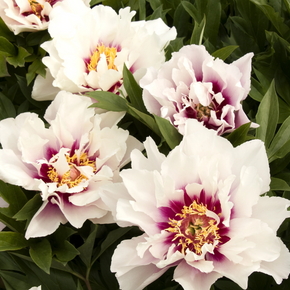
- Breathtaking, ever-changing blooms open lavender-pink and buttery yellow, then gracefully fade to soft cream-white with a bold, deep burgundy center flare - a living work of art that transforms throughout the season.
- Intersectional hybrid vigor delivers exceptionally strong, self-supporting stems, deeply lobed dark green tree-peony-type foliage that stays handsome well into autumn, and a near-perfect hemispherical mounded form reaching about 30 inches tall and wide.
- Multiple lateral buds per stem extend the flowering display for up to 2.5 weeks in mid to late spring, with large flowers up to 6 inches across and secondary blooms nearly 5 inches wide - plus a mild, pleasant fragrance.
- A long-lived, low-maintenance perennial hardy in USDA Zones 3-8 that resists deer and rabbits, attracts butterflies and bees, and thrives for decades in the landscape with minimal care once established.
The Takara Treasure Itoh Peony (Paeonia 'Smith Opus 2') is a showstopping intersectional hybrid peony that represents the very best of both the herbaceous garden peony and the exotic tree peony worlds. Bred by renowned hybridizer Don Smith, this award-winning cultivar produces very large semi-double blooms - up to 6 inches across - that begin as a luminous blend of light yellow heavily flushed with deep lavender-pink, creating an initial impression of rich hot pink. As the flowers mature, the tones gracefully evolve, softening to pale cream-white with just a whisper of blush and a striking, dramatically large dark burgundy center flare highlighted by a narrow ring of golden stamens and pale green carpels. Numerous lateral buds per stem open in succession, extending the spring bloom period for up to two and a half weeks and ensuring a long, lavish display. The plant forms a near-perfect, compact hemispherical mound approximately 28 to 30 inches tall and equally wide, clothed in exceptionally attractive, finely cut, deep green tree-peony-style foliage that remains healthy and ornamental from spring all the way into autumn. Unlike traditional herbaceous peonies, the sturdy, semi-woody stems require no staking, and the plant dies back to the ground each winter only to re-emerge reliably every spring. Hardy in USDA Zones 3 through 8, Takara is a long-lived, relatively low-maintenance perennial that resists deer and rabbits, draws in butterflies and bees, and makes an outstanding fresh-cut flower. Whether used as a specimen, in perennial borders, or planted in drifts, Takara is a true garden treasure that will captivate for generations.
Plant Description
Takara is a patented intersectional (Itoh) peony - a hybrid cross between an herbaceous garden peony (Paeonia lactiflora 'Martha W.') and an unregistered Daphnis lutea hybrid tree peony. Registered under the cultivar name 'Smith Opus 2' and trademarked as TAKARA (meaning "treasure" in Japanese), it was hybridized by Don Smith of Massachusetts and first bloomed in 2004, with registration recorded in 2016. It produces single to semi-double, tree-peony-type flowers on strong, semi-woody herbaceous stems. The blooms are an ever-changing spectacle: opening as light yellow heavily flushed with deep lavender-pink (appearing mostly pink at first), then gradually fading to pale cream or near-white with a faint pink picotee edge and a uniquely beautiful, very prominent dark burgundy center flare. The flower center features a narrow ring of golden stamens surrounding 3 to 5 pale green carpels topped with creamy yellow stigmata. The foliage is finely cut, deeply lobed, and rich dark green in the manner of tree peony ancestry, remaining attractive and healthy well into autumn before the plant dies back to the ground with hard frost. The plant's form is a near-perfect hemispherical mound, compact and self-supporting.
Mature Size
| Attribute | Measurement |
|---|---|
| Mature Height | 24 to 36 inches (typically 28 to 30 inches) |
| Mature Spread | 24 to 36 inches (typically 28 to 30 inches) |
| Plant Form | Near-perfect hemispherical mound |
| Bloom Size | Up to 6 inches across (lateral blooms up to 5 inches) |
| Bloom Duration | Approximately 2.5 weeks per plant (successive buds) |
| Growth Rate | Slow; reaches full maturity in approximately 3 years |
| Recommended Spacing | 3 to 4 feet on center |
Hardiness and Climate
Takara is rated hardy in USDA Zones 3 through 8, making it an exceptionally cold-tolerant perennial. Unlike many showy flowering perennials, it requires no special winter mulching after its first year in the ground, as the overwintering buds are located safely below the soil surface. As an intersectional hybrid, it also tolerates more summer heat than traditional herbaceous peonies and can be grown in warmer climates up to Zone 8 (and in some references Zone 9) without additional special care. It performs best in regions with warm sunny days, cool nights, and moderate precipitation - conditions found throughout much of the Pacific Northwest, the Intermountain West, and similar temperate climates. In Southern Oregon and Northern California, Takara thrives in the region's Mediterranean-influenced climate where cool winters provide adequate winter chill and warm springs and summers promote vigorous flowering. In areas with intense summer heat, some afternoon shade protection can help prolong bloom life.
Sunlight Requirements
Takara Itoh Peony performs best in full sun, receiving a minimum of 6 to 8 hours of direct sunlight per day. Full sun exposure produces the largest number of blooms and the strongest, most compact plant form. While the plant will tolerate partial shade (receiving 4 to 6 hours of sunlight), flowering will be reduced and the plant will take longer to reach full maturity. In climates with intense summer heat and prolonged afternoon temperatures above 85-90°F, some light afternoon shade can help protect the delicate blooms and extend their display. Morning sun combined with afternoon dappled shade is a practical option in hotter inland areas. Avoid deep shade entirely, as this results in poor bloom production and a weaker, less vigorous plant.
Soil and pH Preferences
Takara thrives in rich, fertile, well-drained soil with consistent moisture. It is not tolerant of waterlogged or saturated conditions, so good drainage is essential. The ideal soil type is a loose, friable loam - a well-balanced mix of sand, clay, and compost that drains freely while retaining adequate moisture and nutrients. The preferred soil pH is slightly acidic to neutral, ideally between 6.5 and 7.0. At planting time, amend the soil with 2 to 4 inches of well-composted organic matter worked into the planting hole and surrounding area to a depth of at least 12 inches. Annual top-dressing with a thin layer of compost at the drip line (not directly over the crown) helps maintain soil quality over the years. Avoid planting in low-lying areas prone to standing water, and use caution near automated irrigation systems that may lead to overwatering. Sandy soils benefit from more frequent compost top-dressing to replace leached nutrients, while heavy clay soils should be amended with compost and coarse sand or grit to improve drainage before planting.
Watering Guide
Consistent moisture is important for Takara, especially during the growing season and in the first one to two years after planting while the root system establishes. Aim to provide approximately 1 inch of water per week through rainfall or supplemental irrigation. During dry spells or periods of extended summer heat, increase watering frequency to prevent drought stress, which can cause premature leaf drop and reduced flowering. Water deeply and infrequently at the base of the plant, directing moisture to the root zone rather than wetting foliage. Avoid overhead watering or sprinkler systems that keep foliage wet for extended periods, as this can promote fungal diseases such as botrytis. Drip irrigation is an ideal option. While Takara can withstand brief dry spells once established, prolonged drought will inhibit blooming and overall vigor. Established plants are more drought-tolerant but still benefit from deep, thorough soakings during dry summer periods. Always ensure that water drains freely away from the plant - never allow the crown or roots to sit in standing water.
Fertilizing
Takara Itoh Peony benefits from light, well-timed fertilization to support its vigorous spring growth, prolific blooming, and root energy storage for the following season. Feed the plant three times per year using organic or slow-release fertilizers:
- Early Spring (as shoots emerge): Apply a balanced, low-nitrogen organic fertilizer or a slow-release granular formula such as 5-10-10 or 5-20-20 to promote bud development without excessive leafy growth. Liquid foliar feeds such as fish emulsion or seaweed extract at bud-set are also beneficial.
- Early Summer (after blooming finishes): Apply a light dose of a balanced fertilizer to support continued foliage health and root energy replenishment through the summer months.
- Fall (at garden cleanup): A light application of compost or a low-nitrogen formula such as 5-10-10 helps replenish soil nutrients and supports the root system heading into winter dormancy.
Always apply fertilizer at the drip line rather than directly over the crown to avoid burying the plant too deeply over time. Avoid high-nitrogen formulas, which will promote excessive foliage at the expense of flowers. Organic options such as composted worm castings, alfalfa meal, kelp, and fish and seaweed emulsions are excellent choices for gentle, sustained feeding.
Planting Instructions
- Choose a site in full sun with rich, well-drained soil and good air circulation. Avoid low spots where water pools.
- Dig a planting hole approximately 12 inches deep and 18 inches in diameter. Amend the removed soil with generous amounts of well-aged compost.
- Set the plant so the crown (the point where roots meet stems) is at or just at soil level - no more than 1 to 2 inches below the surface. In warmer zones (7-8), plant shallower (about 0.5 inch below soil surface); in colder zones (3-4), plant slightly deeper (up to 2 inches below). Planting too deep is the most common reason peonies fail to bloom.
- Backfill with the amended soil, firming gently to eliminate air pockets. Do not mound soil over the crown.
- Water thoroughly after planting and continue to provide deep soakings every one to two weeks through the first growing season to help establish the root system.
- Space multiple plants 3 to 4 feet apart on center, and at least 1.5 feet from any border edge.
- Fall and early spring are the best times to plant nursery-grown peonies. Avoid planting in midsummer heat.
- Once established in its permanent location, avoid transplanting or dividing unless absolutely necessary, as disturbance may delay blooming by one to two years.
Pruning and Maintenance
Takara Itoh Peony requires minimal pruning but benefits from consistent seasonal maintenance to keep it healthy and blooming at its best.
- During bloom (mid to late spring): Deadhead spent flowers promptly by snipping the bloom stem back to the nearest set of healthy leaves. Be careful not to remove unopened lateral buds, which will extend the bloom period. Because plants are sterile, there is no benefit to allowing spent flowers to form seed.
- After bloom (summer): Leave the attractive foliage intact through the entire growing season. The lush, dark green leaves continue to photosynthesize and store energy in the roots for next year's blooms. Remove only yellowing or diseased foliage as needed for tidiness.
- Fall (after hard frost): Cut all stems and foliage back to the ground and remove the debris from the garden. Do not compost diseased material. This fall cutback is important for preventing fungal diseases such as botrytis from overwintering in dead plant matter.
- Staking: Not required. Takara's intersectional hybrid stems are sturdy and self-supporting, unlike traditional herbaceous peonies that often need support.
- Mulching: Avoid heavy mulching over the crown, as this can bury the plant too deeply and prevent blooming. A light layer of mulch around (not over) the plant can help retain soil moisture and moderate temperature in summer.
Bloom Time and Seasonal Interest
Takara blooms in mid to late spring, typically May through June depending on your local climate and zone. It falls into the late-blooming peony category, extending the peony season after most herbaceous peonies have finished their display. Each plant produces multiple stems, each carrying a primary bud (up to 6 inches across) as well as 1 to 2 lateral buds that open in succession, resulting in an individual plant bloom period of approximately 2 to 2.5 weeks. The color transformation of each flower - from rosy lavender-pink and yellow at opening to cream-white with a bold burgundy flare as it matures - provides constantly changing and visually dynamic interest throughout the bloom period. Beyond flowering, the deeply cut, rich dark green tree-peony-style foliage provides excellent textural interest from spring emergence through autumn. The plant maintains a handsome, full, rounded form that functions as an attractive foliage mound well into the fall season. In late autumn, the foliage yellows and the plant dies cleanly back to the ground. The following spring, distinctive reddish-bronze new shoots emerge from below ground, adding early seasonal interest as the garden awakens.
Landscape Uses
Takara Itoh Peony is an exceptionally versatile landscape plant with a well-behaved, compact, self-supporting form that integrates beautifully into a wide range of garden settings:
- Perennial borders: An outstanding specimen or accent plant in the front to middle of a mixed perennial border. Its compact mounded form and long season of foliage interest make it a reliable border anchor.
- Specimen planting: Displays beautifully as a single focal point in a garden bed or at the end of a pathway where the spectacular blooms and foliage can be admired up close.
- Mass plantings: Planted in drifts of three or more, Takara creates a breathtaking mid-spring floral display. Stagger plant spacing at 3 to 4 feet on center for optimal air circulation and visual fullness.
- Informal hedges: Its dense, rounded habit and consistent size make it suitable for low informal hedges along walkways, driveways, garden edges, or fences.
- Cutting garden: The large, lightly fragrant blooms are excellent for fresh-cut arrangements. Harvest stems when buds are just beginning to show color for the longest vase life.
- Container growing: Can be grown in large containers (minimum 5-gallon, preferably larger) with excellent drainage. Containers must be kept outdoors through winter to provide required cold dormancy.
Companion Plants
Takara pairs beautifully with a wide range of perennials, bulbs, and shrubs that complement its mid to late spring bloom time and lush summer foliage. Consider the following companions:
- Earlier-blooming peonies: Plant alongside early and mid-season herbaceous peonies to create a successive peony display from late April through June.
- Bearded iris (Iris germanica): Their upright architectural form and similar late-spring bloom time create a classic pairing. Iris foliage also provides textural contrast to the lush peony mound.
- Salvia (Salvia nemorosa and S. x sylvestris): Spikes of violet-blue or purple salvia echo and complement the lavender-pink tones in Takara's early blooms and extend the display into summer.
- Geranium (Cranesbill): Low-growing hardy geraniums fill in around the base of the peony, covering bare soil and providing a complementary mid-season bloom.
- Allium: The dramatic globe flowers of ornamental alliums appear at the same time as Takara blooms and pair beautifully with the large peony flowers.
- Catmint (Nepeta): Soft blue-lavender catmint complements the pink and cream tones of Takara and creates a relaxed cottage-garden aesthetic.
- Agapanthus: For summer interest after Takara's bloom, agapanthus provides bold blue or white blooms and handsome strap-like foliage.
- Spring-blooming bulbs (tulips, daffodils): Plant bulbs between and around peonies to provide color before the peonies emerge, with the expanding peony foliage naturally concealing fading bulb foliage as the season progresses.
Pests and Diseases
Takara Itoh Peony is considered relatively pest-resistant, and its intersectional hybrid nature gives it improved disease resistance compared to many traditional herbaceous peonies. However, a few issues may occasionally arise:
- Botrytis blight (gray mold): The most common peony disease, caused by the fungus Botrytis cinerea. Symptoms include brown spots and fluffy gray mold on leaves, stems, and buds, particularly in cool, damp spring conditions with poor air circulation. Prevent by ensuring adequate plant spacing, avoiding overhead watering, removing and disposing of all dead stems and foliage in fall, and not over-fertilizing with nitrogen. Treat early infections by removing affected plant parts and applying a horticultural fungicide if necessary.
- Powdery mildew: A fungal disease appearing as a gray-white powdery coating on leaves, stems, and buds, typically in late summer. Promote good air circulation and avoid water stress. Neem oil or other horticultural oils can be applied at early stages of infection.
- Phytophthora blight (crown rot): Can occur in poorly drained soils or with chronic overwatering. Prevention through proper soil drainage and avoiding excessive irrigation is the best defense.
- Ants: Commonly seen on peony buds, attracted by sweet nectar secreted by the developing flowers. Ants are completely harmless to the plant and require no treatment.
- Deer and rabbits: Takara is generally avoided by deer and rabbits, making it an excellent choice for gardens in areas with significant wildlife pressure.
Wildlife Value
Takara Itoh Peony provides meaningful wildlife value in the garden. Its large, open semi-double blooms with prominent stamens are attractive to a variety of beneficial pollinators, including bees (particularly bumblebees and native bees) and butterflies, which visit the flowers for pollen and nectar during the mid to late spring bloom period. The mild fragrance of the flowers further enhances their appeal to pollinators. Ants are also frequently observed on the developing buds, where they feed harmlessly on nectar secreted from nectaries on the outside of the buds - and in turn may help deter other pest insects. On the other end of the wildlife spectrum, Takara is notably resistant to browsing by deer and rabbits, which tend to avoid peonies in favor of more palatable garden plants. This makes Takara an excellent choice for landscapes in rural areas or regions with frequent deer pressure.
Container Growing
While Takara Itoh Peony strongly prefers to be planted in the ground in a permanent location, it can be successfully grown in containers under the right conditions. If growing in a container, keep the following guidelines in mind:
- Choose a large container - at minimum 5 gallons, but larger is strongly preferred (15-20+ gallons is ideal for long-term success). The pot must have excellent drainage holes.
- Use a high-quality, porous potting mix amended with extra perlite or coarse grit to ensure fast drainage. The crown must never sit in soggy soil.
- Plant at the same depth as in-ground planting - crown just at or slightly below the soil surface.
- Water regularly but allow the soil to partially dry between waterings. Container plants dry out faster than in-ground plants and may need more frequent watering in summer heat.
- Fertilize lightly throughout the growing season, as nutrients leach more quickly from containers.
- Containers must remain outdoors in winter to provide the cold dormancy (winter chill) that peonies require to bloom the following spring. Do not bring inside or store in a warm location.
- Ensure winter container drainage is not blocked by frozen ground beneath the pot, as standing water in a container during freeze-thaw cycles can cause crown rot.
- Expect container plants to take longer to establish and produce fewer blooms than in-ground plants. Plan to eventually transplant to the garden for the best long-term performance.
- Breathtaking, ever-changing blooms open lavender-pink and buttery yellow, then gracefully fade to soft cream-white with a bold, deep burgundy center flare - a living work of art that transforms throughout the season.
- Intersectional hybrid vigor delivers exceptionally strong, self-supporting stems, deeply lobed dark green tree-peony-type foliage that stays handsome well into autumn, and a near-perfect hemispherical mounded form reaching about 30 inches tall and wide.
- Multiple lateral buds per stem extend the flowering display for up to 2.5 weeks in mid to late spring, with large flowers up to 6 inches across and secondary blooms nearly 5 inches wide - plus a mild, pleasant fragrance.
- A long-lived, low-maintenance perennial hardy in USDA Zones 3-8 that resists deer and rabbits, attracts butterflies and bees, and thrives for decades in the landscape with minimal care once established.
The Takara Treasure Itoh Peony (Paeonia 'Smith Opus 2') is a showstopping intersectional hybrid peony that represents the very best of both the herbaceous garden peony and the exotic tree peony worlds. Bred by renowned hybridizer Don Smith, this award-winning cultivar produces very large semi-double blooms - up to 6 inches across - that begin as a luminous blend of light yellow heavily flushed with deep lavender-pink, creating an initial impression of rich hot pink. As the flowers mature, the tones gracefully evolve, softening to pale cream-white with just a whisper of blush and a striking, dramatically large dark burgundy center flare highlighted by a narrow ring of golden stamens and pale green carpels. Numerous lateral buds per stem open in succession, extending the spring bloom period for up to two and a half weeks and ensuring a long, lavish display. The plant forms a near-perfect, compact hemispherical mound approximately 28 to 30 inches tall and equally wide, clothed in exceptionally attractive, finely cut, deep green tree-peony-style foliage that remains healthy and ornamental from spring all the way into autumn. Unlike traditional herbaceous peonies, the sturdy, semi-woody stems require no staking, and the plant dies back to the ground each winter only to re-emerge reliably every spring. Hardy in USDA Zones 3 through 8, Takara is a long-lived, relatively low-maintenance perennial that resists deer and rabbits, draws in butterflies and bees, and makes an outstanding fresh-cut flower. Whether used as a specimen, in perennial borders, or planted in drifts, Takara is a true garden treasure that will captivate for generations.
Plant Description
Takara is a patented intersectional (Itoh) peony - a hybrid cross between an herbaceous garden peony (Paeonia lactiflora 'Martha W.') and an unregistered Daphnis lutea hybrid tree peony. Registered under the cultivar name 'Smith Opus 2' and trademarked as TAKARA (meaning "treasure" in Japanese), it was hybridized by Don Smith of Massachusetts and first bloomed in 2004, with registration recorded in 2016. It produces single to semi-double, tree-peony-type flowers on strong, semi-woody herbaceous stems. The blooms are an ever-changing spectacle: opening as light yellow heavily flushed with deep lavender-pink (appearing mostly pink at first), then gradually fading to pale cream or near-white with a faint pink picotee edge and a uniquely beautiful, very prominent dark burgundy center flare. The flower center features a narrow ring of golden stamens surrounding 3 to 5 pale green carpels topped with creamy yellow stigmata. The foliage is finely cut, deeply lobed, and rich dark green in the manner of tree peony ancestry, remaining attractive and healthy well into autumn before the plant dies back to the ground with hard frost. The plant's form is a near-perfect hemispherical mound, compact and self-supporting.
Mature Size
| Attribute | Measurement |
|---|---|
| Mature Height | 24 to 36 inches (typically 28 to 30 inches) |
| Mature Spread | 24 to 36 inches (typically 28 to 30 inches) |
| Plant Form | Near-perfect hemispherical mound |
| Bloom Size | Up to 6 inches across (lateral blooms up to 5 inches) |
| Bloom Duration | Approximately 2.5 weeks per plant (successive buds) |
| Growth Rate | Slow; reaches full maturity in approximately 3 years |
| Recommended Spacing | 3 to 4 feet on center |
Hardiness and Climate
Takara is rated hardy in USDA Zones 3 through 8, making it an exceptionally cold-tolerant perennial. Unlike many showy flowering perennials, it requires no special winter mulching after its first year in the ground, as the overwintering buds are located safely below the soil surface. As an intersectional hybrid, it also tolerates more summer heat than traditional herbaceous peonies and can be grown in warmer climates up to Zone 8 (and in some references Zone 9) without additional special care. It performs best in regions with warm sunny days, cool nights, and moderate precipitation - conditions found throughout much of the Pacific Northwest, the Intermountain West, and similar temperate climates. In Southern Oregon and Northern California, Takara thrives in the region's Mediterranean-influenced climate where cool winters provide adequate winter chill and warm springs and summers promote vigorous flowering. In areas with intense summer heat, some afternoon shade protection can help prolong bloom life.
Sunlight Requirements
Takara Itoh Peony performs best in full sun, receiving a minimum of 6 to 8 hours of direct sunlight per day. Full sun exposure produces the largest number of blooms and the strongest, most compact plant form. While the plant will tolerate partial shade (receiving 4 to 6 hours of sunlight), flowering will be reduced and the plant will take longer to reach full maturity. In climates with intense summer heat and prolonged afternoon temperatures above 85-90°F, some light afternoon shade can help protect the delicate blooms and extend their display. Morning sun combined with afternoon dappled shade is a practical option in hotter inland areas. Avoid deep shade entirely, as this results in poor bloom production and a weaker, less vigorous plant.
Soil and pH Preferences
Takara thrives in rich, fertile, well-drained soil with consistent moisture. It is not tolerant of waterlogged or saturated conditions, so good drainage is essential. The ideal soil type is a loose, friable loam - a well-balanced mix of sand, clay, and compost that drains freely while retaining adequate moisture and nutrients. The preferred soil pH is slightly acidic to neutral, ideally between 6.5 and 7.0. At planting time, amend the soil with 2 to 4 inches of well-composted organic matter worked into the planting hole and surrounding area to a depth of at least 12 inches. Annual top-dressing with a thin layer of compost at the drip line (not directly over the crown) helps maintain soil quality over the years. Avoid planting in low-lying areas prone to standing water, and use caution near automated irrigation systems that may lead to overwatering. Sandy soils benefit from more frequent compost top-dressing to replace leached nutrients, while heavy clay soils should be amended with compost and coarse sand or grit to improve drainage before planting.
Watering Guide
Consistent moisture is important for Takara, especially during the growing season and in the first one to two years after planting while the root system establishes. Aim to provide approximately 1 inch of water per week through rainfall or supplemental irrigation. During dry spells or periods of extended summer heat, increase watering frequency to prevent drought stress, which can cause premature leaf drop and reduced flowering. Water deeply and infrequently at the base of the plant, directing moisture to the root zone rather than wetting foliage. Avoid overhead watering or sprinkler systems that keep foliage wet for extended periods, as this can promote fungal diseases such as botrytis. Drip irrigation is an ideal option. While Takara can withstand brief dry spells once established, prolonged drought will inhibit blooming and overall vigor. Established plants are more drought-tolerant but still benefit from deep, thorough soakings during dry summer periods. Always ensure that water drains freely away from the plant - never allow the crown or roots to sit in standing water.
Fertilizing
Takara Itoh Peony benefits from light, well-timed fertilization to support its vigorous spring growth, prolific blooming, and root energy storage for the following season. Feed the plant three times per year using organic or slow-release fertilizers:
- Early Spring (as shoots emerge): Apply a balanced, low-nitrogen organic fertilizer or a slow-release granular formula such as 5-10-10 or 5-20-20 to promote bud development without excessive leafy growth. Liquid foliar feeds such as fish emulsion or seaweed extract at bud-set are also beneficial.
- Early Summer (after blooming finishes): Apply a light dose of a balanced fertilizer to support continued foliage health and root energy replenishment through the summer months.
- Fall (at garden cleanup): A light application of compost or a low-nitrogen formula such as 5-10-10 helps replenish soil nutrients and supports the root system heading into winter dormancy.
Always apply fertilizer at the drip line rather than directly over the crown to avoid burying the plant too deeply over time. Avoid high-nitrogen formulas, which will promote excessive foliage at the expense of flowers. Organic options such as composted worm castings, alfalfa meal, kelp, and fish and seaweed emulsions are excellent choices for gentle, sustained feeding.
Planting Instructions
- Choose a site in full sun with rich, well-drained soil and good air circulation. Avoid low spots where water pools.
- Dig a planting hole approximately 12 inches deep and 18 inches in diameter. Amend the removed soil with generous amounts of well-aged compost.
- Set the plant so the crown (the point where roots meet stems) is at or just at soil level - no more than 1 to 2 inches below the surface. In warmer zones (7-8), plant shallower (about 0.5 inch below soil surface); in colder zones (3-4), plant slightly deeper (up to 2 inches below). Planting too deep is the most common reason peonies fail to bloom.
- Backfill with the amended soil, firming gently to eliminate air pockets. Do not mound soil over the crown.
- Water thoroughly after planting and continue to provide deep soakings every one to two weeks through the first growing season to help establish the root system.
- Space multiple plants 3 to 4 feet apart on center, and at least 1.5 feet from any border edge.
- Fall and early spring are the best times to plant nursery-grown peonies. Avoid planting in midsummer heat.
- Once established in its permanent location, avoid transplanting or dividing unless absolutely necessary, as disturbance may delay blooming by one to two years.
Pruning and Maintenance
Takara Itoh Peony requires minimal pruning but benefits from consistent seasonal maintenance to keep it healthy and blooming at its best.
- During bloom (mid to late spring): Deadhead spent flowers promptly by snipping the bloom stem back to the nearest set of healthy leaves. Be careful not to remove unopened lateral buds, which will extend the bloom period. Because plants are sterile, there is no benefit to allowing spent flowers to form seed.
- After bloom (summer): Leave the attractive foliage intact through the entire growing season. The lush, dark green leaves continue to photosynthesize and store energy in the roots for next year's blooms. Remove only yellowing or diseased foliage as needed for tidiness.
- Fall (after hard frost): Cut all stems and foliage back to the ground and remove the debris from the garden. Do not compost diseased material. This fall cutback is important for preventing fungal diseases such as botrytis from overwintering in dead plant matter.
- Staking: Not required. Takara's intersectional hybrid stems are sturdy and self-supporting, unlike traditional herbaceous peonies that often need support.
- Mulching: Avoid heavy mulching over the crown, as this can bury the plant too deeply and prevent blooming. A light layer of mulch around (not over) the plant can help retain soil moisture and moderate temperature in summer.
Bloom Time and Seasonal Interest
Takara blooms in mid to late spring, typically May through June depending on your local climate and zone. It falls into the late-blooming peony category, extending the peony season after most herbaceous peonies have finished their display. Each plant produces multiple stems, each carrying a primary bud (up to 6 inches across) as well as 1 to 2 lateral buds that open in succession, resulting in an individual plant bloom period of approximately 2 to 2.5 weeks. The color transformation of each flower - from rosy lavender-pink and yellow at opening to cream-white with a bold burgundy flare as it matures - provides constantly changing and visually dynamic interest throughout the bloom period. Beyond flowering, the deeply cut, rich dark green tree-peony-style foliage provides excellent textural interest from spring emergence through autumn. The plant maintains a handsome, full, rounded form that functions as an attractive foliage mound well into the fall season. In late autumn, the foliage yellows and the plant dies cleanly back to the ground. The following spring, distinctive reddish-bronze new shoots emerge from below ground, adding early seasonal interest as the garden awakens.
Landscape Uses
Takara Itoh Peony is an exceptionally versatile landscape plant with a well-behaved, compact, self-supporting form that integrates beautifully into a wide range of garden settings:
- Perennial borders: An outstanding specimen or accent plant in the front to middle of a mixed perennial border. Its compact mounded form and long season of foliage interest make it a reliable border anchor.
- Specimen planting: Displays beautifully as a single focal point in a garden bed or at the end of a pathway where the spectacular blooms and foliage can be admired up close.
- Mass plantings: Planted in drifts of three or more, Takara creates a breathtaking mid-spring floral display. Stagger plant spacing at 3 to 4 feet on center for optimal air circulation and visual fullness.
- Informal hedges: Its dense, rounded habit and consistent size make it suitable for low informal hedges along walkways, driveways, garden edges, or fences.
- Cutting garden: The large, lightly fragrant blooms are excellent for fresh-cut arrangements. Harvest stems when buds are just beginning to show color for the longest vase life.
- Container growing: Can be grown in large containers (minimum 5-gallon, preferably larger) with excellent drainage. Containers must be kept outdoors through winter to provide required cold dormancy.
Companion Plants
Takara pairs beautifully with a wide range of perennials, bulbs, and shrubs that complement its mid to late spring bloom time and lush summer foliage. Consider the following companions:
- Earlier-blooming peonies: Plant alongside early and mid-season herbaceous peonies to create a successive peony display from late April through June.
- Bearded iris (Iris germanica): Their upright architectural form and similar late-spring bloom time create a classic pairing. Iris foliage also provides textural contrast to the lush peony mound.
- Salvia (Salvia nemorosa and S. x sylvestris): Spikes of violet-blue or purple salvia echo and complement the lavender-pink tones in Takara's early blooms and extend the display into summer.
- Geranium (Cranesbill): Low-growing hardy geraniums fill in around the base of the peony, covering bare soil and providing a complementary mid-season bloom.
- Allium: The dramatic globe flowers of ornamental alliums appear at the same time as Takara blooms and pair beautifully with the large peony flowers.
- Catmint (Nepeta): Soft blue-lavender catmint complements the pink and cream tones of Takara and creates a relaxed cottage-garden aesthetic.
- Agapanthus: For summer interest after Takara's bloom, agapanthus provides bold blue or white blooms and handsome strap-like foliage.
- Spring-blooming bulbs (tulips, daffodils): Plant bulbs between and around peonies to provide color before the peonies emerge, with the expanding peony foliage naturally concealing fading bulb foliage as the season progresses.
Pests and Diseases
Takara Itoh Peony is considered relatively pest-resistant, and its intersectional hybrid nature gives it improved disease resistance compared to many traditional herbaceous peonies. However, a few issues may occasionally arise:
- Botrytis blight (gray mold): The most common peony disease, caused by the fungus Botrytis cinerea. Symptoms include brown spots and fluffy gray mold on leaves, stems, and buds, particularly in cool, damp spring conditions with poor air circulation. Prevent by ensuring adequate plant spacing, avoiding overhead watering, removing and disposing of all dead stems and foliage in fall, and not over-fertilizing with nitrogen. Treat early infections by removing affected plant parts and applying a horticultural fungicide if necessary.
- Powdery mildew: A fungal disease appearing as a gray-white powdery coating on leaves, stems, and buds, typically in late summer. Promote good air circulation and avoid water stress. Neem oil or other horticultural oils can be applied at early stages of infection.
- Phytophthora blight (crown rot): Can occur in poorly drained soils or with chronic overwatering. Prevention through proper soil drainage and avoiding excessive irrigation is the best defense.
- Ants: Commonly seen on peony buds, attracted by sweet nectar secreted by the developing flowers. Ants are completely harmless to the plant and require no treatment.
- Deer and rabbits: Takara is generally avoided by deer and rabbits, making it an excellent choice for gardens in areas with significant wildlife pressure.
Wildlife Value
Takara Itoh Peony provides meaningful wildlife value in the garden. Its large, open semi-double blooms with prominent stamens are attractive to a variety of beneficial pollinators, including bees (particularly bumblebees and native bees) and butterflies, which visit the flowers for pollen and nectar during the mid to late spring bloom period. The mild fragrance of the flowers further enhances their appeal to pollinators. Ants are also frequently observed on the developing buds, where they feed harmlessly on nectar secreted from nectaries on the outside of the buds - and in turn may help deter other pest insects. On the other end of the wildlife spectrum, Takara is notably resistant to browsing by deer and rabbits, which tend to avoid peonies in favor of more palatable garden plants. This makes Takara an excellent choice for landscapes in rural areas or regions with frequent deer pressure.
Container Growing
While Takara Itoh Peony strongly prefers to be planted in the ground in a permanent location, it can be successfully grown in containers under the right conditions. If growing in a container, keep the following guidelines in mind:
- Choose a large container - at minimum 5 gallons, but larger is strongly preferred (15-20+ gallons is ideal for long-term success). The pot must have excellent drainage holes.
- Use a high-quality, porous potting mix amended with extra perlite or coarse grit to ensure fast drainage. The crown must never sit in soggy soil.
- Plant at the same depth as in-ground planting - crown just at or slightly below the soil surface.
- Water regularly but allow the soil to partially dry between waterings. Container plants dry out faster than in-ground plants and may need more frequent watering in summer heat.
- Fertilize lightly throughout the growing season, as nutrients leach more quickly from containers.
- Containers must remain outdoors in winter to provide the cold dormancy (winter chill) that peonies require to bloom the following spring. Do not bring inside or store in a warm location.
- Ensure winter container drainage is not blocked by frozen ground beneath the pot, as standing water in a container during freeze-thaw cycles can cause crown rot.
- Expect container plants to take longer to establish and produce fewer blooms than in-ground plants. Plan to eventually transplant to the garden for the best long-term performance.