Zoom the image with the mouse
Shivereana Rubber Plant - 6 in
SKU:
2173550
UPC:
014949066317
$24.99
- Strikingly rare variegated rubber plant featuring glossy, leathery leaves splashed with speckled patterns of lime green, cream, and pale blush pink — no two leaves are exactly alike
- New growth emerges with a soft rosy-pink tint that gradually matures into the plant's signature mojito-colored mottling, keeping the display ever-changing and fresh
- An exceptional indoor air purifier that helps remove common household toxins while serving as a bold living sculpture in contemporary, tropical, or bohemian-style interiors
- Thrives indoors in bright, indirect light with straightforward care — a rewarding statement houseplant that can grow up to 6 feet tall in the home environment
The Shivereana Rubber Plant (Ficus elastica 'Shivereana'), sometimes called the Moonshine Rubber Plant, is one of the most coveted and visually captivating houseplants available today. A rare hybrid cultivar of the classic Ficus elastica, this stunning evergreen tree-form houseplant sets itself apart with thick, glossy, leathery leaves adorned in an almost watercolor-like mosaic of lime green, creamy white, and pale pink — a variegation pattern so unique it resembles abstract art. Each unfurling leaf begins with a delicate rosy-pink blush before settling into its characteristic neon-green and cream speckled pattern, ensuring the plant never looks the same twice. Native to the tropical regions of South and Southeast Asia — from India and the Himalayan foothills through Malaysia — Ficus elastica in its native habitat can soar to towering heights outdoors, but indoors the Shivereana cultivar grows at a moderate pace to a manageable 4 to 6 feet, making it equally well-suited to bright living rooms, offices, and entryways. Unlike some of its darker-leafed rubber plant relatives, the Shivereana's pale variegated foliage demands a bright spot to maintain its brilliant color, rewarding attentive growers with lush, generously sized leaves and an upright, architectural form. With its remarkable tropical aesthetic, air-purifying qualities, and show-stopping foliage, the Ficus elastica 'Shivereana' is a must-have collector's specimen for plant enthusiasts throughout Southern Oregon and Northern California.
Plant Description
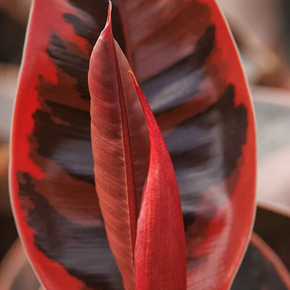
Ficus elastica 'Shivereana' is a rare hybrid cultivar of the common rubber plant, prized above all others in the species for its extraordinary variegated foliage. Each large, oval to oblong leaf is thick, stiff, and glossy, with a leathery texture that gives it a distinctly tropical, sculptural presence. The leaf surfaces are decorated with irregular speckles and blotches in shades of lime green, chartreuse, creamy white, and pale blush pink — an effect often compared to a watercolor wash or mojito-style mottling. Newly emerging leaves unfurl from a central red or pink sheath (cataphyll) displaying a soft rosy-pink or peachy tone, which gradually deepens and transitions into the plant's mature lime-and-cream patterning as the leaf expands. The undersides of the leaves are slightly paler, and the midribs are often flushed with pink. Stems are stout and upright with a tree-like growth habit. Like all Ficus elastica varieties, when any part of the plant is cut or damaged it will exude a milky white latex sap — this sap is an irritant and should not be allowed to contact skin, eyes, or be ingested.
Mature Size and Growth Rate
When grown indoors as a houseplant, the Ficus elastica 'Shivereana' typically reaches a mature height of 4 to 6 feet (approximately 1.2 to 2 meters), though in ideal conditions with ample space it can stretch to around 6.5 feet (2 meters) over many years. The spread is generally 2 to 3 feet. Outdoors in frost-free tropical or subtropical climates, Ficus elastica can ultimately grow into a large tree reaching up to 60 to 65 feet, but this is not expected in typical home or garden settings in our region. Growth rate is moderate, averaging roughly 18 to 24 inches per growing season under good care. Leaf size is directly influenced by light availability — plants in brighter conditions tend to produce larger, more vividly variegated leaves. Rotating the plant a quarter turn every few weeks encourages even, symmetrical growth on all sides.
Hardiness and Indoor vs. Outdoor Use
| Category | Details |
|---|---|
| USDA Hardiness Zones (Outdoor) | Zones 10–12 (frost-free climates only) |
| Recommended Use in Southern Oregon / Northern California | Primarily grown as an indoor houseplant; outdoor use only in the warmest, frost-free microclimates of far Northern California coastal areas |
| Minimum Temperature | 50°F (10°C) — cold damage occurs below this threshold; protect from frost at all times |
| Ideal Indoor Temperature Range | 60–80°F (15–27°C) |
| Cold Sensitivity | Very sensitive to frost, cold drafts, and sudden temperature drops; keep away from cold windows in winter |
| Summer Outdoor Placement | Can be moved outdoors to a shaded patio during warm summer months; bring inside before nighttime temperatures drop below 55°F |
Sunlight Requirements
Providing the correct light is the single most important factor in keeping the Shivereana Rubber Plant's spectacular variegation vibrant and healthy. This cultivar requires bright, indirect light for several hours each day — ideally 6 to 8 hours. A spot near an east-facing window that receives gentle morning sun is ideal. A few feet back from a south- or west-facing window, or directly in front of a window shielded by a sheer curtain, also works very well. The pale, cream and lime portions of the variegated leaves are significantly more sensitive to intense, direct sun than the darker green areas, and prolonged exposure to harsh direct sunlight — especially afternoon sun — will cause brown, scorched patches and faded, bleached-out coloration. Conversely, insufficient light causes the plant to revert toward solid green as it produces more chlorophyll to compensate, and growth will become leggy and sparse. If your home has limited natural light, a high-quality full-spectrum grow light placed 6 to 12 inches above the plant for 10 to 12 hours per day is an effective supplement. Avoid placing this plant in deep shade or low-light corners.
Watering Guide
The Shivereana Rubber Plant follows a "drench and dry" watering philosophy. Water thoroughly and deeply when the top 2 to 3 inches of the potting mix feel dry to the touch — never water on a rigid calendar schedule, as conditions vary seasonally. When watering, saturate the soil completely until water flows freely from the drainage holes, then allow the pot to drain fully for 15 to 20 minutes before returning it to its saucer. Never allow the pot to sit in standing water, as this is the leading cause of root rot. During the active growing season (spring and summer), this may mean watering approximately once every 7 to 10 days. In fall and winter, growth slows and the plant's water needs decrease considerably — watering every 2 to 3 weeks is often sufficient. A soil moisture meter is a worthwhile investment for this plant. Signs of overwatering include yellowing lower leaves, soft mushy stems, and soggy soil. Signs of underwatering include limp or drooping leaves, dry and crispy leaf edges, and very lightweight soil. Water quality also matters — if brown, crispy tips appear despite appropriate watering, try switching to filtered, distilled, or rain water, as the Shivereana can be sensitive to chlorine and fluoride in tap water.
Soil and pH Preferences
The Ficus elastica 'Shivereana' performs best in a loose, chunky, well-draining potting mix that provides excellent aeration while retaining just enough moisture. Standard dense potting soils are not ideal, as they tend to compact, restrict airflow to the roots, and hold excess moisture. A well-formulated aroid mix works very well, or you can blend your own using equal parts of a quality indoor potting soil, orchid bark (for structure and organic matter), and perlite or pumice (for drainage and aeration). Some growers also include a small amount of coarse horticultural sand or activated charcoal. Loam-based soils with high organic content are also suitable, provided drainage is not compromised. Drainage holes in the container are non-negotiable — this plant will not tolerate waterlogged conditions. Preferred soil pH is slightly acidic to neutral, in the range of 6.0 to 6.5. More acidic conditions can inhibit nutrient uptake and reduce overall vigor. Avoid heavy clay soils entirely.
Fertilizing
During the active growing season — spring through summer — feed your Shivereana Rubber Plant once a month with a balanced, water-soluble liquid houseplant fertilizer, such as a 10-10-10 or 20-20-20 formulation. Always dilute to half the strength recommended on the label to prevent fertilizer burn on the roots. Never apply fertilizer to dry soil; water the plant first and then apply the diluted fertilizer solution. Cease fertilizing entirely in fall and winter, as the plant's growth naturally slows and reduced nutrient uptake can lead to salt buildup in the soil. Signs of over-fertilization include brown leaf tips, leaf edge burn, or a white crusty residue on the soil surface — if this occurs, flush the soil thoroughly with plain water two to three times and hold off on further fertilizing until the plant recovers. Organic slow-release fertilizers or liquid kelp-based fertilizers are also gentle and effective options during the growing season. If you repot the plant annually into fresh potting soil, supplemental fertilizing may be minimal, as fresh soil contains adequate nutrients for several months.
Temperature and Humidity
As a tropical plant by origin, the Shivereana Rubber Plant thrives in consistently warm indoor conditions. The ideal temperature range is 60 to 80°F (15 to 27°C). Avoid exposing the plant to temperatures below 50°F (10°C), which can cause cold damage resulting in deformed, puckered, or brown new growth. Equally important is avoiding sudden temperature fluctuations — keep the plant away from cold drafts near windows or exterior doors, and away from hot, dry blasts from heating vents, radiators, or air conditioning units. Sudden temperature swings are one of the most common triggers for dramatic leaf drop in Ficus plants. For humidity, aim for a minimum of 50% relative humidity. In drier indoor environments — particularly during winter when forced-air heating reduces indoor humidity — brown, crispy leaf edges are a telltale sign that humidity is too low and that spider mites may soon follow. Effective ways to boost humidity include placing the plant near a room humidifier, setting the pot on a pebble tray filled with water (ensuring the pot base does not sit directly in the water), or grouping the Shivereana with other tropical houseplants to create a more humid microclimate through shared transpiration.
Pruning and Maintenance
Pruning the Shivereana Rubber Plant is beneficial for shaping, controlling height, and encouraging a bushier, more branched form rather than a single tall unbranched trunk. The ideal time to prune is in spring or early summer when the plant has the most energy for recovery and regrowth. Use sharp, sterilized pruning shears or scissors for clean cuts — dull blades can crush and damage stems. Make cuts just above a leaf node (the point where a leaf attaches to the stem), as new growth will emerge from the nodes just below each cut. Removing the growing tip (apical bud) of a single-stemmed plant will stimulate lateral branching and a fuller appearance. Remove any dead, yellowing, or damaged leaves at any time of year. Avoid removing more than 25% of the plant's total foliage at one time to minimize stress. Important safety note: always wear gloves when pruning, as the milky white latex sap released at cut surfaces is a skin and mucous membrane irritant. Keep a cloth handy to catch drips and prevent sap from contacting furniture, carpets, or other surfaces. Routinely wipe leaves clean with a soft, damp cloth every few weeks to remove dust buildup, which impedes photosynthesis and can harbor pests.
Repotting
Plan to repot your Shivereana Rubber Plant every 1 to 2 years, or whenever it shows signs of becoming rootbound — such as roots emerging from drainage holes, soil drying out unusually fast, significantly slowed growth, or the plant becoming top-heavy and unstable. Spring is the best time to repot, as the plant is entering its active growing phase and will recover and establish quickly. When selecting a new container, choose one that is only 1 to 2 inches larger in diameter than the current pot — avoid jumping to an oversized container, as excess soil volume holds moisture too long and increases the risk of root rot. Always use a pot with drainage holes. To repot, water the plant a day or two in advance to reduce stress, then gently tip the plant on its side and ease it free from its pot. Loosen the root ball, remove old soil, and inspect the roots — trim away any soft, black, or mushy roots with clean scissors before repotting. Add a layer of fresh potting mix to the bottom of the new container, center the plant, backfill with fresh soil to the same depth as before, and water thoroughly. Expect some minor leaf drop or adjustment for a week or two after repotting; this is normal.
Pests and Diseases
- Spider Mites: The most frequent pest, particularly in dry indoor air. Look for fine webbing and tiny white or yellow speckling on leaf surfaces. Treat with repeated applications of insecticidal soap or neem oil spray, coating all leaf surfaces including undersides. Increase ambient humidity to deter reinfestation.
- Mealybugs: Appear as fluffy white cottony masses in leaf axils and along stems. Wipe off with a cotton swab dipped in rubbing alcohol, then follow up with insecticidal soap spray.
- Scale Insects: Present as small, hard, immobile brown or tan bumps on stems and leaf surfaces. Scrape off manually and treat with neem oil or horticultural oil.
- Thrips: Tiny, fast-moving insects leaving silvery streaks and small dark fecal spots on leaf surfaces. Treat with neem oil or spinosad-based insecticides.
- Aphids: Cluster on new growth and leaf undersides, causing curling and yellowing. Knock off with a strong stream of water and follow up with insecticidal soap.
- Root Rot (Pythium / Phytophthora): Caused by overwatering and poor drainage. Symptoms include sudden wilting, yellowing, and mushy stems at soil level. Remove affected roots, treat with a fungicide drench, and repot into fresh, well-draining soil.
- Algal Leaf Spot (Cephaleuros virescens): Causes gray, orange, or brown spots on leaf surfaces in warm, humid conditions. Prune affected leaves and improve air circulation; use a copper-based fungicide for severe cases.
- Leaf Spot Disease: Fungal or bacterial spots, often triggered by water sitting on leaves. Avoid overhead misting; prune affected leaves and apply a broad-spectrum fungicide if severe.
Common Problems and Troubleshooting
| Symptom | Likely Cause | Solution |
|---|---|---|
| Sudden leaf drop | Change in location, temperature fluctuation, cold draft, or inconsistent watering | Find a stable, bright spot and maintain consistent care; avoid moving the plant frequently |
| Yellowing leaves | Overwatering, waterlogged soil, or nutrient deficiency | Allow soil to dry out; check roots for rot; resume fertilizing in the growing season |
| Brown, crispy leaf edges | Low humidity, underwatering, or tap water minerals | Increase humidity, water more consistently, and switch to filtered or distilled water |
| Brown or black soft spots on leaves | Fungal disease from wet foliage or overwatering | Avoid misting directly on leaves; improve air circulation; treat with fungicide |
| Loss of variegation (leaves turning solid green) | Insufficient light — plant producing extra chlorophyll | Move to a significantly brighter location with more indirect light |
| Small leaves | Inadequate light or underfeeding | Increase light levels; fertilize monthly during the growing season |
| Curling or drooping leaves | Underwatering, overwatering, cold stress, or low humidity | Check soil moisture first; adjust watering; move away from drafts; boost humidity |
| Leggy, stretched growth | Insufficient light | Relocate to a brighter spot or supplement with a grow light |
Toxicity and Pet Safety
The Ficus elastica 'Shivereana' is considered toxic to both pets and humans and should be placed out of reach of curious cats, dogs, and small children. All parts of the plant contain a milky white latex sap that can cause irritation and adverse reactions upon contact or ingestion. In pets, ingestion of leaves or sap can result in drooling, vomiting, diarrhea, and oral irritation. In humans, the sap is a known skin and eye irritant — direct contact can cause contact dermatitis, redness, swelling, and itching in sensitive individuals. Always wear gloves when pruning or repotting, and wash hands thoroughly after handling the plant. If a pet or child ingests any part of the plant, contact your veterinarian, the ASPCA Animal Poison Control Center, or Poison Control immediately. Despite its toxicity, the Shivereana is safe to display in the home when placed thoughtfully on elevated shelves, plant stands, or in rooms that pets and young children do not access.
Propagation
The Shivereana Rubber Plant can be propagated by stem cuttings or by air layering. Both methods are best performed in spring or early summer during active growth. Note that because this is a variegated cultivar, propagated plants may not always display identical variegation to the parent, though they typically retain the characteristic speckled pattern.
- Stem Cutting Method: Using clean, sterilized shears, take a 4 to 6 inch cutting from the tip of a healthy stem, ensuring at least 2 to 3 leaves and one or two nodes are present. Remove the lowest leaves to expose a bare node. Allow the cut end to dry and callus for 1 to 2 hours to reduce the risk of rot. Optionally, dip the cut end in powdered rooting hormone. Plant the cutting about 1 to 2 inches deep in a small pot filled with moist, well-draining propagation mix (perlite, peat, or a mix of both). Enclose the pot in a clear plastic bag or humidity dome to maintain high humidity around the cutting. Place in bright, indirect light at 70 to 77°F (21 to 25°C). Roots typically form in 4 to 8 weeks — new leaf growth indicates successful rooting.
- Air Layering Method: Ideal for creating a larger, more established new plant. Select a healthy section of the main stem and make a shallow, upward-angled cut one-third of the way through it. Apply rooting hormone to the wound, pack the area with a generous handful of moist sphagnum moss, and wrap tightly with clear plastic wrap secured above and below with twist ties. Roots will grow into the moss within a few months. Once the root ball is robust and visible through the plastic, sever the stem below the root mass and pot up the new plant in fresh, well-draining soil.
Interior Decor and Landscape Uses
The Shivereana Rubber Plant is a true interior design showpiece whose upright, tree-like habit and extraordinarily colorful foliage make it one of the most versatile decorative plants available. Its light, lime-green and cream variegation creates a striking contrast when positioned in front of dark-colored walls — navy, charcoal, deep forest green, or terracotta tones all make the pale foliage pop dramatically. Consider the following display ideas:
- Living Room Statement Plant: Allow it to grow tall in a large ceramic, terracotta, or woven basket planter as a bold focal point or room divider between living and dining spaces.
- Entryway or Foyer Specimen: Its upright, columnar growth habit suits tall, narrow spaces where it makes an immediate impression on arrival.
- Office or Workspace: The Shivereana's relatively compact footprint and air-purifying qualities make it an excellent choice for brightening a home office or commercial workspace.
- Plant Stand Feature: Display smaller specimens elevated on a mid-century modern or bamboo plant stand to bring the spectacular foliage up to eye level.
- Bohemian or Tropical-Themed Interiors: The vivid variegation complements rooms with rattan furniture, macrame, and other organic textures and materials.
- Shaded Patio Feature (Seasonal): In Southern Oregon and Northern California summers, the Shivereana can be brought outdoors to a shaded or dappled patio as a seasonal tropical accent, returning indoors before cooler fall temperatures arrive.
Companion Plants
The Shivereana Rubber Plant pairs beautifully with other bold tropical foliage plants that share similar care requirements. Consider combining it with these compatible companions for a lush, layered indoor plant display:
- Ficus elastica 'Burgundy': Deep, near-black leaves provide a dramatic contrast to the Shivereana's pale, speckled variegation when grouped together.
- Ficus elastica 'Tineke': A related variegated rubber plant with broader cream, white, and green patches and pink stems — creates a cohesive but visually varied rubber plant collection.
- Monstera deliciosa: Large, deeply split dark green leaves complement the Shivereana's lighter tones and share humidity and indirect light preferences.
- Bird of Paradise (Strelitzia reginae): Bold, paddle-shaped foliage in deep green tones beautifully offsets the Shivereana's colorful speckled leaves in a bright, sunny room.
- Pothos (Epipremnum aureum): Trailing varieties can be trained down from a high shelf near the Shivereana, adding a flowing, contrasting texture.
- Calathea or Maranta species: Their patterned foliage and humidity preferences align well with the Shivereana, and the grouping naturally creates a more humid microclimate for all plants involved.
- Strikingly rare variegated rubber plant featuring glossy, leathery leaves splashed with speckled patterns of lime green, cream, and pale blush pink — no two leaves are exactly alike
- New growth emerges with a soft rosy-pink tint that gradually matures into the plant's signature mojito-colored mottling, keeping the display ever-changing and fresh
- An exceptional indoor air purifier that helps remove common household toxins while serving as a bold living sculpture in contemporary, tropical, or bohemian-style interiors
- Thrives indoors in bright, indirect light with straightforward care — a rewarding statement houseplant that can grow up to 6 feet tall in the home environment
The Shivereana Rubber Plant (Ficus elastica 'Shivereana'), sometimes called the Moonshine Rubber Plant, is one of the most coveted and visually captivating houseplants available today. A rare hybrid cultivar of the classic Ficus elastica, this stunning evergreen tree-form houseplant sets itself apart with thick, glossy, leathery leaves adorned in an almost watercolor-like mosaic of lime green, creamy white, and pale pink — a variegation pattern so unique it resembles abstract art. Each unfurling leaf begins with a delicate rosy-pink blush before settling into its characteristic neon-green and cream speckled pattern, ensuring the plant never looks the same twice. Native to the tropical regions of South and Southeast Asia — from India and the Himalayan foothills through Malaysia — Ficus elastica in its native habitat can soar to towering heights outdoors, but indoors the Shivereana cultivar grows at a moderate pace to a manageable 4 to 6 feet, making it equally well-suited to bright living rooms, offices, and entryways. Unlike some of its darker-leafed rubber plant relatives, the Shivereana's pale variegated foliage demands a bright spot to maintain its brilliant color, rewarding attentive growers with lush, generously sized leaves and an upright, architectural form. With its remarkable tropical aesthetic, air-purifying qualities, and show-stopping foliage, the Ficus elastica 'Shivereana' is a must-have collector's specimen for plant enthusiasts throughout Southern Oregon and Northern California.
Plant Description
Ficus elastica 'Shivereana' is a rare hybrid cultivar of the common rubber plant, prized above all others in the species for its extraordinary variegated foliage. Each large, oval to oblong leaf is thick, stiff, and glossy, with a leathery texture that gives it a distinctly tropical, sculptural presence. The leaf surfaces are decorated with irregular speckles and blotches in shades of lime green, chartreuse, creamy white, and pale blush pink — an effect often compared to a watercolor wash or mojito-style mottling. Newly emerging leaves unfurl from a central red or pink sheath (cataphyll) displaying a soft rosy-pink or peachy tone, which gradually deepens and transitions into the plant's mature lime-and-cream patterning as the leaf expands. The undersides of the leaves are slightly paler, and the midribs are often flushed with pink. Stems are stout and upright with a tree-like growth habit. Like all Ficus elastica varieties, when any part of the plant is cut or damaged it will exude a milky white latex sap — this sap is an irritant and should not be allowed to contact skin, eyes, or be ingested.
Mature Size and Growth Rate
When grown indoors as a houseplant, the Ficus elastica 'Shivereana' typically reaches a mature height of 4 to 6 feet (approximately 1.2 to 2 meters), though in ideal conditions with ample space it can stretch to around 6.5 feet (2 meters) over many years. The spread is generally 2 to 3 feet. Outdoors in frost-free tropical or subtropical climates, Ficus elastica can ultimately grow into a large tree reaching up to 60 to 65 feet, but this is not expected in typical home or garden settings in our region. Growth rate is moderate, averaging roughly 18 to 24 inches per growing season under good care. Leaf size is directly influenced by light availability — plants in brighter conditions tend to produce larger, more vividly variegated leaves. Rotating the plant a quarter turn every few weeks encourages even, symmetrical growth on all sides.
Hardiness and Indoor vs. Outdoor Use
| Category | Details |
|---|---|
| USDA Hardiness Zones (Outdoor) | Zones 10–12 (frost-free climates only) |
| Recommended Use in Southern Oregon / Northern California | Primarily grown as an indoor houseplant; outdoor use only in the warmest, frost-free microclimates of far Northern California coastal areas |
| Minimum Temperature | 50°F (10°C) — cold damage occurs below this threshold; protect from frost at all times |
| Ideal Indoor Temperature Range | 60–80°F (15–27°C) |
| Cold Sensitivity | Very sensitive to frost, cold drafts, and sudden temperature drops; keep away from cold windows in winter |
| Summer Outdoor Placement | Can be moved outdoors to a shaded patio during warm summer months; bring inside before nighttime temperatures drop below 55°F |
Sunlight Requirements
Providing the correct light is the single most important factor in keeping the Shivereana Rubber Plant's spectacular variegation vibrant and healthy. This cultivar requires bright, indirect light for several hours each day — ideally 6 to 8 hours. A spot near an east-facing window that receives gentle morning sun is ideal. A few feet back from a south- or west-facing window, or directly in front of a window shielded by a sheer curtain, also works very well. The pale, cream and lime portions of the variegated leaves are significantly more sensitive to intense, direct sun than the darker green areas, and prolonged exposure to harsh direct sunlight — especially afternoon sun — will cause brown, scorched patches and faded, bleached-out coloration. Conversely, insufficient light causes the plant to revert toward solid green as it produces more chlorophyll to compensate, and growth will become leggy and sparse. If your home has limited natural light, a high-quality full-spectrum grow light placed 6 to 12 inches above the plant for 10 to 12 hours per day is an effective supplement. Avoid placing this plant in deep shade or low-light corners.
Watering Guide
The Shivereana Rubber Plant follows a "drench and dry" watering philosophy. Water thoroughly and deeply when the top 2 to 3 inches of the potting mix feel dry to the touch — never water on a rigid calendar schedule, as conditions vary seasonally. When watering, saturate the soil completely until water flows freely from the drainage holes, then allow the pot to drain fully for 15 to 20 minutes before returning it to its saucer. Never allow the pot to sit in standing water, as this is the leading cause of root rot. During the active growing season (spring and summer), this may mean watering approximately once every 7 to 10 days. In fall and winter, growth slows and the plant's water needs decrease considerably — watering every 2 to 3 weeks is often sufficient. A soil moisture meter is a worthwhile investment for this plant. Signs of overwatering include yellowing lower leaves, soft mushy stems, and soggy soil. Signs of underwatering include limp or drooping leaves, dry and crispy leaf edges, and very lightweight soil. Water quality also matters — if brown, crispy tips appear despite appropriate watering, try switching to filtered, distilled, or rain water, as the Shivereana can be sensitive to chlorine and fluoride in tap water.
Soil and pH Preferences
The Ficus elastica 'Shivereana' performs best in a loose, chunky, well-draining potting mix that provides excellent aeration while retaining just enough moisture. Standard dense potting soils are not ideal, as they tend to compact, restrict airflow to the roots, and hold excess moisture. A well-formulated aroid mix works very well, or you can blend your own using equal parts of a quality indoor potting soil, orchid bark (for structure and organic matter), and perlite or pumice (for drainage and aeration). Some growers also include a small amount of coarse horticultural sand or activated charcoal. Loam-based soils with high organic content are also suitable, provided drainage is not compromised. Drainage holes in the container are non-negotiable — this plant will not tolerate waterlogged conditions. Preferred soil pH is slightly acidic to neutral, in the range of 6.0 to 6.5. More acidic conditions can inhibit nutrient uptake and reduce overall vigor. Avoid heavy clay soils entirely.
Fertilizing
During the active growing season — spring through summer — feed your Shivereana Rubber Plant once a month with a balanced, water-soluble liquid houseplant fertilizer, such as a 10-10-10 or 20-20-20 formulation. Always dilute to half the strength recommended on the label to prevent fertilizer burn on the roots. Never apply fertilizer to dry soil; water the plant first and then apply the diluted fertilizer solution. Cease fertilizing entirely in fall and winter, as the plant's growth naturally slows and reduced nutrient uptake can lead to salt buildup in the soil. Signs of over-fertilization include brown leaf tips, leaf edge burn, or a white crusty residue on the soil surface — if this occurs, flush the soil thoroughly with plain water two to three times and hold off on further fertilizing until the plant recovers. Organic slow-release fertilizers or liquid kelp-based fertilizers are also gentle and effective options during the growing season. If you repot the plant annually into fresh potting soil, supplemental fertilizing may be minimal, as fresh soil contains adequate nutrients for several months.
Temperature and Humidity
As a tropical plant by origin, the Shivereana Rubber Plant thrives in consistently warm indoor conditions. The ideal temperature range is 60 to 80°F (15 to 27°C). Avoid exposing the plant to temperatures below 50°F (10°C), which can cause cold damage resulting in deformed, puckered, or brown new growth. Equally important is avoiding sudden temperature fluctuations — keep the plant away from cold drafts near windows or exterior doors, and away from hot, dry blasts from heating vents, radiators, or air conditioning units. Sudden temperature swings are one of the most common triggers for dramatic leaf drop in Ficus plants. For humidity, aim for a minimum of 50% relative humidity. In drier indoor environments — particularly during winter when forced-air heating reduces indoor humidity — brown, crispy leaf edges are a telltale sign that humidity is too low and that spider mites may soon follow. Effective ways to boost humidity include placing the plant near a room humidifier, setting the pot on a pebble tray filled with water (ensuring the pot base does not sit directly in the water), or grouping the Shivereana with other tropical houseplants to create a more humid microclimate through shared transpiration.
Pruning and Maintenance
Pruning the Shivereana Rubber Plant is beneficial for shaping, controlling height, and encouraging a bushier, more branched form rather than a single tall unbranched trunk. The ideal time to prune is in spring or early summer when the plant has the most energy for recovery and regrowth. Use sharp, sterilized pruning shears or scissors for clean cuts — dull blades can crush and damage stems. Make cuts just above a leaf node (the point where a leaf attaches to the stem), as new growth will emerge from the nodes just below each cut. Removing the growing tip (apical bud) of a single-stemmed plant will stimulate lateral branching and a fuller appearance. Remove any dead, yellowing, or damaged leaves at any time of year. Avoid removing more than 25% of the plant's total foliage at one time to minimize stress. Important safety note: always wear gloves when pruning, as the milky white latex sap released at cut surfaces is a skin and mucous membrane irritant. Keep a cloth handy to catch drips and prevent sap from contacting furniture, carpets, or other surfaces. Routinely wipe leaves clean with a soft, damp cloth every few weeks to remove dust buildup, which impedes photosynthesis and can harbor pests.
Repotting
Plan to repot your Shivereana Rubber Plant every 1 to 2 years, or whenever it shows signs of becoming rootbound — such as roots emerging from drainage holes, soil drying out unusually fast, significantly slowed growth, or the plant becoming top-heavy and unstable. Spring is the best time to repot, as the plant is entering its active growing phase and will recover and establish quickly. When selecting a new container, choose one that is only 1 to 2 inches larger in diameter than the current pot — avoid jumping to an oversized container, as excess soil volume holds moisture too long and increases the risk of root rot. Always use a pot with drainage holes. To repot, water the plant a day or two in advance to reduce stress, then gently tip the plant on its side and ease it free from its pot. Loosen the root ball, remove old soil, and inspect the roots — trim away any soft, black, or mushy roots with clean scissors before repotting. Add a layer of fresh potting mix to the bottom of the new container, center the plant, backfill with fresh soil to the same depth as before, and water thoroughly. Expect some minor leaf drop or adjustment for a week or two after repotting; this is normal.
Pests and Diseases
- Spider Mites: The most frequent pest, particularly in dry indoor air. Look for fine webbing and tiny white or yellow speckling on leaf surfaces. Treat with repeated applications of insecticidal soap or neem oil spray, coating all leaf surfaces including undersides. Increase ambient humidity to deter reinfestation.
- Mealybugs: Appear as fluffy white cottony masses in leaf axils and along stems. Wipe off with a cotton swab dipped in rubbing alcohol, then follow up with insecticidal soap spray.
- Scale Insects: Present as small, hard, immobile brown or tan bumps on stems and leaf surfaces. Scrape off manually and treat with neem oil or horticultural oil.
- Thrips: Tiny, fast-moving insects leaving silvery streaks and small dark fecal spots on leaf surfaces. Treat with neem oil or spinosad-based insecticides.
- Aphids: Cluster on new growth and leaf undersides, causing curling and yellowing. Knock off with a strong stream of water and follow up with insecticidal soap.
- Root Rot (Pythium / Phytophthora): Caused by overwatering and poor drainage. Symptoms include sudden wilting, yellowing, and mushy stems at soil level. Remove affected roots, treat with a fungicide drench, and repot into fresh, well-draining soil.
- Algal Leaf Spot (Cephaleuros virescens): Causes gray, orange, or brown spots on leaf surfaces in warm, humid conditions. Prune affected leaves and improve air circulation; use a copper-based fungicide for severe cases.
- Leaf Spot Disease: Fungal or bacterial spots, often triggered by water sitting on leaves. Avoid overhead misting; prune affected leaves and apply a broad-spectrum fungicide if severe.
Common Problems and Troubleshooting
| Symptom | Likely Cause | Solution |
|---|---|---|
| Sudden leaf drop | Change in location, temperature fluctuation, cold draft, or inconsistent watering | Find a stable, bright spot and maintain consistent care; avoid moving the plant frequently |
| Yellowing leaves | Overwatering, waterlogged soil, or nutrient deficiency | Allow soil to dry out; check roots for rot; resume fertilizing in the growing season |
| Brown, crispy leaf edges | Low humidity, underwatering, or tap water minerals | Increase humidity, water more consistently, and switch to filtered or distilled water |
| Brown or black soft spots on leaves | Fungal disease from wet foliage or overwatering | Avoid misting directly on leaves; improve air circulation; treat with fungicide |
| Loss of variegation (leaves turning solid green) | Insufficient light — plant producing extra chlorophyll | Move to a significantly brighter location with more indirect light |
| Small leaves | Inadequate light or underfeeding | Increase light levels; fertilize monthly during the growing season |
| Curling or drooping leaves | Underwatering, overwatering, cold stress, or low humidity | Check soil moisture first; adjust watering; move away from drafts; boost humidity |
| Leggy, stretched growth | Insufficient light | Relocate to a brighter spot or supplement with a grow light |
Toxicity and Pet Safety
The Ficus elastica 'Shivereana' is considered toxic to both pets and humans and should be placed out of reach of curious cats, dogs, and small children. All parts of the plant contain a milky white latex sap that can cause irritation and adverse reactions upon contact or ingestion. In pets, ingestion of leaves or sap can result in drooling, vomiting, diarrhea, and oral irritation. In humans, the sap is a known skin and eye irritant — direct contact can cause contact dermatitis, redness, swelling, and itching in sensitive individuals. Always wear gloves when pruning or repotting, and wash hands thoroughly after handling the plant. If a pet or child ingests any part of the plant, contact your veterinarian, the ASPCA Animal Poison Control Center, or Poison Control immediately. Despite its toxicity, the Shivereana is safe to display in the home when placed thoughtfully on elevated shelves, plant stands, or in rooms that pets and young children do not access.
Propagation
The Shivereana Rubber Plant can be propagated by stem cuttings or by air layering. Both methods are best performed in spring or early summer during active growth. Note that because this is a variegated cultivar, propagated plants may not always display identical variegation to the parent, though they typically retain the characteristic speckled pattern.
- Stem Cutting Method: Using clean, sterilized shears, take a 4 to 6 inch cutting from the tip of a healthy stem, ensuring at least 2 to 3 leaves and one or two nodes are present. Remove the lowest leaves to expose a bare node. Allow the cut end to dry and callus for 1 to 2 hours to reduce the risk of rot. Optionally, dip the cut end in powdered rooting hormone. Plant the cutting about 1 to 2 inches deep in a small pot filled with moist, well-draining propagation mix (perlite, peat, or a mix of both). Enclose the pot in a clear plastic bag or humidity dome to maintain high humidity around the cutting. Place in bright, indirect light at 70 to 77°F (21 to 25°C). Roots typically form in 4 to 8 weeks — new leaf growth indicates successful rooting.
- Air Layering Method: Ideal for creating a larger, more established new plant. Select a healthy section of the main stem and make a shallow, upward-angled cut one-third of the way through it. Apply rooting hormone to the wound, pack the area with a generous handful of moist sphagnum moss, and wrap tightly with clear plastic wrap secured above and below with twist ties. Roots will grow into the moss within a few months. Once the root ball is robust and visible through the plastic, sever the stem below the root mass and pot up the new plant in fresh, well-draining soil.
Interior Decor and Landscape Uses
The Shivereana Rubber Plant is a true interior design showpiece whose upright, tree-like habit and extraordinarily colorful foliage make it one of the most versatile decorative plants available. Its light, lime-green and cream variegation creates a striking contrast when positioned in front of dark-colored walls — navy, charcoal, deep forest green, or terracotta tones all make the pale foliage pop dramatically. Consider the following display ideas:
- Living Room Statement Plant: Allow it to grow tall in a large ceramic, terracotta, or woven basket planter as a bold focal point or room divider between living and dining spaces.
- Entryway or Foyer Specimen: Its upright, columnar growth habit suits tall, narrow spaces where it makes an immediate impression on arrival.
- Office or Workspace: The Shivereana's relatively compact footprint and air-purifying qualities make it an excellent choice for brightening a home office or commercial workspace.
- Plant Stand Feature: Display smaller specimens elevated on a mid-century modern or bamboo plant stand to bring the spectacular foliage up to eye level.
- Bohemian or Tropical-Themed Interiors: The vivid variegation complements rooms with rattan furniture, macrame, and other organic textures and materials.
- Shaded Patio Feature (Seasonal): In Southern Oregon and Northern California summers, the Shivereana can be brought outdoors to a shaded or dappled patio as a seasonal tropical accent, returning indoors before cooler fall temperatures arrive.
Companion Plants
The Shivereana Rubber Plant pairs beautifully with other bold tropical foliage plants that share similar care requirements. Consider combining it with these compatible companions for a lush, layered indoor plant display:
- Ficus elastica 'Burgundy': Deep, near-black leaves provide a dramatic contrast to the Shivereana's pale, speckled variegation when grouped together.
- Ficus elastica 'Tineke': A related variegated rubber plant with broader cream, white, and green patches and pink stems — creates a cohesive but visually varied rubber plant collection.
- Monstera deliciosa: Large, deeply split dark green leaves complement the Shivereana's lighter tones and share humidity and indirect light preferences.
- Bird of Paradise (Strelitzia reginae): Bold, paddle-shaped foliage in deep green tones beautifully offsets the Shivereana's colorful speckled leaves in a bright, sunny room.
- Pothos (Epipremnum aureum): Trailing varieties can be trained down from a high shelf near the Shivereana, adding a flowing, contrasting texture.
- Calathea or Maranta species: Their patterned foliage and humidity preferences align well with the Shivereana, and the grouping naturally creates a more humid microclimate for all plants involved.
Related Products